
Blue Devil Damselfish Care Guide

If you’ve ever seen a Blue Devil Damselfish (Chrysiptera cyanea), you probably thought, “Wow, that’s the bluest fish I’ve ever seen.” And you’d be right. These little electric gems light up any tank they swim in and then proceed to terrorize everyone else living there.
Yep, they’re gorgeous… and they know it. Think of them as the reef’s version of that friend who looks innocent until you share a room with them for too long. 🙂
But before you run away scared, hear me out the Blue Devil isn’t pure evil. With the right setup (and some patience), they’re hardy, inexpensive, and perfect for beginner saltwater hobbyists. You just have to understand how to handle their attitude.
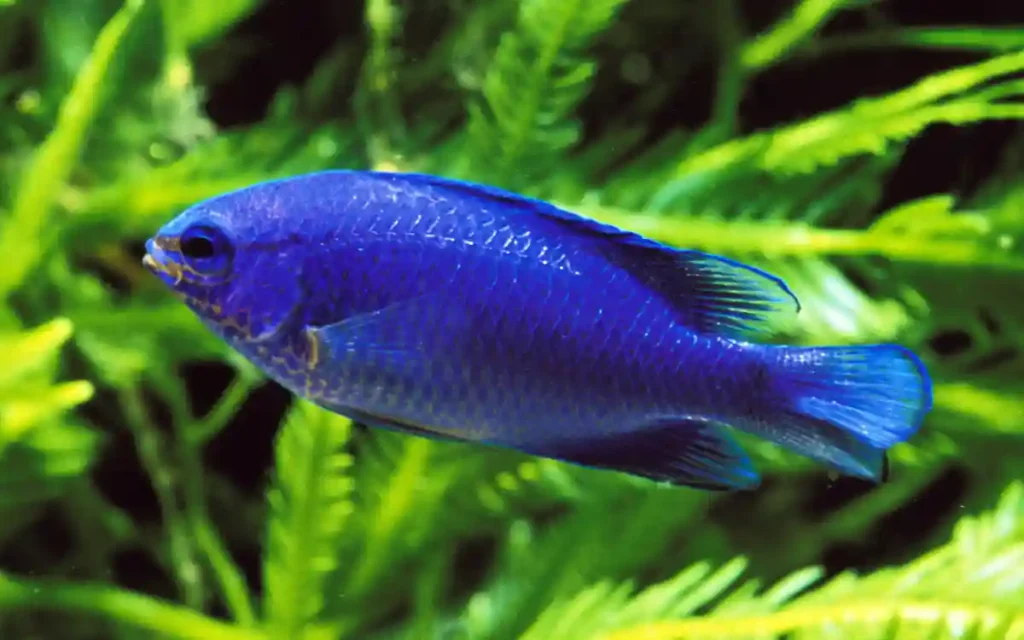
Getting to Know the Blue Devil Damselfish
Let’s start with the basics. These guys are native to the Indo-Pacific region, especially around coral reefs in Indonesia, the Philippines, and northern Australia. In the wild, they hang out near coral heads, darting in and out like underwater lightning bolts.
Quick Species Facts
- Scientific Name: Chrysiptera cyanea
- Common Name: Blue Devil Damselfish
- Size: Around 3 inches
- Temperament: Territorial (to put it nicely)
- Lifespan: 5–8 years
- Diet: Omnivore
- Tank Level: All areas (they zoom everywhere)
They’re tiny, flashy, and basically bulletproof once settled. That’s why many beginners start with them — they survive what many other fish wouldn’t.
Just remember: they pack a big personality into that little body.
Tank Setup
Here’s where most people mess up. Blue Devils may be small, but they act like they own the ocean. If you don’t give them space or hiding spots, they’ll go full mafia boss on your tank.
Tank Size and Space
A 30-gallon tank is the bare minimum for one fish. If you plan to keep a few, go for 50 gallons or more. The more space, the fewer turf wars.
These fish love rocky structures. Add plenty of live rock to create caves and overhangs so weaker tankmates can escape their royal wrath.
Water Parameters
| Parameter | Ideal Range |
| Temperature | 74–80°F |
| pH | 8.1–8.4 |
| Salinity | 1.020–1.025 |
| Ammonia/Nitrite | 0 ppm |
| Nitrate | <20 ppm |
Keep your parameters steady. The Blue Devil won’t drop dead from a small swing, but stable water keeps its colors vibrant and behavior calmer (well, calmer-ish).
Lighting and Filtration
Moderate to strong lighting makes their blue pop beautifully.
A solid protein skimmer and reliable filtration system keep your water pristine — these fish appreciate clean, oxygen-rich environments.
Feeding the Blue Devil
These little demons aren’t picky eaters, and that’s one of the reasons they’re such a breeze to care for.
What They Eat
In the wild, they munch on plankton, small crustaceans, and algae. In captivity, they’ll happily eat:
- High-quality marine flake or pellet foods
- Frozen mysis and brine shrimp
- Chopped seafood (shrimp, squid, etc.)
- Occasional algae wafers for variety
Feed 2–3 small meals daily. You’ll notice they eat aggressively — because of course they do.
Feeding Tip
Scatter the food across the tank instead of dumping it in one spot. This keeps your Blue Devil from hoarding everything and allows slower fish to grab a bite.
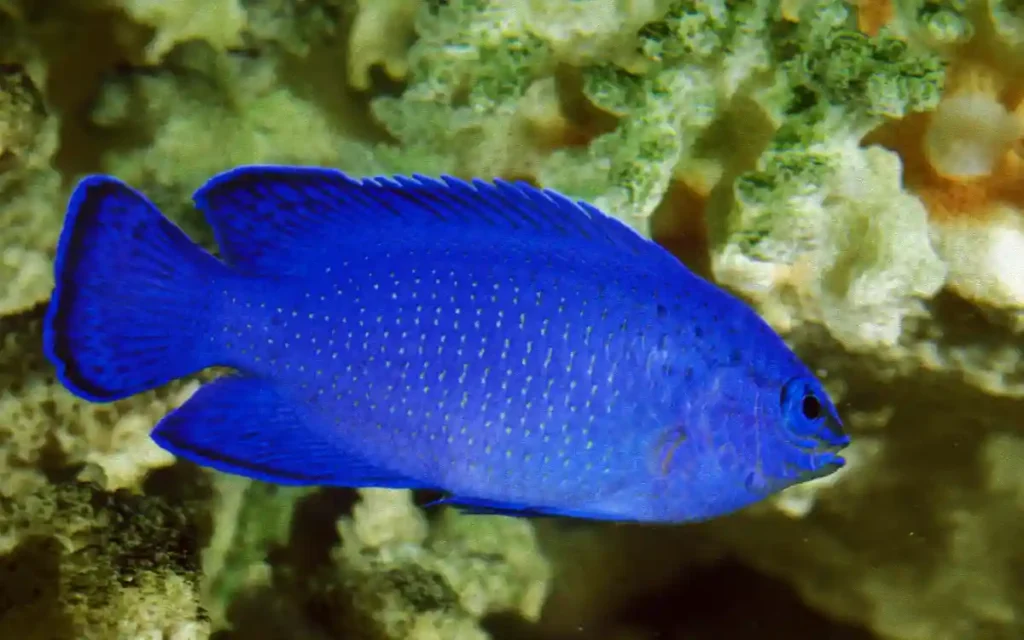
Temperament:
Let’s be honest. You don’t call a fish “Blue Devil” because it’s a sweetheart.
These fish are territorial, especially as they mature. When young, they’re friendly, curious, and full of energy. Then one day they wake up and decide they rule the tank.
Read also: Firefish Goby Care: Tank Setup, Feeding, and Tank Mates
Tank Mates That Work
Choose companions that can handle a bit of attitude. Good picks include:
- Clownfish (they hold their ground)
- Dottybacks (similar energy)
- Wrasses
- Damsels of similar size
If you’re keeping just one Blue Devil, life’s easier. But if you add multiples, introduce them all at once in a large tank. Otherwise, the first one will claim everything and bully the newcomers.
Tank Mates to Avoid
- Small gobies, firefish, or cardinals — too timid.
- Seahorses or pipefish — way too slow.
- Other dominant fish like large angels — total chaos.
Basically, don’t put two divas in the same dressing room.
Health and Longevity
The Blue Devil is practically a tank in fish form — resistant to most diseases if the water stays clean. Still, they can catch marine ich or velvet if stressed.
Keep stress low by:
- Avoiding overcrowded tanks
- Providing lots of hiding spaces
- Quarantining new fish before adding them
Feed a varied diet for bright coloration and immune support.
If your Blue Devil starts hiding constantly or breathing heavily, check oxygen levels and temperature first — they’re usually the problem.
Breeding the Blue Devil Damselfish
If you’ve got a pair, you might witness some impressive behavior. Males actually become the fish world’s version of helicopter parents.
Here’s how it works:
- The male picks a rock or shell as a nest site.
- The female lays eggs there.
- The male guards and aerates them until they hatch (about 3–4 days).
It’s adorable… until he decides everyone else in the tank is a threat. Breeding males turn from feisty to full-blown psycho. If you want to try breeding, move the pair to a separate tank.
Read also: Clown Goby Care Guide: Tank Setup, Feeding, and Behavior
Fun Behavior & Personality Traits
Despite their fiery reputation, these fish are genuinely entertaining.
They’re bold, confident, and always front-and-center in the tank. They’ll swim right up to your face like they’re checking who you are.
You’ll also notice them establishing “zones.” They’ll patrol certain areas repeatedly, chasing anyone who crosses the invisible border. It’s hilarious when they pick on fish three times their size.
Just remember — they’re not bullies by nature; they’re just high-energy little guards who take “personal space” very seriously.
Quick Care Summary
| Category | Requirement |
| Tank Size | 30+ gallons |
| Temperament | Aggressive / Territorial |
| Diet | Omnivore |
| Lighting | Moderate to strong |
| Reef Safe | Yes (with caution) |
| Lifespan | 5–8 years |
| Difficulty | Easy to moderate |
Pro Tips from Experience
- Add them last. If you already have peaceful fish, wait to introduce the Blue Devil until the end. It prevents territory domination.
- Break line of sight. Use rockwork to divide the tank visually — it reduces chasing.
- Feed regularly. A hungry Blue Devil is an angry Blue Devil.
- Use a lid. They’re jumpers, especially during feeding time chaos.
- Avoid small tanks. They might “survive,” but they’ll stress everyone else.
And FYI, if your Blue Devil loses that bright neon glow, it’s often due to poor lighting or a vitamin-deficient diet. Boost food quality and it’ll look like a swimming sapphire again.
Common Mistakes New Owners Make
- Underestimating their aggression. That “cute little blue fish” can terrorize your peaceful reef.
- Adding them to small community tanks. Not enough space = instant chaos.
- Ignoring tank décor. Without rocks and caves, they’ll turn other fish into punching bags.
- Mixing species of damsels. It rarely ends well unless the tank is huge.
- Not feeding enough variety. They’ll eat flakes, but that doesn’t mean they should only eat flakes.
A bit of planning saves a lot of regret later.
Why Keep a Blue Devil Anyway?
Because they’re beautiful, bulletproof, and full of attitude. Sure, they’re spicy, but they bring life and color to any tank.
They’re also perfect for beginners who want to test saltwater keeping without risking expensive fish. Once you learn to manage aggression, you’ll see why they’ve been hobby staples for decades.
Personally, I’ve kept several over the years, and every single one had a unique personality. One used to “guard” the feeding ring and chase away pellets like it was its job. Another would pose every time I walked by. You can’t stay mad at that kind of confidence.
Final Thoughts
The Blue Devil Damselfish is proof that small doesn’t mean boring. They’re feisty, fearless, and stunning to look at basically the saltwater version of a high-maintenance celebrity.
If you give them enough space, solid hiding spots, and proper tank mates, they’ll reward you with years of energy and color. But treat them like a peaceful clownfish? Yeah, that’s not gonna work.
So if you’re ready for a bit of drama and a lot of blue, this little devil might just be your next favorite fish. Just… don’t say I didn’t warn you when it starts rearranging your tank’s social order. 😉
