Best Community Aquarium Fish Combinations (By Tank Size)
The best community aquarium fish combinations include peaceful species like guppies, tetras, corydoras, mollies, and gouramis that can live together without aggression. These combinations work because the fish share similar behavior, occupy different swimming levels, and do not compete heavily for food or territory.
A successful community tank is not about picking random “peaceful fish.” It depends on matching size, activity level, and tank space so each species can coexist naturally. Fish that seem calm on their own can become stressed or aggressive when mixed incorrectly, especially in smaller tanks.
In this guide, you’ll find proven community aquarium fish combinations that actually work, along with simple rules to help you build your own setup safely. You’ll also learn how tank size affects compatibility, which fish should never be mixed, and how to avoid common mistakes that cause community tanks to fail.
How to Choose Community Fish Combinations
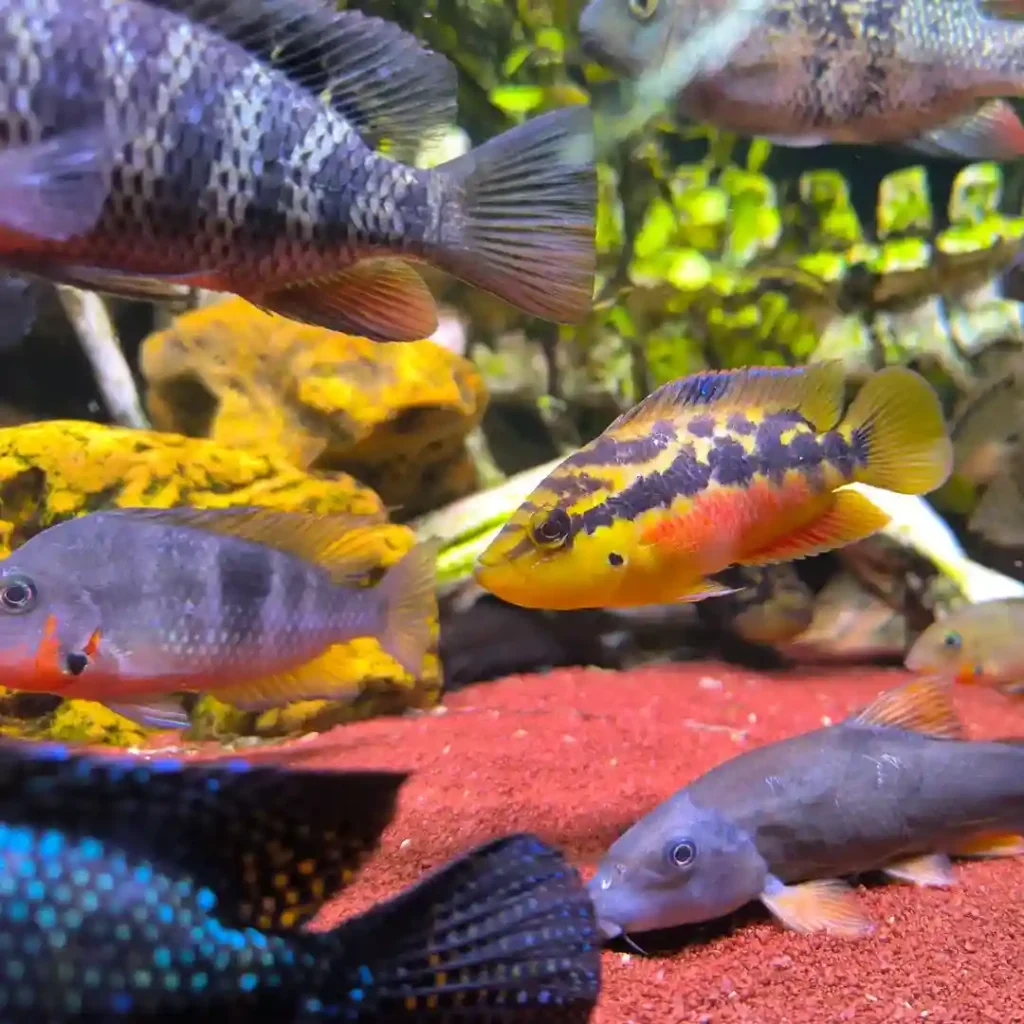
Before copying any fish combination, you need to understand what actually makes fish compatible.
Tank size controls behavior. A combination that works in a 20-gallon tank can fail in a 10-gallon setup because fish have less space to escape stress or establish territory. Smaller tanks increase tension even between peaceful species.
Behavior matters more than appearance. Calm fish should always be paired with other calm fish. Mixing slow, shy fish with fast, active swimmers often leads to stress, even if no direct fighting happens.
Swimming levels should be balanced. The most stable combinations include fish that occupy different areas of the tank top, middle, and bottom. This reduces constant interaction and competition.
Feeding style also matters. Fast eaters can outcompete slower fish, causing hidden starvation over time. Always match fish that feed at a similar pace.
If you understand these basics, you can build your own combinations instead of relying on random lists.
Best Community Aquarium Fish Combinations
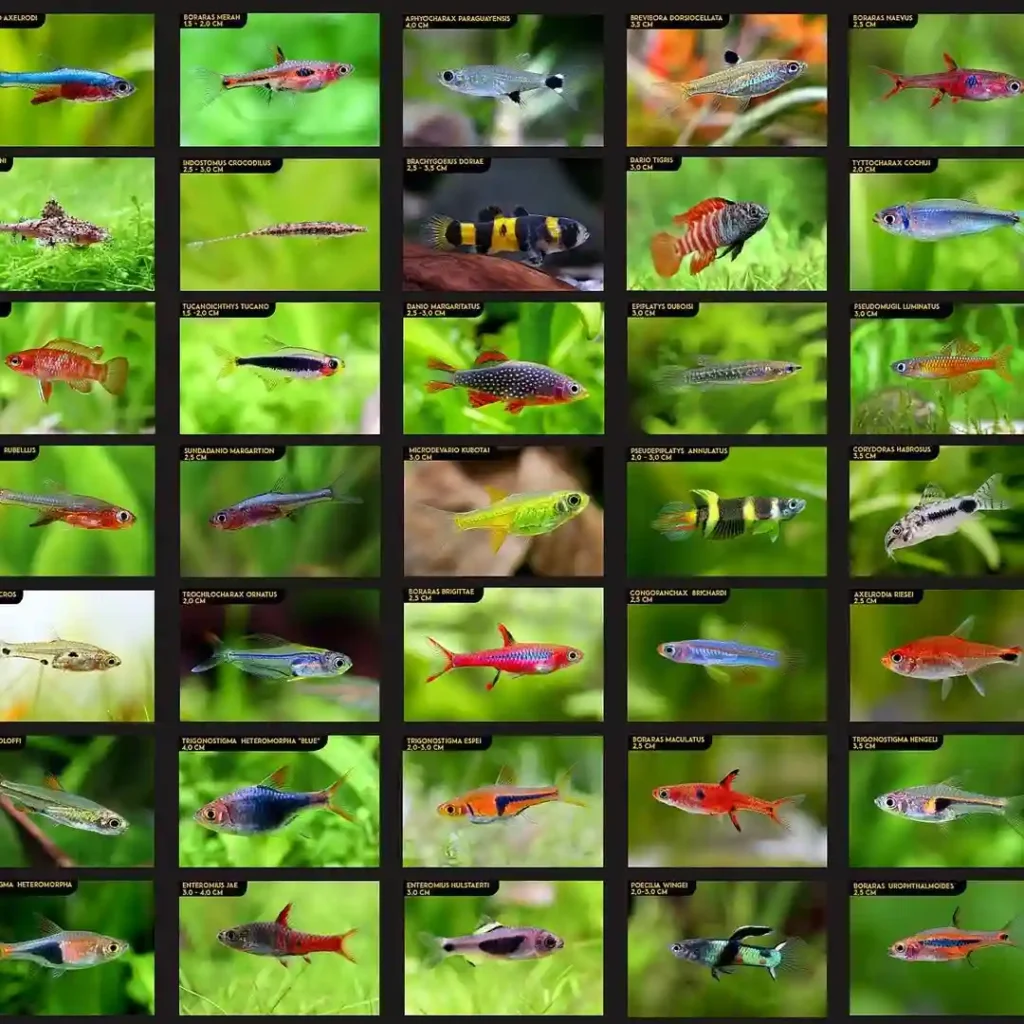
These are proven combinations that work well when tank size and conditions are correct.
Combination 1: Guppy + Neon Tetra + Corydoras
- Tank size: 15–20 gallons
- Why it works:Each species uses a different part of the tank, reducing competition
- Behavior:
Peaceful and active - Difficulty: Beginner-friendly
Combination 2: Platy + Molly + Otocinclus
- Tank size: 20 gallons
- Why it works:Livebearers stay active in upper levels, while Otocinclus stay on surfaces
- Behavior:Calm and adaptable
- Difficulty: Easy
Combination 3: Harlequin Rasbora + Honey Gourami + Corydoras
- Tank size: 20 gallons
- Why it works:Gentle fish with similar activity levels and no aggression
- Difficulty: Easy to moderate
Combination 4: Zebra Danio + Corydoras + Platy
- Tank size: 20–30 gallons
- Why it works:Active top swimmers combined with peaceful bottom dwellers
- Difficulty: Easy
Combination 5: Cardinal Tetra + Rummynose Tetra + Otocinclus
- Tank size: 20–30 gallons
- Why it works:Strong schooling behavior reduces stress and aggression
- Difficulty: Moderate
Combination 6: Guppy + Kuhli Loach + Cherry Barb
- Tank size: 20 gallons
- Why it works:Balanced activity with minimal territorial conflict
- Difficulty: Easy
Combination 7: Pearl Gourami + Tetra School + Corydoras
- Tank size: 30–40 gallons
- Why it works:Calm centerpiece fish supported by schooling species
- Difficulty: Moderate
Combination 8: Rainbowfish + Corydoras + Rasboras
- Tank size: 40+ gallons
- Why it works:Active swimmers that still maintain peaceful behavior
- Difficulty: Moderate
Combination 9: Chili Rasbora + Shrimp + Otocinclus
- Tank size: 10–15 gallons
- Why it works:Extremely peaceful nano setup with low competition
- Difficulty: Easy
Combination 10: Bolivian Ram + Tetras + Corydoras
- Tank size: 30 gallons
- Why it works:One calm centerpiece fish with non-aggressive tank mates
- Difficulty: Moderate
Community Fish Combinations by Tank Size
Community Fish Combinations by Tank Size
Tank size changes how fish behave. A combination that works in a larger tank can fail in a smaller setup because fish have less space to escape stress or avoid constant interaction. Instead of copying combinations blindly, it’s better to match fish to the space available.
10 Gallon Community Fish Combinations
A 10-gallon tank has very limited space, so combinations must stay simple and focused.
Best combination:
- Chili Rasbora + Shrimp + Otocinclus
Why it works:
- All species are small and peaceful
- Minimal competition for space
- Low waste production
Alternative setup:
- Guppy (male group) + Corydoras (pygmy)
What to avoid:
- Mixing multiple active species
- Adding centerpiece fish
- Overstocking
In small tanks, stability matters more than variety.
Learn more about Best Fish for a 10 Gallon Tank
15–20 Gallon Community Fish Combinations
This is the best range for beginner-friendly community tanks. It allows balanced stocking without too much complexity.
Best combination:
- Guppy + Neon Tetra + Corydoras
Why it works:
- Top, middle, and bottom zones are covered
- Similar temperament
- Easy feeding balance
Alternative setup:
- Platy + Molly + Otocinclus
What to avoid:
- Overstocking too quickly
- mixing fast swimmers with shy fish
This size gives flexibility, but still requires careful planning.
Learn more about Best Fish for a 20 Gallon Aquarium
29–30 Gallon Community Fish Combinations
At this size, fish behave more naturally and stress levels drop significantly.
Best combination:
- Harlequin Rasbora + Honey Gourami + Corydoras
Why it works:
- Calm centerpiece fish
- active schooling group
- bottom dwellers stay separate
Alternative setup:
- Zebra Danio + Cherry Barb + Corydoras
What to avoid:
- assuming bigger tanks remove the need for compatibility
- adding too many centerpiece fish
Learn more about Best Fish for a 30 Gallon Tank
40–55 Gallon Community Fish Combinations
Larger tanks allow more diversity, but poor planning can still cause issues.
Best combination:
- Pearl Gourami + Tetra School + Corydoras
Why it works:
- peaceful centerpiece fish
- large schooling group reduces stress
- good space distribution
Alternative setup:
- Rainbowfish + Rasboras + bottom dwellers
What to avoid:
- mixing aggressive fish
- overcrowding with multiple feature fish
Bigger tanks reduce stress but do not fix compatibility issues.
Learn more about 14 Best Fish for a 40 Gallon Tank
Large Community Tanks (75 Gallons and Up)
Large aquariums offer the most flexibility, but also require stronger planning and maintenance.
Best combination:
- Rainbowfish + Corydoras + Rasboras
Why it works:
- high activity without aggression
- strong schooling behavior
- stable water conditions
Alternative setup:
- Bala Shark + Tetras + Gouramis
What to avoid:
- ignoring filtration needs
- mixing large aggressive species
In large tanks, waste management and long-term planning matter more than fish count.
Learn more about Best Fish for a 75 Gallon Tank
Fish That Should NOT Be Kept Together
Not all fish combinations work, even if each species is labeled “peaceful.” Some mixes fail because of behavior differences, size mismatch, or feeding competition.
Avoid these combinations:
- Aggressive + peaceful fish
Fish like aggressive cichlids or territorial species will stress or injure calmer fish over time. - Large fish + small fish
Even non-aggressive large fish may see smaller species as food or dominate them during feeding. - Fast eaters + slow feeders
Active fish like danios or barbs can outcompete slower fish, leading to hidden starvation. - Fin nippers + long-fin fish
Fish that nip fins should not be paired with species like gouramis or bettas.
A good combination is not just about peaceful species it’s about matching behavior and feeding style.
Common Mistakes in Community Fish Combinations
Many community tanks fail because of small mistakes that build up over time.
The most common issues include:
- Choosing fish based on color instead of compatibility
- Adding too many species at once
- Ignoring tank size limitations
- Mixing fish with very different activity levels
These problems often don’t show immediately, which makes them harder to fix later.
A stable tank is built slowly, not all at once.
Can You Mix Shrimp or Bottom Dwellers in Community Tanks?
Shrimp and bottom dwellers can be part of a community setup, but they require careful pairing.
Shrimp combinations that work:
- Chili Rasbora + Shrimp
- Guppy (male only) + Shrimp
Shrimp survive best with calm fish and plenty of hiding spaces.
Bottom dwellers that fit well:
- Corydoras
- Kuhli Loach
- Otocinclus
These species stay out of the way and reduce competition.
However, they still add to the tank’s bioload and should not be treated as “cleaners.”
Community Tank vs Species-Only Tank
Not every setup needs to be a community tank.
Community tanks:
- More variety
- More movement
- Require planning and observation
Species-only tanks:
- More stable
- Easier to manage
- Less risk of compatibility issues
How to Build Your Own Community Fish Combination
Instead of copying lists, use this simple method:
- Start with tank size
- Choose peaceful species first
- balance top, middle, and bottom swimmers
- match feeding speed and activity level
- add fish gradually
- stop before overcrowding
FAQ
What fish can live together in a community tank?
Peaceful fish like guppies, tetras, corydoras, rasboras, and mollies can live together when matched by size, behavior, and tank space.
How many fish can I keep in a community aquarium?
It depends on tank size and species. A 20-gallon tank can typically hold 10–15 small fish when stocked properly.
Can different species of tetras live together?
Yes, peaceful tetras like neon, cardinal, and rummynose can coexist if kept in proper group sizes.
Are community fish always peaceful?
Not always. Behavior can change due to stress, crowding, or competition, so compatibility matters more than labels.
Do community fish need plants?
Plants are not required, but they help reduce stress, provide hiding spaces, and improve water quality.