
Guppy Fry Care Guide: How to Raise Baby Guppies

Guppy fry are small, but caring for them is not difficult. They need warm, clean water, gentle filtration, several tiny meals each day, and protection from adult fish.
The first few weeks matter most. Newborn guppies can become weak quickly if they cannot reach food or if the water becomes dirty. With a simple setup and a steady routine, most beginners can raise healthy fry without buying expensive equipment.
This guide covers everything from preparing the tank to feeding, water changes, growth, and moving young guppies into an adult aquarium.
Quick Guppy Fry Care Chart
| Care requirement | Recommended range |
| Fry tank size | 5 to 10 gallons |
| Water temperature | 76°F to 80°F |
| pH level | About 7.0 to 8.0 |
| Ammonia | 0 ppm |
| Nitrite | 0 ppm |
| Nitrate | Below 20 ppm |
| Feeding | 3 to 5 small meals daily |
| Filter | Air-powered sponge filter |
| Water change | 10% to 20% daily or every other day |
| Time before joining adults | Usually 6 to 8 weeks |
| Best survival setup | Separate, cycled fry tank |
These numbers are helpful targets, but stable water is more important than chasing an exact pH or temperature.
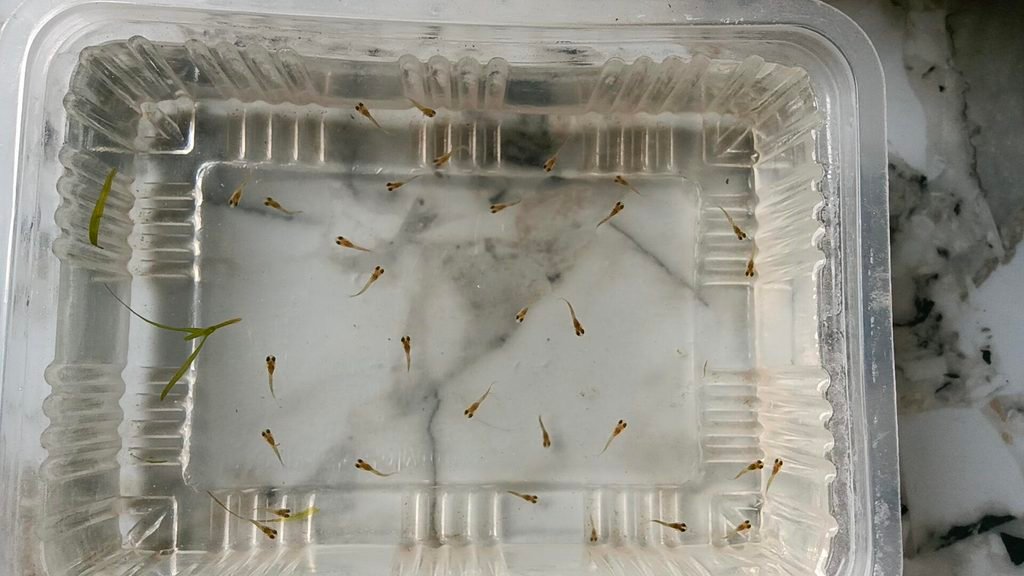
Step 1: Prepare a Safe Tank for the Fry
A separate 5 or 10-gallon aquarium is the safest place to raise guppy fry. It keeps them away from hungry adult fish and makes feeding much easier.
Set up the fry tank before the female gives birth when possible. The aquarium should already be cycled, which means it has enough helpful bacteria to process fish waste.
If you are new to this process, read the fish tank cycling guide before moving the fry. An uncycled tank can develop toxic ammonia very quickly.
A basic fry tank only needs:
- A 5 or 10-gallon aquarium
- A small heater
- A sponge filter and air pump
- A thermometer
- A few live plants or hiding places
- A light with a regular day and night schedule
You do not need gravel. A bare-bottom tank is easier to clean because leftover food and waste stay visible.
However, a thin layer of sand is fine if you prefer a more natural-looking aquarium. Just make sure you can remove trapped food during water changes.
Step 2: Use a Sponge Filter
A sponge filter is the best filter for newborn guppies. It creates gentle water movement and cannot pull tiny fry into an intake tube.
The sponge also grows a thin layer of microorganisms. Young guppies may pick at this surface between meals.
Avoid strong power filters unless you cover the intake with a pre-filter sponge. Even when a fry is too large to enter the filter, strong suction can trap or injure it.
Set the airflow low enough that the fry can swim normally. They should not be pushed around the aquarium.
If the sponge filter is new, place it in an established aquarium for a few weeks before using it. This allows helpful bacteria to grow on it.
Step 3: Maintain Warm, Stable Water
Keep the fry tank between 76°F and 80°F. A stable temperature near 78°F works well for most guppy fry.
Warm water supports digestion and steady growth. Water that is too cold may slow their growth and make them less active. Temperatures that are too high can reduce oxygen in the water and cause more stress.
Use a heater with a thermostat rather than guessing based on room temperature. Check the thermometer once a day, especially during cold weather.
Try to keep the water close to these conditions:
- Ammonia: 0 ppm
- Nitrite: 0 ppm
- Nitrate: below 20 ppm
- pH: about 7.0 to 8.0
Do not try to change the pH with chemicals unless your water is far outside the normal guppy range. Sudden changes are often more dangerous than a slightly imperfect but stable pH.
Step 4: Protect Newborn Fry From Adult Guppies
Adult guppies may eat newborn fry, including the mother. The safest choice is to move the babies into a separate cycled tank.
If the female gives birth in the main aquarium, use a small cup or fine fish net to transfer the fry. Move slowly because newborns can be injured easily.
Do not chase them around the tank for a long time. You can guide them toward a corner and gently scoop them up with a clear cup.
When a separate tank is not available, give the fry plenty of cover. Guppy grass, Java moss, water sprite, hornwort, and floating plants create places where babies can hide.
A heavily planted aquarium can save many fry, but it will not protect every baby. Adult fish may still find them.
You can learn about more suitable plants in the best plants for guppies guide.
Can You Use a Breeder Box?
A breeder box can protect fry for a short time, but it should not become their permanent home.
Most breeder boxes have little swimming room. Waste and uneaten food can also collect inside them. Fry kept in a cramped box for too long may grow slowly.
Use a breeder box as a temporary solution while you prepare a proper fry tank. If possible, release the babies into a larger cycled aquarium within a few days.
Do not leave the pregnant female inside a small breeder box for several days. The stress can make birth harder and may cause her to stop eating.
Step 5: Feed Guppy Fry the Right Food
Guppy fry are born able to swim and eat. You can offer their first meal within a few hours after birth.
Their mouths are tiny, so normal fish flakes must be crushed into a fine powder. Rub the flakes between clean fingers before adding them to the water.
Good foods for guppy fry include:
- Finely crushed tropical fish flakes
- Commercial guppy fry food
- Newly hatched baby brine shrimp
- Microworms
- Small daphnia
- Powdered spirulina food
Baby brine shrimp is one of the best growth foods because it is small, nutritious, and moves through the water. Its movement also encourages the fry to hunt.
A good beginner routine is to use crushed flakes for most meals and baby brine shrimp once a day when available. You can find more food choices in the guppy fish food guide.
How Often Should You Feed Guppy Fry?
Feed newborn guppy fry three to five very small meals each day.
Fry have small stomachs and grow quickly. Several small feedings work better than one large meal.
Only add an amount they can finish in about one or two minutes. A fry’s stomach is tiny, so the tank needs much less food than you may expect.
Watch their bellies after feeding. A gently rounded belly usually means they have eaten. A belly that stays flat may mean the fry cannot find enough food.
Remove visible leftovers with a turkey baster or small siphon. Extra food rots and can cause an ammonia spike.
Simple Daily Feeding Schedule
You do not have to follow a complicated feeding plan. A schedule like this works well:
| Time | Food |
| Morning | Finely crushed quality flakes |
| Afternoon | Baby brine shrimp or microworms |
| Evening | Crushed flakes or powdered fry food |
| Optional extra meal | A tiny amount of live or powdered food |
If you cannot feed four times, three small meals are enough. Water quality should never be sacrificed just to add more food.
Step 6: Change Small Amounts of Water Often
Frequent water changes help guppy fry grow in clean water. They also remove uneaten food and waste before it turns into ammonia.
Change about 10% to 20% of the water every day or every other day. The exact schedule depends on the tank size, number of fry, and amount of food added.
A crowded fry tank may need daily cleaning. A lightly stocked, well-cycled tank may stay clean with changes every two or three days.
Use water conditioner on all new tap water. Make sure the replacement water is close to the tank’s temperature before adding it.
Pour the water back slowly so you do not push the fry around.
How to Siphon Without Sucking Up Fry
Newborn fry are easy to pull into a normal gravel vacuum. Use airline tubing or a turkey baster for better control.
Keep one end of the tubing in a white bucket while siphoning. If a fry is accidentally removed, you will be able to see it and return it to the aquarium.
You can also cover the siphon opening with a piece of fine mesh. This keeps babies out while still allowing small waste particles to pass.
Clean the bottom slowly. Avoid removing all the water at once or taking the tank apart for deep cleaning.
Step 7: Give the Fry a Regular Light Schedule
Guppy fry need a normal day and night cycle. Keep the aquarium light on for about eight to ten hours a day.
Light helps the fry find food and supports live plant growth. However, leaving the light on all night can cause stress and excess algae.
Use an inexpensive timer if you often forget to switch the light off. A regular schedule is better than changing the lighting time every day.
The tank does not need strong lighting unless you are growing demanding plants. Low to medium light is enough for guppy grass, Java moss, hornwort, and many floating plants.
Step 8: Watch the Fry Every Day
Take a minute to observe the fry during each feeding. Healthy guppy fry should swim actively, notice food, and keep their fins open.
Look for warning signs such as:
- Staying at the bottom
- Gasping near the surface
- Refusing food
- Clamped fins
- Bent bodies
- White spots
- Red or damaged gills
- Fry dying one after another
If several fry become weak at the same time, test the water first. Poor water quality is more likely than a rare disease in a newly set-up fry tank.
Check ammonia, nitrite, nitrate, and temperature. Perform a small water change if anything looks wrong.
Do not add aquarium salt or medicine without knowing what you are treating. Some treatments can harm fry, plants, and the helpful bacteria in the filter.
Step 9: Avoid Overcrowding as the Fry Grow
A 10-gallon tank may hold many newborn fry for a short period, but they need more room as they grow.
Overcrowding causes waste to build up quickly. It may also slow growth because the fish compete for food and swimming space.
If you have a large batch, divide the fry between two cycled tanks. You can also plan to rehome some once they are old enough.
Test the water more often when:
- The tank contains more than 20 to 30 fry
- The fry are growing quickly
- The water becomes cloudy
- Waste returns soon after cleaning
- Nitrate rises between water changes
There is no single safe number for every tank. Filtration, feeding, plant growth, water changes, and the size of the fry all affect how many the aquarium can support.
Step 10: Separate Males and Females
Young guppies can begin showing their sex at around three to six weeks, though some develop more slowly.
Males usually become slimmer and show color first. Their anal fin changes into a narrow, pointed reproductive fin called a gonopodium.
Females normally have a fan-shaped anal fin. They develop a rounder body and may show a darker gravid spot near the back of the belly.
The male vs. female guppy guide can help you identify these changes.
Separate young males and females as soon as you can identify them. Guppies may breed while they are still quite young, which can leave you with more fry before you have enough tank space.
Check them more than once. A late-developing male can look like a female during the first inspection.
When Can Guppy Fry Join the Adult Tank?
Most guppy fry can move into an adult tank when they are six to eight weeks old, but size matters more than age.
A young guppy is ready when it is too large to fit inside an adult fish’s mouth. It should also swim strongly and compete for food without difficulty.
Small or slow-growing fry may need more time. Moving them too early can lead to bullying, missed meals, or being eaten.
Before transferring them, make sure the adult aquarium has peaceful tank mates. Larger or aggressive fish may still attack young guppies. Check the guppy tank mates guide before mixing them.
Acclimate the fry slowly if the tanks have different temperatures or water conditions. Float their container and add small amounts of adult-tank water over 20 to 30 minutes.
How Fast Do Guppy Fry Grow?
Guppy fry grow fastest during their first few months. You may notice color and fin changes within three to six weeks.
Most young guppies begin looking like small adults at around two months. They may reach close to adult size at four to six months, depending on genetics, food, water quality, temperature, and available space.
Some fry will grow faster than their siblings. This is normal. Make sure smaller fish can reach food before the larger fry eat everything.
Good growth comes from:
- Clean, stable water
- Several small meals
- Protein-rich food
- Enough swimming space
- Low stress
- Regular tank care
Do not keep raising the temperature or overfeeding to force faster growth. Both choices can create health problems.
Common Guppy Fry Care Mistakes
Keeping the Fry With Hungry Adults
Plants can provide cover, but they do not guarantee safety. Use a separate tank if you want to save most of the fry.
Feeding Too Much at Once
Fry need frequent food, but each serving should be tiny. Too much food quickly pollutes a small aquarium.
Using a Strong Filter
An uncovered filter intake can trap fry. Choose a sponge filter or cover the intake with a fine sponge.
Starting With an Uncycled Tank
Fresh-looking water is not always safe. A new aquarium can develop ammonia because it lacks enough helpful bacteria.
Making Large Water Changes
A very large change can quickly alter the temperature and water chemistry. Small, regular changes are safer for delicate fry.
Keeping Fry in a Breeder Box Too Long
Breeder boxes are cramped and collect waste. Move the babies to a proper tank as soon as you can.
Adding Medicine Without Checking the Water
Weakness, clamped fins, and surface gasping are often caused by poor water. Test and correct the water before treating for disease.
Simple Guppy Fry Care Routine
Every Morning
Check the temperature and watch how the fry swim. Feed a tiny meal and remove any obvious leftovers.
During the Day
Offer two or three more small meals. Make sure the smallest fry get a chance to eat.
Every Day or Every Other Day
Remove waste from the bottom and change 10% to 20% of the water. Use conditioned water at a similar temperature.
Once a Week
Test ammonia, nitrite, nitrate, and pH. Check the sponge filter, but do not replace it unless it is falling apart.
If the sponge becomes clogged, gently squeeze it in a bucket of removed tank water. Do not rinse it under untreated tap water because chlorine may kill the helpful bacteria.
Frequently Asked Questions
Do guppy fry need a heater?
Yes, guppy fry usually need a heater unless the room keeps their water steady between 76°F and 80°F. A heater prevents sudden temperature drops, especially at night.
Do guppy fry need a filter?
Yes. A sponge filter gives gentle filtration and helps keep ammonia and nitrite at zero. It also adds oxygen to the water.
Can guppy fry eat normal fish flakes?
Yes, but you must crush the flakes into a very fine powder. Fry cannot bite pieces made for adult fish.
How long can guppy fry stay in a breeder box?
Keep them there for the shortest time possible. A few days is much better than several weeks. Move them into a cycled fry tank when one is ready.
Will the mother guppy eat her babies?
She may. Guppies do not care for their young, and both male and female adults can eat newborn fry.
Can guppy fry survive without live food?
Yes. They can grow on finely crushed flakes and a good powdered fry food. Live foods such as baby brine shrimp can support faster growth, but they are not required.
Why are my guppy fry dying?
Test the water first. Ammonia, nitrite, sudden temperature changes, overfeeding, poor oxygen levels, and an uncycled aquarium are common causes.
When do guppy fry get their color?
Some males show early color at three to six weeks. Full color develops slowly and depends on genetics, diet, health, and age.
How many guppy fry are born at once?
A female may produce around 10 to 50 fry, though younger females may have fewer and large mature females may have more. The number can vary between births.
Final Guppy Fry Checklist
Before bringing home or saving guppy fry, make sure you have:
- A cycled 5 or 10-gallon tank
- A sponge filter
- A heater and thermometer
- Water conditioner
- A liquid water test kit
- Crushed flakes or fry food
- Airline tubing or a small siphon
- Live plants or safe hiding places
- A plan for separating males and females
- Enough space or new homes for the growing fish
Raising guppy fry becomes much easier once you build a routine. Feed small meals, remove waste, keep the water stable, and watch the babies each day.
You do not need a perfect aquarium. You need a safe tank and steady care. Give the fry those two things, and you will soon see them grow from tiny, almost colorless babies into active young guppies.
