
Skunk Loach Care Guide: Tank Setup, Diet, Behavior, and Tank Mates

The Skunk Loach is one of those fish that looks easier than it really is.
Many beginners see it in stores as a small bottom-dwelling fish and assume it will behave like a Corydoras, Kuhli Loach, or peaceful algae eater. That is where problems begin. The Skunk Loach may stay fairly small, but it has a bold personality and can become pushy, nippy, and territorial in the wrong tank.
This does not mean Skunk Loaches are bad fish. They can be active, interesting, and fun to watch when kept in the right setup. But they are not a good match for calm community aquariums, slow fish, or tanks with delicate bottom dwellers.
If you are thinking about keeping Skunk Loaches, the main thing to understand is this: they need space, hiding places, clean water, and tank mates that can handle their behavior.
Skunk Loach Species Overview
| Category | Details |
|---|---|
| Scientific Name | Yasuhikotakia morleti |
| Common Names | Skunk Loach, Skunk Botia, Hora’s Loach |
| Adult Size | Around 3–4 inches |
| Lifespan | 8–10 years with good care |
| Minimum Tank Size | 40 gallons for a small setup, 55+ gallons is better for a group |
| Temperament | Semi-aggressive to aggressive |
| Care Level | Moderate |
| Tank Level | Bottom |
| Diet | Omnivore |
| Best For | Experienced keepers or semi-aggressive community tanks |
What Does a Skunk Loach Look Like?
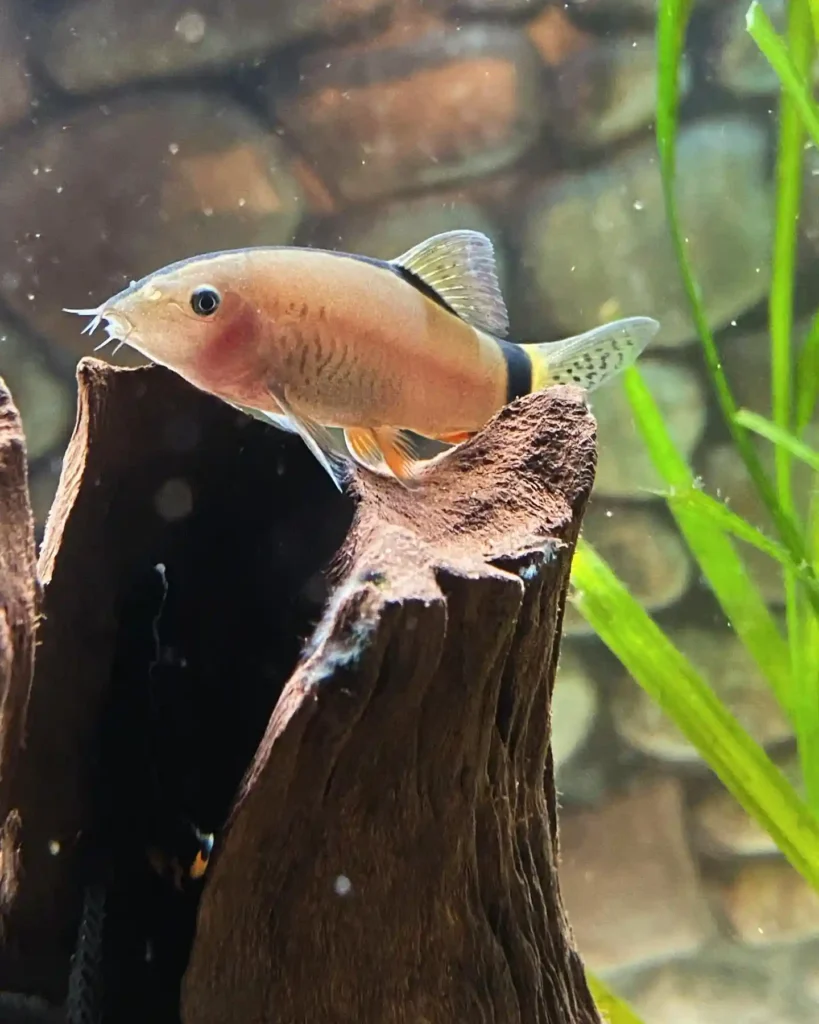
Skunk Loaches have a slim body with a dark stripe running from the head toward the tail. This stripe is the reason they get the “skunk” name.
Their body is usually pale beige, tan, or light brown, which makes the stripe easy to see. They also have small barbels around the mouth. These barbels help them search through sand, gravel, and small gaps for leftover food, worms, snails, and other small items.
Young Skunk Loaches often look harmless in store tanks. They may hide, stay close to the bottom, or seem quiet. As they settle in and mature, their stronger behavior usually becomes more obvious.
That is why many fishkeepers are surprised later. The fish was not “peaceful” forever. It was just young, stressed, or not fully settled yet.
Natural Habitat
Skunk Loaches come from parts of Southeast Asia, including river systems connected to Thailand, Laos, Cambodia, and nearby areas.
In the wild, they are found in rivers, streams, and seasonal water areas with sandy bottoms, rocks, roots, wood, and places to hide. They spend much of their time near the bottom, searching for food and using cover when they feel unsafe.
This matters in the aquarium because a bare tank makes their behavior worse. If they cannot claim hiding spots or break line of sight, they may chase other fish more often.
Skunk Loach Tank Size
A 30-gallon tank is sometimes listed as the minimum, but I would not call it ideal.
For one Skunk Loach in a carefully managed setup, a 40-gallon tank gives you a better starting point. For a proper group, a 55-gallon tank or larger is much safer.
The reason is simple: these fish need territory. They do not just swim around peacefully at the bottom. They explore, claim spaces, chase, and test other fish.
A larger tank helps because it gives each fish more room and gives weaker fish a place to move away.
Best Tank Size Recommendation
For most hobbyists, here is a better way to think about tank size:
| Setup Type | Tank Size |
|---|---|
| Single Skunk Loach setup | 40 gallons minimum |
| Small group | 55 gallons or larger |
| Mixed semi-aggressive tank | 55 gallons or larger |
| Peaceful community tank | Not recommended |
A bigger tank does not fully remove aggression, but it gives you more control.
Best Tank Setup for Skunk Loaches
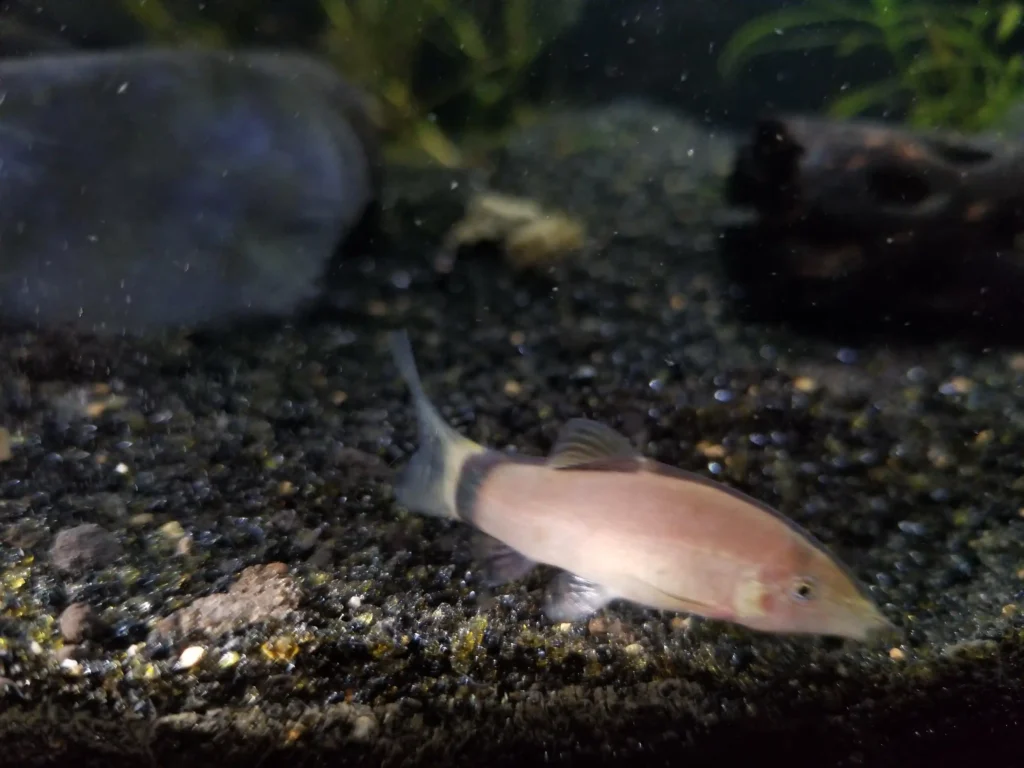
The best Skunk Loach tank should feel busy at the bottom without being cramped. You want lots of cover, but you still need open swimming space.
Substrate
Use soft sand or smooth, rounded gravel.
Sand is usually the better choice because Skunk Loaches like to search through the bottom. Sharp gravel can damage their barbels and make feeding behavior uncomfortable.
Avoid rough crushed rock, sharp decorative gravel, or anything with jagged edges.
Hiding Places
Hiding spots are not optional with this fish. They help reduce stress and give each loach a place to retreat.
Good hiding options include:
- Driftwood
- Smooth rock caves
- Ceramic caves
- Slate piles
- Thick plant areas
- PVC caves hidden behind decor
Try to create more hiding spots than fish. If you keep five Skunk Loaches, do not add only two caves. That can create fights over the best places.
The layout should also break line of sight. A fish should be able to move behind wood, plants, or rocks and get away from another fish’s view.
Plants
Skunk Loaches can work in planted tanks, but choose stronger plants.
Good options include Java Fern, Anubias, Vallisneria, Java Moss, and floating plants. Avoid delicate carpeting plants in tanks where loaches dig or push around the substrate.
Attach plants like Java Fern and Anubias to wood or rock instead of planting them deep in the substrate. This keeps them safer from digging.
Water Flow and Filtration
Skunk Loaches prefer clean, well-oxygenated water with moderate flow.
Use a filter that can handle the tank size properly. Since they are bottom fish and eat protein-rich foods, leftover food can build up fast. A good filter plus regular maintenance keeps the tank stable.
Aim for steady water movement, but do not blast the whole tank with strong current. Give them calmer areas behind rocks and wood.
Ideal Water Parameters
Skunk Loaches are fairly hardy when kept in stable water, but they do best in warm tropical conditions.
| Parameter | Ideal Range |
|---|---|
| Temperature | 76–82°F |
| pH | 6.0–7.8 |
| Hardness | Soft to medium |
| Water Flow | Moderate |
| Ammonia | 0 ppm |
| Nitrite | 0 ppm |
| Nitrate | As low as possible, ideally under 20–30 ppm |
Stable water is more important than chasing a perfect number every week.
Do not move Skunk Loaches into a new, uncycled tank. Like most loaches, they can react badly to poor water quality, sudden changes, and dirty substrate.
What Do Skunk Loaches Eat?
Skunk Loaches are omnivores, but they lean toward meaty foods. In nature, they feed on small invertebrates, insect larvae, mollusks, and similar foods found along the bottom.
In the aquarium, they usually accept many prepared and frozen foods.
Best Foods for Skunk Loaches
A balanced diet can include:
- Sinking carnivore pellets
- Sinking community pellets
- Frozen bloodworms
- Frozen brine shrimp
- Daphnia
- Tubifex worms from clean sources
- Algae wafers
- Blanched zucchini or cucumber
- Pest snails
They may eat snails, but do not buy them only as a snail control tool. Some Skunk Loaches eat snails actively, while others may ignore larger snails or only eat small ones.
If you have a serious pest snail problem, fix the cause too. Overfeeding is usually the main reason snail numbers explode.
Feeding Tips
Feed Skunk Loaches once or twice a day in small amounts.
The key is making sure food actually reaches the bottom. Fast mid-water fish may eat everything before the loaches get enough.
A simple trick is to feed the top and middle fish first, then drop sinking food near the loaches after the other fish are distracted.
Do not rely only on leftovers. Bottom fish still need their own diet.
Hungry Skunk Loaches may become more aggressive because they compete harder for food. A steady feeding routine helps reduce that pressure.
Skunk Loach Behavior and Temperament
This is the most important section of the whole guide.
Skunk Loaches are not peaceful community fish. They can chase, nip, and harass tank mates, especially when kept in small tanks or with slow bottom-dwelling fish.
Their aggression is often strongest near the bottom because that is the area they use most. Corydoras, Kuhli Loaches, small plecos, and other bottom fish may become targets.
They may also nip long fins, especially on slow fish such as fancy guppies, bettas, angelfish, and gouramis.
Are Skunk Loaches Aggressive?
Yes, Skunk Loaches are known for being feisty and sometimes aggressive.
They are small compared to many semi-aggressive fish, but they can be surprisingly bold. A Skunk Loach may chase fish larger than itself if it feels confident in the tank.
This behavior is one reason they are not a good beginner loach.
Are Skunk Loaches Active?
Yes, but they may not always be active in the open.
They often become more active in the evening, during feeding, or after the lights dim. In a well-set-up tank, you may see them exploring caves, moving under wood, and searching the substrate.
If your Skunk Loach hides all day and only comes out at night, that can be normal. But if it hides constantly, refuses food, or looks thin, check water quality and tank mate stress.
Should Skunk Loaches Be Kept Alone or in Groups?
This is where advice online can be confusing.
Skunk Loaches are social loaches, but they also have a strong pecking order. Keeping only two or three can be risky because one fish may bully the others nonstop.
A better choice is either:
Keep a proper group of five or more in a large, well-structured tank.
Or avoid the species if you only have a small peaceful community aquarium.
Keeping one Skunk Loach may reduce fighting between loaches, but it does not always solve aggression toward other fish. A single Skunk Loach can still become territorial and harass tank mates.
My honest advice: do not buy one just because your tank is too small for a group. Choose a more peaceful loach instead.
Best Tank Mates for Skunk Loaches
The best tank mates are active, confident fish that spend most of their time away from the bottom.
You want fish that are fast enough to avoid chasing and not delicate enough to be stressed by occasional rough behavior.
Possible Tank Mates
Good options may include:
- Larger barbs
- Giant danios
- Larger rasboras
- Rainbowfish
- Robust tetras
- Other semi-aggressive fish with care
This does not mean every combination will work. Tank size, layout, group size, and each fish’s personality matter.
Always watch the tank after adding new fish.
Fish to Avoid
Avoid slow, delicate, or long-finned fish.
Skunk Loaches are also a poor match for most peaceful bottom dwellers because they compete for the same space.
Avoid keeping Skunk Loaches with:
- Corydoras
- Kuhli Loaches
- Otocinclus
- Small peaceful plecos
- Bettas
- Fancy guppies
- Angelfish with long fins
- Slow gouramis
- Shrimp
- Very small tetras
- Sick or weak fish
Shrimp are especially risky. Skunk Loaches may eat small shrimp or stress them badly.
Can Skunk Loaches Live in a Community Tank?
Only in the right type of community tank.
A Skunk Loach should not go into a calm beginner community tank with Corydoras, guppies, small tetras, and shrimp. That setup is asking for stress.
They can work better in a larger semi-aggressive community tank with fast fish, lots of hiding places, and a keeper who is ready to separate fish if needed.
If your goal is a peaceful tank, choose Zebra Loaches, Kuhli Loaches, or Dwarf Chain Loaches instead.
Common Skunk Loach Problems
Aggression
Aggression is the most common problem with this species.
It usually gets worse when the tank is too small, hiding places are limited, or the fish are kept in poor group numbers.
To reduce aggression, add more cover, increase tank size if possible, feed properly, and avoid slow bottom fish.
Damaged Barbels
Damaged barbels usually come from sharp substrate, dirty substrate, or poor water quality.
Use soft sand, keep the bottom clean, and avoid rough decorations.
Hiding Too Much
Some hiding is normal. Constant hiding can mean stress.
Check for bullying, bright lighting, poor water quality, or a tank layout with too little cover. Oddly, fish may hide more in bare tanks because they feel exposed.
Thin Body
A thin Skunk Loach may not be getting enough food.
Make sure sinking food reaches the bottom. Also watch for internal parasites if the fish eats but keeps losing weight.
Ich
Loaches can be sensitive to some medications, so always read treatment labels carefully. If you need to treat ich, choose a loach-safe method and avoid overdosing.
Biggest Mistakes Beginners Make
The biggest mistake is buying Skunk Loaches as peaceful cleaner fish.
They are not algae cleaners like Otocinclus. They are not gentle bottom fish like Corydoras. They are active, territorial loaches with a strong feeding response.
Other common mistakes include keeping them in small tanks, adding them to shrimp tanks, mixing them with long-finned fish, and giving them too few hiding spots.
Another mistake is buying two. A pair often turns into one dominant fish bullying the weaker one.
Breeding Skunk Loaches
Breeding Skunk Loaches in home aquariums is very rare.
Most hobbyists should not expect them to breed naturally in a regular tank. They are egg-laying fish, but successful breeding usually requires conditions that are hard to copy at home.
For a care guide, it is better to focus on long-term health, water quality, and behavior management rather than breeding.
Are Skunk Loaches Good for Beginners?
No, I would not recommend Skunk Loaches for most beginners.
They are hardy enough in good water, but their behavior makes them harder than many other bottom fish. A beginner may not notice early aggression until other fish are already stressed, hiding, or damaged.
If you are new to fishkeeping and want a loach, start with a more peaceful species.
Better beginner-friendly options include Kuhli Loaches, Zebra Loaches, or Dwarf Chain Loaches, depending on your tank size and setup.
Should You Keep a Skunk Loach?
You should keep Skunk Loaches only if you are ready for their behavior.
They can be a good choice if you have a larger tank, enjoy active bottom fish, and are comfortable managing a semi-aggressive setup.
They are not a good choice if you want a calm community aquarium, a shrimp tank, or a peaceful bottom-dweller group.
My honest opinion: Skunk Loaches are interesting, but they are often not worth the trouble for casual community tanks. Most fishkeepers will be happier with a Zebra Loach or Kuhli Loach.
FAQs
Are Skunk Loaches aggressive?
Yes. Skunk Loaches are known for being feisty and sometimes aggressive, especially in small tanks or with slow bottom-dwelling fish.
Do Skunk Loaches eat snails?
Yes, they may eat pest snails, especially small ones. However, they should not be bought only for snail control because their behavior can cause problems in peaceful tanks.
Can Skunk Loaches live with Corydoras?
No, I would avoid this mix. Corydoras are peaceful bottom fish, while Skunk Loaches are more territorial and may harass them.
How big do Skunk Loaches get?
Most Skunk Loaches grow around 3–4 inches in aquariums, though some sources list them close to 4 inches.
Can Skunk Loaches live alone?
They can survive alone, but it is not the best reason to buy one. Skunk Loaches are social fish, but they need a proper group and a large tank. A single fish may still become aggressive toward tank mates.
What tank size do Skunk Loaches need?
A 40-gallon tank is a better starting point than a 30-gallon tank. For a group, use 55 gallons or larger.
Are Skunk Loaches good community fish?
Only for the right type of community tank. They are not suitable for calm community tanks with guppies, Corydoras, shrimp, or slow fish.
Final Thoughts
Skunk Loaches are often misunderstood because they are small and sold as bottom feeders. But small does not always mean peaceful.
This fish needs space, cover, clean water, and carefully chosen tank mates. In the right setup, it can be active and interesting. In the wrong setup, it can become a bully that stresses the whole tank.
If you want a bold loach for a larger semi-aggressive aquarium, the Skunk Loach may be worth considering. But if you want a peaceful community fish, choose a calmer loach instead.
