
Saltwater fish are some of the most colorful aquarium fish you can keep at home. From clownfish and gobies to tangs, wrasses, angelfish, and butterflyfish, marine fish give an aquarium a bright reef look that freshwater tanks cannot fully copy.
But saltwater fish also need more planning.
Before choosing your first fish, you need to think about tank size, water stability, temperament, feeding needs, and whether the fish is safe for a reef tank. A fish may look small in the store but later need a much larger aquarium as it grows.
This guide will help you understand the main types of saltwater fish, the best species for beginners, which fish to avoid at first, and how to build a peaceful saltwater community tank.
What Are Saltwater Fish?
Saltwater fish are fish that live in marine water. In aquariums, they need saltwater made with marine salt mix, not regular table salt or freshwater aquarium salt.
A saltwater aquarium must have stable salinity, clean water, good flow, and a fully cycled filter before fish are added. Many saltwater fish are sensitive to quick water changes, so the tank needs to be stable before you start stocking it.
This is why beginners should not rush. A saltwater tank can be very rewarding, but it works best when you choose hardy fish first and avoid delicate species until you have more experience.
If you are completely new, read our beginner guide on aquarium cycling before adding fish to any tank.
Internal link idea:
Link to your existing Aquarium Cycling for Beginners article using anchor text like:
how aquarium cycling works before adding fish
Saltwater Fish Quick Comparison Chart
| Saltwater Fish Type | Beginner Friendly | Minimum Tank Size | Temperament | Best For |
| Clownfish | Yes | 20 gallons | Semi-peaceful | First saltwater tank |
| Gobies | Yes | 10 to 30 gallons | Peaceful | Nano tanks and reef tanks |
| Blennies | Yes | 20 gallons | Peaceful | Rockwork and algae grazing |
| Royal Gramma | Yes | 30 gallons | Peaceful to semi-territorial | Colorful community tanks |
| Cardinalfish | Yes | 20 to 30 gallons | Peaceful | Calm beginner tanks |
| Damselfish | Sometimes | 30 gallons | Aggressive | Hardy but risky community fish |
| Wrasses | Mixed | 30+ gallons | Active | Reef tanks and pest control |
| Dwarf Angelfish | Intermediate | 55+ gallons | Semi-aggressive | Larger marine tanks |
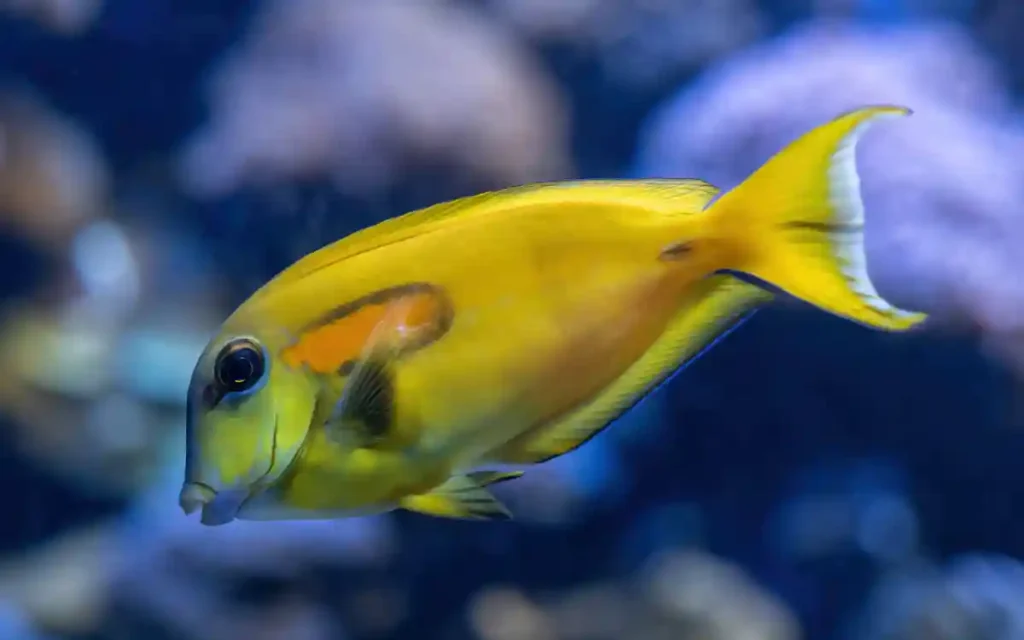
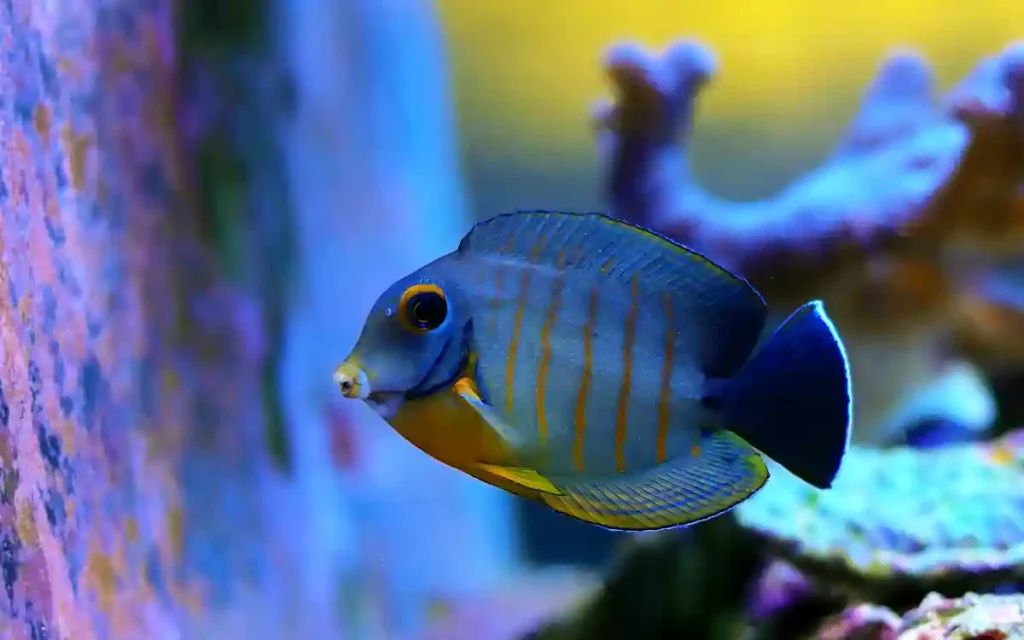
| Tangs | Not beginner in small tanks | 75+ gallons | Active | Large saltwater aquariums |
| Butterflyfish | Advanced | 75+ gallons | Peaceful but delicate | Experienced keepers |
Best Saltwater Fish for Beginners
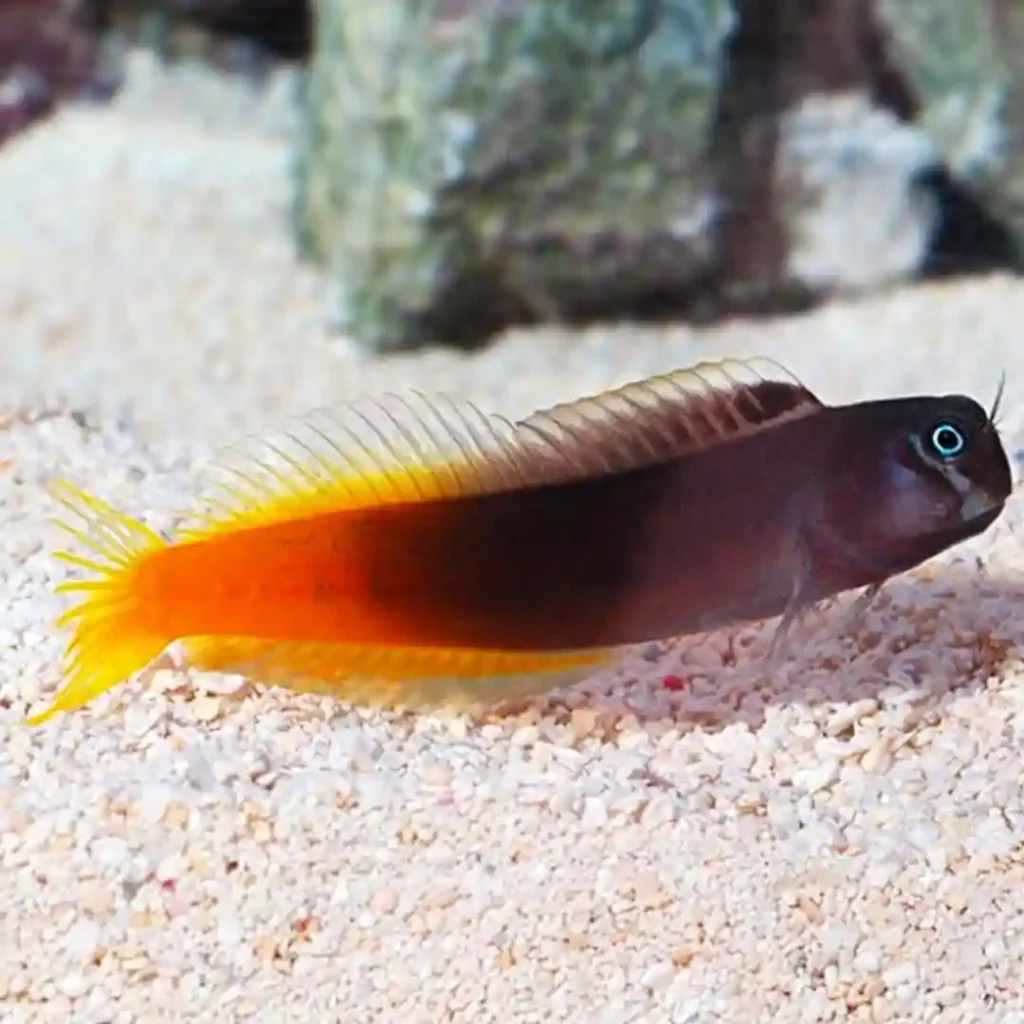
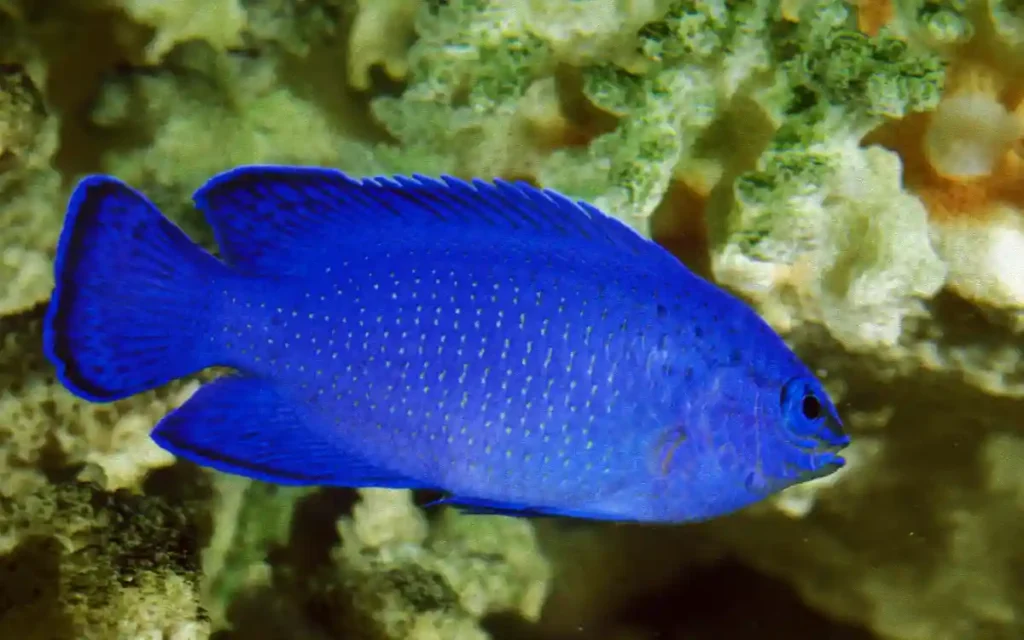
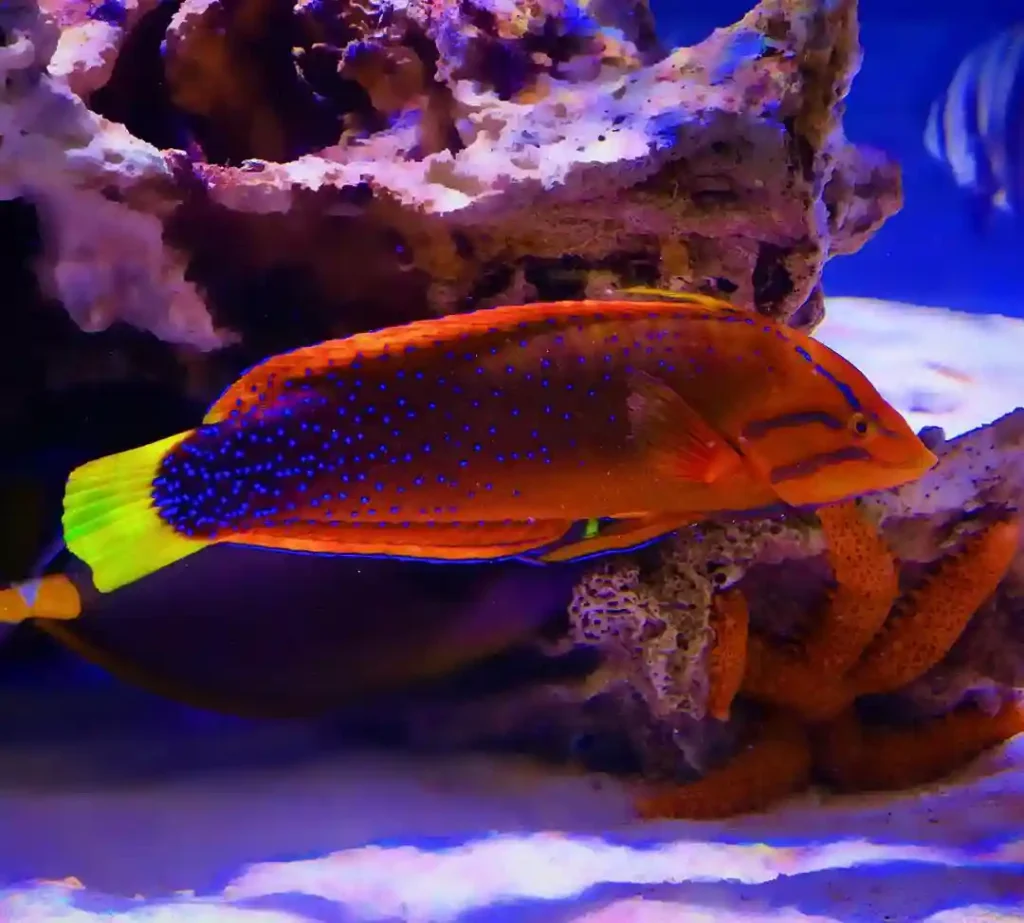
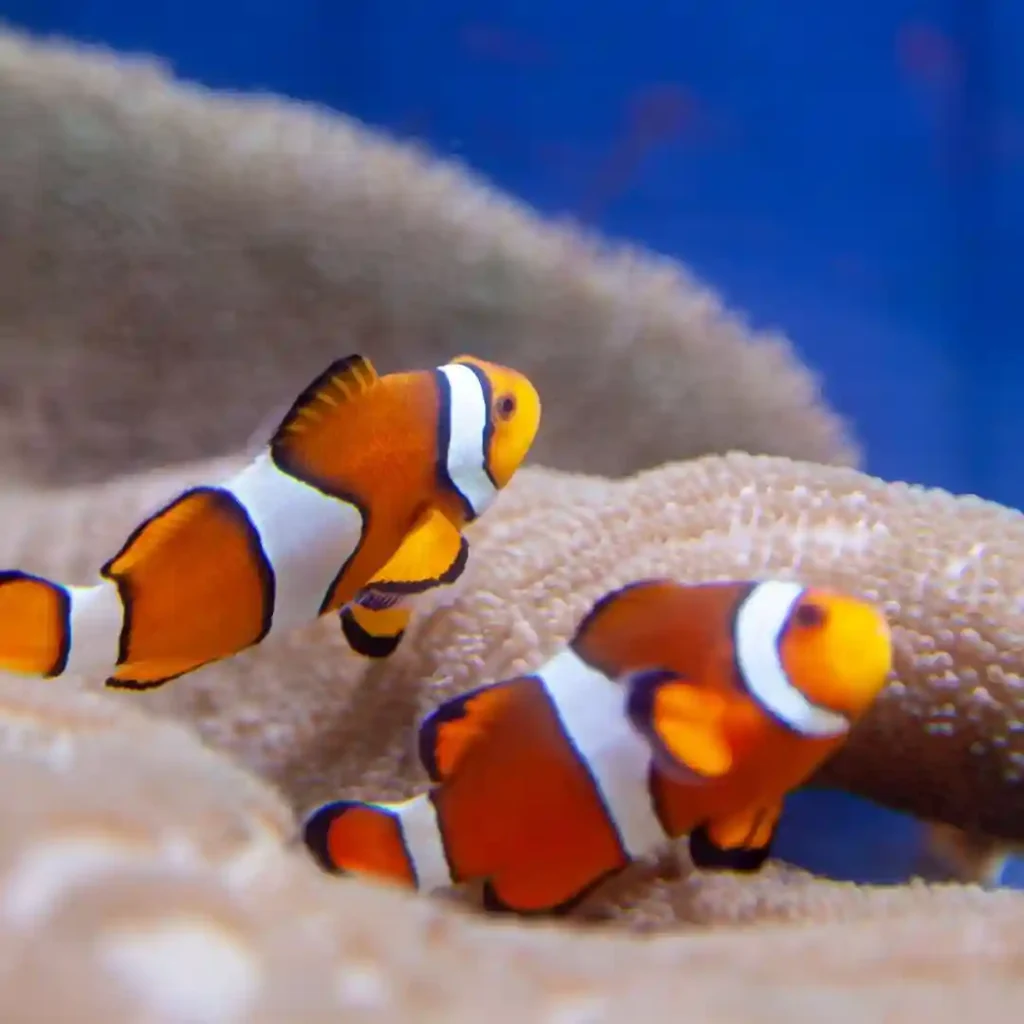
Ocellaris Clownfish Care Guide: Tank Setup, Diet, and Breeding
Domino Damsel Care Guide: Tank Setup, Diet, Behavior & Tank Mates
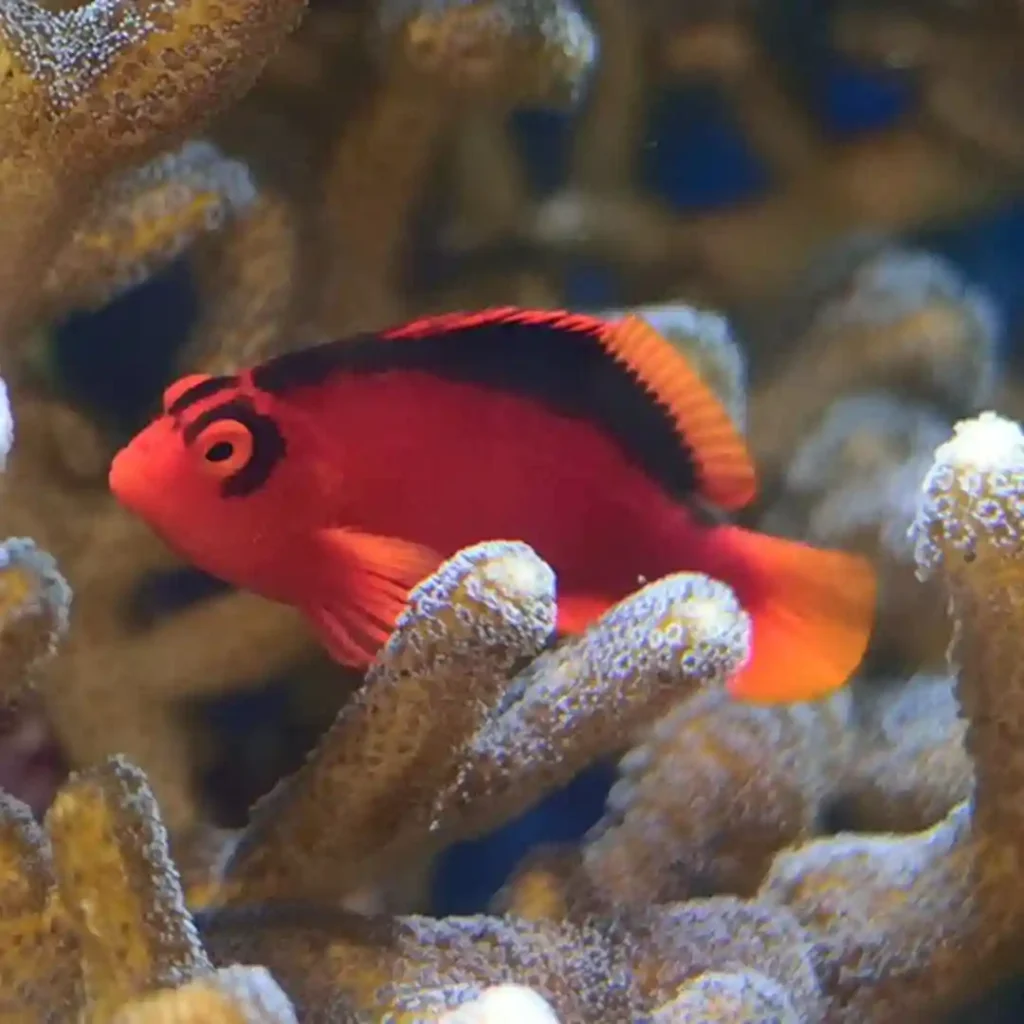
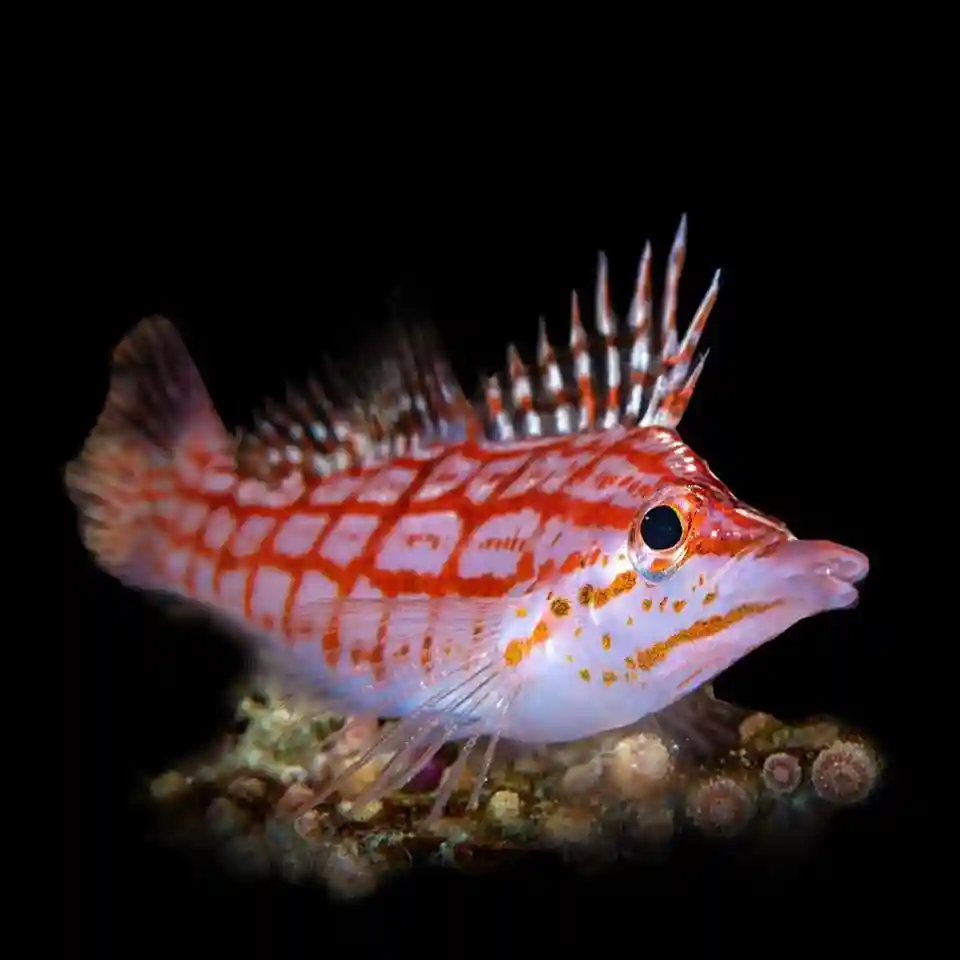
Flame Hawkfish Care Guide: Feeding, Compatibility, Tank Tips & Behavior
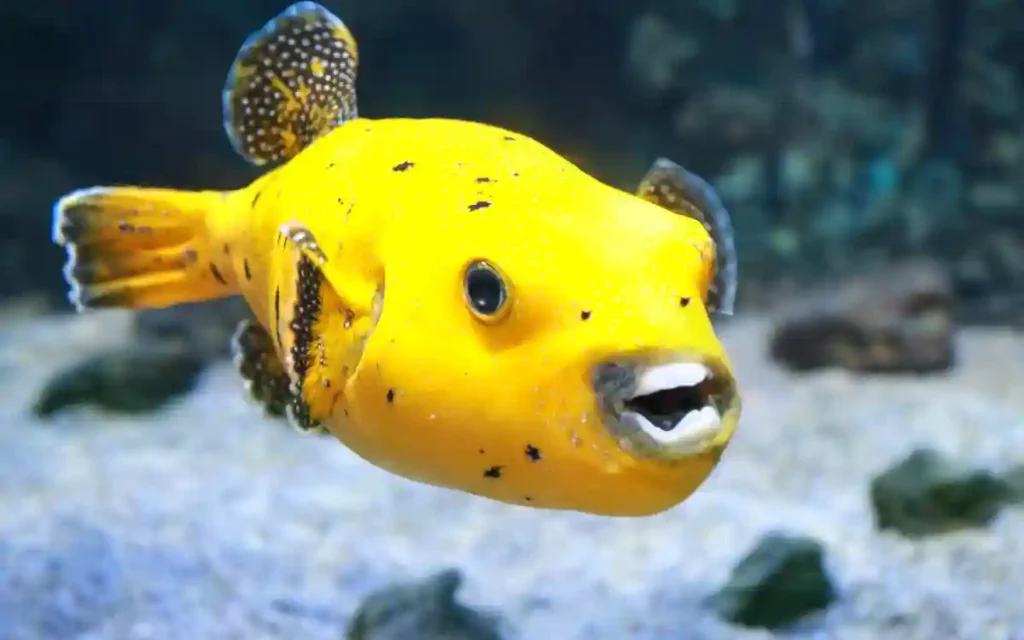
Dog Face Puffer Fish Care Guide: Size, Tank, Food & Compatibility
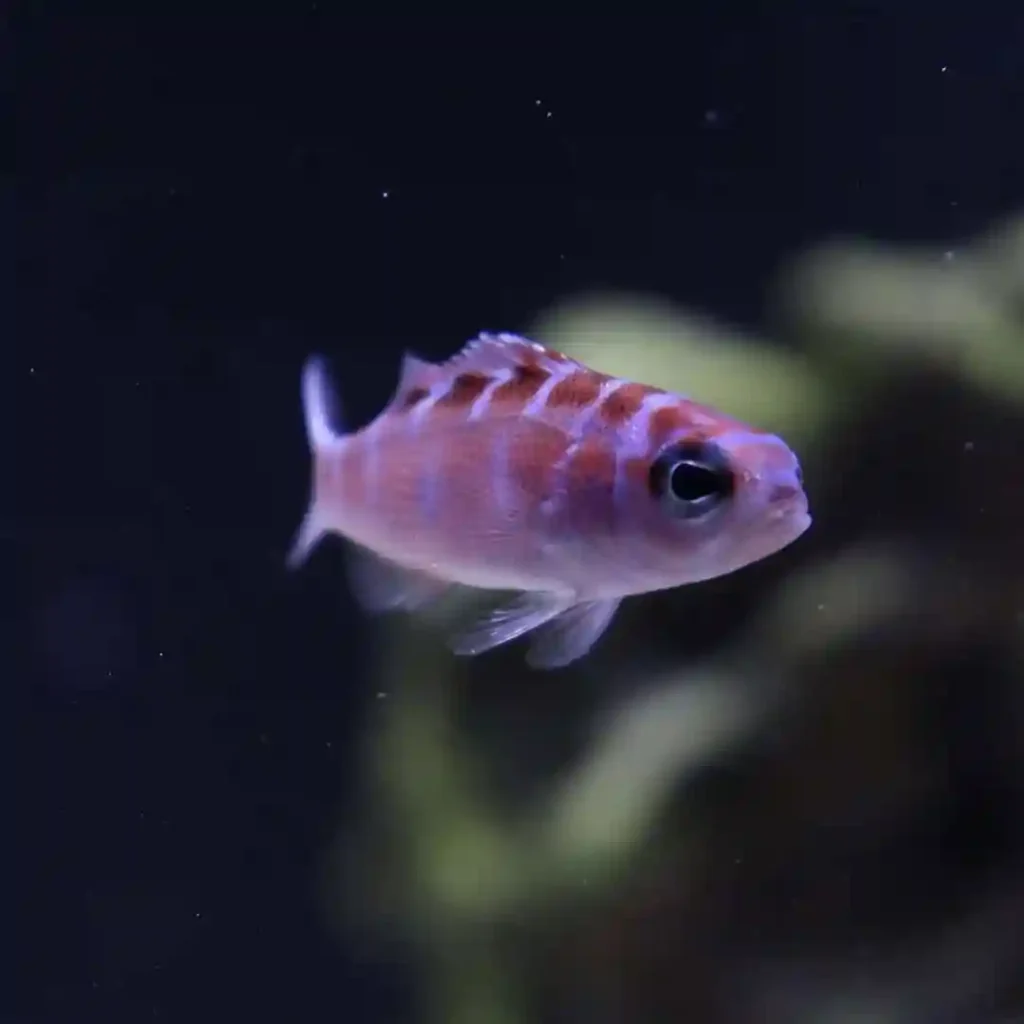
Chalk Bass Care Guide: Diet, Tank Size, Mates & Breeding Tips
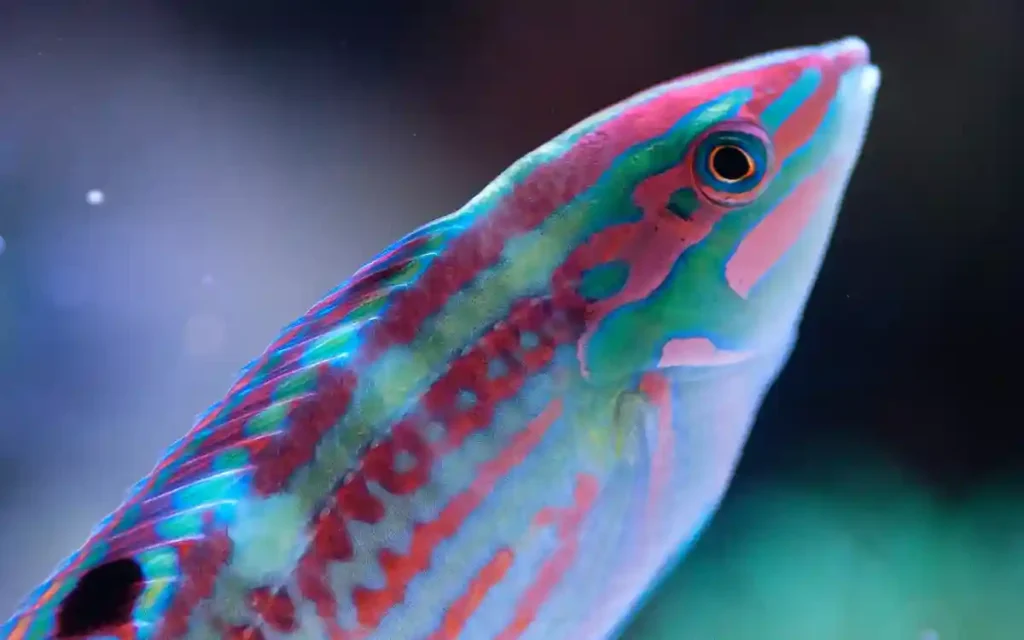
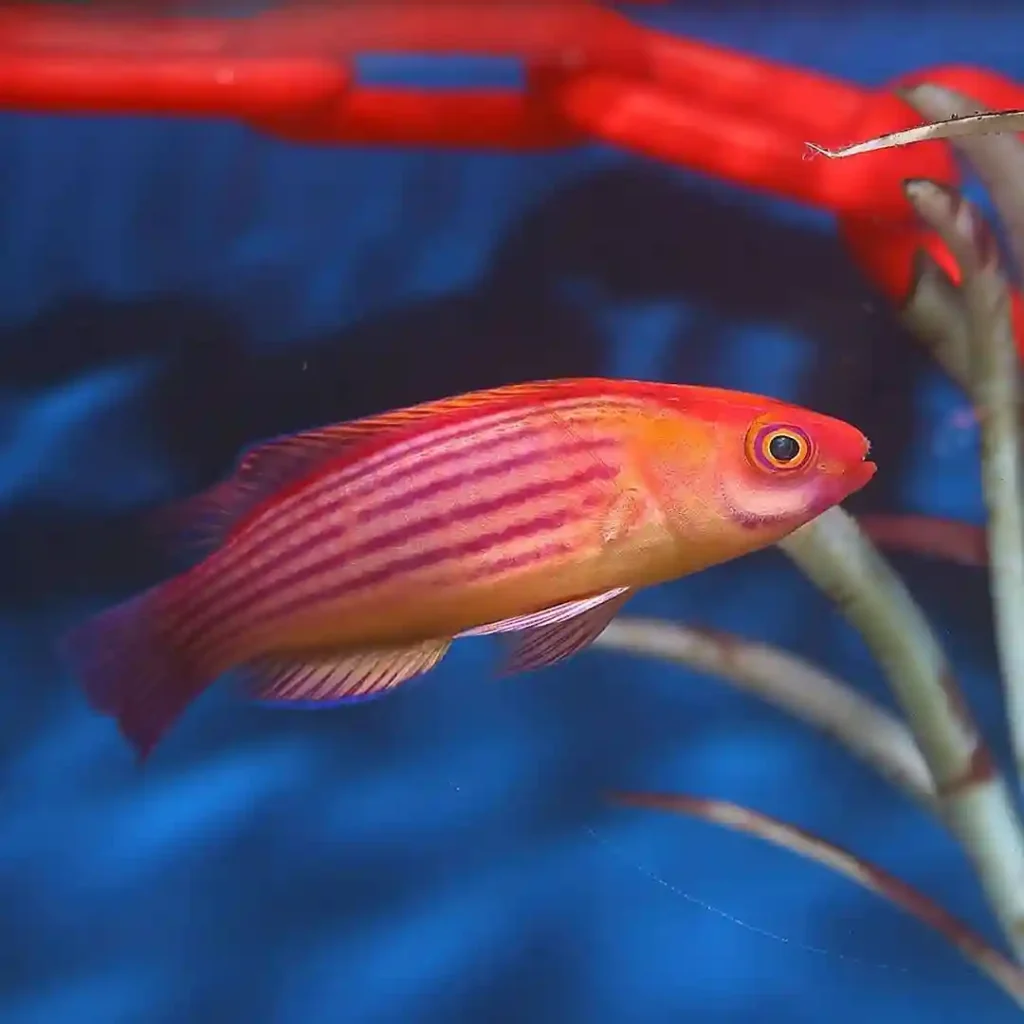
Christmas Wrasse 101: Care, Diet, Tank Mates, Jumping Risk & More
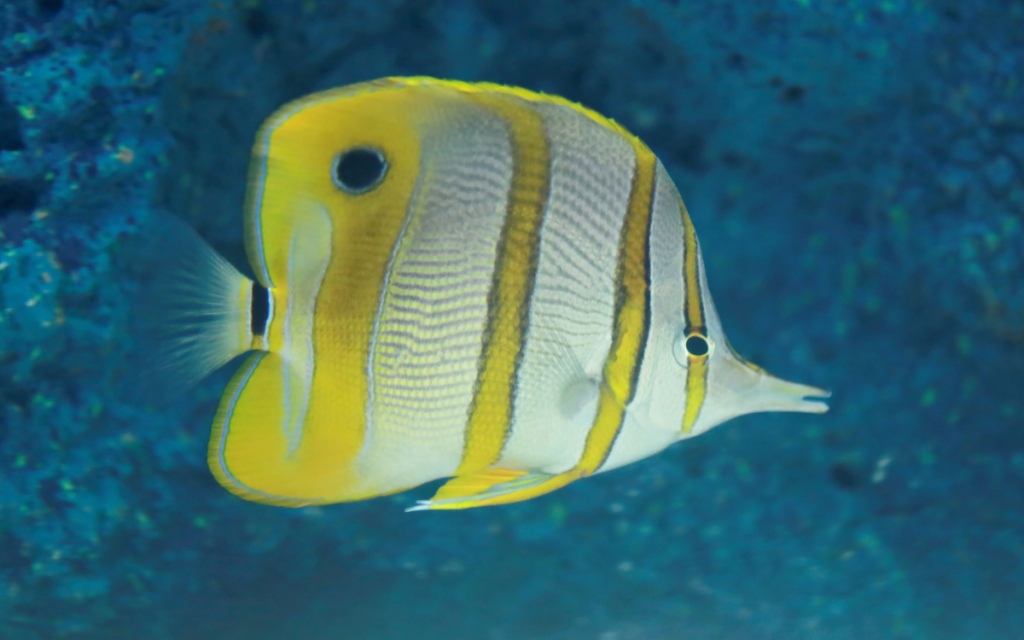
Copperband Butterflyfish 101: Feeding, Lifespan, and Tank Tips

The best beginner saltwater fish are hardy, easy to feed, not too aggressive, and suitable for common home aquarium sizes. You want fish that can handle normal beginner mistakes better than delicate marine species.
That does not mean you can ignore water quality. Even hardy saltwater fish need a cycled tank, stable salinity, and regular maintenance.
Clownfish
Clownfish are usually the first saltwater fish most beginners think about, and honestly, they are a good choice. They are hardy, colorful, easy to feed, and full of personality.
Ocellaris clownfish and percula clownfish are the best choices for most beginners. They do not need a huge tank, and a pair can often live well in a 20-gallon aquarium if the tank is stable.
Clownfish do not need an anemone to survive. Many beginners think they must buy an anemone with clownfish, but that can make the tank harder because anemones need strong lighting and stable water.
Royal Gramma
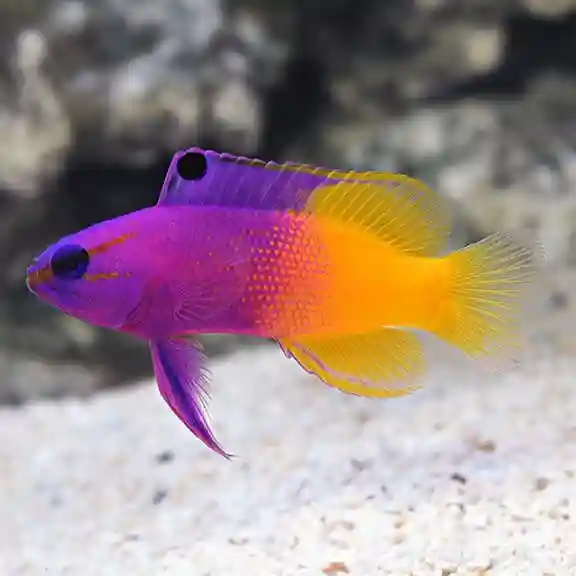
The royal gramma is one of the best saltwater fish for color. It has a bright purple front half and a yellow back half, which makes it stand out even in a simple reef tank.
This fish usually stays close to rock caves and does not need open swimming space like a tang. It can be peaceful, but it may guard its small cave area.
A royal gramma works well in many beginner saltwater tanks around 30 gallons or larger.
Learn more : royal gramma care
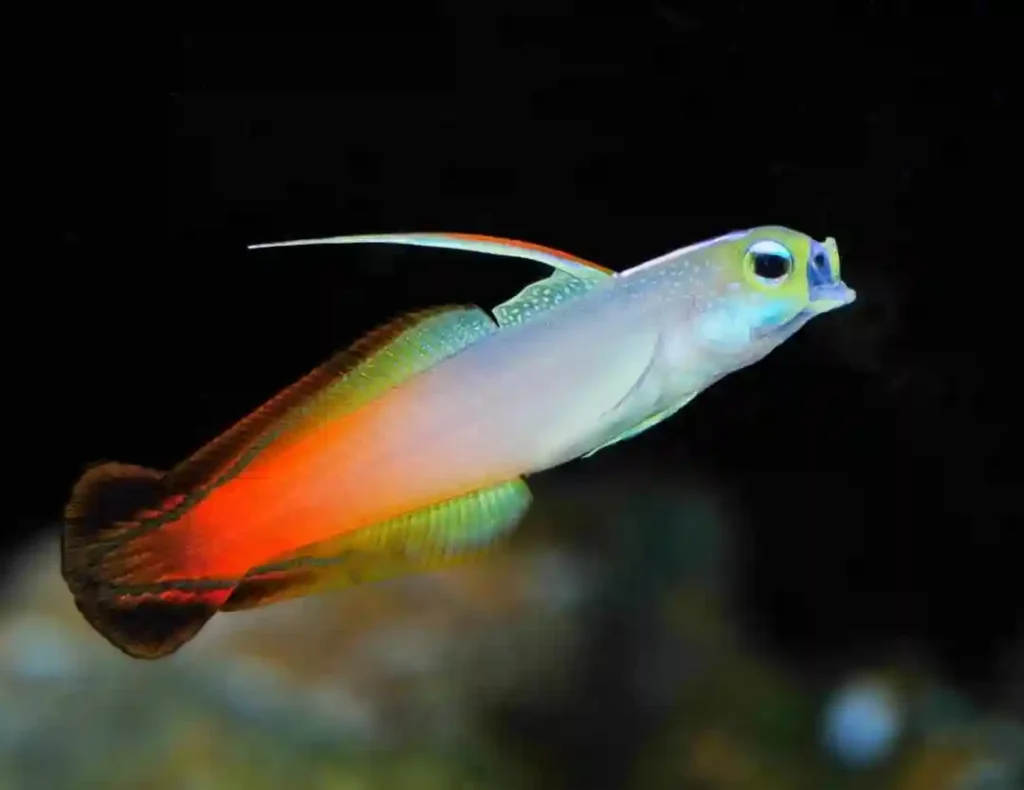
Firefish Goby
The firefish goby is peaceful, slim, and beautiful. It has a pale body, bright tail color, and a tall dorsal fin that gives it a delicate look.
This fish is a good choice for calm saltwater community tanks. It does not like aggressive tank mates, so avoid keeping it with pushy damsels or larger bullies.
One thing you must know: firefish can jump. Use a tight-fitting lid if you keep one.
Learn more : firefish goby care guide
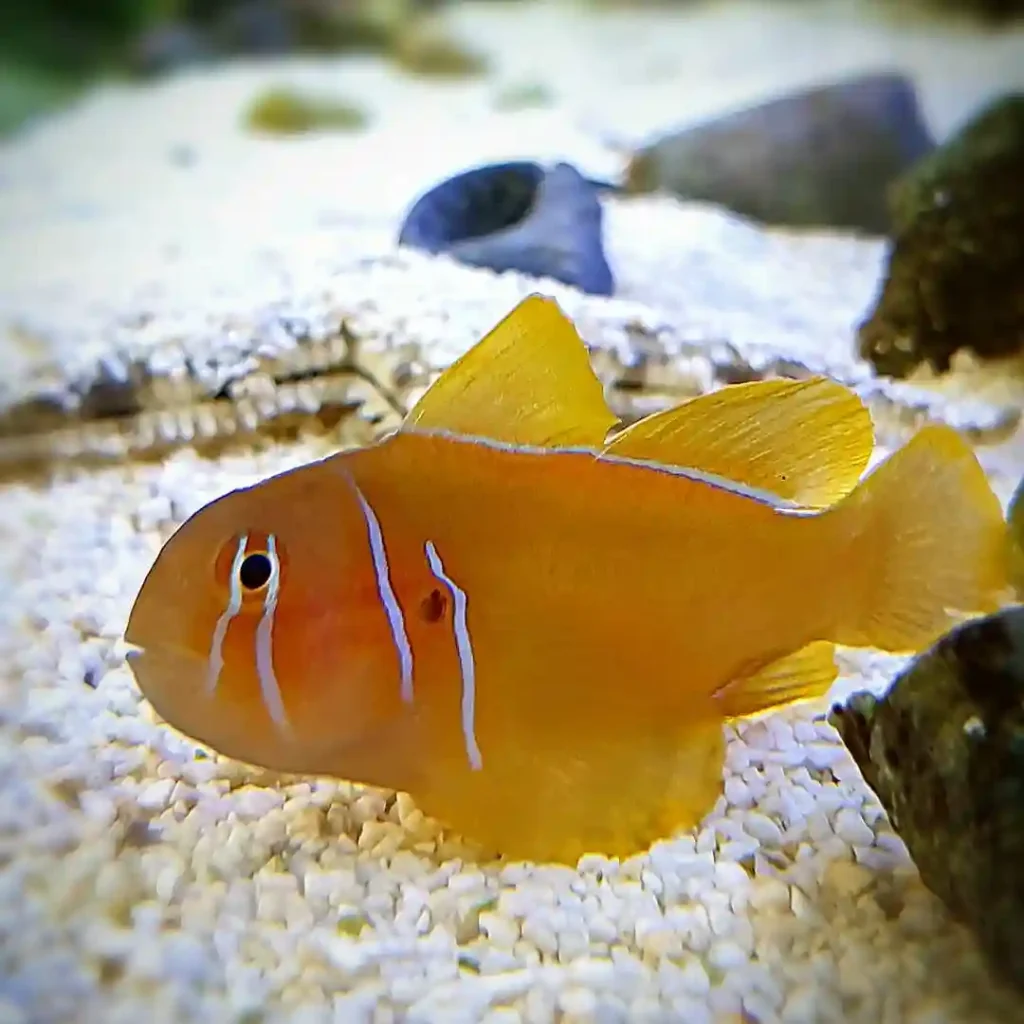
Watchman Goby
Watchman gobies are great bottom-dwelling saltwater fish. They spend most of their time near the sand and around rockwork.
The yellow watchman goby is especially popular because it has a bright color and a calm nature. Many keepers also pair them with pistol shrimp, which creates a fun relationship to watch.
They are good for beginners because they are hardy, interesting, and not hard to feed.
Tailspot Blenny
Tailspot blennies are small, peaceful, and fun to watch. They often perch on rocks and look around the tank with curious behavior.
They may graze on light algae, but you should not depend on them as your full algae solution. They still need proper feeding with prepared foods and some plant-based food.
A tailspot blenny is a strong choice for smaller reef tanks around 20 gallons or more.
Pajama Cardinalfish
Pajama cardinalfish are calm, slow-moving saltwater fish that work well in peaceful community tanks. They have a unique look with spotted patterns and soft colors.
They are not the most active fish, but that can be good for beginners who want a peaceful tank without constant chasing.
They usually do best with other calm species like gobies, blennies, clownfish, and royal grammas.
Popular Types of Saltwater Fish
There are many types of saltwater aquarium fish, but not all of them are good for every tank. Some are small and peaceful, while others grow large, become territorial, or need special food.
Here are the main groups beginners should know.
Clownfish
Clownfish are hardy marine fish that work well in beginner saltwater tanks. The most common types are ocellaris clownfish and percula clownfish.
They usually stay near one area of the tank instead of swimming nonstop. This makes them easier to keep in medium-sized aquariums.
Popular types of clownfish include:
| Clownfish Type | Care Level | Notes |
| Ocellaris Clownfish | Easy | Best beginner choice |
| Percula Clownfish | Easy to moderate | Similar to ocellaris |
| Maroon Clownfish | Moderate | Larger and more aggressive |
| Tomato Clownfish | Moderate | Hardy but territorial |
| Clarkii Clownfish | Moderate | Active and bold |
For beginners, I would start with ocellaris or percula clownfish. Maroon clownfish are beautiful, but they can become too aggressive for smaller peaceful tanks.
Gobies
Gobies are small saltwater fish that often stay near the bottom of the tank. Many are peaceful and work well in nano or reef aquariums.
Some gobies perch on rocks, while others live near the sand. Watchman gobies can also pair with pistol shrimp, which makes them one of the most interesting beginner fish.
Popular saltwater gobies include:
| Goby Type | Best Tank Size | Temperament |
| Yellow Watchman Goby | 20+ gallons | Peaceful |
| Firefish Goby | 20+ gallons | Peaceful |
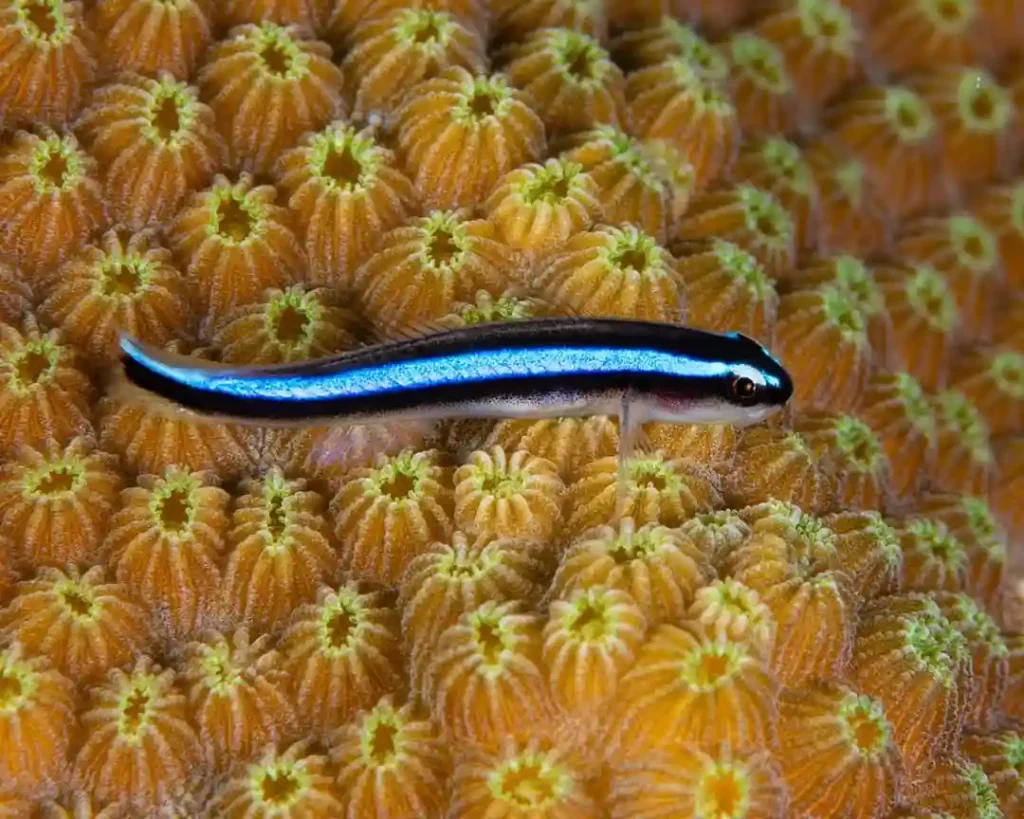
| Neon Goby | 10+ gallons | Peaceful |
| Clown Goby | 10+ gallons | Peaceful |
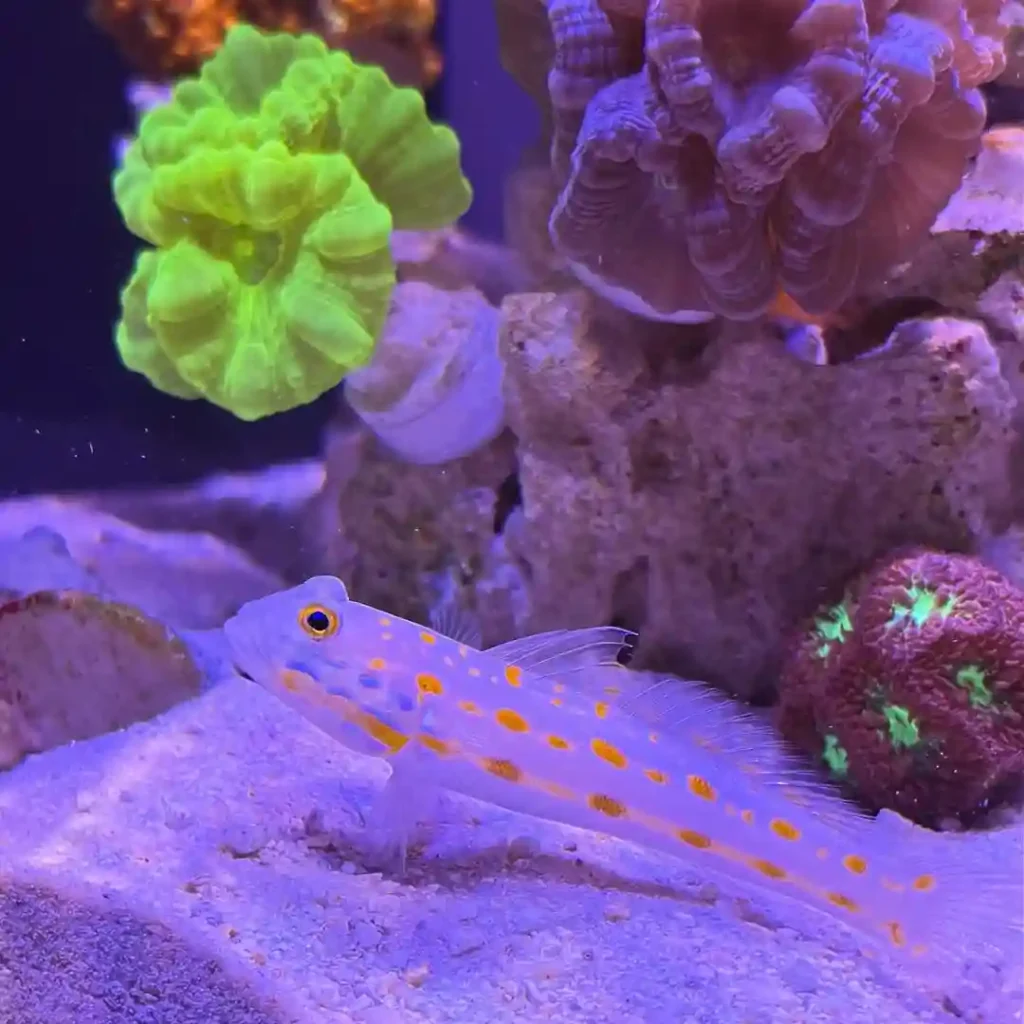
| Diamond Goby | 50+ gallons | Peaceful but active |
Be careful with sand-sifting gobies in new tanks. Some need a mature sand bed with enough natural food.
Blennies
Blennies are small saltwater fish with big personality. Many perch on rocks, hide in small holes, and graze during the day.
Some blennies eat algae, but not all of them are true algae cleaners. They still need prepared food and a balanced diet.
Popular blennies include:
| Blenny Type | Best For | Notes |
| Tailspot Blenny | Small reef tanks | Great beginner choice |
| Lawnmower Blenny | Algae grazing | Needs enough food |
| Bicolor Blenny | Reef tanks | Can be territorial |
| Midas Blenny | Active tanks | Swims more than many blennies |
| Starry Blenny | Larger rock tanks | Good personality |
Blennies are a good group for beginners because many species stay small and are not too hard to care for.
Tangs
Tangs are some of the most popular saltwater fish, but they are not ideal for small beginner tanks. They are active swimmers and need a lot of space.
Many tangs also graze all day, so they need algae-based foods like nori sheets along with a balanced diet.
Popular tangs include:
| Tang Type | Minimum Tank Size | Care Level |
| Yellow Tang | 75+ gallons | Moderate |
| Kole Tang | 75+ gallons | Moderate |
| Blue Tang | 125+ gallons | Moderate to hard |
| Sailfin Tang | 125+ gallons | Moderate |
| Powder Blue Tang | 100+ gallons | Hard |
The blue tang is popular because many people know it from movies, but it is not a small-tank fish. It needs room to swim and can become stressed in cramped aquariums.
Angelfish
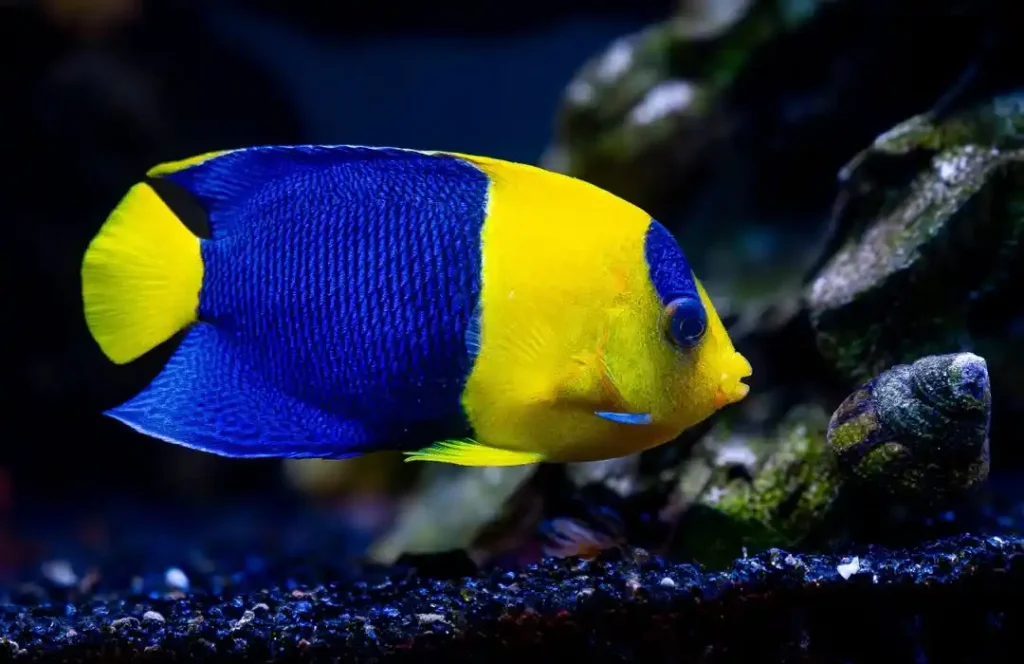
Saltwater angelfish are beautiful, but they need more care than common beginner fish. Some stay smaller, while others become large centerpiece fish.
Dwarf angelfish are more realistic for home aquariums, but even they can be semi-aggressive and may nip at corals.
Popular saltwater angelfish include:
| Angelfish Type | Tank Size | Reef Safe? |
| Coral Beauty Angelfish | 55+ gallons | With caution |
| Flame Angelfish | 55+ gallons | With caution |
| Lemonpeel Angelfish | 70+ gallons | With caution |
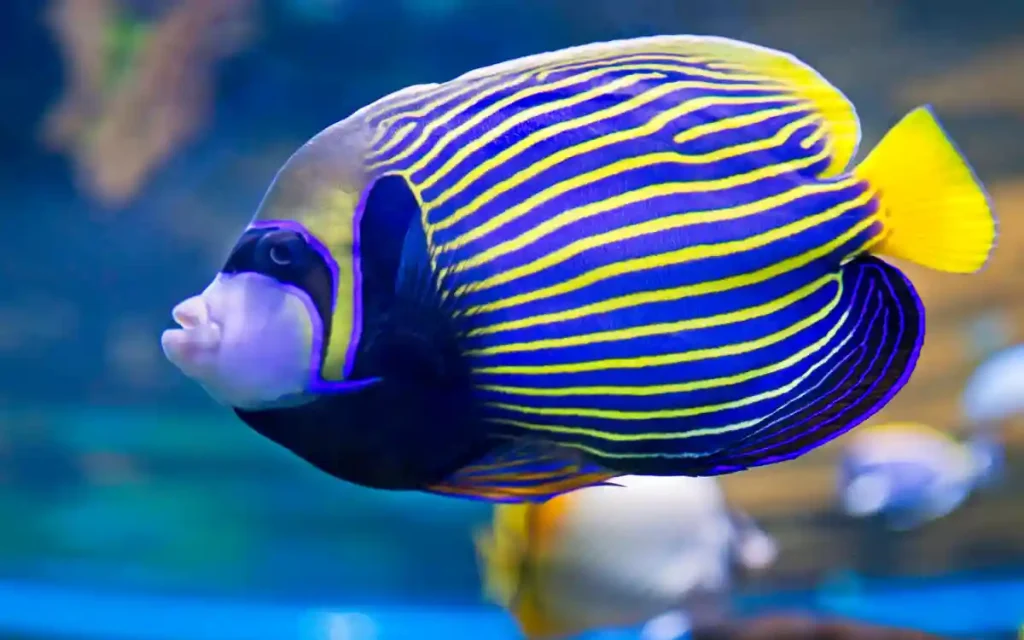
| Emperor Angelfish | 180+ gallons | Not ideal for most reefs |
| Queen Angelfish | 180+ gallons | Not beginner-friendly |
If you want a beginner-friendly saltwater tank, wait before adding angelfish. They are better once you understand marine fish behavior and feeding.
Wrasses
Wrasses are active saltwater fish with many different colors, sizes, and behaviors. Some are peaceful reef fish, while others become aggressive or difficult to feed.
Many wrasses jump, so a lid is almost always needed.
Popular wrasses include:
| Wrasse Type | Care Level | Notes |
| Six Line Wrasse | Moderate | Hardy but can become aggressive |
| Fairy Wrasse | Moderate | Colorful and active |
| Melanurus Wrasse | Moderate | May help with pests |
| Cleaner Wrasse | Hard | Often difficult long term |
| Leopard Wrasse | Hard | Needs mature tank |
For beginners, avoid delicate wrasses. A six line wrasse can be hardy, but it may become pushy in small tanks.
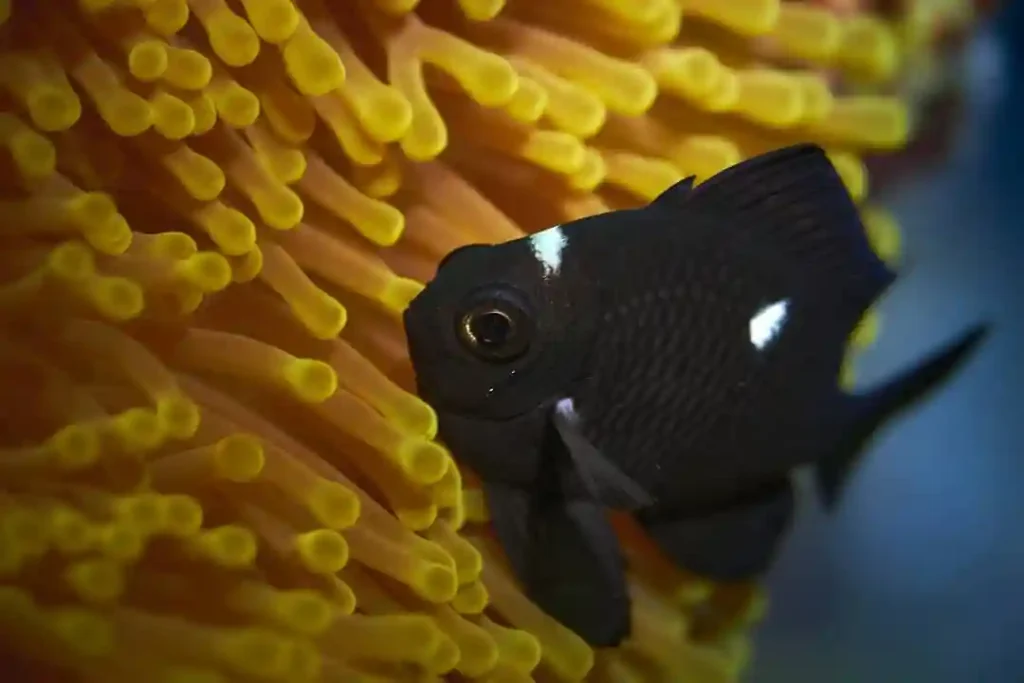
Damselfish
Damselfish are very hardy, but I do not love them for peaceful beginner tanks. They can be aggressive, especially in smaller aquariums.
Many beginners buy damsels because they are cheap and tough. The problem is that they can claim territory and bully calmer fish later.
Popular damselfish include:
| Damselfish Type | Temperament | Beginner Note |
| Blue Damselfish | Aggressive | Hardy but pushy |
| Yellowtail Damselfish | Semi-aggressive | Better than some damsels |
| Domino Damselfish | Aggressive | Avoid in peaceful tanks |
| Azure Damselfish | Semi-aggressive | More manageable |
| Three Stripe Damselfish | Aggressive | Not ideal for beginners |
My opinion: skip damsels unless you understand their behavior and plan the tank around them.
Butterflyfish
Butterflyfish are peaceful and beautiful, but many are not easy to keep. Some need special diets, mature tanks, and careful feeding.
They are also not always reef safe. Some may nip at corals, feather dusters, or other invertebrates.
Popular butterflyfish include:
| Butterflyfish Type | Care Level | Notes |
| Copperband Butterflyfish | Hard | Often difficult to feed |
| Raccoon Butterflyfish | Moderate | Needs larger tank |
| Longnose Butterflyfish | Moderate | Not always reef safe |
| Auriga Butterflyfish | Moderate | Active swimmer |
| Pearlscale Butterflyfish | Moderate | Better for experienced keepers |
Beginners should not start with butterflyfish. They are better after you already know how to keep marine fish healthy.
Saltwater Fish by Tank Size
Tank size matters more in saltwater than many beginners expect. A bigger tank gives fish more swimming space and keeps water more stable.
Small saltwater tanks can work, but they leave less room for mistakes.
Best Saltwater Fish for 10-Gallon Tanks
A 10-gallon saltwater tank is very small. I would only keep tiny, peaceful fish in this size.
Good options may include:
| Fish | Notes |
| Neon Goby | Small and peaceful |
| Clown Goby | Good for nano tanks |
| Tailspot Blenny | Better in mature 10 to 20 gallon tanks |
| Single Firefish | Possible, but 20 gallons is better |
Avoid clownfish pairs, tangs, angelfish, damsels, and active wrasses in a 10-gallon tank.
Best Saltwater Fish for 20-Gallon Tanks
A 20-gallon tank is a better beginner size. It gives you more choices while still being manageable.
Good options include:
| Fish | Notes |
| Ocellaris Clownfish | One or a pair |
| Firefish Goby | Needs peaceful tank mates |
| Tailspot Blenny | Great personality |
| Watchman Goby | Good bottom fish |
| Neon Goby | Small and peaceful |
A simple 20-gallon saltwater setup could have a pair of clownfish and one small goby or blenny, but do not overstock it.
Best Saltwater Fish for 30-Gallon Tanks
A 30-gallon tank gives you more space for a peaceful community.
Good options include:
| Fish | Notes |
| Pair of Clownfish | Strong beginner option |
| Royal Gramma | Adds color |
| Watchman Goby | Good with sand |
| Firefish | Peaceful and attractive |
| Tailspot Blenny | Active around rockwork |
| Pajama Cardinalfish | Calm and easygoing |
This is one of the best sizes for a beginner who wants more than just one or two fish.
Best Saltwater Fish for 55-Gallon Tanks
A 55-gallon tank opens the door to slightly larger and more active fish.
Good options include:
| Fish | Notes |
| Dwarf Angelfish | Add with care |
| Fairy Wrasse | Needs lid |
| Hawkfish | Watch with shrimp |
| Royal Gramma | Still a good choice |
| Clownfish Pair | Easy centerpiece |
| Blennies and Gobies | Great support fish |
This size is still too small for many tangs long term, so choose carefully.
Best Saltwater Fish for 75-Gallon Tanks and Larger
A 75-gallon or larger tank is better if you want more active fish.
Good options include:
| Fish | Notes |
| Yellow Tang | Needs space and algae foods |
| Kole Tang | Good algae grazer |
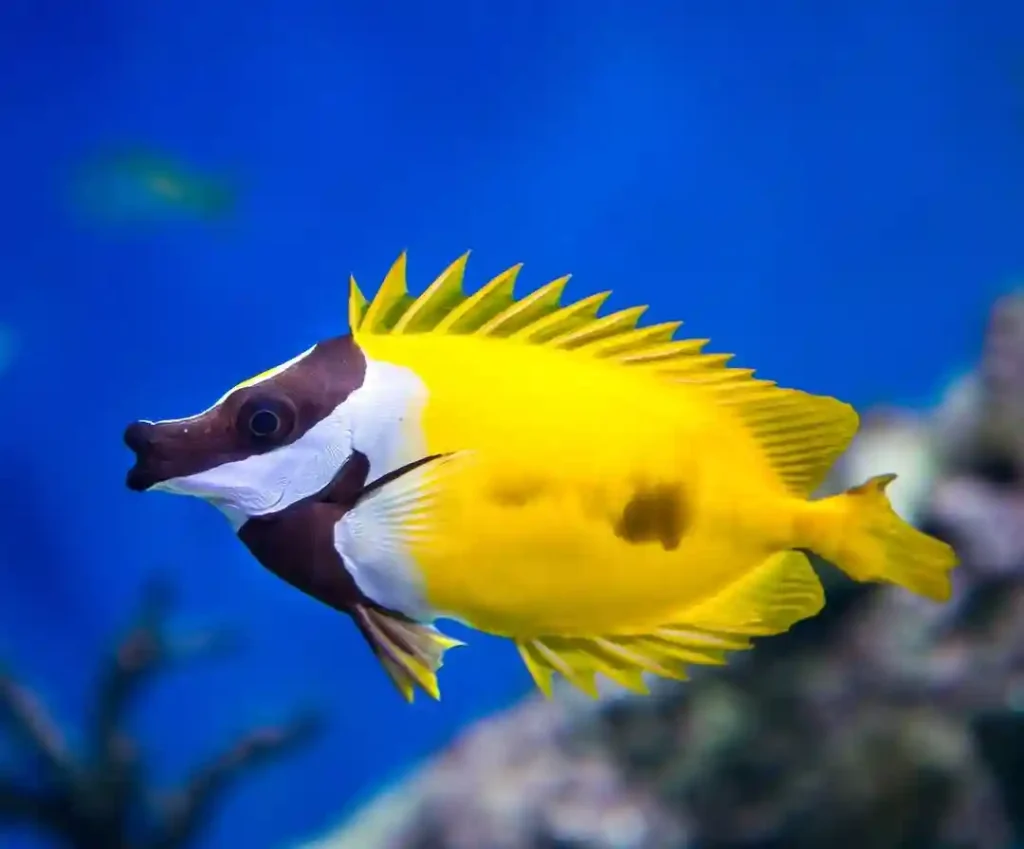
| Foxface Rabbitfish | Larger but useful |
| Dwarf Angelfish | Works in many larger tanks |
| Wrasses | Many options available |
| Butterflyfish | Better for experienced keepers |
Large tanks cost more to set up, but they are usually more stable and give fish more room.
Saltwater Fish by Temperament
Fish behavior is one of the biggest reasons saltwater tanks fail. A fish can be hardy and healthy but still cause problems if it bullies everything else.
Peaceful Saltwater Fish
Peaceful fish are best for beginner community tanks.
Good choices include:
| Fish | Notes |
| Firefish Goby | Very peaceful |
| Neon Goby | Small and calm |
| Clown Goby | Good nano fish |
| Tailspot Blenny | Peaceful with personality |
| Pajama Cardinalfish | Slow and calm |
| Royal Gramma | Peaceful but may guard caves |
Peaceful fish should not be mixed with aggressive tank mates that chase or stress them.
Semi-Aggressive Saltwater Fish
Semi-aggressive fish can work, but you need to plan carefully.
Examples include:
| Fish | Notes |
| Clownfish | Can guard territory |
| Dwarf Angelfish | May chase similar fish |
| Hawkfish | Can eat tiny shrimp |
| Six Line Wrasse | Hardy but can bully |
| Some Damselfish | Can become territorial |
Add semi-aggressive fish after more peaceful fish when possible.
Aggressive Saltwater Fish
Aggressive fish are not ideal for normal beginner community tanks.
Examples include:
| Fish | Notes |
| Domino Damselfish | Very territorial |
| Maroon Clownfish | Large and aggressive |
| Triggerfish | Can bite and bully |
| Lionfish | Predatory |
| Puffers | May eat invertebrates |
| Large Angelfish | Need big tanks and planning |
These fish can be amazing, but they are better for species-specific or advanced setups.
Reef-Safe Saltwater Fish
Reef-safe fish are fish that are usually safer with corals and invertebrates. But “reef safe” does not always mean guaranteed. Individual fish can behave differently.
Good reef-safe choices often include:
| Fish | Reef-Safe Notes |
| Ocellaris Clownfish | Usually reef safe |
| Firefish Goby | Reef safe and peaceful |
| Watchman Goby | Reef safe |
| Neon Goby | Reef safe |
| Tailspot Blenny | Usually reef safe |
| Royal Gramma | Usually reef safe |
| Pajama Cardinalfish | Reef safe |
| Fairy Wrasse | Usually reef safe |
Fish to research carefully before adding to a reef tank:
| Fish | Why Be Careful |
| Dwarf Angelfish | May nip corals |
| Butterflyfish | Many nip corals |
| Puffers | May eat invertebrates |
| Hawkfish | May eat small shrimp |
| Triggers | Often not reef safe |
Saltwater Fish Beginners Should Avoid
Some saltwater fish look beautiful in stores but are poor choices for new tanks. They may need special food, huge tanks, or very stable water.
Mandarin Dragonet
Mandarin dragonets are stunning, but they are not good first saltwater fish. Many need a mature tank with a strong copepod population.
In a new tank, they can slowly starve even if the water looks perfect.
Copperband Butterflyfish
Copperband butterflyfish are beautiful but often difficult to feed. Some refuse prepared foods and need experienced care.
They are better for keepers who already understand saltwater feeding and water stability.
Blue Tang
Blue tangs are active swimmers that need a large aquarium. They are often sold small, but they grow and need far more space than a beginner nano tank can provide.
A blue tang does not belong in a 20-gallon or 30-gallon tank.
Moorish Idol
The Moorish idol is one of those fish beginners should admire but not buy. It has a poor survival record in many home aquariums and needs expert care.
Lionfish
Lionfish are predatory fish. They may eat smaller tank mates and need a setup built around their needs.
They are not a good choice for a peaceful beginner community tank.
How to Choose Saltwater Fish for Your Aquarium
Choosing saltwater fish is not just about color. You need to think about how each fish will behave in your tank after months or years.
Before buying any saltwater fish, ask these questions:
| Question | Why It Matters |
| How large does the fish get? | Many marine fish outgrow small tanks |
| Is it peaceful or aggressive? | Bad mixing causes stress and fighting |
| Is it reef safe? | Some fish nip corals or eat shrimp |
| What does it eat? | Some fish need special diets |
| Does it jump? | Many gobies and wrasses need lids |
| Does it need sand or rockwork? | Habitat affects comfort |
| Is my tank mature enough? | Some fish need established tanks |
My best advice is simple: stock slowly.
Do not buy five saltwater fish in one day. Add one fish, watch the tank, test the water, and let your filter adjust before adding another.
Basic Saltwater Fish Care
Saltwater fish care starts before you buy the fish. The tank needs to be ready first.
Cycle the Tank First
Never add saltwater fish to an uncycled aquarium. A new tank needs beneficial bacteria to process waste.
Without a proper cycle, ammonia can rise and harm or kill fish quickly.
Internal link idea:
Link to your cycling article with:
aquarium cycling guide for beginners
Keep Salinity Stable
Saltwater fish need stable salinity. Most marine aquariums are kept around a specific gravity of 1.020 to 1.026, depending on the setup.
Reef tanks are often kept near 1.025 to 1.026.
Use a refractometer if possible because it is more accurate than many cheap swing-arm hydrometers.
Feed the Right Diet
Different saltwater fish eat different foods.
Some need meaty foods. Some need algae-based foods. Some need small frozen foods. Tangs and rabbitfish need regular plant matter like nori sheets.
A good diet may include:
| Food Type | Best For |
| Marine pellets | General feeding |
| Frozen mysis shrimp | Clownfish, gobies, wrasses |
| Brine shrimp | Treat food, not full diet |
| Nori sheets | Tangs, rabbitfish, some blennies |
| Algae wafers | Some grazing fish |
| Chopped seafood | Larger carnivores |
Do not feed only one food forever. A mixed diet usually keeps fish healthier.
Use Good Filtration
Saltwater tanks usually need strong filtration and good water movement.
Common saltwater filtration tools include:
| Equipment | Purpose |
| Live rock | Holds bacteria and creates hiding spaces |
| Filter media | Removes particles and supports bacteria |
| Protein skimmer | Removes waste before it breaks down |
| Powerheads | Improve water movement |
| Sump | Adds water volume and equipment space |
A simple beginner fish-only saltwater tank does not need to be complicated, but it still needs clean water and stable conditions.
Quarantine New Fish
Quarantine is one of the smartest habits in saltwater fishkeeping.
Many marine fish can carry parasites or disease from stores. If you add them straight into your main tank, one sick fish can affect every fish you own.
A basic quarantine tank gives you time to watch new fish, make sure they are eating, and treat problems before they enter the display tank.
Saltwater Fish Compatibility Chart
| Fish | Good Tank Mates | Avoid With | Notes |
| Clownfish | Gobies, blennies, royal gramma | Very aggressive damsels | Can guard territory |
| Royal Gramma | Clownfish, gobies, cardinalfish | Similar cave-dwelling fish | Needs rock caves |
| Firefish Goby | Peaceful nano fish | Bullies and aggressive wrasses | Needs lid |
| Watchman Goby | Clownfish, blennies, shrimp | Aggressive bottom fish | Good sand-dweller |
| Tailspot Blenny | Clownfish, gobies, grammas | Similar blennies in small tanks | Fun rock-percher |
| Damselfish | Other tough fish | Shy peaceful fish | Can become aggressive |
| Dwarf Angelfish | Clownfish, wrasses, gobies | Other dwarf angels | May nip corals |
| Tangs | Larger peaceful fish | Tiny stressed fish | Need large tanks |
| Hawkfish | Clownfish, wrasses, larger fish | Tiny shrimp | Can perch and ambush |
| Butterflyfish | Peaceful large fish | Aggressive tank mates | Many are not reef safe |
Common Saltwater Fish Mistakes
Saltwater beginners usually make the same few mistakes. Most of them come from rushing.
Adding Fish Too Soon
A new saltwater tank needs time to cycle. Adding fish before the tank is ready can cause ammonia problems.
Even hardy fish can suffer in poor water.
Choosing Fish Only by Color
Saltwater fish are beautiful, so it is easy to buy the brightest one in the store. But color does not tell you tank size, aggression, or feeding needs. Always research the adult size and temperament first.
FAQs
What is the best saltwater fish for beginners?
The best saltwater fish for beginners include ocellaris clownfish, royal gramma, firefish goby, watchman goby, tailspot blenny, neon goby, and pajama cardinalfish. These fish are usually hardy, easier to feed, and suitable for many beginner saltwater tanks.
Are saltwater fish harder to keep than freshwater fish?
Yes, saltwater fish are usually harder to keep than freshwater fish because they need stable salinity, clean water, and careful stocking. That said, beginners can keep saltwater fish successfully if they start with hardy species and avoid rushing the setup.
How many saltwater fish can I keep in one tank?
It depends on tank size, filtration, fish size, and temperament. A 20-gallon saltwater tank may only hold a few small fish, while a 75-gallon tank can support more variety. It is better to understock than overstock.
Can clownfish live in a 10-gallon tank?
A single small clownfish may survive in a 10-gallon tank, but a 20-gallon tank is a better beginner choice. The extra space gives more stable water and more room for a pair of clownfish.
What saltwater fish should beginners avoid?
Beginners should avoid mandarin dragonets, copperband butterflyfish, Moorish idols, lionfish, large tangs in small tanks, aggressive damsels, and large predatory fish. These fish need more experience, larger tanks, or special care.
Are saltwater fish expensive?
Saltwater fish can be more expensive than freshwater fish. The fish, salt mix, equipment, live rock, testing tools, and food can all add to the cost. Starting with a simple beginner setup is usually better than buying a large reef tank right away.
Do saltwater fish need coral?
No, saltwater fish do not need coral to survive. Many beginners start with a fish-only tank or a fish-only tank with live rock. Coral can be added later if the tank has proper lighting, stable water, and reef-safe fish.
What is the easiest saltwater tank size for beginners?
A 30-gallon to 40-gallon saltwater tank is a good beginner size. It is not too huge, but it gives more water stability than a tiny nano tank. A 20-gallon tank can also work if you keep the stocking light.