
12 Best Aquarium Plants for Gravel Substrate

Yes, aquarium plants can grow well in gravel. The key is choosing plants that can anchor between the gravel pieces and giving root-feeding plants enough nutrients.
Plain aquarium gravel usually does not contain much plant food. So when I grow Amazon Sword, Cryptocoryne, Vallisneria, or other strong root feeders in gravel, I normally use root tabs. Plants such as Anubias, Java fern, and Java moss are even easier because they can grow attached to rocks or driftwood instead of being planted deeply.
If you already have a gravel aquarium, you do not need to replace the whole substrate just to add live plants.
Here are the plants I would start with.
Best Aquarium Plants for Gravel at a Glance
| Plant | Light | CO2 | Gravel Difficulty | Best Placement |
| Anubias | Low | No | Very easy | Foreground/Midground |
| Java Fern | Low | No | Very easy | Midground |
| Cryptocoryne | Low-Medium | No | Easy | Midground |
| Amazon Sword | Medium | No | Easy | Background |
| Vallisneria | Low-Medium | No | Easy | Background |
| Dwarf Sagittaria | Medium | No | Easy | Foreground |
| Bacopa | Medium | No | Easy | Background |
| Water Wisteria | Medium | No | Easy | Midground/Background |
| Java Moss | Low | No | Very easy | Hardscape |
| Water Sprite | Low-Medium | No | Easy | Background |
| Rotala Rotundifolia | Medium | Optional | Moderate | Background |
| Tiger Lotus | Medium | No | Moderate | Midground |
You do not need all twelve.
For a beginner tank, three to five species are usually plenty.
Can Aquarium Plants Really Grow in Gravel?
Yes.
Gravel can hold plant roots surprisingly well, especially when the pieces are not extremely large.
The bigger issue is usually nutrition.
Unlike aquasoil, ordinary aquarium gravel is mostly there to hold plants and cover the bottom. It may not provide much food for the roots.
That means I treat gravel as a planting medium rather than a complete fertilizer source.
For heavy root feeders, I add root tabs underneath the gravel.
For plants that mainly take nutrients from the water, liquid fertilizer may be more useful.
Your Aquarium Substrate Guide explains the differences between gravel, sand, aquasoil, and other substrate options in more detail.
1. Anubias
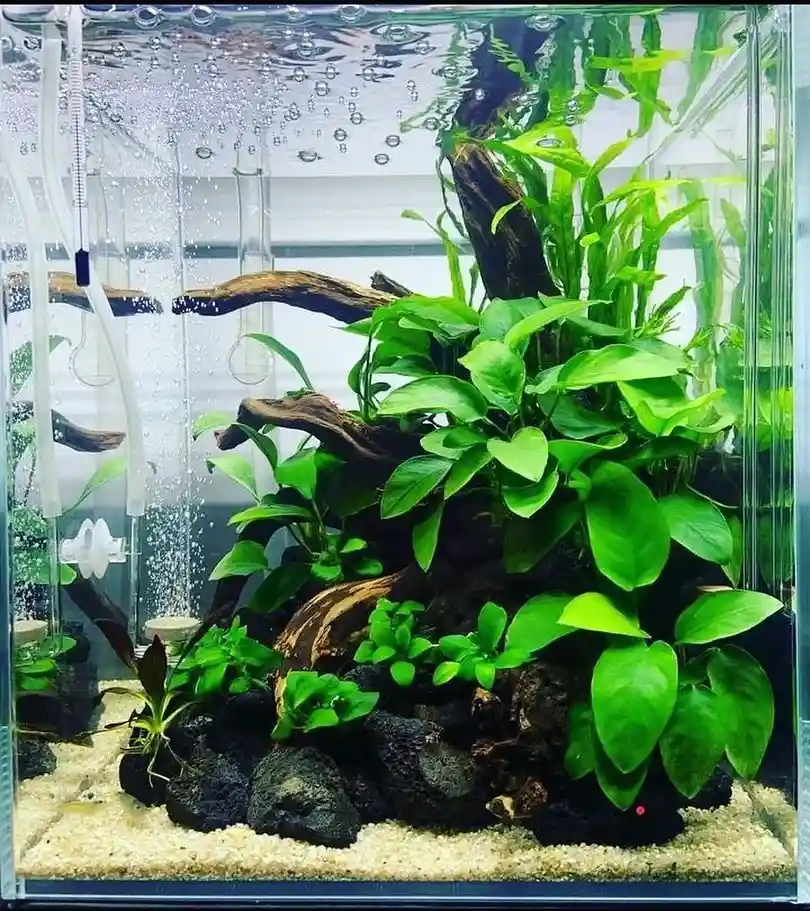
Anubias is one of my first choices for a gravel aquarium because it does not actually need to be planted in the gravel.
Attach it to:
Driftwood.
Rocks.
Aquarium decorations.
The roots may eventually grow down between the gravel pieces, but the thick rhizome should remain above the substrate.
Why It Works Well
Anubias grows slowly and handles lower light well.
It also does not require injected CO2.
This makes it useful for beginner community tanks where plants are not the main focus.
I like placing Anubias around rocks in the foreground or midground.
Do Not Bury the Rhizome
This is the main mistake.
You may put the thin roots into gravel, but keep the thick horizontal rhizome exposed.
Burying the rhizome can cause problems with the plant.
2. Java Fern
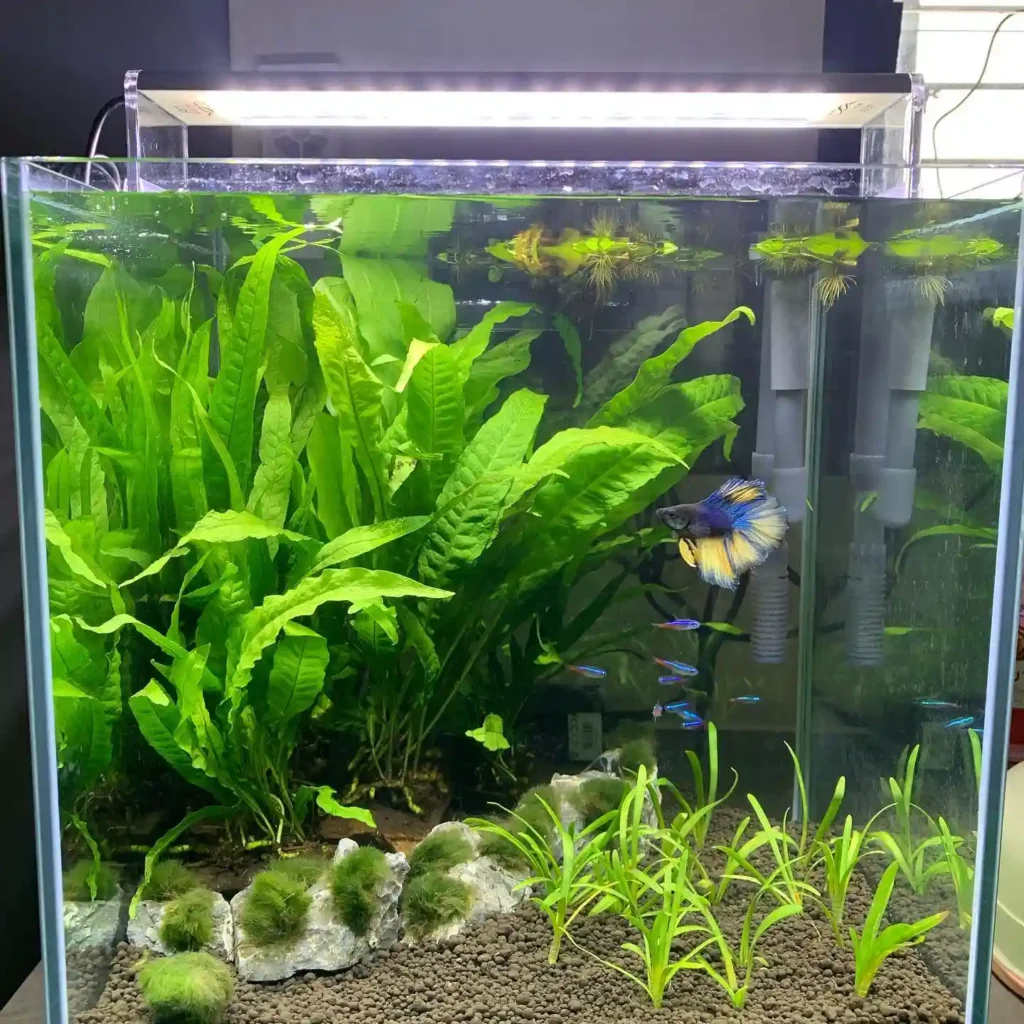
Java fern is another plant that makes gravel setups very easy.
Like Anubias, Java fern normally grows attached to hardscape.
I attach it to driftwood or rocks and let the roots gradually grip the surface.
You do not need rich substrate underneath it.
Why I Like Java Fern in Gravel Tanks
It works with:
Low-tech tanks.
Beginner aquariums.
Driftwood layouts.
Rock aquascapes.
Community tanks.
It can also provide more height than many Anubias varieties.
Keep the rhizome exposed and give the plant space because mature Java fern can become much larger than the small plants sold in stores.
3. Cryptocoryne
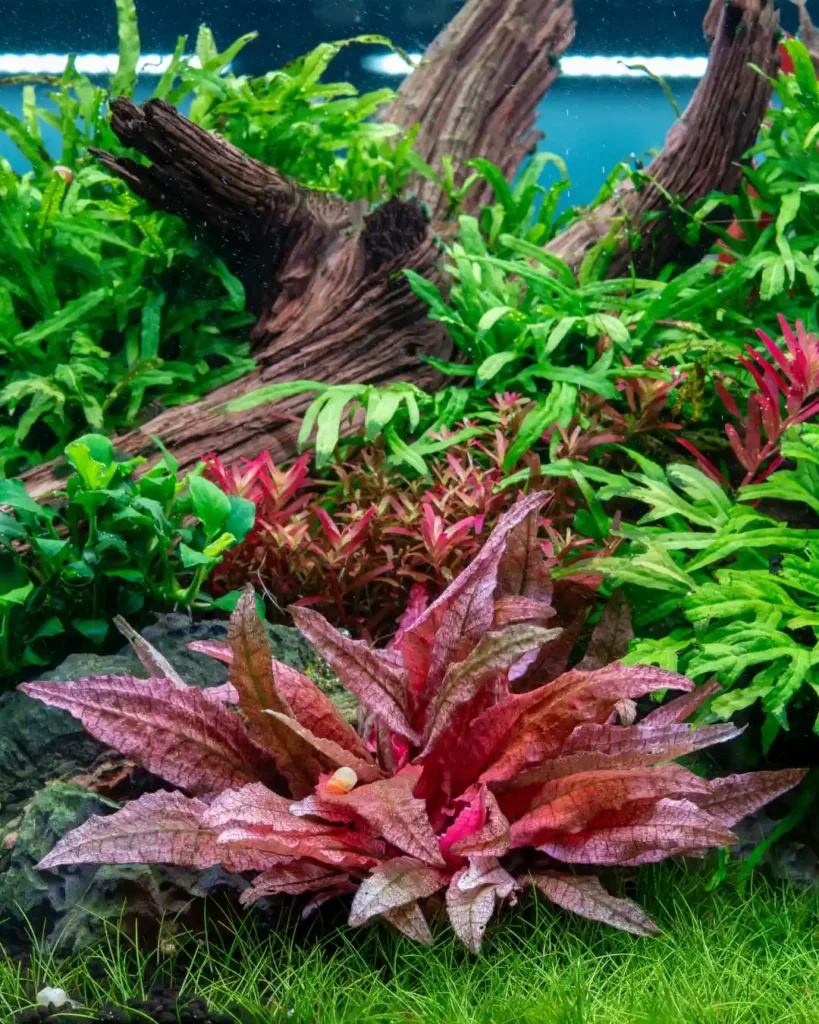
Cryptocoryne is one of my favorite rooted plants for gravel.
Once established, it can form thick groups of leaves through the midground.
There are many Crypt varieties with different sizes, leaf shapes, and colors.
For beginners, I would choose a common easy variety rather than starting with something unusual.
Does Cryptocoryne Need Root Tabs?
If your gravel does not contain nutrients, I usually give Crypts root tabs.
Place the tab underneath or near the root zone according to the fertilizer instructions.
Cryptocoryne can develop a strong root system, so gravel can provide good anchoring once the plant settles.
Give Crypts Time
Do not keep moving them.
Crypts may react to changes in their environment by losing older leaves.
If the roots and crown remain healthy, fresh growth may follow.
4. Amazon Sword
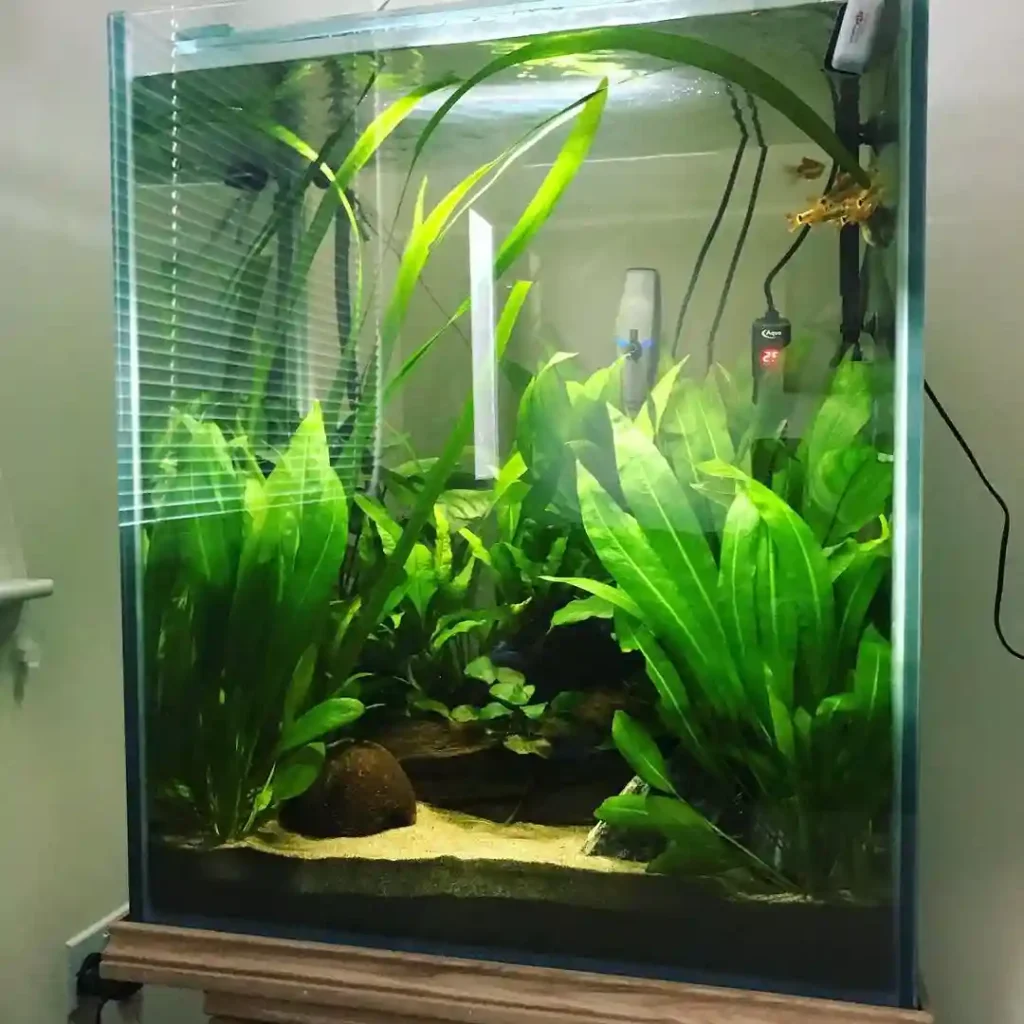
Amazon Sword can grow very well in gravel when the roots receive enough nutrition.
This is a heavy root-feeding plant.
Plain gravel alone may not provide what it needs over the long term.
I would use root tabs around the root zone and replace them according to the product directions.
Give It Enough Space
Amazon Sword is not a tiny plant.
A healthy mature specimen can become a major feature in the aquarium.
I normally use it toward the back or rear side of the tank.
Avoid placing it right in front of slower, smaller plants because the large leaves can eventually shade them.
Your Amazon Sword Care Guide goes deeper into its planting and care.
5. Vallisneria
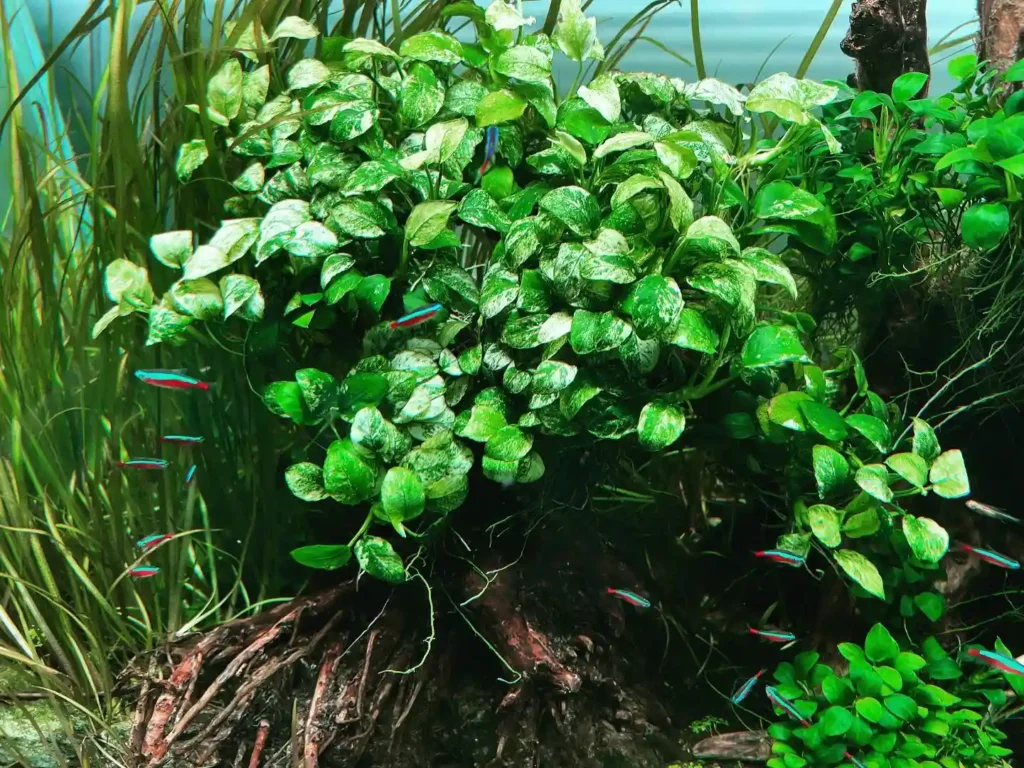
Vallisneria is an excellent background plant for gravel.
Its long ribbon-shaped leaves grow upward and can create a thick green backdrop.
Once established, the plant can spread by runners.
New Vallisneria plants may begin appearing around the original group.
How I Plant Vallisneria in Gravel
Place the roots into the gravel.
Keep the crown around substrate level rather than burying the whole base deeply.
If the gravel is nutrient-poor, root tabs can help support growth.
Control the Runners
Vallisneria may eventually spread outside the area where you planted it.
I keep runners that improve the background.
I remove the ones growing into open foreground or sand areas.
6. Dwarf Sagittaria
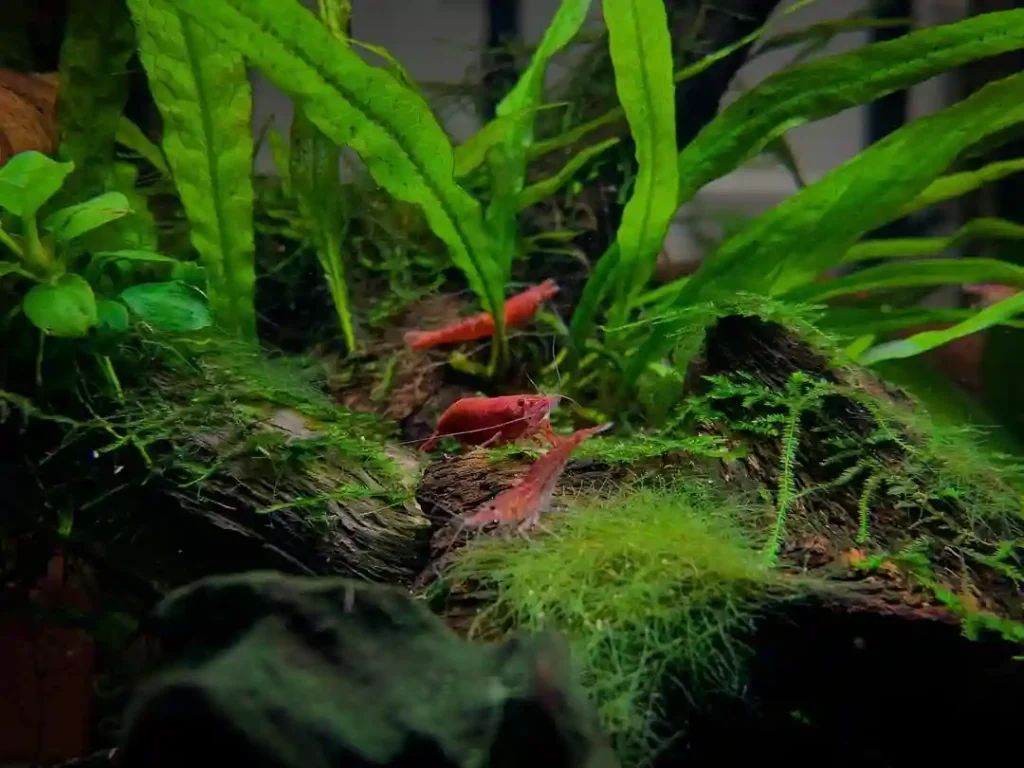
Dwarf Sagittaria is a useful foreground plant when you want something grassy without building a demanding high-tech carpet.
It grows from the substrate and spreads through runners.
Gravel can hold its roots well as long as the gravel is not excessively coarse.
Give It Root Nutrition
Dwarf Sagittaria benefits from nutrients around the roots.
In plain gravel, I would use root tabs.
Plant individual plants or small groups with some space between them.
The runners can gradually fill the gaps.
It May Grow Taller Than Expected
Dwarf Sagittaria does not always stay extremely short.
Light, nutrients, and tank conditions can affect its height.
I use it when I am happy with a loose grassy foreground rather than expecting a perfectly flat lawn.
7. Bacopa
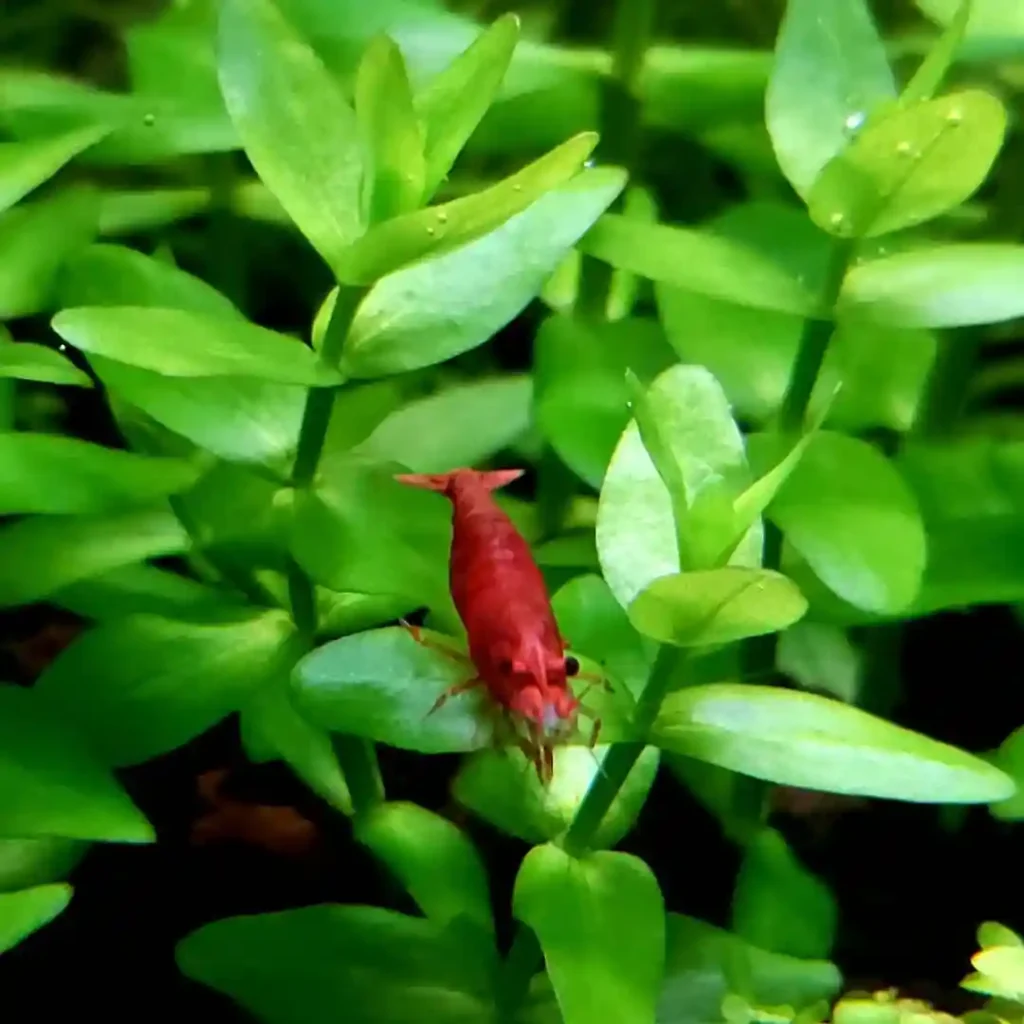
Bacopa is a stem plant that can grow in gravel.
The stems can develop roots after being planted between the gravel pieces.
I like it for beginners because the planting method is straightforward.
Separate the stems.
Remove leaves from the lowest part.
Push the bare stem into the gravel.
Leave a little space between stems.
Why Leave Space?
If you plant every Bacopa stem tightly together, the lower leaves can become shaded.
A little space lets light and water move around the group.
Once the stems grow tall, you can trim the healthy tops and replant them.
That makes it easy to build a thicker background over time.
8. Water Wisteria
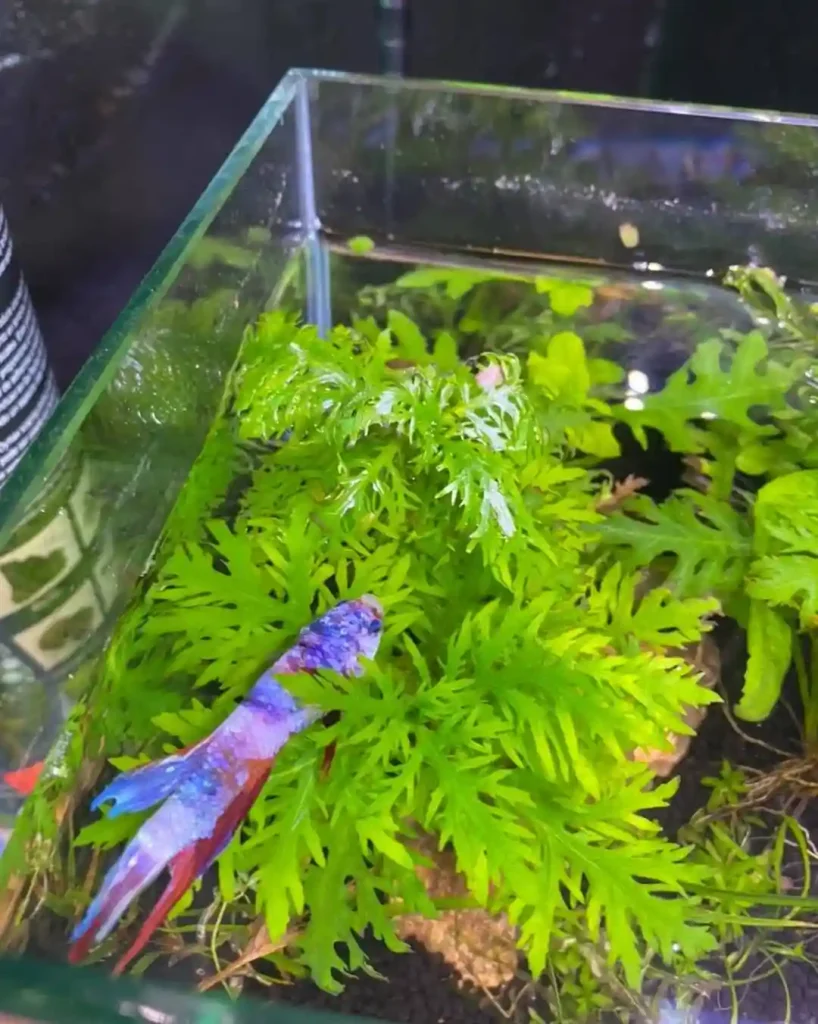
Water Wisteria can add a lot of plant mass without requiring a difficult setup.
You can grow it rooted in gravel or, depending on your setup, allow it to grow differently in the aquarium.
When planting it, give the roots and lower stem enough support from the gravel without burying healthy leaves.
Good for Filling Empty Areas
Water Wisteria can become bushy.
I use it when I need a quick-looking background or larger midground group.
Just remember that it can eventually take up quite a bit of space.
Regular trimming stops it from shading slower plants.
9. Java Moss
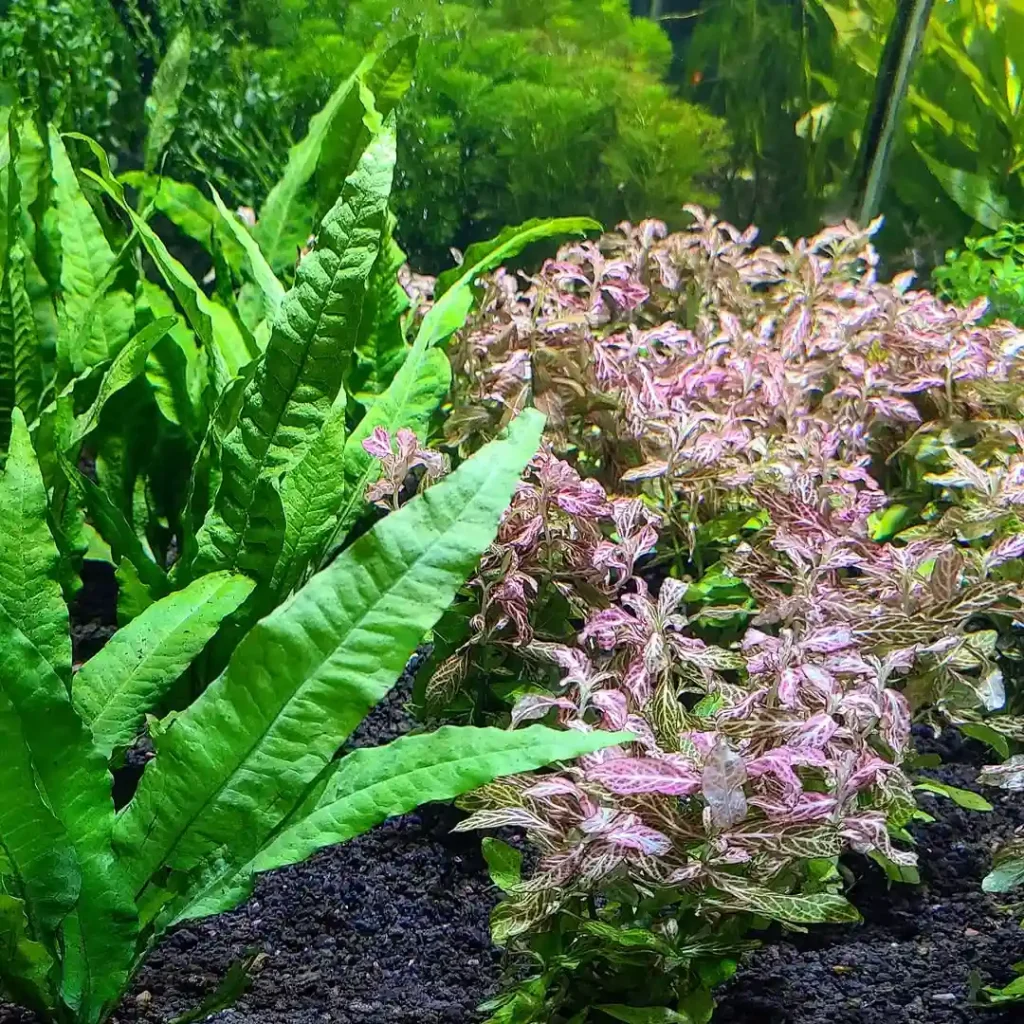
Java moss does not care whether your substrate is gravel, sand, or aquasoil because it does not need to be planted in the bottom at all.
Attach it to:
Driftwood.
Rocks.
Mesh made for aquarium use.
Other suitable hardscape.
Why It Works Well for Beginners
Java moss does not need injected CO2 and can grow under fairly modest lighting.
It is also easy to propagate.
Trim off a healthy section and attach it somewhere else.
Your Java Moss Care Guide covers its growth and trimming in more detail.
Do Not Let It Become a Thick Mess
Java moss looks best when I keep it reasonably thin.
Very thick moss can collect debris.
Trim it and remove the loose fragments afterward.
10. Water Sprite
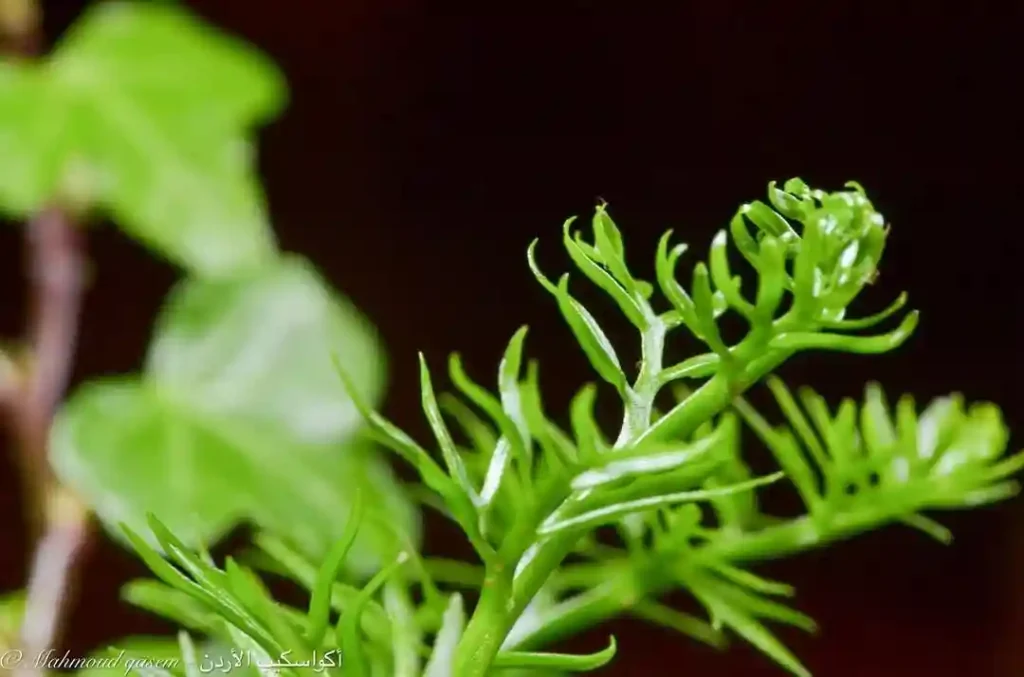
Water Sprite can be planted in gravel or grown floating, depending on how you want the aquarium to look.
When rooted, it can become a large bushy midground or background plant.
Its fine leaf shape also creates a nice contrast with broad-leaved plants.
Plant the Roots, Not the Crown
Be gentle when planting Water Sprite.
Keep the growing point from being buried too deeply.
If your gravel contains little nutrition, root tabs can help when you are growing it rooted.
Your Water Sprite Care Guide explains both rooted and floating growth.
11. Rotala Rotundifolia
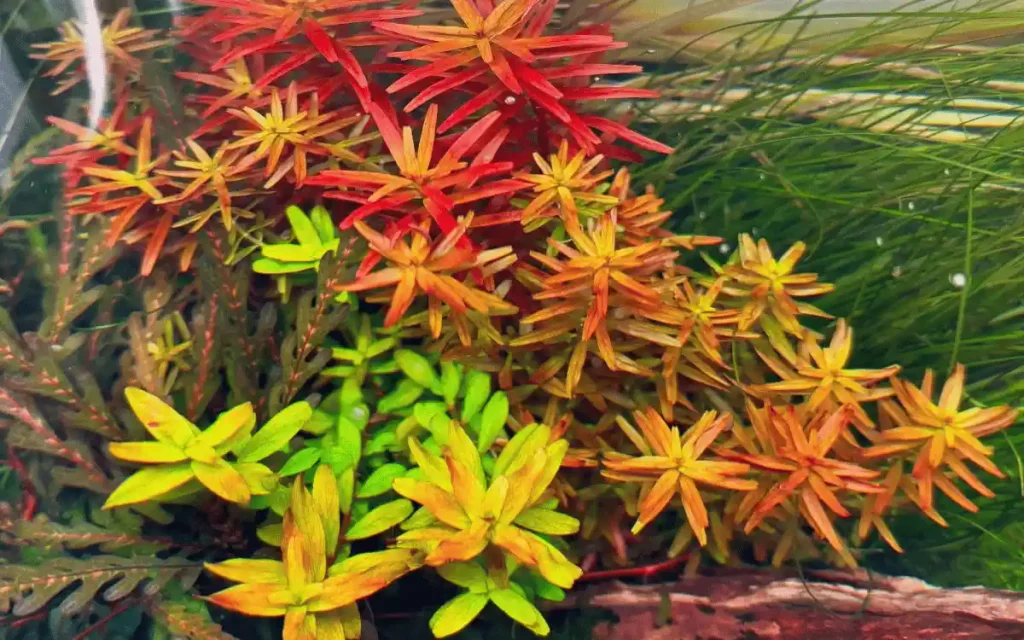
Rotala Rotundifolia is a good choice when you want a more classic planted-aquarium background.
It consists of individual stems that can be pushed into gravel.
Once rooted and growing, you can trim the tops and replant them to thicken the group.
Give the Stems Space
Do not plant the whole bunch into one tight hole.
Separate individual stems.
Plant them close enough to form a group but not so tightly that the bottom receives no light.
Does Rotala Need CO2?
Injected CO2 can improve growth in many setups, but you can grow Rotala Rotundifolia without it when the other conditions suit the plant.
For a simple low-tech tank, expect growth to be different from the dense red stems often seen in high-tech aquascapes.
12. Tiger Lotus
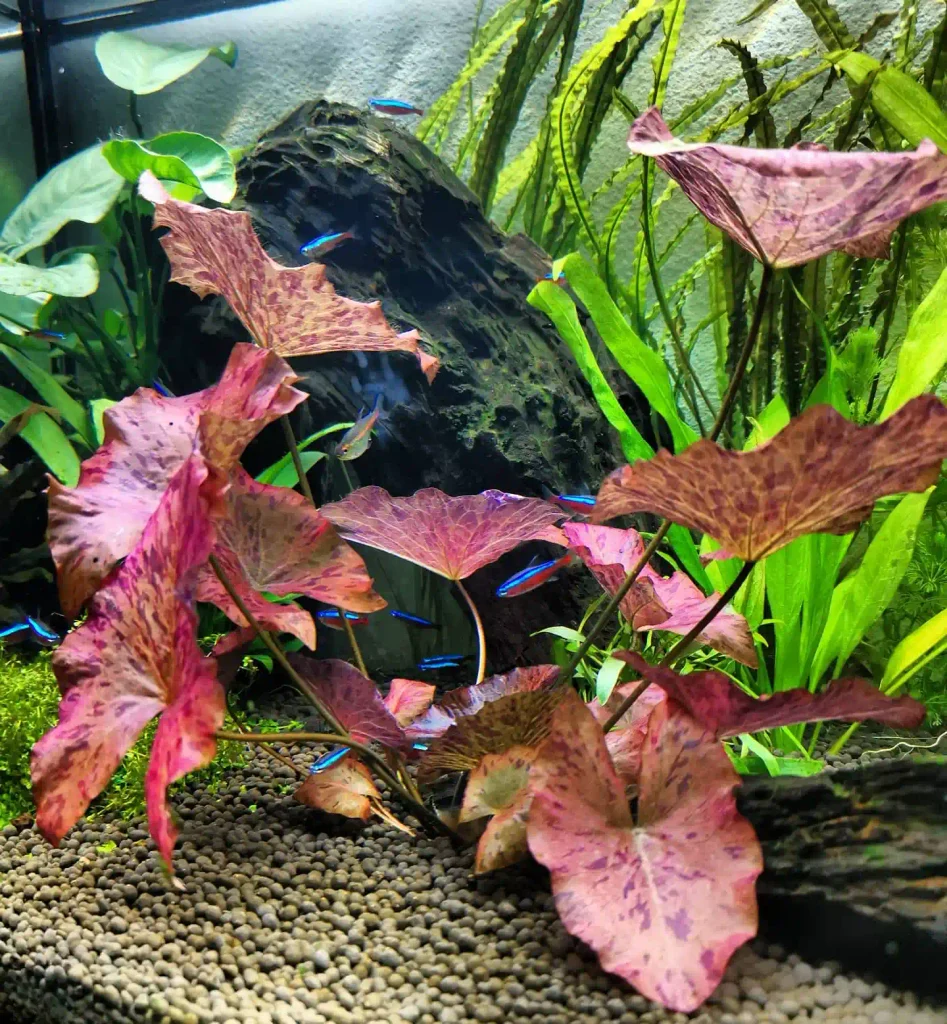
Tiger Lotus is a more unusual choice for gravel, but it can work well when given good root nutrition.
Its broad leaves and reddish tones can create a strong focal plant among green species.
I would use it as an accent rather than planting several all over the tank.
Root Tabs Matter
Tiger Lotus feeds strongly through its roots.
Plain gravel will not provide much nutrition by itself.
Place appropriate root fertilizer nearby.
Control Tall Leaves
Tiger Lotus may send leaves upward toward the surface.
If I want it to stay more compact, I manage tall growth before the plant shades a large area.
It needs a little more attention than Anubias or Java fern, which is why I would not make it the first plant in a brand-new beginner tank.
What Gravel Is Best for Aquarium Plants?
I prefer gravel that is small enough for roots to grip but not packed so tightly that planting becomes difficult.
Extremely large stones make it harder to anchor small roots.
Very sharp gravel is also something I would avoid, especially in tanks with bottom-dwelling fish.
For most planted community tanks, relatively fine, smooth aquarium gravel is easier to work with.
How Deep Should Gravel Be for Aquarium Plants?
For rooted plants, I usually want around 2 to 3 inches of substrate in planted areas.
You can make the back slightly deeper than the front.
That gives larger background plants more room for roots while also creating visual depth.
You do not need to make every section exactly the same depth.
A gentle slope usually looks better than a perfectly flat bottom.
Can Plants Grow in Large Gravel?
Some can, but very large gravel makes planting more difficult.
Small roots may struggle to stay anchored.
Food and waste can also fall deeply between large pieces.
If you already have coarse gravel, I would focus more heavily on plants that attach to hardscape, such as:
Anubias.
Java fern.
Java moss.
Bucephalandra.
Then use larger rooted plants only where you can create suitable planting areas.
How to Plant Aquarium Plants in Gravel
The planting method depends on the plant.
Rooted Rosette Plants
For Cryptocoryne, Amazon Sword, Vallisneria, and Dwarf Sagittaria:
Put the roots into the gravel.
Keep the crown from being buried too deeply.
Stem Plants
For Bacopa, Rotala, and similar species:
Remove the lowest leaves.
Plant the bare part of the stem.
Leave space between stems.
Rhizome Plants
For Anubias and Java fern:
Attach them to wood or rocks.
Do not bury the rhizome.
Knowing the plant type makes planting much easier.
How Do You Stop Plants Floating Out of Gravel?
Freshly planted stems sometimes float up before roots form.
First, make sure you have enough substrate depth.
Then use planting tweezers.
Push the plant farther into the gravel than its final position.
Slowly pull it back upward slightly.
Then remove the tweezers at an angle.
This can help the gravel settle around the roots or stem.
Reduce Direct Flow
Do not aim a strong filter output directly at new plants.
Give them time to root.
Once the root system develops, the plants will hold much more firmly.
Do Gravel Plants Need Root Tabs?
Not every plant does.
Root tabs are most useful for strong root feeders.
I would especially consider them for:
Amazon Sword.
Cryptocoryne.
Vallisneria.
Dwarf Sagittaria.
Tiger Lotus.
Plants growing on rocks and wood do not get much benefit from putting a root tab underneath them.
Your Aquarium Plant Fertilizer Guide: Root Tabs vs Liquid Fertilizer is the best supporting internal link here.
Do You Need Liquid Fertilizer With Gravel?
Possibly.
Some plants take a lot of their nutrients from the water.
Stem plants, epiphytes, mosses, and floating plants may benefit from suitable water-column nutrients.
A mixed planted tank may use both liquid fertilizer and root tabs.
I would not keep adding fertilizer without watching the plants.
Follow the fertilizer instructions and look at new growth.
Can You Grow Plants in Gravel Without Fertilizer?
Some easy plants can survive in fish tanks where nutrients are already available, especially slow-growing epiphytes such as Anubias and Java fern.
But rooted heavy feeders may eventually struggle in completely nutrient-free gravel.
If you want a strongly planted aquarium, providing the right nutrients makes the setup much easier.
Do not expect plain decorative gravel to act like aquasoil.
Does Gravel Need to Be Replaced for Plants?
No.
If the gravel is safe and works well in your aquarium, you usually do not need to replace it simply because you want live plants.
Add suitable plants.
Use root tabs where needed.
Add liquid fertilizer when appropriate.
Provide enough light.
Then watch the new growth.
Replacing the entire substrate can be much more disruptive than improving the setup you already have.
Gravel vs Sand for Aquarium Plants
Both can work.
Gravel is easy to plant larger rooted species in and allows waste to fall between the pieces.
Sand has a smoother appearance and works especially well for bottom-dwelling fish that prefer soft substrate.
Neither automatically feeds plants.
Plain sand and plain gravel may both need added nutrients for strong root feeders.
If you are considering sand, your Best Aquarium Plants for Sand Substrate article is the natural comparison link.
Gravel vs Aquasoil
Aquasoil is designed more specifically for planted aquariums.
It can provide root nutrients and may influence water chemistry depending on the product.
Gravel is simpler and can be cheaper, but you may need to provide plant nutrition separately.
If I am building a serious carpeted aquascape from scratch, I may choose aquasoil.
If I already have a gravel community aquarium and simply want healthy plants, I would usually keep the gravel and choose plants that suit it.
How to Vacuum Gravel Around Plants
Do not deeply dig through the root zone every week.
In open areas, you can clean gravel more thoroughly.
Near established plants, I focus on removing visible debris from the surface and upper gravel.
I do not constantly uproot Crypts and Swords just to make the substrate look perfectly clean.
Your Planted Aquarium Maintenance Guide should be internally linked from this section.
Do Plant Roots Make Gravel Harder to Clean?
Yes, a heavily planted area becomes harder to vacuum deeply.
That is normal.
Once roots fill the substrate, treat it differently from an open gravel area.
Clean exposed sections more thoroughly.
Around established roots, remove excess surface debris while leaving the root system mostly undisturbed.
You are maintaining a planted ecosystem, not trying to sterilize the gravel.
Best Gravel Plants for Low-Light Tanks
If your aquarium has relatively modest lighting, I would start with:
Anubias.
Java fern.
Cryptocoryne.
Java moss.
These are much easier than trying to force high-light carpeting plants into a low-light gravel tank.
Choose plants that match your equipment rather than choosing plants first and buying more equipment afterward.
Best Gravel Plants Without CO2
You have plenty of choices.
My easiest options include:
Anubias.
Java fern.
Cryptocoryne.
Amazon Sword.
Vallisneria.
Dwarf Sagittaria.
Java moss.
Water Sprite.
Water Wisteria.
Injected CO2 is not required simply because the aquarium contains gravel.
Your Aquarium Plants That Don’t Need CO2 article is a useful supporting link.
Best Gravel Plants for Beginners
If someone handed me an established gravel aquarium and asked for the easiest first plants, I would choose:
Anubias attached to driftwood.
Java fern attached to rocks.
Cryptocoryne in the midground with root tabs.
Vallisneria in the background.
That combination gives you several heights without making the aquarium difficult.
I would add more plants only after those were growing well.
My Simple Gravel Planted Tank Setup
If I were setting up an easy gravel planted aquarium, I would use smooth, relatively fine gravel with more depth toward the back.
I would place driftwood slightly off-center.
Anubias would grow on the wood.
Java fern would grow on a nearby rock.
Cryptocoryne would form the midground.
Vallisneria would create the background.
Dwarf Sagittaria could fill part of the foreground.
I would place root tabs underneath the strong root feeders and use an appropriate liquid fertilizer only if the tank needed it.
That gives you a fully planted look without replacing gravel with expensive planted soil.
Common Mistakes When Growing Plants in Gravel
Assuming Gravel Feeds the Plants
Plain gravel may contain very little nutrition.
Use root tabs for root feeders.
Using Extremely Large Gravel
Small roots can be difficult to anchor.
Burying Rhizomes
Keep Anubias and Java fern rhizomes exposed.
Burying Plant Crowns Too Deeply
Keep the growing point of rosette plants at the proper level.
Planting Stem Plants in One Tight Bunch
Separate the stems.
Vacuuming Deeply Around Roots Every Week
Clean gently around established plants.
Adding More Fertilizer for Every Yellow Leaf
Look for a repeated pattern before making changes.
Choosing Plants That Need Different Conditions
Match the plants to your light, water, and maintenance level.
Expecting Immediate Growth
New plants need time to root and adjust.
My Best Advice for Growing Aquarium Plants in Gravel
Do not replace your gravel until you have a real reason.
Most beginner planted tanks can work perfectly well with it.
Choose easy plants.
Give rooted plants enough substrate depth.
Use root tabs for heavy root feeders.
Attach Anubias and Java fern to hardscape.
Keep your lighting consistent.
Then watch the new leaves.
Healthy new growth tells you much more than whether one old leaf looks imperfect.
With the right plant choices, plain gravel can support a healthy planted aquarium without turning the setup into a high-tech project.
FAQs
Can aquarium plants grow in gravel?
Yes. Many aquarium plants grow well in gravel. Root-feeding plants may need root tabs because ordinary gravel usually provides little nutrition.
What are the easiest aquarium plants for gravel?
Anubias, Java fern, Cryptocoryne, Vallisneria, Amazon Sword, Java moss, and Dwarf Sagittaria are good beginner choices.
Do aquarium plants need soil under gravel?
No. You can grow many aquarium plants directly in gravel. Add root tabs for plants that need stronger root nutrition.
How deep should gravel be for aquarium plants?
Around 2 to 3 inches works well for many rooted plants. You can make the rear planted areas slightly deeper to give large roots more room and create visual depth.
Do I need root tabs with aquarium gravel?
Heavy root feeders such as Amazon Sword, Cryptocoryne, Vallisneria, Dwarf Sagittaria, and Tiger Lotus can benefit from root tabs in nutrient-poor gravel.
Can Anubias be planted in gravel?
The thin roots can grow around gravel, but the rhizome should stay exposed. I prefer attaching Anubias to rocks or driftwood.
Can Java fern grow in gravel?
Java fern does not need to be planted in gravel. Attach it to rock or driftwood and keep its rhizome exposed.
Can aquarium plants grow in gravel without CO2?
Yes. Many beginner plants grow without injected CO2, including Anubias, Java fern, Cryptocoryne, Vallisneria, Amazon Sword, Java moss, and Water Sprite.
Is gravel or sand better for aquarium plants?
Both can grow plants. Gravel can make anchoring larger roots easy, while sand creates a smoother substrate. Plain versions of either may need root tabs for heavy root feeders.
Should I replace gravel with aquasoil for live plants?
Not necessarily. If you already have a healthy gravel aquarium, choosing suitable plants and providing root nutrition is usually much easier than replacing the entire substrate.
