
Guppy Grass Care Guide: How to Grow, Plant, and Trim It

Guppy grass is one of the easiest live plants to grow in a freshwater aquarium. Give it low to medium light, stable water, and a little room to spread. It does not need CO2, rich substrate, or difficult planting.
You can leave guppy grass floating or place it loosely in the substrate. I recommend floating it when you first add it, especially in a guppy breeding tank. Its tangled stems give baby fish and shrimp a safe place to hide, while its quick growth uses nutrients from the water.
The main job is not keeping guppy grass alive. It is stopping the plant from filling the tank. A small portion can turn into a large mass, so regular thinning is part of normal guppy grass care.
Guppy Grass Care at a Glance
| Care need | Recommended range |
| Scientific name | Najas guadalupensis |
| Care level | Easy |
| Growth rate | Fast |
| Light | Low to medium; medium gives denser growth |
| Temperature | 68–79°F (20–26°C) |
| pH | 6.0–8.0 |
| Water hardness | Soft to hard water, roughly 2–20 dGH |
| CO2 | Not required |
| Fertilizer | Optional liquid fertilizer |
| Placement | Floating or loosely planted |
| Propagation | Stem cuttings |
| Best for | Guppies, fry, shrimp, and breeding tanks |
What Is Guppy Grass?
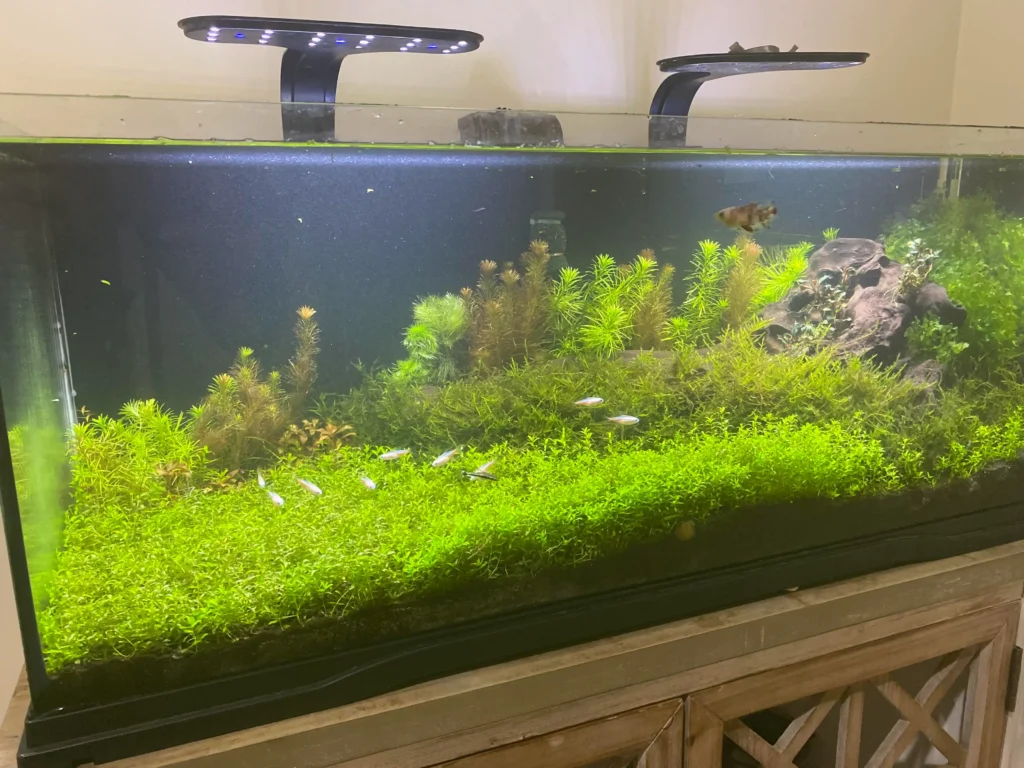
Guppy grass, or Najas guadalupensis, is a thin, fully aquatic plant found naturally in ponds, lakes, streams, and other freshwater habitats across the Americas. It is also called southern waternymph, common water nymph, and najas grass.
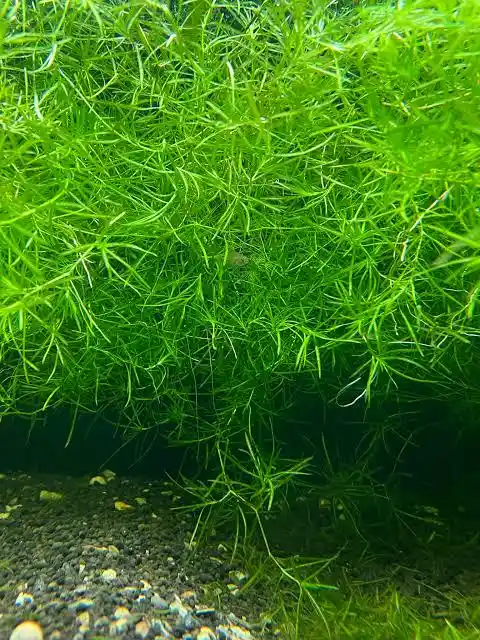
Despite its name, it does not grow like lawn grass. It forms long, branching stems covered with narrow green leaves. Those stems weave together and create the loose, bushy mass that makes the plant so useful in fish and shrimp tanks.
Guppy grass became popular with breeders because newborn guppies can slip between its fine stems. Adult fish have a harder time following them into the thickest growth. It is one of the most useful choices in this list of live plants for guppies, but it also works well with many other small freshwater fish.
Guppy grass is easy enough for a first planted tank. It adapts to many freshwater setups, grows without added CO2, and needs no aquasoil when floated. Its only real demand is regular thinning because thick growth can shade other plants, collect debris, and block a filter intake.
Best Water Conditions for Guppy Grass
Guppy grass does well between 68 and 79°F (20 and 26°C), at a pH of 6.0 to 8.0. It handles soft and hard water, although sudden changes may damage older growth after shipping.
I would not change the tank’s chemistry just for this plant. Match the water to the fish first. The conditions in the guppy care guide are already suitable for guppy grass.
Keep ammonia and nitrite at zero in any stocked aquarium. Guppy grass may take up some nitrogen as it grows, but it cannot protect fish from an uncycled tank or a sudden ammonia spike.
How Much Light Does Guppy Grass Need?
Low to medium aquarium light is enough to grow guppy grass. Under low light, the stems may become longer, thinner, and more widely spaced. Medium light usually produces a fuller mass with more side growth.
I start with six to eight hours of light each day. If the plant stays pale, check whether other plants show the same problem before increasing the light. If algae coats the leaves, shorten the light period instead of making the tank brighter.
Very strong light is not needed. It can make the plant grow faster, but it can also turn a simple plant into a weekly trimming job. For more choices that do not need a bright fixture, see these low-light aquarium plants.
Does Guppy Grass Need CO2 or Fertilizer?
Guppy grass does not need injected CO2. It uses carbon dioxide already dissolved in the aquarium water and grows well in a normal low-tech setup.
In a stocked aquarium, fish waste may supply enough nutrients. A lightly stocked tank or one packed with fast-growing plants may need a small dose of complete liquid aquarium fertilizer. I start on the low side because extra fertilizer may feed algae when light is weak.
Root tabs are not needed for floating guppy grass. Even when the stems are placed in gravel or sand, the plant takes much of what it needs from the water. Save root tabs for heavy root feeders such as Amazon swords.
Should You Float or Plant Guppy Grass?
Both methods work, but floating guppy grass is easier and usually grows faster. Planting it gives the aquarium a tidier background, although the fine stems can come loose during cleaning or when fish disturb them.
Floating Guppy Grass
To float guppy grass, place a loose portion near the surface. Do not pack it into a tight ball. Water and light need to reach the inner stems, or the center may collect waste and decay.
Floating growth works well for guppy fry, shrimp, bare-bottom breeding tanks, and tanks without plant substrate. Trimming is also easier because you can lift out the mass and return only its healthiest sections.
Keep some open surface space for feeding and water movement. If the plant drifts toward the filter, add a prefilter sponge or use a floating plant ring to hold it in one area.
Planting Guppy Grass in the Substrate
If you want upright growth, divide the bunch into several small sections. Push only the lower end of each stem lightly into sand or fine gravel. Deep planting can crush the fragile stem and cause the buried part to rot.
Space the sections apart. Some stems will form thin roots and hold themselves in place, while others may float free. A loose plant weight can help, but it must not pinch the stems.
Planted guppy grass looks less formal than a firm-stemmed background plant because it branches in many directions. If you want a more structured background, water wisteria care is another easy option.
How to Add Guppy Grass Without Bringing in Pests
Inspect every new bunch before it enters the aquarium. Look between the stems for snail eggs, pest snails, algae, damaged leaves, and any soft brown sections. Remove unhealthy pieces and rinse the plant gently in conditioned water.
If the seller cannot confirm that the plant is safe for shrimp, keep it in a separate container first. Some aquarium plants are grown with treatments that may harm small invertebrates. A tissue-culture plant is usually the cleaner choice when available.
Do not pour store or shipping water into your aquarium. Move only the inspected plant. Once added, give it time to adjust instead of changing the light, fertilizer, and water chemistry all at once.
How Fast Does Guppy Grass Grow?
Guppy grass grows quickly once it adjusts. With moderate light and available nutrients, you may notice longer stems and new side shoots each week. Growth slows under weak light or in water with very few nutrients.
The plant often grows as a tangled mass rather than as a set of neat vertical stems. That is normal. If the center becomes dark or brown, the bunch has probably become too thick for light and water to reach the inner growth.
Remove enough plant to keep water moving through it. A quick trim every week or two is easier than pulling apart one heavy, debris-filled mat.
How to Trim Guppy Grass
I prefer to lift the plant into a container of aquarium water before trimming. This stops loose pieces from spreading and gives me a chance to check for hidden fry or shrimp.
Use clean scissors to shorten long stems. Keep firm green pieces and discard brown, slimy, or badly algae-covered parts. Return the healthy tops and remove the old lower growth.
Shake each removed clump gently in the container before throwing it away or giving it to another fishkeeper. Newborn fry and tiny shrimp can hide deep inside the stems and are easy to miss.
Never release unwanted guppy grass into a pond, drain, stream, or local waterway. Seal it in a bag for disposal, or dry it fully before adding it to household compost where local rules allow.
How to Propagate Guppy Grass
Propagation is as simple as cutting a healthy stem. Choose a green section several inches long and place it back in the tank. It can float immediately, or you can set the lower end loosely in the substrate.
The cutting will continue growing and make side branches. It does not need roots or a separate propagation tank. Even pieces that break during handling may become new plants.
This easy propagation is helpful when you want more fry cover, but it also explains why guppy grass spreads so quickly. Remove tiny loose pieces during water changes if you do not want new growth in every corner.
Why Guppy Grass Is Good for Guppies and Fry
Guppy grass gives newborn fish natural shelter. Fry can move through gaps between the leaves while larger guppies struggle to follow. Tiny foods and biofilm also collect on the plant, giving fry a place to graze between meals.
The plant improves the odds of some fry surviving in a community tank, but it does not make them completely safe. Adult guppies may still find and eat babies. Use a separate grow-out tank if you want to save the largest possible number.
It also gives females a place to move away from persistent males. If you expect babies, the guppy breeding guide explains what happens before and during birth. After the fry arrive, follow the feeding and water-care steps in the guppy fry care guide.
Is Guppy Grass Good for Shrimp?
Yes, guppy grass is a good plant for cherry shrimp and other small freshwater shrimp. Its narrow leaves provide a large grazing surface where biofilm and fine food particles can collect. Baby shrimp can also hide inside the tangled growth.
Shrimp usually eat the biofilm rather than the living leaves. Remove decaying sections so they do not trap waste. You can find more plant and tank advice in the cherry shrimp care guide.
Does Guppy Grass Help Keep Water Clean?
Healthy guppy grass uses nitrogen and other nutrients while it grows. Its fast growth can help slow nitrate buildup, especially when you regularly remove excess stems from the aquarium.
Nutrients leave the system when you remove plant growth from the tank. If old stems rot in the water, part of that material returns. This is why trimming weak growth matters.
Guppy grass is support, not a replacement for a filter, gravel cleaning, testing, or water changes. If nitrate remains high, fix feeding, stocking, and maintenance first. Our guide to lowering nitrate in a fish tank explains the full process.
Common Guppy Grass Problems
Guppy Grass Is Turning Brown or Melting
A little damage after shipping is common. The plant may lose old leaves while it adjusts to new light, temperature, or water chemistry. Remove soft brown growth and watch for fresh green tips.
If melting continues, check for sudden temperature changes, untreated tap water, very weak light, or a lack of available nutrients. Also make sure the plant is not packed so tightly that the center receives no light or flow.
Guppy Grass Is Yellow or Pale
Pale growth may come from weak light or low nutrients. Do not guess at one missing nutrient from leaf color alone. Check the light, test the water, and look at the other plants before adding fertilizer.
If the tank has almost no nitrate and very few fish, try a small dose of complete liquid aquarium fertilizer. Give the plant time to respond before adding more.
Guppy Grass Is Growing Long and Thin
Sparse stems usually mean the plant is reaching for light. Move it away from heavy shade or slightly increase the light if algae is under control. Regularly trimming the longest stems can also encourage more side branches.
Do not expect a compact ball in every tank. Some loose, uneven growth is part of this plant’s natural shape.
Algae Is Growing on the Leaves
Guppy grass has many fine leaves that are difficult to clean by hand. When algae takes hold, removing the worst stems is often easier than trying to scrub them.
Reduce excess light, avoid overfeeding, and keep up with water changes. Adding more fertilizer without checking the cause can make the algae worse.
Loose Pieces Keep Clogging the Filter
The stems break easily, especially during cleaning. Fit a sponge over the filter intake and collect loose cuttings after each trim. You can also keep the floating bunch inside a ring or away from the strongest current.
Broken pieces do not always mean the plant is unhealthy. Firm green fragments can grow on their own. Soft, dark, or slimy fragments should be removed.
Guppy Grass vs. Hornwort
Guppy grass and hornwort are different plants, although both can float, grow quickly, and shelter fry. Guppy grass has softer, flat, narrow leaves and may form fine roots. Hornwort has stiffer, forked leaves arranged around the stem and does not make true roots.
Guppy grass creates a softer tangle that small fry can enter easily. Hornwort often looks more upright and feels rougher. Both need regular trimming, so choose the one that suits your tank’s look and water.
If you are deciding between them, read the full hornwort care guide before buying. Java moss is another useful choice when you want fry cover attached to wood or rock rather than floating stems; the Java moss care guide explains that method.
Fish and Tank Mates for Guppy Grass
Guppy grass works well with guppies, Endlers, platies, mollies, small tetras, rasboras, bettas, snails, and freshwater shrimp. Peaceful fish rarely damage it.
Large plant-eating fish may tear it apart faster than it can grow. Goldfish and some large cichlids can also scatter the fragile stems around the tank. If you keep strong diggers or rough fish, use tougher plants such as Anubias instead.
The plant can be used in small tanks, but it needs more frequent thinning because it fills limited swimming space quickly. Leave enough open water for fish to move and enough open surface for feeding.
Frequently Asked Questions
Can guppy grass grow without substrate?
Yes. Guppy grass can live entirely as a floating plant, so it does not need soil, sand, or gravel. It takes nutrients from the water and may grow faster when left loose near the light.
Can guppy grass grow in gravel?
Yes, but plant it gently. Place only the lower end of the stem in the gravel and avoid crushing or burying it deeply. Some pieces may come loose until they form fine roots.
Why is my guppy grass dying?
The most common causes are shipping stress, sudden changes in water conditions, very weak light, low nutrients, or a bunch that is packed too tightly. Remove decaying growth, keep the water stable, and watch for healthy green tips.
Does guppy grass oxygenate the water?
Guppy grass releases oxygen during photosynthesis, but the plant also respires. Do not use it as a replacement for surface movement or aeration when fish need more oxygen.
Will guppies eat guppy grass?
Guppies may peck at biofilm, algae, and tiny foods on the leaves. They normally do not destroy healthy guppy grass. Their grazing is usually harmless.
Is guppy grass good for a betta tank?
Yes. It can provide shade and cover for a betta, but do not let it fill the entire surface. Bettas need clear access to the top to breathe and feed.
Is Guppy Grass Right for Your Aquarium?
Guppy grass is a good choice if you want fast plant growth, natural fry cover, or an easy floating plant. It handles ordinary freshwater conditions and grows without CO2 or special substrate.
Choose another plant if you want a neat aquascape that needs little trimming. Guppy grass looks wild and spreads quickly. For a breeding tank, shrimp tank, or relaxed planted aquarium, that unruly growth is often exactly what makes it useful.
You can compare more easy species in the OceanBitez aquarium plant hub.
