
21 Planted Aquarium Layout Ideas for Beautiful Tanks

A good planted aquarium layout doesn’t need twenty plant species or expensive hardscape. Most beautiful tanks are built around one clear idea: a strong piece of wood, a group of rocks, a carpet, an open swimming area, or plants growing above the water.
For beginners, I would start with an island layout, triangular layout, or open-center planted tank. They are easier to plant, trim, and change later.
The taller riparium-style tanks and dense carpet layouts look incredible, but they can ask more from your lighting, plant choice, trimming routine, and sometimes CO2 setup.
Before copying any aquascape, look at the shape first. Plants grow and change. The basic hardscape is what holds the whole design together.
Explore :- 101 Aquascaping for Beginners: The Ultimate
1. Driftwood Tree Riparium
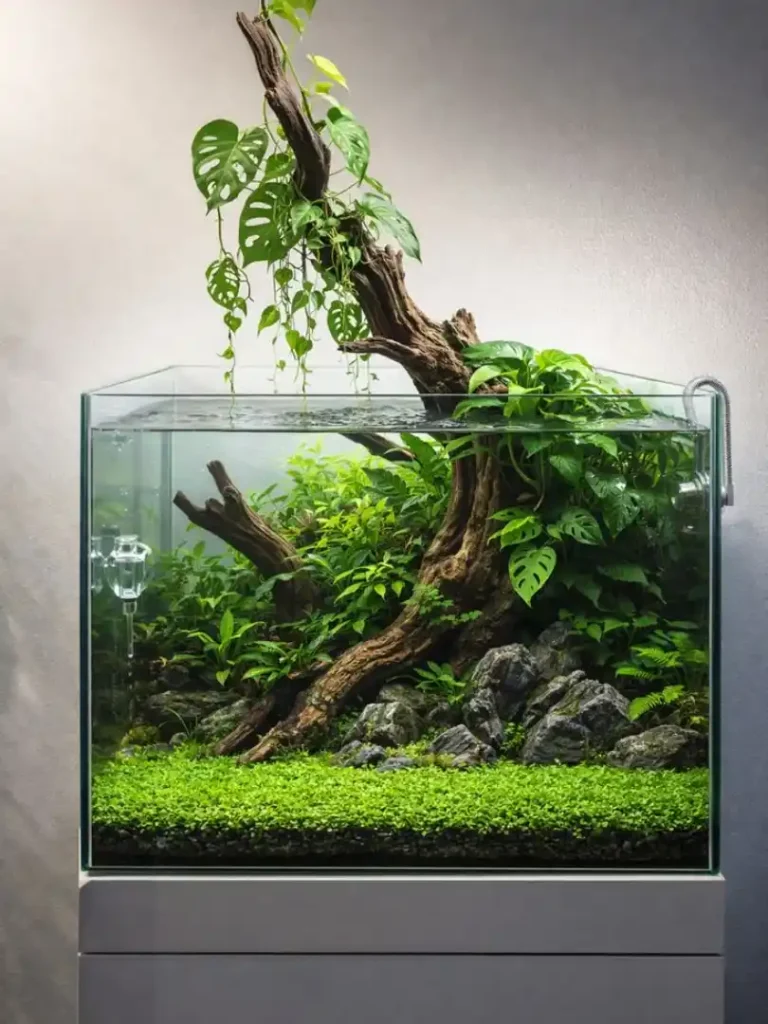
This layout uses one large piece of driftwood almost like the trunk of a tree. Most of the planting stays underwater, while climbing and trailing plants continue above the surface.
That extra height makes a standard glass aquarium feel much larger.
The trick is not filling every part of the wood with plants. Leave enough exposed wood so you can still see its shape.
For a similar setup:
- Build around one tall branching piece of driftwood.
- Use carpet plants across the foreground.
- Place darker plants and rocks around the wood’s base.
- Attach rhizome plants to shaded sections of the wood.
- Keep terrestrial foliage above water rather than submerging its leaves.
An emersed plant such as Monstera can create the dramatic upper section, but its leaves should remain above the water.
This is a strong choice for an open-top aquarium where you have plenty of vertical room.
2. Vertical Forest Cliff
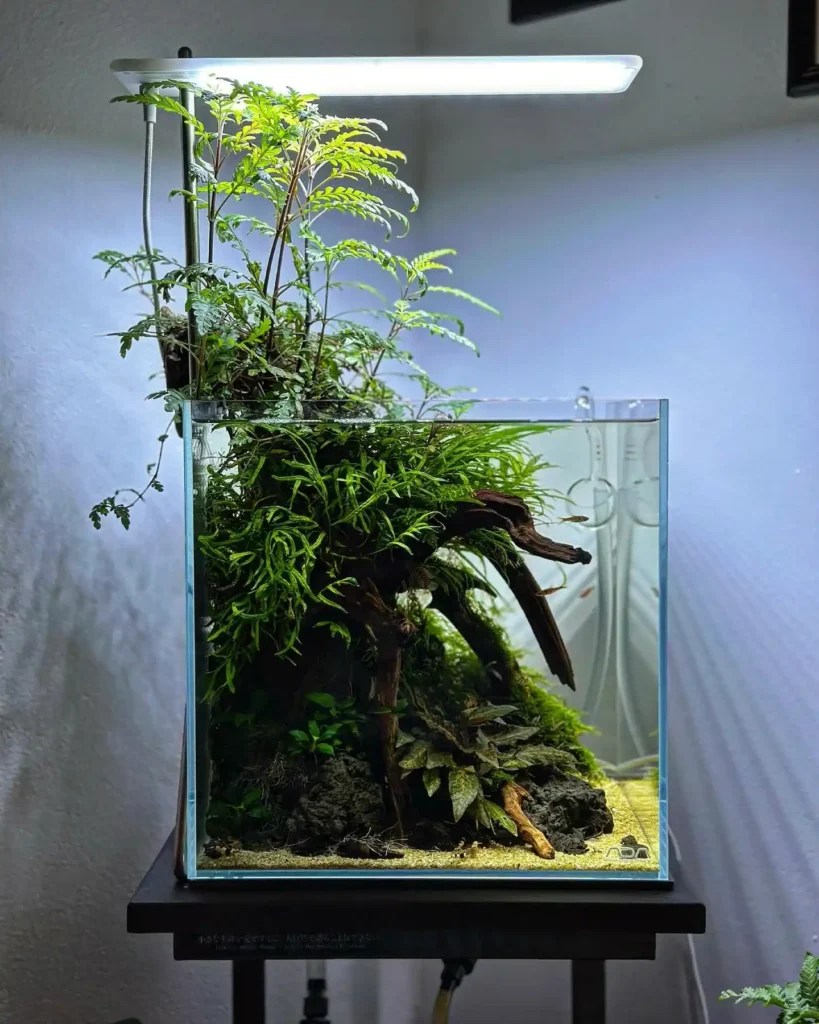
Instead of spreading the aquascape evenly across the tank, push most of the hardscape and plants toward one side.
The result looks almost like a riverbank collapsing into the water.
A tall mound of wood, rock, moss, ferns, and small plants creates the main focal point. The other side stays much more open.
That empty water isn’t wasted space. It stops the layout from becoming one giant green wall.
Try building it like this:
- Create a high planted mound on the left or right.
- Angle branches toward the open section.
- Put larger plants toward the rear.
- Use smaller leaves closer to the front.
- Leave roughly one-third of the aquarium visually open.
This type of layout works especially well in taller tanks because you can use both underwater and above-water planting.
Just make sure the tall hardscape is secure before filling the aquarium. A beautiful cliff becomes much less charming when gravity decides to redesign it overnight.
3. Planted Tree Island
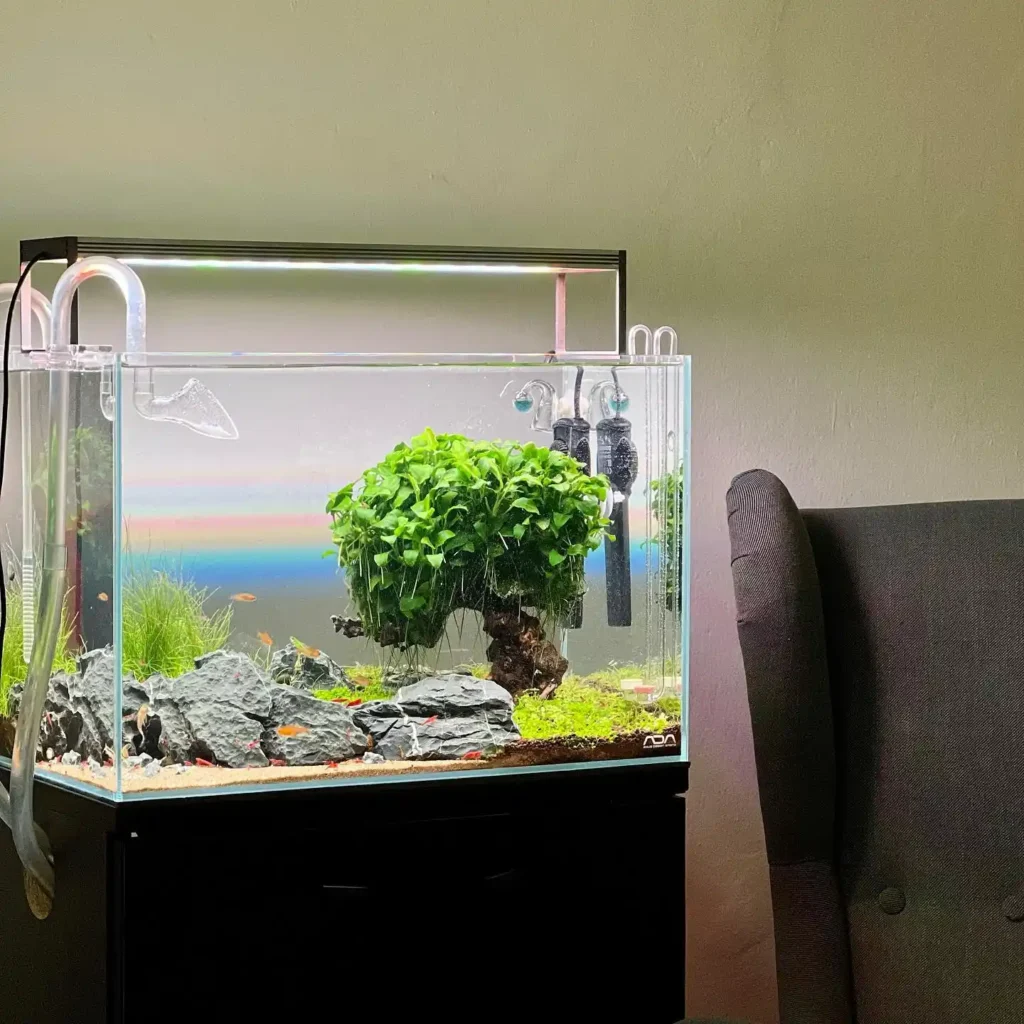
Here’s a clever way to make one small section of an aquarium carry almost the entire layout.
Build a central island from driftwood and rocks, then cover the upper wood with compact green plants. From a distance, it starts looking like a miniature tree.
The surrounding substrate stays much simpler.
Plants such as Anubias or other compact epiphytes work well around wood because they can be attached instead of planted deeply into the substrate. Keep their rhizomes exposed rather than burying them.
A low foreground carpet can finish the scene without competing with the tree.
This layout works because you have three clear layers:
Top: leafy canopy
Middle: trunk and branches
Bottom: rocks and foreground carpet
It is also easier to maintain than a tank where every inch contains a different stem plant.
If you’re still choosing plants, checkout Aquarium Plant Finder and Care Guides can help you separate foreground, attached, background, and low-light options.
4. Dense Jungle Cube
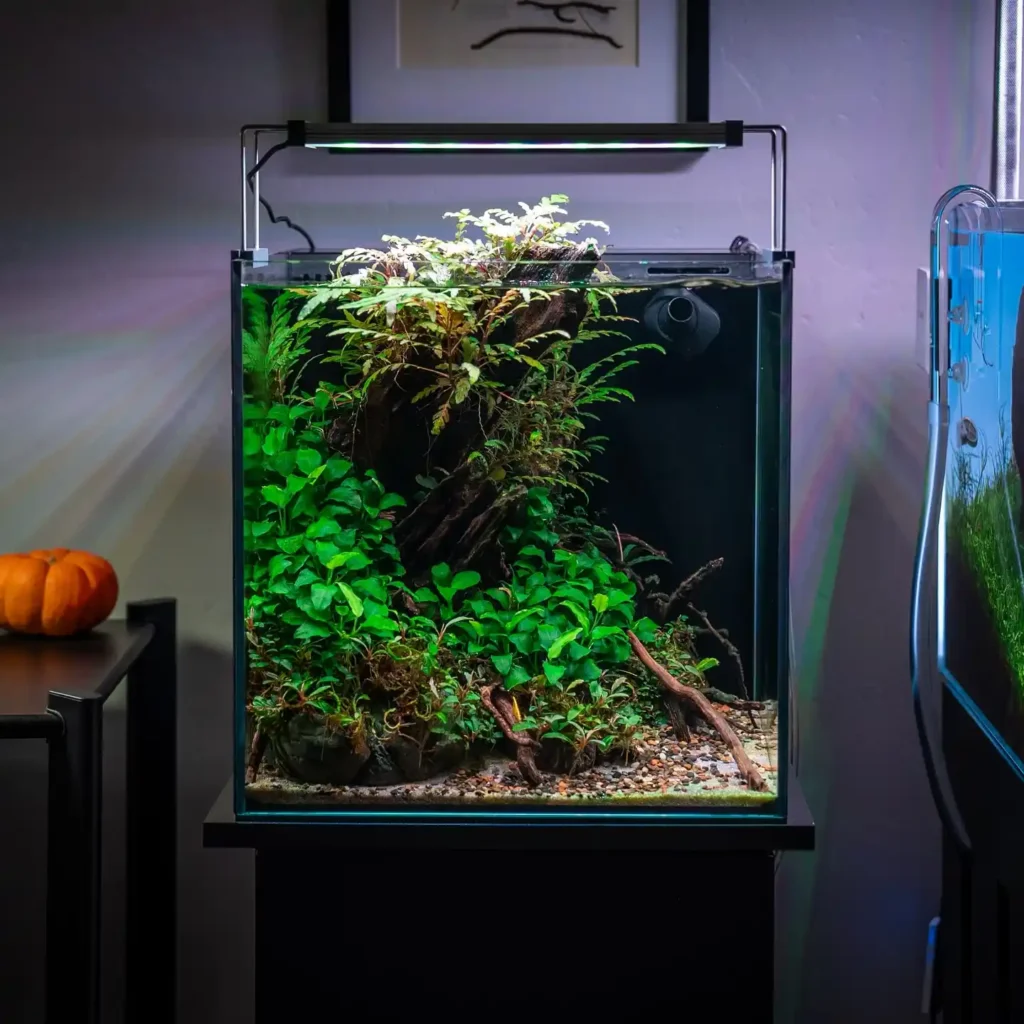
Not every aquascape has to look perfectly trimmed.
A jungle layout can look better when plants overlap, leaves grow around branches, and the hardscape appears half-hidden.
In a cube aquarium, start with a large dark piece of driftwood running upward through the center or rear. Then surround it with broad-leaved plants, smaller epiphytes, mosses, and compact foreground growth.
A dark background works particularly well here. It makes green leaves appear deeper while hiding equipment and empty gaps behind the plants.
The mistake to avoid is using plants with the same leaf shape everywhere.
Mix:
- Broad leaves near the base
- Small leaves around the foreground
- Narrow or fern-like growth higher up
- Moss around selected wood joints
You want controlled chaos, not a tank where you can’t find your fish anymore.
Dense layouts also collect dead leaves and debris in hidden areas, so leave enough access for maintenance.
5. Above-Water Plant Garden
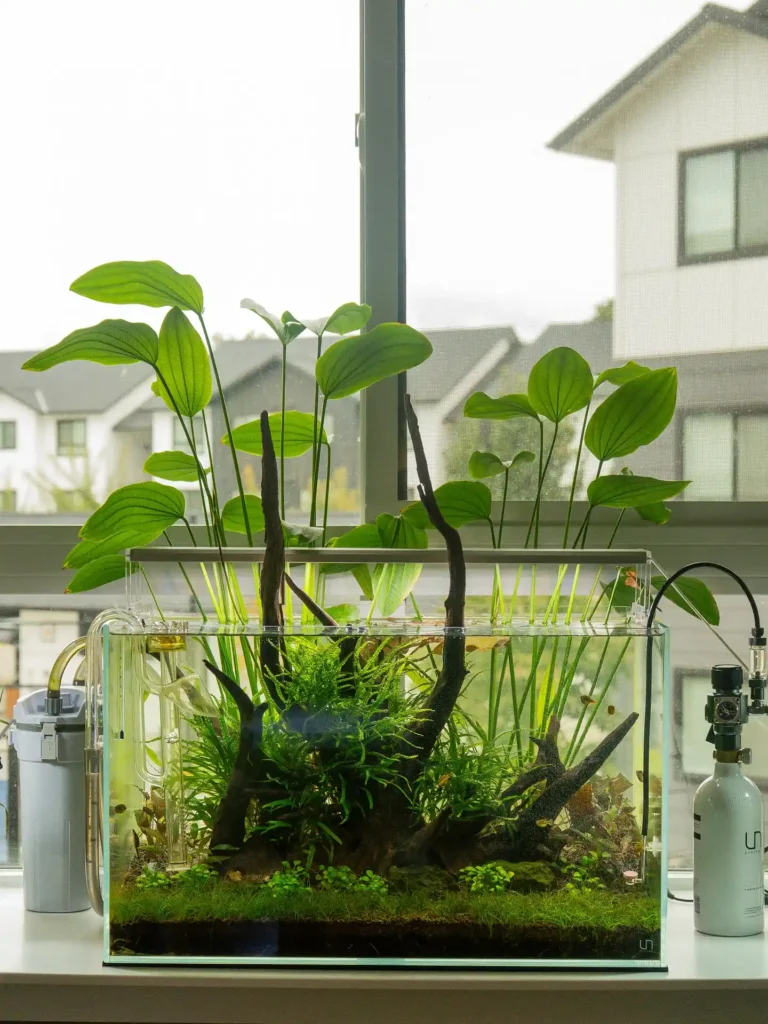
You don’t have to keep every plant inside the aquarium.
This design turns the waterline into part of the layout by allowing tall plants to grow above it while underwater plants fill the lower half.
It creates a strong indoor-garden look, especially beside a bright window or dedicated planted-tank light.
The basic arrangement is simple:
Underwater: wood, moss, small foreground plants and attached plants.
At the surface: roots and stems transition out of the aquarium.
Above water: large leaves create height.
If you’re using terrestrial houseplants, keep the foliage above water. Constantly submerging leaves from plants that aren’t aquatic can cause them to rot.
This style can also hide tubing and equipment because the viewer’s attention goes straight toward the foliage.
Be careful with direct window sunlight, though. Strong changing sunlight can heat the tank and make algae harder to control.
6. Open Meadow Rockscape
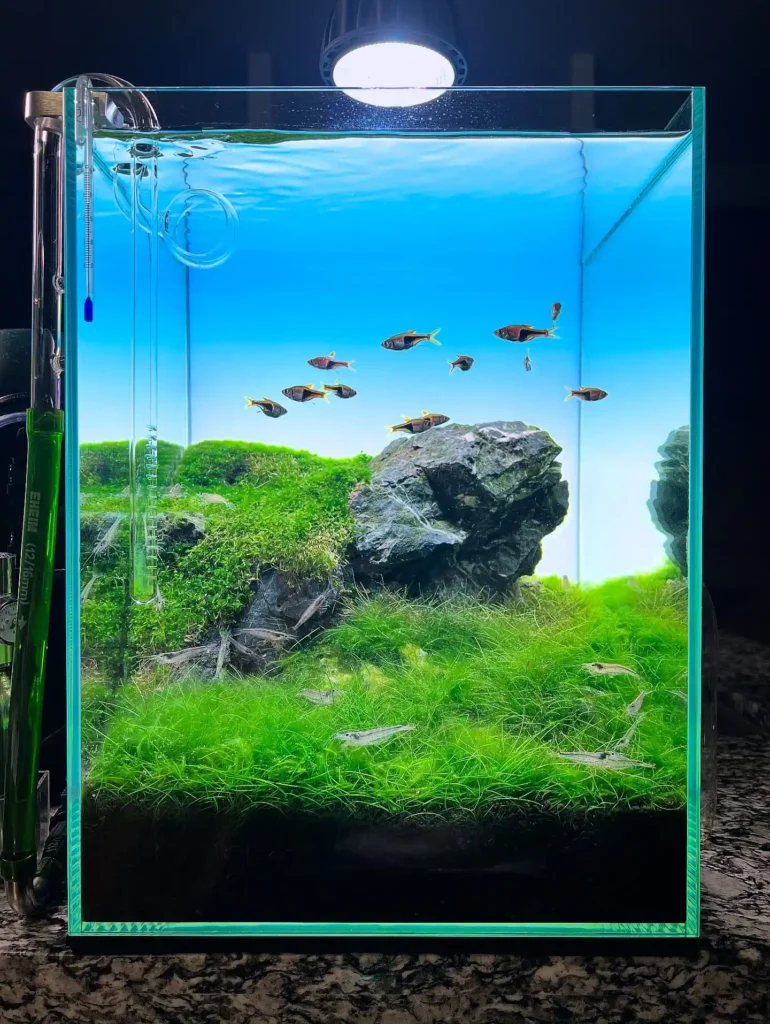
If you prefer a cleaner planted aquarium, strip the design down.
A bright green carpet, a few dark rocks, plenty of swimming space, and a small school of fish can be enough.
This layout uses contrast instead of plant variety.
The dark stone becomes much more noticeable against the low green foreground. Meanwhile, the open upper half makes schooling fish part of the design rather than something squeezed between plants.
You can recreate the idea with carpeting or grass-like plants such as dwarf hairgrass, depending on your lighting and setup.
For a carpeted design:
- Use your largest rock slightly away from dead center.
- Add several smaller supporting stones.
- Keep plants low around the stones.
- Leave a clear water column above.
- Choose small fish that naturally use the open swimming area.
Carpets can be more demanding than the finished aquarium makes them look.
Lighting has to reach all the way to the substrate, and some carpeting plants grow much faster with added CO2. If you want easier choices, checkout guide to Aquarium Carpet Plants for Beginners.
7. Low Planted Shrimp Garden
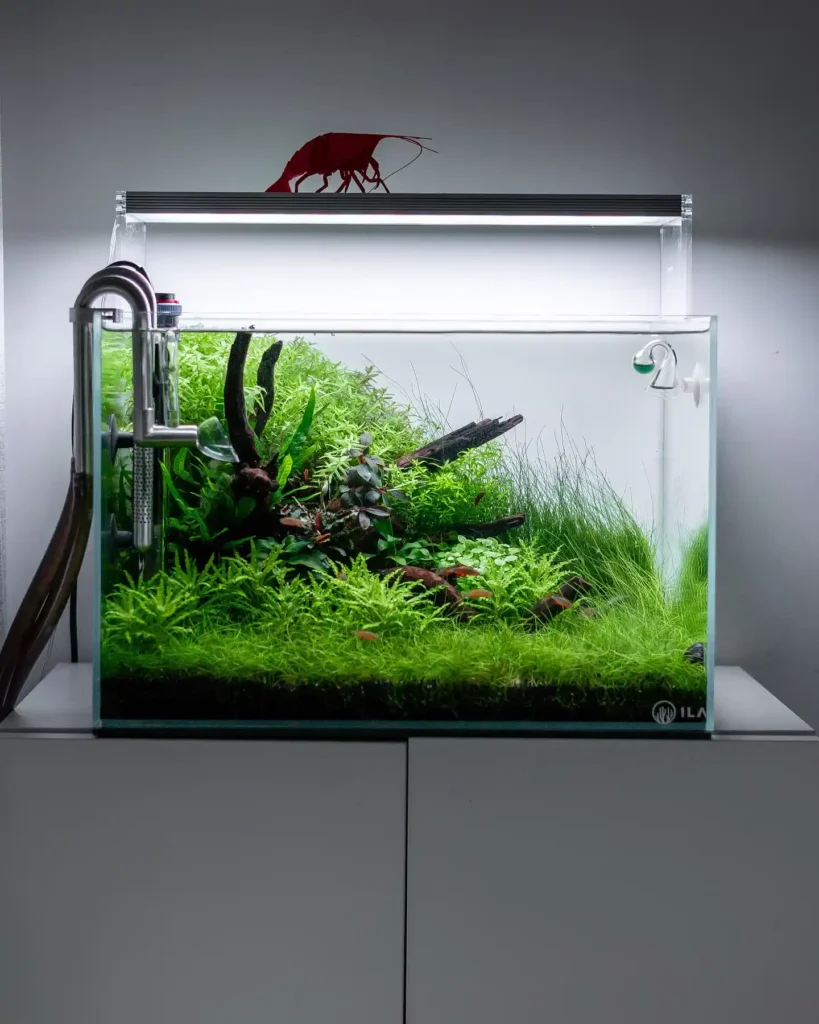
You can create a heavily planted aquarium without letting plants reach the surface.
Keep nearly everything low.
Use rocks across the bottom, add compact plants around their bases, then introduce one slightly taller planted feature as the focal point.
This produces a wide, garden-like layout with plenty of surfaces for shrimp and tiny fish to move around.
It is particularly useful when you want an open viewing area instead of a thick background wall.
A good planting pattern would be:
- Carpet or short plants across the front
- Small epiphytes attached to rocks
- Grass-like plants in selected rear corners
- One raised centerpiece
- Open pathways between rock groups
Leaving paths helps the tank feel larger.
A common beginner mistake is planting every open patch because it looks unfinished on day one. Give the plants time. Today’s empty gap may disappear after a few weeks of growth.
8. Shallow Desktop Riparium
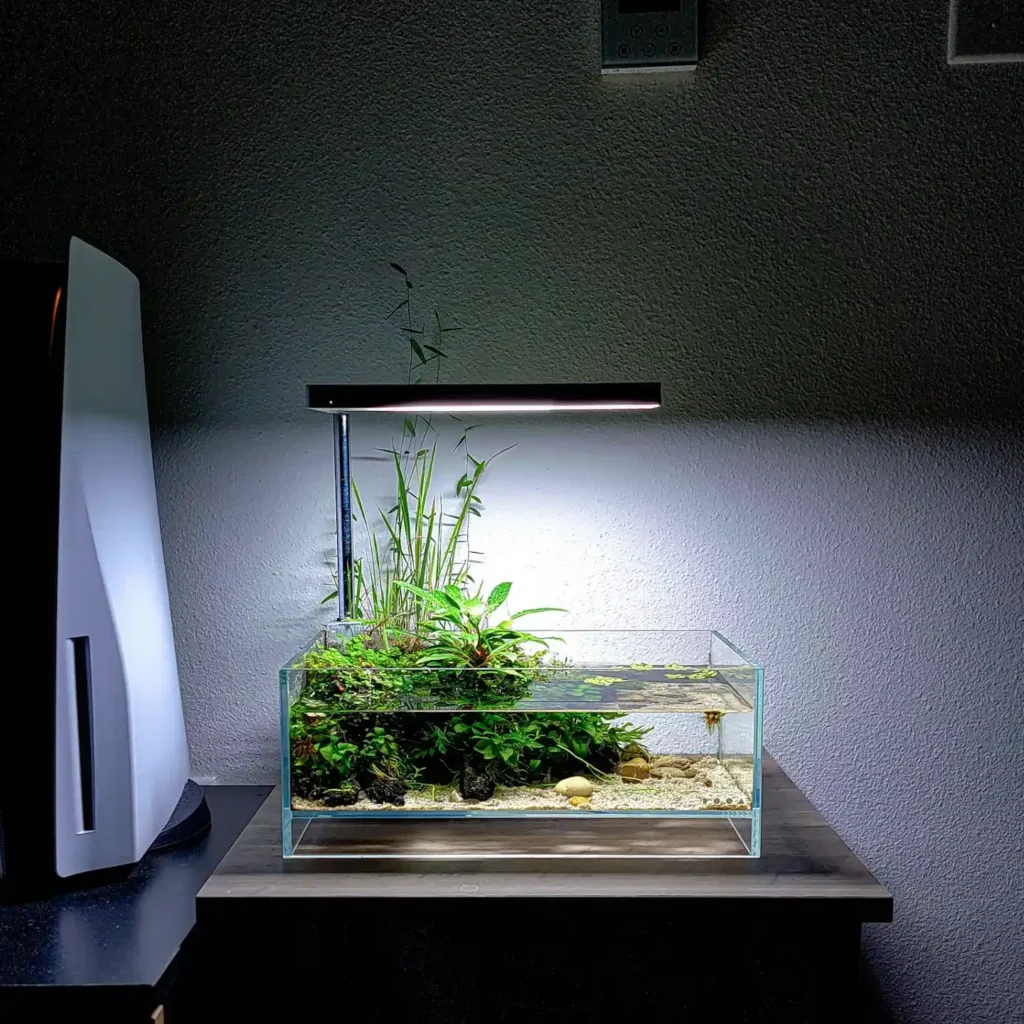
Shallow aquariums can produce some of the most interesting layouts because the waterline becomes much more noticeable.
Instead of pretending the surface doesn’t exist, use it.
Build a planted mound toward one side, let taller grasses or stems continue above water, then keep the opposite end sandy and open.
That creates the appearance of a tiny river edge.
This layout is particularly well suited to desks, shelves, and spaces where a tall aquarium would feel bulky.
For the same visual balance:
- Keep one side densely planted.
- Use sand or pale gravel on the open side.
- Position rocks around the planted mound.
- Allow some vegetation to reach above the waterline.
- Keep floating plants controlled so the open surface remains visible.
Shallow tanks have less vertical swimming room, so stocking needs to match the aquarium’s actual dimensions rather than its appearance alone.
9. Triangular Nature Aquarium
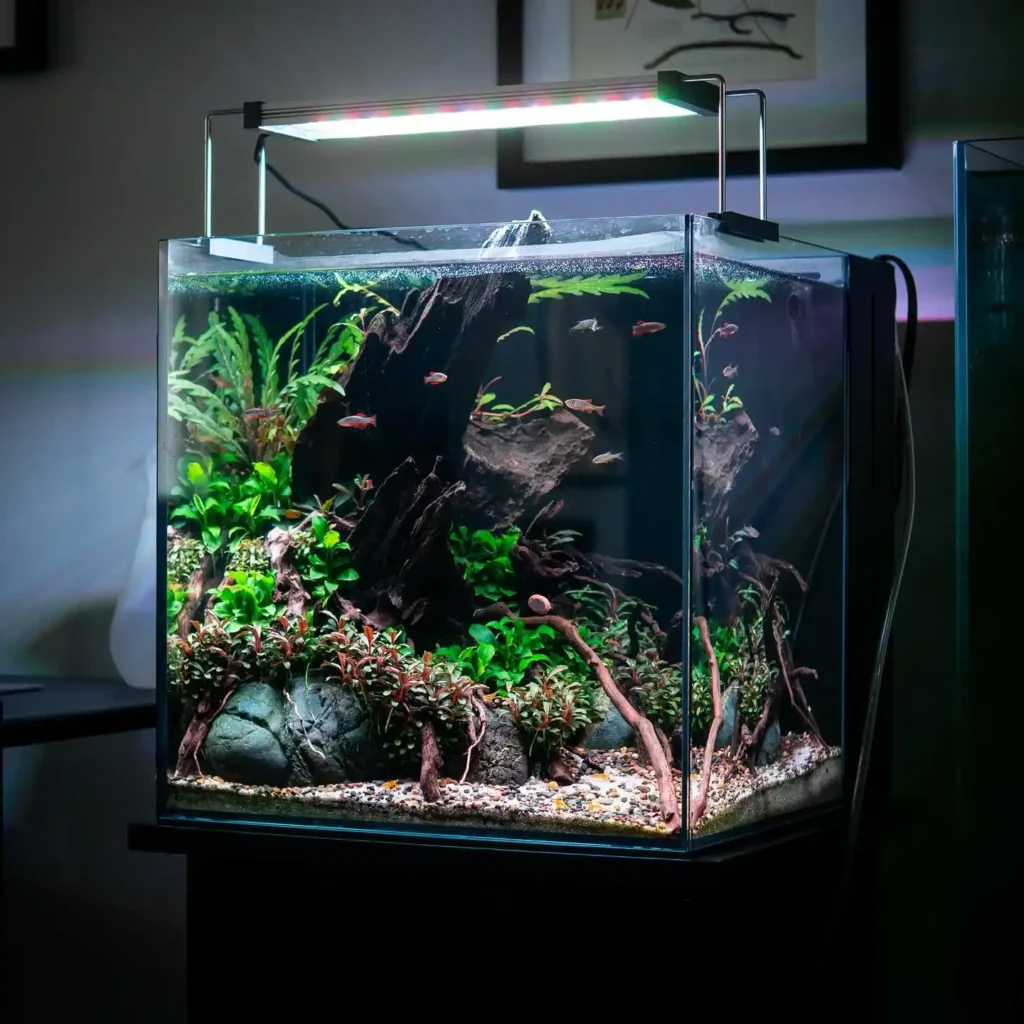
This is one of the easiest layout shapes to understand.
Make one rear corner tall and heavily planted, then gradually bring the hardscape and plants downward toward the opposite front corner.
You have created a triangle.
It sounds almost too simple, but that basic shape can hold a lot of detail without looking messy.
Driftwood gives you the main direction. Rocks anchor the lower part of the layout. Broad green plants fill shaded zones, while smaller plants soften the foreground.
A few reddish plants can also break up a tank that would otherwise become one solid block of green.
The key is keeping the direction consistent.
If the wood points down toward the right, let the planting height follow that same movement instead of suddenly putting another tall plant at the opposite end.
This is one of the planted aquarium layouts I would recommend to someone building their first planned aquascape.
10. Branch Wood and Red Stem Layout
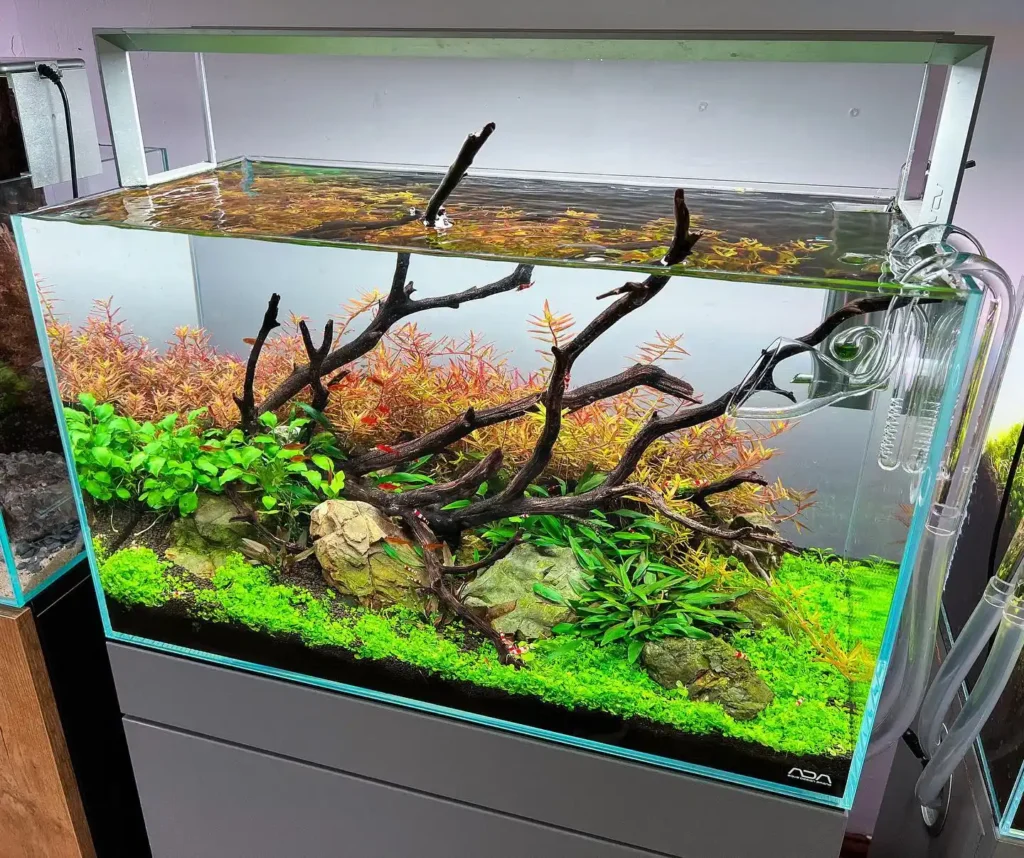
Long, thin branches create a very different feeling from thick driftwood.
Instead of one heavy centerpiece, you get a network of lines moving across the aquarium.
Place the branches over rocks, then grow short green plants around the foreground and use taller stem plants behind them.
Red or bronze stems at the rear can create a strong background without needing colorful ornaments.
The layout works best when you keep some branches exposed.
Cover every piece with moss and eventually the entire structure can disappear.
Try this planting order:
- Build the rocks and branches before adding plants.
- Add tall stems along the rear.
- Place mid-height plants around the rocks.
- Add compact green plants near the branches.
- Finish with a foreground carpet or scattered low growth.
This type of tank usually needs more trimming than an Anubias-heavy layout. Fast-growing stems can quickly hide the hardscape if you let them go for too long.
11. Red Stem Driftwood Garden
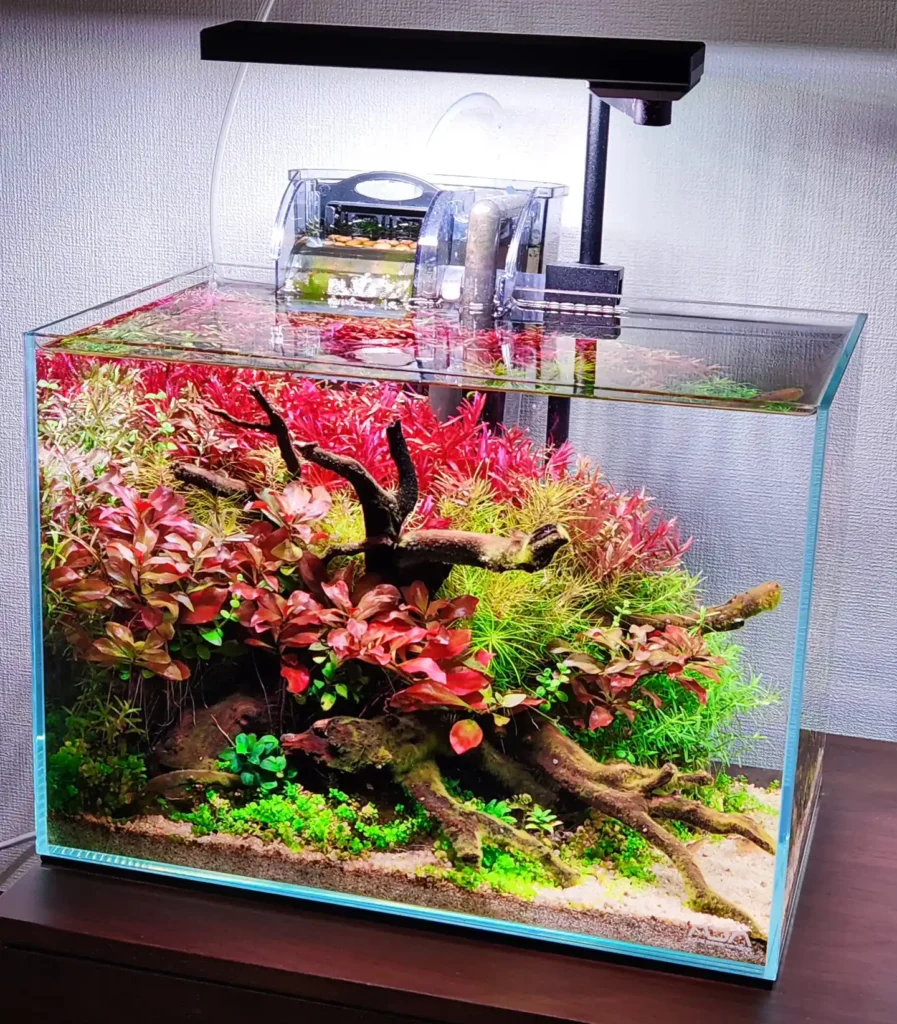
This layout proves that a planted aquarium does not have to be mostly green. Deep red stem plants fill the background while dark driftwood cuts across the middle, creating strong contrast without needing many rocks.
The trick is keeping the red plants grouped together rather than scattering single stems everywhere. Dense groups look much more intentional and make the green foreground stand out.
For a similar layout:
- Place branching driftwood through the middle of the tank.
- Keep taller red stems toward the back.
- Mix a few green stems between red groups for contrast.
- Use small plants around the wood’s base.
- Leave a narrow open foreground so the tank does not feel packed from glass to glass.
Red aquarium plants can be less forgiving than hardy green plants. Their color often depends on good lighting, nutrients, and the species you’re growing, so this is better for someone comfortable maintaining a planted tank.
12. Full Jungle Aquarium With Emergent Plants
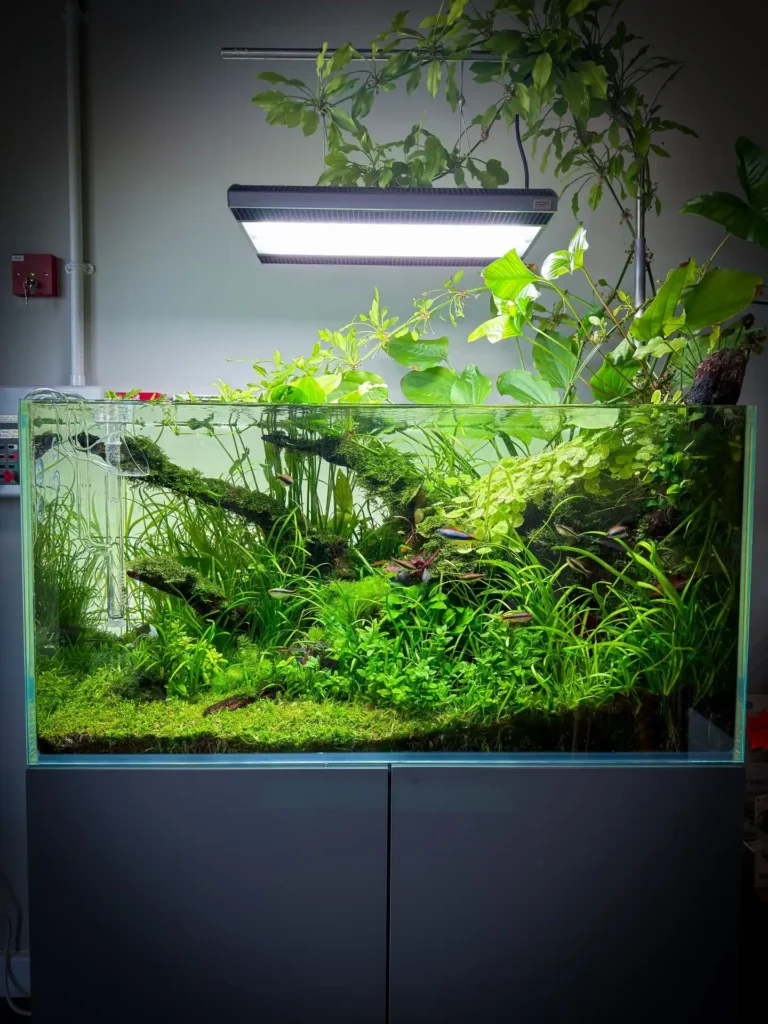
This is the planted aquarium equivalent of letting the garden take over, but in a good way.
Long grass-like plants, moss-covered wood, compact foreground growth, and larger leaves create several layers underwater. Above the surface, more plants continue the same wild look.
The big difference between this and a messy overgrown tank is depth.
The shortest plants remain in front. Taller growth fills the middle and back. Dark wood cuts through those layers so the aquarium still has a visible structure.
This style works well in a larger tank because you have room to use:
- Low foreground plants
- Medium-height grassy plants
- Moss-covered branches
- Tall background foliage
- Emergent growth above the waterline
You’ll need to trim it regularly. Otherwise, fast growers can shade the plants underneath and slowly erase the layers you worked so hard to create.
13. Simple Branch and Anubias Layout
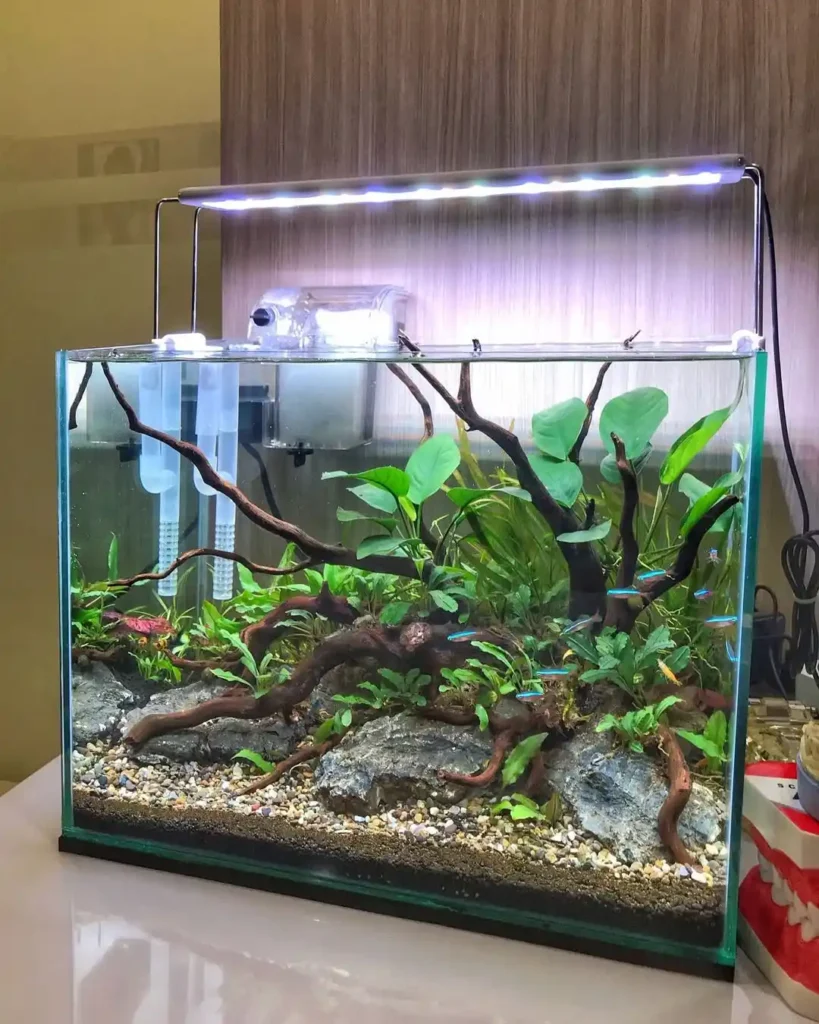
You don’t need a carpet or a wall of stem plants to make a planted tank interesting.
This layout relies on exposed branches, rocks, gravel, and broad green leaves. It feels lighter and more open than many heavily planted aquascapes.
The branching wood creates most of the shape, while plants soften the hardscape without hiding it.
This is a good direction for beginners because plants such as Anubias and similar epiphytes can be attached directly to wood or rock. Their rhizomes should stay above the substrate.
A practical arrangement is:
- Large branches through the center
- Broad-leaved plants toward the rear
- Smaller plants around the wood
- Rocks along the bottom
- Open gravel in the foreground
The open bottom also makes debris easier to spot and siphon.
If maintaining a dense carpet sounds like another job you didn’t apply for, this kind of planted aquarium layout is much easier to live with.
14. Giant Driftwood Centerpiece
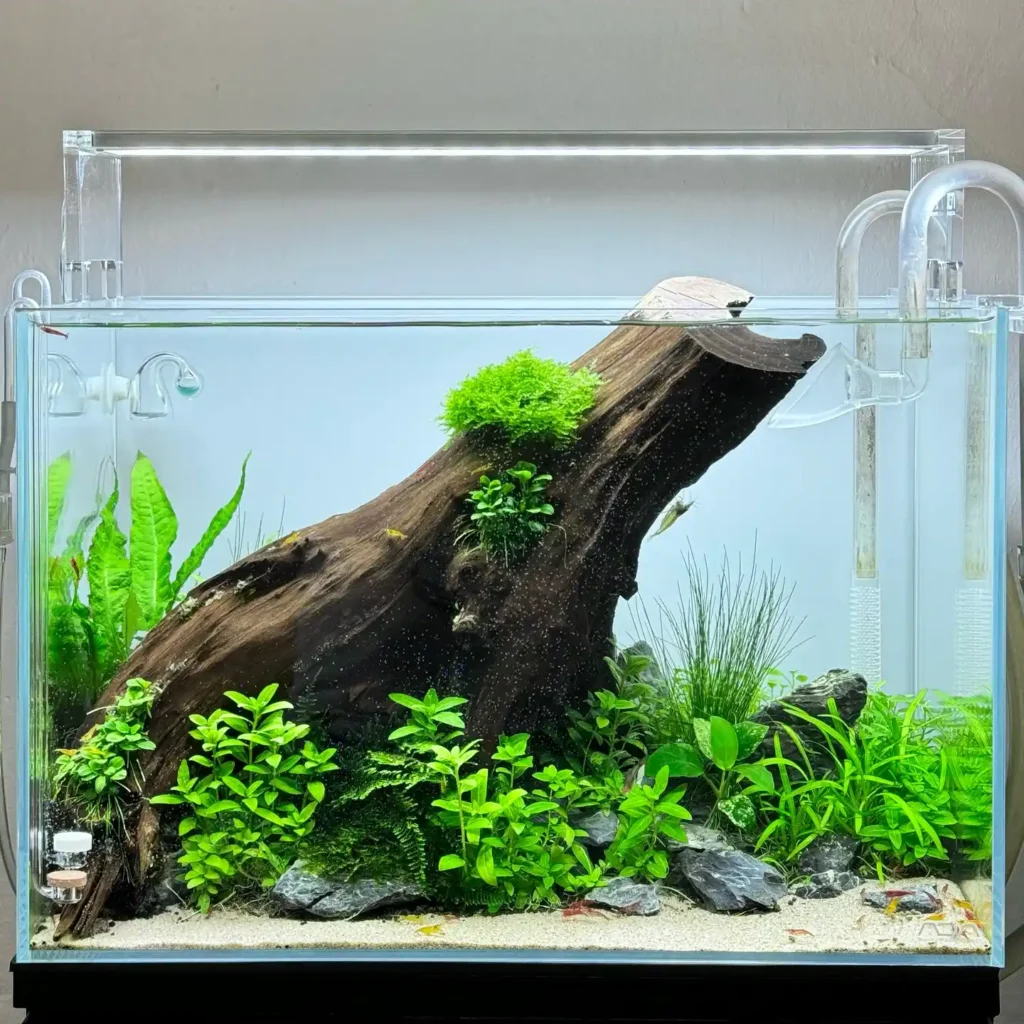
Sometimes one piece of wood should do most of the work.
This aquarium uses an oversized driftwood stump as the main feature, angled upward until it almost reaches the surface. Small plants, mosses, rocks, and grasses are arranged around it rather than competing with it.
The result feels strong without looking overcrowded.
When working with a large centerpiece, resist the urge to cover every inch.
Leave plenty of the wood visible.
Use plants mainly to soften:
- The base
- Natural cracks
- Rock transitions
- Selected pockets on the wood
A moss patch near the upper section can make the wood look older and more natural, while small attached plants add detail without hiding its shape.
This style is especially useful if you find one unusual piece of driftwood that already looks good before any plants are added.
15. Compact Fern and Moss Aquarium
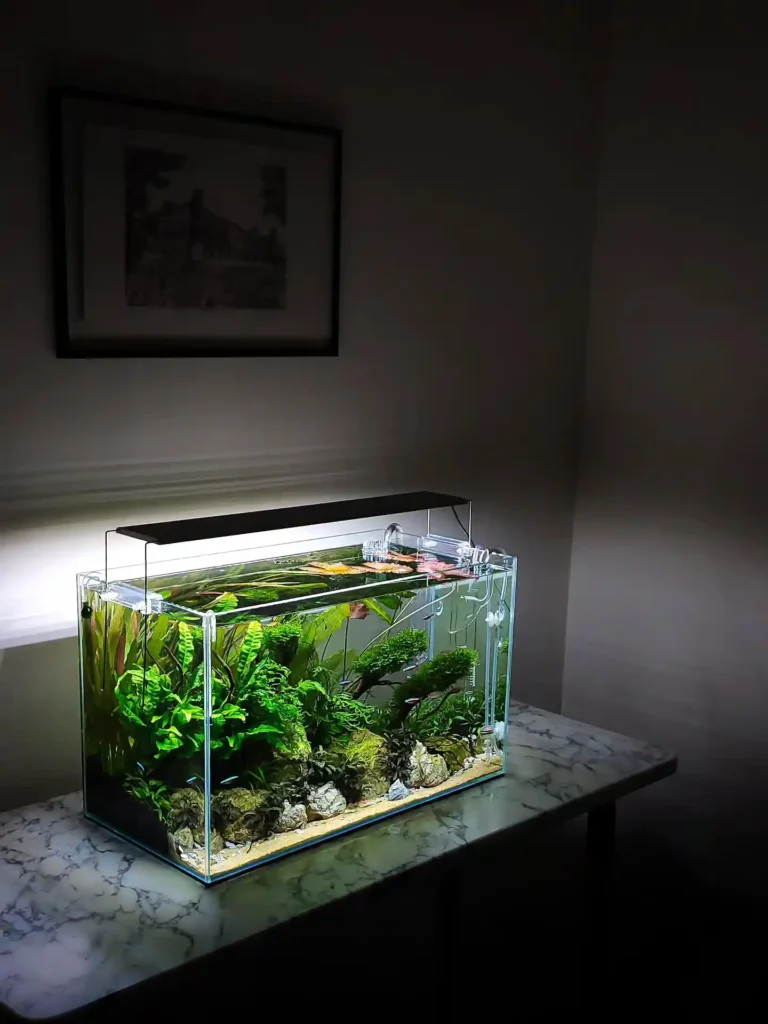
A small planted aquarium can still feel deep if you build upward instead of filling every inch of the floor.
This layout combines rocks, wood, moss, ferns, and taller background plants while leaving a thin open strip of substrate at the front.
That little foreground path matters more than it seems.
It creates separation between the front glass and the planted mass, which helps the aquarium appear deeper.
For a similar effect:
- Place the tallest plants along one rear corner.
- Use moss-covered wood through the center.
- Build rocks around the base.
- Keep shorter plants toward the front.
- Leave a visible gravel or sand border.
Small tanks can become visually crowded very quickly. Limiting yourself to a few plant shapes usually looks better than buying one of everything at the fish store.
16. Shallow Paludarium-Style Plant Layout
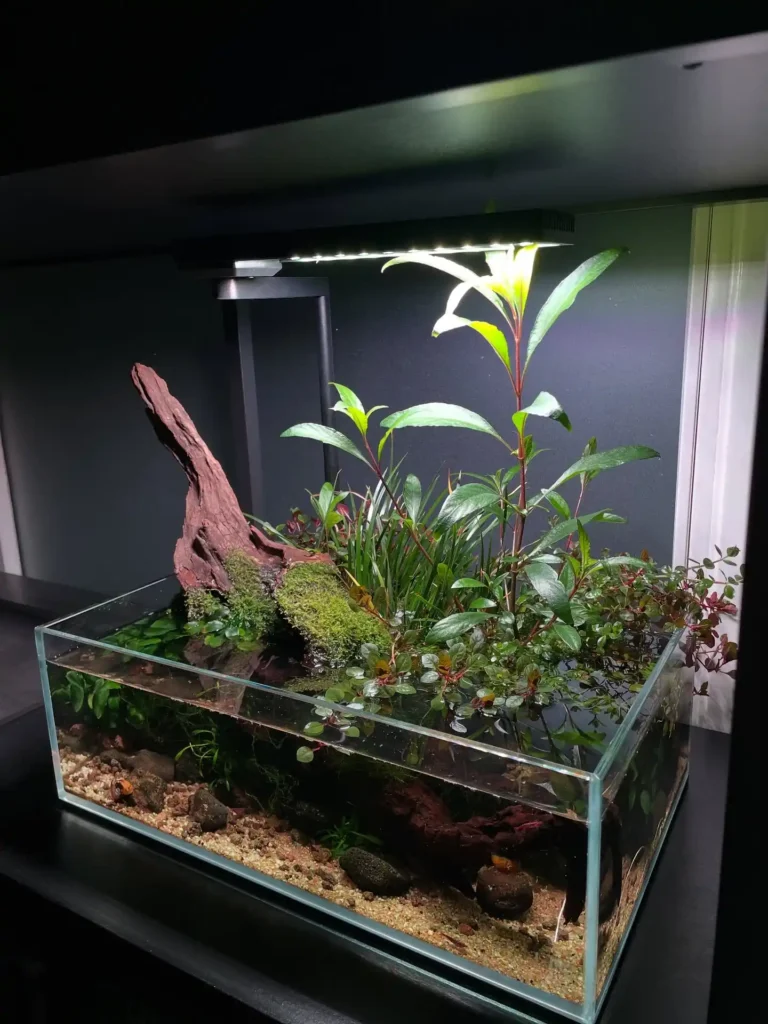
This layout blurs the line between an aquarium and an indoor plant display.
The aquarium itself is shallow, but the planting continues well above the water. A piece of wood rises out of the tank while marginal and creeping plants grow around the surface.
Underwater, the planting stays relatively simple.
That balance keeps the upper growth from making the whole setup look too busy.
This type of layout works best when you deliberately plan three zones:
Underwater zone: aquatic plants, wood, stones and open substrate.
Waterline zone: mosses and plants that tolerate wet conditions.
Above-water zone: terrestrial or marginal foliage suited to growing with its roots near water.
Don’t assume any houseplant can have its leaves submerged. Many can grow with roots in aquarium water while their stems and leaves remain above it, but that is very different from being a true aquatic plant.
17. Rock Mound With Red Center Plant
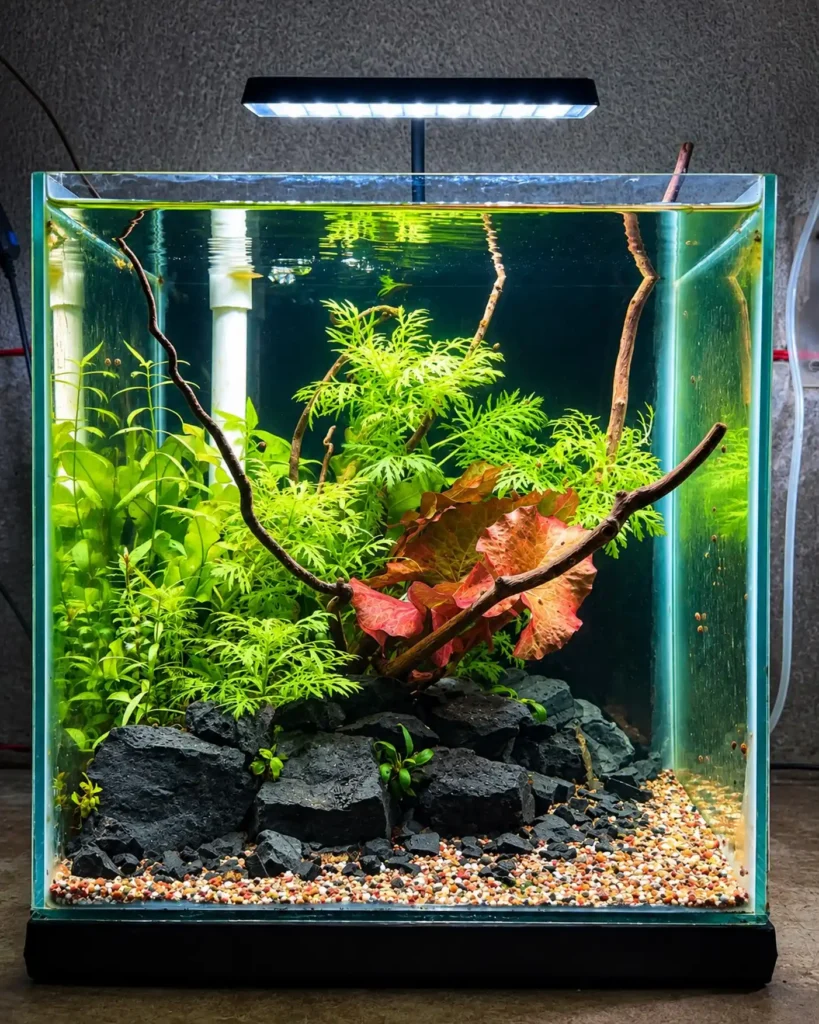
This layout has a simple composition that’s easy to understand from across the room.
Dark rocks form a mound across the bottom. Bright green plants rise behind them, while one red plant near the center becomes the focal point.
Thin branches add height without blocking the plants.
The color placement is doing a lot of the work here.
Instead of putting red plants throughout the tank, keep your strongest color concentrated in one area. Your eye naturally lands there first.
To recreate the structure:
- Build a low dark rock mound.
- Add taller green plants behind it.
- Position one contrasting red plant slightly off center.
- Add narrow branches for vertical lines.
- Keep part of the gravel foreground exposed.
This is a smart planted aquarium layout for a cube because it creates height without filling the entire front viewing area.
18. Blackwater Forest Riparium
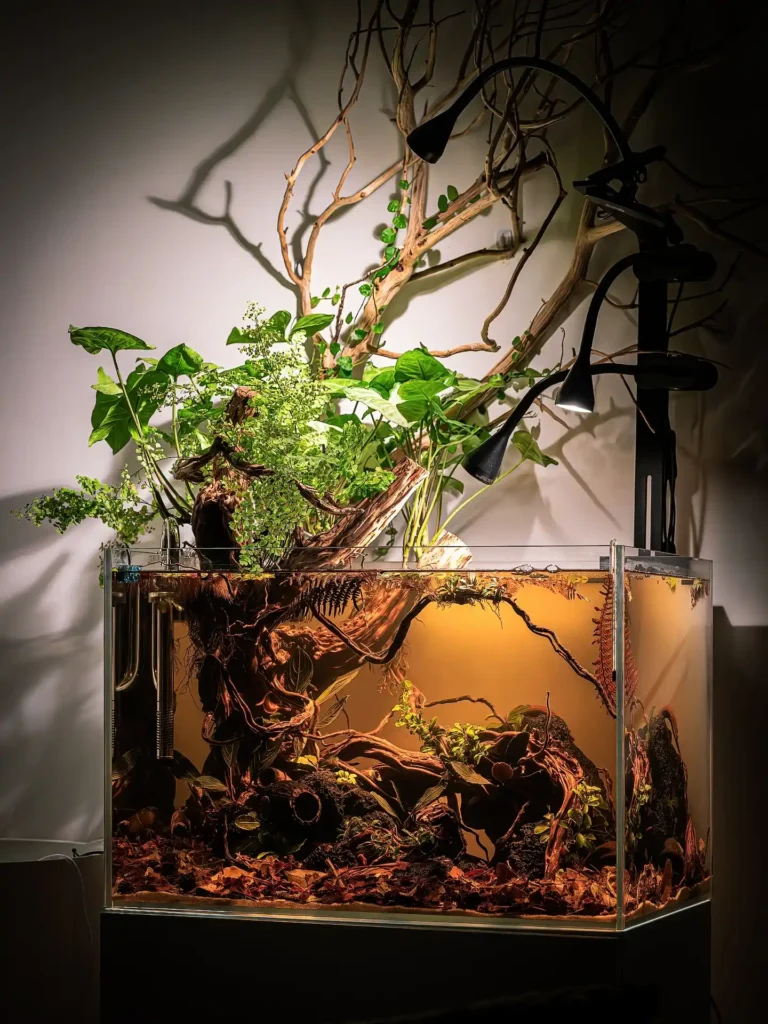
This layout takes a very different route.
Instead of bright clear water and a vivid green carpet, it uses warm tea-colored water, tangled roots, leaf litter, dark wood, and plants growing above the surface.
The result looks closer to a flooded forest edge.
The brown tint in a blackwater-style aquarium can come from tannins released by botanicals and wood. You don’t need to make the water extremely dark. Even a warm amber tint can change the entire mood.
The visual structure comes from:
- Twisting roots
- Leaf litter
- Dark substrate
- Sparse underwater planting
- Emergent plants above the surface
- Open shadowy areas between branches
This isn’t the best layout if your goal is a bright lawn-style aquascape.
It is a much better choice if you like natural-looking wood, softer lighting, and a more mysterious tank.
Just make sure any fish you choose are suited to the water conditions you’re actually maintaining rather than choosing livestock only because it matches the look.
19. Anubias Root Garden
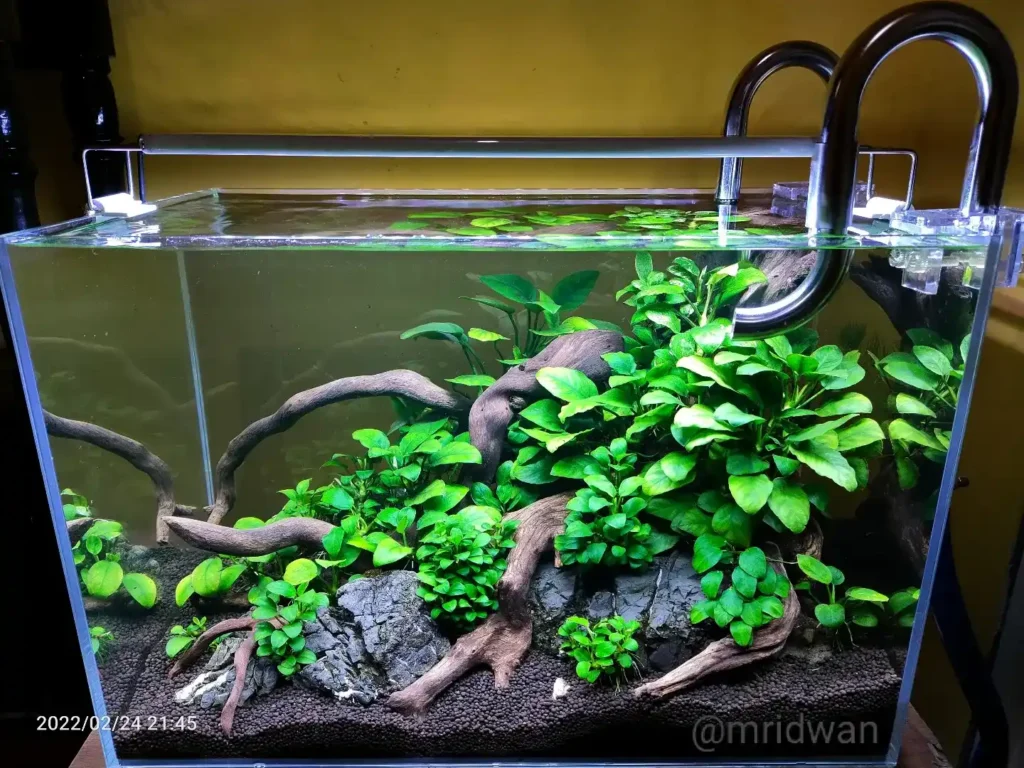
This layout lets broad green leaves cover the hardscape while still keeping the aquarium easy to read.
Large pieces of driftwood twist across rocks, with clusters of attached plants positioned along the branches and between stones.
Unlike a stem-heavy aquascape, most of the growth stays compact.
That can make maintenance much easier.
The most useful trick here is planting in groups.
Instead of attaching one Anubias every few inches, create several dense clusters. Leave sections of wood bare between them. That gives each group its own shape.
The dark substrate also helps the leaves stand out.
This kind of layout can work well for someone who wants a planted aquarium but doesn’t want to trim fast-growing stem plants every week.
Just remember that slow-growing leaves can collect algae when exposed to very strong light for too long.
20. Peace Lily Island Aquarium
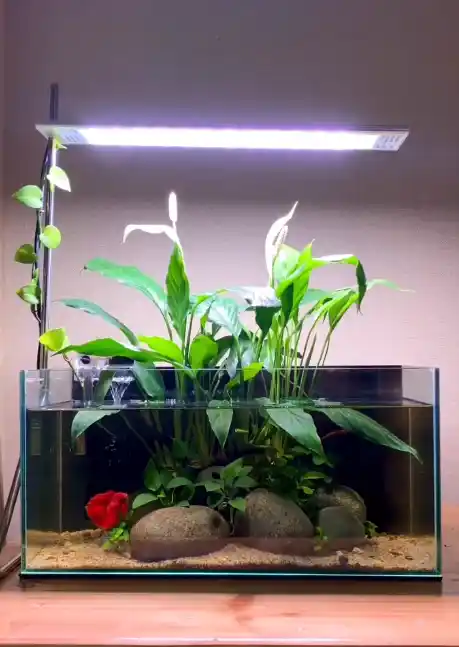
This aquarium uses a large above-water plant as the main focal point while keeping the underwater section fairly simple.
Rounded stones, sand, submerged greenery, and one central planted mound support the taller leaves growing from the tank.
It’s a clean idea for anyone who wants an aquarium that also looks like a houseplant display.
Peace lilies are commonly grown with their roots in water while their leaves remain above the surface. They are not plants you should fully submerge.
A layout like this works best when the underwater section stays restrained:
- Use a few large smooth stones.
- Keep the foreground mostly open.
- Add small aquatic plants around the center.
- Let the emergent foliage provide most of the height.
- Hide roots behind wood, rocks or other plants when possible.
Because the top growth becomes the star, you don’t need a complicated aquascape underneath.
21. Betta Riparium With Floating Roots
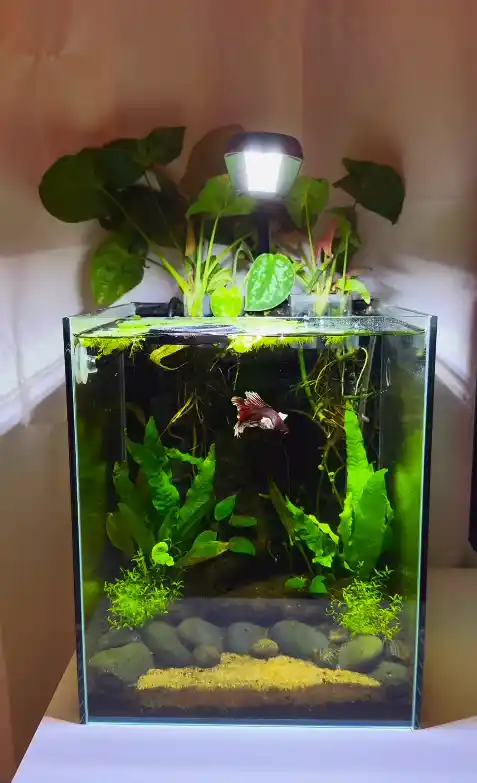
The final layout combines a planted cube with a dense root zone hanging down from plants above the aquarium.
Underwater, ferns, small plants, rocks, and a dark central hardscape create hiding areas. Above the water, larger leaves continue the display while roots hang through the upper section.
A betta can look striking in a setup like this because the broad leaves, shaded areas, and surface cover create a softer environment than a bare tank.
But don’t copy the photo and forget the practical side.
For a betta setup, make sure there is still:
- Easy access to the water surface
- Gentle water movement
- Clear swimming space
- No sharp wood or rocks near long fins
- Stable warm water
- A properly cycled aquarium
Floating roots can create useful cover, but don’t allow them to turn the whole surface into a tangled mat.
You still want the fish to reach open air easily.
More betta tank ideas read this: 16 Betta Fish Tank Ideas
How to Choose the Right Planted Aquarium Layout
After looking through all 21 ideas, don’t choose based only on which finished tank looks most impressive.
Choose based on what you’re willing to maintain.
If you want something relatively simple, start with branch wood and Anubias, a driftwood centerpiece, or an island layout. These can look full without depending on constant stem trimming or a perfect carpet.
If you’re happy to spend more time pruning and managing plant growth, the jungle, red stem, and heavily planted nature layouts give you much more room to play with color and texture.
For something completely different, try a riparium or above-water plant layout. These are especially interesting in open-top tanks because the aquarium becomes part underwater scene and part indoor garden.
The best idea to copy isn’t necessarily the exact plants shown in a photo. Copy the shape, plant heights, open spaces, and hardscape placement, then choose plants that fit your own lighting, water, tank size, and maintenance routine.
That gives you a planted aquarium that still looks good after the first photo session is over.
