
15 Ways to Protect Fry in a Community Tank

The safest way to protect fish fry is to move them into a separate, cycled grow-out tank. If that isn’t possible, dense plants, a protected nursery area, gentle filtration, small fry food, and fewer predators can help some babies survive inside a community aquarium.
Adult fish often eat eggs and fry, including their own young. Even peaceful tetras, guppies, mollies, corydoras, shrimp, and snails may eat babies or eggs small enough to swallow.
You probably won’t save every fry in a community tank. The aim is to give them places adults cannot enter, deliver food where the babies hide, and keep the water safe while they grow.
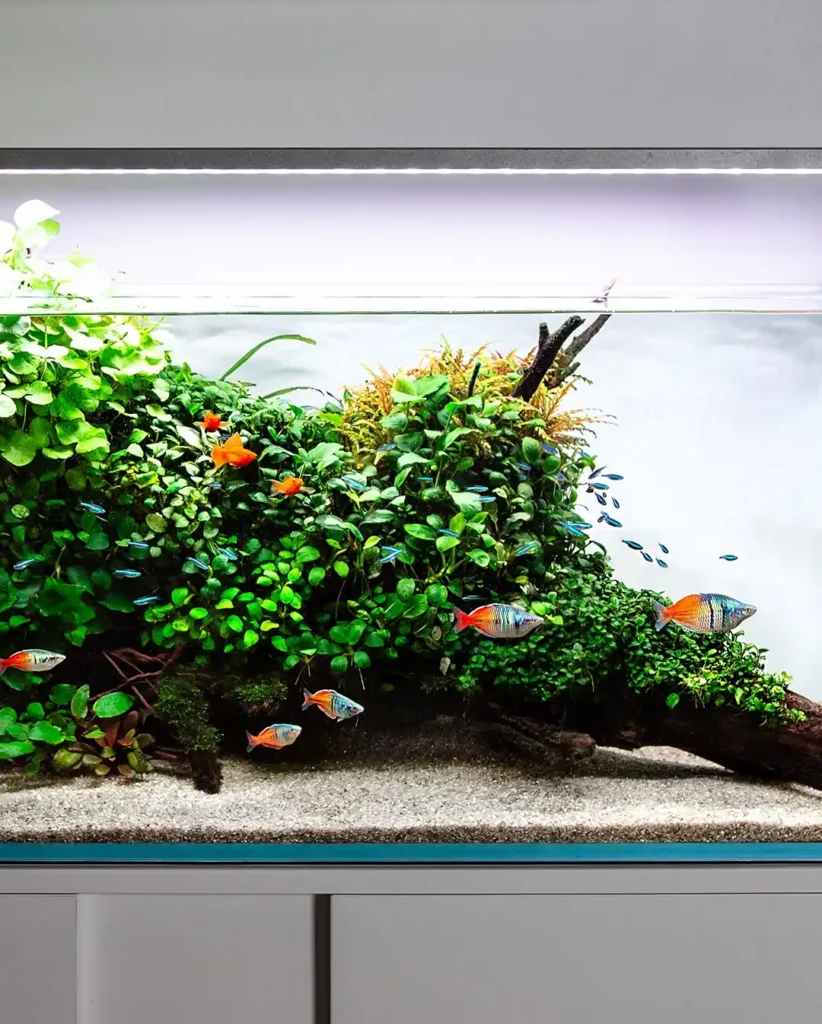
1. Fill Part of the Aquarium With Dense Live Plants
A thick area of live plants is the easiest way to give fry immediate cover. The plants break the adults’ line of sight and create narrow gaps that larger fish cannot enter.
Natural plant growth also holds small organisms and food particles. Newly born fry may pick at these surfaces between scheduled meals.
Best Plants for Protecting Fry
Fine, tangled plants work better than a few broad leaves. Useful options include:
- Guppy grass
- Java moss
- Hornwort
- Water sprite
- Cabomba
- Myriophyllum
- Subwassertang
Place plants in thick groups instead of spreading individual stems evenly around the aquarium. A dense thicket offers real shelter. One thin stem does not.
Which Fry Benefit Most?
Plant cover works especially well for guppies, Endler’s livebearers, mollies, platies, swordtails, ricefish, and small egg-scattering species.
Cichlid fry may also hide among plants, but territorial parents often provide most of their early protection.
Where This Method Can Fail
Fast or determined predators can still push through loose plants. Adult livebearers may wait around the edges and catch fry when they come out to feed.
Dense plants also trap uneaten food and waste. Inspect the area during maintenance and use narrow airline tubing to remove debris without destroying the shelter.
2. Add Floating Plants With Long Roots
Many newborn livebearers swim toward the surface soon after birth. Floating plants provide immediate shelter exactly where these fry gather.
Long roots form a curtain that adults find difficult to move through. They also hold tiny food particles where fry can reach them.
Suitable Floating Plants
Amazon frogbit, water sprite, Salvinia, red root floaters, and water lettuce can create useful surface cover. Choose species that suit your aquarium size and lighting.
Avoid allowing floating plants to cover the entire surface. Fish still need open areas for feeding and gas exchange. Bettas, gouramis, and other surface-breathing fish must always have easy access to air.
Best Placement
Group floating plants around quiet corners rather than directly above the strongest filter flow. Roots remain longer and more stable when they aren’t being pushed around continuously.
You can use a floating airline ring to keep one area open for feeding and surface access.
Possible Problems
Large mollies, swordtails, and gouramis can still search among floating roots. Surface cover improves survival, but it doesn’t create a predator-proof nursery.
Some floating plants grow quickly. Remove excess growth before it blocks too much light from plants below.
3. Create a Thick Java Moss Nursery
Java moss deserves its own method because it creates hundreds of tiny gaps within one compact clump. Newly born fry can disappear deep inside while adult fish remain outside.
A mature moss pile also supports microorganisms that very small fry may eat. This is useful for species whose babies struggle with crushed flakes.
How to Set It Up
Place a thick clump of Java moss in a quiet corner. You can attach the outer part to a small rock or piece of wood, but leave enough loose growth for fry to enter.
Don’t trim it into a thin decorative carpet. A deep, tangled mound offers more protection than a neat layer.
For surface-dwelling fry, attach or contain some moss near the upper part of the aquarium.
Cleaning Around Moss
Java moss catches waste easily. Lift the edge gently during water changes and use airline tubing to remove debris from underneath.
Don’t squeeze or rinse the entire clump without checking it first. Small fry can remain hidden inside and may be removed accidentally.
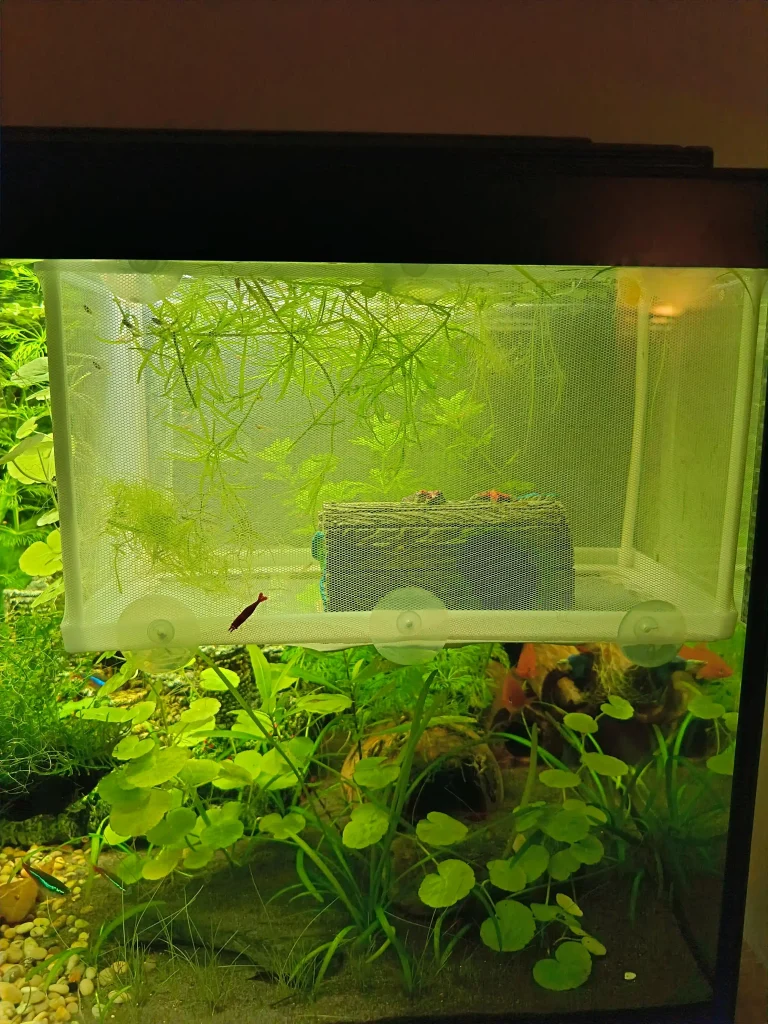
4. Build Fry-Only Hiding Places
Plants aren’t the only option. You can create narrow shelters that fry can enter but adult fish cannot.
Suitable materials include fine plastic mesh, purpose-made ceramic fry shelters, small rock piles, or bundles of aquarium-safe tubes. Every opening must be smooth and large enough for fry without allowing adults through.
How a Fry Refuge Should Work
The shelter needs many entrances. A fry being chased shouldn’t have to find one small doorway.
Place the shelter close to the area where fry are born or released. For livebearers, this is often around floating cover or dense plants.
Make sure water can move gently through the refuge. A sealed box with poor circulation can collect waste and develop low oxygen.
Safety Checks
Don’t use sharp plastic mesh, metal screen, painted decorations, or untreated household materials. Fry have delicate bodies and can become trapped in rough openings.
Check the shelter as the fry grow. A gap that protects newborns may trap larger juveniles later.
5. Cover Every Filter Intake With a Sponge
A filter intake can kill fry even when no adult fish finds them. Newborn fish may be pulled against the intake or disappear inside the filter.
Fit a fine pre-filter sponge over every intake before the fry arrive.
Choosing a Pre-Filter Sponge
The sponge must be fine enough to stop the smallest fry but coarse enough to allow water through. It should fit securely without leaving gaps around the intake tube.
Check hang-on-back filters, canister filters, internal filters, surface skimmers, and powerheads. Any device that pulls in water can trap fry.
Cleaning the Sponge
A fine sponge can clog quickly. Rinse it gently in removed aquarium water when the filter flow begins to slow.
Don’t wash biological filter material under untreated tap water. Chlorine or chloramine may harm the bacteria living on it.
An Extra Benefit
A mature intake sponge grows biofilm and catches small food particles. Fry often graze on its surface, turning a dangerous filter part into a feeding area.
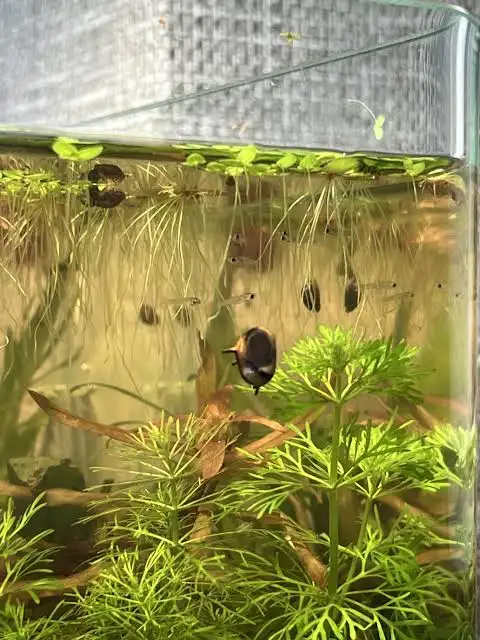
6. Reduce Strong Current Around the Fry
Newborn fish use energy quickly when they must fight a strong current. Weak fry may be pushed into open water where adults can catch them.
You don’t need to remove all water movement. The goal is to create at least one calm nursery area while maintaining enough circulation and oxygen in the aquarium.
Ways to Soften the Flow
Point the filter outlet toward the glass, add a suitable baffle, reduce an adjustable pump’s output, or place tall plants between the outlet and the nursery area.
Don’t block a filter outlet completely. This can reduce filtration or damage the equipment.
Fry That Need Calm Water
Guppy, molly, platy, betta, gourami, and many newly hatched egg-layer fry benefit from gentle areas.
Danio fry and other stream-associated species still shouldn’t be forced against an uncovered intake or blasted around the tank.
Watch the Adults
Some adult fish need stronger circulation than newborn fry. Create different flow areas instead of changing the entire aquarium in a way that makes the adults uncomfortable.
7. Use a Breeder Box Only for Short-Term Protection
A breeder box can stop adults from reaching newborn fry. It works best as a temporary nursery while you prepare a grow-out tank or wait for fry to become large enough to avoid being eaten.
It shouldn’t become the permanent home of a pregnant female or a large group of growing fry.
When to Use One
A breeder box can help when:
- A livebearer is close to giving birth
- You find a few fry in the main tank
- A separate aquarium isn’t immediately ready
- Injured or weak fry need short observation
A box with water circulating from the main aquarium is usually safer than a sealed container.
Using It for Pregnant Fish
Moving a female too early can leave her confined for days. Stress may delay birth, weaken her, or cause pregnancy problems.
If possible, let the female give birth in a heavily planted aquarium and move the fry instead. If you use a maternity box, monitor her closely and release her after delivery.
Problems With Long-Term Use
Breeder boxes offer limited swimming room, collect uneaten food, and may receive weak circulation. Fry can also show slower growth when crowded.
Move them to a proper grow-out tank as soon as practical.
8. Divide the Aquarium Into Adult and Fry Areas
A mesh divider creates a larger nursery than a small breeder box. It can give fry their own section while they continue sharing the community tank’s heater and water.
This method is useful when moving an entire aquarium isn’t possible.
Choosing a Safe Divider
The openings must be too small for fry to pass through and too narrow for predators to insert their mouths. The divider should reach the lid because adults may jump over a low barrier.
Seal gaps along the substrate and glass. Fry are good at finding openings that look too small to matter.
Maintaining Water Flow
Position the filter so clean water reaches both sections. A divider packed with plants can reduce circulation on one side.
Check temperature and waste levels in the protected area. Sharing the same tank doesn’t guarantee both sections have identical conditions.
When a Divider Isn’t Suitable
Very small fry may pass through standard aquarium dividers. Aggressive fish may also spend the entire day striking at the mesh, causing stress on both sides.
In those cases, a separate nursery tank is better.
9. Remove the Most Dangerous Predators
Sometimes the simplest answer is to move the fish that keep hunting the fry. One determined predator can clear an entire batch from a planted community aquarium.
Larger tetras, barbs, gouramis, bettas, cichlids, rainbowfish, and other opportunistic feeders may hunt fry actively. Adult livebearers also eat their own young.
Decide Which Fish to Move
Watch the aquarium rather than blaming one species automatically. The fish patrolling the plants, snapping at movement, or waiting beside a spawning area is the likely problem.
Move the predator only to another fully cycled aquarium that meets its needs. Don’t place it in a bowl or unheated container simply to save the babies.
Protecting Fry From Their Parents
For livebearers, remove the mother after she has finished giving birth if she delivered in a nursery tank.
For egg-scattering fish, remove the adults as soon as spawning ends. Danios, barbs, and tetras may eat their eggs before they hatch.
When Parents Should Remain
Don’t automatically remove cichlid parents that are guarding their young. Kribensis, convict cichlids, angelfish, and several other species may provide useful protection.
Watch the pair closely. Parental care can change, and one adult may begin eating fry or attacking its partner.
10. Move Newborn Fry With a Cup or Turkey Baster
If only a few fry appear, collect them before other fish notice. A small cup or aquarium-only turkey baster is gentler than chasing tiny fry with a large net.
Move them into a breeder box, divided nursery, or cycled grow-out aquarium.
How to Catch Fry Safely
Dim the room and use a small flashlight to locate them among plants. Move slowly so they don’t scatter.
Submerge a cup and guide the fry into it. This keeps them underwater during the transfer. A clean turkey baster can collect very small fry from corners, but squeeze and release it gently.
Never use kitchen equipment that has touched soap, oil, cleaners, or food.
Match the Water
A breeder box inside the same tank already contains matching water. When moving fry to another aquarium, compare temperature and water chemistry first.
If the tanks differ, acclimate the fry carefully. Sudden changes can kill newborn fish even when the destination aquarium looks clean.
11. Move Eggs Before They Hatch
For egg-laying fish, protecting the eggs may be easier than catching dozens of tiny fry later. This works particularly well when eggs are attached to spawning mops, plant leaves, slate, caves, or aquarium glass.
Move the eggs into a cycled hatching or nursery tank with similar water conditions.
Eggs That Are Easy to Transfer
Medaka and many killifish attach visible eggs to mops or plants. Angelfish lay rows on leaves or removable slate. Corydoras stick individual eggs to glass and other surfaces.
Move the spawning material whenever possible. Handling each egg separately increases the chance of damage.
When Eggs Should Stay With Parents
Bristlenose pleco males guard and fan their eggs inside caves. Kribensis and many other cichlids clean, guard, and move their offspring.
Removing eggs from capable parents means you must replace their work with gentle water movement, close fungus control, and clean conditions.
Check for Bad Eggs
Infertile eggs often become solid white or fuzzy. Remove them carefully before fungus spreads to nearby healthy eggs.
Research the normal egg appearance of the species before discarding an entire batch.
12. Feed Fry Inside Their Hiding Areas
Fry can starve in a tank full of food if they are too frightened to leave cover. Deliver food directly to the plants, moss, or nursery area where they spend their time.
A pipette, dropper, or aquarium-only turkey baster gives you better control than sprinkling food across the surface.
Match Food to Fry Size
| Fry type | Suitable first foods |
| Guppy, platy and molly fry | Powdered fry food, crushed flakes, baby brine shrimp |
| Tiny egg-layer fry | Infusoria, green water, very fine fry food |
| Corydoras fry | Microworms, baby brine shrimp, fine sinking food |
| Cichlid fry | Baby brine shrimp, microworms, powdered fry food |
| Bristlenose fry | Soft algae foods, sinking wafers, suitable vegetables |
If food is too large, fry cannot eat it. Crushing adult flakes doesn’t always make particles small enough for newly hatched egg layers.
Feed Small Amounts Frequently
Several small meals usually work better than one large serving. Fry have small stomachs and need regular access to food.
Only add what they can finish. Food hidden inside moss or gravel can rot and cause ammonia to rise.
13. Feed Adult Fish Away From the Fry
Feed the adults at the opposite end of the tank before placing food near the nursery area. This creates a short window when fry can eat without being followed by larger fish.
This method supports the other protections but cannot replace them.
How to Separate Feeding Areas
Offer adult flakes, pellets, or frozen food in the normal feeding corner. Once the adults gather there, use a pipette to release fry food inside moss or floating roots.
Turn off strong flow briefly if it immediately carries fry food into open water. Remember to restart the filter after feeding.
Don’t Depend on Full Stomachs
A well-fed fish may still eat fry. Predatory behavior can happen whenever a small moving fish fits inside a larger fish’s mouth.
Continue using plants, shelters, or physical separation even when the adults receive enough food.
14. Keep Water Changes Small and Consistent
Fry need clean water for healthy growth, but they are less able than adults to handle sudden changes. Small, regular water changes are safer than waiting for the tank to become dirty and replacing most of the water at once.
The exact schedule depends on stocking, feeding, tank size, and filtration.
Test Before Guessing
Monitor ammonia, nitrite, nitrate, temperature, and any other values important for your fish. Ammonia and nitrite should remain at zero in a cycled freshwater aquarium.
Frequent fry feeding adds more waste than normal community feeding. Test more often after a large brood appears.
Match Replacement Water
Bring the new water close to the aquarium’s temperature. Treat tap water for chlorine or chloramine before adding it.
Avoid sudden changes in pH, hardness, salinity, or temperature. Fry can die from rapid shifts even if the final reading falls within a normally acceptable range.
Don’t Skip Water Changes Because Fry Are Present
Dirty water doesn’t protect fry. It weakens them, slows growth, and increases the chance of disease.
Use a careful cleaning method rather than allowing waste to build.
15. Move the Fry to a Cycled Grow-Out Tank
If you want to raise most of the brood, use a separate grow-out aquarium. Plants and shelters help some babies survive, but no community-tank method removes predation completely.
A grow-out tank also lets you feed the fry properly without overfeeding the adults.
Basic Grow-Out Tank Setup
Use:
- A fully cycled aquarium
- A mature sponge filter
- A heater when required
- A fitted lid
- Simple hiding cover
- A bare bottom or easy-to-clean substrate
- Water similar to the main aquarium
The tank should be large enough for the fry’s adult size and expected number. A five-gallon container may hold a few newborn guppies temporarily, but it won’t house dozens of growing mollies or cichlids.
When to Move Fry
Move newborns when predators are actively hunting them or when the community tank cannot provide suitable food.
If plants are protecting the babies successfully, you can wait until they are easier to catch. Don’t wait so long that the nursery becomes overcrowded.
When Can Fry Return to the Community Tank?
A practical rule is to wait until the juveniles are too large to fit inside the largest tank mate’s mouth.
Size isn’t the only concern. Young fish must also be strong enough to compete for food and tolerate the community tank’s flow.
Introduce them gradually and watch for chasing. A large fish may attack a juvenile even when it cannot swallow it.
Which Fry-Protection Method Works Best?
The best method depends on how many fry you want to save.
| Your goal | Best approach |
| Let a few fry survive naturally | Dense plants and floating cover |
| Save one unexpected brood | Breeder box followed by a grow-out tank |
| Raise most newborn livebearers | Separate cycled nursery tank |
| Raise egg-scattering species | Move adults or protected eggs |
| Keep fry in the main aquarium | Fine divider plus plants and safe filtration |
| Breed fish regularly | Dedicated breeding and grow-out tanks |
If you only want a few guppies to survive, heavy planting may be enough. If you want to raise an entire batch, a separate aquarium is the honest answer.
Fish Most Likely to Eat Fry
Almost any fish may eat a baby small enough to swallow. Common fry predators include:
- Adult guppies, mollies, platies and swordtails
- Bettas and gouramis
- Angelfish
- Barbs
- Medium and large tetras
- Rainbowfish
- Loaches
- Cichlids that aren’t guarding the brood
- Larger catfish
- Other juveniles that have outgrown their siblings
Shrimp and snails may eat dead or weak fry and exposed eggs. Some larger shrimp may also catch very small or vulnerable babies.
Don’t label a fish “safe” based only on its peaceful community reputation. Peaceful fish still eat tiny animals.
How to Tell Whether Fry Are Surviving
Healthy fry should become more active after absorbing their yolk sacs. You should see them searching for food, developing fuller bellies after meals, and gradually increasing in size.
Warning signs include:
- Fry resting continuously on the bottom
- Pinched or hollow bellies
- Rapid breathing
- Fry gathering near the surface
- Sudden disappearance
- Curved bodies
- Uneaten food covering the bottom
- Cloudy or foul-smelling water
Test the water immediately if several fry act weak. Don’t assume every loss comes from adult predation.
Common Mistakes That Get Fry Eaten or Killed
Relying on One Small Plant
A decorative stem or two won’t hide an entire brood. Fry need dense, tangled cover with several escape routes.
Leaving the Filter Intake Uncovered
A tank may appear predator-free while the filter quietly removes the babies. Cover the intake before fry appear.
Keeping Fry in a Breeder Box for Weeks
Breeder boxes are useful temporarily. They become cramped and dirty when used as permanent grow-out tanks.
Adding Too Much Fry Food
Powdered food spreads through the aquarium and is easy to overuse. Feed with a pipette and remove leftovers.
Moving Fry Into a New, Uncycled Aquarium
Separation doesn’t help if the nursery develops ammonia. Cycle the tank and filter before transferring fry.
Assuming Parents Will Protect the Babies
Some cichlids guard fry, while livebearers provide no care. Even normally attentive parents may eat a brood when stressed.
Cleaning Without Checking for Fry
Fry hide inside moss, filter sponges, floating roots, gravel and siphon buckets. Inspect everything before discarding removed water or plant trimmings.
Frequently Asked Questions
Can fry survive in a community tank?
Yes, some fry can survive when the aquarium contains dense plants and small hiding spaces. Survival will be much lower when adult fish can search every part of the tank.
Do adult fish always eat their fry?
No, but many species will eat fry when given the chance. Individual behavior varies, so don’t assume a normally peaceful adult is safe.
What plant is best for hiding baby fish?
Java moss and guppy grass are among the best choices because they form dense tangles. Floating plants with long roots also help surface-dwelling fry.
Should I separate a pregnant guppy?
You can, but moving her too early may cause stress. A heavily planted birthing tank or moving the newborn fry after delivery is often safer than keeping her in a small breeder box for several days.
For species-specific preparation, read the Guppy Breeding Guide.
Can fry live in a breeder box?
They can live there temporarily, but a breeder box doesn’t provide enough room for long-term growth. Move them into a cycled grow-out tank as soon as possible.
How often should fry be fed?
Most fry benefit from several small meals per day. The exact number depends on the species, age, food, and aquarium conditions.
Will floating plants protect all the fry?
No. They improve cover but don’t stop determined adults from hunting among the roots.
Can a filter kill baby fish?
Yes. An uncovered intake can trap or pull in fry. Install a fine pre-filter sponge or use a sponge filter.
How long should fry remain separated?
Keep them separated until they are too large to fit inside the biggest tank mate’s mouth and can compete successfully for food.
Should I remove cichlid fry from their parents?
Not automatically. Many cichlid parents guard their eggs and fry. Move the young if the parents begin eating them, fight with each other, or cannot protect them from other tank residents.
