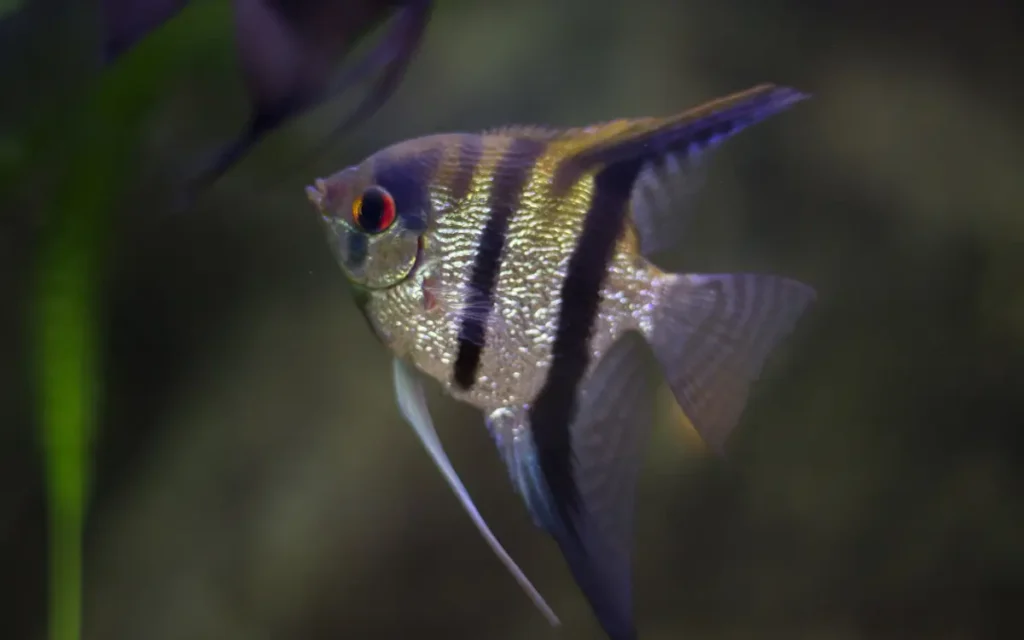
Angelfish, with their graceful fins and striking appearance, are among the most popular freshwater fish in the aquarium hobby. While they are admired for their beauty and elegance, providing the right care is key to keeping them healthy and stress-free.
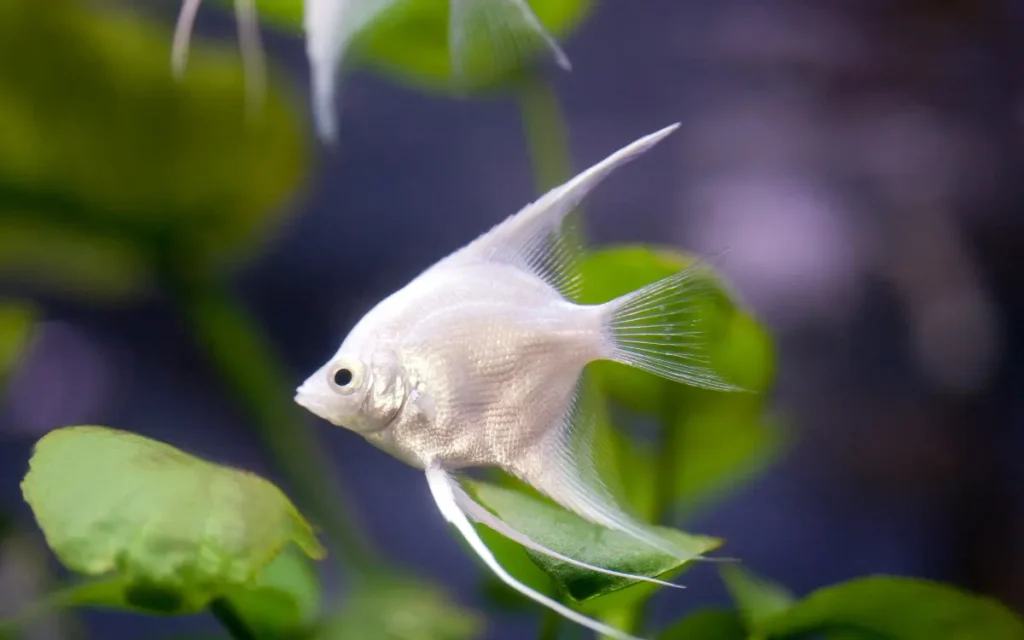
Angelfish Species Profile
| Attribute | Details |
| Family | Cichlidae |
| Aggressiveness | Semi-aggressive |
| Minimum Tank Size | 20 gallons |
| Life Span | 10–12 years |
| Diet | Omnivorous (flakes, pellets, live, frozen) |
| Size | Up to 6 inches |
| Compatibility | Best with peaceful, similarly sized fish |
| Temperament | Generally peaceful but can be territorial |
Best Angelfish Tank Setup for Beginners
When choosing a tank, start with at least a 20-gallon setup, though 30 gallons or more is ideal. Angelfish have tall bodies, so vertical tanks are better suited to their swimming habits.
Use a soft substrate like sand or fine gravel, along with natural decorations such as driftwood, rocks, and live plants. Leave plenty of open space for swimming.
Filtration is essential. Use a reliable filter that provides moderate water flow, like a hang-on-back or canister filter. Angelfish prefer water temperatures between 75–82°F (24–28°C) and a slightly acidic to neutral pH of 6.5–7.5. Lighting should be moderate, avoiding both extremes.
Feeding Angelfish
Angelfish are omnivores and thrive on a varied diet. A combination of flake or pellet food forms the base of their nutrition. Supplement this with live foods like brine shrimp or blackworms two to three times a week, and offer frozen foods such as bloodworms for additional protein.
Vegetables like blanched peas or zucchini can be included once or twice a week to aid digestion. Treats like freeze-dried foods or fruit bits can be given occasionally for variety.
Keeping Angelfish Healthy
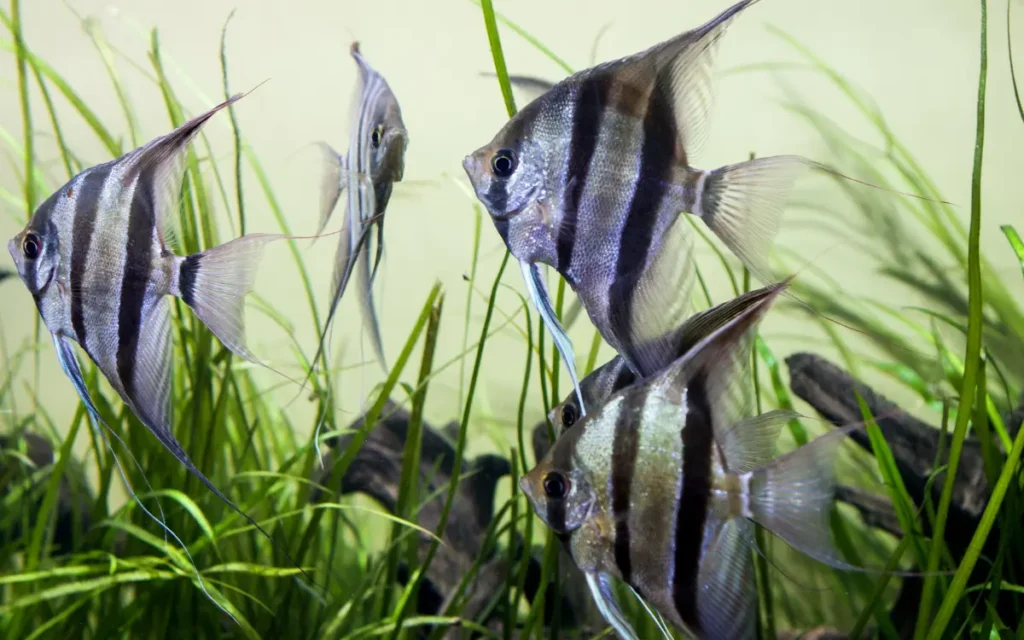
To maintain good water quality, change 20–25% of the tank water weekly using a water conditioner. Regular testing will help you keep parameters stable.
Choose peaceful tankmates of similar size and temperament. Avoid overcrowding to reduce stress and aggression. Watch for signs of disease such as clamped fins or odd swimming behavior. Address any issues promptly.
Suitable Tank Mates for Angelfish
Angelfish do best with non-aggressive species that won’t nip fins. Suitable companions include Black Skirt Tetras, Cardinal Tetras, Dwarf and Pearl Gouramis, Corydoras Catfish, Bristlenose Plecos, and Scissortail Rasboras.
Avoid barbs, very small fish, or aggressive cichlids that could either stress or become prey.
Read more about Angelfish Tank Mates.
Can Angelfish Live with Goldfish?
Quick Answer
Not recommended. Angelfish and Goldfish have different care needs, especially regarding temperature, behavior, and diet.
Key Differences
Angelfish are tropical fish that prefer temperatures between 76–82°F and slightly acidic water. Goldfish prefer cooler water around 68–74°F and are better suited to neutral to slightly alkaline conditions. Angelfish are semi-aggressive and territorial, while Goldfish are peaceful but messy eaters.
Issues in Shared Tanks
Temperature mismatch can cause chronic stress or illness for both species. Their dietary needs and feeding speeds differ, leading to poor nutrition or overfeeding. Angelfish may also nip the flowing fins of Goldfish, especially in tight spaces.
Are There Any Exceptions?
In rare, temporary setups with a large tank (50+ gallons), careful temperature management around 74°F, and constant monitoring, they may coexist. However, this is not ideal for long-term health or stability.
Breeding Angelfish
A separate 20-gallon breeding tank works best. Keep the temperature between 80–82°F. Use a bare bottom or fine substrate with flat surfaces like slate or plant leaves for egg-laying. A gentle filter helps maintain clean water.
Angelfish usually pair off naturally. Look for signs like swimming together and cleaning a specific surface. Feed the pair a protein-rich diet including live or frozen foods to condition them for spawning.
Once eggs are laid and fertilized, the parents will guard them. Remove any white (unfertilized) eggs to prevent fungus. Eggs hatch within 2–3 days. Fry remain attached to the surface for a few more days and absorb their yolk sacs.
When the fry begin swimming freely, feed them infusoria or fry food. Within a week, switch to baby brine shrimp or crushed flakes. Move the fry to a grow-out tank once they’re large enough.
FAQs
Do angelfish eat other fish?
Yes, especially small fish that fit in their mouths. Choose tankmates wisely.
Are angelfish hard to keep?
No, they are beginner-friendly when given a clean, stable environment.
What fish can live with angelfish?
Tetras, Corydoras, and peaceful Gouramis are excellent options.
How many angelfish should be kept together?
Start with a group of 4–6 juveniles. As they mature and form pairs, you may need to separate them.
Can Angelfish and Goldfish live together with temperature adjustment?
Even adjusted, 74°F isn’t optimal for either species. Long-term coexistence isn’t recommended.
What are signs of stress in Angel Fish or Goldfish?
Look for clamped fins, poor appetite, hiding, or unusual swimming.
 **2. Platy** Platies are hardy and easygoing. They enjoy swimming in groups and come in a variety of bright colors. Great for peaceful community tanks. ➡️ [Platy Fish Guide →](#) **3. Zebra Danio** Known for their energy and toughness, zebra danios are perfect for cycling new tanks. They tolerate a wide range of conditions and like to dart around in groups. ➡️ [Zebra Danio Guide →](#) **4. Corydoras Catfish** Peaceful bottom-dwellers that help keep your tank clean. Keep them in groups of 3 or more and give them soft substrate. ➡️ [Cory Catfish Care →](#) **5. Molly** Adaptable to various water conditions (even brackish), mollies are lively and great for community aquariums. ➡️ [Molly Fish Care Guide →](#) **6. Swordtail** Easy to care for and great in peaceful groups. Males have a signature sword-like tail and love swimming space. ➡️ [Swordtail Fish Guide →](#) **7. Betta Fish** Low-maintenance and visually stunning. Best kept alone or with very peaceful tank mates like snails or Corydoras. ➡️ [Full Betta Fish Care Guide →](#) **8. Neon Tetra** Small and peaceful, neon tetras love to school and light up a planted tank. Keep them in groups of 6 or more. ➡️ [Neon Tetra Care Guide →](https://oceanbitez.com/neon-tetras/) **9. Harlequin Rasbora** A calm and schooling species that fits right into community setups. Easy to feed and care for. ➡️ [Harlequin Rasbora Guide →](#) **10. Dwarf Gourami** A gentle and colorful addition to a beginner’s tank. Likes planted environments and peaceful neighbors. ➡️ [Dwarf Gourami Guide →](#) **11. White Cloud Mountain Minnow** Can live in cooler temperatures and is perfect for unheated tanks. Small, peaceful, and easy to care for. ➡️ [White Cloud Minnow Guide →](#) **12. Cherry Barb** Peaceful and social, cherry barbs do well in planted tanks and enjoy being in small groups. ➡️ [Cherry Barb Care →](#) --- ### Sample Beginner Tank Combos **Combo 1: 10–15 Gallon Easy Starter** * 4–6 Guppies * 3 Corydoras Catfish * 1 Nerite Snail **Combo 2: 20 Gallon Planted Community** * 6 Harlequin Rasboras * 6 Neon Tetras * 1 Dwarf Gourami * 3 Otocinclus (optional if algae control is needed) --- ### Beginner Tips for a Successful Aquarium * Cycle your tank before adding fish (ammonia → nitrite → nitrate) * Start with hardy species before delicate ones * Feed small amounts once or twice daily * Do weekly partial water changes (20–30%) * Don’t mix aggressive or fin-nipping species * Use a heater for tropical fish (75–80°F) --- ### Final Thoughts These beginner fish are ideal for getting started in the hobby without frustration. They're low-maintenance, compatible, and fun to watch. Once you’re comfortable, you can explore more advanced species and community combinations. ➡️ Check out our full guide to [Freshwater Aquarium Fish →](https://oceanbitez.com/freshwater-fish/)](https://oceanbitez.com/wp-content/uploads/2024/06/Best-Freshwater-Fish-for-Your-Aquarium-1024x640.webp)