If you’ve ever wanted a cichlid with bold colors but without the size and aggression of larger species, Apistogramma might be exactly what you’re looking for. These small South American dwarf cichlids are full of personality. They explore, claim territory, guard their caves, and show off incredible colors when they feel comfortable.
But here’s the honest truth: they’re not “set and forget” fish. They do best in a well-planned tank with stable water and proper hiding spaces. If you set things up correctly from the start, they’re rewarding and surprisingly manageable.
What Is an Apistogramma?
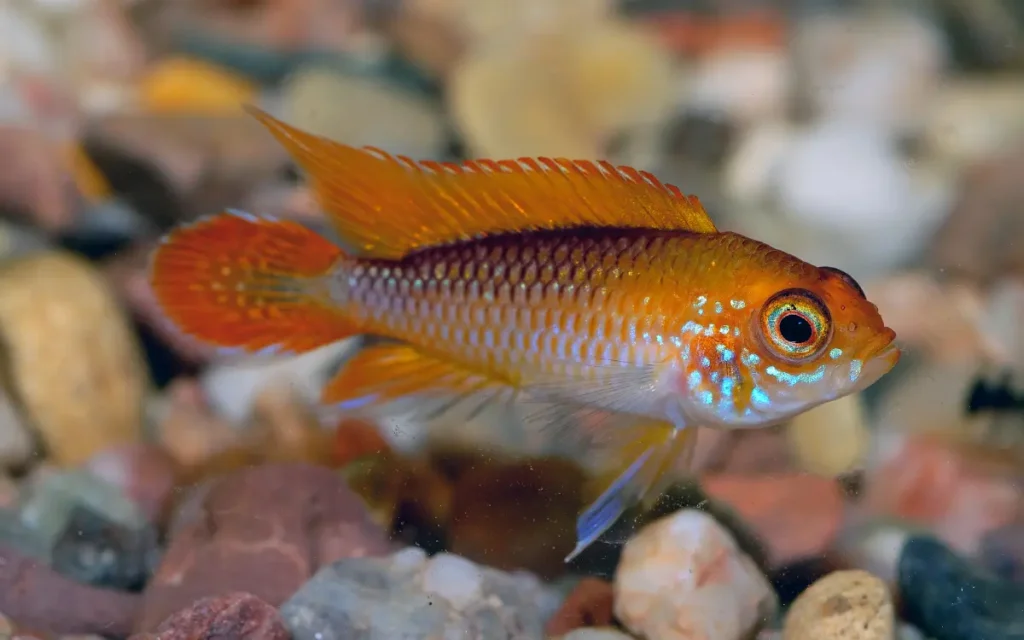
Apistogramma are small freshwater dwarf cichlids native to slow-moving waters in South America, especially the Amazon basin. In the wild, they live in shallow streams filled with leaf litter, roots, and soft sand.
That environment explains a lot about their behavior. They stay near the bottom, defend small territories, and prefer calm water.
Most species grow between 2 to 3.5 inches. Males are larger and more colorful, while females are smaller but often turn bright yellow when breeding. With proper care, they live around 3–5 years.
Popular Apistogramma Species
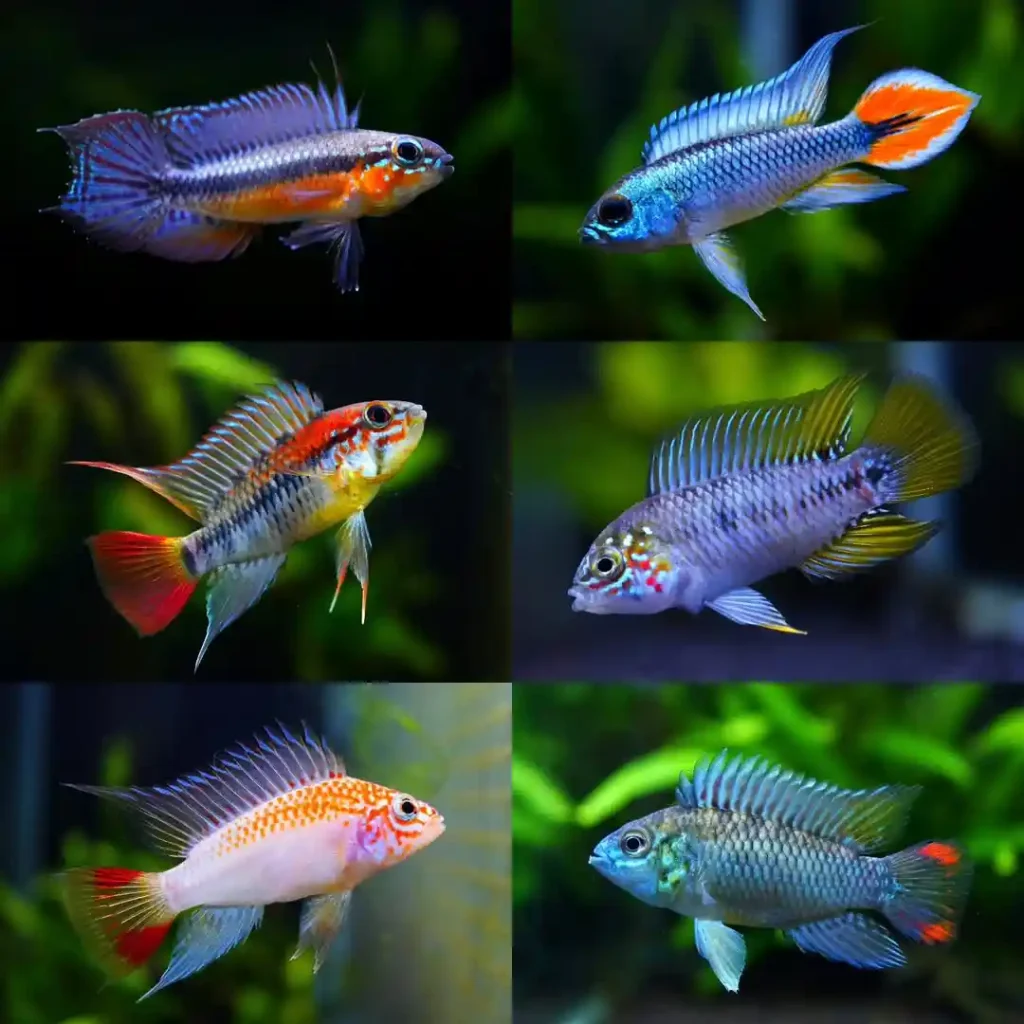
There are dozens of species, but a few are much easier to find in the aquarium trade.
Apistogramma cacatuoides (Cockatoo Dwarf Cichlid)
This is the best starting point for most hobbyists.
It’s more adaptable to slightly harder water compared to other species. Males develop dramatic orange, red, or yellow dorsal fins that look like a cockatoo crest that’s where the name comes from.
If you’re keeping them in a 20 gallon aquarium, this species works very well. You can see other compatible fish ideas in our 20 gallon tank guide on OceanBitez.
Apistogramma agassizii
This species has a slimmer body and longer flowing fins.
They are slightly more sensitive and prefer softer water. When conditions are right, their red or blue color variations are stunning.
Better suited for hobbyists comfortable managing water chemistry.
Apistogramma borellii
Often called the Opal Apisto.
This species is calmer and can tolerate slightly cooler water. If you’re building a peaceful community tank, this is a solid choice.
Tank Size and Setup
Apistogramma are small, but they are territorial. Tank layout matters more than you might think.
Minimum Tank Size
- Single pair: 15–20 gallons
- One male with two females: 20–30 gallons
- Community tank: 20+ gallons
Long tanks are better than tall tanks because they use bottom space to define territory.
If you’re planning stocking carefully, check our fish for 30 gallon tank guide on OceanBitez to avoid overcrowding.
Tank Layout: What They Actually Need
Think natural and slightly cluttered.
They do best with:
- Fine sand substrate (they sift through it)
- Multiple caves (coconut shells, rock caves, clay pots)
- Driftwood to break up sight lines
- Dense plants for cover
- Floating plants to reduce lighting intensity
The more visual barriers you create, the less aggression you’ll see.
A bare tank almost always leads to stress and constant chasing.
Water Parameters
Stable water beats perfect water.
ParameterIdeal RangeTemperature75–82°FpH5.5–7.0GH1–8 dGH
They naturally prefer soft, slightly acidic water. Many captive-bred fish adapt to neutral pH around 7, but extremely hard water can cause stress and reduce breeding success.
Gentle filtration works best. Sponge filters are ideal because they provide biological filtration without strong current.
Feeding Apistogramma
These fish are carnivores.
In the wild, they eat insect larvae and small crustaceans. In captivity, offer:
- Frozen bloodworms
- Brine shrimp
- Daphnia
- High-quality micro pellets
Feed once or twice daily in small amounts. Overfeeding is one of the fastest ways to cause water quality issues in smaller tanks.
A varied diet brings out better color and supports breeding behavior.
Temperament and Tank Mates
Apistogramma are not aggressive in the same way larger cichlids are. They’re territorial, especially near caves.
During breeding, females become protective and may chase other fish away from their fry.
Good Tank Mates
- Small tetras like neon or ember tetras
- Corydoras catfish
- Pencilfish
- Otocinclus
Avoid:
- Large cichlids
- Fin-nipping species
- Other bottom-dwelling dwarf cichlids in small tanks
If you’re unsure about schooling fish, our Neon Tetra care guide on OceanBitez explains compatibility in detail.
Breeding Apistogramma
Breeding is one of the most fascinating parts of keeping these fish.
Males court females by displaying bright colors and flaring fins. The female chooses a cave and lays eggs inside. She guards the eggs while the male protects the outer territory.
Male vs Female Differences
- Males are larger and more colorful
- Females are smaller and turn bright yellow when guarding eggs
Fry Care
Eggs hatch in about 2–3 days. Fry become free swimming shortly after.
Feed baby brine shrimp or microworms. In community tanks, fry survival drops unless the tank is heavily planted.
In species-only tanks, parents often guard fry for weeks.
Common Problems
Constant Hiding
Usually caused by:
- Lack of hiding spaces
- Aggressive tank mates
- Poor water quality
Add more cover before assuming something is wrong.
Faded Colors
This is often stress-related. Check water parameters and improve diet variety.
Disease
Like most freshwater fish, they can develop:
- Ich
- Fin rot
- Internal parasites
Most problems trace back to unstable water or overfeeding.
Pros and Cons
Pros
- Vibrant colors
- Small tank friendly
- Engaging breeding behavior
- Strong personality
Cons
- Territorial during breeding
- Prefer softer water
- Sensitive to poor maintenance
Apistogramma vs German Blue Ram
Both are dwarf cichlids, but Apistogramma are generally more adaptable.
German Blue Rams require very warm and stable water. Apistogramma tolerate slightly wider ranges and often live longer.
If you’re choosing your first dwarf cichlid, Apistogramma are usually the safer bet.
Frequently Asked Questions
Can Apistogramma live in hard water?
Some captive-bred varieties tolerate moderate hardness, but extremely hard water can lead to stress and poor breeding results.
How many can live together?
In a 20 gallon tank, one pair is safest. Larger tanks can support one male with two females if there are plenty of hiding spots.
Do they need plants?
They can survive without plants, but planted tanks reduce stress and make them feel secure.
Are they good for beginners?
They’re better for hobbyists who already understand cycling and basic water maintenance. Not impossible for beginners, but not the easiest starter fish.
How long do they live?
Around 3–5 years with consistent care.
 **2. Platy** Platies are hardy and easygoing. They enjoy swimming in groups and come in a variety of bright colors. Great for peaceful community tanks. ➡️ [Platy Fish Guide →](#) **3. Zebra Danio** Known for their energy and toughness, zebra danios are perfect for cycling new tanks. They tolerate a wide range of conditions and like to dart around in groups. ➡️ [Zebra Danio Guide →](#) **4. Corydoras Catfish** Peaceful bottom-dwellers that help keep your tank clean. Keep them in groups of 3 or more and give them soft substrate. ➡️ [Cory Catfish Care →](#) **5. Molly** Adaptable to various water conditions (even brackish), mollies are lively and great for community aquariums. ➡️ [Molly Fish Care Guide →](#) **6. Swordtail** Easy to care for and great in peaceful groups. Males have a signature sword-like tail and love swimming space. ➡️ [Swordtail Fish Guide →](#) **7. Betta Fish** Low-maintenance and visually stunning. Best kept alone or with very peaceful tank mates like snails or Corydoras. ➡️ [Full Betta Fish Care Guide →](#) **8. Neon Tetra** Small and peaceful, neon tetras love to school and light up a planted tank. Keep them in groups of 6 or more. ➡️ [Neon Tetra Care Guide →](https://oceanbitez.com/neon-tetras/) **9. Harlequin Rasbora** A calm and schooling species that fits right into community setups. Easy to feed and care for. ➡️ [Harlequin Rasbora Guide →](#) **10. Dwarf Gourami** A gentle and colorful addition to a beginner’s tank. Likes planted environments and peaceful neighbors. ➡️ [Dwarf Gourami Guide →](#) **11. White Cloud Mountain Minnow** Can live in cooler temperatures and is perfect for unheated tanks. Small, peaceful, and easy to care for. ➡️ [White Cloud Minnow Guide →](#) **12. Cherry Barb** Peaceful and social, cherry barbs do well in planted tanks and enjoy being in small groups. ➡️ [Cherry Barb Care →](#) --- ### Sample Beginner Tank Combos **Combo 1: 10–15 Gallon Easy Starter** * 4–6 Guppies * 3 Corydoras Catfish * 1 Nerite Snail **Combo 2: 20 Gallon Planted Community** * 6 Harlequin Rasboras * 6 Neon Tetras * 1 Dwarf Gourami * 3 Otocinclus (optional if algae control is needed) --- ### Beginner Tips for a Successful Aquarium * Cycle your tank before adding fish (ammonia → nitrite → nitrate) * Start with hardy species before delicate ones * Feed small amounts once or twice daily * Do weekly partial water changes (20–30%) * Don’t mix aggressive or fin-nipping species * Use a heater for tropical fish (75–80°F) --- ### Final Thoughts These beginner fish are ideal for getting started in the hobby without frustration. They're low-maintenance, compatible, and fun to watch. Once you’re comfortable, you can explore more advanced species and community combinations. ➡️ Check out our full guide to [Freshwater Aquarium Fish →](https://oceanbitez.com/freshwater-fish/)](https://oceanbitez.com/wp-content/uploads/2024/06/Best-Freshwater-Fish-for-Your-Aquarium-1024x640.webp)