15 Beginner Aquarium Checklist
Starting a freshwater aquarium sounds simple. Buy a tank, add water, add fish. That’s the idea most beginners walk in with, and it’s exactly why so many first tanks fail within the first month.
Fish deaths, cloudy water, algae explosions, and constant stress usually come down to one thing: the basics weren’t handled correctly. Not because beginners are careless, but because they’re overloaded with bad advice, upsells, and half-truths.
This checklist is different. It’s not a shopping list designed to sell gear. It’s a problem-solving checklist built around what actually keeps fish alive and tanks stable.
Each item below explains:
- what beginners usually do wrong
- why it causes problems
- how to fix it in a simple, realistic way
If you follow this list, you’ll avoid most beginner mistakes before they happen.
1. Aquarium Tank (Bigger Is Easier, Not Harder)
Common mistake: Choosing a very small tank because it feels less intimidating.
Why this causes problems: Small tanks are unstable. Ammonia, nitrite, and temperature change faster in low water volume. That means a small mistake turns into a big problem very quickly.
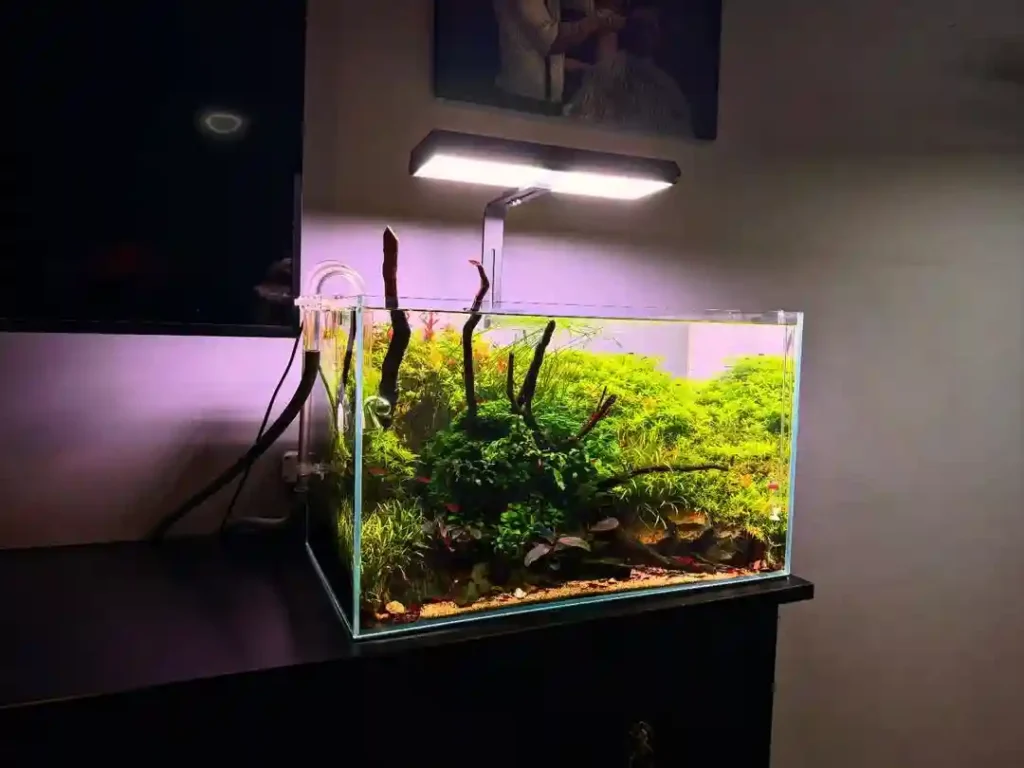
How to fix it: Start with 10–20 gallons. This size gives you breathing room. Water parameters change more slowly, fish are less stressed, and maintenance mistakes are easier to correct.
Small tanks look easier, but they demand perfect care. Bigger tanks forgive beginners.
2. Strong, Level Stand or Surface
Common mistake: Placing the aquarium on random furniture that “looks sturdy.”
Why this causes problems: Water is heavy. A filled aquarium puts constant pressure on the glass. If the surface isn’t level or strong enough, stress points form. Over time, that leads to leaks or cracks.
How to fix it: Use an aquarium stand or a solid surface designed to hold weight. Always check that the tank is level before filling. A slight tilt may not look serious, but it matters.
3. Filter Matched to Tank Size
Common mistake: Buying the cheapest filter or one that’s far too powerful.
Why this causes problems: A weak filter struggles to grow beneficial bacteria. An oversized filter can create strong currents that stress fish and push waste into dead spots.
How to fix it: Choose a filter rated for your tank size, ideally with adjustable flow. The goal isn’t just water movementit’s providing a home for beneficial bacteria.
The filter is the heart of the aquarium. Everything depends on it working correctly.
4. Heater (For Tropical Fish)
Common mistake: Skipping a heater because the room feels warm enough.
Why this causes problems: Room temperatures fluctuate. Fish and beneficial bacteria react badly to sudden drops, especially at night.
How to fix it: Use a properly sized heater and keep the temperature stable. Stability matters more than hitting an exact number.
Even small temperature swings cause stress long before fish show visible symptoms.
5. Thermometer
Common mistake: Trusting the heater’s built-in dial.
Why this causes problems: Heaters fail silently. Fish don’t complain until damage is already done.
How to fix it: Add a basic thermometer where you can see it daily. A quick glance tells you more than guesswork ever will.
6. Substrate (Chosen for Function, Not Looks)
Common mistake: Picking gravel or sand based only on color or style.
Why this causes problems: Some substrates trap waste, others compact too tightly, and some aren’t suitable for certain fish or plants.
How to fix it: Choose smooth gravel or sand based on your fish and whether you plan to keep plants. Think about cleaning and waste flow, not just appearance.
A good substrate supports easy maintenance, not just aesthetics.
7. Dechlorinator (Water Conditioner)
Common mistake: Letting tap water sit overnight to “remove chlorine.”
Why this causes problems: Modern tap water often contains chloramine, which does not evaporate. Chlorine and chloramine kill beneficial bacteria instantly.
How to fix it: Use dechlorinator every time you add new water. No exceptions. This protects both fish and the bacterial colony you’re trying to build.
8. Water Test Kit
Common mistake: Testing only when fish look sick.
Why this causes problems: Ammonia and nitrite are invisible. Fish show stress only after damage starts.
How to fix it: Test regularly during cycling and weekly once the tank is stable. Testing isn’t about panicit’s about early warnings.
Clear water does not mean safe water.
9. Ammonia Source (For Fishless Cycling)
Common mistake: Adding fish to “start the cycle.”
Why this causes problems: Fish are exposed to toxins while bacteria slowly establish themselves. Stress and long-term damage are common.
How to fix it: Use pure ammonia or controlled fish food to cycle the tank before adding fish. This builds bacteria without risking lives.
Cycling is preparation, not a test of fish toughness.
10. Basic Lighting (Simple Wins)
Common mistake: Buying powerful lights meant for advanced planted tanks.
Why this causes problems: Too much light leads to algae growth faster than beginners can manage.
How to fix it: Use moderate lighting that matches your tank’s purpose. Fish-only tanks don’t need intense light.
Lighting should support the tank, not dominate it.
11. Fish Food (Less Than You Think)
Common mistake: Overfeeding because fish beg or seem active.
Why this causes problems: Uneaten food turns into ammonia. Overfeeding is one of the fastest ways to crash a new tank.
How to fix it: Feed small portions once or twice daily. If food reaches the bottom uneaten, it’s too much.
Healthy fish don’t need constant feeding.
12. Aquarium Net
Common mistake: Using hands, cups, or household tools to catch fish.
Why this causes problems: Fish panic easily. Rough handling causes injury and stress.
How to fix it: A simple net makes maintenance safer and calmer for both fish and keeper.
13. Dedicated Aquarium Bucket
Common mistake: Using buckets that previously held soap or cleaners.
Why this causes problems: Chemical residue is deadly to fish even in trace amounts.
How to fix it: Keep one bucket used only for aquarium water. Label it if needed.
This single habit prevents many unexplained fish deaths.
14. Simple Cleaning Tools
Common mistake: Avoiding water changes because they feel complicated.
Why this causes problems: Nitrates build up slowly and stress fish over time.
How to fix it: A siphon and towel are enough. Consistent small water changes are better than rare large ones.
Maintenance doesn’t need to be perfectjust regular.
15. Patience (The Most Important Item)
Common mistake: Adding fish too quickly because the tank “looks ready.”
Why this causes problems: The biological system isn’t finished yet. Rushing leads to instability and losses.
How to fix it: Let the cycle complete fully. Add fish slowly. Observe before adding more.
Waiting a little now prevents frustration later.
What Beginners Think They Need (But Don’t)
Many beginners are sold extra equipment early:
- chemical “quick fixes”
- UV sterilizers
- decorative items that trap waste
These don’t solve beginner problems. Stability, testing, and patience do.
The Pattern Behind Most Beginner Aquarium Failures
When you step back, most problems come from the same behaviors:
- rushing setup
- trusting looks instead of test results
- overfeeding
- overcleaning filters
Once you break these habits, aquariums become predictable and calm.
A Better Way to Start Your First Aquarium
A beginner aquarium should feel boring at first. Stable temperature. Clear test results. Slow changes. That’s a good sign.
This checklist isn’t about perfection. It’s about creating a system that supports life before fish ever arrive. When the basics are right, everything else becomes easier.