25 Aquascaping Myths Beginners Should Ignore
Aquascaping often looks simple when you see it online. Clean glass, perfect plants, calm fish. It gives the impression that there’s a right way to do everything and that beginners fail because they don’t know the rules yet.
In reality, many of the rules beginners follow are myths. They come from competition tanks, edited photos, or advice taken out of context. When you apply them to a real home aquarium, they often create more problems than solutions.
This article breaks down common aquascaping myths beginners should ignore. Each point explains what the myth is and what actually works instead, so you can build a planted tank that grows naturally and feels manageable from the start.
1. Myth: You Need Expensive Tools to Aquascape
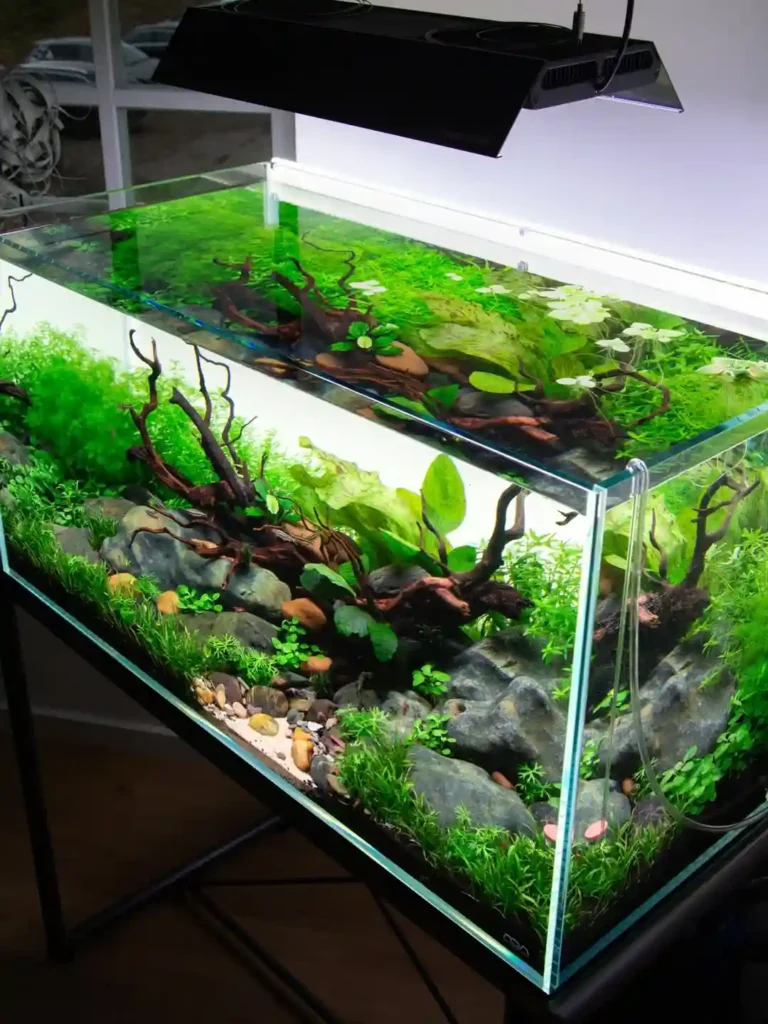
Beginners often believe aquascaping requires costly scissors, tweezers, and gear. This myth discourages many from starting. In reality, simple tools work just fine. Focus on plant placement, spacing, and patience. Skill and observation matter more than premium equipment.
2. Myth: Bigger Tanks Are Harder for Beginners
Many think large tanks are difficult to manage. Beginners actually struggle more with small tanks because water parameters swing faster. Larger tanks offer more stability and room for error. Start with a size that gives balance, not fear.
3. Myth: Aquascaping Is Only About Looks
Aquascaping isn’t just visual design. Beginners forget plants, fish, and bacteria share the same space. A beautiful layout fails if water quality suffers. Design with plant growth, fish movement, and maintenance in mind from day one.
4. Myth: You Must Copy Competition Layouts
Competition tanks look perfect but hide months of work and heavy maintenance. Beginners copy them and feel disappointed. Instead, build a layout that fits your tank size, lighting, and schedule. Simple designs last longer and look better over time.
5. Myth: All Planted Tanks Need CO₂
CO₂ systems feel mandatory because advanced tanks use them. Beginners rush into CO₂ and create instability. Many plants grow well without it. Start low-tech, learn plant behavior, and add CO₂ only when needed.
6. Myth: More Plants Always Mean Better Results
Stuffing plants into a new tank seems helpful but causes shading and decay. Overcrowding limits flow and light. Leave space for growth. Healthy spacing prevents rot, algae, and frustration later.
7. Myth: Perfect Symmetry Is Required
Many beginners chase exact symmetry and feel frustrated when it fails. Nature rarely looks balanced. Use uneven spacing and varied heights. Natural flow feels calmer and more realistic than forced symmetry.
8. Myth: New Tanks Should Look Finished Immediately
Social media makes tanks look complete overnight. Real aquascapes evolve slowly. Plants adapt, melt, and regrow. Expect change, not perfection. Let time improve the layout instead of constant rescapes.
9. Myth: Aquascaping Is Only for Experts
Beginners think aquascaping requires deep knowledge. This stops them from experimenting. Simple layouts teach more than complex plans. Start basic, observe growth, and learn naturally through small adjustments.
10. Myth: Driftwood Always Sinks Quickly
Many assume driftwood sinks in days. Some wood floats for weeks. Beginners panic and glue it down. Soak wood properly or anchor it temporarily. Time solves the problem better than force.
11. Myth: Any Rock Is Aquarium-Safe
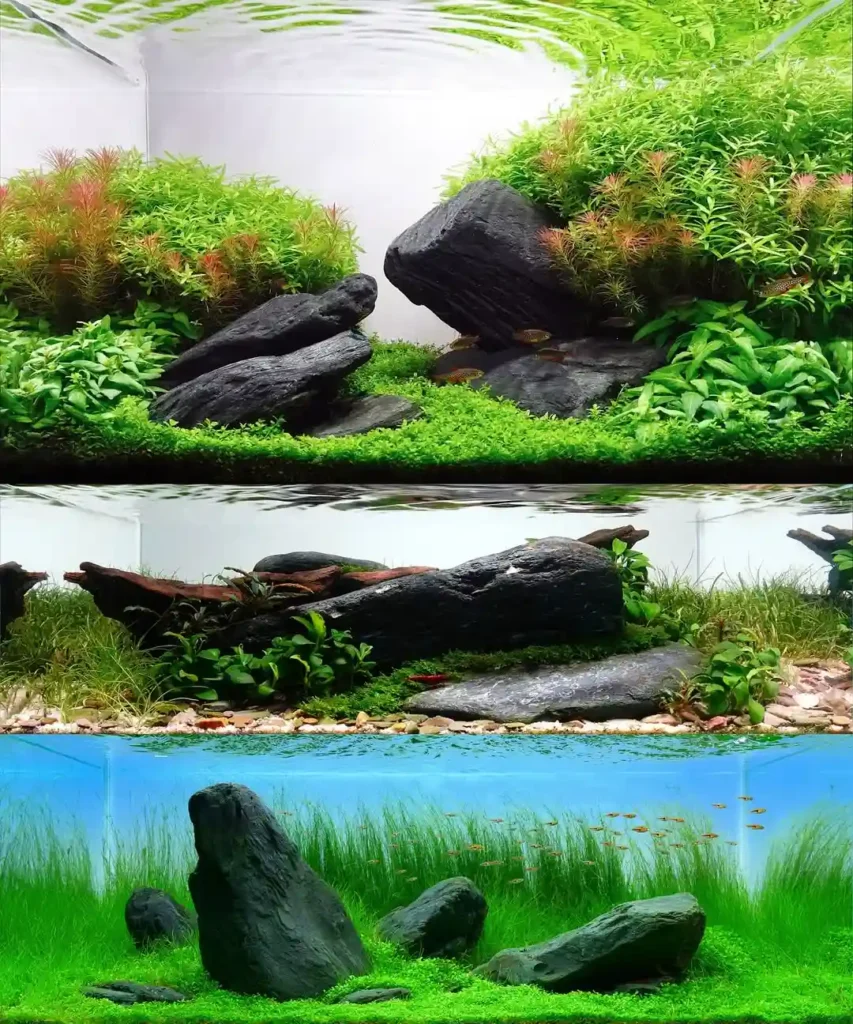
Collecting random rocks feels harmless. Some stones alter pH or leach minerals. Test rocks before use or buy aquarium-safe options. Stable water matters more than free materials.
12. Myth: Frequent Rescaping Helps Plants
Constant rearranging stresses plants and roots. Beginners think moving plants helps them “find the right spot.” Plants need time to settle. Pick placements carefully and leave them alone to grow.
13. Myth: Algae Means You Failed
Algae appears in almost every new tank. Beginners see it as failure and overcorrect. Algae shows imbalance, not defeat. Reduce light, adjust feeding, and wait. Mature tanks naturally balance out.
14. Myth: You Must Follow Strict Aquascaping Rules
Rules like golden ratio or exact slopes confuse beginners. These are guidelines, not laws. Focus on balance and flow instead. Trust your eye and adjust slowly.
15. Myth: Bare-Bottom Tanks Can’t Look Natural
Many believe substrate is required for beauty. Bare-bottom tanks can look clean and intentional. Use stones, wood, and plants creatively. Style matters more than substrate depth.
16. Myth: Aquascaping and Fish Care Are Separate
Some treat aquascaping as decoration only. Fish behavior and plant placement affect each other. Design spaces fish can swim, hide, and rest. A healthy tank looks better long-term.
17. Myth: Stronger Light Fixes Weak Growth
Beginners increase light when plants struggle. This often causes algae instead. Balance light with nutrients and patience. More light isn’t always the solution.
18. Myth: Fertilizers Solve Every Problem
Fertilizers don’t fix poor lighting, flow, or unstable tanks. Beginners overdose hoping for fast growth. Feed plants lightly and address root causes first.
19. Myth: Trimming Plants Early Ruins Layouts
Many avoid trimming because they fear damaging the scape. Early trimming encourages bushier growth. Trim with purpose and plants respond better over time.
20. Myth: You Need Rare Plants to Stand Out
Rare plants feel impressive but often fail in beginner setups. Common plants grow reliably and look great when healthy. Strong growth beats rarity every time.
21. Myth: Aquascapes Must Stay Unchanged
Some believe changing layouts ruins the tank. Small adjustments help refine balance. Let the scape evolve gently as plants grow.
22. Myth: Small Tanks Can’t Be Impressive
Small tanks demand care but can look stunning. Thoughtful layouts shine even in limited space. Focus on scale and simplicity.
23. Myth: Every Plant Works in Every Tank
Beginners mix plants with different needs and struggle. Match plants to light, flow, and nutrients. Compatibility prevents constant issues.
24. Myth: Clear Water Means a Healthy Tank
Clear water hides unstable chemistry. Beginners trust appearance alone. Test regularly and watch plant and fish behavior. Health shows through consistency, not clarity.
25. Myth: Aquascaping Success Is Instant
Many expect fast results and quit early. Real success builds over weeks and months. Let patience do the work. Time improves aquascapes more than constant changes.