Bala Sharks are sleek, fast-swimming freshwater fish known for their silver bodies and peaceful personalities. Although they’re not true sharks, their torpedo-shaped build and active nature make them a striking addition to large home aquariums. In this guide, you’ll learn everything about Bala Shark care from tank size and feeding to ideal tank mates and health concerns.
Looking for more options? Visit our Freshwater Fish Guide for more beginner-friendly species.
Species Overview
| Feature | Details |
| Scientific Name | Balantiocheilos melanopterus |
| Common Names | Bala Shark, Silver Shark, Tricolor Shark |
| Family | Cyprinidae (related to barbs and danios) |
| Origin | Thailand, Borneo, Malaysia |
| Conservation Status | Endangered in the wild |
Appearance and Size
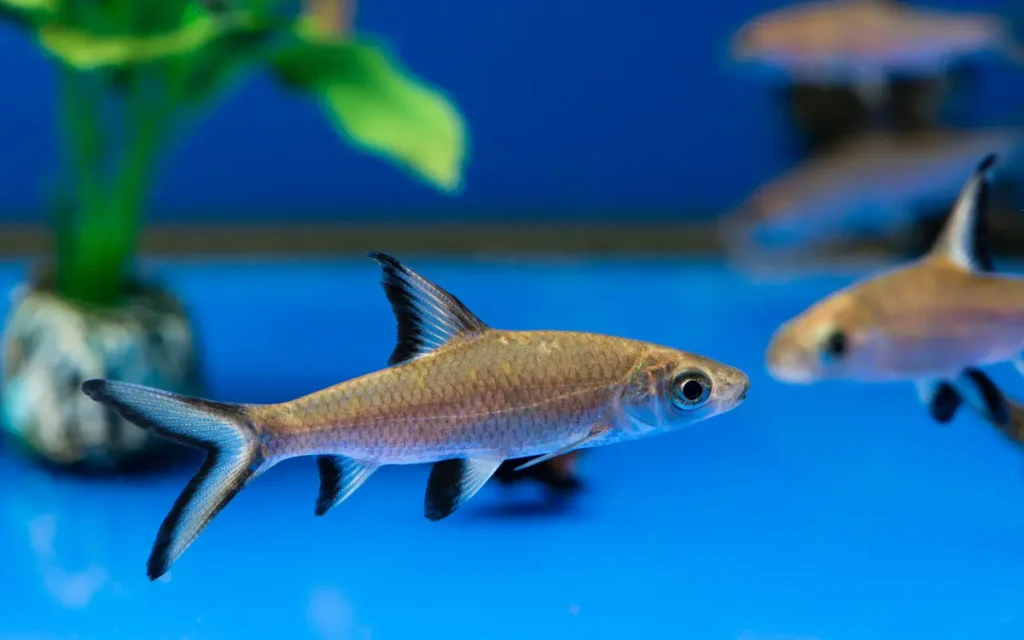
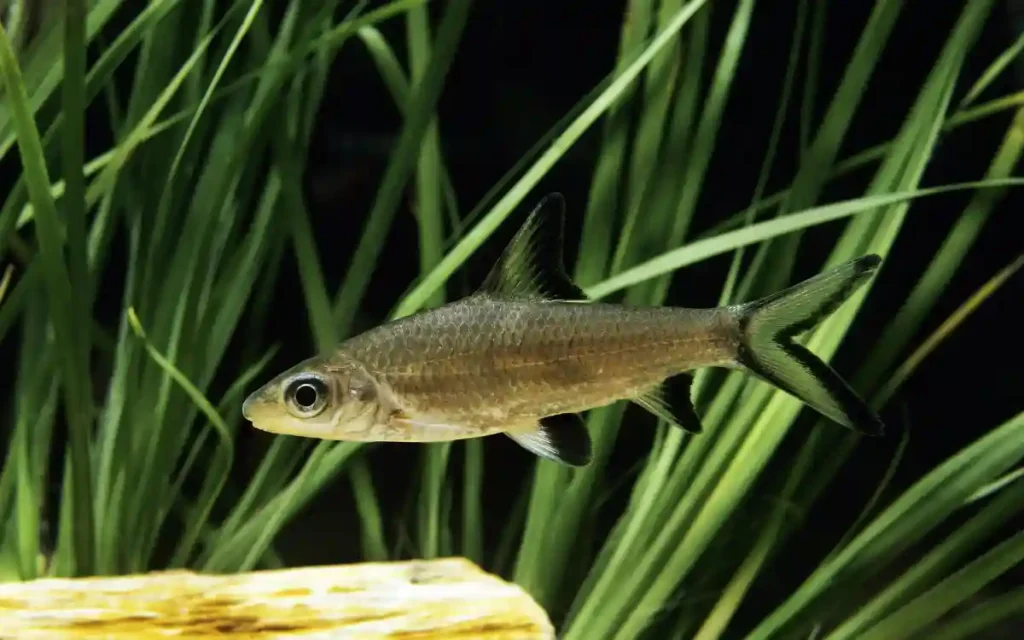
Bala Sharks have a shiny silver body with black-edged dorsal, caudal, and anal fins. Their torpedo shape is built for speed, and their constant swimming adds energy to any tank.
- Size in Captivity: Up to 12 inches
- Lifespan: 8–10 years with good care
- Body Type: Long, sleek, and streamlined
Behavior and Temperament
Bala Sharks are peaceful, skittish, and active swimmers. They are best kept in groups of 4 to 6 to prevent stress or erratic behavior. When alone or in small numbers, they may become timid or hide frequently.
- Temperament: Peaceful, but easily startled
- Activity Level: High—require lots of open space
- Swimming Level: Mid to bottom
- Jump Risk: High—use a tight-fitting lid
Tank Setup and Requirements
Minimum Tank Size
Due to their size and activity level, Bala Sharks require at least 125 gallons for a group. More space is better.
- Substrate: Sand or smooth gravel
- Décor: Smooth rocks and driftwood around tank edges
- Plants: Hardy background plants like Java Fern or Anubias
- Lighting: Moderate
Avoid sharp decorations, which may injure their fins.
Water Parameters
| Parameter | Ideal Range |
| Temperature | 72°F – 82°F (22–28°C) |
| pH Level | 6.5 – 7.5 |
| Water Hardness | 5 – 12 dGH |
| Ammonia/Nitrite | 0 ppm |
| Nitrate | <20 ppm |
Maintain stable, clean water with a powerful filter that offers strong flow and aeration.
What Do Bala Sharks Eat?
In the wild, Bala Sharks feed on insects, crustaceans, and algae. In captivity, they are not fussy eaters and do well on a balanced diet.
Best Foods for Bala Sharks
- Staple Diet: High-quality sinking pellets
- Treats: Frozen or live bloodworms, brine shrimp
- Vegetables: Blanched spinach, zucchini, or cucumber
Feed 2–3 times daily in small amounts, and remove uneaten food to prevent water issues.
Ideal Tank Mates for Bala Sharks
Since they’re peaceful but large and fast, Bala Sharks need companions that won’t be bullied—or mistaken for food.
Good Companions
- Rainbowfish – Quick and colorful
- Giant Danios – Active, fast-swimming
- Congo Tetras – Mid-size and peaceful
- Clown Loaches – Bottom dwellers, social
- Pearl Gouramis – Calm and elegant
See our full article: Best Bala Shark Tank Mates
Avoid These Tank Mates
- Tiny fish like Guppies and Neon Tetras
- Slow, flowy-finned species like Bettas or Fancy Goldfish
- Aggressive fish like large cichlids
Introduce tank mates gradually and observe for any aggression or stress.
Common Health Problems
Bala Sharks are hardy, but poor water quality or stress can lead to illness.
Watch for:
- Lethargy or hiding
- Clamped fins
- Loss of appetite
- Scratching or erratic swimming
Common Diseases
- Ich (white spot disease)
- Fin Rot
- Bacterial infections (usually due to injury or poor water)
Prevention Tips
- Quarantine new arrivals
- Stick to stable water parameters
- Avoid overcrowding and under-filtration
Can You Breed Bala Sharks?
Breeding Bala Sharks in home aquariums is nearly impossible. They need:
- Huge tanks (several hundred gallons)
- Soft, acidic water
- Hormonal injections (used in farms, not for hobbyists)
Most Bala Sharks sold in pet stores are farm-raised in Asia. If you’re interested in breeding freshwater fish, consider livebearers like Swordtails or Platies.
FAQs
Can Bala Sharks live alone?
No. They are social and should be kept in groups of 4–6 to reduce stress.
How fast do Bala Sharks grow?
Very fast. Juveniles can reach 6–8 inches within the first year under good conditions.
Are Bala Sharks good for beginners?
Not really. They need large tanks, excellent filtration, and long-term commitment.
Can Bala Sharks live with Angelfish?
It depends. If the tank is large enough and the Angelfish aren’t aggressive, it’s possible. But monitor closely for stress or fin-nipping.
Final Thoughts
Bala Sharks are impressive fish that do best in large, well-maintained tanks with plenty of swimming room and peaceful companions. They’re not ideal for small tanks or casual hobbyists, but if you have the space and dedication, they’re a stunning addition to any freshwater setup.
 **2. Platy** Platies are hardy and easygoing. They enjoy swimming in groups and come in a variety of bright colors. Great for peaceful community tanks. ➡️ [Platy Fish Guide →](#) **3. Zebra Danio** Known for their energy and toughness, zebra danios are perfect for cycling new tanks. They tolerate a wide range of conditions and like to dart around in groups. ➡️ [Zebra Danio Guide →](#) **4. Corydoras Catfish** Peaceful bottom-dwellers that help keep your tank clean. Keep them in groups of 3 or more and give them soft substrate. ➡️ [Cory Catfish Care →](#) **5. Molly** Adaptable to various water conditions (even brackish), mollies are lively and great for community aquariums. ➡️ [Molly Fish Care Guide →](#) **6. Swordtail** Easy to care for and great in peaceful groups. Males have a signature sword-like tail and love swimming space. ➡️ [Swordtail Fish Guide →](#) **7. Betta Fish** Low-maintenance and visually stunning. Best kept alone or with very peaceful tank mates like snails or Corydoras. ➡️ [Full Betta Fish Care Guide →](#) **8. Neon Tetra** Small and peaceful, neon tetras love to school and light up a planted tank. Keep them in groups of 6 or more. ➡️ [Neon Tetra Care Guide →](https://oceanbitez.com/neon-tetras/) **9. Harlequin Rasbora** A calm and schooling species that fits right into community setups. Easy to feed and care for. ➡️ [Harlequin Rasbora Guide →](#) **10. Dwarf Gourami** A gentle and colorful addition to a beginner’s tank. Likes planted environments and peaceful neighbors. ➡️ [Dwarf Gourami Guide →](#) **11. White Cloud Mountain Minnow** Can live in cooler temperatures and is perfect for unheated tanks. Small, peaceful, and easy to care for. ➡️ [White Cloud Minnow Guide →](#) **12. Cherry Barb** Peaceful and social, cherry barbs do well in planted tanks and enjoy being in small groups. ➡️ [Cherry Barb Care →](#) --- ### Sample Beginner Tank Combos **Combo 1: 10–15 Gallon Easy Starter** * 4–6 Guppies * 3 Corydoras Catfish * 1 Nerite Snail **Combo 2: 20 Gallon Planted Community** * 6 Harlequin Rasboras * 6 Neon Tetras * 1 Dwarf Gourami * 3 Otocinclus (optional if algae control is needed) --- ### Beginner Tips for a Successful Aquarium * Cycle your tank before adding fish (ammonia → nitrite → nitrate) * Start with hardy species before delicate ones * Feed small amounts once or twice daily * Do weekly partial water changes (20–30%) * Don’t mix aggressive or fin-nipping species * Use a heater for tropical fish (75–80°F) --- ### Final Thoughts These beginner fish are ideal for getting started in the hobby without frustration. They're low-maintenance, compatible, and fun to watch. Once you’re comfortable, you can explore more advanced species and community combinations. ➡️ Check out our full guide to [Freshwater Aquarium Fish →](https://oceanbitez.com/freshwater-fish/)](https://oceanbitez.com/wp-content/uploads/2024/06/Best-Freshwater-Fish-for-Your-Aquarium-1024x640.webp)