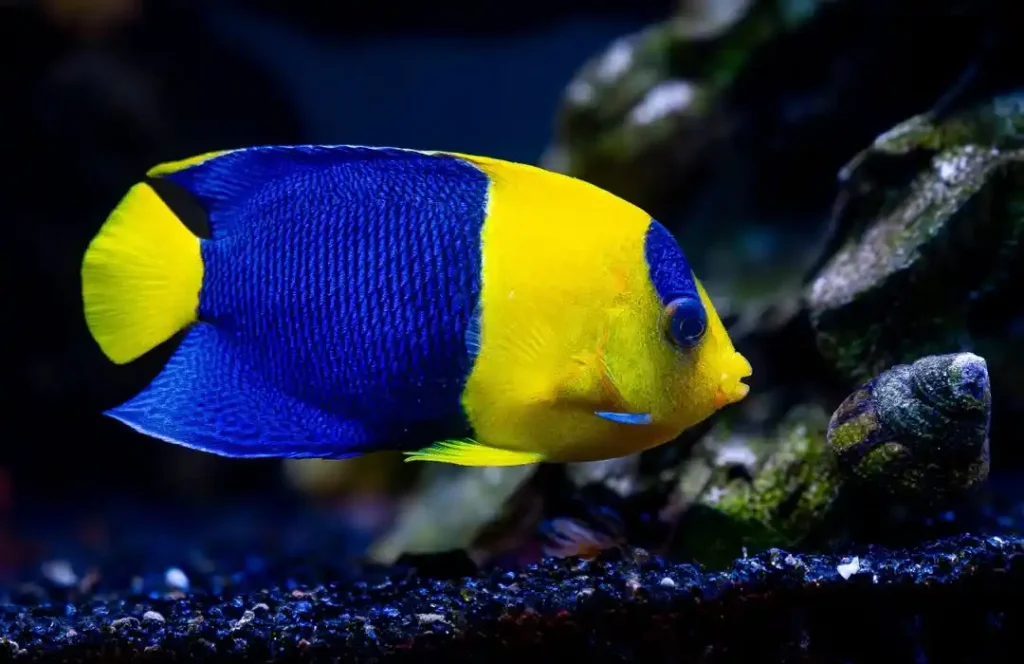
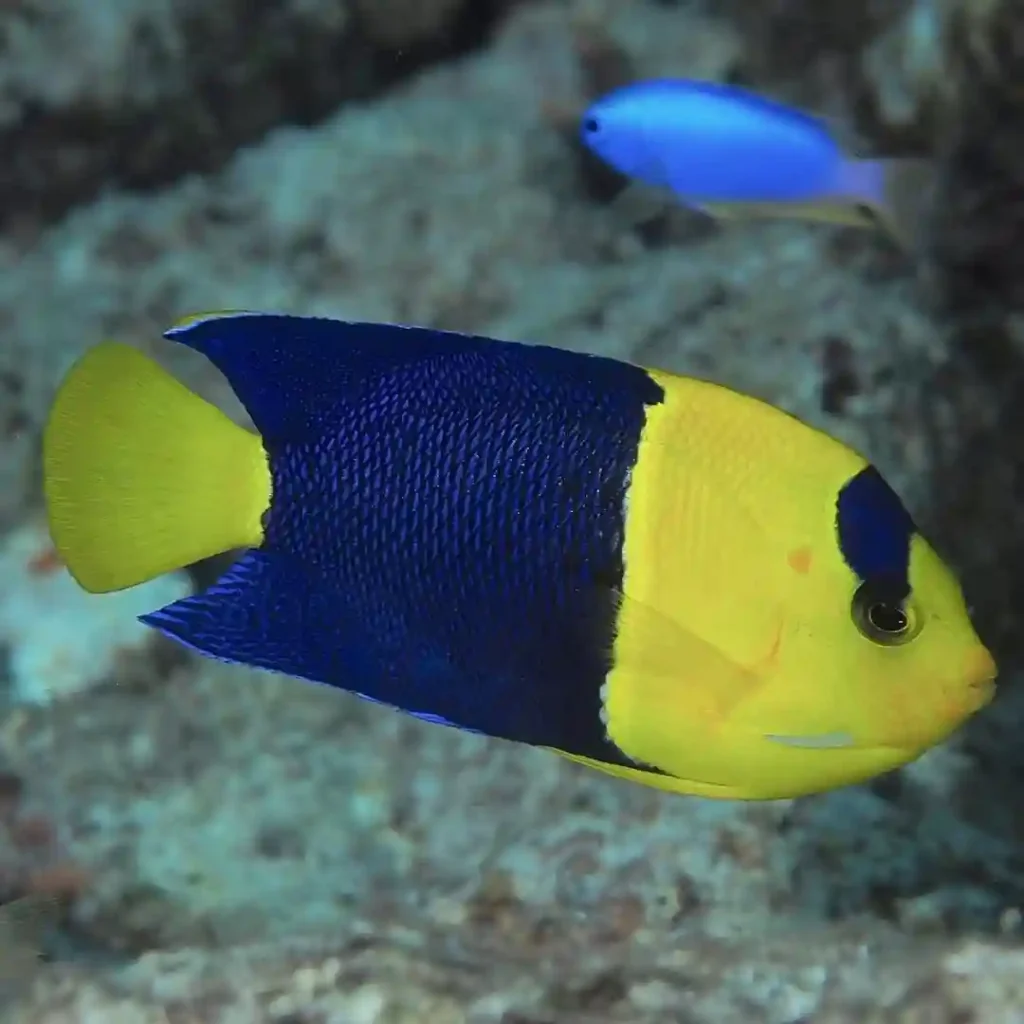
The Bicolor Angelfish (Centropyge bicolor) is a vibrant and captivating saltwater fish, instantly recognizable by its bold yellow and deep blue body. As a dwarf angelfish, it’s a favorite among marine hobbyists for its striking appearance and active behavior. While its care is manageable for intermediate keepers, the species requires careful attention to tank conditions and compatibility.
Species Profile
| Feature | Details |
| Common Name | Bicolor Angelfish |
| Scientific Name | Centropyge bicolor |
| Origin | Indo-Pacific, Coral Sea |
| Max Size | Up to 6 inches |
| Lifespan | 5–10 years |
| Temperament | Semi-aggressive |
| Diet | Omnivore |
| Reef-Safe | With caution |
| Tank Size | 70+ gallons |
| Care Level | Intermediate |
Appearance and Behavior
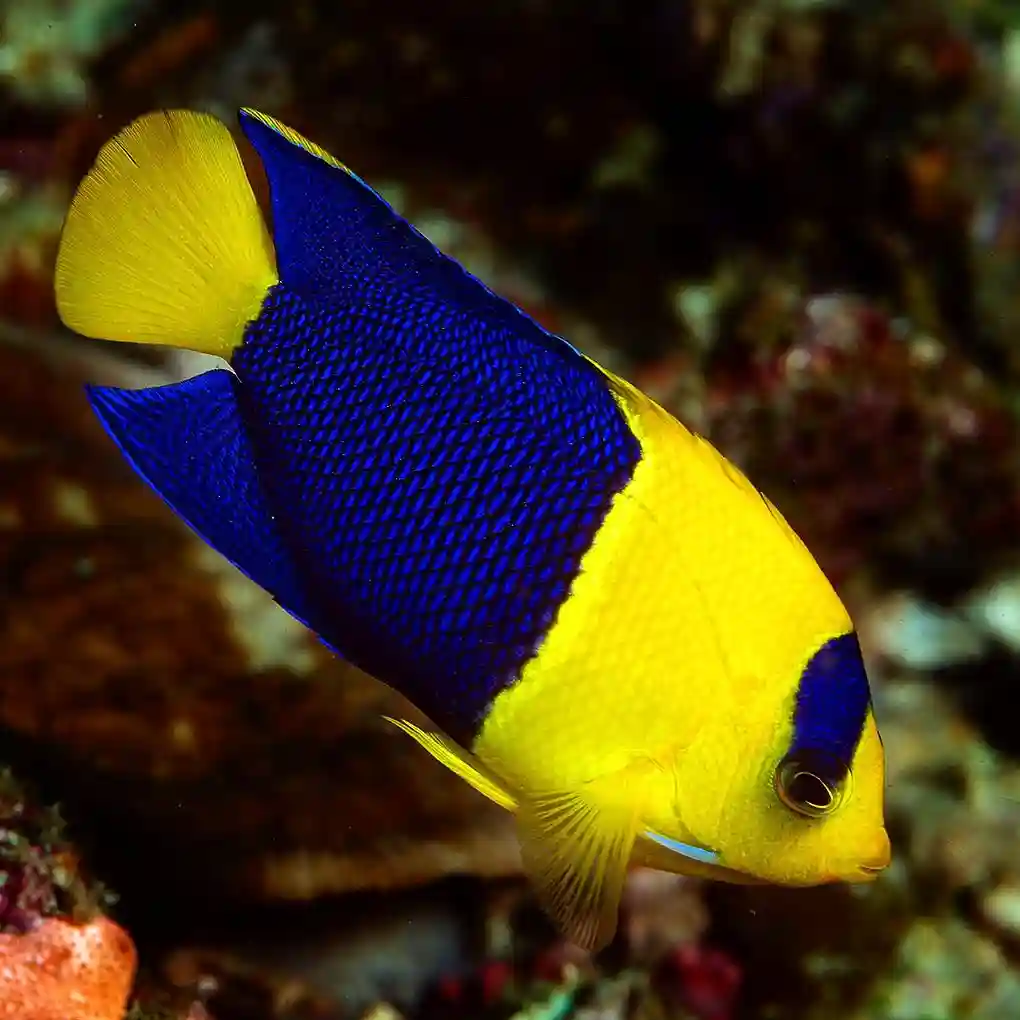
The Bicolor Angel displays a vivid contrast of yellow and blue, often forming a clear midpoint division across its body. It’s an active swimmer and prefers to explore crevices in live rock. While shy at first, it tends to become bold and may exhibit territorial behavior, especially in smaller or overcrowded tanks.
Tank Setup and Water Parameters
A tank of at least 70 gallons is essential for a single Bicolor Angel. Provide a mix of open swimming areas and plenty of live rock for grazing and shelter.
Water parameters to maintain:
- Temperature: 72–78°F
- Salinity: 1.020–1.025
- pH: 8.1–8.4
- Nitrate: Below 20 ppm
Strong filtration, regular water changes, and good water movement are key to keeping this species healthy.
Diet and Feeding
Bicolor Angels are omnivores. In the wild, they graze on algae and tiny invertebrates. In the home aquarium, feed them a variety of:
- Marine algae
- Spirulina
- Mysis shrimp
- High-quality angelfish pellets or flakes
Feed small portions 2–3 times a day. A varied diet reduces the chance of coral-nipping due to nutritional deficiencies.
Tank Mates and Compatibility
This angelfish does well with many community saltwater fish but may become territorial toward other dwarf angelfish.
Compatible species include:
- Clownfish
- Gobies
- Royal Gramma
- Peaceful Wrasses
- Tangs (Kole, Yellow)
Avoid aggressive or fin-nipping species, and be cautious about housing with other Centropyge angels unless you have a large tank.
Is the Bicolor Angelfish Reef-Safe?
The Bicolor Angel is considered reef-safe with caution. Many individuals may nip at corals, especially soft corals, LPS, zoanthids, and clams. Keeping them well-fed helps, but reef behavior varies from fish to fish.
For best results, monitor closely or consider a fish-only with live rock (FOWLR) setup.
Breeding Behavior
Breeding is extremely rare in home aquariums. Bicolor Angels are protogynous hermaphrodites, starting life as females and becoming males. Spawning usually occurs in pairs at dusk, but this behavior is hard to replicate in captivity.
Common Health Issues
Like most marine species, Bicolor Angels are prone to:
- Marine Ich
- Fin rot
- Nutritional deficiencies (leading to Lateral Line Erosion)
Quarantine new additions and maintain consistent water quality to prevent disease.
Tips for Long-Term Success
- Provide a mature, stable tank
- Offer a well-balanced omnivorous diet
- House with compatible tank mates
- Avoid small tanks that trigger territorial behavior
- Watch coral health in reef tanks
Read also:
Copperband Butterflyfish 101: Feeding, Lifespan, and Tank Tips
Fairy Wrasse Care: Feeding, Mates & Reef Guide
FAQs
Can I keep more than one Bicolor Angelfish?
Only in large tanks (100+ gallons) with plenty of hiding spots.
Do they eat algae?
Yes, they graze on algae but need protein-rich foods too.
Why is my Bicolor Angel hiding?
Likely due to stress, aggression, or sudden changes in the environment.
Can I keep them in a reef tank?
Reef-safe with caution; monitor coral health closely.