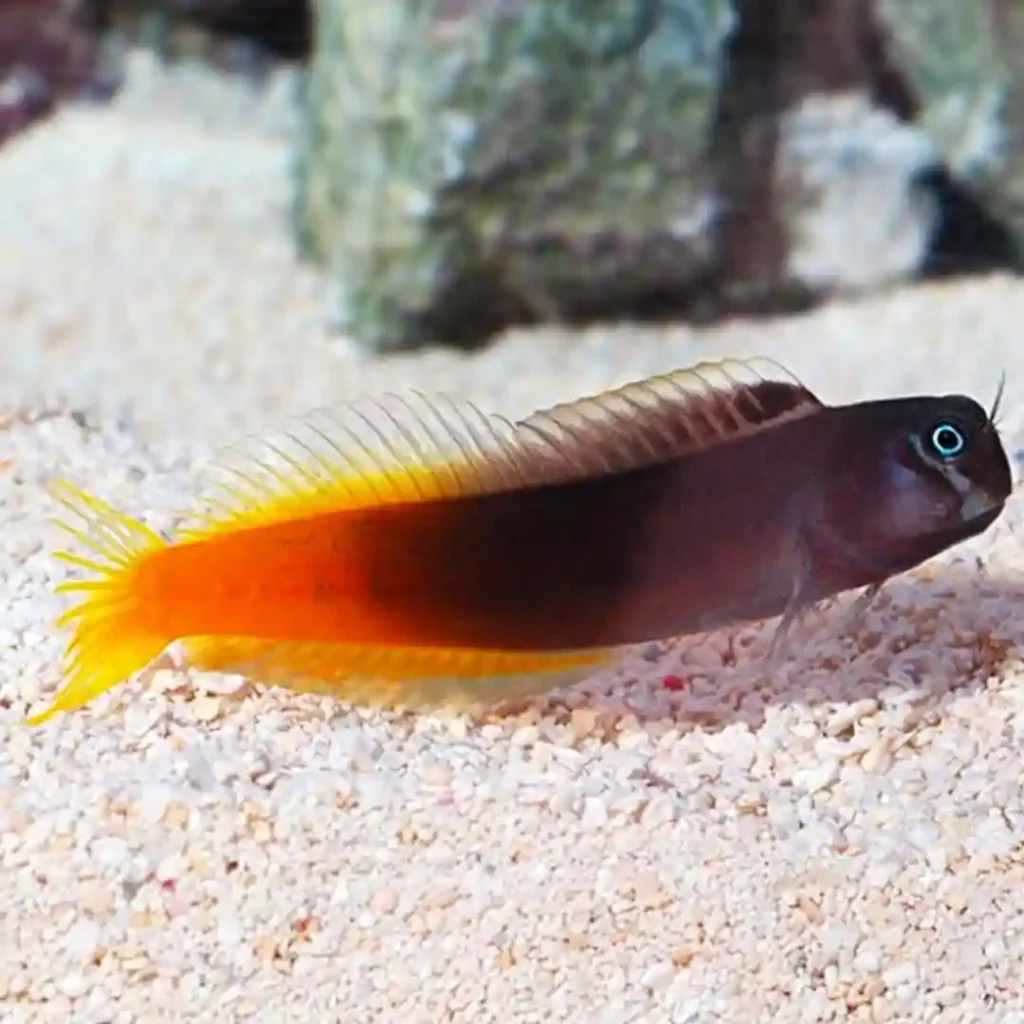
If fish had personalities, the Bicolor Blenny (Ecsenius bicolor) would be that one friend who always cracks jokes at the wrong time but somehow you can’t help loving them. This little saltwater fish, split halfway between bright orange and deep blue, looks like it couldn’t decide on an outfit, so it wore both.
I remember my first Bicolor Blenny. It sat on a rock, stared right at me, and did this weird head tilt like it was judging my aquascape choices. From that moment, I knew it wasn’t just another “background fish.” These guys are small, full of character, and surprisingly easy to care for once you know what they like.
So, if you’re thinking about adding one to your reef setup or just want to stop yours from glaring at you during feeding time here’s everything you need to know.
Getting to Know the Bicolor Blenny
Before you fall for that goofy face, let’s cover the basics.
Quick Species Facts
- Scientific Name: Ecsenius bicolor
- Origin: Indo-Pacific region
- Size: About 4 inches (small but mighty)
- Temperament: Peaceful with a hint of sass
- Lifespan: 3–5 years with proper care
The Bicolor Blenny is a reef-safe herbivore known for its comical behavior. They perch on rocks like they’re guarding treasure, dart out to grab food, then retreat to their little cave like nothing happened.
Why They’re So Popular
- They eat nuisance algae, helping keep your tank clean.
- They don’t bother corals, so they’re perfect for reef tanks.
- They’re cheap, hardy, and full of personality—pretty much the dream combo for new saltwater keepers.
Ever wanted a fish that makes your tank look lively without causing chaos? This is it.
Read also: Purple Firefish 101: Care, Diet, Tank Mates & Reef Safety
Ideal Tank Setup for a Bicolor Blenny
Alright, let’s get serious (well, kind of). Even though Bicolor Blennies are tough little creatures, they still deserve a solid setup.
Tank Size and Layout
The minimum tank size for one Blenny is 30 gallons. They love exploring, so give them plenty of live rock to perch on and graze. Think of rocks as their version of Netflix—they’ll spend hours glued to it.
Create caves and tunnels where they can hide or claim territory. If you have more than one, you’ll definitely need extra space to avoid the classic “this is MY rock” showdown.
Water Parameters
| Parameter | Ideal Range |
| Temperature | 72–78°F |
| pH | 8.1–8.4 |
| Salinity | 1.020–1.025 |
| Ammonia/Nitrite | 0 ppm |
| Nitrate | <20 ppm |
Consistency is key. These guys hate sudden changes. If your tank swings faster than mood lighting at a club, your Blenny will notice (and probably sulk about it).
Lighting and Filtration
Moderate lighting works great. They’re not coral, so no need to blind them with intense LEDs.
For filtration, a good protein skimmer helps keep the water clean. Add a moderate water flow, but not a sandstorm. Blennies like calm zones to hang out.
Feeding Your Bicolor Blenny
This is where people often go wrong. Despite their cuteness, Bicolor Blennies are mostly vegetarians. They spend hours munching on microalgae, but that doesn’t mean they’ll refuse an occasional shrimp snack.
What They Eat
Give them a healthy mix of:
- Spirulina flakes or pellets
- Marine algae sheets
- Mysis shrimp or brine shrimp (as treats, not main meals)
- Seaweed clips for extra grazing
If you rely only on frozen meaty food, your Blenny might get digestion issues and lose color. You want that bright orange-and-blue contrast to stay sharp—not fade into dull gray.
Feeding Tips
Feed two to three times a day, but keep portions small.
Let them graze naturally—this keeps them busy and happy. Overfeeding can lead to “tank potato” behavior (aka, they stop working for food).
Tank Mates – Who They Get Along With
These little fish are mostly chill. Keyword: mostly.
Good Tank Mates
They get along well with:
- Clownfish
- Gobies
- Firefish
- Wrasses
- Cardinals
You can safely keep them in reef setups without worrying about coral damage.
Fish to Avoid
Skip:
- Other blennies or goby-like fish (they’ll fight over hiding spots)
- Aggressive species like dottybacks or large angelfish
- Predators that could swallow them whole (seems obvious, but you’d be surprised)
Blennies have attitude, but they’re not warriors. Keep them in peaceful communities and everyone stays happy.
Common Health Issues & How to Prevent Them
Even the most low-maintenance fish need a little care.
Stress and Ich
Bicolor Blennies can catch marine ich or get stressed from poor water quality. The cure?
- Stable water parameters
- Regular partial water changes
- Quarantine new fish before adding them to the tank
If your Blenny starts hiding constantly or loses color, check your ammonia and nitrate levels. That’s usually the culprit.
Read also: Bicolor Angelfish 101: Diet, Tank Mates & Reef Safety Guide
Diet-Related Problems
Feeding too much meat can cause intestinal issues. These fish evolved to eat algae, not steak dinners. Offer veggie-based foods at least once daily.
Also, make sure they get enough to eat especially if you have strong algae grazers like tangs. Competition can leave your Blenny hungry and grumpy.
Breeding the Bicolor Blenny
You might get lucky and spot a pair forming, but breeding in captivity is pretty rare.
If you’re serious about it:
- Use a separate breeding tank with stable conditions.
- Males will guard eggs laid in rock crevices.
- Once hatched, fry need specialized food (rotifers and microalgae).
But honestly, most people just enjoy these fish for their personality rather than their parenting skills.
Fun Behavior and Personality Traits
This is where the Bicolor Blenny really shines.
The “Rock-Watcher” Behavior
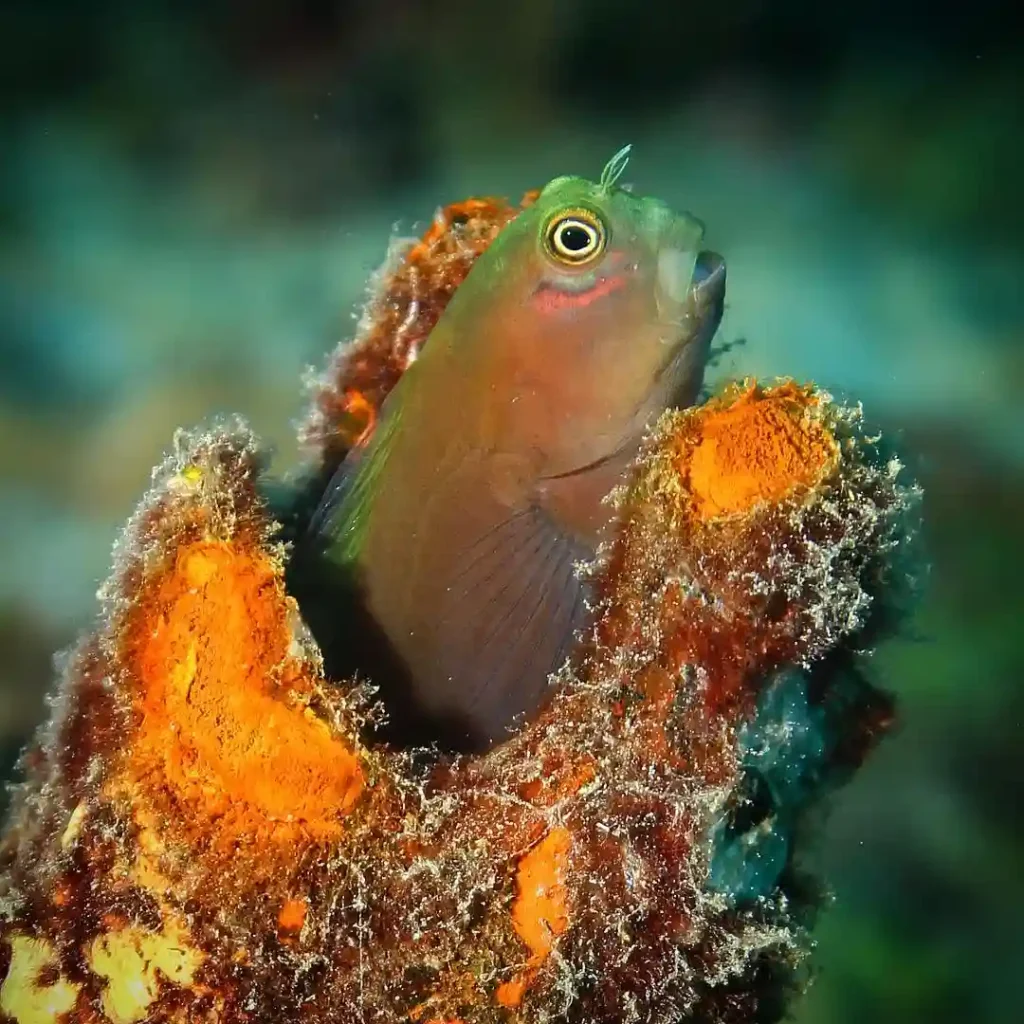
You’ll often see them perched on a rock, head sticking out of a hole like they’re on lifeguard duty. They literally watch everything—you, other fish, floating food… maybe even their own reflection.
They’ve got this “grumpy old man” energy that’s impossible not to love.
Quirky Habits
- Sometimes they’ll nip at fins of similarly shaped fish—more out of boredom than aggression.
- They recognize their owners, often swimming up to the glass when you approach.
- They’re jumpers, so always keep your tank covered unless you want a surprise carpet Blenny (trust me, it’s not funny when it happens).
Quick Care Summary Table
| Category | Requirement |
| Tank Size | 30+ gallons |
| Temperament | Peaceful |
| Diet | Herbivore with occasional protein |
| Lighting | Moderate |
| Water Flow | Moderate |
| Reef Safe | Yes |
| Lifespan | 3–5 years |
Pro Tips from Experience
Here’s the stuff you won’t find in the average care sheet:
- Stable water beats expensive gear. Fancy lights won’t fix bad parameters.
- Introduce your Blenny last if your tank is small—helps prevent territory drama.
- Keep algae available. If your tank is spotless, add seaweed clips or algae rocks.
- Cover your tank. Seriously, they will jump if startled.
- Drip acclimate slowly when introducing them. They hate abrupt salinity changes.
And FYI, if you notice your Blenny losing color, it’s usually from stress or poor diet, not illness. More algae = happier fish.
Common Mistakes New Owners Make
Let’s be honest, we’ve all made at least one of these:
- Using tanks too small. They might survive, but they won’t thrive.
- Adding aggressive tank mates. Instant stress.
- Feeding only meaty food. Leads to color loss and bloating.
- Skipping a tank lid. You’ll regret it the first time you find one on the floor.
- Neglecting regular maintenance. Dirty water = grumpy Blenny.
Avoid these, and you’ll have a fish that lives for years and actually makes eye contact like it knows what you’re thinking. (Creepy? Maybe. Still adorable though.)
Final Thoughts
The Bicolor Blenny is small, funny, and ridiculously charming. It’s one of those fish that makes your reef tank feel alive, not just stocked. If you give it space, good food, and stable water, it’ll reward you with years of goofy antics and personality.
IMO, few saltwater fish are as entertaining for the price. So if you’re building a peaceful community tank and want something with both utility and humor—this fish deserves a spot.
Now, go prep that algae clip, clean your lid (seriously, use a lid), and enjoy watching your Bicolor Blenny judge you from its favorite rock. 🙂