Black Skirt Tetras (Gymnocorymbus ternetzi), also called Black Widow Tetras, are peaceful, schooling freshwater fish known for their tall, flowing black fins and social nature. They thrive in groups of six or more and need a 20-gallon tank or larger with clean, stable water. These active swimmers are beginner-friendly and do well in planted community setups. In this guide, you’ll learn how to care for Black Skirt Tetras, including tank setup, feeding, behavior, and the best tank mates.
Species Overview
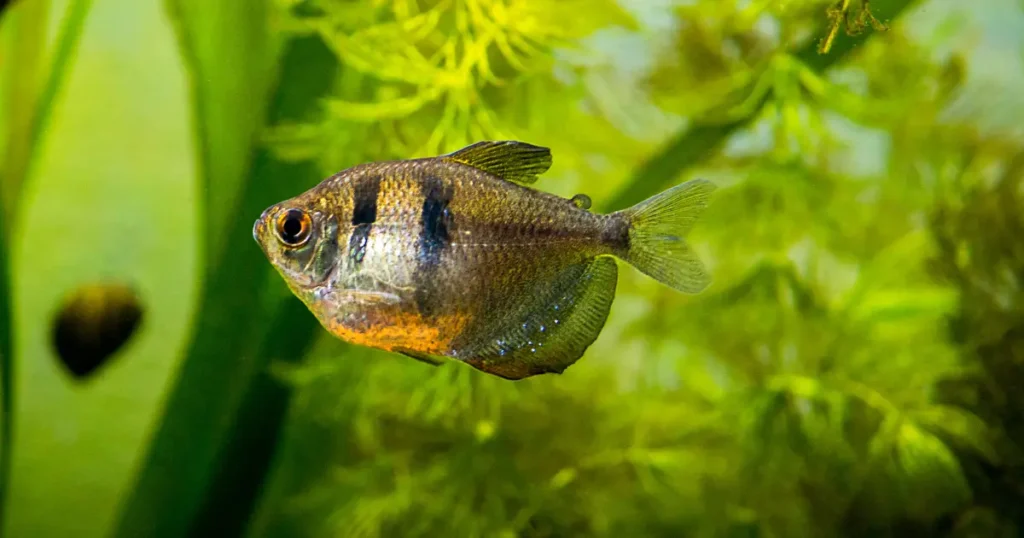
Native to South America, particularly the Paraguay River Basin, Black Skirt Tetras are mid-water schooling fish that do best in groups. They’re active, hardy, and a great choice for a planted community tank.
| Feature | Details |
| Scientific Name | Gymnocorymbus ternetzi |
| Common Names | Black Skirt Tetra, Black Widow Tetra |
| Size | 2–2.5 inches |
| Lifespan | 3–5 years |
| Temperament | Peaceful, semi-aggressive if alone |
| Tank Size | 20+ gallons |
| Temperature | 70–82°F |
| pH Range | 6.0–7.5 |
Tank Setup for Black Skirt Tetras
Minimum Tank Size
Keep them in at least a 20-gallon tank, preferably longer than tall. These fish are active swimmers and need room to school comfortably.
Group Size
Never keep Black Skirt Tetras alone. A group of six or more reduces stress and prevents aggression like fin nipping.
Aquascaping Tips
- Use dark gravel or sand to highlight their colors
- Add live plants like Java fern or Anubias
- Provide open swimming areas with light plant coverage
- Driftwood and rocks offer hiding spots
Filtration & Lighting
- Use a sponge or HOB filter with gentle to moderate flow
- Moderate lighting is ideal — bright light can stress them out
Keep a tight lid — they may jump when startled
Water Parameters & Maintenance
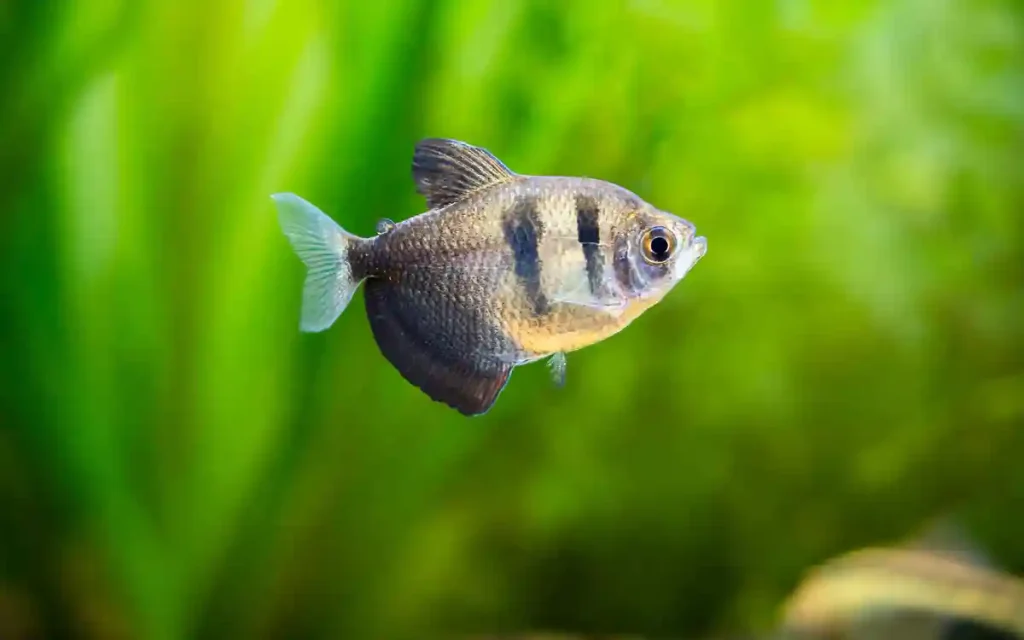
Black Skirt Tetras are adaptable but prefer stable water conditions.
- Temperature: 72–78°F is ideal
- pH: 6.5–7.5
- Hardness: Soft to moderately hard
- Weekly water changes: 25%
- Test water regularly for ammonia, nitrites, and nitrates
Feeding Black Skirt Tetras
Black Skirt Tetras are not picky eaters and will accept most foods.
Best Foods to Offer
- Quality flake food or micro pellets
- Frozen or live brine shrimp, bloodworms, or daphnia
- Occasional vegetable-based foods (blanched spinach or spirulina flakes)
Feeding Schedule
Feed once or twice daily in small portions. Feed what they can finish in 2 minutes. Vary the diet to keep their health and colors vibrant.
Behavior and Temperament
These tetras are peaceful when kept in groups. Kept alone or in small numbers, they may become shy or fin-nippy.
- Schooling fish — feel more secure in a group of 6+
- Active mid-level swimmers
- Can startle easily but usually adapt well in calm tanks
- Males may spar mildly, but injuries are rare
Tank Mates for Black Skirt Tetras
Black Skirt Tetras do well with other peaceful or semi-peaceful fish. Avoid slow swimmers with long fins—they may be nipped.
Great Tank Mates:
- Corydoras
- Platy Fish
- Harlequin Rasboras
- Bristlenose Plecos
- Mollies
- Larger tetras (like Lemon or Rummy Nose)
Avoid:
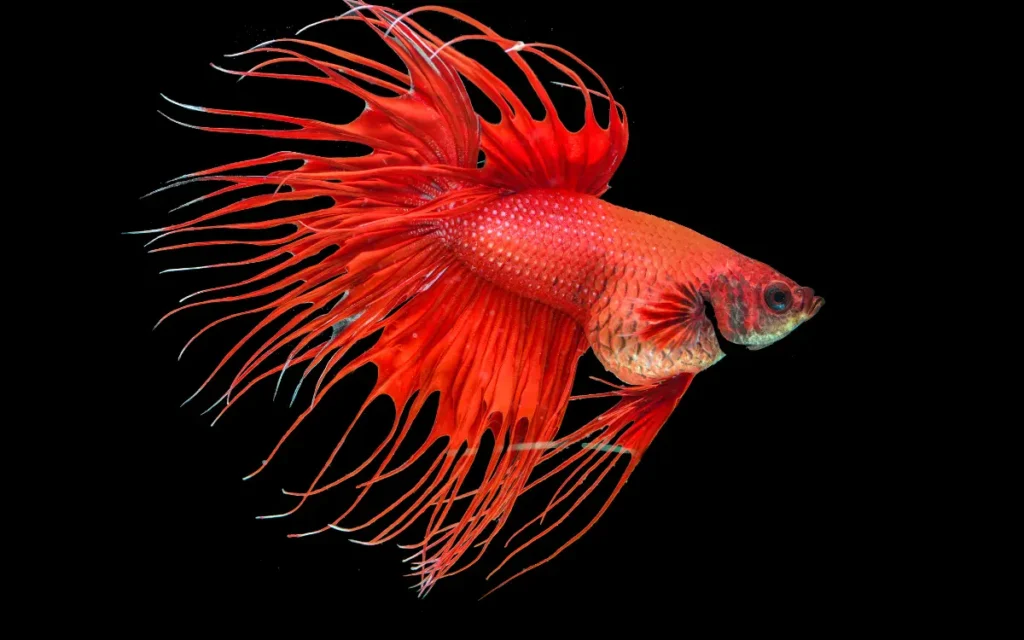
- Bettas
- Fancy Guppies
- Angelfish (in small tanks)
- Tiger Barbs or other aggressive species
Related Link: Celestial Pearl Danio Care
Breeding Black Skirt Tetras
Breeding them at home is possible with the right setup.
Spawning Tips
- Use a separate breeding tank (10–15 gallons)
- Add a mesh bottom or spawning mop
- Slightly lower the water level
- Condition with live or frozen foods
Post-Spawning
- Eggs hatch in 24–36 hours
- Remove adults to prevent egg-eating
- Feed fry infusoria or liquid fry food, then baby brine shrimp
Common Health Issues
Black Skirt Tetras are hardy, but like all fish, they can get sick if water quality drops.
Problems to Watch For:
- Ich (white spots)
- Fin rot (damaged, ragged fins)
- Stress from small group size
- Fin nipping in overcrowded or under-stocked setups
Prevention Tips:
- Maintain stable water conditions
- Keep them in groups of 6 or more
- Avoid fin-nippy or aggressive tank mates
- Use a quarantine tank for new fish
FAQs
Are Black Skirt Tetras aggressive?
They’re peaceful in groups, but may nip fins if kept in small numbers or with slow tank mates.
Do they need a heater?
Yes. Keep them in water between 70–82°F.
Can they live with shrimp?
They may eat baby shrimp. Adult shrimp are safe if the tank is well-planted.
Are they good for beginners?
Yes. They’re hardy, undemanding, and adaptable to different water conditions.
Can they live alone?
No. Keep at least six together to reduce stress and promote natural behavior.
 **2. Platy** Platies are hardy and easygoing. They enjoy swimming in groups and come in a variety of bright colors. Great for peaceful community tanks. ➡️ [Platy Fish Guide →](#) **3. Zebra Danio** Known for their energy and toughness, zebra danios are perfect for cycling new tanks. They tolerate a wide range of conditions and like to dart around in groups. ➡️ [Zebra Danio Guide →](#) **4. Corydoras Catfish** Peaceful bottom-dwellers that help keep your tank clean. Keep them in groups of 3 or more and give them soft substrate. ➡️ [Cory Catfish Care →](#) **5. Molly** Adaptable to various water conditions (even brackish), mollies are lively and great for community aquariums. ➡️ [Molly Fish Care Guide →](#) **6. Swordtail** Easy to care for and great in peaceful groups. Males have a signature sword-like tail and love swimming space. ➡️ [Swordtail Fish Guide →](#) **7. Betta Fish** Low-maintenance and visually stunning. Best kept alone or with very peaceful tank mates like snails or Corydoras. ➡️ [Full Betta Fish Care Guide →](#) **8. Neon Tetra** Small and peaceful, neon tetras love to school and light up a planted tank. Keep them in groups of 6 or more. ➡️ [Neon Tetra Care Guide →](https://oceanbitez.com/neon-tetras/) **9. Harlequin Rasbora** A calm and schooling species that fits right into community setups. Easy to feed and care for. ➡️ [Harlequin Rasbora Guide →](#) **10. Dwarf Gourami** A gentle and colorful addition to a beginner’s tank. Likes planted environments and peaceful neighbors. ➡️ [Dwarf Gourami Guide →](#) **11. White Cloud Mountain Minnow** Can live in cooler temperatures and is perfect for unheated tanks. Small, peaceful, and easy to care for. ➡️ [White Cloud Minnow Guide →](#) **12. Cherry Barb** Peaceful and social, cherry barbs do well in planted tanks and enjoy being in small groups. ➡️ [Cherry Barb Care →](#) --- ### Sample Beginner Tank Combos **Combo 1: 10–15 Gallon Easy Starter** * 4–6 Guppies * 3 Corydoras Catfish * 1 Nerite Snail **Combo 2: 20 Gallon Planted Community** * 6 Harlequin Rasboras * 6 Neon Tetras * 1 Dwarf Gourami * 3 Otocinclus (optional if algae control is needed) --- ### Beginner Tips for a Successful Aquarium * Cycle your tank before adding fish (ammonia → nitrite → nitrate) * Start with hardy species before delicate ones * Feed small amounts once or twice daily * Do weekly partial water changes (20–30%) * Don’t mix aggressive or fin-nipping species * Use a heater for tropical fish (75–80°F) --- ### Final Thoughts These beginner fish are ideal for getting started in the hobby without frustration. They're low-maintenance, compatible, and fun to watch. Once you’re comfortable, you can explore more advanced species and community combinations. ➡️ Check out our full guide to [Freshwater Aquarium Fish →](https://oceanbitez.com/freshwater-fish/)](https://oceanbitez.com/wp-content/uploads/2024/06/Best-Freshwater-Fish-for-Your-Aquarium-1024x640.webp)