Cherry Barbs (Puntius titteya) are colorful, peaceful freshwater fish that add lively energy to any community tank. Their red hues, schooling behavior, and hardy nature make them perfect for beginners and rewarding for experienced fishkeepers. In this care guide, you’ll learn everything about tank setup, diet, compatibility, and breeding.
Cherry Barb Species Profile
| Characteristic | Details |
| Scientific Name | Puntius titteya |
| Origin | Sri Lanka |
| Adult Size | 2 inches |
| Lifespan | 4–6 years |
| Temperament | Peaceful, social |
| Ideal Tank Size | Minimum 15 gallons |
| Water Temperature | 73–81°F |
| pH Range | 6.0–7.5 |
| Water Hardness | 4–10 dGH |
| Diet | Omnivore |
Species Overview
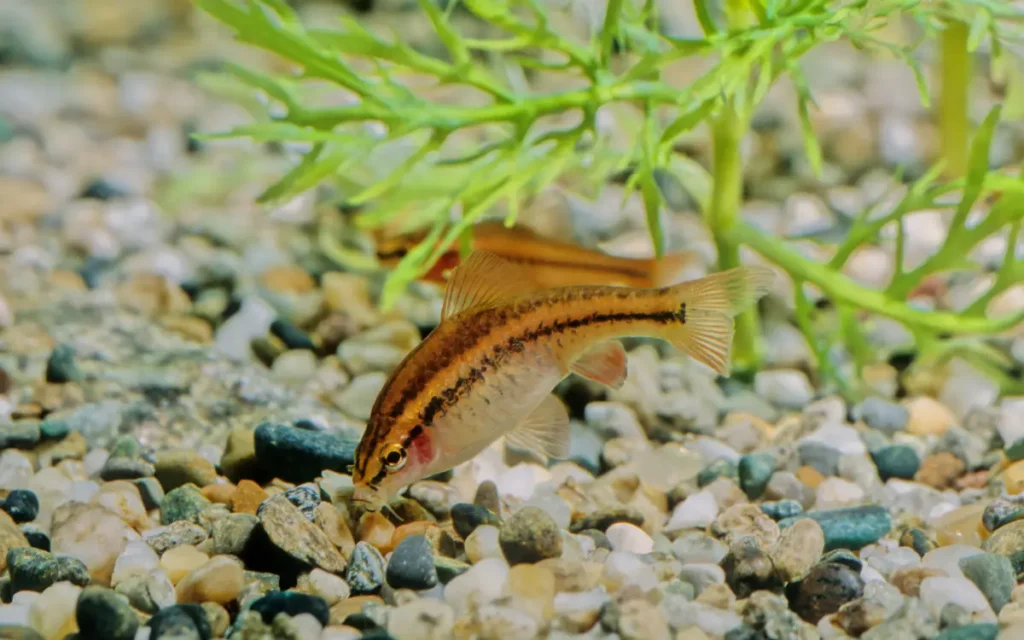
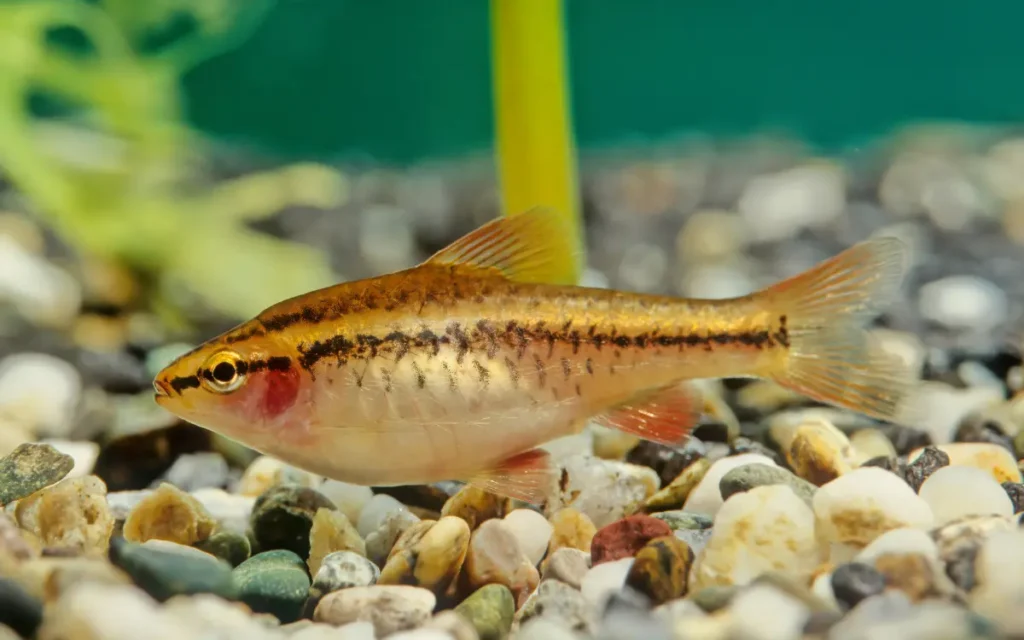
Cherry Barbs are small cyprinids native to slow-moving streams and shaded areas in Sri Lanka. Males display bright cherry red coloration, especially when breeding, while females are lighter and more silver-brown. They’re peaceful and do best in groups of at least 6, which helps reduce stress and brings out their best colors.
Appearance and Behavior
Cherry Barbs are torpedo-shaped with a deep red color in males and subtle pink-brown hues in females. They are active, quick swimmers but not aggressive. They tend to stay in the middle to lower regions of the tank and prefer well-planted aquariums.
My Experience: I’ve found Cherry Barbs to be one of the most stress-free community fish. They don’t chase others and are quick to settle in as long as they’re kept in a small school with enough hiding spaces.
Ideal Tank Setup
A 15–20 gallon tank is ideal for a small school. Use dark substrate and provide live plants like Java Fern, Cryptocoryne, and water wisteria. Add driftwood or rocks for extra hiding places. A gentle filter and stable heater are important. Ideal water conditions:
- Temperature: 73–81°F
- pH: 6.0–7.5
- Hardness: 4–10 dGH
Real Tip: Cherry Barbs look their best under subdued lighting with lots of green plants. Floating plants help diffuse light and reduce stress.
Compatible Tank Mates
Cherry Barbs are highly compatible with peaceful community fish. Good companions include Neon Tetras, Corydoras Catfish, Harlequin Rasboras, Dwarf Gouramis, and peaceful shrimp. Avoid aggressive or fin-nipping fish.
Feeding and Diet
Cherry Barbs accept flakes, micro pellets, and live or frozen foods like brine shrimp and bloodworms. Feed twice daily in small portions. A varied diet helps enhance their color and supports breeding.
Breeding Cherry Barbs
To breed, condition a pair or small group with high-protein foods. Use a separate breeding tank with fine-leaved plants or spawning mops. Males display richer color and court females by circling and flaring. Eggs hatch in 1–2 days and fry become free-swimming by day 3–4. Remove adults after spawning.
What I’ve Learned: Cherry Barbs scatter eggs, so adding marbles or dense moss at the bottom can protect the eggs. I’ve had successful spawns using a bare tank with Java moss and a sponge filter.
FAQ
How many Cherry Barbs should be kept together?
At least six to keep them social and reduce stress.
Do Cherry Barbs nip fins?
No, they are peaceful and not prone to fin-nipping.
Can they live in a 10-gallon tank?
Temporarily, but 15–20 gallons is better for a proper school.
Do Cherry Barbs need live plants?
Not required, but they thrive and show better color in planted tanks.
Final Thoughts
Cherry Barbs are hardy, colorful, and peaceful fish that bring motion and life to planted aquariums. Their ease of care, compatibility, and active nature make them a wonderful choice for community tanks.
 **2. Platy** Platies are hardy and easygoing. They enjoy swimming in groups and come in a variety of bright colors. Great for peaceful community tanks. ➡️ [Platy Fish Guide →](#) **3. Zebra Danio** Known for their energy and toughness, zebra danios are perfect for cycling new tanks. They tolerate a wide range of conditions and like to dart around in groups. ➡️ [Zebra Danio Guide →](#) **4. Corydoras Catfish** Peaceful bottom-dwellers that help keep your tank clean. Keep them in groups of 3 or more and give them soft substrate. ➡️ [Cory Catfish Care →](#) **5. Molly** Adaptable to various water conditions (even brackish), mollies are lively and great for community aquariums. ➡️ [Molly Fish Care Guide →](#) **6. Swordtail** Easy to care for and great in peaceful groups. Males have a signature sword-like tail and love swimming space. ➡️ [Swordtail Fish Guide →](#) **7. Betta Fish** Low-maintenance and visually stunning. Best kept alone or with very peaceful tank mates like snails or Corydoras. ➡️ [Full Betta Fish Care Guide →](#) **8. Neon Tetra** Small and peaceful, neon tetras love to school and light up a planted tank. Keep them in groups of 6 or more. ➡️ [Neon Tetra Care Guide →](https://oceanbitez.com/neon-tetras/) **9. Harlequin Rasbora** A calm and schooling species that fits right into community setups. Easy to feed and care for. ➡️ [Harlequin Rasbora Guide →](#) **10. Dwarf Gourami** A gentle and colorful addition to a beginner’s tank. Likes planted environments and peaceful neighbors. ➡️ [Dwarf Gourami Guide →](#) **11. White Cloud Mountain Minnow** Can live in cooler temperatures and is perfect for unheated tanks. Small, peaceful, and easy to care for. ➡️ [White Cloud Minnow Guide →](#) **12. Cherry Barb** Peaceful and social, cherry barbs do well in planted tanks and enjoy being in small groups. ➡️ [Cherry Barb Care →](#) --- ### Sample Beginner Tank Combos **Combo 1: 10–15 Gallon Easy Starter** * 4–6 Guppies * 3 Corydoras Catfish * 1 Nerite Snail **Combo 2: 20 Gallon Planted Community** * 6 Harlequin Rasboras * 6 Neon Tetras * 1 Dwarf Gourami * 3 Otocinclus (optional if algae control is needed) --- ### Beginner Tips for a Successful Aquarium * Cycle your tank before adding fish (ammonia → nitrite → nitrate) * Start with hardy species before delicate ones * Feed small amounts once or twice daily * Do weekly partial water changes (20–30%) * Don’t mix aggressive or fin-nipping species * Use a heater for tropical fish (75–80°F) --- ### Final Thoughts These beginner fish are ideal for getting started in the hobby without frustration. They're low-maintenance, compatible, and fun to watch. Once you’re comfortable, you can explore more advanced species and community combinations. ➡️ Check out our full guide to [Freshwater Aquarium Fish →](https://oceanbitez.com/freshwater-fish/)](https://oceanbitez.com/wp-content/uploads/2024/06/Best-Freshwater-Fish-for-Your-Aquarium-1024x640.webp)