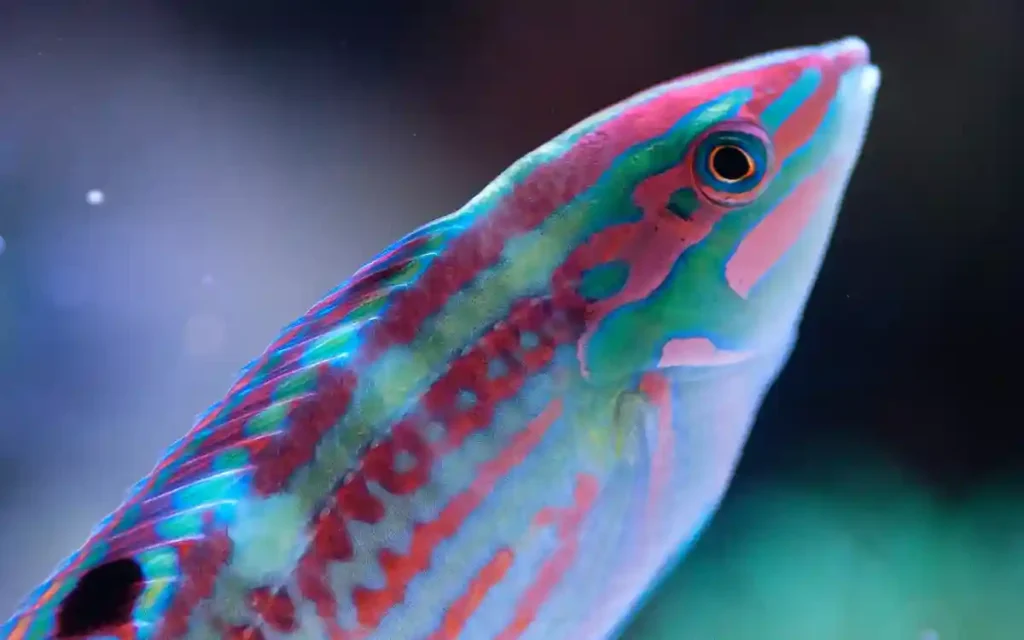
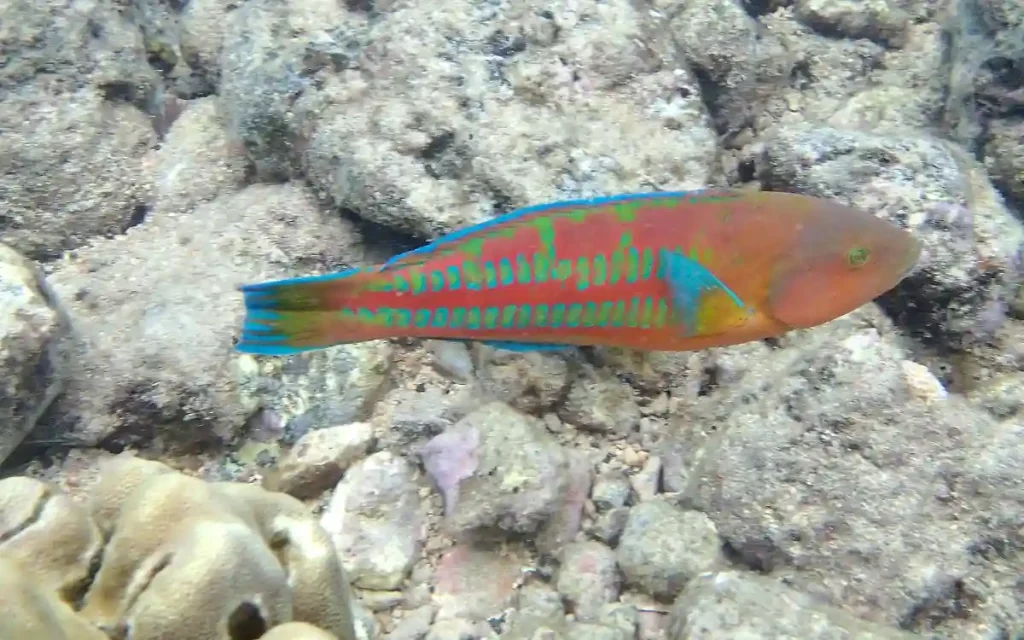
The Christmas Wrasse (Halichoeres claudia) is a stunning saltwater fish that brings festive flair to marine aquariums. With its vivid red, green, and blue patterns, it stands out in any tank. Beyond its looks, this active and curious fish is admired for its peaceful nature and useful role in controlling pests like bristle worms. However, caring for a Christmas Wrasse requires thoughtful tank setup, proper feeding, and precautions for its burrowing and jumping behavior. This guide will walk you through everything you need to know to keep a Christmas Wrasse healthy and happy.
What Is a Christmas Wrasse?
The Christmas Wrasse, native to the coral reefs of the Indo-Pacific, is known for its dazzling holiday-like coloration and lively personality. This fish typically grows to about five to seven inches in length and can live up to seven years with proper care. It has an elongated body, quick swimming style, and a habit of burrowing into sand at night for rest. Despite its peaceful reputation, it can show mild aggression toward very small fish or invertebrates. Hobbyists value this wrasse for its pest control abilities, as it often helps keep unwanted critters in check.
Quick Facts About Christmas Wrasse
Christmas Wrasses usually need a tank of at least 75 gallons. They thrive in water temperatures between 72 and 78°F with salinity levels from 1.020 to 1.025 SG. The ideal pH range is 8.1 to 8.4, and keeping nitrate levels low (below 20 ppm) is important to prevent stress and health issues. This species is carnivorous and enjoys a diet of meaty marine foods, including frozen mysis shrimp and finely chopped seafood. While they are generally reef safe, they may snack on small snails, worms, and shrimp if underfed.
Tank Setup and Habitat Needs
Providing a proper tank setup is key to keeping your Christmas Wrasse stress-free and healthy. A longer tank layout is ideal, giving them plenty of space to swim. These fish are known for their habit of burrowing in the sand to sleep at night, so it’s essential to offer a soft sand bed at least two to three inches deep. This not only supports their natural behavior but also reduces stress. Adding live rock structures provides hiding spots and areas where they can hunt for small organisms. Since Christmas Wrasses are skilled jumpers, a tight-fitting lid is a must to prevent escapes. Many hobbyists learn this the hard way, so it’s wise to secure your tank from day one.
Diet and Feeding Schedule
In the wild, Christmas Wrasses feed on small invertebrates and zooplankton. In your aquarium, they will do best on a varied carnivorous diet. Offer foods like frozen mysis shrimp, brine shrimp, chopped squid, and high-quality marine pellets formulated for carnivores. These fish are active foragers and benefit from smaller, more frequent meals rather than a single large feeding. Aim to feed two to three times daily in small portions to mimic their natural grazing behavior. This helps maintain their energy levels and reduces the chances of them turning to small tank invertebrates for a snack.
Tank Mates: Who Gets Along with Christmas Wrasse?
Christmas Wrasses generally do well in peaceful community tanks. They are compatible with fish like tangs, clownfish, larger gobies, and dwarf angelfish. Their active nature means they thrive alongside other lively but non-aggressive species. However, it’s wise to avoid pairing them with tiny shrimp or delicate snails, as these could become part of their diet over time. Similarly, highly aggressive species like triggers could intimidate or harm them. Providing enough space and hiding spots helps ensure harmony among tank mates.
Health and Common Problems
Like many saltwater species, Christmas Wrasses are prone to marine diseases such as ich and velvet, especially if stressed or introduced without proper quarantine. Their burrowing behavior means keeping the sand bed clean is important, as dirty substrate can lead to infections or skin issues. Good water quality, regular maintenance, and a stress-free environment are your best defenses against illness. Look for signs of trouble such as faded colors, loss of appetite, or scratching against rocks, and act quickly if you spot these.
Breeding in Captivity
Breeding Christmas Wrasses in home aquariums is extremely rare. In the wild, they are known to spawn in pairs during dusk, releasing eggs into open water. Replicating these conditions at home is difficult due to the space, lighting cycles, and water parameters required. Most Christmas Wrasses available in the hobby are wild-caught.
Behaviors: Burrowing and Jumping
One of the most interesting behaviors of the Christmas Wrasse is its nightly burrowing habit. As night falls, this fish will dive into the sand to sleep, hidden from predators and safe from disturbances. This makes a deep sand bed essential. Another important trait is their tendency to jump when startled or excited. Without a secure lid, there’s a real risk of finding your fish on the floor. Many hobbyists recommend double-checking any small openings where a wrasse might slip through.
Read also:
Bicolor Angelfish 101: Diet, Tank Mates & Reef Safety Guide
Fairy Wrasse Care: Feeding, Mates & Reef Guide
FAQs
Are Christmas Wrasses reef safe?
Christmas Wrasses are reef safe with caution. They generally leave corals alone but may eat small invertebrates if they’re not well fed.
Do they really burrow in the sand?
Yes, they burrow at night or when they feel threatened. A sand bed of at least two inches helps support this behavior.
How often should I feed a Christmas Wrasse?
Feeding two to three small meals daily is best. This mirrors their natural foraging and helps prevent them from hunting small tank mates.
Can they live with cleaner shrimp?
It’s risky. Some individuals might leave cleaner shrimp alone, but others may see them as food over time.
Do I need a lid on my tank?
Absolutely. These fish are notorious jumpers and can escape from even small openings.
Final Thoughts
The Christmas Wrasse is a beautiful and lively addition to larger saltwater tanks. With proper setup, a well-balanced diet, and awareness of its unique needs, this fish can thrive for many years. Focus on giving it space to swim, a sandy spot to burrow, and a secure lid to keep it safe. Its vibrant colors and active nature will make it a standout in your marine setup.