Clown Loaches grow up to 12 inches, live 10–20 years, and need a large tank of at least 75 gallons. They are peaceful, social fish that must be kept in groups and do best in spacious aquariums with hiding spots and a varied diet.
They are not beginner fish for small tanks but if you set them up correctly, they become one of the most entertaining and long-lived species you can keep.
Clown Loach Quick Facts
| Feature | Details |
| Scientific Name | Chromobotia macracanthus |
| Size | Up to 12 inches |
| Lifespan | 10–20 years |
| Temperament | Peaceful, social |
| Tank Size | 75 gallons minimum |
| Group Size | 5+ recommended |
| Temperature | 77–86°F |
| Diet | Omnivore |
What Is a Clown Loach?
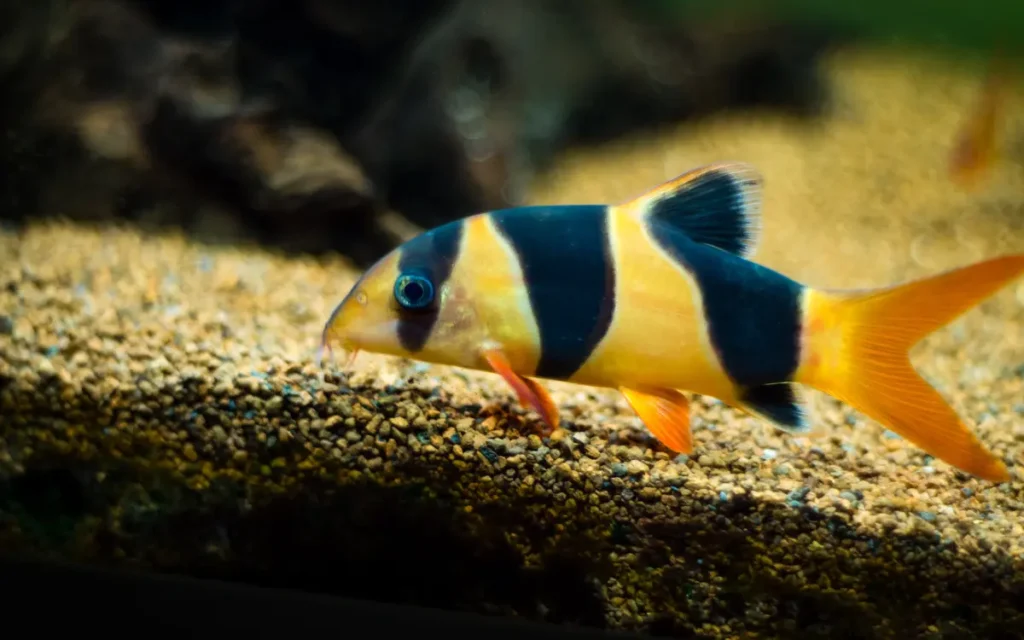
Clown Loaches are bright orange freshwater fish with bold black vertical bands and a long, slightly curved body. They are bottom-dwelling fish known for their playful behavior and social nature.
They often rest in unusual positions, explore caves, and interact with each other, making them one of the most entertaining fish in large aquariums.
How Big Do Clown Loach Get?
Clown Loaches can grow up to 12 inches (30 cm).
Important:
- They grow slowly
- Many stay small for years, which tricks beginners
- In small tanks, growth becomes stunted
This is why buying them for small tanks is a common mistake.
How Long Do Clown Loach Live?
Clown Loaches can live 10 to 20 years, making them a long-term commitment.
They live longer when:
- kept in large tanks
- fed a varied diet
- water quality is stable
This is not a short-term fish — it’s more like keeping a pet for years.
What Size Tank for Clown Loach?
A 75-gallon tank is the minimum, but bigger is always better.
For proper care:
- 75 gallons → small group (young fish)
- 100+ gallons → ideal for adults
They need space because:
- they grow large
- they are very active
- they live in groups
Keeping them in small tanks leads to stress and poor health.
Ideal Tank Setup for Clown Loach
Water Conditions
Clown Loaches prefer warm, stable water.
- Temperature: 77–86°F
- pH: 6.0–7.5
- Soft to moderate hardness
They are sensitive to poor water conditions, especially when young.
Substrate and Decor
Use soft materials because they are bottom dwellers.
Best setup:
- sand substrate (protects their barbels)
- caves, driftwood, and hiding spots
- dim lighting areas
They love hiding and resting in groups.
Filtration & Maintenance
Clown Loaches need clean, well-oxygenated water.
- use strong filtration
- maintain steady flow
- do 25–30% weekly water changes
Poor water quality is one of the main reasons they get sick.
What Do Clown Loach Eat?
Clown Loaches are omnivores and enjoy a varied diet.
Best foods:
- sinking pellets or wafers
- bloodworms and brine shrimp
- snails (they love eating them)
- vegetables like zucchini or cucumber
Feeding Tips
- feed once or twice daily
- ensure food reaches the bottom
- remove leftovers
They are active feeders but can miss food if faster fish are present.
Clown Loach Behavior
Clown Loaches have unique behavior that often confuses beginners.
Are Clown Loach Aggressive?
No — they are peaceful fish.
However:
- they may chase each other (normal behavior)
- they need groups to feel safe
In small numbers, they can become stressed.
Why Is My Clown Loach Laying on Its Side?
This is one of the most searched questions.
In many cases, this is completely normal.
Clown Loaches often:
- lie on their side while resting
- hide in strange positions
But if combined with:
- heavy breathing
- lack of movement
then it may indicate stress or illness.
Why Is My Clown Loach Pale?
A pale Clown Loach usually means stress.
Common causes:
- poor water quality
- sudden changes
- illness
- bullying
Fix:
- check water parameters
- ensure stable conditions
Why Did My Clown Loach Die?
Common reasons:
- small tank size
- poor water quality
- sudden temperature changes
- stress from being alone
They are hardy once established, but sensitive when conditions are unstable.
Clown Loach Tank Mates
Clown Loaches are peaceful and do well with other community fish.
Good Tank Mates
- larger tetras
- rainbowfish
- barbs (non-aggressive types)
- other loaches
Fish to Avoid
- aggressive cichlids
- very small fish (may get stressed)
For balanced community setups, you can also explore beginner-friendly fish combinations here: Zebra danio care
How to Sex Clown Loach Fish
Sexing Clown Loaches is difficult.
General differences:
- females → slightly larger and rounder
- males → slimmer
There are no clear visual differences in young fish.
What Do Clown Loach Eggs Look Like?
Clown Loach eggs are:
- small
- round
- slightly sticky
Breeding in home aquariums is extremely rare, so most hobbyists never see their eggs.
How to Grow a Clown Loach Faster
Growth depends on care.
To help them grow properly:
- provide a large tank
- feed a high-protein diet
- maintain stable water
- keep them in groups
Growth is slow, so patience is required.
How Much Do Clown Loach Fish Cost?
Clown Loaches usually cost:
- $5–$10 for small juveniles
- $15–$30 for larger fish
Price depends on size and availability.
Beginner Mistakes to Avoid
Most problems come from these mistakes:
- keeping them in small tanks
- keeping them alone
- ignoring their adult size
- poor diet
- skipping water changes
Avoid these, and they become very hardy fish.
Daily Care Checklist
Daily:
- feed properly
- observe behavior
- check for stress signs
Weekly:
- water change
- clean tank lightly
FAQs
How big does a clown loach get?
Up to 12 inches, much larger than most beginner fish.
What size tank does a clown loach need?
At least 75 gallons, with larger tanks recommended for adults.
What do clown loach eat?
Sinking pellets, live foods, vegetables, and snails.
Are clown loach aggressive?
No, they are peaceful and social fish.
Why is my clown loach laying on its side?
Usually normal resting behavior, but check for stress if other symptoms appear.
Final Thoughts
Clown Loaches are not beginner fish for small tanks, but they are one of the most rewarding species for large aquariums. They are social, playful, and can live for many years when cared for properly.
If you can provide enough space, stable water, and a proper group, they will become one of the most active and interesting fish in your tank.
 **2. Platy** Platies are hardy and easygoing. They enjoy swimming in groups and come in a variety of bright colors. Great for peaceful community tanks. ➡️ [Platy Fish Guide →](#) **3. Zebra Danio** Known for their energy and toughness, zebra danios are perfect for cycling new tanks. They tolerate a wide range of conditions and like to dart around in groups. ➡️ [Zebra Danio Guide →](#) **4. Corydoras Catfish** Peaceful bottom-dwellers that help keep your tank clean. Keep them in groups of 3 or more and give them soft substrate. ➡️ [Cory Catfish Care →](#) **5. Molly** Adaptable to various water conditions (even brackish), mollies are lively and great for community aquariums. ➡️ [Molly Fish Care Guide →](#) **6. Swordtail** Easy to care for and great in peaceful groups. Males have a signature sword-like tail and love swimming space. ➡️ [Swordtail Fish Guide →](#) **7. Betta Fish** Low-maintenance and visually stunning. Best kept alone or with very peaceful tank mates like snails or Corydoras. ➡️ [Full Betta Fish Care Guide →](#) **8. Neon Tetra** Small and peaceful, neon tetras love to school and light up a planted tank. Keep them in groups of 6 or more. ➡️ [Neon Tetra Care Guide →](https://oceanbitez.com/neon-tetras/) **9. Harlequin Rasbora** A calm and schooling species that fits right into community setups. Easy to feed and care for. ➡️ [Harlequin Rasbora Guide →](#) **10. Dwarf Gourami** A gentle and colorful addition to a beginner’s tank. Likes planted environments and peaceful neighbors. ➡️ [Dwarf Gourami Guide →](#) **11. White Cloud Mountain Minnow** Can live in cooler temperatures and is perfect for unheated tanks. Small, peaceful, and easy to care for. ➡️ [White Cloud Minnow Guide →](#) **12. Cherry Barb** Peaceful and social, cherry barbs do well in planted tanks and enjoy being in small groups. ➡️ [Cherry Barb Care →](#) --- ### Sample Beginner Tank Combos **Combo 1: 10–15 Gallon Easy Starter** * 4–6 Guppies * 3 Corydoras Catfish * 1 Nerite Snail **Combo 2: 20 Gallon Planted Community** * 6 Harlequin Rasboras * 6 Neon Tetras * 1 Dwarf Gourami * 3 Otocinclus (optional if algae control is needed) --- ### Beginner Tips for a Successful Aquarium * Cycle your tank before adding fish (ammonia → nitrite → nitrate) * Start with hardy species before delicate ones * Feed small amounts once or twice daily * Do weekly partial water changes (20–30%) * Don’t mix aggressive or fin-nipping species * Use a heater for tropical fish (75–80°F) --- ### Final Thoughts These beginner fish are ideal for getting started in the hobby without frustration. They're low-maintenance, compatible, and fun to watch. Once you’re comfortable, you can explore more advanced species and community combinations. ➡️ Check out our full guide to [Freshwater Aquarium Fish →](https://oceanbitez.com/freshwater-fish/)](https://oceanbitez.com/wp-content/uploads/2024/06/Best-Freshwater-Fish-for-Your-Aquarium-1024x640.webp)