Clownfish rank among the most popular saltwater fish for home aquariums. They stay hardy, colorful, and beginner-friendly. But they are not always as peaceful as people assume.
Clownfish defend territory, especially once they bond as a pair. If you add aggressive tank mates or fish that invade their space, problems start quickly.
This list explains 15 reef-safe tank mates that work well with clownfish plus why they work.
What Clownfish Need in a Community Tank
Before choosing tank mates, understand their behavior:
- Adult size: 3–4 inches (depending on species)
- Temperament: Semi-aggressive when paired
- Tank level: Middle to upper
- Territory: Around host coral or anemone
- Minimum tank size: 20–30 gallons for a pair
Most compatibility issues happen when fish invade their hosting area.
15 Best Clownfish Tank Mates
1. Royal Gramma
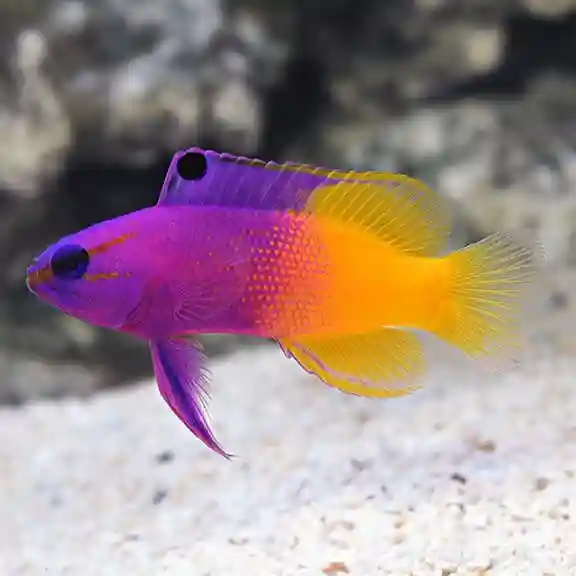
Royal Grammas are one of the most reliable tank mates for clownfish because they occupy different territory zones and rarely compete for space.
Royal Grammas grow to about 3 inches and prefer to stay close to rockwork and caves. Clownfish typically hover in midwater or near their host anemone or coral. This natural separation reduces stress and territorial overlap.
Royal Grammas may defend their cave, but they do not roam aggressively across the tank. As long as you provide enough rock structure, both species coexist peacefully.
Why they go very well together:
- Different preferred zones (rock vs open water)
- Similar adult size
- Both reef safe
- Minimal fin nipping behavior
Related setup tip: Provide multiple caves so the Royal Gramma can claim a space without interfering with clownfish territory.
Tank size: 30+ gallons
Compatibility level: Very Good
2. Firefish Goby
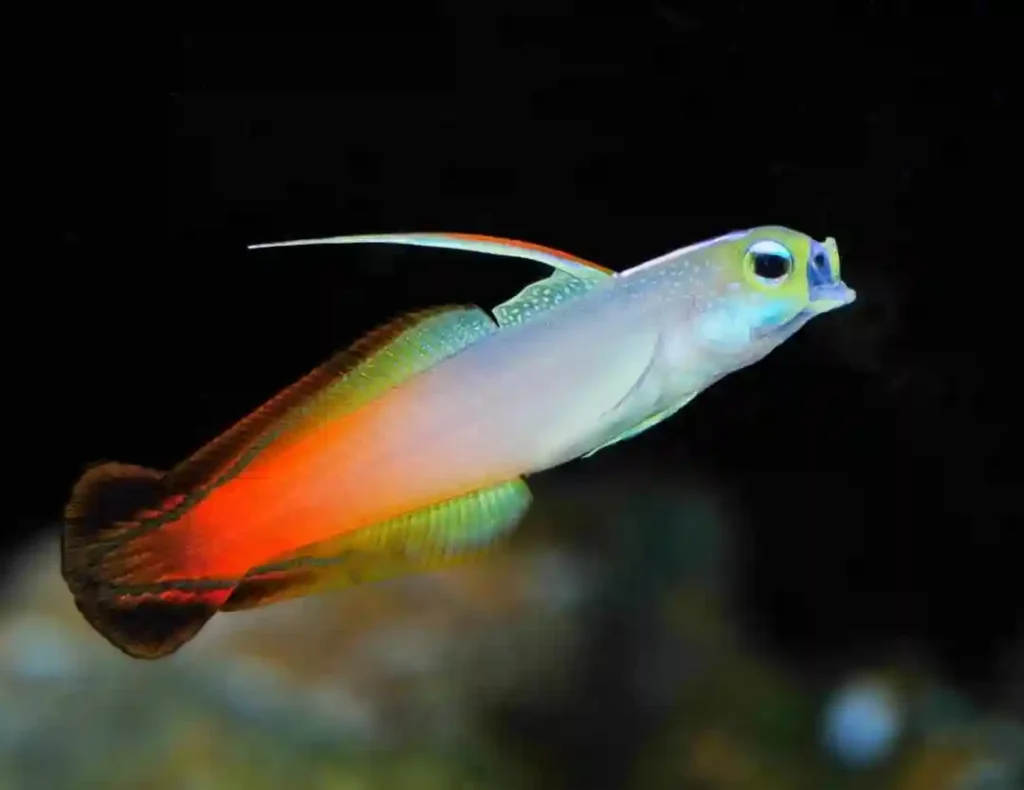
Firefish Gobies work extremely well with clownfish because they are shy, non-confrontational, and avoid territorial disputes.
They grow to about 3 inches and hover gently in midwater. When threatened, they retreat into rock crevices instead of fighting.
Clownfish may show mild dominance, but Firefish rarely escalate conflict. Their calm personality keeps the tank peaceful.
Why they go very well together:
- Firefish avoid confrontation
- Similar water requirements
- No aggression toward clownfish
- Do not compete for hosting areas
Important note: Keep only one Firefish unless your tank is large. They can fight among themselves.
Tank size: 20–30 gallons
Compatibility level: Excellent
3. Banggai Cardinalfish
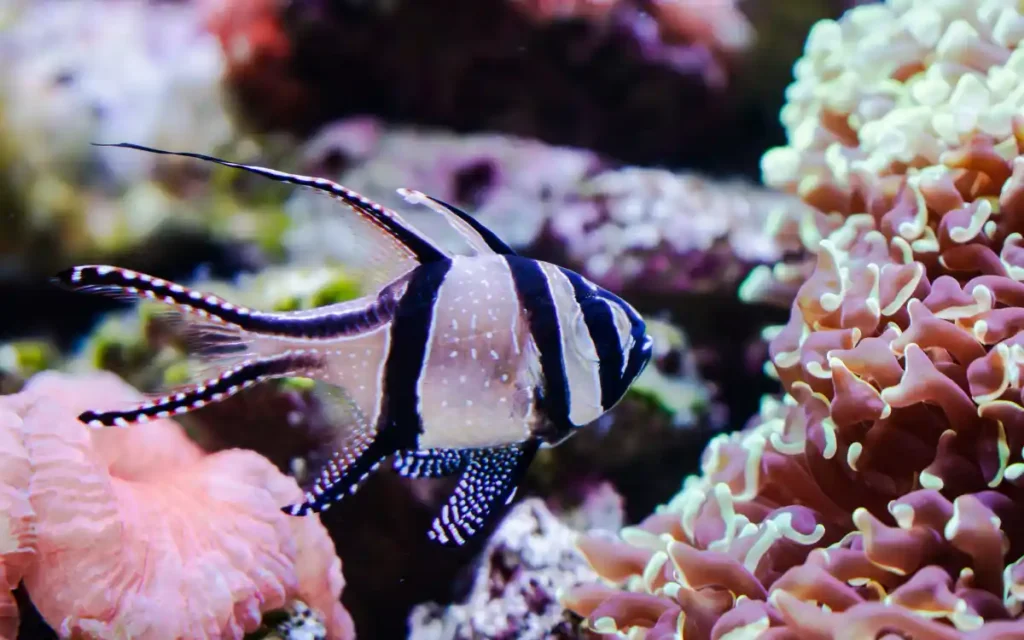
Banggai Cardinalfish pair nicely with clownfish because they remain slow, steady swimmers and show very little aggression.
They grow to about 3 inches and stay midwater, often hovering in place. Clownfish may act slightly dominant during feeding, but Banggai Cardinals tolerate this behavior.
They do not invade clownfish territory or chase other fish.
Why they go very well together:
- Calm personality
- No territorial aggression
- Similar diet and feeding behavior
- Reef safe
Related information: Banggai Cardinals prefer stable water parameters. Add them only to established tanks.
Tank size: 30+ gallons
Compatibility level: Very Good
4. Yellow Watchman Goby
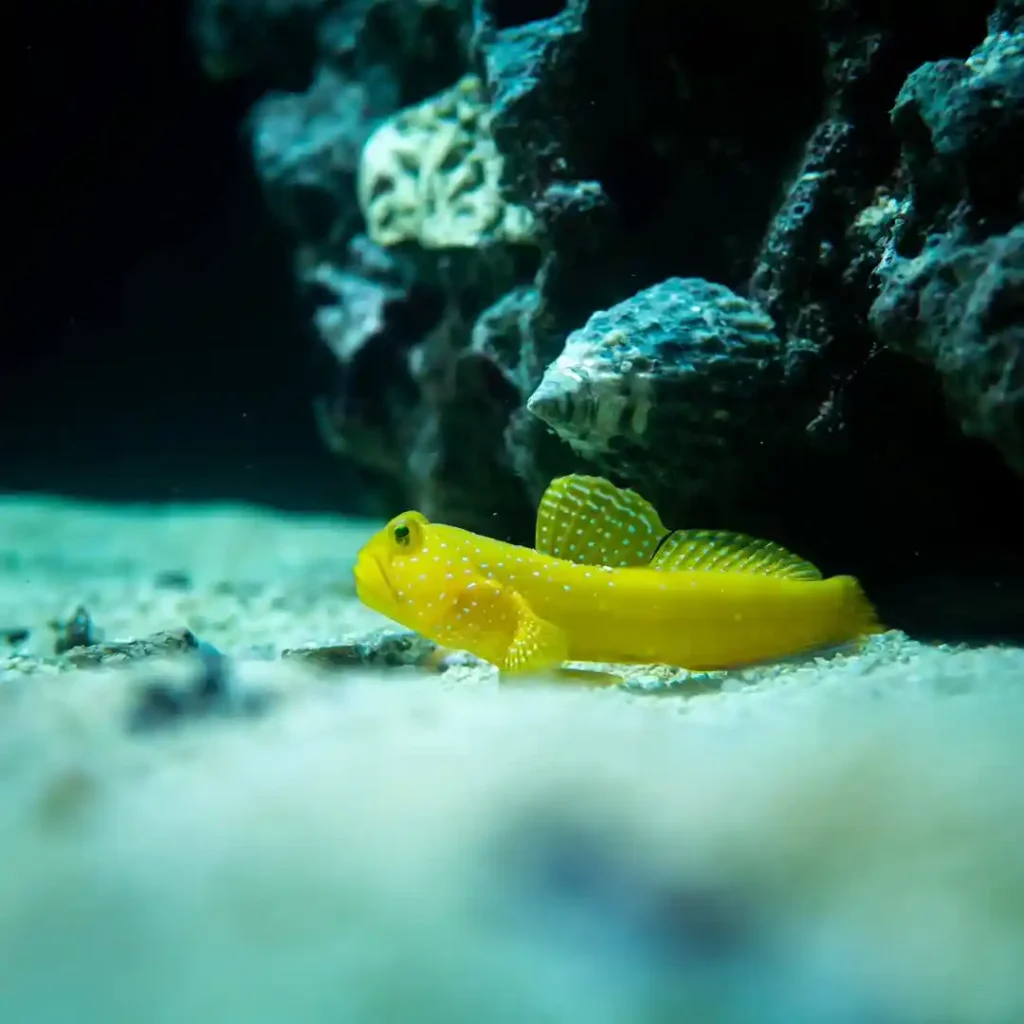
Yellow Watchman Gobies stay near the sand bed and create burrows. Because they live at the bottom, they rarely interact with clownfish in midwater.
They grow to about 3–4 inches and spend most of their time guarding their burrow entrance.
Clownfish ignore them because they do not compete for swimming space or hosting areas.
Why they go very well together:
- Completely different tank zones
- Peaceful temperament
- Minimal movement outside burrow
- Reef safe
Bonus tip: Pair them with a pistol shrimp for interesting natural behavior.
Tank size: 30+ gallons
Compatibility level: Excellent
5. Pajama Cardinalfish
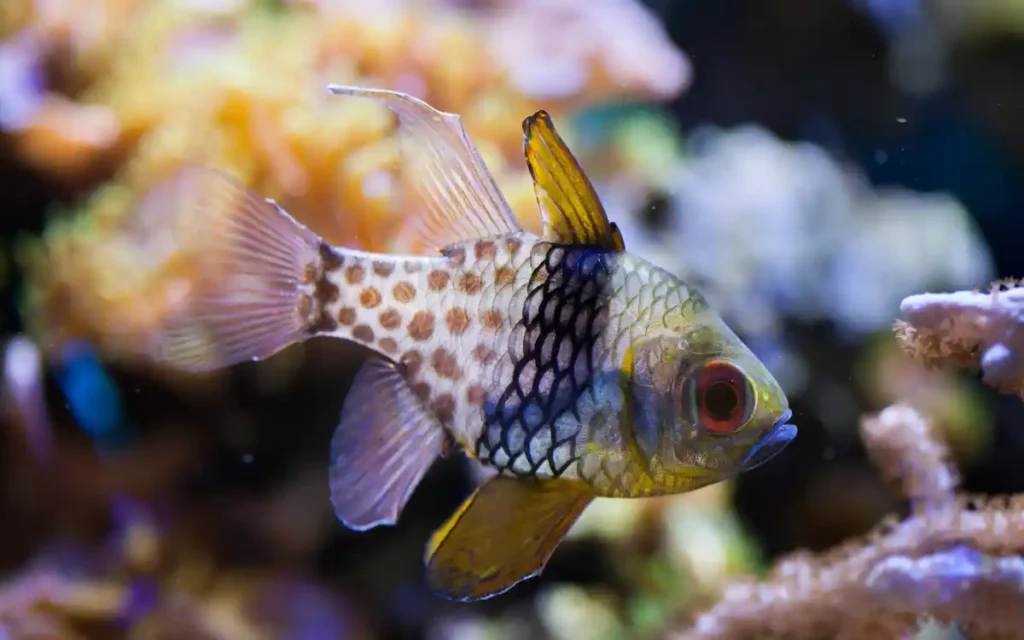
Pajama Cardinalfish are peaceful, slow-moving fish that do not show territorial behavior. They grow to about 3 inches and stay midwater.
They rarely compete aggressively for food and coexist well with clownfish pairs.
Since they do not challenge dominance, clownfish usually tolerate them without issue.
Why they go very well together:
- Non-aggressive personality
- Similar adult size
- Compatible feeding habits
- Reef safe
Related tip: Keep them in small groups for better confidence and natural behavior.
Tank size: 30 gallons
Compatibility level: Very Good
6. Tailspot Blenny
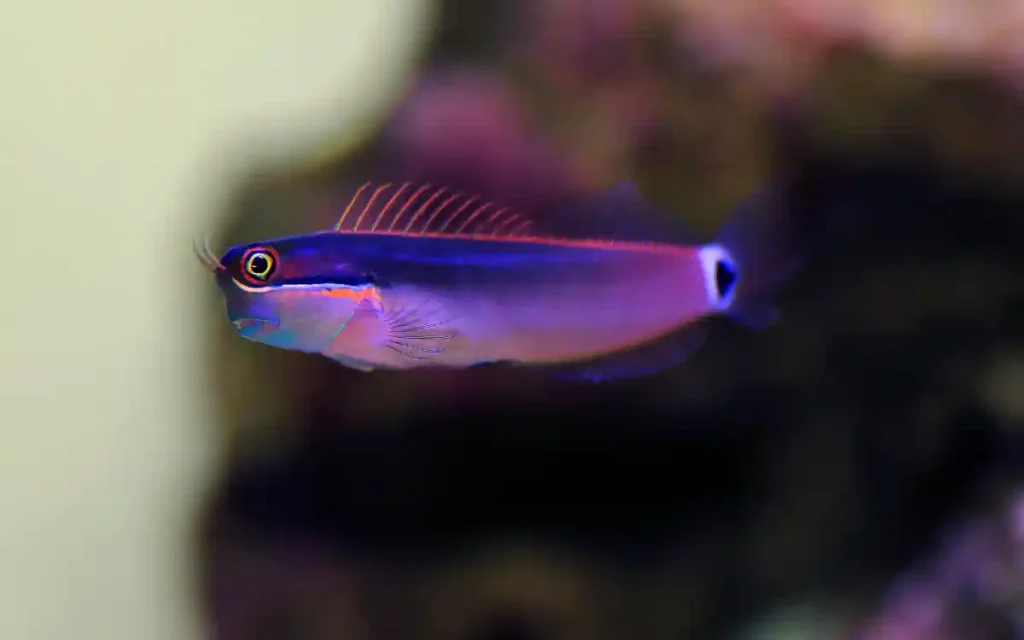
Tailspot Blennies work very well with clownfish because they stay small, peaceful, and focused on rock surfaces rather than open swimming areas.
They grow to about 2.5 inches and spend most of their time perched on rocks or grazing algae. Since clownfish defend midwater territory near their host, they rarely see blennies as competition.
Tailspot Blennies show personality but not aggression. They may guard a small rock perch, but they do not roam the tank looking for conflict.
Why they go very well together:
- Different tank zones (rock percher vs midwater swimmer)
- Peaceful temperament
- Small adult size
- Reef safe and algae helpful
Related tip: Provide rockwork with natural hiding crevices. Blennies feel secure when they can perch and retreat easily.
Tank size: 20–30 gallons Compatibility level: Excellent
7. Blue-Green Chromis
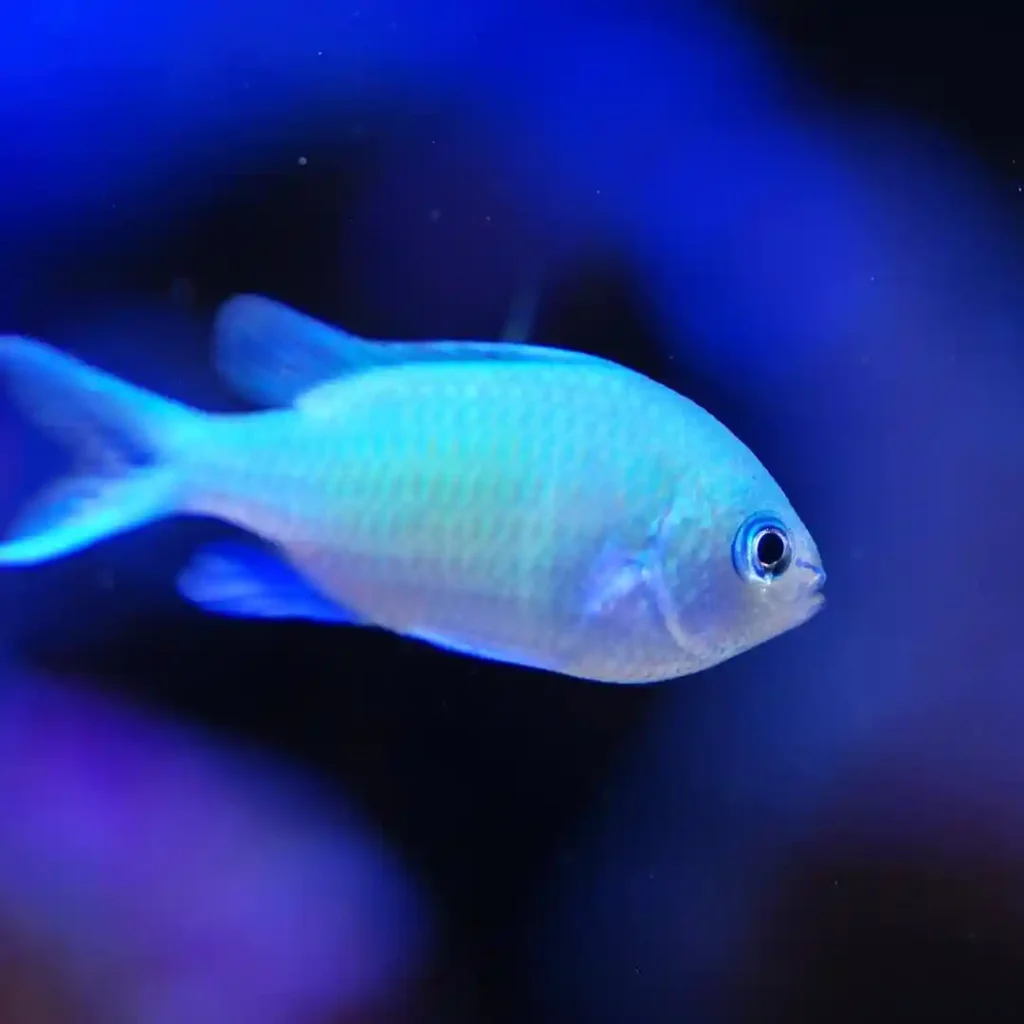
Blue-Green Chromis make strong clownfish companions in slightly larger tanks. They grow to about 3–4 inches and swim actively in upper water levels.
They spread out aggression because they stay in small groups. Clownfish usually ignore them unless tank space is too tight.
Chromis add movement without creating territorial pressure near rockwork or anemones.
Why they go very well together:
- Active upper-level swimmers
- Generally peaceful in groups
- Do not challenge clownfish dominance
- Reef safe
Important note: Keep at least 3–5 Chromis to reduce internal bullying. They behave better in groups.
Tank size: 40+ gallons recommended Compatibility level: Very Good
8. Coral Beauty Angelfish (With Caution)
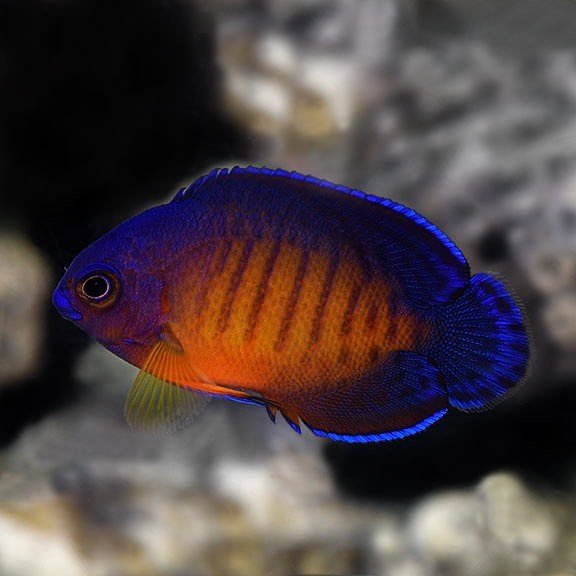
Coral Beauty Angelfish can work with clownfish in larger reef tanks. They grow to about 4 inches and stay active around rock structures.
They may show mild territorial behavior, but they rarely target clownfish specifically.
The key is tank size and rock coverage. In cramped setups, territorial tension increases.
Why they can work:
- Similar size
- Different focus areas (rock grazing vs hosting area)
- Reef compatible in many setups
Caution: Some individuals nip corals or act dominant. Monitor behavior closely during introduction.
Tank size: 55+ gallons Compatibility level: Moderate
9. Cleaner Shrimp (Non-Fish Option)
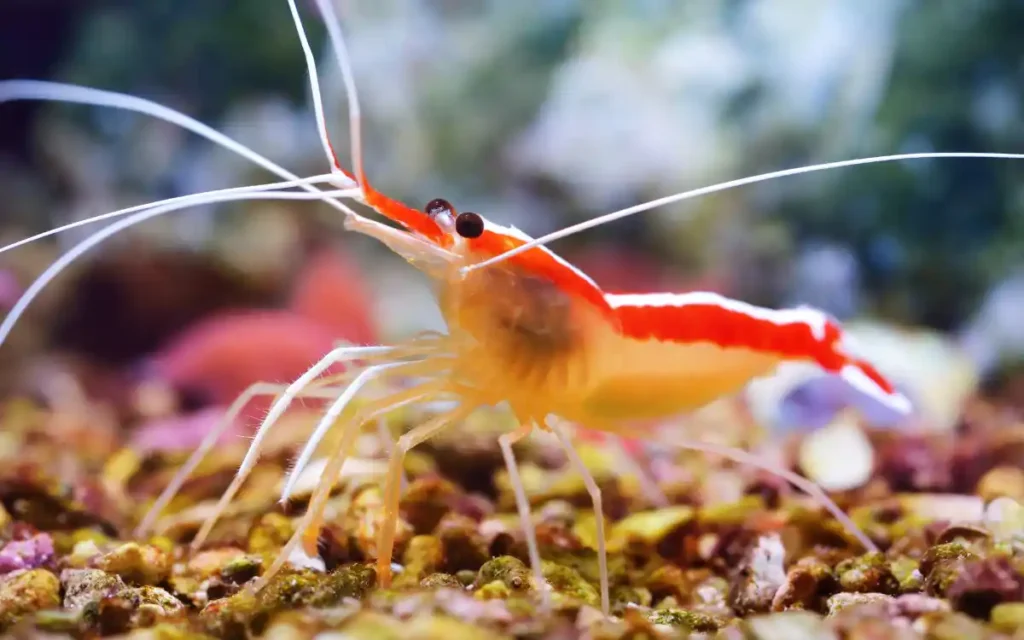
Cleaner Shrimp, like Skunk Cleaner Shrimp, pair extremely well with clownfish in reef tanks.
Clownfish often allow cleaner shrimp to groom them. This creates natural behavior and adds movement without aggression.
Shrimp stay on rock surfaces and do not compete for territory.
Why they go very well together:
- No territorial conflict
- Reef safe
- Beneficial cleaning behavior
- Clownfish often tolerate them easily
Tank size: 20+ gallons Compatibility level: Excellent
10. Kole Tang (For Larger Tanks)
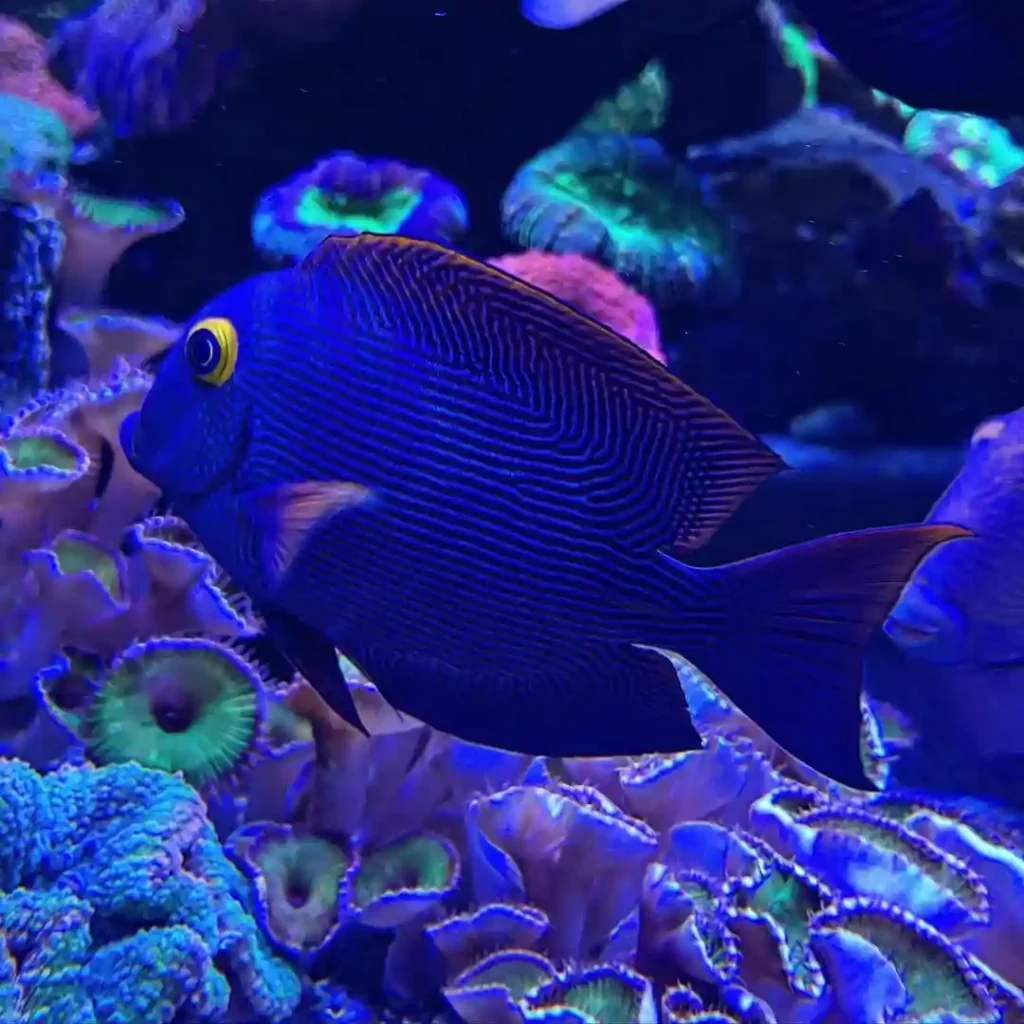
Kole Tangs work with clownfish in larger reef systems. They grow to about 7 inches and focus on grazing algae from rock surfaces.
Since tangs occupy different swimming patterns and rarely interact directly with clownfish, compatibility remains stable in spacious tanks.
However, tangs need strong swimming space and stable water quality.
Why they go well together (in large tanks):
- Different swimming patterns
- Algae grazing behavior
- Rarely territorial toward clownfish
Important requirement: Do not add tangs to small tanks. Stress causes aggression.
Tank size: 75+ gallons Compatibility level: Good (in proper setup)
11. Midas Blenny
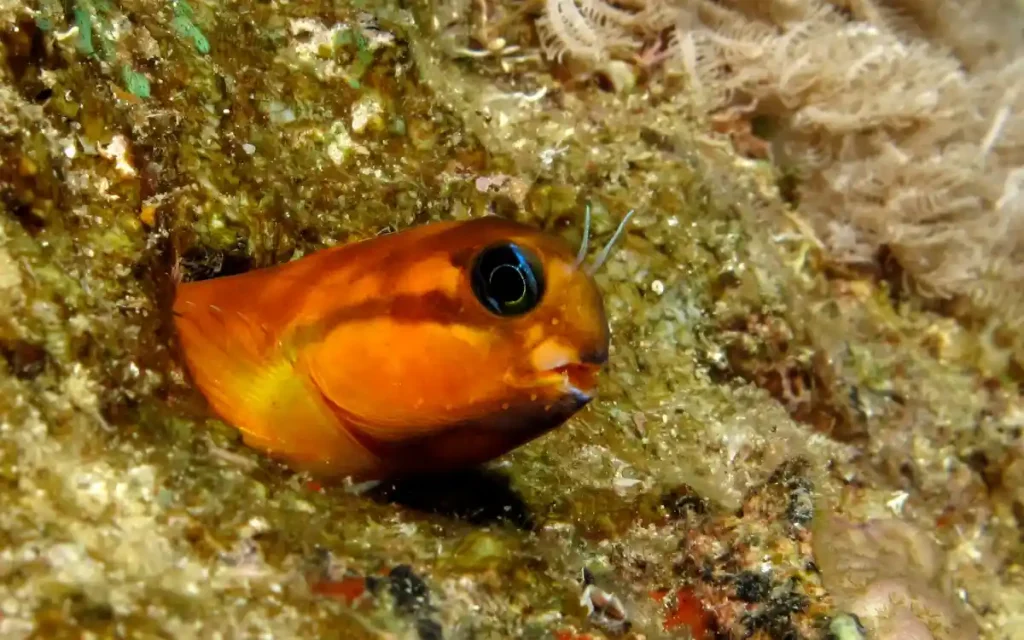
Midas Blennies add personality without creating serious conflict in clownfish tanks. They grow to about 5–6 inches and swim more actively than most blennies, often hovering in midwater.
Despite their movement, they rarely challenge clownfish territory. They focus more on grazing and exploring rockwork.
Clownfish may show brief curiosity, but long-term aggression is uncommon in properly sized tanks.
Why they go very well together:
- Confident but not overly aggressive
- Different territory focus
- Reef safe
- Similar water needs
Important note: Provide rock caves. Midas Blennies retreat when stressed.
Tank size: 40+ gallons Compatibility level: Very Good
12. Diamond Watchman Goby
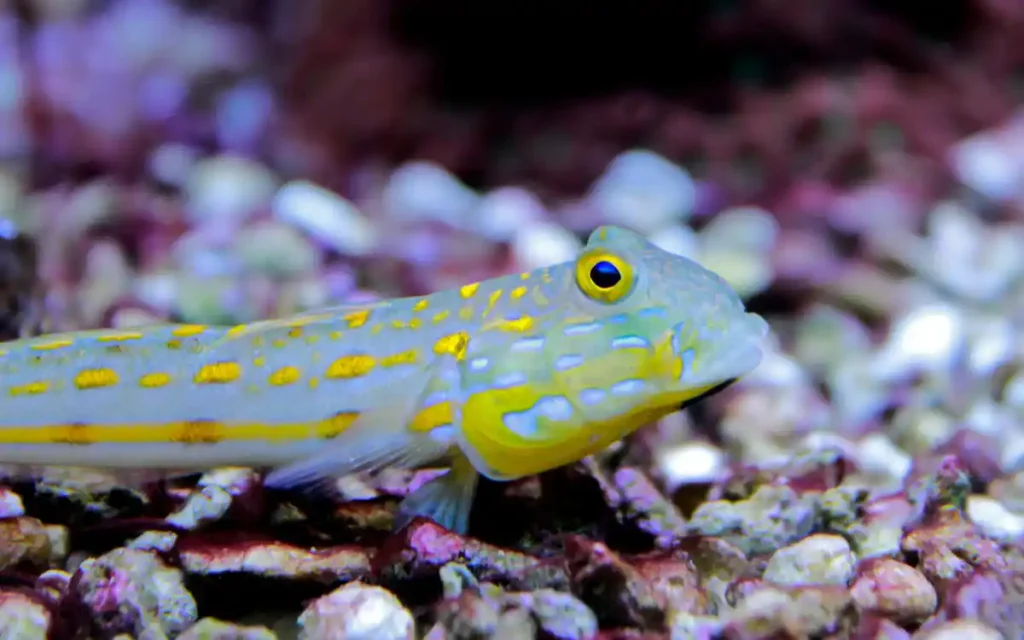
Diamond Watchman Gobies stay near the sand bed and constantly sift substrate. They grow to about 6 inches but remain peaceful.
They do not swim into clownfish territory and rarely leave the bottom zone.
Because they focus on sand sifting, they create zero competition with clownfish pairs.
Why they go very well together:
- Completely different tank zone
- Non-aggressive temperament
- Reef safe
- Helpful sand cleaning behavior
Important requirement: Use a covered tank. Gobies can jump.
Tank size: 40+ gallons Compatibility level: Excellent
13. Chalk Bass
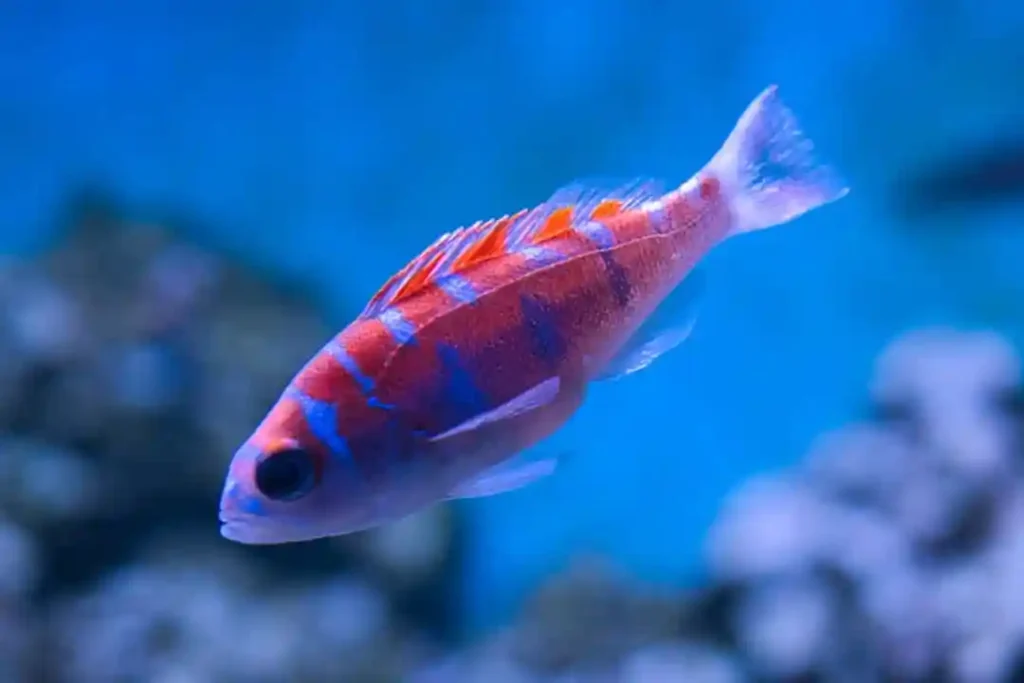
Chalk Bass remain small, peaceful, and community-friendly. They grow to about 3 inches and swim calmly in mid-to-lower sections.
They do not display strong territorial instincts and tolerate clownfish dominance.
Chalk Bass perform best in small groups and stay reef safe.
Why they go very well together:
- Similar size
- Calm schooling behavior
- Rarely aggressive
- Reef compatible
Tank size: 30+ gallons Compatibility level: Very Good
14. Yellow Coris Wrasse
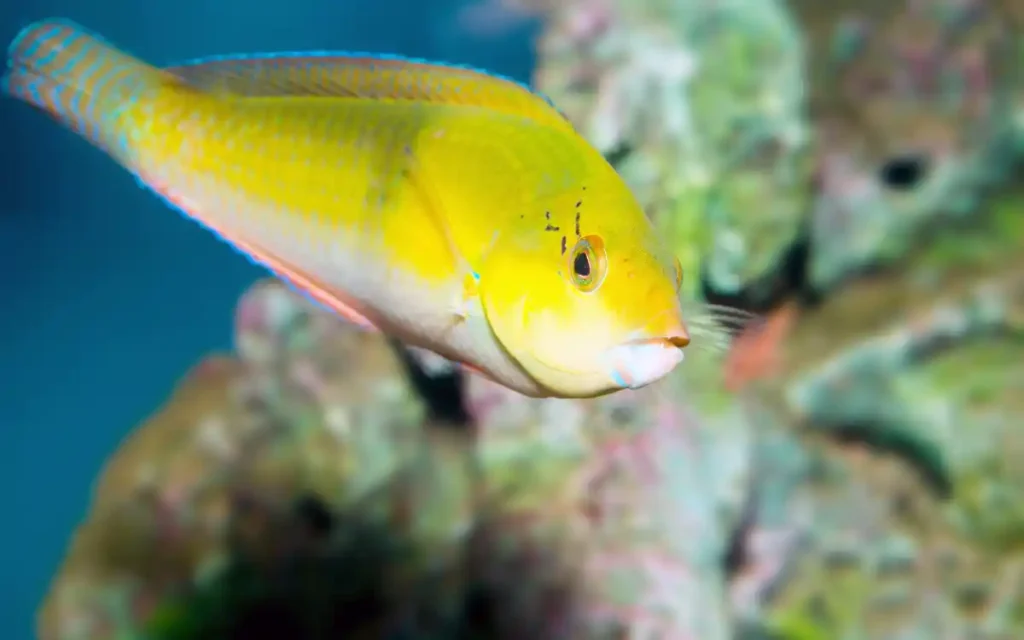
Yellow Coris Wrasses work well in reef tanks with clownfish because they stay active but not overly aggressive.
They grow to about 5 inches and spend time searching rock and sand for pests. They rarely focus on other fish.
Clownfish typically ignore them unless the tank feels overcrowded.
Why they go very well together:
- Active but not dominant
- Reef safe
- Different behavior focus
- Helps control small pests
Important note: Provide sand for sleeping. Wrasses bury themselves at night.
Tank size: 50+ gallons
Compatibility level: Good
15. Hector’s Goby
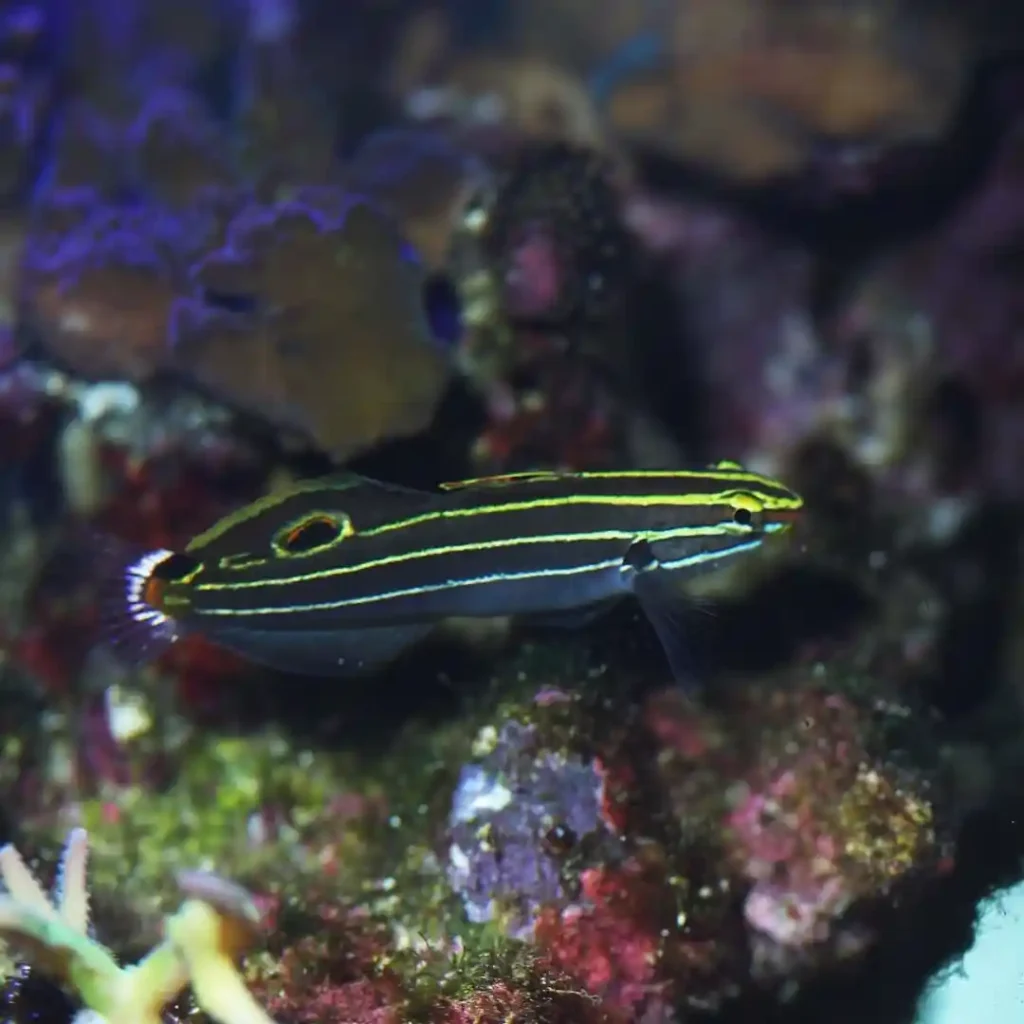
Hector’s Goby stays small, peaceful, and sand-oriented. They grow to about 2.5 inches and spend time near the bottom.
They avoid midwater conflict and rarely interact with clownfish territory.
This makes them a low-risk addition to reef tanks with established clownfish pairs.
Why they go very well together:
- Bottom-dwelling behavior
- Very peaceful
- Reef safe
- No dominance issues
Tank size: 30+ gallons
Compatibility level: Excellent
Tank Mates to Avoid With Clownfish
Clownfish are not fully peaceful. Once they form a pair, they defend territory aggressively especially around their host coral or anemone. Avoid fish that create dominance conflicts or invade their space.
Here are fish that commonly cause problems:
1. Large Aggressive Damselfish
Many damselfish species become highly territorial. They chase clownfish constantly and create stress.
Why to avoid them:
- Extremely territorial
- Compete for similar tank zones
- Stress clownfish pairs
Exception: Yellowtail Damselfish can sometimes work in larger tanks, but monitor closely.
2. Maroon Clownfish (With Other Clowns)
Never mix different clownfish species unless you are very experienced. Maroon Clownfish are especially aggressive and will attack smaller clown species.
Why to avoid:
- Severe territorial aggression
- Risk of injury
- Stressful tank dynamics
Keep only one clownfish species per tank.
3. Large Predatory Wrasses
Some wrasses become aggressive hunters and may harass smaller peaceful fish.
Why to avoid:
- Aggressive feeding behavior
- Bullying tendencies
- Fast dominance behavior
Stick with reef-safe wrasses like Yellow Coris.
4. Triggerfish
Triggers are not community-friendly for smaller reef tanks.
Why to avoid:
- Strong jaws
- Aggressive personality
- May harass or injure clownfish
Triggers belong in larger aggressive setups.
5. Dottybacks (Certain Species)
Some dottybacks become highly territorial in smaller tanks.
Why to avoid:
- Aggressive cave guarding
- Chase smaller fish
- Stress peaceful tank mates
Orchid Dottybacks may work in larger systems, but caution is needed.
6. Lionfish or Large Predators
This one is obvious — lionfish will eat smaller fish if they fit in their mouth.
Never mix clownfish with predators.
Clownfish Compatibility Comparison Table
Here’s a simplified overview for quick reference:
| Fish | Minimum Tank | Zone | Compatibility | Notes |
| Royal Gramma | 30 gal | Rock | Excellent | Peaceful cave dweller |
| Firefish Goby | 20 gal | Mid | Excellent | Very shy, non-aggressive |
| Banggai Cardinal | 30 gal | Mid | Very Good | Calm swimmer |
| Watchman Goby | 30 gal | Bottom | Excellent | Stays in burrow |
| Tailspot Blenny | 20 gal | Rock | Excellent | Perching algae grazer |
| Blue-Green Chromis | 40 gal | Upper | Very Good | Keep in groups |
| Coral Beauty | 55 gal | Rock | Moderate | Monitor aggression |
| Kole Tang | 75 gal | Open | Good | Large tank only |
| Yellow Coris Wrasse | 50 gal | Active | Good | Needs sand bed |
| Cleaner Shrimp | 20 gal | Rock | Excellent | Peaceful invertebrate |
Ideal Clownfish Community Setup
To keep clownfish peaceful in a mixed reef tank, follow these rules:
1. Add Clownfish Early or Last Strategically
If adding to an established tank, rearrange rockwork before introducing them. This prevents territorial claims.
2. Provide Clear Territory
If they host an anemone or coral, allow enough space around it.
3. Avoid Overcrowding
Most aggression problems happen in undersized tanks.
4. Introduce Peaceful Fish First
Add shy species before dominant clownfish pairs.
5. Keep Stable Water Parameters
Clownfish tolerate beginner mistakes, but tank mates like cardinals and wrasses need stable conditions.