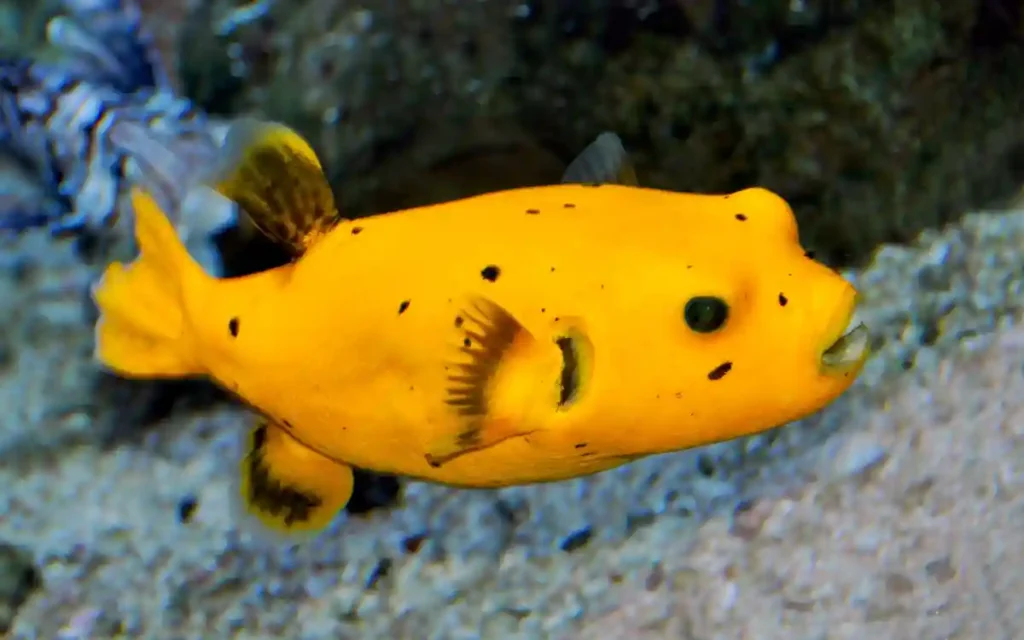
The Dog Face Puffer (Arothron nigropunctatus) is one of the most charming saltwater fish you can add to your aquarium. With a comically expressive face and an intelligent, gentle nature, it’s no wonder this puffer has won over marine aquarists around the world. But while they may look easygoing, Dog Face Puffers have special needs—from space and water quality to diet and tank mates.
In this complete care guide, we’ll cover everything you need to know to keep your Dog Face Puffer healthy, happy, and thriving in a home aquarium.
Dog Face Puffer Quick Overview
| Feature | Details |
| Scientific Name | Arothron nigropunctatus |
| Common Name | Dog Face Puffer |
| Size | Up to 12–13 inches |
| Temperament | Peaceful (but eats inverts) |
| Lifespan | 10–15 years |
| Minimum Tank Size | 100–120 gallons |
| Diet | Carnivore (crustaceans, mollusks) |
| Reef Safe? | No – will eat corals/inverts |
| Care Level | Moderate to Advanced |
| Tank Type | Fish-only with live rock (FOWLR) |
What Makes Dog Face Puffers Unique?
The Dog Face Puffer stands out not just for its looks but also for its personality. These fish are known for their dog-like expressions—complete with big eyes and a curious demeanor. They form bonds with their keepers and often recognize people during feeding time.
Unlike many saltwater species, Dog Face Puffers are scaleless, which means they’re extra sensitive to poor water conditions and medication. They can also inflate their bodies with water or air as a defense mechanism, although this is extremely stressful and should never be provoked intentionally.
Their intelligence is noticeable—they explore their tank, interact with the environment, and often behave more like a puppy than a fish. Just be careful: they come with a powerful beak and a natural tendency to nip at small tank mates or decorative items if bored.
Dog Face Puffer Tank Setup
Creating the right environment for your Dog Face Puffer is key to keeping them stress-free and healthy. These fish grow large, produce significant waste, and are sensitive to changes in water conditions. A well-thought-out tank setup helps prevent disease, aggression, and boredom.
Minimum Tank Size
Dog Face Puffers need at least 100 to 120 gallons of space, even as juveniles. They grow up to 12–13 inches and require room to swim freely. Cramped tanks often lead to stress, poor water quality, and aggressive behavior.
Tip: Don’t be fooled by small juveniles at pet stores—they grow faster than expected and need their full adult space from the start.
Ideal Water Parameters
| Parameter | Ideal Range |
| Temperature | 74–82°F (23–28°C) |
| Salinity (SG) | 1.020–1.025 |
| pH | 8.1–8.4 |
| Ammonia/Nitrite | 0 ppm |
| Nitrate | Under 20 ppm |
Because puffers are scaleless, they are extremely sensitive to ammonia, nitrite, and copper-based treatments. Maintain pristine water quality using a powerful protein skimmer, regular water changes, and live rock for biological filtration.
Décor and Substrate
- Use soft, fine sand to protect their undersides.
- Add plenty of open space for swimming.
- Include rounded live rock structures and hiding spots.
- Avoid sharp décor or corals, which can damage their delicate skin.
Dog Face Puffers are naturally inquisitive and like to poke around—so give them enrichment. Rearranging rockwork occasionally helps prevent boredom.
Diet & Feeding
Dog Face Puffers are carnivores with a powerful, ever-growing beak-like mouth. In the wild, they feed on crustaceans, snails, and coral, using their strong jaws to crush hard shells. In captivity, providing the right foods is critical—not just for nutrition, but also to keep their teeth from overgrowing.
What to Feed a Dog Face Puffer
Offer a variety of meaty, hard-shelled foods several times a week:
- Frozen clams on the half shell
- Mussels and oysters
- Crab legs and shrimp
- Squid and krill
- Snails or cockles (great for trimming teeth)
Pro Tip: Soak frozen foods in a vitamin supplement like Selcon once a week to support immune health.
Feeding Frequency
Feed adult puffers every other day or once daily in small amounts. Overfeeding can lead to obesity and poor water quality.
Juveniles may eat smaller meals daily until they reach full size.
Beak Management
Their fused teeth continuously grow. If they don’t chew on hard foods, their beaks can overgrow, making it impossible for them to eat. Some puffers eventually need their teeth trimmed manually—a stressful process that requires experience.
Are Dog Face Puffers Reef Safe?
In short: no, Dog Face Puffers are not reef safe. While they’re not aggressive in the typical sense, their natural diet and curiosity make them a threat to many reef inhabitants.
Why They’re Not Reef Safe:
- They bite and consume small invertebrates like shrimp, snails, and crabs
- They often nibble on soft and hard corals, damaging expensive reef setups
- Their powerful beak is designed for crushing, not nibbling gently
Even if they seem calm at first, over time they usually begin to sample tank mates—especially if bored or underfed.
Best Setup:
Dog Face Puffers are best kept in a FOWLR tank (Fish-Only With Live Rock). This setup allows for natural behavior without putting reef organisms at risk.
If you’re looking to build a beautiful marine display without corals or shrimp, a Dog Face Puffer can be a centerpiece fish that brings loads of personality to your tank.
Compatible Tank Mates
While Dog Face Puffers are peaceful toward most fish, they’re opportunistic feeders and will eat small or slow-moving animals if given a chance. Choosing the right tank mates helps maintain harmony in a FOWLR system.
Best Tank Mates for Dog Face Puffer
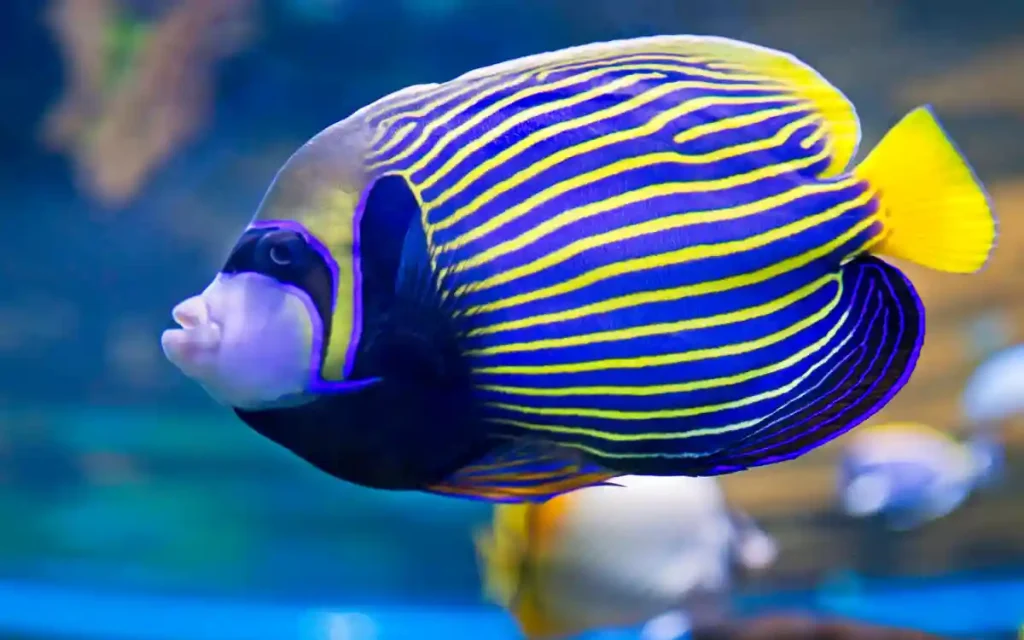
- Large Angelfish – Tough enough to hold their own and rarely provoke puffers
- Tangs (e.g., Yellow Tang, Kole Tang) – Fast, active swimmers that help control algae
- Triggerfish (non-aggressive species) – Can coexist in large tanks with proper space
- Harlequin Tusk – Similar diet and temperament
- Wrasses (larger types like Banana or Bird Wrasse) – Quick and curious, just like puffers
- Lionfish – Predatory but usually ignored by puffers due to their size and defense
Tank Mate Guidelines
- Ensure the tank is 120+ gallons to reduce territory disputes
- Avoid introducing tiny fish, invertebrates, or reef-cleaners
- Don’t keep two puffers unless the tank is very large (200+ gallons) and has ample hiding spaces
- Monitor interactions closely during the first week of introduction
Pro Tip: Rearranging rockwork before introducing new tank mates can reduce territorial behavior.
Growth and Size Expectations
Dog Face Puffers may start out small at the store—often just 4 to 6 inches—but don’t be fooled. In a healthy environment, they can grow up to 12 to 13 inches in length over time.
Growth Rate
- Moderate growth in the first year
- Can reach adult size in 2–3 years with proper diet and tank space
- Growth may slow if kept in cramped tanks or fed an improper diet
Important: Always plan for their full adult size when choosing your tank. Upgrading later can stress the fish and disturb the bio-filtration.
Size Impact on Setup
As they grow, Dog Face Puffers require:
- More swimming space
- Stronger filtration (more waste output)
- Larger, meatier food items
A full-grown Dog Face Puffer becomes the focal point of any tank—not just in size, but in behavior. They’re always on the move, watching, exploring, and interacting.
Are Dog Face Puffers Hardy or Beginner-Friendly?
Dog Face Puffers are often recommended to experienced aquarists—but that doesn’t mean beginners can’t keep them. They are fairly hardy when kept in the right conditions, but their needs require a solid understanding of marine fishkeeping.
Why They’re Not Ideal for Beginners:
- Large tank requirement (100+ gallons from the start)
- High waste output requires strong filtration and frequent water changes
- Sensitive to poor water quality—especially ammonia and nitrate spikes
- Cannot tolerate copper-based medications due to being scaleless
- Need a varied diet with hard foods to prevent overgrown teeth
However, for a beginner who’s done their research and is willing to invest in proper equipment and care, the Dog Face Puffer can be a rewarding marine pet.
🧠 Tip: Start with fish-only setups (FOWLR) and avoid community tanks with invertebrates or reef corals.
Do Dog Face Puffers Have Teeth?
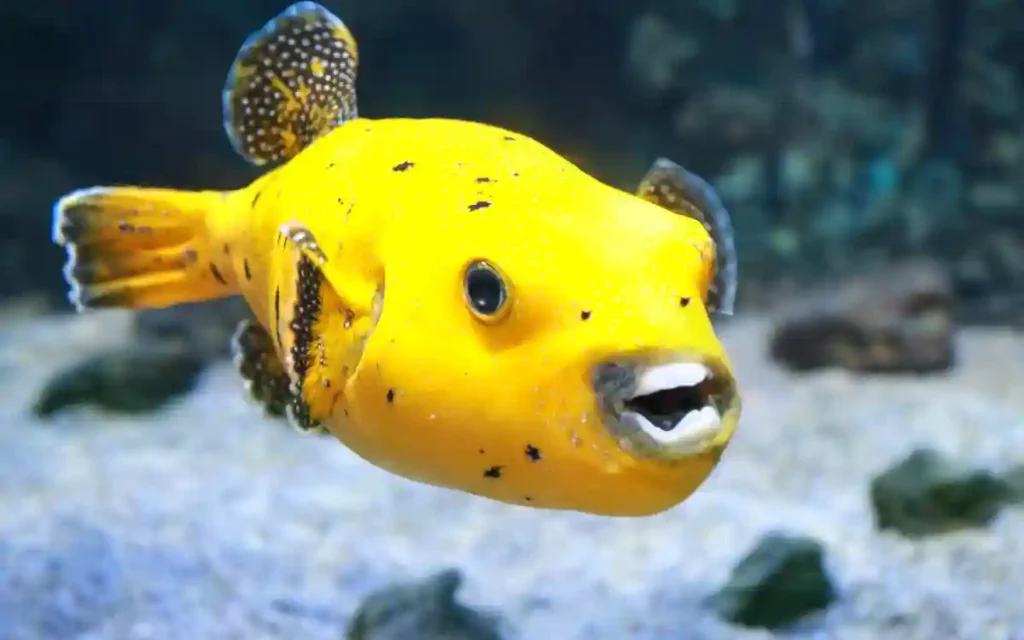
Yes—Dog Face Puffers have a strong, beak-like mouth made of fused teeth, which never stop growing. This dental structure helps them crush hard-shelled prey in the wild like crabs, snails, and clams.
Why Their Teeth Matter in Captivity
In an aquarium, if they’re not fed hard foods regularly, their teeth can become overgrown. This leads to major feeding problems, where they can no longer chew or bite properly.
How to Manage Their Teeth
- Feed crunchy foods like clam shells, crab legs, cockles, or snails 2–3 times a week
- Avoid soft-only diets (like shrimp or squid alone)
- In some cases, puffers may need their beak manually trimmed—a stressful and delicate procedure best done by an experienced aquarist or vet
🧠 Tip: If your puffer starts spitting food or avoids eating, check their teeth. Overgrowth can happen slowly but cause serious health issues.
Dog Face Puffer Behavior & Personality
Dog Face Puffers are more than just good looks—they’re known for their playful, curious, and even intelligent personalities. Many aquarists describe them as the most interactive fish in their tanks.
What to Expect:
- Recognizes feeding routines and people—may follow your hand or stare until fed
- Explores constantly—noses around rocks and decorations
- Peaceful temperament toward tank mates, but may nip if food is involved
- Likes to be the center of attention—often swims near the glass to interact
Each Dog Face Puffer develops its own personality. Some are shy at first, while others immediately begin patrolling the tank and begging for food.
🧠 Note: Puffers are intelligent and can get bored. Rotate décor and offer live or frozen treats to keep them mentally stimulated.
Common Health Issues
While Dog Face Puffers are relatively hardy, they are scaleless, which makes them more prone to certain health problems—especially in subpar water conditions or stressful environments.
Common Issues in Dog Face Puffers:
- Ich (Marine White Spot Disease):
Puffers can catch ich easily, but cannot be treated with copper-based meds. Use hyposalinity or reef-safe medications instead. - Beak Overgrowth:
If not given hard foods, their teeth can overgrow, leading to feeding difficulties and even starvation. - Bacterial Infections:
Open wounds, stress, or poor water quality can lead to fin rot, cloudy eyes, or internal infections. Look out for signs like hiding, loss of appetite, or unusual breathing. - Internal Parasites:
Symptoms include stringy feces, weight loss despite eating, or bloating. These are common in wild-caught specimens and may require medicated food. - Puffing Behavior:
Although puffers can inflate with air or water when scared, frequent puffing or inability to deflate properly can be dangerous and sometimes fatal.
Tip: Keep a quarantine tank ready for new arrivals or if your puffer shows signs of illness. Maintain stable parameters and avoid sudden changes in salinity or temperature.
Dog Face Puffer for Sale: What to Look For
When buying a Dog Face Puffer, it’s important to choose a healthy specimen from a reputable saltwater fish supplier. These fish are often wild-caught, so careful selection helps you avoid long-term health issues.
Checklist for a Healthy Puffer:
- Clear eyes – No cloudiness or swelling
- Full, rounded belly – Avoid puffers with sunken sides or signs of starvation
- Active behavior – Should swim around or interact when approached
- Steady breathing – Rapid gill movement can indicate stress or illness
- No skin damage – Look for smooth, unbroken skin without lesions or discoloration
Tip: Ask the seller if the fish is eating well and what they’ve been feeding it. Avoid any puffer that hasn’t eaten for several days.
Price Range:
Dog Face Puffers generally cost between $90 and $300 USD, depending on size, coloration, and shipping conditions.
💡 Bonus: Look for stores that offer a live arrival guarantee and acclimation advice for sensitive species like puffers.
More saltwater fish:-
Longnose Hawkfish Care: Diet, Mates, Tank and Breeding
Chalk Bass Care Guide: Diet, Tank Size, Mates & Breeding Tips
Copperband Butterflyfish 101: Feeding, Lifespan, and Tank Tips
FAQ’s
How long do Dog Face Puffers live?
With proper care, Dog Face Puffers can live 10 to 15 years in captivity. Their lifespan depends on tank size, water quality, and a proper diet that prevents tooth and health issues.
Is the Dog Face Puffer aggressive?
Not usually. They are considered peaceful toward most fish but will eat small invertebrates like shrimp or snails. They may nip during feeding time or if space is limited.
What size tank do Dog Face Puffers need?
A minimum of 100 to 120 gallons is recommended. They grow up to 13 inches and produce a lot of waste, requiring space and strong filtration.
Can Dog Face Puffers be kept in a reef tank?
No. They are not reef safe. They will eat corals, crabs, snails, and shrimp—even if they seem peaceful at first.
Why is my Dog Face Puffer not eating?
This could be due to:
- Stress from a new environment
- Overgrown teeth
- Illness or internal parasites
- Poor water conditions
Start by checking water parameters and offering a favorite food like clams or krill.
Can they live with other puffers?
Only in very large tanks (200+ gallons) and with careful monitoring. Even then, puffers may become territorial or nip at each other.