Flowerhorn Cichlids are bold, territorial, and built to dominate their space. They grow large, defend their tank aggressively, and often treat every inch as their own territory. Because of that, choosing tank mates is not simple and in many cases, not recommended.
Some Flowerhorns can tolerate certain large, tough fish in very big aquariums. Others will attack anything you add, no matter the setup. If you’re considering tank mates, you need to understand their behavior, tank size requirements, and the risks involved. This guide will explain what might work, what usually fails, and how to make the safest decision for your Flowerhorn.
1. Common Pleco (Large Species Only)
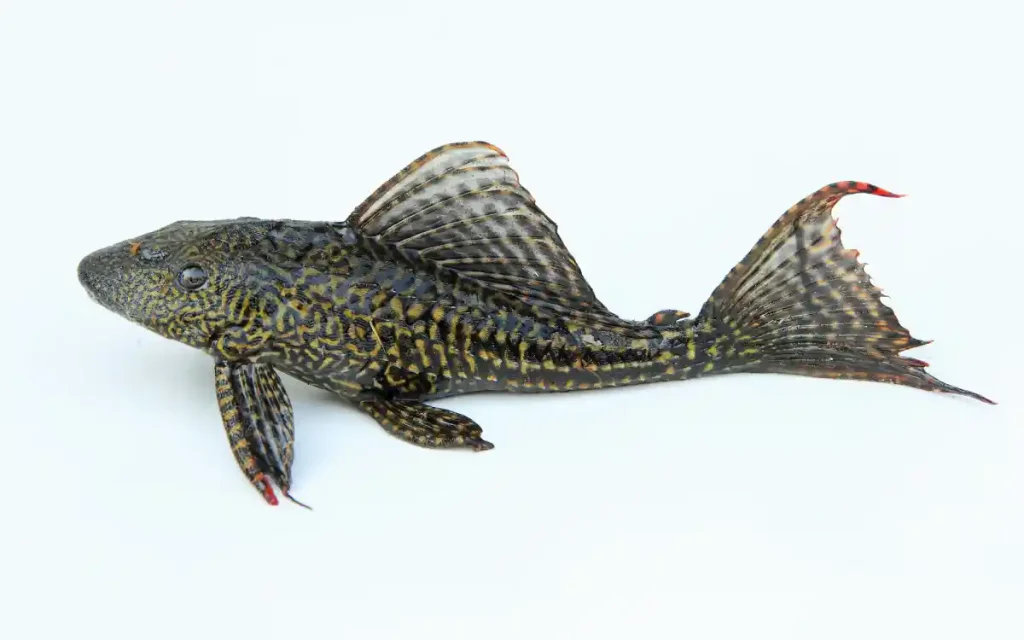
Large Common Plecos are one of the most common tank mates attempted with Flowerhorns.
They grow 12–18 inches and have thick armored plating that protects them from bites. Because they stay mostly on the bottom and attach to glass or driftwood, they do not directly challenge the Flowerhorn’s midwater dominance.
However, problems can still occur:
- Flowerhorns may repeatedly harass them
- Plecos may attach to the Flowerhorn’s slime coat at night
Choose large individuals only. Small plecos will not survive.
Why it sometimes works:
- Heavy armor
- Different tank zones
- No direct territorial competition
Minimum tank size: 125 gallons Risk level: Moderate
2. Sailfin Pleco
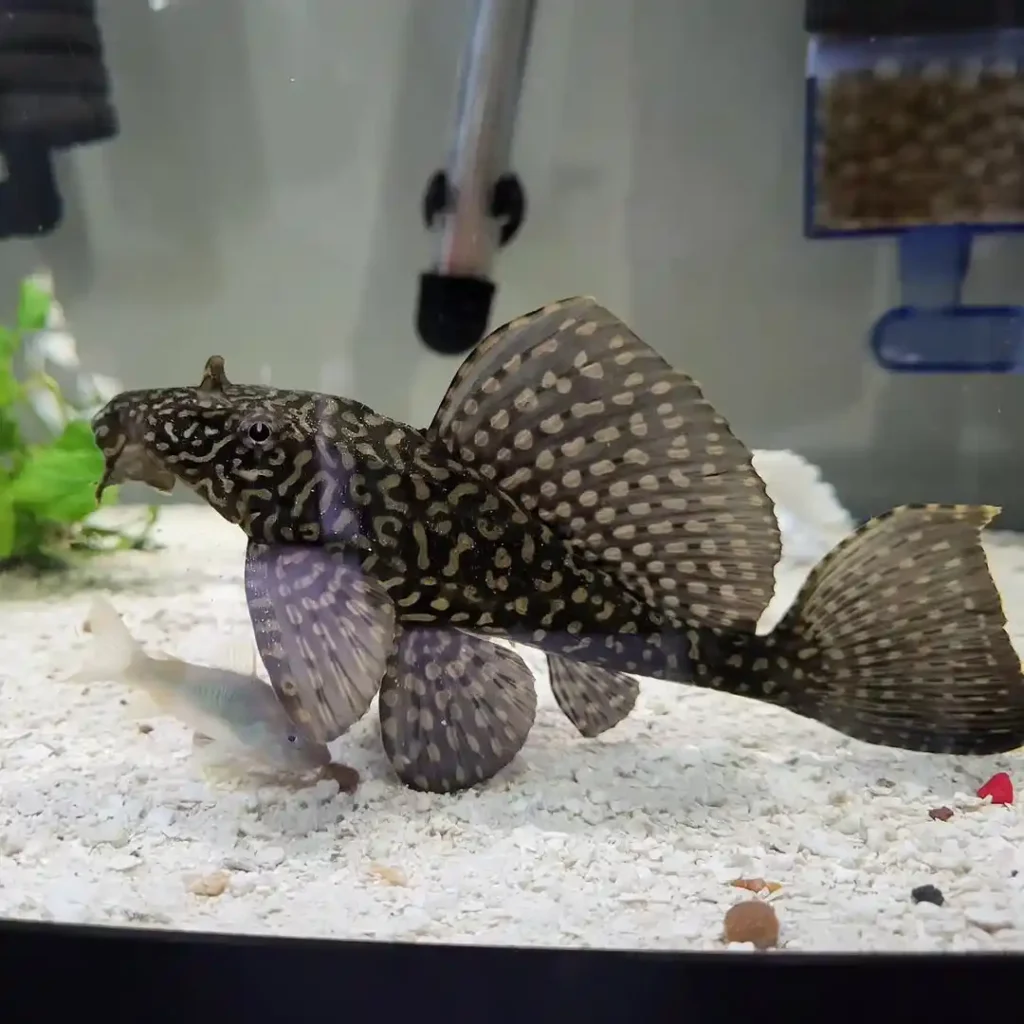
Sailfin Plecos are similar to Common Plecos but often slightly calmer in behavior. They grow very large and have strong defensive plating.
Because of their size, they are not easily intimidated.
However, waste production increases dramatically when combining two large fish. Filtration must be powerful.
Why it sometimes works:
- Large adult size
- Thick armor
- Bottom-oriented behavior
Minimum tank size: 125+ gallons Risk level: Moderate
3. Texas Cichlid
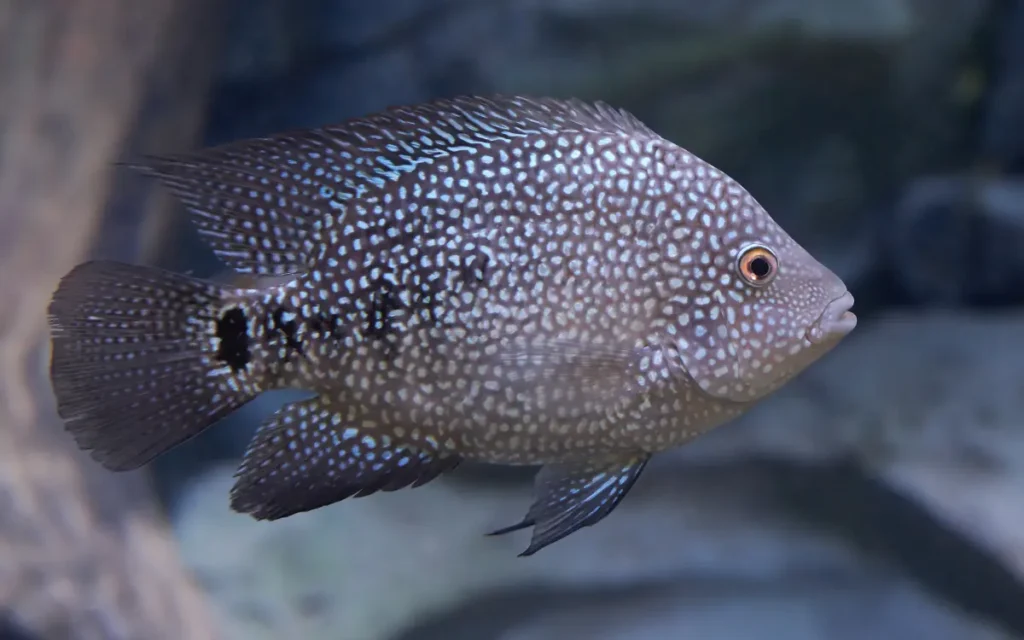
Texas Cichlids share similar aggression levels and grow to about 12 inches. They can defend themselves and establish territory.
This pairing only works in very large tanks with multiple rock barriers. In smaller aquariums, fights are almost guaranteed.
Even in large tanks, long-term success depends on individual temperament.
Why it sometimes works:
- Comparable aggression
- Similar size
- Strong territorial defense
Major warning: Expect possible injuries. Monitor closely.
Minimum tank size: 150 gallons
Risk level: High
4. Jaguar Cichlid
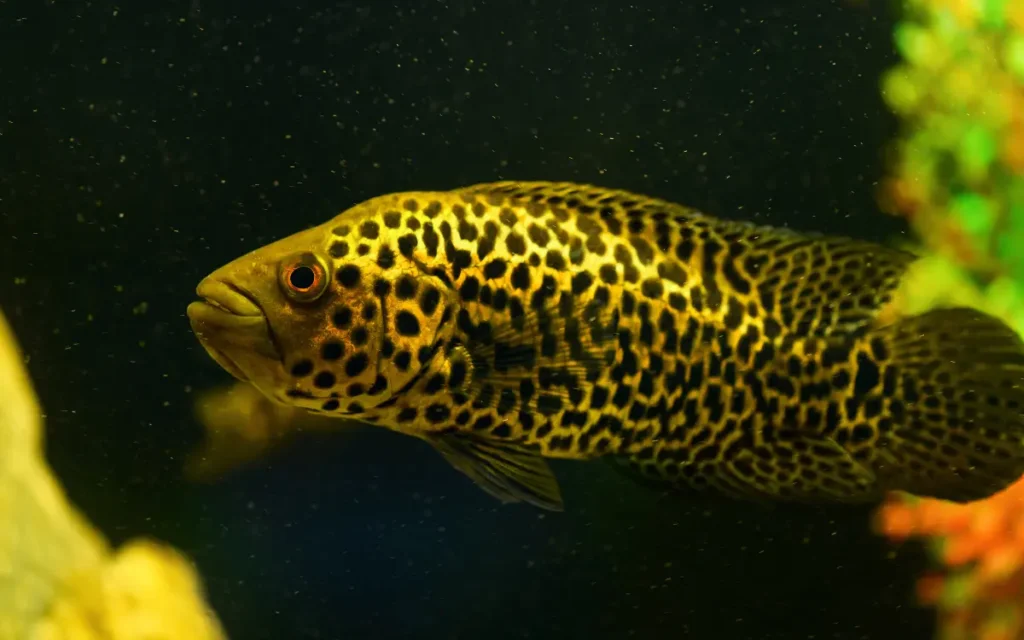
Jaguar Cichlids are even more aggressive than Texas Cichlids. They grow 14–16 inches and can match Flowerhorn strength.
This pairing becomes a dominance battle. Only advanced keepers with very large aquariums should attempt it.
Even then, separation may become necessary.
Why it sometimes works:
- Equal size and strength
- Can defend territory
- Not easily bullied
Minimum tank size: 150–180 gallons Risk level: Very High
5. Silver Arowana
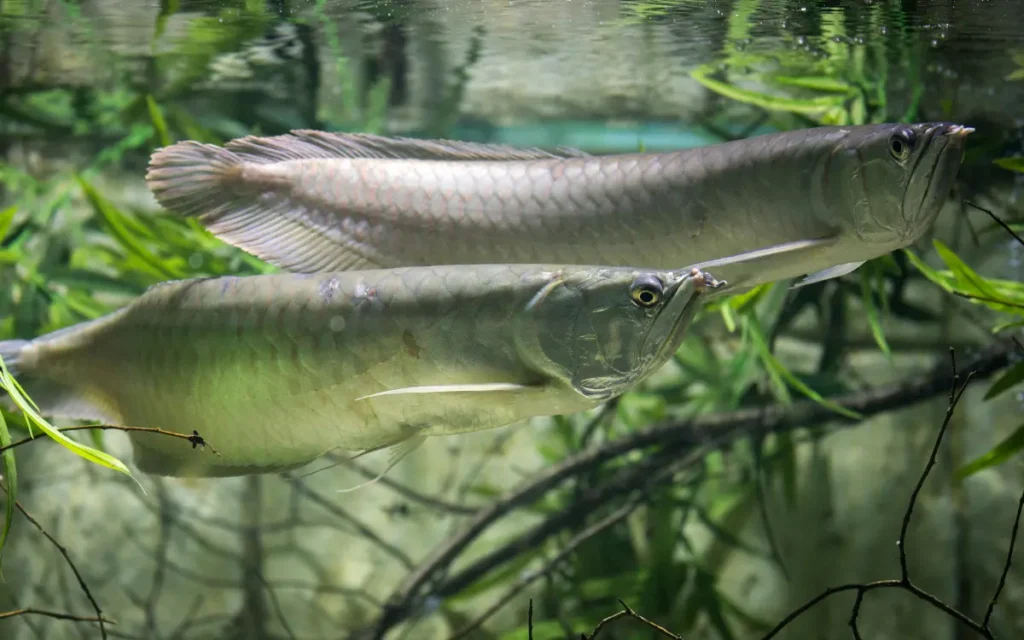
Silver Arowanas occupy the surface level and grow 24+ inches. Because they stay near the top, direct territorial overlap decreases.
However, both fish grow extremely large and require long tanks.
Arowanas also jump, so secure lids are mandatory.
Why it sometimes works:
- Different swimming levels
- Large adult size
- Rare direct conflict
Minimum tank size: 180+ gallons Risk level: High
Why Most Tank Mates Fail
Tank mates fail for one of five reasons:
- Too small
- Too peaceful
- Too slow
- Same territory but weaker
- Overcrowded tank
If a fish cannot defend itself or escape quickly, it will not survive long term.
Flowerhorn Tank Mates to Avoid
Avoid almost everything smaller or peaceful.
Do not mix with:
- Tetras
- Guppies
- Angelfish
- Gouramis
- Corydoras
- Shrimp
- Small catfish
- Small cichlids
Flowerhorns will:
- Chase relentlessly
- Bite fins
- Kill weaker fish
- Claim entire tank as territory
Tank for Maximum Compatibility
If you insist on trying tank mates, design the tank correctly.
1. Use Large Open Space
Avoid cluttered tanks. Flowerhorns need swimming room.
2. Break Line of Sight
Use large rocks or driftwood to divide visual territory.
3. Avoid Reflective Surfaces
Reflections increase aggression.
4. Add Fish at Similar Sizes
Never add small juveniles to an adult Flowerhorn tank.
5. Introduce Carefully
Rearrange decor before adding a tank mate to reset territory.
Signs Compatibility Is Failing
Watch for:
- Constant chasing
- Torn fins
- One fish hiding constantly
- Refusal to eat
- Color fading
- Rapid breathing
If you see repeated attacks, separate immediately.
Do not “wait it out.”
Can Flowerhorns Ever Be Peaceful?
Some individuals tolerate tank mates for years. Others reject everything.
Temperament depends on:
- Genetics
- Tank size
- Past environment
- Maturity level
You cannot train aggression out of them.
Is a Species-Only Tank Better?
In most cases, yes.
Benefits of keeping a Flowerhorn alone:
- Stable behavior
- Less stress
- Lower injury risk
- Easier maintenance
- Cleaner water
Many experienced keepers eventually move to species-only setups.
Compatibility Quick Summary
| Species | Tank Size | Success Rate | Risk Level |
| Common Pleco | 125+ gal | Moderate | Medium |
| Sailfin Pleco | 125+ gal | Moderate | Medium |
| Texas Cichlid | 150+ gal | Low-Moderate | High |
| Jaguar Cichlid | 150+ gal | Low | Very High |
| Silver Arowana | 180+ gal | Low | High |
No pairing is guaranteed.