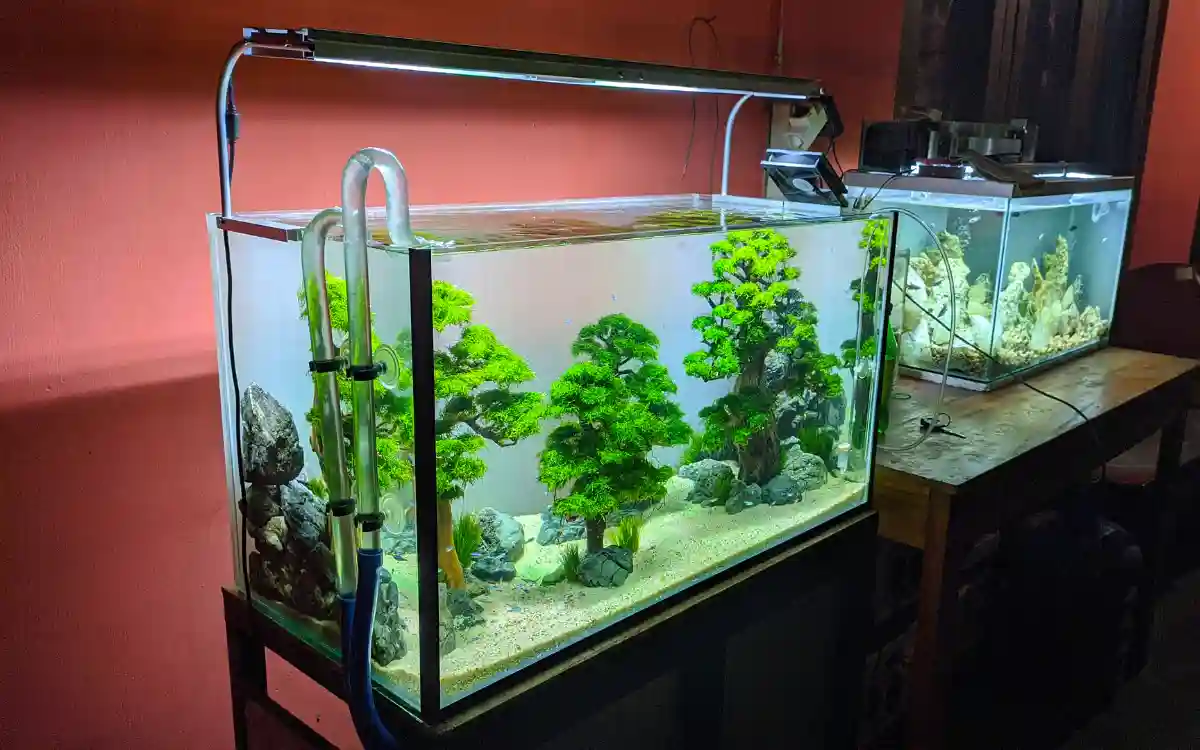
Freshwater Aquarium Setup Step-by-Step Beginner Guide
Starting your first freshwater aquarium does not need to be complicated. This freshwater aquarium setup guide is written for first-time fishkeepers who want a simple, fish-only tank that stays stable and easy to care for. If you feel confused about tank size, filters, cycling, or when to add fish, this guide walks you through the full setup step by step.
This article focuses on basic freshwater aquariums for fish, not planted aquascapes. If your goal is growing lots of plants or using special substrates, follow our freshwater planted tank setup guide instead. Here, we keep things simple, practical, and beginner-friendly.
Step 1 – Choosing the Right Freshwater Aquarium
Best Tank Size for Beginners
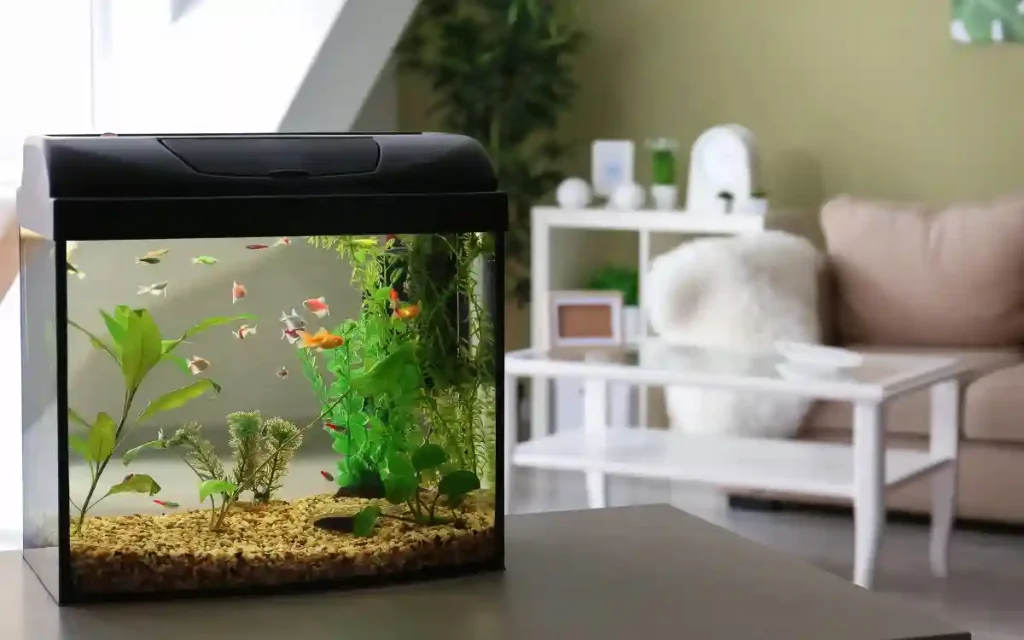
Many beginners assume smaller tanks are easier, but the opposite is true. Small aquariums change temperature and water chemistry quickly, which stresses fish.
A 10–20 gallon tank is the best starting point.
- 5 gallon: Best for a single betta or shrimp only
- 10 gallon: Small group of nano fish
- 20 gallon: More stable and flexible stocking options
Larger tanks dilute waste better and give you more room to correct mistakes.
Are Aquarium Starter Kits Worth It?
Starter kits are a good choice for beginners because they include the tank, filter, heater, and sometimes lighting. Brands like Aqueon and Fluval are popular. Always check that the filter is rated for your tank size. Upgrading the filter later is common and helpful.
Step 2 – Freshwater vs Tropical Aquariums
All tropical aquariums are freshwater, but not all freshwater tanks are tropical.
- Tropical aquariums need a heater (75–80°F)
- Coldwater aquariums do not use heaters but often involve goldfish
For beginners, a tropical freshwater tank with hardy community fish is the easiest and most stable option.
Step 3 – Picking the Right Location
Choose your aquarium location before adding water.
- Avoid direct sunlight to prevent algae
- Keep away from heaters, AC vents, and windows
- Use a sturdy surface or aquarium stand
Water weighs about 10 pounds per gallon. A 20-gallon tank weighs over 200 pounds when full.
If your looking for fish new aquarium read this:- 25+ Best Freshwater Aquarium Fish
Step 4 – Setting Up Aquarium Equipment
Substrate and Decorations
The substrate is the material at the bottom of the tank.
- Gravel: Easy to clean and best for beginners
- Sand: Natural look, good for bottom-dwelling fish
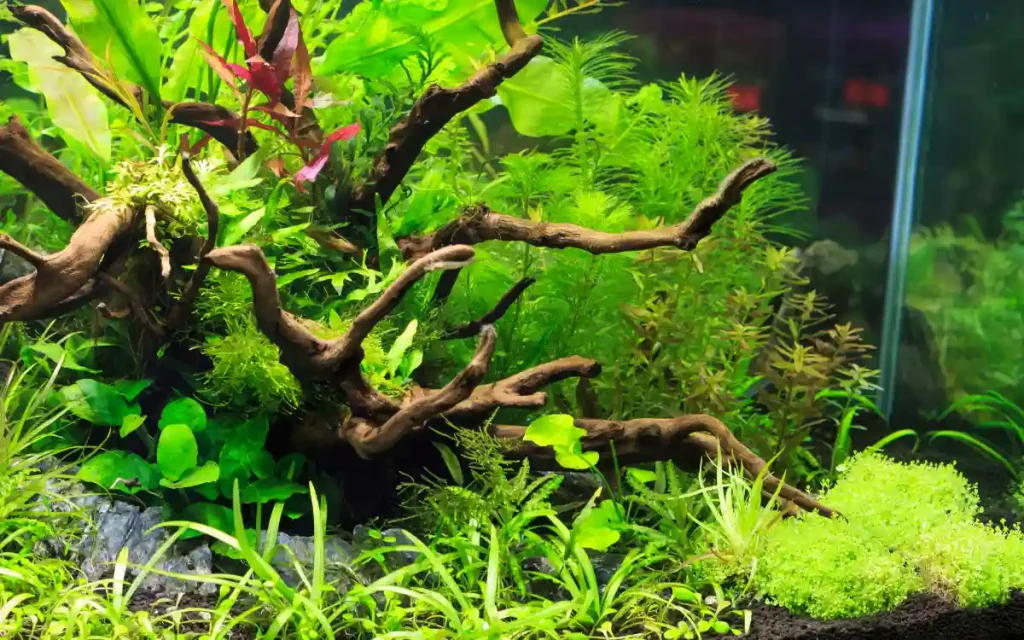
Decorations like driftwood, rocks, and caves help fish feel secure. Rinse everything with water only before adding it to the tank.
Filter Setup
A filter removes waste and keeps oxygen moving through the water.
Beginner-friendly filter types:
- Hang-on-back (HOB) filters
- Sponge filters
- Internal filters for small tanks
Choose a filter rated for your tank size or one step larger.
Heater and Thermometer
Most beginner fish need stable tropical temperatures. Set your heater to 76–78°F and always use a thermometer to confirm accuracy.
Aquarium Lighting
Fish do not need strong lighting. Basic LED lighting for 8–10 hours daily is enough. Use a timer to keep the schedule consistent.
Step 5 – Adding Water and Treating It

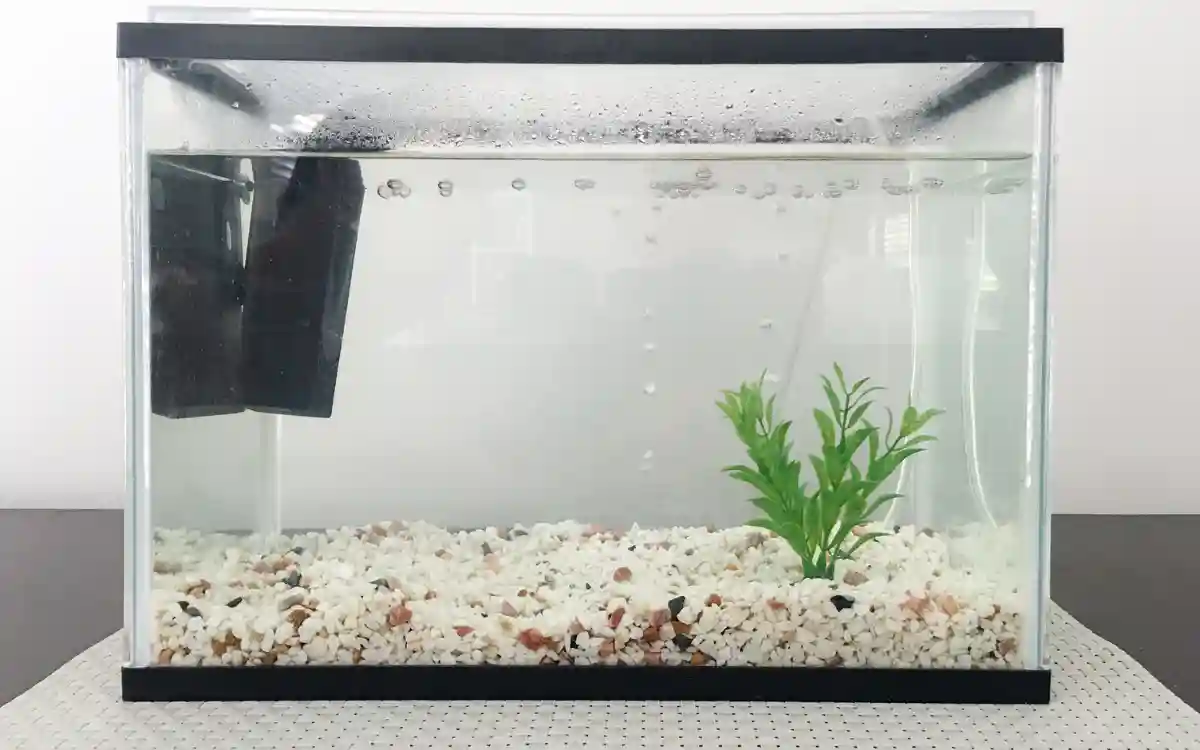
Fill the tank slowly to avoid disturbing the substrate.
- Use a water conditioner to remove chlorine
- Test the water using a liquid test kit
Target readings:
- Nitrate: under 20 ppm
- pH: 6.5–7.5
- Ammonia: 0 ppm
- Nitrite: 0 ppm
Step 6 – Cycling the Tank Before Adding Fish
What Is Aquarium Cycling?
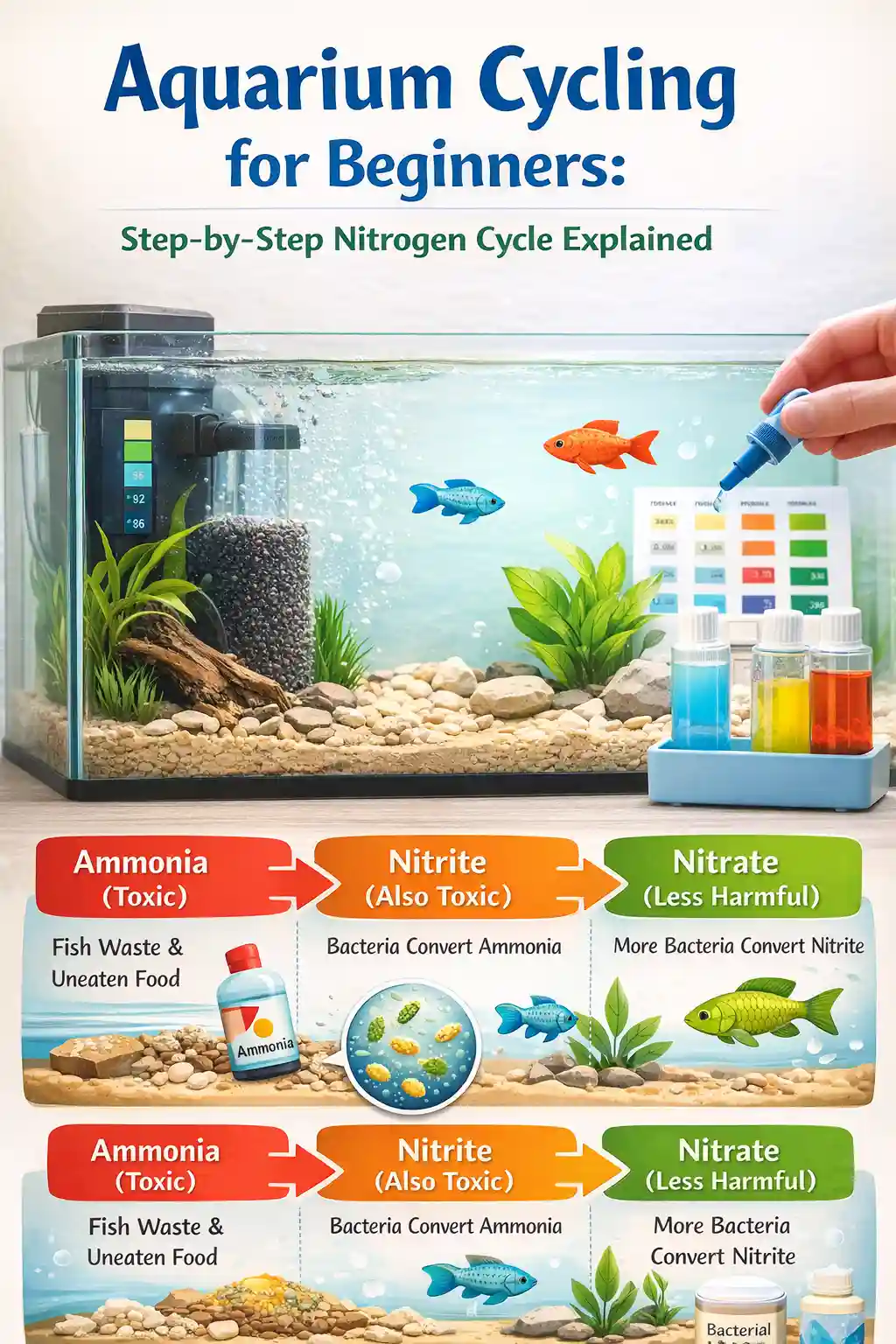
Fish waste produces ammonia, which is toxic. Beneficial bacteria convert ammonia into nitrite and then nitrate. Cycling builds this bacteria colony before fish are added.
How to Cycle a Freshwater Aquarium
- Add water conditioner
- Add bottled bacteria (optional)
- Drop in a small amount of fish food
- Test water every few days
- Wait 2–4 weeks until ammonia and nitrite reach zero
Never rush this step. Most beginner fish losses happen because cycling was skipped.
Step 7 – Choosing Beginner-Friendly Freshwater Fish
Easy Fish for First-Time Owners
Hardy fish that tolerate beginner mistakes include:
- Guppies
- Zebra danios
- Platies
- Corydoras catfish
Start with only a few fish and add more slowly over time.
How Many Fish Can You Add?
A rough beginner guideline is 1 inch of fish per gallon, but this is not exact. In a 10-gallon tank, start with 6–8 small fish and observe water quality before adding more.
Step 8 – Optional Live Plants for Fish-Only Tanks
Live plants are optional in fish-only aquariums. They help absorb waste and reduce algae but are not required.
Beginner-safe, low-maintenance plants:
- Java Fern
- Anubias
- Hornwort
If your goal is a fully planted aquarium with special substrate and lighting, follow our complete freshwater planted tank setup guide.
Step 9 – Freshwater Aquarium Maintenance
Weekly Tasks
- Change 25–30% of the water
- Siphon debris from the substrate
- Check temperature and water parameters
Monthly Tasks
- Rinse filter media in old tank water
- Inspect heater and filter performance
Feeding Tips
Feed once or twice daily. Only give what fish eat in 1–2 minutes. Overfeeding causes ammonia spikes and algae problems.
Step 10 – Troubleshooting Common Problems
- Cloudy water: Normal in new tanks, clears as bacteria grow
- Algae growth: Reduce light time and feeding
- Fish dying early: Test for ammonia and nitrite
- pH swings: Avoid sudden water changes
Beginner Freshwater Aquarium Setup Cost
| Item | Estimated Cost |
|---|---|
| 10–20 gallon tank | $50–$150 |
| Filter | $20–$60 |
| Heater | $15–$40 |
| Substrate | $15–$30 |
| Decorations | $20–$50 |
| Test kit | $25–$35 |
| Fish and food | $20–$60 |
Total: $150–$400 depending on choices
Freshwater Aquarium Setup Checklist
- Aquarium (10–20 gallons)
- Filter
- Heater and thermometer
- Water conditioner
- Substrate
- Decorations
- Aquarium light
- Test kit
- Fish food
- Gravel vacuum
FAQs
How long should I wait before adding fish?
Wait 2–4 weeks until ammonia and nitrite are both zero.
Can I use tap water? Yes, but always treat it with water conditioner first.
What temperature is best for freshwater fish?
Most tropical fish prefer 75–80°F.
Do I need live plants?
No. They help, but fish can thrive without them.
Are starter kits good for beginners?
Yes, but always verify the filter and heater quality.