Scarlet Badis (Dario dario) are one of the smallest and most colorful freshwater fish for nano tanks. Known for their striking red and blue patterns, these shy fish thrive in soft water, heavily planted tanks, and peaceful setups. They’re picky eaters that usually prefer live food, and males can be territorial. This guide covers everything you need to keep your Scarlet Badis healthy including tank setup, diet, behavior, tank mates, and breeding tips.
Scarlet Badis Overview
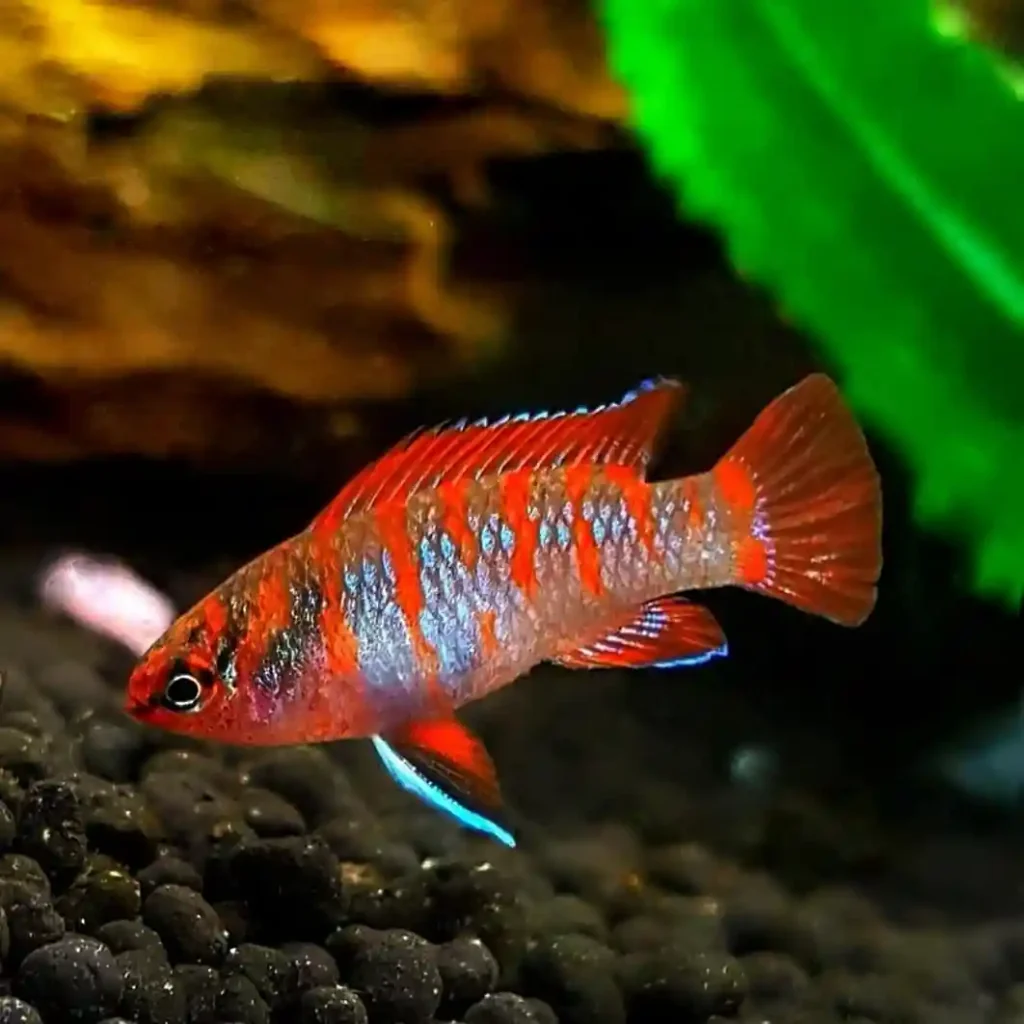
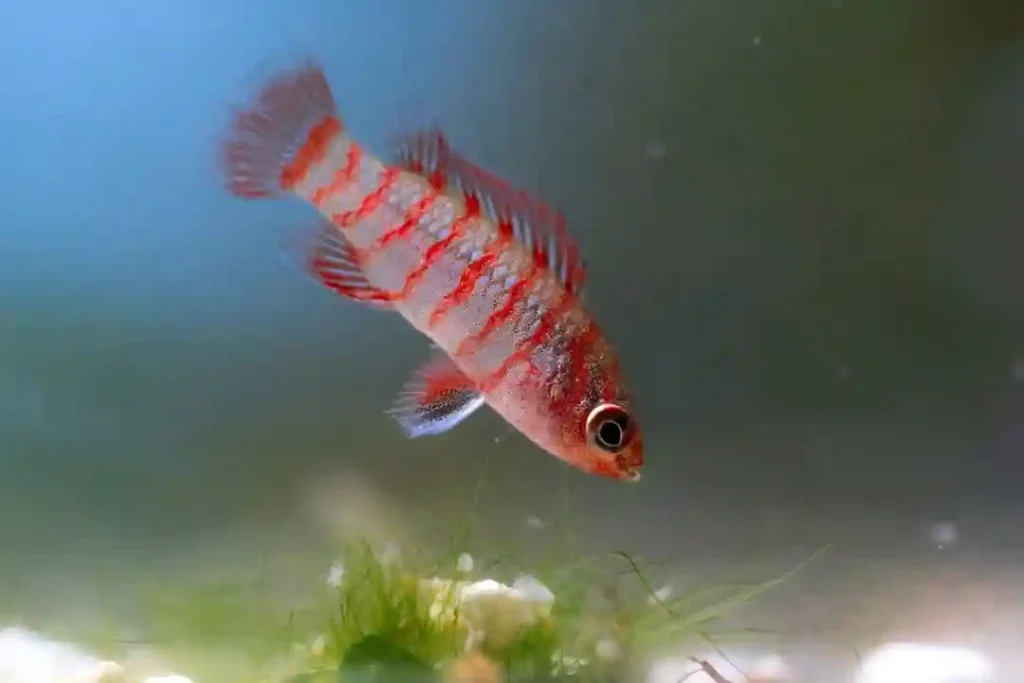
Native to the slow-moving streams of India, Scarlet Badis are stunning nano fish with a peaceful temperament. Though they’re tiny barely an inch long they stand out with their vibrant stripes and unique personality. Males are bold and brightly colored, while females are more subdued and smaller.
Quick Species Profile
| Feature | Details |
| Scientific Name | Dario dario |
| Common Name | Scarlet Badis |
| Size | 0.5–0.8 inch |
| Lifespan | 3–4 years |
| Origin | India (Brahmaputra basin) |
| Temperament | Peaceful, territorial males |
| Tank Size | 5–10 gallons |
| Temperature | 72–79°F |
| pH Range | 6.5–7.5 |
Setting Up the Right Tank for Scarlet Badis
Tank Size
A 5-gallon tank is fine for a single male or a pair. For a group (one male and 2–3 females), a 10-gallon or larger tank with lots of hiding places is best.
Plants and Aquascaping
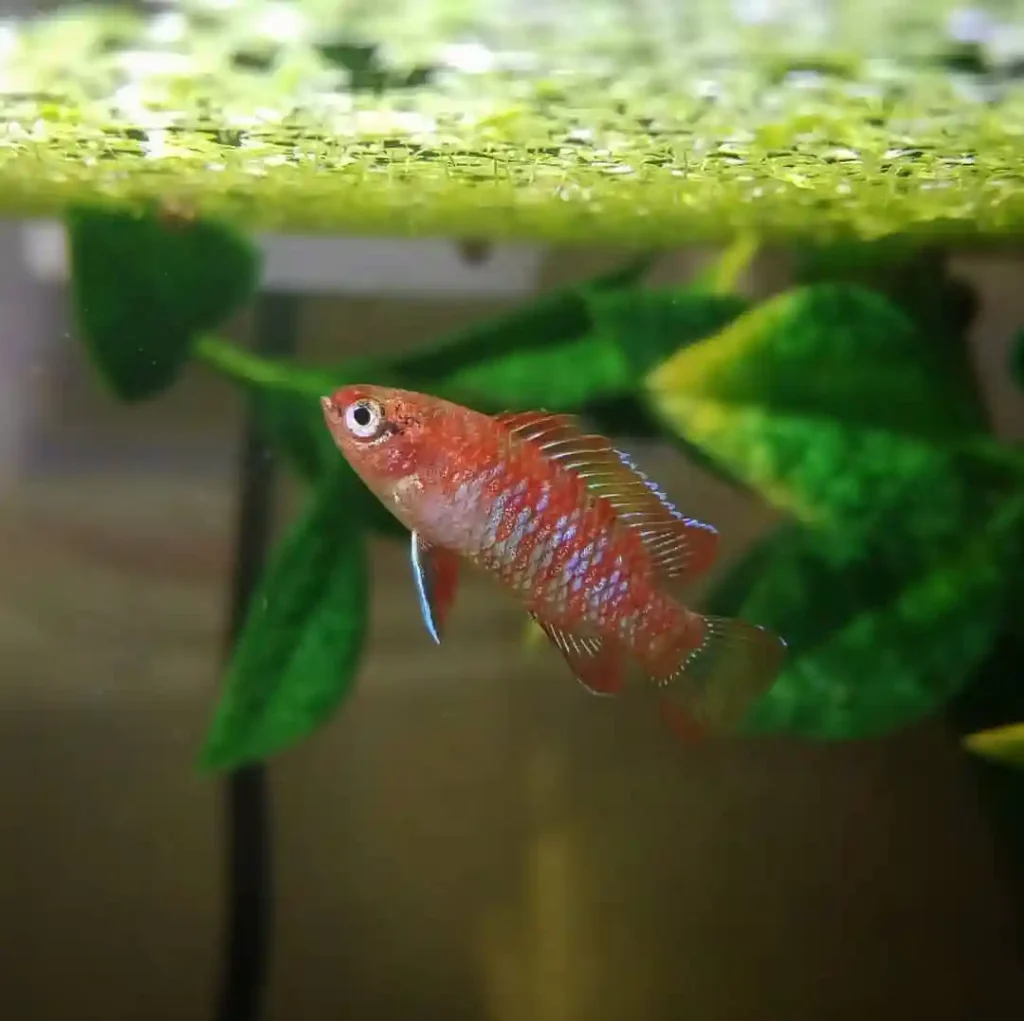
Scarlet Badis love dense vegetation and shaded hiding spots. Use live plants like Java moss, Anubias, and floating plants. Add driftwood and caves to create boundaries and reduce male aggression.
Lighting and Filtration
Soft, low lighting helps mimic their natural shaded habitat. Use a sponge filter to maintain water quality without creating strong currents. Scarlet Badis dislike fast-moving water.
Need inspiration? Visit our Aquascaping for Beginners guide.
Water Parameters & Maintenance
Scarlet Badis require stable, clean water to thrive:
- Temperature: 72–79°F
- pH: 6.5–7.5
- Hardness: Soft to moderately hard
- Ammonia/Nitrite: 0 ppm
- Nitrate: Below 20 ppm
Change 25–30% of the water weekly. Avoid sudden shifts in parameters as these fish stress easily.
Scarlet Badis Feeding Guide
Why They’re Picky Eaters
Scarlet Badis are micropredators that prefer live food. They often ignore flakes and pellets. In community tanks, they can easily be outcompeted and may starve.
Best Foods for Scarlet Badis
- Live baby brine shrimp
- Daphnia
- Microworms
- Grindal worms
- Frozen bloodworms (chopped)
Feed twice daily in small amounts. Place food close to them to ensure they eat.
Behavior & Temperament
Scarlet Badis are peaceful but males can be territorial. It’s safest to keep one male per tank unless you have a larger, well-scaped aquarium. They spend time near the lower and mid-levels of the tank, often hiding or exploring.
They’re shy and sensitive, so avoid high-activity or aggressive tank mates.
Best Tank Mates for Scarlet Badis
Choose calm, peaceful fish that won’t outcompete them for food:
Compatible Tank Mates:
- Ember Tetras
- Celestial Pearl Danios
- Pygmy Corydoras
- Otocinclus
- Adult Cherry Shrimp
Avoid:
- Bettas
- Guppies
- Barbs
- Fin nippers
- Large or fast/aggressive fish
Related Guide: Celestial Pearl Danio Care
Breeding Scarlet Badis
Breeding Scarlet Badis is possible at home with the right setup.
How to Set Up a Breeding Tank
- Use a 10-gallon tank
- Add small caves or ceramic tubes
- Maintain temperature at 78–79°F
- Feed live food to condition the pair
Males will court females and guard the eggs inside their chosen hiding spot.
Caring for the Fry
- Eggs hatch in 2–3 days
- Remove adults after spawning to protect fry
- Feed infusoria or vinegar eels initially
- Introduce baby brine shrimp as they grow
- Use sponge filters to prevent fry loss
Common Health Issues
Scarlet Badis are sensitive due to their size and food needs. Watch for:
- Starvation: Most common issue in community setups
- Fin rot/Ich: Often caused by poor water quality
- Faded color: Sign of stress or poor diet
Prevention Tips
- Keep water clean and parameters stable
- Feed varied, high-quality live food
- Avoid competitive or aggressive tank mates
FAQs
Can Scarlet Badis live in a community tank?
Yes, but only with peaceful fish and careful feeding to avoid starvation.
Do they eat flakes or pellets?
Most will not. Live or frozen food is strongly preferred.
Are they hard to care for?
Not difficult, but they need clean water and a specialized diet.
Can you keep more than one male?
Only in larger tanks with lots of cover and separate territories.
Do they need a heater?
Yes. Maintain tropical temperatures between 72–79°F.
Final Thoughts
Scarlet Badis are one of the most beautiful nano fish you can add to a peaceful aquarium. Their bold colors and shy nature make them a delight to observe in a calm, natural setup. With the right diet and tank environment, they’ll thrive and may even breed.
More nano fish to explore:
 **2. Platy** Platies are hardy and easygoing. They enjoy swimming in groups and come in a variety of bright colors. Great for peaceful community tanks. ➡️ [Platy Fish Guide →](#) **3. Zebra Danio** Known for their energy and toughness, zebra danios are perfect for cycling new tanks. They tolerate a wide range of conditions and like to dart around in groups. ➡️ [Zebra Danio Guide →](#) **4. Corydoras Catfish** Peaceful bottom-dwellers that help keep your tank clean. Keep them in groups of 3 or more and give them soft substrate. ➡️ [Cory Catfish Care →](#) **5. Molly** Adaptable to various water conditions (even brackish), mollies are lively and great for community aquariums. ➡️ [Molly Fish Care Guide →](#) **6. Swordtail** Easy to care for and great in peaceful groups. Males have a signature sword-like tail and love swimming space. ➡️ [Swordtail Fish Guide →](#) **7. Betta Fish** Low-maintenance and visually stunning. Best kept alone or with very peaceful tank mates like snails or Corydoras. ➡️ [Full Betta Fish Care Guide →](#) **8. Neon Tetra** Small and peaceful, neon tetras love to school and light up a planted tank. Keep them in groups of 6 or more. ➡️ [Neon Tetra Care Guide →](https://oceanbitez.com/neon-tetras/) **9. Harlequin Rasbora** A calm and schooling species that fits right into community setups. Easy to feed and care for. ➡️ [Harlequin Rasbora Guide →](#) **10. Dwarf Gourami** A gentle and colorful addition to a beginner’s tank. Likes planted environments and peaceful neighbors. ➡️ [Dwarf Gourami Guide →](#) **11. White Cloud Mountain Minnow** Can live in cooler temperatures and is perfect for unheated tanks. Small, peaceful, and easy to care for. ➡️ [White Cloud Minnow Guide →](#) **12. Cherry Barb** Peaceful and social, cherry barbs do well in planted tanks and enjoy being in small groups. ➡️ [Cherry Barb Care →](#) --- ### Sample Beginner Tank Combos **Combo 1: 10–15 Gallon Easy Starter** * 4–6 Guppies * 3 Corydoras Catfish * 1 Nerite Snail **Combo 2: 20 Gallon Planted Community** * 6 Harlequin Rasboras * 6 Neon Tetras * 1 Dwarf Gourami * 3 Otocinclus (optional if algae control is needed) --- ### Beginner Tips for a Successful Aquarium * Cycle your tank before adding fish (ammonia → nitrite → nitrate) * Start with hardy species before delicate ones * Feed small amounts once or twice daily * Do weekly partial water changes (20–30%) * Don’t mix aggressive or fin-nipping species * Use a heater for tropical fish (75–80°F) --- ### Final Thoughts These beginner fish are ideal for getting started in the hobby without frustration. They're low-maintenance, compatible, and fun to watch. Once you’re comfortable, you can explore more advanced species and community combinations. ➡️ Check out our full guide to [Freshwater Aquarium Fish →](https://oceanbitez.com/freshwater-fish/)](https://oceanbitez.com/wp-content/uploads/2024/06/Best-Freshwater-Fish-for-Your-Aquarium-1024x640.webp)