The Thick-Lipped Gourami is a colorful and peaceful freshwater fish that adds personality and beauty to community aquariums. Unlike larger species such as the Giant Gourami, this mid-sized gourami stays small enough to thrive in modestly sized tanks while still showcasing the unique behaviors the gourami family is known for.
With their bright shades of orange, red, and gold, these fish are eye-catching without being overly demanding. They’re also hardy and adaptable, making them a great choice for aquarists who want something more unique than common species like the Dwarf Gourami.
In this guide, we’ll explore everything you need to know about caring for Thick-Lipped Gouramis — from tank setup and diet to their social behavior and best tank mates.
Species Overview
- Scientific name: Trichogaster labiosa
- Common name: Thick-Lipped Gourami
- Origin: Rivers, ponds, and rice paddies in Myanmar and northeastern India
- Size: 3–4 inches in aquariums
- Lifespan: 5–7 years
- Temperament: Peaceful and shy, well-suited for community tanks
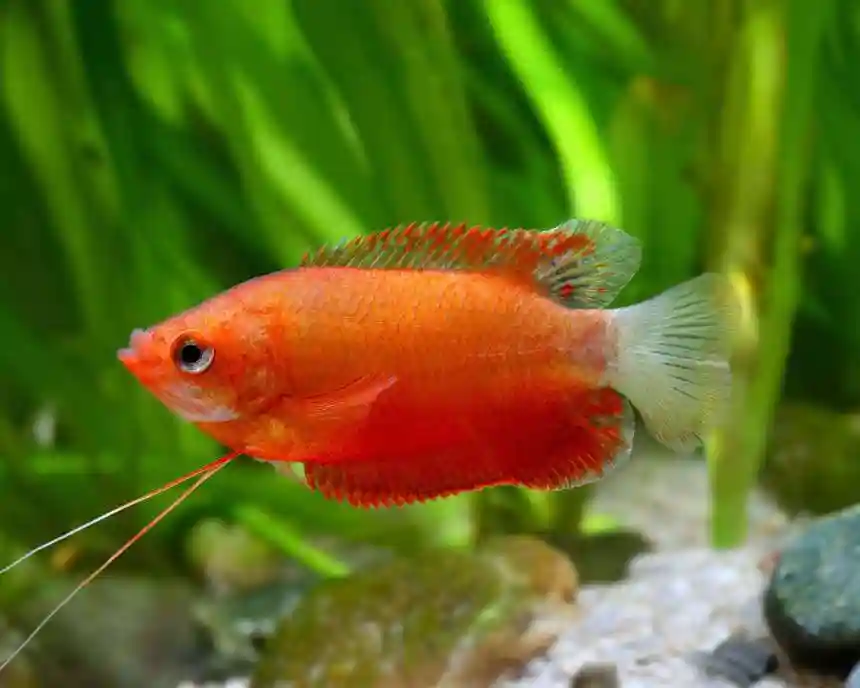
Their most distinctive feature is their thick, fleshy lips, which set them apart from other gouramis. They come in several color varieties, including natural bronze, bright red, and orange morphs often sold as “sunset gourami.”
Compared to other popular species like the Honey Gourami, the Thick-Lipped Gourami is slightly larger but still easy to manage in medium aquariums.
Tank Size and Setup
Tank Size
A single Thick-Lipped Gourami can live comfortably in a 20-gallon aquarium, though a 30-gallon or larger tank is better if you plan to keep them in pairs or groups. They’re not as space-demanding as larger species like the Blue Gourami, but they do appreciate room to swim.
Substrate and Décor
- Substrate: Fine gravel or sand to mimic their natural riverbed habitat.
- Décor: Include driftwood, smooth stones, and caves for shelter.
- Plants: They thrive in planted tanks. Use hardy species like Java Fern, Anubias, or floating plants to create shaded areas.
Lighting and Tank Cover
Moderate lighting works best. Since Thick-Lipped Gouramis have a labyrinth organ, they need access to the surface to gulp air. Always use a tank cover to prevent jumping but leave some air space between the water and lid.
For comparison, their setup is very similar to the Pearl Gourami, just on a slightly smaller scale.
Water Parameters and Maintenance
Thick-Lipped Gouramis are hardy and can adapt to a range of water conditions.
- Temperature: 75–82°F (24–28°C)
- pH: 6.5–7.5
- Hardness: 5–15 dGH
Gentle filtration is best, as they come from calm waters in the wild. A sponge filter or low-flow canister filter works well. Perform weekly water changes of 20–25% to keep conditions stable.
They’re more forgiving than sensitive species like the Chocolate Gourami, which requires very specific water conditions to thrive.
Thick-Lipped Gourami Behavior
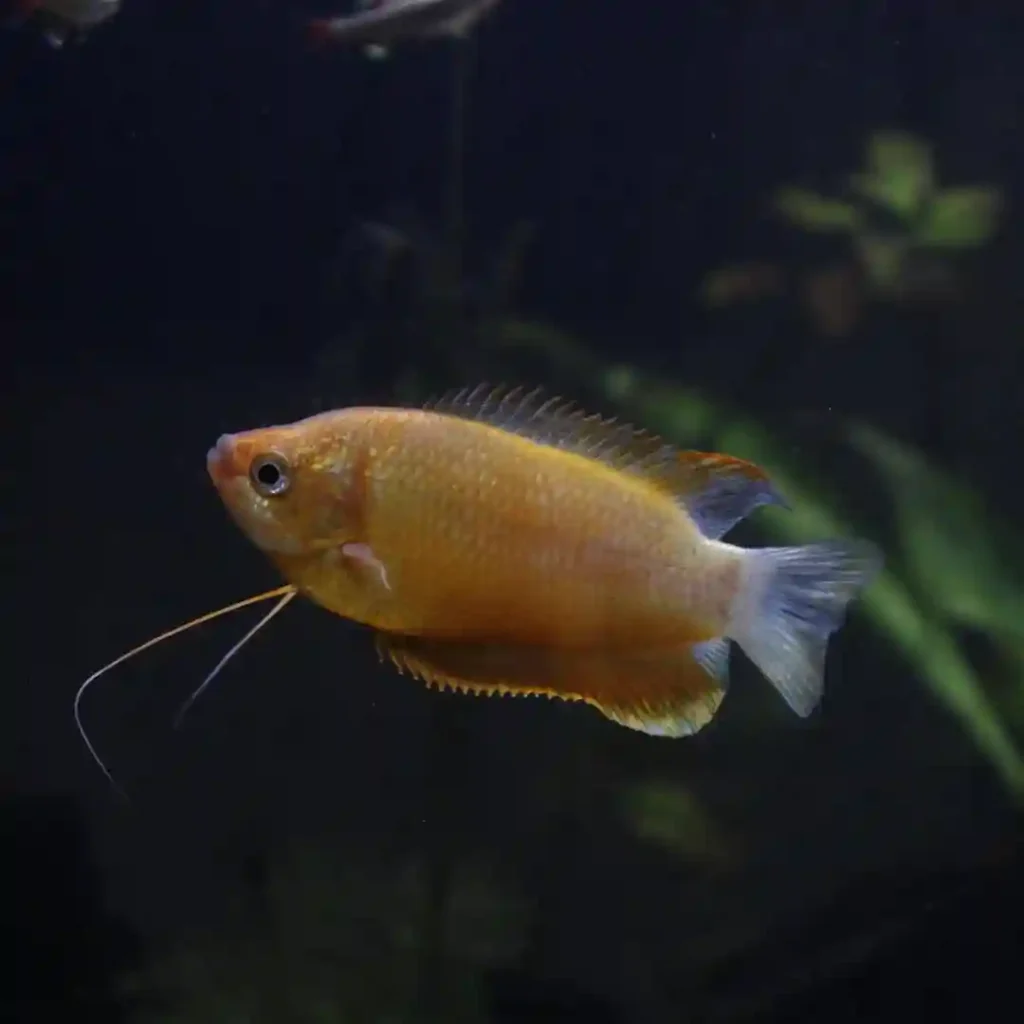
These fish are peaceful and shy by nature. They spend most of their time in the middle and upper levels of the tank, occasionally darting to the surface to breathe air.
- Social behavior: Best kept in pairs or small groups. Males may spar lightly, but serious aggression is rare in a spacious, well-decorated tank.
- Personality: Curious but calm, making them suitable for community aquariums.
- Activity: Active swimmers that enjoy exploring plants and shaded areas.
They’re far less territorial than semi-aggressive gouramis such as the Kissing Gourami.
Diet and Feeding
Thick-Lipped Gouramis are omnivores with a healthy appetite.
Staple diet:
- High-quality flakes or small pellets.
Protein-rich foods:
- Bloodworms, brine shrimp, daphnia, and mosquito larvae (live or frozen).
Vegetables:
- Blanched spinach, zucchini, or peas provide fiber and balance.
Feed them once or twice daily in small portions they can consume in 2–3 minutes. A varied diet helps enhance their natural colors, especially in the brighter sunset and red morphs.
Their feeding habits are more relaxed compared to species like the Snakeskin Gourami, which can be more selective.
Tank Mates for Thick-Lipped Gourami
These gouramis do best in peaceful community setups.
Ideal Tank Mates
- Tetras (Neon, Rummy Nose, Glowlight)
- Rasboras (Harlequin, Lambchop)
- Corydoras Catfish
- Peaceful Barbs (Cherry Barbs)
- Small Loaches (Kuhli Loach)
Tank Mates to Avoid
- Fin-nippers like Tiger Barbs.
- Aggressive species like Cichlids.
- Very large fish that may see them as food.
They can coexist with other gouramis if the tank is large enough. For example, a 40-gallon or bigger tank may house them alongside Moonlight Gouramis or Honey Gouramis.
Breeding Thick-Lipped Gourami
Like other gouramis, Thick-Lipped Gouramis are bubble nest builders.
- Breeding tank: 15–20 gallons with calm water and floating plants.
- Male role: Builds the nest and guards the eggs.
- Female role: Lays eggs under the nest, which the male collects.
- Care: Remove the female after spawning, as the male may become aggressive.
Conditioning the pair with live food increases spawning success. Fry hatch in 1–2 days and need infusoria or liquid fry food initially.
Common Health Issues
While hardy, Thick-Lipped Gouramis can suffer from common freshwater ailments:
- Ich (White Spot Disease): Appears as white dots on fins and body.
- Fin Rot: Caused by poor water quality or stress.
- Velvet Disease: Golden dust-like coating on the skin.
Prevent problems by quarantining new fish, maintaining clean water, and feeding a balanced diet.
Is the Thick-Lipped Gourami Right for You?
This species is perfect for aquarists who want a peaceful, hardy, and colorful fish for a community tank.
- Pros:
- Easy to care for.
- Peaceful temperament.
- Works well in planted aquariums.
- Easy to care for.
- Cons:
- Can be shy in busy tanks.
- Males may spar in smaller tanks.
- Can be shy in busy tanks.
If you’ve kept species like the Pearl Gourami or Honey Gourami, the Thick-Lipped Gourami is a natural next step. They’re also less demanding than delicate species such as the Chocolate Gourami.
FAQs
How big do Thick-Lipped Gouramis get?
They usually grow to around 3–4 inches in home aquariums.
Can they live with other gouramis?
Yes, if the tank is large enough and decorated to break up sightlines. Peaceful species like Honey Gouramis are best companions.
Do they need live plants in their tank?
Live plants are recommended because they provide cover and mimic natural habitats, but they can adapt to artificial plants too.
How long do they live in captivity?
On average, 5–7 years with proper care.
Are Thick-Lipped Gouramis aggressive?
No, they are generally peaceful, though males may display light sparring behavior.
 **2. Platy** Platies are hardy and easygoing. They enjoy swimming in groups and come in a variety of bright colors. Great for peaceful community tanks. ➡️ [Platy Fish Guide →](#) **3. Zebra Danio** Known for their energy and toughness, zebra danios are perfect for cycling new tanks. They tolerate a wide range of conditions and like to dart around in groups. ➡️ [Zebra Danio Guide →](#) **4. Corydoras Catfish** Peaceful bottom-dwellers that help keep your tank clean. Keep them in groups of 3 or more and give them soft substrate. ➡️ [Cory Catfish Care →](#) **5. Molly** Adaptable to various water conditions (even brackish), mollies are lively and great for community aquariums. ➡️ [Molly Fish Care Guide →](#) **6. Swordtail** Easy to care for and great in peaceful groups. Males have a signature sword-like tail and love swimming space. ➡️ [Swordtail Fish Guide →](#) **7. Betta Fish** Low-maintenance and visually stunning. Best kept alone or with very peaceful tank mates like snails or Corydoras. ➡️ [Full Betta Fish Care Guide →](#) **8. Neon Tetra** Small and peaceful, neon tetras love to school and light up a planted tank. Keep them in groups of 6 or more. ➡️ [Neon Tetra Care Guide →](https://oceanbitez.com/neon-tetras/) **9. Harlequin Rasbora** A calm and schooling species that fits right into community setups. Easy to feed and care for. ➡️ [Harlequin Rasbora Guide →](#) **10. Dwarf Gourami** A gentle and colorful addition to a beginner’s tank. Likes planted environments and peaceful neighbors. ➡️ [Dwarf Gourami Guide →](#) **11. White Cloud Mountain Minnow** Can live in cooler temperatures and is perfect for unheated tanks. Small, peaceful, and easy to care for. ➡️ [White Cloud Minnow Guide →](#) **12. Cherry Barb** Peaceful and social, cherry barbs do well in planted tanks and enjoy being in small groups. ➡️ [Cherry Barb Care →](#) --- ### Sample Beginner Tank Combos **Combo 1: 10–15 Gallon Easy Starter** * 4–6 Guppies * 3 Corydoras Catfish * 1 Nerite Snail **Combo 2: 20 Gallon Planted Community** * 6 Harlequin Rasboras * 6 Neon Tetras * 1 Dwarf Gourami * 3 Otocinclus (optional if algae control is needed) --- ### Beginner Tips for a Successful Aquarium * Cycle your tank before adding fish (ammonia → nitrite → nitrate) * Start with hardy species before delicate ones * Feed small amounts once or twice daily * Do weekly partial water changes (20–30%) * Don’t mix aggressive or fin-nipping species * Use a heater for tropical fish (75–80°F) --- ### Final Thoughts These beginner fish are ideal for getting started in the hobby without frustration. They're low-maintenance, compatible, and fun to watch. Once you’re comfortable, you can explore more advanced species and community combinations. ➡️ Check out our full guide to [Freshwater Aquarium Fish →](https://oceanbitez.com/freshwater-fish/)](https://oceanbitez.com/wp-content/uploads/2024/06/Best-Freshwater-Fish-for-Your-Aquarium-1024x640.webp)