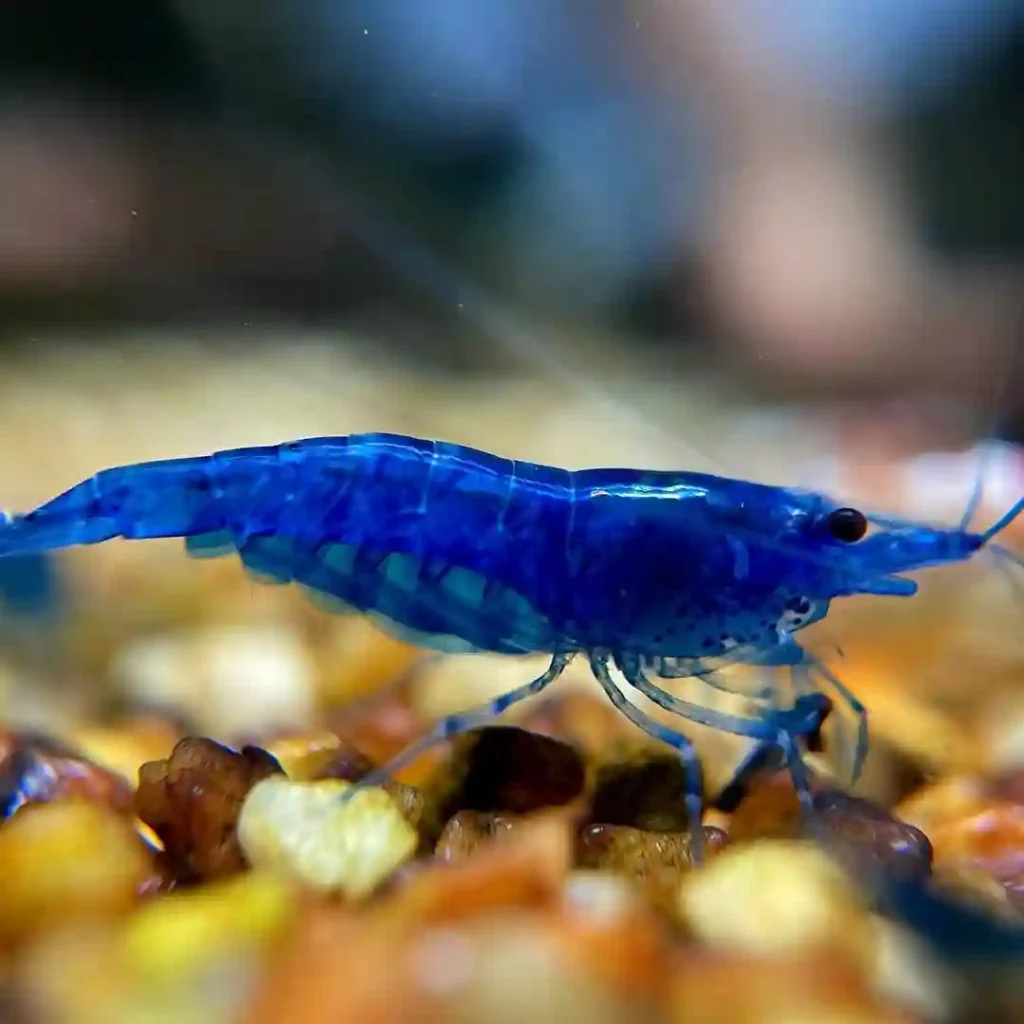
Shrimp often die due to sudden water changes, poor acclimation, ammonia spikes, or molting issues. If your shrimp are dying all of a sudden especially after a water change or tank transfer check water parameters, remove toxins like copper, and confirm it’s not just a molt. Proper care and slow acclimation are key to survival.
Quick Checklist: Are Your Shrimp Dying Suddenly?
Before jumping to conclusions, it helps to run through a few key questions. Shrimp deaths can seem random, but they’re often caused by specific, avoidable triggers. If you’re noticing shrimp dying overnight, or one by one over a few days, go through this checklist.
Did They Die Overnight or After a Water Change?
If your shrimp died right after a water change, there may have been a sudden shift in water temperature, pH, or hardness. Even clean tap water can introduce harmful substances like chlorine or copper. Always use a good water conditioner and try to match the new water to your tank’s parameters.
Did You Just Add Them to a New Tank?
New shrimp often die shortly after being introduced if they weren’t properly acclimated. Sudden changes in water conditions can shock their system. It’s also possible your tank isn’t fully cycled, meaning there’s still ammonia or nitrite present—both deadly to shrimp.
Are Multiple Shrimp Dying One by One?
If deaths are spread out over several days, it might point to a slow-moving problem—like copper leaching from décor, unstable parameters, or lack of minerals. This pattern often goes unnoticed until the colony has already suffered.
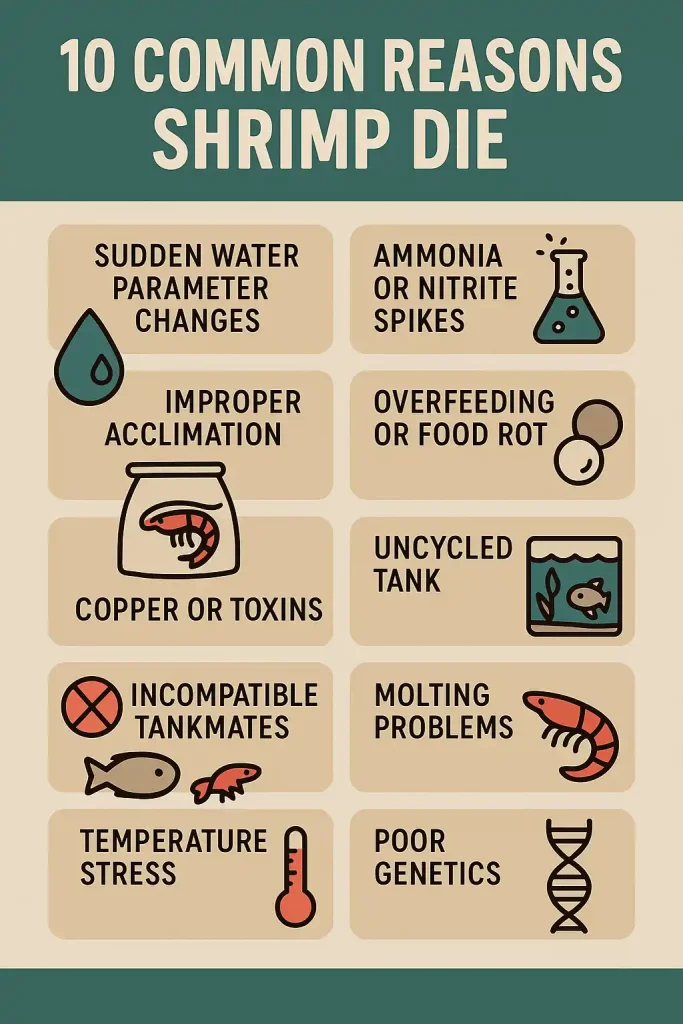
Top 10 Reasons Shrimp Die in Aquariums

Shrimp are sensitive creatures, and even small mistakes in care can lead to losses. If you’re seeing unexplained deaths, here are the most likely culprits:
1. Sudden Water Parameter Changes
Shrimp need stable conditions more than perfect ones. A sudden shift in pH, GH (general hardness), or KH (carbonate hardness) can shock their system. This often happens after a water change or if you use water from a different source.
Always test both your tank water and your tap water, especially when setting up or performing maintenance.
Check this article for Ideal GH & KH for Shrimp Tanks: Full Water Guide
2. Ammonia or Nitrite Spikes
Even trace amounts of ammonia or nitrite can be lethal to shrimp. These often spike in:
- Newly set up tanks
- Overfed tanks with decaying food
- Tanks with dead shrimp left too long
Use a liquid test kit to check your levels, and never assume a tank is “safe” without testing.
3. Improper Acclimation After Purchase
When shrimp are moved from one water system to another, they must be slowly acclimated—usually with the drip method. Skipping or rushing this process can result in fatal osmotic shock, even if water looks fine.
4. Overfeeding or Food Rot
Feeding too much is one of the most common beginner mistakes. Shrimp eat slowly, and leftover food quickly decays, creating toxic water. If your shrimp seem uninterested or food sits around too long, you’re likely feeding too much.
5. Copper or Toxins in Tap Water
Many water supplies (or aquarium medications) contain trace amounts of copper—deadly to shrimp. Always check if your water conditioner removes heavy metals, and avoid using fish treatments that aren’t shrimp-safe.
Even some fertilizers can be harmful if they include copper sulfate.
6. New Tank Syndrome (Uncycled Tank)
Adding shrimp to a tank that hasn’t completed its nitrogen cycle is a recipe for disaster. Ammonia and nitrite levels fluctuate heavily in uncycled tanks. Always cycle your tank fully before adding shrimp, and test your water regularly.
7. Incompatible Tankmates or Predators
Fish that seem peaceful—like bettas or tetras—can harass or eat shrimp, especially babies. Stress alone can lead to death, even if they’re not directly attacked.
If you’re finding missing or half-eaten shrimp, a predator might be the problem.
8. Molting Problems (White Ring of Death)
Shrimp need proper minerals and stable water to molt safely. When molting goes wrong, it can result in the white ring of death—a break between the head and body where they get stuck and can’t shed their exoskeleton.
This is often caused by soft water or a lack of calcium.
9. Temperature Stress or Heater Malfunction
Sudden spikes or drops in temperature can cause shrimp to go into shock. Make sure your heater is working properly and that your temperature stays steady—ideally between 72°F and 78°F (22–25°C) for most shrimp.
Avoid placing tanks in direct sunlight or next to windows during hot months.
10. Poor Genetics or Weak Stock
Unfortunately, not all shrimp sold in stores are healthy. Some may have been inbred, poorly kept, or shipped under stress. Even with perfect conditions, these shrimp may still die.
Always buy from reputable sellers, and consider quarantining new shrimp before adding them to your main tank.
Why Did My Shrimp Die Overnight?
Losing shrimp overnight can be frustrating and confusing—especially if everything seemed fine the day before. Sudden deaths usually point to an abrupt change in their environment. Here’s how to figure out what went wrong.
Common Triggers of Sudden Death
Overnight shrimp deaths often follow one of these events:
- A recent water change
- Adding new shrimp without proper acclimation
- Introducing untreated tap water
- A filter malfunction or loss of oxygen
- Adding new plants or décor with chemical residue
Even a small mistake—like forgetting to dechlorinate water—can lead to shrimp dying within hours.
What Changed in the Last 24 Hours?
When shrimp die suddenly, look for recent changes:
- Did you use a different water source?
- Was the heater unplugged or fluctuating?
- Did you feed something new?
- Were new fish or plants introduced?
Sometimes, just rinsing décor with soap or using air freshener near the tank can cause problems. Trace chemicals are more harmful to shrimp than to fish.
How to Spot an Emergency (Gasps, Color Loss, Lethargy)
Shrimp often give warning signs before they die:
- Hiding more than usual
- Lying on their side or upside down
- Pale or milky coloration
- Weak movement or floating in the current
If you notice any of these signs, test your water immediately. Quick action—like a partial water change with properly matched, dechlorinated water—might still save the others.
New Shrimp Died After Adding to Tank?
One of the most discouraging things for a shrimp keeper is seeing new shrimp die within hours or days of being introduced. This is sadly common—and very often preventable. Here’s what might have gone wrong and how to do it right next time.
How to Properly Acclimate Shrimp (Drip Method)
Shrimp are highly sensitive to sudden changes in water chemistry. The drip acclimation method is the safest way to help them adjust:
- Float the bag in your tank for 20–30 minutes to match temperature.
- Open the bag and place shrimp and bag water into a small container.
- Using airline tubing, slowly drip your tank water into the container (about 1–2 drops per second).
- Continue for 1–2 hours until the volume has doubled or tripled.
- Gently net the shrimp and place them into the tank—do not pour the bag water into your tank.
Skipping this step or rushing the process can shock their system and lead to early death—even in ideal water conditions.
Matching Parameters Between Seller and Tank
Your tank water might be perfect, but if it’s too different from what the shrimp were used to, it can still kill them. Big jumps in pH, GH, or KH can cause osmotic stress, which their bodies can’t handle.
If possible, ask your seller for their water parameters before purchasing. You can then adjust yours gradually or at least be prepared for a slower acclimation.
Why Stress Kills Even in Perfect Water
Even when your tank is fully cycled, planted, and shrimp-friendly, the journey to your home could have already weakened them. Long shipping times, poor bag conditions, or rough handling stress shrimp significantly.
That stress builds up, and once introduced to a new environment—even a good one—they may simply not recover. That’s why quarantining new shrimp in a smaller, stable tank can sometimes help them bounce back before moving into the main setup.
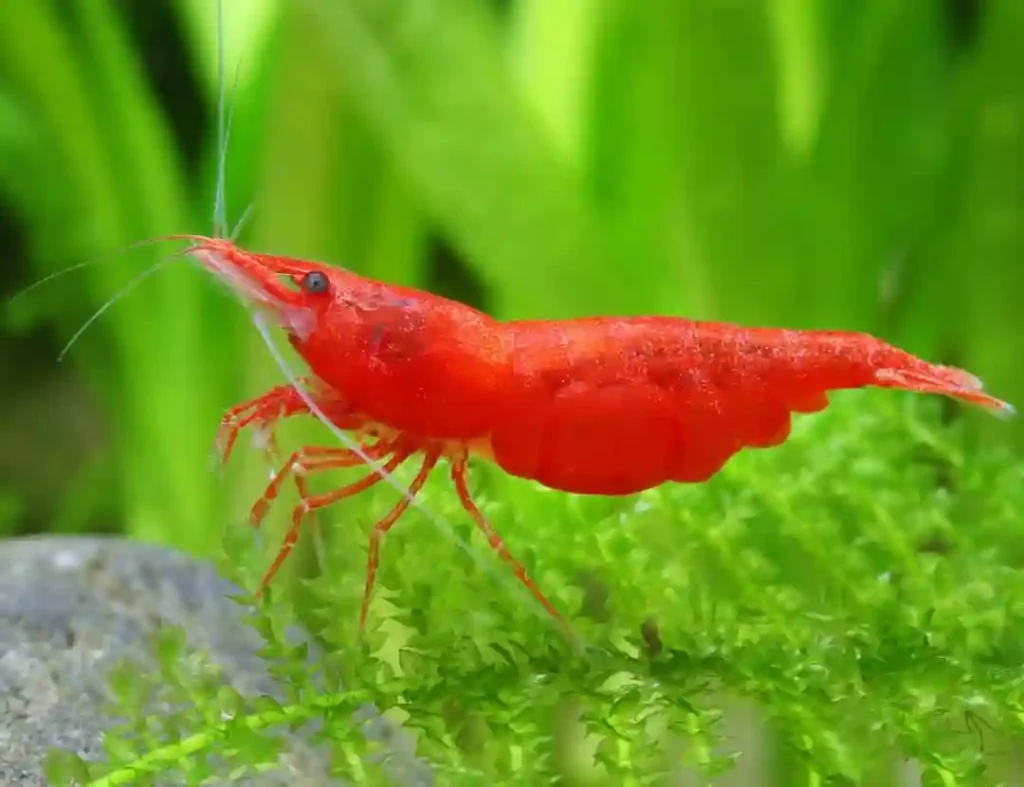
Cherry Shrimp Dying One by One? Here’s Why
If your cherry shrimp seem to be dying slowly—one every day or two—it’s usually a sign of a deeper issue that’s building up quietly in the background. Unlike sudden mass deaths, this kind of slow loss is harder to notice until it’s too late. Let’s look at what might be causing it.
Hidden Causes Like Slow Copper Leaching
Sometimes, the problem isn’t obvious. Decorations, pipes, or even certain plant fertilizers can slowly leach copper or heavy metals into the water. These levels may be too low to harm fish, but even trace amounts can kill shrimp over time.
Test your water for copper or switch to shrimp-safe products to rule this out. Avoid using old brass fittings, untreated tap water, or fertilizers that list copper sulfate.
Water Too Soft or Too Hard?
Cherry shrimp need moderate water hardness to molt properly and build strong shells. If your water is too soft (low GH), they may struggle with molting. If it’s too hard, they can become stressed and inactive.
Ideal water parameters for cherry shrimp:
- pH: 6.5–7.4
- GH: 6–8
- KH: 2–4
- Temperature: 72–78°F (22–25°C)
It’s best to use a liquid test kit to get accurate readings and adjust using shrimp-safe products if needed.
Are You Seeing Empty Shells or Actual Dead Shrimp?
Sometimes what looks like a dead shrimp is just a molt—a shed exoskeleton. Molts are usually translucent and hollow, while dead shrimp lose color or turn milky white.
If you’re finding red, motionless bodies, that’s a true death. If you’re seeing clear, crumpled shells, your shrimp are likely molting successfully, which is a good sign.
Still, frequent molts followed by deaths can point to molting stress or improper water conditions.
Dead Shrimp or Just a Molt?
One of the most common (and confusing) questions shrimp keepers face is whether they’ve found a dead shrimp or just a molt. It’s easy to mistake one for the other, especially if you’re new to shrimp keeping. Here’s how to tell the difference and what to do next.
How to Tell the Difference
A dead shrimp will usually:
- Have solid color (red, white, or clear depending on the species)
- Lie on its side or back
- Start to lose color and turn milky or cloudy
- Not move when touched gently with tweezers or a stick
A molt, on the other hand, looks like:
- A thin, see-through version of the shrimp
- An empty shell that may appear split near the head or back
- Floating or curled up near plants or substrate
- No meat or body mass inside
The easiest clue is texture and movement. Dead shrimp will feel more solid and sink immediately. Molts are almost weightless and can drift in the current.
Signs of a Healthy Molt
Molting is a normal and essential part of shrimp growth. A healthy molt means your shrimp is growing and likely doing well.
You may even notice the shrimp hiding after molting—they’re vulnerable during this time and need a safe place to harden their new shell.
Frequent molts followed by no deaths usually mean your tank is balanced and your shrimp are thriving.
What to Do If You’re Unsure
If you’re not sure, it’s okay to remove the shell and inspect it. If it’s hollow and bends easily, it’s a molt. You can either leave it in the tank as a calcium source or remove it to keep the tank tidy.
If you think it’s a dead shrimp, remove it quickly to avoid water contamination. Decaying shrimp can spike ammonia, especially in smaller tanks.
Shrimp Molting Problems & White Ring of Death
Molting is how shrimp grow, but when it goes wrong, it can lead to one of the most heartbreaking and frustrating causes of death: the white ring of death. This is a common issue that affects shrimp of all ages and is often tied to water conditions and nutrition.
What Is the White Ring of Death?
The “white ring of death” appears as a pale or white band between the shrimp’s head and body—right where the exoskeleton splits during molting. It means the shrimp tried to molt but got stuck halfway through. Once stuck, they usually cannot escape and will die within hours.
This is not a disease or infection—it’s a molting failure caused by internal stress or external conditions.
Causes: Lack of Minerals or Poor Water Quality
Several things can trigger molting problems:
- Low calcium or GH levels – Shrimp need minerals like calcium and magnesium to form and shed their shells properly.
- Sudden parameter swings – Even small shifts in pH or temperature can disrupt their molt cycle.
- Improper diet – If shrimp aren’t getting a balanced diet, their shells may be too weak or soft.
- Soft or unstable water – Water that’s too soft often lacks the minerals needed for molting.
If you’ve recently changed your water source, added RO/DI water without remineralizing, or used poor-quality food, molting issues may follow.
How to Prevent and Fix Molting Issues
You can reduce the risk of molting problems by keeping your water stable and properly mineralized. Here’s what helps:
- Maintain GH between 6–8 for Neocaridina species
- Add shrimp-safe mineral blocks or leaf litter (like Indian almond leaves)
- Use foods high in calcium and protein (in moderation)
- Avoid large water changes—do smaller, more frequent ones to keep parameters stable
Once a shrimp is stuck mid-molt, there’s unfortunately not much that can be done. Prevention is key.
Here’s the next section of the article:
How to Save a Dying Shrimp (If It’s Not Too Late)
Catching a shrimp in distress early gives you a small window of opportunity to help. While not all cases are fixable, quick action can sometimes prevent further losses and save others in the tank.
Emergency Water Tests and Quick Fixes
If you suspect something’s wrong, the first step is to test your water—especially for:
- Ammonia
- Nitrites
- Nitrates
- pH, GH, and KH
- Temperature
Even small traces of ammonia or nitrite can kill shrimp. If levels are off, do an immediate 25–50% water change using dechlorinated, temperature-matched water. Don’t delay—shrimp react quickly to poor conditions.
You can also add Indian almond leaves or botanicals. These release tannins that may calm the shrimp and slightly buffer the water, making it safer in the short term.
Moving to a Quarantine Tank
If only one or two shrimp look unwell and you suspect toxins, aggression, or contamination, gently move them to a separate container with clean, cycled water. This helps reduce stress and removes them from the source of the problem while giving you time to troubleshoot the main tank.
Use water from the original tank to avoid more shock, but make sure the container is clean, toxin-free, and aerated.
Adding Air, Rebalancing Parameters, Feeding Gently
Low oxygen can sometimes be the hidden issue. Adding an air stone or increasing surface agitation can help in emergencies, especially if the shrimp are gasping or floating.
Also:
- Stop feeding for a day or two to reduce waste
- Avoid any medications unless they’re shrimp-safe
- Double-check any recent décor, food, or fertilizers you may have introduced
Sometimes, just removing the source of stress and letting the shrimp rest in stable conditions is enough to turn things around.
How to Prevent Future Shrimp Deaths
Once you’ve stabilized the tank and identified possible causes, it’s time to focus on prevention. Healthy shrimp tanks are all about consistency, simplicity, and observation. Here’s how to keep your shrimp alive and thriving long-term.
Test Water Weekly (pH, GH, KH, Ammonia, Nitrites, Nitrates)
Regular testing helps catch small problems before they become fatal. Use a liquid test kit to monitor:
- Ammonia and nitrite – should always be 0 ppm
- Nitrate – keep below 20 ppm
- pH – stable between 6.5 and 7.4 for most shrimp
- GH/KH – essential for healthy molts
Shrimp are more sensitive than fish to parameter swings, so it’s better to test too often than not enough.
Feed Lightly and Remove Waste
Feed only 2–3 times per week unless your tank has no natural algae or biofilm. Shrimp graze constantly and don’t need large portions. Always remove uneaten food within a few hours to prevent rot and ammonia spikes.
Less food means fewer pests, better water, and longer-living shrimp.
Use Shrimp-Safe Products Only
From dechlorinators to plant fertilizers, always check if products are marked shrimp-safe. Avoid anything that contains copper or strong chemicals. Even aquarium glass cleaners or air fresheners near the tank can cause problems.
When in doubt, research before adding anything to your tank.
Keep a Shrimp Log for New Additions & Deaths
A simple notebook or spreadsheet can help track:
- Water changes and test results
- New shrimp added and their source
- Any deaths and suspected causes
- Tank changes like new plants, décor, or foods
Over time, you’ll notice patterns that help you improve your care and avoid repeated mistakes.
FAQ:
Why are my shrimp dying all of a sudden?
Shrimp often die suddenly due to water changes, ammonia spikes, or improper acclimation. If they were recently added or you changed tank water, it could be a shock to their system. Always test your water, match parameters closely, and use slow acclimation methods.
How do I know if my shrimp died or just molted?
Molts look like see-through, hollow shells—almost like an empty shrimp casing. A dead shrimp, on the other hand, will appear solid, may turn pale or milky, and won’t move at all. If you’re unsure, gently remove it and check for body mass inside.
What causes shrimp to die after a water change?
Shrimp can die after water changes if the new water has different temperature, pH, or mineral levels. Chlorine, copper, or lack of dechlorination are also common culprits. Always match water parameters and treat tap water before adding it.
Can shrimp die from stress?
Yes. Stress from shipping, aggressive tankmates, poor acclimation, or unstable water conditions can all lead to delayed or sudden shrimp deaths. They may seem fine at first, but stress can weaken them over time and make them vulnerable to other issues.
What is the white ring of death in shrimp?
The white ring of death is a clear band between the head and body that appears when a shrimp gets stuck during molting. It’s caused by poor water quality, low minerals (especially calcium), or sudden environmental changes. It’s usually fatal if not prevented.