
Guppy Fin Rot: Causes, Treatment, and Prevention

Guppy fin rot is one of the most common problems in guppy tanks. It usually starts with small damage on the tail or fins, then slowly gets worse if the water quality is poor or the fish is stressed.
The good news is that fin rot is often treatable when caught early. Many mild cases improve once the tank water is cleaned up and the cause of stress is removed.
If your guppy has ragged fins, white edges, blackened tips, or a shrinking tail, this guide will help you understand what is happening and what to do next.
What Is Fin Rot in Guppies?
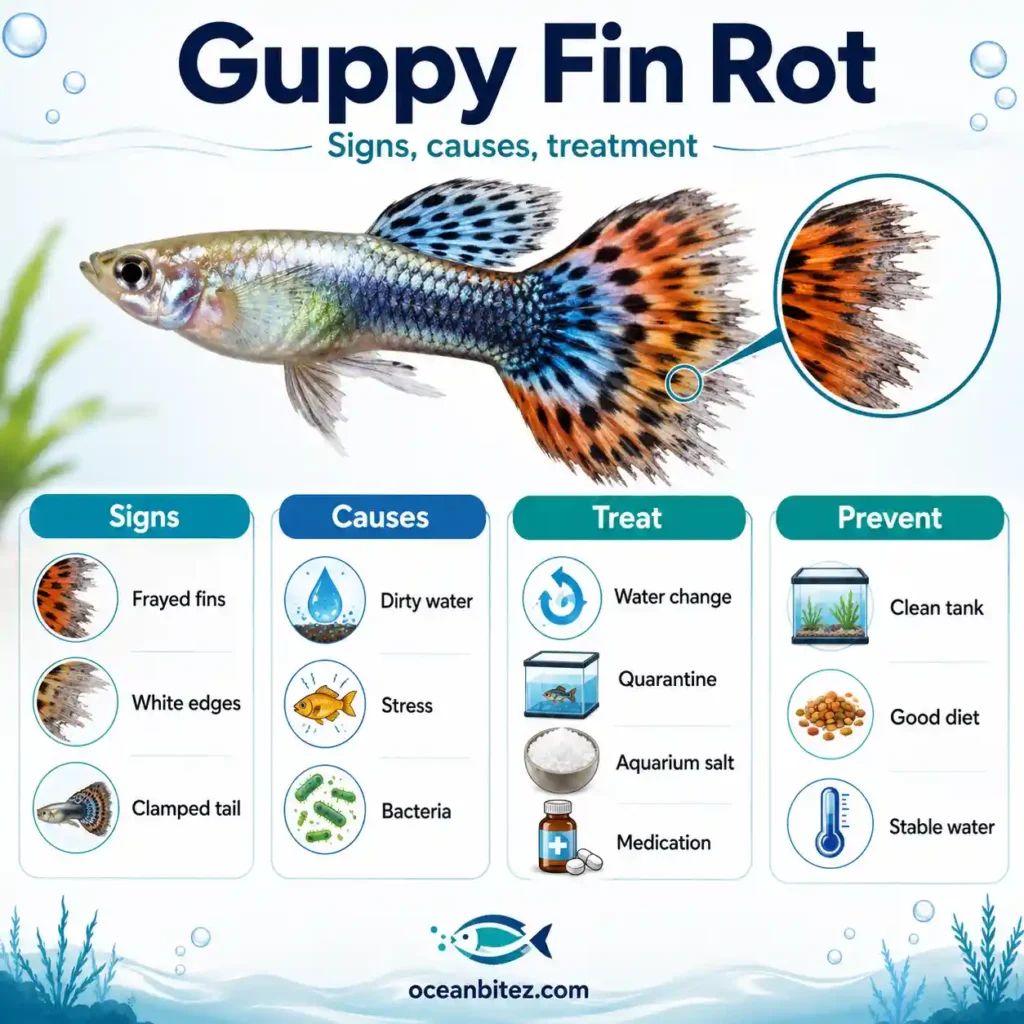
Fin rot is a bacterial infection that damages the soft tissue of the fins and tail. It often begins after the fin is weakened by stress, nipping, injury, or poor water conditions.
In healthy water, small fin tears often heal on their own. But when ammonia, nitrite, or high nitrate levels are present, bacteria can infect the damaged area and cause the fin to break down.
Fin rot can affect the tail, dorsal fin, pectoral fins, or any other fin.
What Does Guppy Fin Rot Look Like?
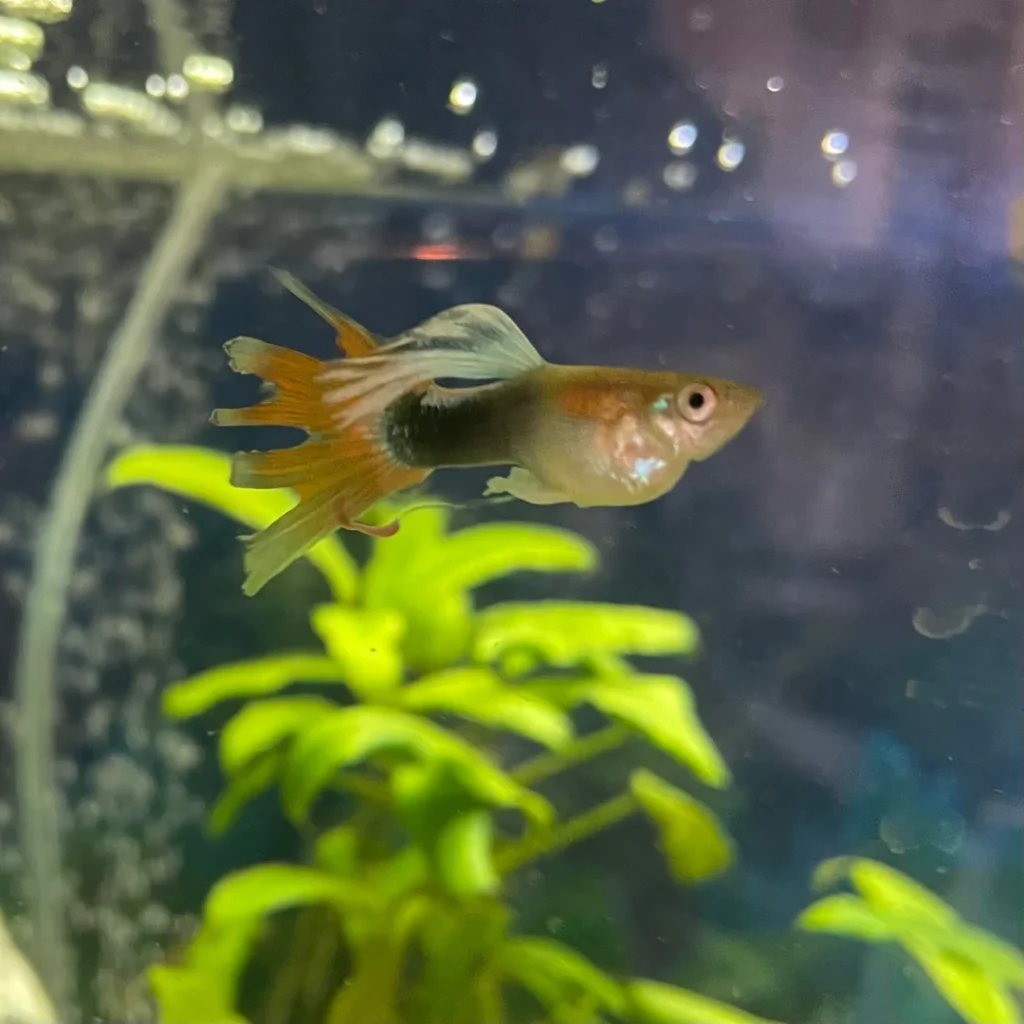
Early fin rot can be easy to miss. At first, the tail may look slightly uneven or thin at the edges. As it gets worse, the fins may look shredded, shorter, or cloudy.
Common signs include:
- Ragged or frayed fin edges
- White, gray, red, or black fin tips
- Tail slowly getting shorter
- Clamped fins
- Less swimming activity
- Loss of appetite
If the fin damage keeps spreading toward the body, treat it quickly. Advanced fin rot can become dangerous when the infection reaches the base of the fin.
Guppy Fin Rot vs Torn Fins
Not every damaged tail is fin rot.
A torn fin usually happens suddenly after chasing, fighting, sharp decorations, or filter intake damage. The fin may look split, but the edges are usually clean.
Fin rot usually gets worse over time. The edges may look cloudy, white, red, or black, and the fin may slowly shrink.
If the damage appeared overnight and does not spread, it may simply be an injury. If it keeps spreading, assume fin rot and check your water quality.
What Causes Fin Rot in Guppies?
Poor water quality is the most common cause. Guppies are hardy, but they still suffer when ammonia or nitrite appears in the tank.
Fin rot can also happen when guppies are stressed by overcrowding, bullying, unstable temperature, poor diet, or dirty substrate. Long-finned guppies are more likely to get fin damage because their tails are easier to nip or tear.
Common causes include:
- Ammonia or nitrite in the water
- High nitrate
- Overcrowding
- Fin nipping
- Sharp decorations
- Poor diet
- Stress after transport
- Weak filtration
Before using medication, always test the water. Treating fin rot without fixing the tank conditions often leads to the same problem returning.
How to Treat Guppy Fin Rot
Start with the basics first. In mild cases, clean water can make a big difference.
Test ammonia, nitrite, and nitrate. Ammonia and nitrite should always be 0 ppm. If either is present, do a partial water change and check whether the tank is properly cycled.
Next, remove anything that may be causing stress. If another fish is nipping the guppy, separate the bully or move the injured fish to a safe tank. Check decorations for sharp edges and make sure the filter intake is not damaging fins.
For mild fin rot, do small water changes over several days and keep the tank stable. You can also use aquarium salt carefully if your tank mates can tolerate it.
For moderate or severe cases, move the guppy to a quarantine tank and use a proper antibacterial fish medication. A hospital tank makes treatment easier and avoids medicating healthy fish unnecessarily.
Step-by-Step Treatment Plan
| Stage | What to Do |
| Mild | Test water, improve water quality, remove stress |
| Moderate | Quarantine, continue clean water, consider antibacterial treatment |
| Severe | Hospital tank, medication, close monitoring |
Do not mix medications unless the product instructions say it is safe. Also avoid using strong treatments in a tank with shrimp or sensitive fish.
If you keep guppies with shrimp, read our Guppies With Shrimp Guide before adding any medication to the main tank.
Will Guppy Fins Grow Back?
Yes, guppy fins can grow back if the damage is not too severe and the infection is stopped early.
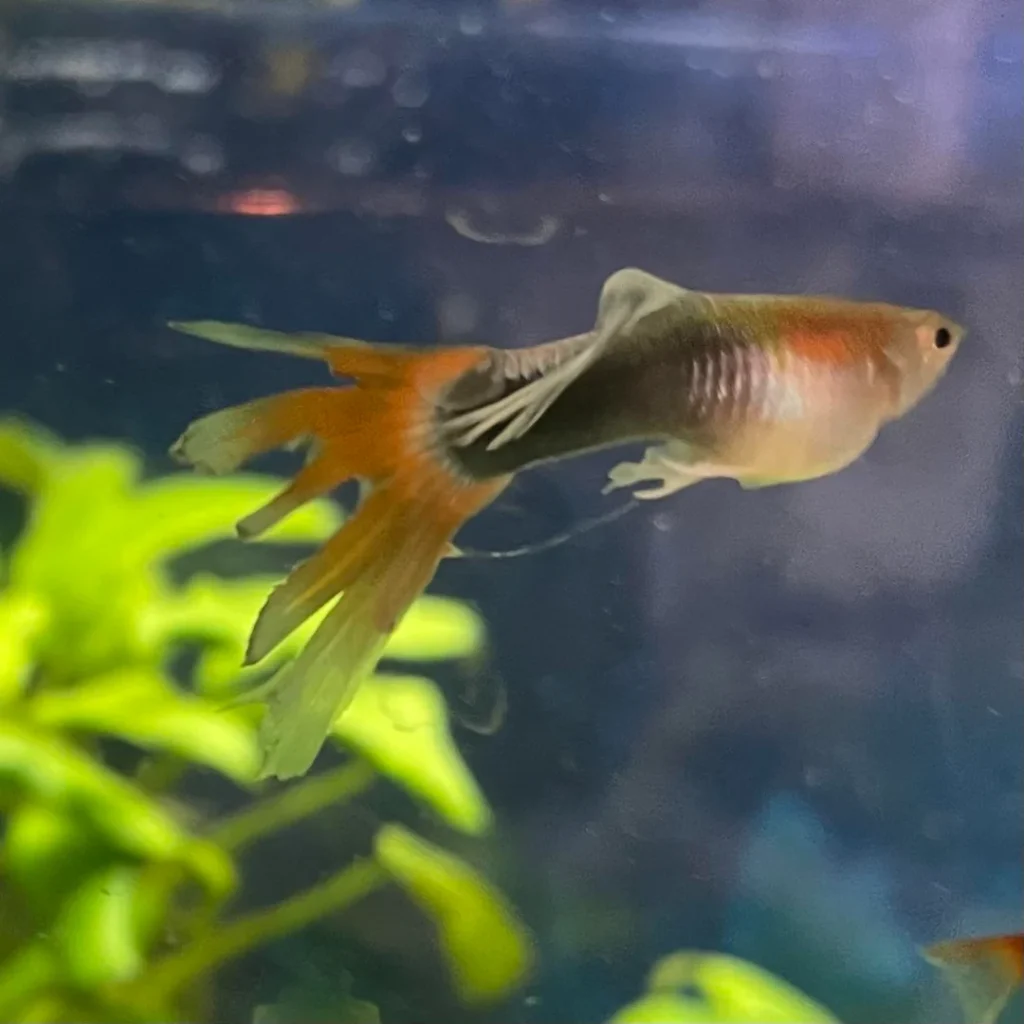
New fin growth often appears clear or pale at first. Over time, the color may return, although very deep damage may not heal perfectly.
Healing depends on water quality, diet, stress level, and how much of the fin was lost.
How Long Does Fin Rot Take to Heal?
Mild cases may start improving within a few days after water quality is corrected. Full regrowth can take several weeks.
Severe cases take longer and may not fully recover if the infection reaches the fin base.
During recovery, keep the water clean and avoid moving the fish too often. Extra stress can slow healing.
How to Prevent Fin Rot in Guppies
Prevention is easier than treatment. Guppies do best in clean, stable water with enough space and peaceful tank mates.
Avoid overcrowding and keep a regular water change schedule. Feed a balanced diet so your guppies have the nutrients needed for healing and immune support.
For a stronger feeding routine, see our Guppy Fish Food Guide.
Good prevention also means choosing the right tank mates. Some fish nip long guppy fins, especially males with large tails. Our Guppy Tank Mates Guide can help you avoid risky combinations.
When Should You Quarantine a Guppy?
Quarantine is best when the fin damage is getting worse, the fish is being bullied, or medication is needed.
A simple quarantine tank does not need to be fancy. A small bare-bottom tank with a sponge filter, heater, and hiding spot is enough for short-term treatment.
Keep the water stable and observe the fish daily.
Can Fin Rot Spread to Other Guppies?
The bacteria linked to fin rot can exist in many aquariums, but healthy fish in clean water usually fight it off.
If several guppies have fin damage at the same time, the problem is likely tank-wide stress or poor water quality rather than one sick fish infecting everyone.
Check the whole aquarium, not just the affected fish.
Common Mistakes to Avoid
Many beginners add medicine before testing the water. This can hide the real problem. If ammonia or nitrite is present, medication alone will not solve fin rot.
Another mistake is keeping long-finned guppies with fin nippers. Even if the water is clean, repeated damage can keep turning into infection.
Overfeeding also makes things worse because leftover food breaks down and lowers water quality.
Frequently Asked Questions
Is guppy fin rot contagious?
It can affect multiple fish, but it usually spreads when the whole tank is stressed or dirty. Clean water is the best protection.
Can guppy fin rot heal without medicine?
Mild cases can heal with clean water, stable conditions, and stress removal. Moderate or severe cases may need antibacterial medication.
Why is my guppy tail turning black?
Black edges can appear during fin damage, healing, or infection. If the tail is shrinking or getting worse, treat it as possible fin rot.
Why are my guppy fins shredded?
Shredded fins may come from fin nipping, sharp decorations, fighting, or fin rot. If the damage spreads, check water quality and begin treatment.
How do I know if fin rot is healing?
Healing fins often stop shrinking and begin showing clear or pale new growth at the edges.
