
Bucephalandra Care Guide

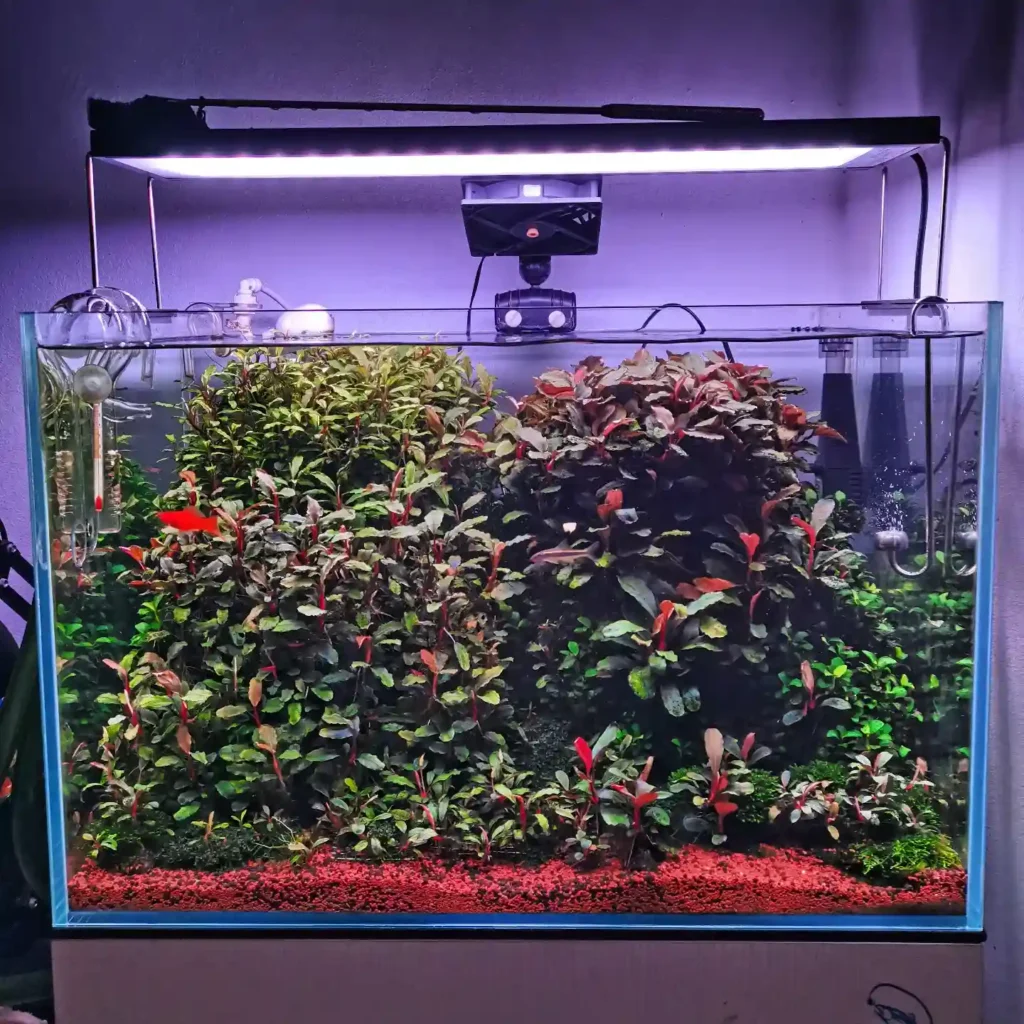
Bucephalandra, often called “Buce” by aquarium hobbyists, has become one of the most sought-after plants in aquascaping. Its compact size, unique leaf shapes, and beautiful colors make it a favorite for planted tanks of all sizes.
Many aquarists compare Bucephalandra to Anubias because both plants grow from a rhizome and can be attached to rocks or driftwood. However, Buce offers a much wider range of leaf colors and textures. Some varieties display green leaves, while others show shades of blue, purple, red, or metallic tones under aquarium lighting.
Although Bucephalandra grows slowly, it is relatively easy to care for once established.
Bucephalandra Plant Profile
| Information | Details |
| Scientific Name | Bucephalandra spp. |
| Common Name | Bucephalandra, Buce |
| Origin | Borneo |
| Growth Rate | Slow |
| Difficulty | Easy to Moderate |
| Placement | Foreground to Midground |
| Lighting | Low to Moderate |
| CO2 | Optional |
| Temperature | 72–82°F |
| pH | 6.0–7.5 |
What Is Bucephalandra?
Bucephalandra is a group of aquatic plants native to the rivers and streams of Borneo. In nature, these plants often grow attached to rocks and wood along riverbanks where water levels change throughout the year.
Like Anubias and Java Fern, Bucephalandra grows from a rhizome. The rhizome produces roots and leaves while remaining above the substrate.
This growth pattern makes Buce an excellent choice for aquascaping because it can be attached directly to hardscape instead of being planted in the substrate.
Why Is Bucephalandra So Popular?
The popularity of Bucephalandra comes from its appearance.
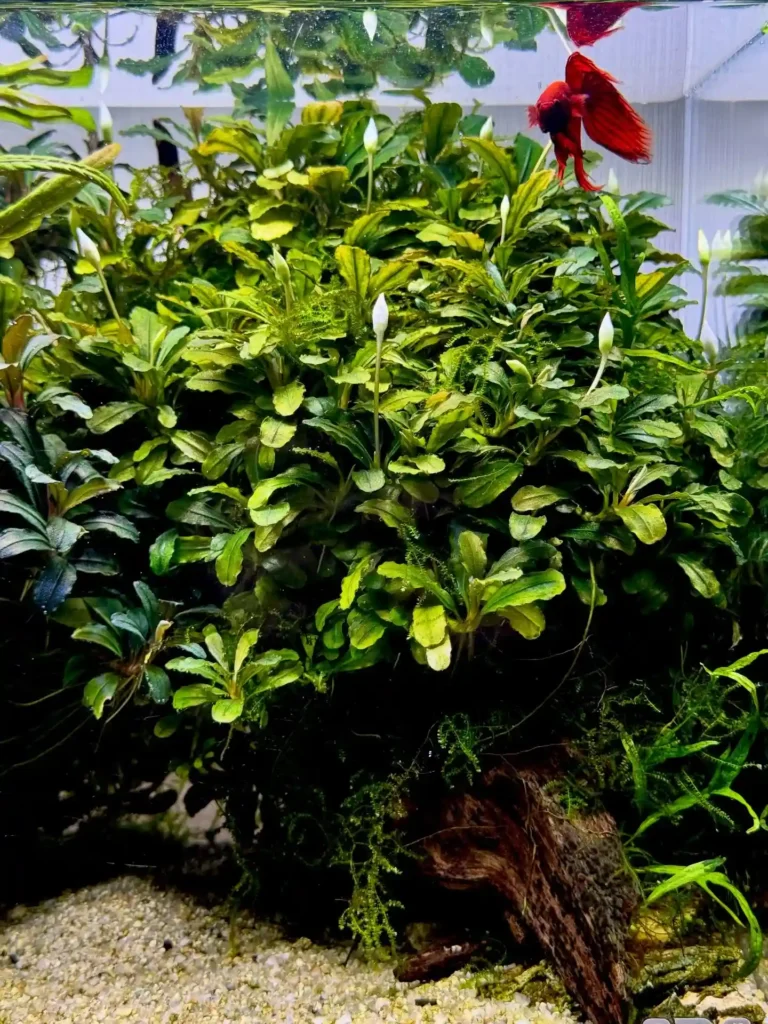
Unlike many green aquarium plants, Buce varieties often display unique colors and iridescent effects. Under proper lighting, some leaves can appear blue, purple, bronze, red, or even metallic.
Its slow growth is another advantage. While fast-growing plants require frequent trimming, Buce generally stays compact and manageable.
Many aquascapers use Buce to create detailed layouts where every plant remains exactly where it was placed.
Popular Types of Bucephalandra
Hundreds of Bucephalandra varieties exist in the aquarium hobby.
Some of the most popular include:
Bucephalandra Green Wavy
Known for its bright green leaves and beginner-friendly nature.
Bucephalandra Kedagang
A popular variety with dark leaves and attractive metallic coloration.
Bucephalandra Brownie
A compact variety that often develops blue and purple highlights.
Bucephalandra Red
Several Buce varieties are sold under red trade names and may display reddish tones under strong lighting.
Bucephalandra Mini
Small-growing varieties that work well in nano aquariums.
While appearances differ, care requirements remain similar across most varieties.
Tank Requirements
Bucephalandra is adaptable and grows well in a wide range of aquarium setups.
Because it grows slowly, stability is often more important than chasing perfect water parameters.
Water Parameters
| Parameter | Recommended Range |
| Temperature | 72–82°F |
| pH | 6.0–7.5 |
| GH | 3–12 dGH |
| KH | 1–8 dKH |
Stable conditions generally produce healthier growth than constantly changing water values.
Lighting Requirements
Bucephalandra performs best under low to moderate lighting.
Many beginners assume stronger light will improve growth, but excessive lighting often encourages algae on the leaves.
Because Buce grows slowly, algae can quickly become a problem if lighting is too intense.
Moderate lighting usually provides the best balance between growth and coloration.
Higher lighting may improve color in some varieties but also increases maintenance requirements.
Does Bucephalandra Need CO2?
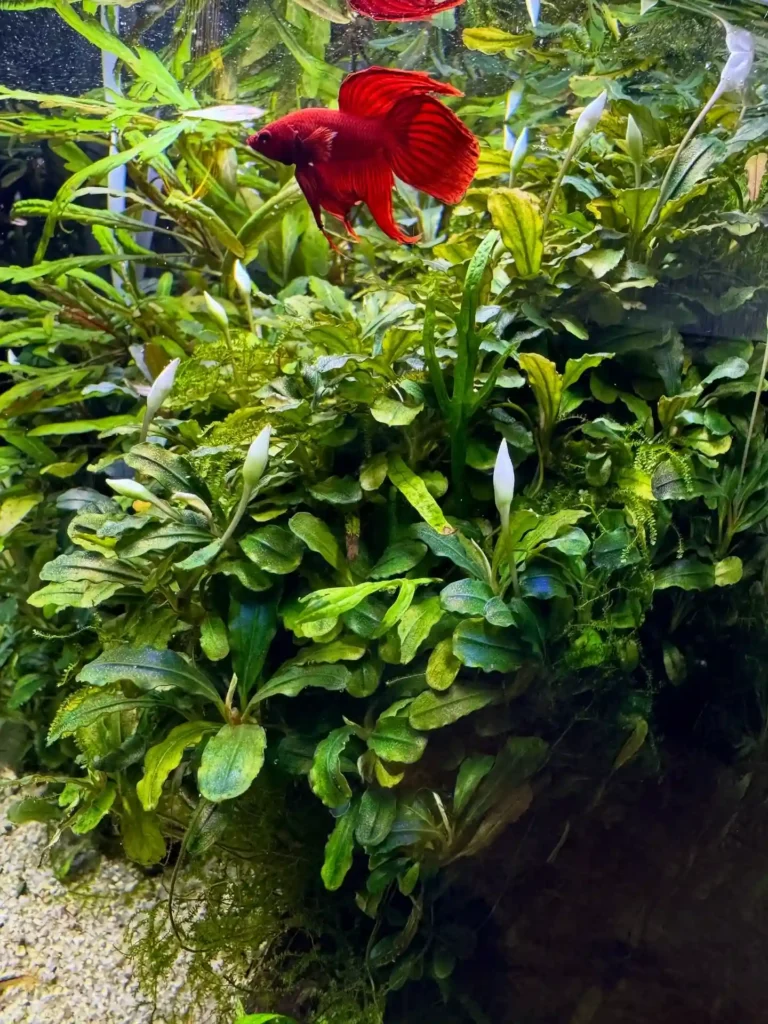
No, Bucephalandra does not require CO2 injection.
One reason it is popular among beginners is its ability to grow successfully in low-tech aquariums.
However, supplemental CO2 can provide several benefits. Growth becomes slightly faster, leaves may appear larger, and coloration can become more intense.
Many high-end aquascapes use CO2 with Buce, but the plant can thrive without it.
How to Plant Bucephalandra
One of the most common mistakes beginners make is burying the rhizome.
Like Java Fern and Anubias, the rhizome should remain exposed.
If buried, it often rots and dies.
Instead, attach Bucephalandra to:
- Driftwood
- Rocks
- Lava stone
- Aquarium decorations
Aquarium-safe glue or thread can be used until the roots naturally anchor themselves.
Does Bucephalandra Need Substrate?
No. The roots mainly serve as anchors rather than nutrient collectors.
Because Buce absorbs many nutrients directly from the water column, it can grow successfully in bare-bottom aquariums and aquascapes without planted substrates.
A nutrient-rich substrate may still benefit overall tank health but is not essential for Buce itself.
Fertilizer Requirements
Although Bucephalandra grows slowly, it still benefits from regular nutrients.
In heavily stocked aquariums, fish waste may provide enough nutrients to support healthy growth.
In lightly stocked planted tanks, an all-in-one liquid fertilizer often improves leaf color and overall plant health.
Slow growth means deficiencies may take time to appear, but yellowing leaves and stalled growth can indicate nutrient shortages.
Growth Rate
Bucephalandra is a slow-growing plant.
New hobbyists sometimes worry because they do not see rapid changes after planting.
This is normal. Healthy Buce often produces only a few new leaves over several weeks. Once established, growth becomes steady but remains slow compared to stem plants.
Patience is important when growing Buce.
How to Propagate Bucephalandra
Propagation is simple. As the rhizome grows, it can be cut into sections using sharp scissors or a razor blade.
Each section should contain several healthy leaves and roots.
The separated pieces can then be attached to new rocks or driftwood.
Over time, each section develops into a new plant.
Common Bucephalandra Problems
Melting After Introduction
Many Buce plants experience a period of melting after being moved into a new aquarium.
Older leaves may deteriorate while the plant adapts.
As long as the rhizome remains healthy, new growth usually appears within a few weeks.
Algae on Leaves
Because Buce grows slowly, algae can easily develop on the leaves.
Excessive lighting is often the main cause.
Reducing light intensity and maintaining stable nutrients usually helps.
Yellow Leaves
Yellowing may indicate nutrient deficiencies or poor water quality.
Regular fertilization often solves the problem.
Rhizome Rot
Rhizome rot is usually caused by burying the rhizome in substrate.
Always keep the rhizome exposed.
Best Tank Mates for Bucephalandra
Bucephalandra works well in most peaceful aquariums.
Suitable tank mates include:
- Guppies
- Tetras
- Rasboras
- Corydoras
- Shrimp
- Bettas
- Small peaceful community fish
Shrimp are especially useful because they help clean algae from Buce leaves.
Bucephalandra in Aquascaping
Buce is one of the most versatile plants in aquascaping.
It can be attached to driftwood, wedged between rocks, or placed along pathways to create natural-looking details.
Its compact size makes it useful in:
- Nano tanks
- Nature aquascapes
- Iwagumi layouts
- Shrimp tanks
- Jungle-style aquariums
Many aquascapers use Buce as a foreground or midground accent plant.
Is Bucephalandra Good for Beginners?
Yes.Although some rare varieties can be expensive, the plant itself is not difficult to grow.
Its ability to thrive in low-tech aquariums, tolerate a range of conditions, and grow without CO2 makes it beginner-friendly.
The main challenge is patience because growth is much slower than many other aquarium plants.
Frequently Asked Questions
Does Bucephalandra need CO2?
No. It grows well without CO2 but benefits from additional carbon dioxide.
Can Bucephalandra grow in low light?
Yes. Low to moderate lighting is usually ideal.
Why is my Buce melting?
Melting often occurs after introduction to a new aquarium and is usually temporary.
Should I bury Bucephalandra?
No. The rhizome should always remain above the substrate.
How fast does Bucephalandra grow?
It is considered a slow-growing aquarium plant.
Is Bucephalandra suitable for shrimp tanks?
Yes. Shrimp tanks are one of the most popular uses for Buce.
