
Buenos Aires Tetra Care

Buenos Aires tetras are tough, fast-moving fish with silver bodies, red fins, and a dark mark at the base of the tail. They tolerate a wider range of water conditions than many smaller tetras, but that does not mean they belong in every community tank.
Their adult size, constant movement, plant-eating habit, and occasional fin nipping make tank planning especially important. A cramped aquarium or undersized group can turn them into persistent troublemakers.
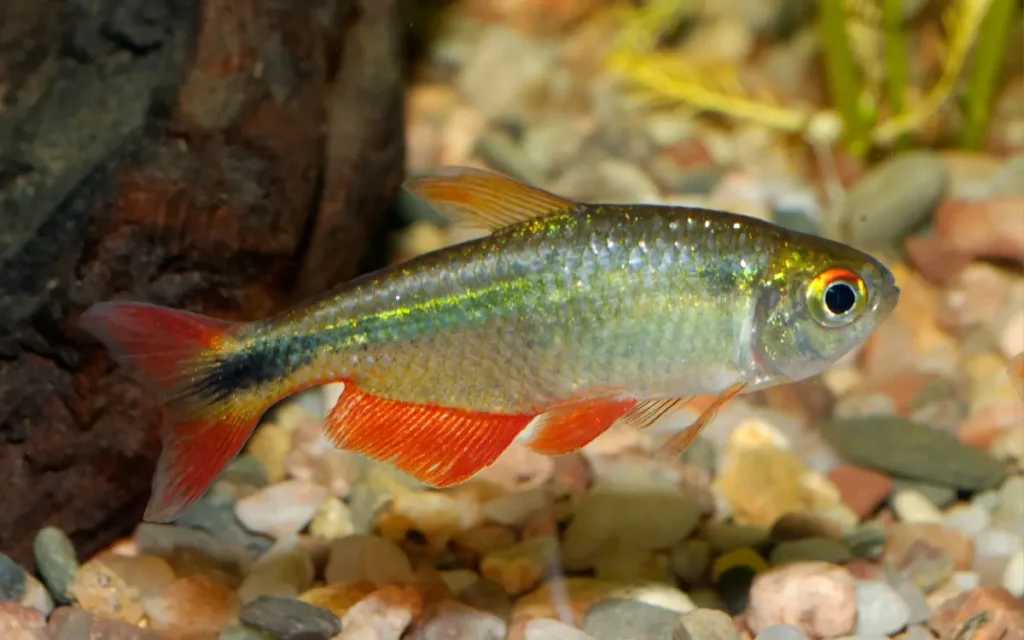
Buenos Aires Tetra Care Profile
| Care requirement | Recommended range |
| Scientific name | Psalidodon anisitsi |
| Older scientific name | Hyphessobrycon anisitsi |
| Adult aquarium size | Usually 2.5–3 inches |
| Wild maximum size | Up to about 5.2 inches |
| Lifespan | Around 5–7 years |
| Minimum tank size | 30 gallons for a small group |
| Better long-term tank | 40 gallons or larger |
| Group size | At least 8; preferably 10–12 |
| Temperature | 68–76°F (20–24°C) |
| pH | 6.0–8.0 |
| Water hardness | 5–25 dGH |
| Diet | Omnivore |
| Temperament | Active, social, sometimes nippy |
| Swimming area | Middle and upper levels |
| Breeding method | Egg scatterer |
| Care level | Easy to moderate |
The Name Has Changed
The accepted scientific name is now Psalidodon anisitsi. Aquarium shops and older fish books may still label it Hyphessobrycon anisitsi, so both names refer to the same fish.
It comes from the Paraná and Uruguay river systems in South America. Wild populations occur across areas of Argentina, Paraguay, Uruguay, and southern Brazil. These regions include ponds, streams, lakes, and river channels with seasonal changes in temperature and water flow.
This helps explain why the species handles moderate changes in aquarium conditions better than sensitive blackwater tetras. It is a subtropical fish rather than a fish that needs consistently hot tropical water.
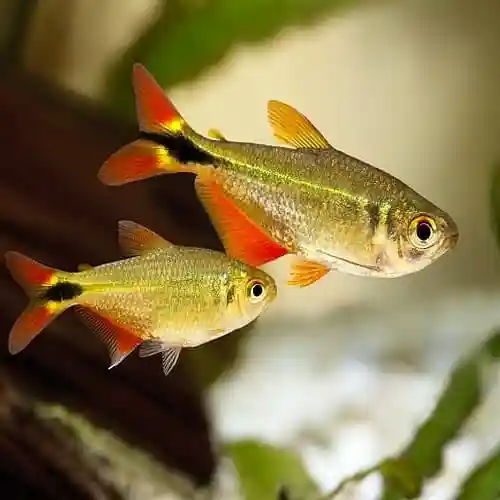
How Large Do Buenos Aires Tetras Get?
Most aquarium-raised Buenos Aires tetras grow to around 2.5–3 inches. That makes them much larger and heavier-bodied than neon, ember, or glowlight tetras.
Wild fish have been recorded at considerably larger sizes, with a published maximum of about 5.2 inches. Captive fish rarely reach that measurement, but aquarists should still plan for a deep-bodied, active three-inch fish rather than a small decorative tetra.
Their size is only part of the space requirement. A school of ten fish can cross the aquarium quickly, turn together, and chase during feeding. A short tank may hold enough water on paper but still lack usable swimming length.
A 40-Gallon Tank Is the Better Choice
A 30-gallon aquarium can house six to eight Buenos Aires tetras if it is long, lightly stocked, and maintained carefully. I would not choose it as the ideal permanent setup.
A 40-gallon breeder or another aquarium at least 36 inches long gives the school more room to move without constantly running into tank mates. A 48-inch tank is even better when other active fish will share the aquarium.
Prioritize floor length over height. Buenos Aires tetras spend most of their time in open middle water and gain little from a tall, narrow tank.
Keep the aquarium covered. These fish can jump when startled, chased, or excited during feeding. Check openings around filters, cables, and airline tubing because surprisingly small gaps may be enough for a fish to escape.
Keep More Than Six
Buenos Aires tetras need their own kind, but simply buying five or six does not always produce a calm group. In a small school, one dominant fish may repeatedly target weaker members or redirect its chasing toward other species.
A group of 8–12 usually spreads social pressure more evenly. The fish spend more time displaying, turning, and chasing within the school instead of inspecting the fins of slower tank mates.
A larger group does not remove every risk of fin nipping. It reduces the chance, especially when paired with enough swimming space, regular feeding, and carefully selected companions.
Buy the entire group at once when possible. Adding two or three newcomers to an established school can trigger renewed chasing while the fish reorganize their social order.
Water Temperature Should Not Stay Too Warm
Many care pages list a broad temperature range from 64–82°F. That range describes what the fish may tolerate, not the temperature that should be used every day.
For long-term care, aim for 68–76°F. Around 72–74°F works well in most community aquariums.
Constantly keeping them near 80–82°F speeds up their metabolism. They eat more, produce more waste, and may age faster. Warm water also holds less oxygen, which is a poor match for an active schooling fish.
Temperatures in the mid-60s can work in a stable indoor aquarium, but sudden cold drafts and fast temperature drops remain risky. If room temperature changes sharply between day and night, use a heater set low enough to prevent swings.
pH and Hardness
Buenos Aires tetras are less demanding about water chemistry than many South American tetras. A pH between 6.0 and 8.0 is normally acceptable, though stable water around neutral is easiest to manage.
Moderately soft to moderately hard water works well. They can live in harder water than cardinal or rummy-nose tetras, which makes them suitable for many tap-water aquariums.
Do not chase an exact pH using chemical adjusters. A stable pH of 7.6 is safer than repeatedly forcing it down to 7.0 and allowing it to rebound.
Test the source water before adding fish. If your tap water is extremely hard or outside the recommended pH range, mixing it with reverse-osmosis water may be safer than relying on bottled pH products.
Water Quality Still Matters
Hardy fish can survive mistakes longer, but they still suffer from ammonia, nitrite, and high nitrate. The aquarium must be fully cycled before the school is added.
Keep these readings as your target:
- Ammonia: 0 ppm
- Nitrite: 0 ppm
- Nitrate: preferably below 20–30 ppm
- Temperature: stable within the chosen range
Change 25–35% of the water every week. Heavily stocked tanks or aquariums with large tank mates may need larger changes.
Vacuum open areas of the substrate, but do not dismantle and scrub the entire aquarium at once. Rinse filter media gently in removed tank water so beneficial bacteria are not exposed to untreated tap water.
A filter rated slightly above the aquarium’s volume is useful because these tetras eat eagerly and produce more waste than tiny tetra species. Moderate flow is suitable, but leave calmer areas around wood or tall décor.
A Tank Layout That Fits Their Behavior
The best arrangement combines a clear swimming lane with sheltered edges. Place wood, rocks, or plant groups along the rear and sides while leaving the center open.
Dark sand or fine gravel makes the silver body and red fins easier to see. The substrate color does not affect basic care, so choose one that is easy to clean.
Floating plants can soften bright lighting, though the fish may pick at their roots. Secure any loose decorations because an excited school can disturb lightweight items.
Do not crowd the tank with branches from front to back. Buenos Aires tetras are quick fish that need space to turn as a group.
They Really Do Eat Aquarium Plants
Plant damage is one of the main reasons this species is less common in planted community tanks. Buenos Aires tetras may bite leaves, strip soft growth, pull at new shoots, and eat floating-plant roots.
Feeding vegetables can reduce hunger-driven grazing, but it does not guarantee that plants will remain untouched. Plant chewing is natural feeding behavior, not always a sign that the fish are starving.
Soft and delicate plants are the most likely to be damaged. Cabomba, hornwort, water sprite, small floating plants, and fresh stem growth may disappear quickly.
If you want to try live plants, choose tougher options such as:
- Java fern attached to wood or rock
- Anubias with thick mature leaves
- Mature Amazon swords
- Large Cryptocoryne species
- Established Vallisneria
Even these plants are not guaranteed to remain perfect. Artificial silk plants are a better choice if leaf damage would spoil the tank design.
Anyone building a carefully aquascaped planted aquarium should choose another species from our guide to the different types of tetras.
What Buenos Aires Tetras Eat
These fish are omnivores. Wild individuals eat worms, insects, crustaceans, and plant material, so feeding only flakes leaves part of their natural diet missing.
Use a good-quality small pellet or flake as the regular food. Add frozen or live foods several times each week, such as brine shrimp, daphnia, mosquito larvae, or bloodworms. Bloodworms are rich and are better used as an occasional food rather than the main meal.
Include plant-based foods. Spirulina flakes, soft shelled peas, blanched spinach, and thin pieces of blanched zucchini can be offered in small amounts. Remove uneaten vegetables before they soften and foul the water.
Feed adults once or twice daily. Give only what they finish within about two minutes. Their fast feeding response can make it look as if they are still hungry after receiving enough food.
Scatter food across the surface instead of dropping it into one spot. This gives timid fish a fair chance and reduces collisions within the school.
Tank Mates That Can Handle Their Energy
Buenos Aires tetras fit best with similarly sized, active fish that do not have long fins. Good companions include robust barbs, larger danios, rainbowfish, peaceful medium-sized tetras, and sturdy bottom dwellers.
A group of black skirt tetras can work in a roomy tank because they have a deeper body and are less fragile than very small tetras. Congo tetras are large enough, but adult males have extended fins, so close observation is still needed.
Serpae tetras share a reputation for fin nipping. Keeping both species together may produce a restless aquarium unless it is large and both schools are properly sized. Read the serpae tetra care guide before considering that mix.
Bottom fish such as medium-sized Corydoras, bristlenose plecos, and many loaches usually avoid direct competition because they occupy a different part of the aquarium.
Fish Best Kept Separately
Avoid slow fish, long-finned varieties, and very small species. Poor choices include bettas, fancy guppies, angelfish with extended fins, long-finned gouramis, and delicate dwarf cichlids.
Adult Buenos Aires tetras may intimidate or nip neon tetras. Neons are much smaller and prefer warmer, calmer conditions, so the two species are not a balanced match.
Very small shrimp may be eaten. Adult Amano shrimp have a better chance in a structured tank, but there is no guarantee that they will be ignored. Shrimplets should be treated as potential food.
Normal Chasing or Real Aggression?
Short chases within the school are normal. Males may display, follow females, or compete briefly before separating. The activity becomes a problem when one fish cannot return to the group or rest.
Warning signs include:
- Torn fins that keep worsening
- One fish hiding behind the filter
- A fish refusing food
- Repeated chasing by the same individual
- Pale color and clamped fins
- A tank mate staying near the surface or bottom to escape
Check the group size and swimming space before removing the dominant fish. The real cause is often an undersized school or a crowded aquarium.
If one fish remains relentlessly aggressive after the setup is corrected, temporary separation may be needed. Rearranging a few decorations before reintroducing it can break established territories.
Male and Female Differences
Sex differences become clearer once the fish mature.
Females are usually deeper-bodied and fuller through the belly, especially when carrying eggs. Males tend to stay slimmer and may develop stronger red coloration in the fins.
Body shape is more reliable than color alone. Stress, age, diet, and shop lighting can change how bright a fish appears.
Sexing juveniles is difficult. If breeding is the goal, start with a group and allow natural pairs to become clear as they mature.
Breeding Buenos Aires Tetras
Buenos Aires tetras are egg scatterers. They do not guard their eggs and will eat both eggs and fry, so breeding works best in a separate aquarium.
A 10–20 gallon breeding tank is enough for a pair or small spawning group. Use a mature sponge filter with gentle flow. Cover the bottom with spawning mesh, glass marbles, dense Java moss, or artificial spawning mops. The openings allow eggs to fall beyond the adults’ reach.
Use slightly acidic to neutral water around pH 6.5–7.2 and a temperature near 74–76°F. Dim lighting helps protect the eggs and keeps the adults calmer.
Condition the breeders for one to two weeks with daphnia, brine shrimp, mosquito larvae, and other rich foods. Choose a round female and an active, brightly colored male.
Spawning often begins after morning light reaches the tank. The pair or group moves through the spawning material while the female releases eggs and the males fertilize them.
Remove the adults as soon as spawning ends. A female may release hundreds of eggs, and a large mature female can produce far more, but many will not survive unless the adults are taken out promptly.
The eggs usually hatch within about 20–24 hours. The fry remain attached or rest while using their yolk sacs. They normally become free-swimming after another three or four days.
Start with infusoria, commercial liquid fry food, or another microscopic food. Move to microworms and newly hatched brine shrimp once the fry are large enough. Feed tiny amounts several times per day and keep the water clean with small, careful water changes.
Acclimating New Fish
Ask the store what temperature the fish are being kept at. This matters when moving them from warm shop tanks into a cooler home aquarium.
Float the closed bag for 15–20 minutes to equalize temperature. Then add small amounts of aquarium water to the bag over another 20–30 minutes.
Net the fish into the aquarium instead of pouring store water into the tank. Keep the lights low for the rest of the day and wait several hours before offering a small meal.
Do not add a single Buenos Aires tetra to an empty tank and plan to complete the school weeks later. A lone fish may become frightened, hide, jump, or harass new companions.
Quarantine new fish for two to four weeks when possible. This gives you time to notice parasites, bacterial infections, or abnormal waste before exposing the main aquarium.
Health Problems
Buenos Aires tetras are not linked to a unique species-specific disease. They can develop the same problems seen in other freshwater community fish.
Ich
White spots resembling grains of salt, rubbing against objects, and rapid breathing often point to ich. Confirm the diagnosis before treatment because several conditions can produce pale marks.
Treat the full aquarium if all fish have been exposed. Do not raise the temperature automatically to extreme levels; this species handles warmth, but its tank mates may not.
Fin Damage
Split fins may come from chasing, unsuitable tank mates, or sharp decorations. Clean water usually allows minor damage to heal. Red edges, swelling, white tissue, or continuing fin loss may mean infection has developed.
Correct the cause before reaching for medication. Medicine cannot stop another fish from continuing to bite the injured fins.
Internal Trouble
Weight loss despite eating, white stringy waste, a sunken belly, or long-term hiding may point to internal parasites or another digestive problem. Isolate the fish and diagnose it carefully rather than mixing several medications.
Poor Water Conditions
Ammonia and nitrite can cause gasping, red gills, clamped fins, and sudden lethargy. Test the water before assuming the fish have a contagious disease. An emergency water change and better aeration may be more useful than medication.
Common Care Mistakes
The most common mistake is treating Buenos Aires tetras like oversized neon tetras. They are stronger swimmers, more likely to nip, and much harder on plants.
Other problems include choosing a tall tank with little horizontal room, buying only three or four fish, keeping them above 80°F throughout the year, and pairing them with slow long-finned species.
Overfeeding is another common issue. These fish rush toward food and rarely appear satisfied. Extra food adds waste without making the school calmer.
The final mistake is expecting vegetable foods to stop all plant damage. A varied diet may help, but a Buenos Aires tetra can remain a dedicated leaf eater even when well fed.
Are Buenos Aires Tetras Good for Beginners?
They are suitable for beginners who have a cycled 40-gallon aquarium and are willing to plan the community around them. Their broad water tolerance, strong appetite, and visible behavior make daily care fairly simple.
They are a poor beginner choice for a small planted tank or a quiet community containing bettas, guppies, neons, or other delicate fish.
The fish themselves are hardy. Creating the right community is the part that requires judgment.
Frequently Asked Questions
How many Buenos Aires tetras should be kept together?
Keep at least eight. A group of 10–12 is better when tank space allows. Larger schools spread chasing across the group and produce more natural behavior.
Can Buenos Aires tetras live in a 20-gallon tank?
A standard 20-gallon tank is too small for a permanent group. The fish grow larger than many common tetras and need enough length for fast schooling. Use a 30-gallon-long tank as the bare minimum, with 40 gallons preferred.
Do they need a heater?
That depends on room temperature. They do well around 68–76°F. A heater is useful when the room becomes colder than this or when temperatures change sharply between day and night.
Will Buenos Aires tetras eat plants?
Yes. Many individuals bite soft leaves, fresh shoots, and floating-plant roots. Tough plants may survive, but no live plant is fully safe from them.
Are they aggressive?
They are not predatory community fish, but they can be boisterous and may nip fins. Small groups, cramped tanks, and slow tank mates make the problem worse.
Can they live with shrimp?
Small shrimp and shrimplets may be eaten. Large adult Amano shrimp have a better chance, especially with hiding places, but the combination is not risk-free.
How long do Buenos Aires tetras live?
With stable water, a suitable diet, and enough swimming room, they commonly live around five years. Some may reach six or seven years under good care.
