
Serpae Tetra Care Guide Tank Size, Diet, Lifespan & Tank Mates

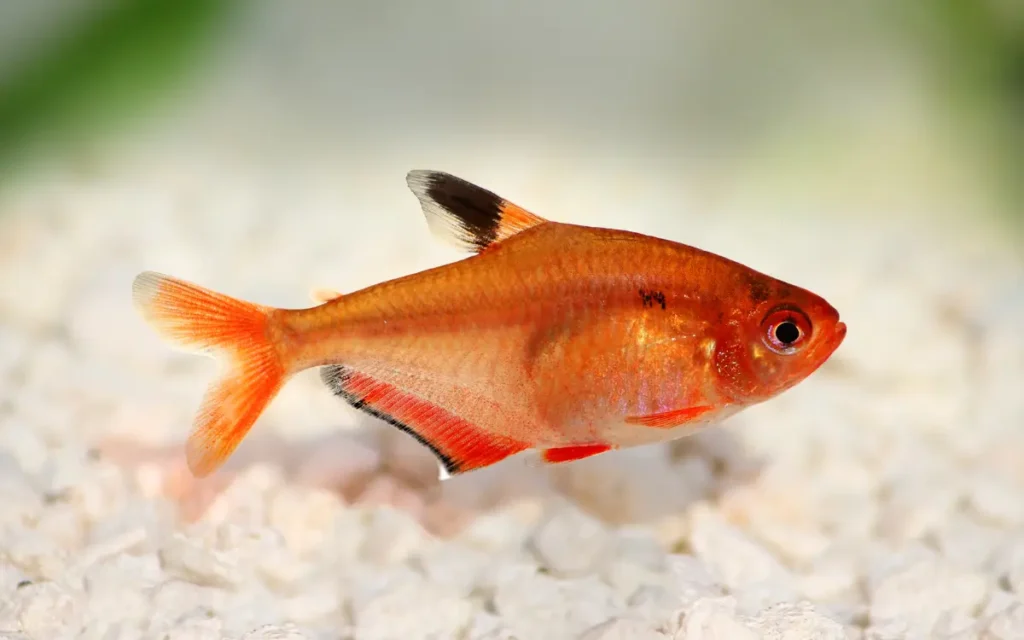
Serpae Tetra (Hyphessobrycon eques) is a bright red freshwater fish known for its bold color and active behavior. It stands out in community tanks, but unlike many other tetras, it has a slightly aggressive side.
This fish is often chosen for its striking appearance, but it requires the right setup and tank mates to avoid problems. When kept in proper groups and given enough space, Serpae Tetras can be active and interesting fish in a community aquarium.
Serpae Tetra Care Overview
| Category | Details |
| Scientific Name | Hyphessobrycon eques |
| Common Names | Serpae Tetra, Red Minor Tetra |
| Size | 1.5 – 2 inches |
| Lifespan | 3 – 5 years |
| Tank Size | 20 gallons (minimum) |
| Temperature | 72–79°F |
| pH | 5.0 – 7.5 |
| Temperament | Semi-aggressive |
| Care Level | Easy |
| Diet | Omnivore |
Appearance
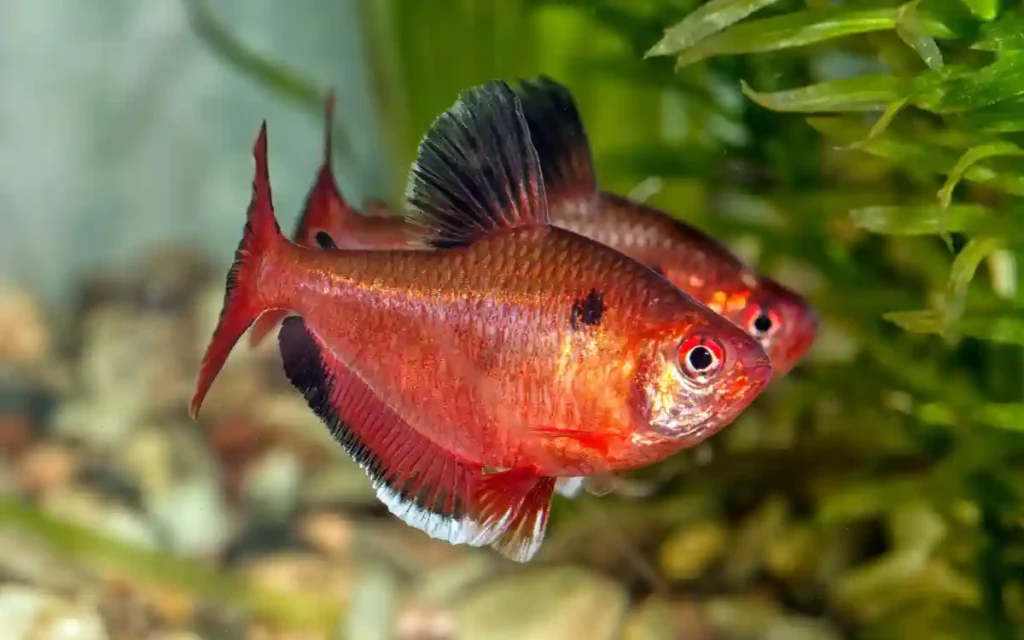
Serpae Tetras have a deep red body with a darker spot behind the gills. Their fins often have black edges, which adds contrast to their bright color.
Compared to other tetras, their appearance is more intense and bold. When kept in groups, their red coloration creates a strong visual impact in the tank.
Tank Size and Setup
Minimum Tank Size
A 20-gallon tank is the minimum for Serpae Tetras. However, a larger tank is recommended if you plan to keep a bigger group or mix them with other fish.
They are active swimmers and need enough space to reduce aggressive behavior.
Ideal Tank Setup
Serpae Tetras do best in a setup that balances open swimming space with some cover. Plants along the sides and back of the tank help reduce stress and give weaker fish a place to hide.
Moderate lighting works well, and a darker substrate can enhance their red color.
Water Parameters
- Temperature: 72–79°F
- pH: 5.0 – 7.5
- Soft to moderately hard water
They are adaptable but still benefit from stable water conditions.
Behavior
Serpae Tetras are more active and aggressive than most tetra species. They are known for fin nipping, especially when kept in small groups or crowded tanks.
They swim in the middle of the tank and often chase each other. This behavior is normal within their group but can become a problem with other fish.
How Many Serpae Tetras Should Be Kept Together?
Group size plays a big role in controlling their behavior. A minimum of 6 fish is required, but keeping 8–10 or more helps spread out aggression.
In smaller groups, they are more likely to target other fish.
Best Tank Mates
Serpae Tetras should only be kept with fish that can handle their active behavior. Fast-moving and similarly sized fish work best.
Good choices include other robust tetras, danios, and some barbs that are not overly aggressive. Corydoras can also work, as they stay near the bottom and avoid conflict.
Avoid slow-moving fish or species with long fins. Fish like bettas, angelfish, and guppies are often targeted for fin nipping.
Diet and Feeding
Serpae Tetras are omnivores and accept a wide variety of foods. A balanced diet helps reduce aggressive behavior and keeps them healthy.
They do well on flakes or pellets, along with occasional frozen or live foods like bloodworms and brine shrimp. Feeding them regularly can also reduce fin-nipping behavior.
Lifespan and Growth
Serpae Tetras usually live between 3 to 5 years with proper care. They grow up to around 2 inches in size and remain active throughout their life.
Breeding Serpae Tetras
Breeding is possible with the right setup. They are egg scatterers and require a separate breeding tank with soft, slightly acidic water.
Adding plants or spawning mops helps protect the eggs. After spawning, the adults should be removed to prevent them from eating the eggs.
The eggs hatch within a few days, and the fry need very fine food at first.
Common Problems
Fin Nipping
This is the biggest issue with Serpae Tetras. It usually happens when the group size is too small or the tank is overcrowded.
Increasing the group size and choosing the right tank mates helps reduce this behavior.
Stress
Stress can occur if they are kept in poor conditions or with unsuitable fish. Providing enough space and hiding areas helps reduce stress.
Diseases
They can develop common freshwater diseases like Ich or fin damage. Clean water and proper care help prevent these problems.
Pros and Cons
Serpae Tetras are colorful, active, and easy to feed, which makes them appealing for many aquarists. They also adapt well to different water conditions.
However, their semi-aggressive nature can be a problem, especially for beginners. They require careful planning when choosing tank mates.
Is Serpae Tetra Right for You?
Serpae Tetras are a good choice if you want an active and colorful fish and are prepared to manage their behavior. They work best in tanks with other active fish and enough space to reduce aggression.
If you prefer a calm and peaceful aquarium, other tetra species may be a better option.
FAQs
Are Serpae Tetras aggressive?
They are semi-aggressive and known for fin nipping, especially in small groups.
How many Serpae Tetras should be kept together?
At least 6, but 8–10 is better to reduce aggression.
Can Serpae Tetras live with bettas?
No, they are likely to nip the fins of bettas.
Do they need a heater?
Yes, they prefer stable temperatures between 72–79°F.
Why are my Serpae Tetras chasing other fish?
This is usually due to their natural behavior, small group size, or lack of space.
