
African Cichlids Care Guide: Tank Setup, Feeding, Water, and More

African cichlids need a roomy tank, clean alkaline water, strong filtration, suitable food, and carefully chosen tank mates. Most popular Lake Malawi cichlids do well at 76–82°F, with a pH around 7.6–8.6. I suggest starting with at least a 55-gallon tank, though a 75-gallon tank is much easier to manage.
These fish are colorful, active, and fun to watch. However, they can also be territorial. A small tank or a poor mix of species can lead to chasing, injuries, and constant stress.
I wouldn’t call African cichlids difficult, but I also wouldn’t buy them without a plan. Once you understand which type you own, their care becomes much easier.
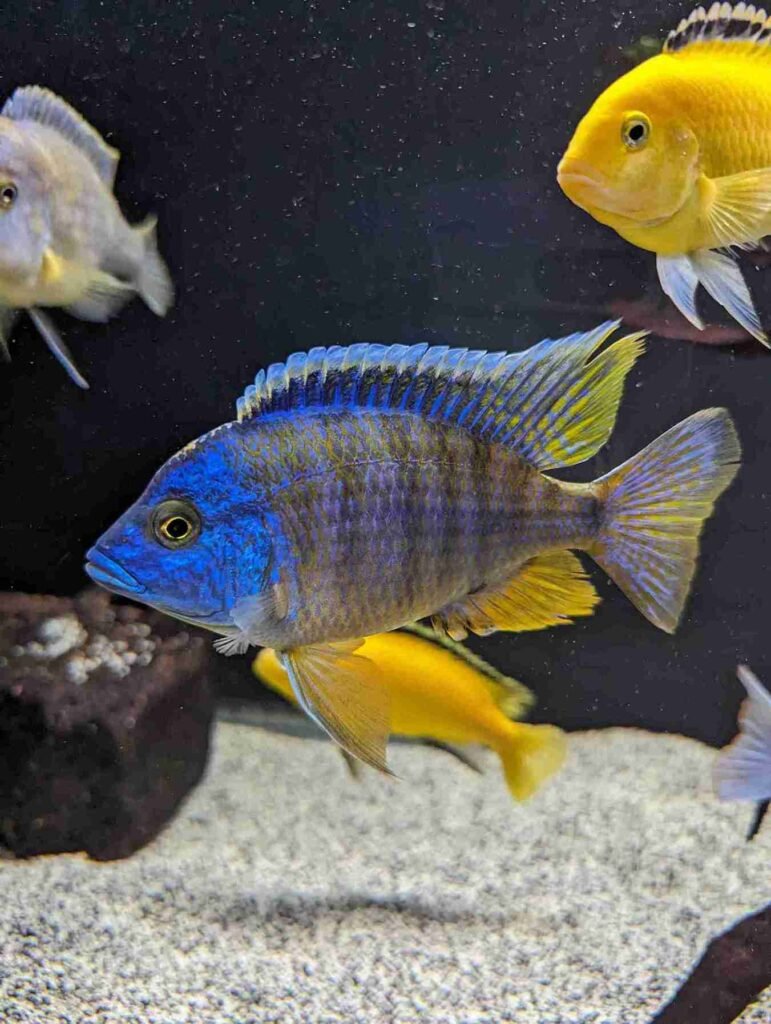
African Cichlid Care at a Glance
| Care need | General recommendation |
| Care level | Medium |
| Adult size | About 3–12 inches, depending on species |
| Lifespan | Commonly 6–10 years |
| Minimum tank size | 55 gallons for many Malawi groups |
| Better community size | 75 gallons or larger |
| Water temperature | 76–82°F |
| Malawi pH | Around 7.6–8.6 |
| Tanganyika pH | Around 8.0–9.0 |
| Temperament | Territorial to highly aggressive |
| Diet | Depends on the species |
| Tank area | Bottom and middle |
| Beginner-friendly? | Yes, with proper research and setup |
These numbers are a starting point. The name “African cichlid” covers hundreds of fish from lakes, rivers, and streams. Always check the needs of the exact species before bringing it home.
What Are African Cichlids?
African cichlids are freshwater fish found across Africa. In the aquarium hobby, the name usually refers to fish from three large lakes:
- Lake Malawi
- Lake Tanganyika
- Lake Victoria
Many fish sold as African cichlids come from Lake Malawi. This group includes mbuna, peacocks, and haps.
These groups don’t all eat the same food or act the same way. I never recommend choosing fish based only on color. Two beautiful cichlids may have very different diets, adult sizes, and levels of aggression.
Mbuna Cichlids
Mbuna live around rocky areas in Lake Malawi. They spend much of their time picking food from rock surfaces and guarding small territories.
Most mbuna are active and aggressive. Popular examples include electric yellow labs, red zebras, acei cichlids, and cobalt blue zebras.
Mbuna usually need plenty of rocks and hiding places. Their diet often contains more plant matter and fiber than the diets of peacocks and haps.
Peacock Cichlids
Peacock cichlids belong to the Aulonocara group. Males are known for their bright colors, while females are often gray or brown.
Peacocks are usually less aggressive than mbuna, but they still form a social order. A male may chase other males or bother females when he wants to breed.
I prefer keeping peacocks with other peacocks of a similar size and nature. Mixing them with very rough mbuna can leave them stressed or injured.
Hap Cichlids
“Hap” is a common name used for several open-water and predatory Lake Malawi cichlids. Many grow larger than mbuna and peacocks.
Some haps reach 8–12 inches, so a 75-gallon tank may still be too small for certain species. Check the expected adult size rather than the size of the young fish at the store.
Tanganyika Cichlids
Lake Tanganyika has its own mix of cichlids. Shell dwellers, Julidochromis, frontosa, and tropheus are a few examples.
Their care can be very different. A tiny shell dweller may live in a modest tank, while a group of adult frontosa needs a very large aquarium.
Tanganyika water is usually more alkaline than Malawi water. These fish should not be added to a general African cichlid tank without checking their needs first.
Choosing the Right Tank Size
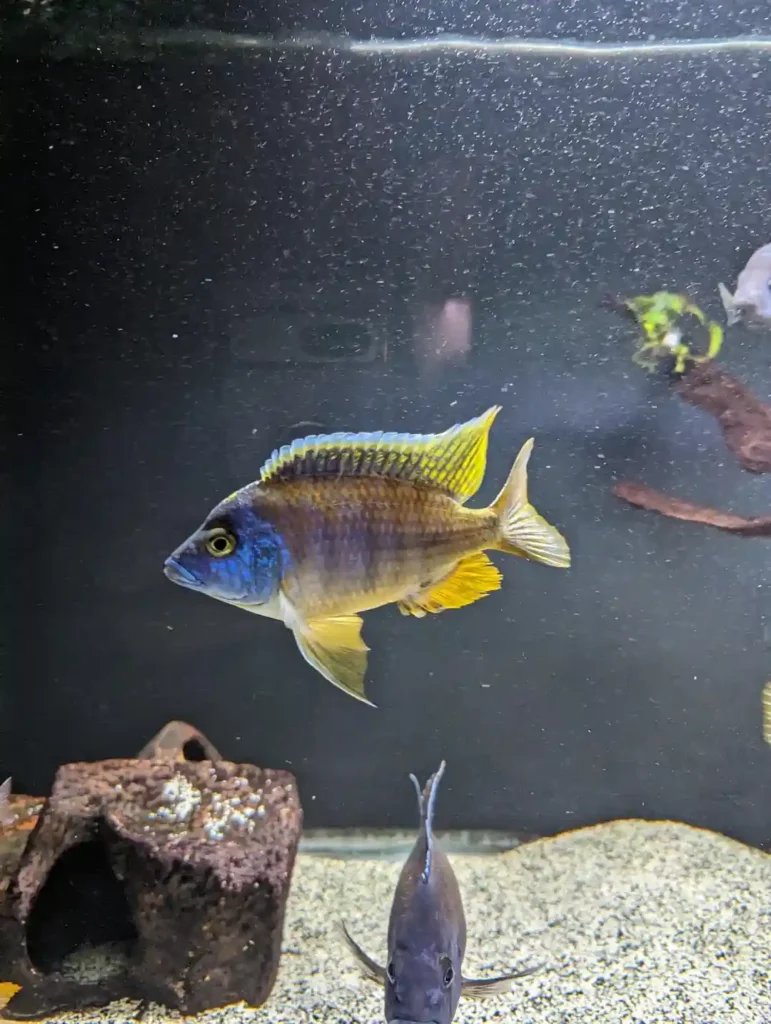
For a mixed group of common Lake Malawi cichlids, I recommend starting with a 55-gallon tank. A 75-gallon tank is a better choice because it provides more swimming room and more space for territories.
The tank’s length matters as much as its total water volume. A long tank gives chased fish more room to get away from an aggressive tank mate.
Here is a simple guide:
| Cichlid setup | Suggested starting size |
| Small shell dwellers | 20–30 gallons, depending on species |
| Small peaceful cichlid pair | 30–40 gallons |
| Mbuna community | 55 gallons or larger |
| Peacock community | 55–75 gallons or larger |
| Peacock and hap community | 75 gallons or larger |
| Large haps or frontosa | 125 gallons or larger |
These are general starting sizes. Stocking numbers depend on the species, adult size, filtration, sex ratio, and tank layout.
Don’t use extra fish as an excuse to place them in a cramped aquarium. Some experienced keepers use larger groups to spread aggression, but this only works with strong filtration, enough tank space, and careful planning.
How to Set Up an African Cichlid Tank
I like to plan the entire tank before adding any fish. Moving rocks and changing the layout becomes much harder once territorial fish have settled in.
Add Strong Filtration
African cichlids eat well and produce a lot of waste. A weak filter can leave the tank cloudy and allow harmful waste to build up.
Use a filter rated above the actual size of the aquarium. A canister filter, large hang-on-back filter, or a combination of filters can work.
The filter should provide:
- Mechanical filtration to catch waste
- Biological filtration for helpful bacteria
- Good surface movement for gas exchange
- Enough flow to prevent waste from settling everywhere
Don’t replace all filter media at once. That can remove much of the helpful bacteria that process fish waste.
Cycle the Tank Before Adding Fish
A new aquarium needs time to grow bacteria that process ammonia and nitrite. Adding a full group of cichlids to an uncycled tank can cause dangerous ammonia levels.
Before adding fish, test the water and confirm:
- Ammonia is 0 ppm
- Nitrite is 0 ppm
- Nitrate is present but controlled
- Temperature and pH are stable
High ammonia and low oxygen are among the water problems most likely to kill fish, according to the Merck Veterinary Manual.
Build Safe Rockwork
Rock piles give cichlids places to hide and break each other’s line of sight. They are especially useful in an mbuna tank.
Place heavy rocks directly on the bottom of the aquarium or on a protective support such as an egg-crate panel. Add the substrate around them afterward.
Cichlids like to dig. If heavy rocks sit on loose sand, a fish may remove the sand below and cause the pile to fall.
Make sure every rock is steady. I test the structure gently before filling the tank.
Choose the Substrate
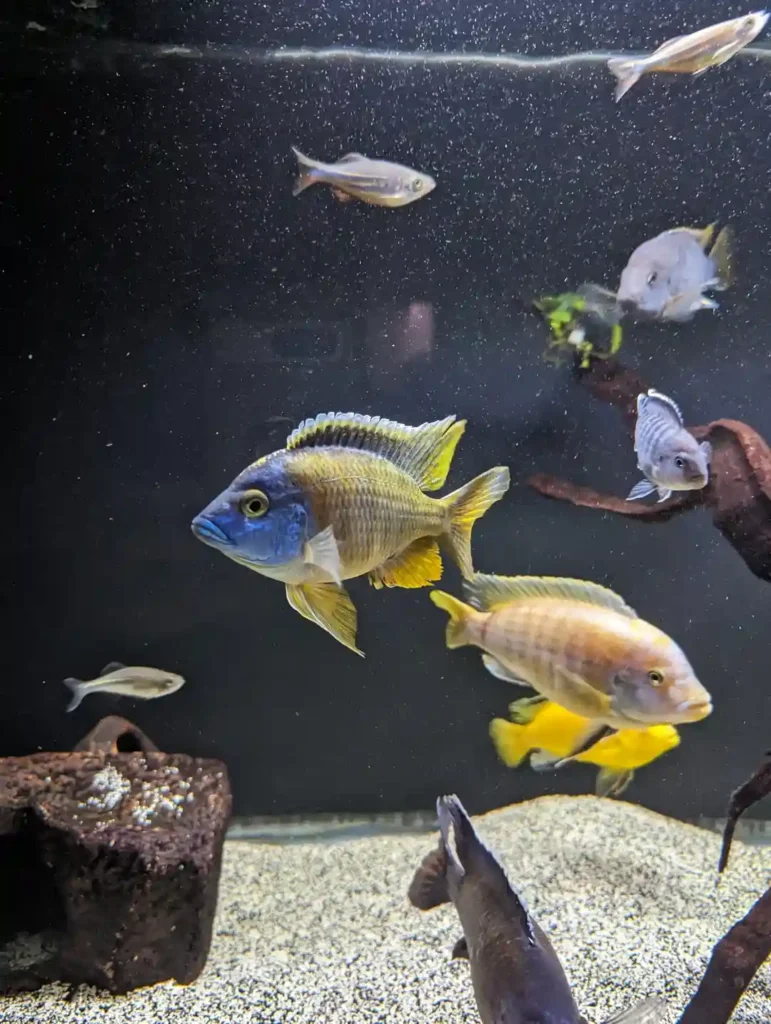
Sand is one of the best choices for African cichlids. It lets them dig and sift through the bottom without scraping their mouths.
Fine gravel may also work if it has smooth edges. Avoid sharp gravel or painted stones that can peel.
Aragonite or crushed coral can help raise hardness and support alkalinity. However, it may not fix every water problem. Test your tap water first so you know whether any change is needed.
Be Careful With Plants
Many African cichlids dig around roots or bite soft leaves. This can make a planted tank hard to maintain.
If you want to try plants, choose tougher types such as:
- Anubias
- Java fern
- Vallisneria
- Crinum
Attach Anubias and Java fern to rocks rather than burying their rhizomes. Even tough plants may be pulled loose, so I see them as an experiment rather than a sure thing.
Read also: African cichlid tank-mate guide.
African Cichlid Water Parameters
Stable water matters more than chasing one perfect number. A quick change in pH or temperature can be harder on the fish than a slightly imperfect but steady reading.
Lake Malawi Cichlids
Most Malawi cichlids can be kept within these general ranges:
- Temperature: 76–82°F
- pH: 7.6–8.6
- GH: About 3–15 dGH
- KH: About 6–12 dKH
- Ammonia: 0 ppm
- Nitrite: 0 ppm
- Nitrate: Preferably below 20 ppm
Published Lake Malawi measurements place its natural pH roughly between 7.8 and 8.5. Exact readings change with location and depth.
Lake Tanganyika Cichlids
Tanganyika species usually prefer:
- Temperature: 76–82°F
- pH: 8.0–9.0
- Hard, mineral-rich water
- Ammonia: 0 ppm
- Nitrite: 0 ppm
- Low nitrate
Check the exact species because fish from rocky shores, open water, and shell beds don’t all have identical needs.
Don’t Change the pH Too Quickly
I don’t add buffers simply because a care sheet lists a higher pH. First, I test the tap water’s pH, GH, and KH.
If your water is close to the required range and remains stable, the fish may adjust well. Constantly adding chemicals can cause the pH to rise and fall.
If your water is very soft or acidic, make changes slowly. Test every batch of new water before it enters the aquarium. Sudden changes can shock the fish.
Heating and Oxygen
Use a reliable heater that can hold a steady temperature. For a large tank, two smaller heaters can provide more even heat and offer some protection if one stops working.
Place a thermometer where you can check it every day. Don’t rely only on the number printed on the heater dial.
African cichlid tanks also need good oxygen levels. Aim the filter outlet toward the surface or add an air stone if surface movement is weak.
Fish gathering near the surface, breathing quickly, or staying close to the filter outlet may be dealing with low oxygen or poor water quality. Test the water right away.
What Do African Cichlids Eat?
The right food depends on the type of cichlid. This is one place where a mixed tank can become tricky.
Feeding Mbuna
Many mbuna scrape algae, tiny animals, and other food from rock surfaces. They often do best with a fiber-rich diet made for herbivorous or omnivorous African cichlids.
Good options include:
- Spirulina-based flakes
- Quality mbuna pellets
- Algae-based wafers
- Small amounts of suitable vegetables
Don’t give large servings of rich, meaty food to plant-leaning mbuna. Too much unsuitable food, dirty water, and stress are often linked with digestive trouble.
Feeding Peacocks and Haps
Peacocks and many haps eat more animal-based food than most mbuna. A quality African cichlid pellet can form the main diet.
Depending on the species, you may also offer small amounts of:
- Brine shrimp
- Mysis shrimp
- Krill-based food
- Insect-based food
Avoid feeder fish. They can carry disease, and most aquarium cichlids don’t need them.
How Often Should I Feed Them?
I feed adult African cichlids once or twice a day. Give only what they can finish within about one minute.
Cichlids often act hungry even after eating. Don’t let their begging fool you.
Overfeeding leads to waste, high nitrate, cloudy water, and weight problems. One light feeding is safer than a large amount left to rot between the rocks.
Choosing Tank Mates
The safest tank mates are usually African cichlids with similar size, water needs, diet, and aggression levels.
I wouldn’t mix fish just because they all carry the “African cichlid” name. A calm peacock may struggle with a very aggressive mbuna. A small cichlid may become food for a large predatory hap.
Before choosing companions, check:
- Adult size
- Temperament
- Diet
- Water requirements
- Swimming area
- Male-to-female ratio
- Similar color patterns
Males may attack fish that look like rivals. Two species with similar male colors can fight even when they are not closely related.
For specific compatibility options, read our guide to the best tank mates for African cichlids.
How to Control Aggression
Some chasing is normal. One fish may guard a cave or keep lower-ranking fish away from its area.
Constant attacks are not normal. A fish that hides all day, stops eating, breathes quickly, or develops torn fins needs help.
Here is what I do when aggression becomes serious:
- Check whether the tank is too small.
- Add more visual barriers and hiding places.
- Confirm that the fish have compatible temperaments.
- Check the male-to-female ratio.
- Rearrange the rocks to reset territories.
- Remove the main attacker or the injured fish if needed.
Keep a spare quarantine or hospital tank available. A divider can help for a short time, but it may not solve a poor stocking mix.
Don’t release an unwanted cichlid into a local river, pond, or lake. Contact a fish store, aquarium club, or another keeper instead.
Weekly Tank Maintenance
African cichlids may look tough, but dirty water will wear them down. I follow a simple weekly schedule.
Every Day
- Check that all fish are present.
- Watch their breathing and swimming.
- Look for torn fins, spots, swelling, or wounds.
- Confirm that the heater and filter are running.
- Remove uneaten food.
Every Week
Change around 25–40% of the water, depending on nitrate levels and stocking. Heavily stocked tanks may need larger or more frequent changes.
During the water change:
- Vacuum waste from open areas.
- Remove dirt trapped behind rocks.
- Clean algae from the front glass.
- Test ammonia, nitrite, nitrate, and pH.
- Add water conditioner to new tap water.
- Match the new water’s temperature closely.
The Merck Veterinary Manual also recommends checking water chemistry, filter flow, and debris as part of routine aquarium care.
Clean the Filter Carefully
Rinse reusable filter sponges or media in a bucket of removed tank water. Don’t wash biological media under untreated tap water because chlorine may harm the helpful bacteria.
Only clean part of the filter media at one time. Replace chemical media when needed, but keep enough mature biological media in the system.
Common African Cichlid Health Problems
Poor water, fighting, stress, and unsuitable food are behind many health problems.
Torn Fins and Injuries
Chasing can lead to split fins, missing scales, and wounds. Separate badly injured fish and check the stocking plan.
Clean water helps minor injuries heal. Deep wounds, swelling, cotton-like growth, or spreading redness may need help from a fish veterinarian.
Malawi Bloat
A fish with suspected bloat may stop eating, develop a swollen belly, hide, or pass pale stringy waste.
“Malawi bloat” is a broad hobby term rather than one simple disease with one cause. Stress, diet, parasites, and poor water may all be involved.
Move the fish to a hospital tank and check the water first. Don’t add random medicine to the display tank. A fish veterinarian can help identify the real cause.
Ich
Ich often appears as small white dots on the body and fins. Fish may scratch against rocks and breathe faster than normal.
Because several conditions can look similar, confirm the signs before treating. Some medicines can affect biological filtration, so monitor ammonia and nitrite during and after treatment.
Sunken Belly
A thin fish with a sunken belly may not be getting enough food, may be bullied away from meals, or may have an internal health problem.
Watch the fish during feeding. If it eats but continues losing weight, isolate it and seek a proper diagnosis.
Breeding African Cichlids
Many popular African cichlids are mouthbrooders. The female carries eggs and young fry inside her mouth for protection.
A holding female may stop eating and develop a fuller-looking throat area. She may hide more often because other fish can bother her.
You can leave her in the main tank, move her to a separate tank, or remove the fry later. Moving her too often can cause stress, so plan before taking action.
The fry need clean water and food small enough to eat. Crushed flakes, powdered fry food, or newly hatched brine shrimp may work, depending on the species.
Are African Cichlids Good for Beginners?
African cichlids can be good beginner fish when the tank is properly planned. They are active, usually eat prepared food, and can live for many years.
The difficult part is choosing compatible species. A random group from a mixed store tank can turn into a fighting problem as the fish grow.
For a first tank, I suggest choosing one group, such as smaller mbuna or all-male peacocks, and building the setup around that group. Buy from a seller who can provide the correct species name.
Frequently Asked Questions
How many African cichlids can I keep together?
There is no safe number based only on tank volume. The answer depends on species, adult size, aggression, sex ratio, and filtration.
Plan the group before buying any fish. Don’t add more fish simply because the tank looks empty while they are young.
Can African cichlids live with community fish?
Most common community fish are poor matches. They may need softer water, have longer fins, or be unable to handle cichlid aggression.
Some sturdy fish can work in carefully planned tanks, but no combination is guaranteed. Compatibility also changes as the cichlids mature.
Do African cichlids need salt?
They are freshwater fish and don’t need marine salt as part of normal care.
Mineral products may be used when source water lacks the hardness or alkalinity required by the species. Test the water before adding anything.
Can I keep different African cichlid species together?
Yes, but they should have similar water, diet, size, and temperament needs. Avoid mixing very peaceful fish with rough species.
Also watch for similar colors. Males may mistake a different species for a rival.
Why is my African cichlid hiding?
A new fish may hide while it settles in. Long-term hiding can point to bullying, poor water, illness, bright lighting, or a lack of safe cover.
Test the water and watch how the other fish act around it.
Why are my African cichlids fighting?
Territory, breeding, competition, a poor male-to-female ratio, or a cramped tank can trigger fights.
Rearranging the rocks may help, but severe or repeated attacks usually mean the stocking plan needs to change.
