
7 Best Plants for African Cichlid Tanks That Actually Survive

Yes, you can keep live plants with African cichlids, but I would not build the tank like a normal planted aquarium. Many African cichlids dig through the substrate, move sand around rocks, and may bite softer leaves. Your own African Cichlid Care Guide already warns that even tough plants can be pulled loose.
For the best chance of success, I start with Anubias, Java fern, Vallisneria, and Crinum. I attach the first two directly to rockwork so the fish cannot easily uproot them. Vallisneria and other rooted plants need more protection around their roots.
No plant is completely “cichlid-proof.” Mbuna are especially difficult because many spend a lot of time grazing around rocks and interacting with plant material. Peacock and Hap tanks can sometimes give you more planting options.
Best African Cichlid Plants at a Glance
| Plant | Best For | Planting Method | Digging Resistance | My Rating |
| Anubias Barteri | Mbuna, Peacock, Hap | Attach to rocks | Excellent | Best overall |
| Anubias Nana | Smaller rock gaps | Attach to rocks | Excellent | Excellent |
| Java Fern | Mbuna, Peacock, Hap | Attach to rocks | Excellent | Excellent |
| Vallisneria | Peacock, Hap, some Mbuna | Rooted and protected | Moderate | Very good |
| Crinum Calamistratum | Larger tanks | Rooted and protected | Good once established | Very good |
| Cryptocoryne Usteriana | Peacock/Hap tanks | Rooted and protected | Moderate | Conditional |
| Hornwort | Less destructive tanks | Float freely | Cannot be uprooted | Conditional |
If I had an aggressive Mbuna setup, I would focus mainly on the first four rather than trying to use every plant on this list.
Why Are African Cichlid Tanks Hard to Plant?
The problem usually is not lighting.
It is the fish.
Many African cichlids naturally interact with rocks and substrate. Mbuna, in particular, live around rocky areas and spend much of their time grazing and defending territories. African cichlids may also dig around roots or bite softer plant leaves.
This creates three problems.
They Dig Around the Roots
You can carefully plant Vallisneria today and find it floating tomorrow.
If the fish removes enough sand around the roots, even a healthy plant can come loose.
Some Fish Nibble Plants
Individual fish behave differently.
One group may ignore a plant completely.
Another group may repeatedly bite the same species.
That is why I never promise that one plant will survive every African cichlid tank.
The Water Is Usually Hard and Alkaline
Many popular Lake Malawi cichlids are kept in hard, alkaline water. Your existing African Cichlid Care Guide gives a general Malawi pH range of around 7.6 to 8.6.
Not every aquarium plant loves those conditions.
The best choices need to handle both the fish and the water.
1. Anubias Barteri
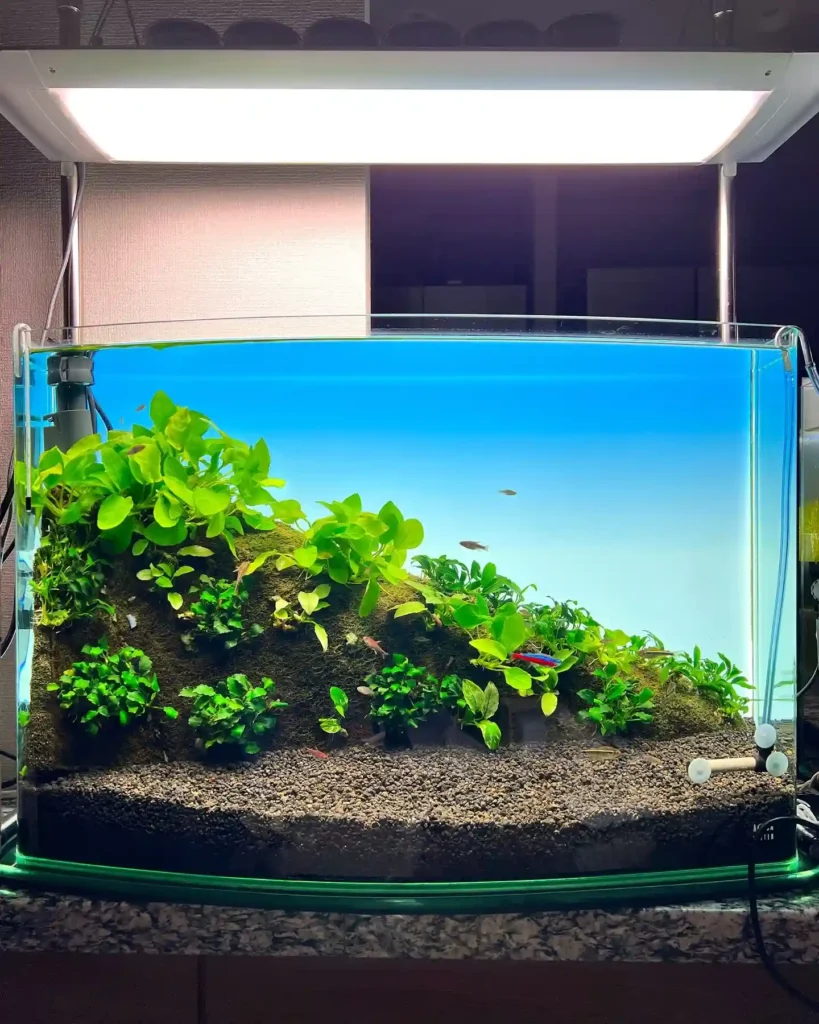
If I could choose only one live plant for an African cichlid aquarium, I would start with Anubias Barteri.
The leaves are thick and tough compared with many soft stem plants.
More importantly, Anubias does not need to be planted in the substrate.
I attach it directly to a large rock.
That removes the biggest problem immediately: the fish cannot dig the roots out of the sand if the entire plant is fixed to rockwork.
Current African-cichlid planting advice also consistently places Anubias among the safest choices for rock-focused tanks.
How I Would Plant It
Choose a heavy rock already included in the cichlid layout.
Attach the Anubias with a small amount of aquarium-safe gel glue or suitable thread.
Keep the thick horizontal rhizome exposed.
Do not bury the rhizome under sand.
Why It Works So Well
Anubias also grows slowly.
That means less trimming and less tender new growth appearing every few days.
I would place several Anubias plants around different rock groups instead of putting all of them in one spot.
This makes the greenery look like part of the rockscape.
2. Anubias Nana
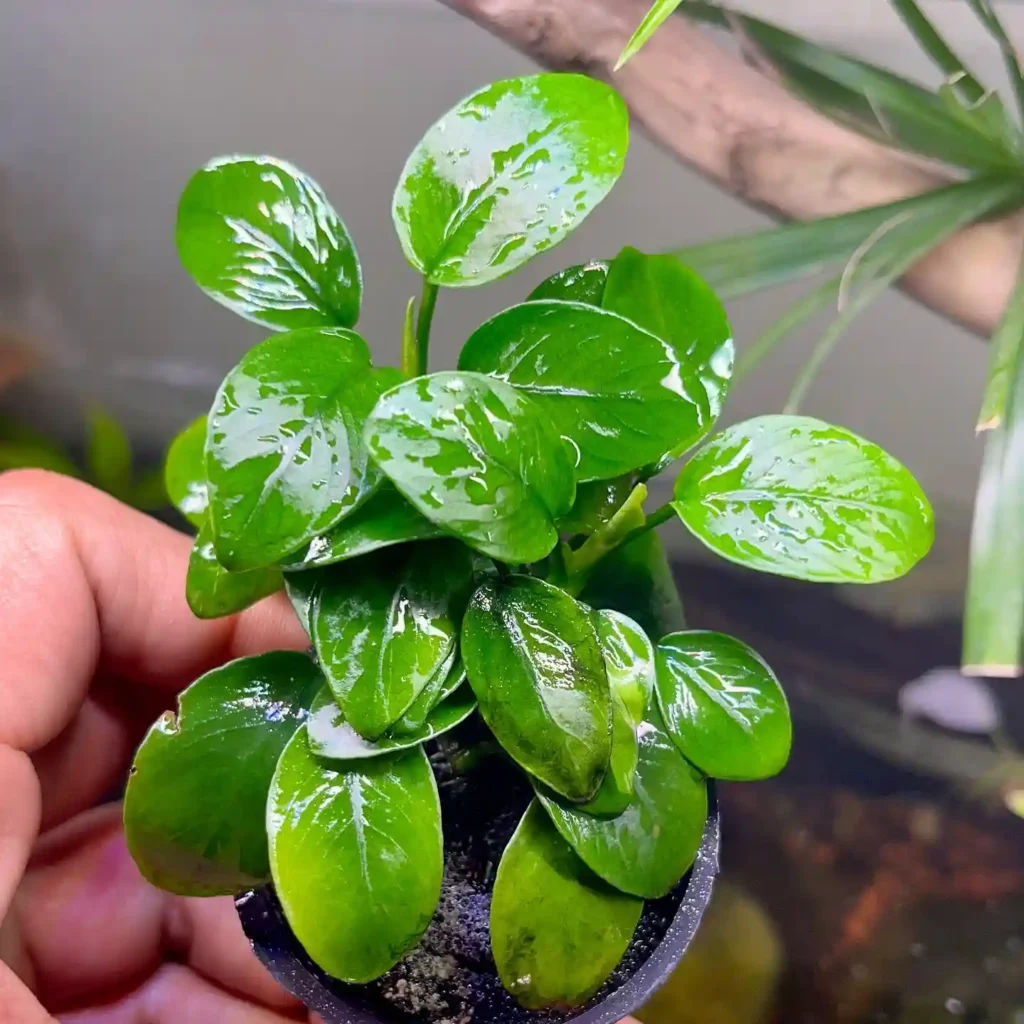
Anubias Nana gives you the same basic advantages as Barteri but in a smaller form.
I like it for:
Smaller rock gaps.
Caves.
Lower sections of rock piles.
Areas where a large Anubias would cover too much hardscape.
Again, the real advantage is attachment.
The plant does not depend on loose substrate to stay in place.
Nana vs Barteri
If I have a large African cichlid aquarium with big rockwork, I prefer Barteri for its stronger visual presence.
If I need greenery around smaller rocks, Nana fits better.
You can use both in the same aquarium without making the planting complicated.
My Tip
Do not attach tiny, weak specimens and expect aggressive fish to ignore them.
I would start with healthy, established plants.
Larger established plants are generally easier to secure than tiny new divisions.
3. Java Fern
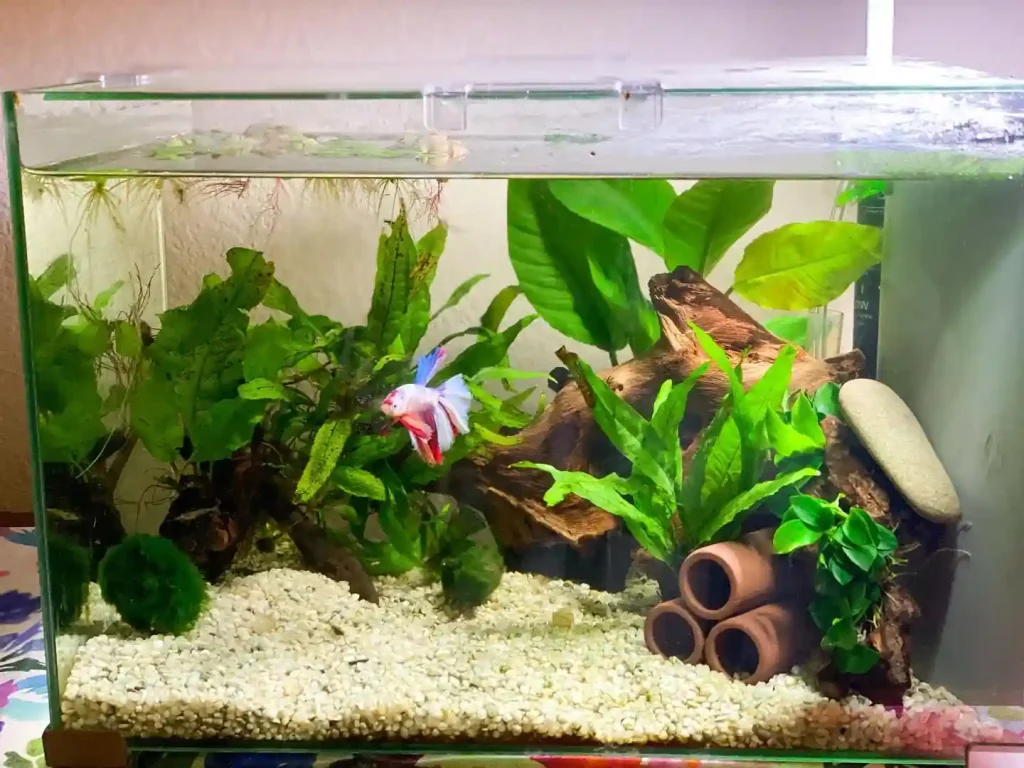
Java fern is my other main choice for a rock-heavy African cichlid tank.
Like Anubias, Java fern grows from a rhizome and does not need to be rooted in the substrate.
That means you can attach it directly to rocks.
Your existing Java Fern Care Guide already notes that Java fern can grow without substrate, tolerates low to moderate lighting, does not require injected CO2, and should have its rhizome exposed.
How I Use Java Fern With Cichlids
I attach it slightly higher or farther back than Anubias.
Its longer leaves give me more height.
This works well when I want plants visible behind a rock formation without adding a rooted background plant.
Keep It Attached to Heavy Hardscape
Do not attach Java fern to one tiny pebble.
A determined fish may still move the whole thing.
Use a rock heavy enough that the fish cannot casually push it across the aquarium.
This is especially useful in Mbuna setups where the rockwork already forms the main layout.
4. Vallisneria
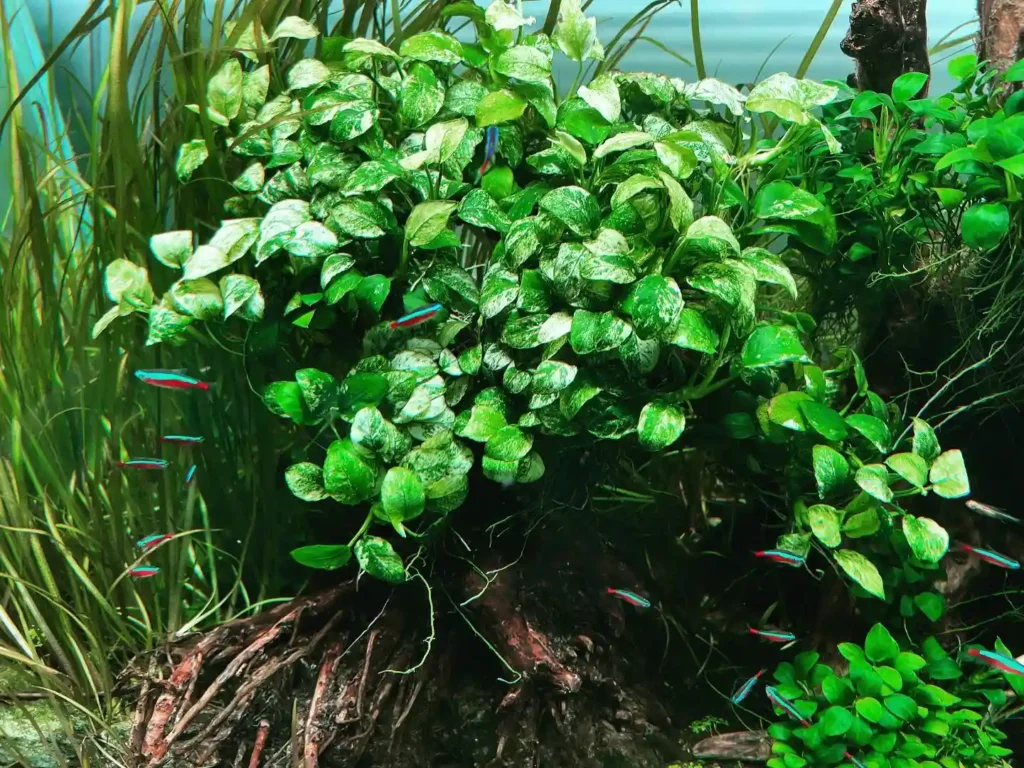
Vallisneria is one of the best rooted plants I would try with African cichlids.
Its long ribbon-like leaves create a grassy background, and once established it can spread by runners.
Vallisneria is also one of the plants repeatedly recommended for African cichlid tanks, although rooted plants remain more vulnerable to digging than rock-attached epiphytes.
The Problem Is Getting It Established
A healthy established Vallisneria bed can be much harder for fish to disturb than a few newly planted stems.
The difficult stage is the beginning.
Fresh plants have not produced large root systems yet.
That is when digging cichlids can repeatedly pull them loose.
How I Protect Vallisneria
I would plant a reasonably sized group rather than one plant.
Then I would place larger smooth stones around the outer root area.
Do not completely bury the plant crown.
The stones are there to make digging around the roots harder.
Best Cichlids for Vallisneria
I would feel more confident trying Vallisneria in many Peacock or Hap setups than in a tank full of determined plant-eating Mbuna.
That does not mean Mbuna and Vallisneria can never work.
It means I would expect more trial and error.
5. Crinum Calamistratum
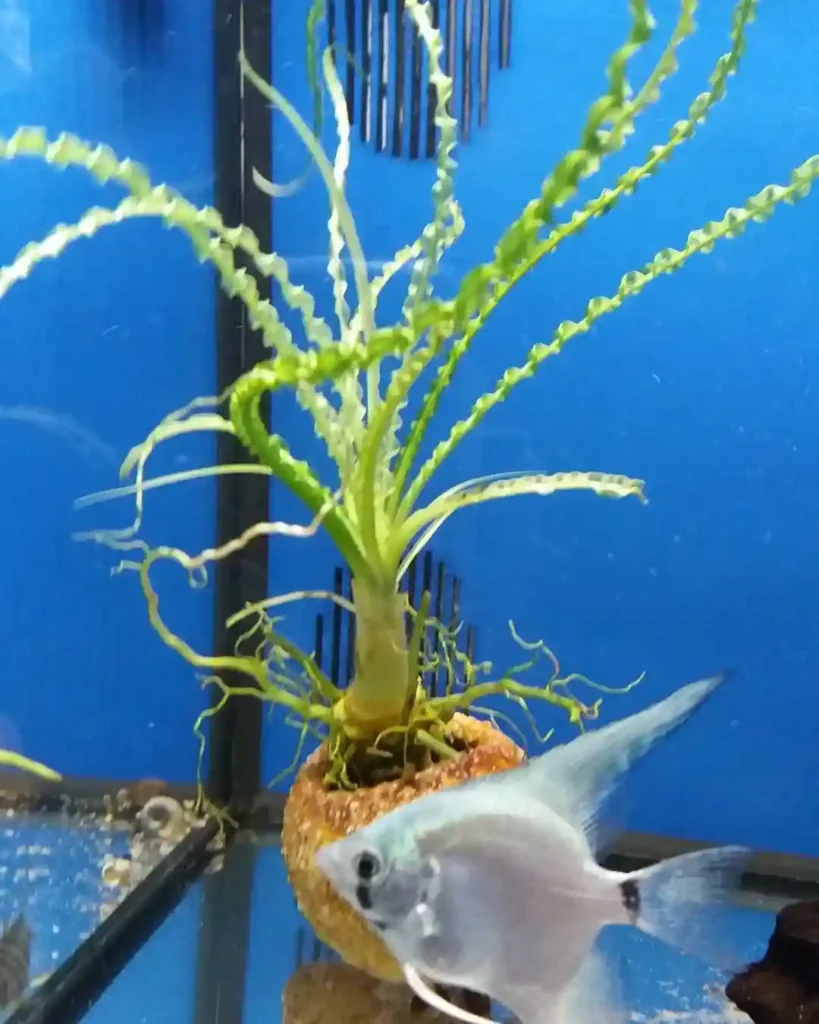
Crinum Calamistratum gives you a very different look.
It develops long, narrow, wavy leaves and can become a striking feature plant.
Your current African Cichlid Care Guide already includes Crinum among the tougher plants worth trying.
Why I Would Try Crinum
It is not a soft delicate stem plant.
Once established, its substantial root and bulb structure can make it more practical than many fragile rooted plants.
But I still protect it from digging.
Give It Space
I would use Crinum in a larger tank rather than squeezing it between every rock.
Place one plant toward the rear or side where the leaves can move through the open water.
It can become a focal plant rather than part of a dense planted background.
Protect the Base
Place rocks around the planting zone without crushing the bulb or growing point.
The goal is to stop fish repeatedly excavating directly beside the plant.
6. Cryptocoryne Usteriana
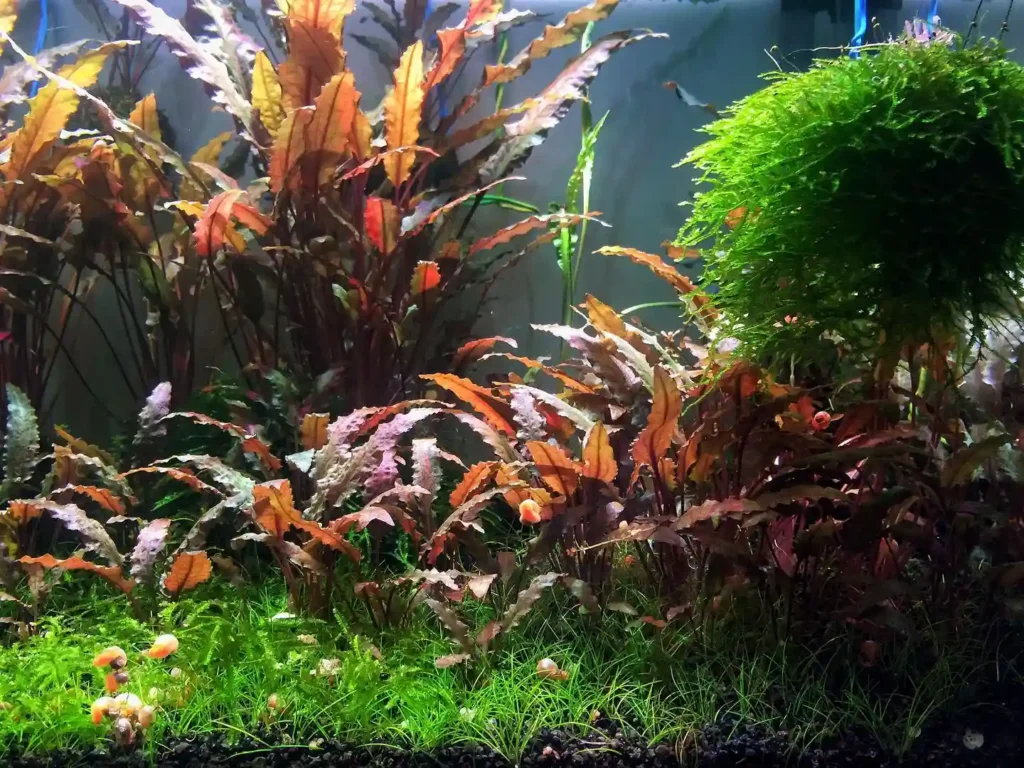
Cryptocoryne is not my first recommendation for a rough Mbuna tank.
But some larger, sturdy Crypts can be worth trying in a less destructive African cichlid setup.
Cryptocoryne Usteriana is one option often discussed for harder-water aquariums.
Where I Would Use It
I would be more likely to try this plant in a Peacock or Hap tank where the fish are not constantly tearing through every planted section.
Put it near the base of a protected rock group.
Use surrounding stones to reduce digging access.
Why It Is a Conditional Choice
Crypts need to stay rooted.
That immediately makes them more vulnerable than Anubias or Java fern.
If your fish regularly dig large pits through the entire aquarium, I would skip Cryptocoryne.
Use attached plants instead.
7. Hornwort
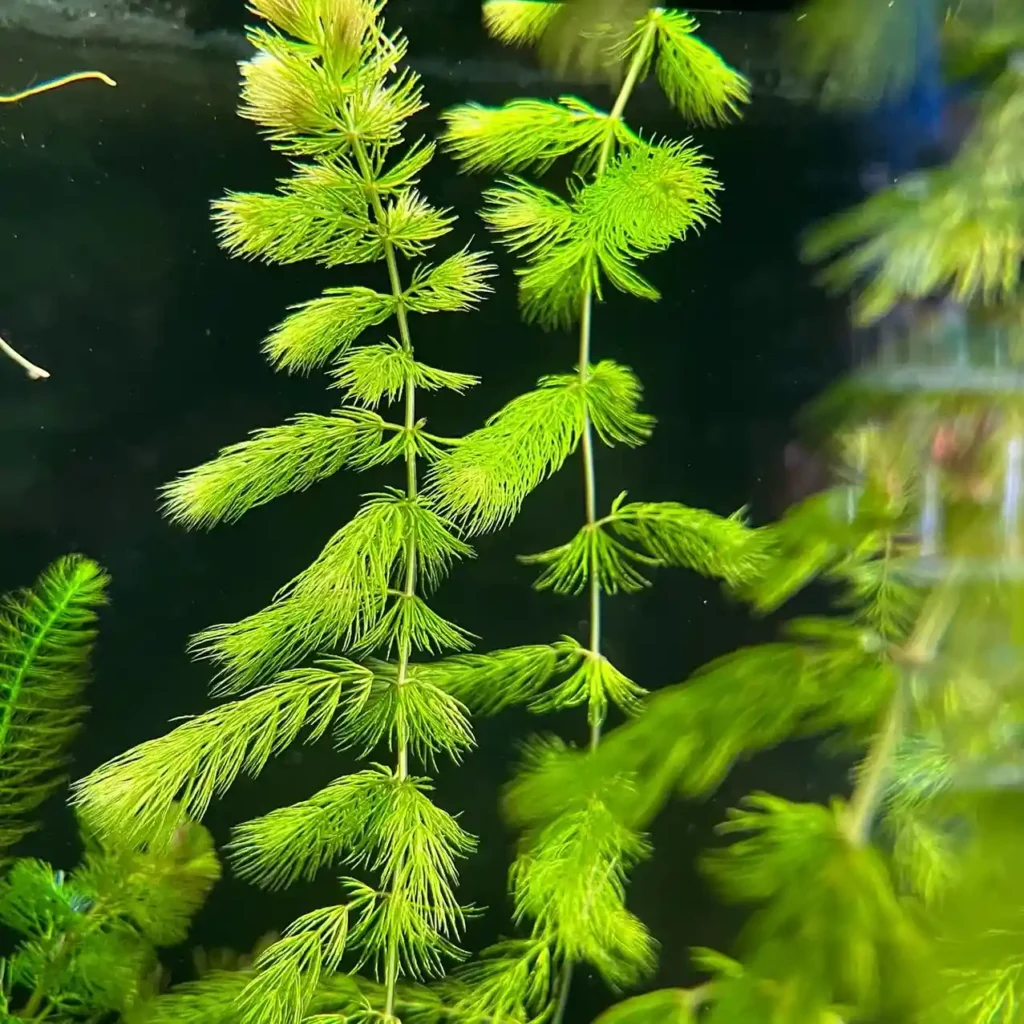
Hornwort is my unusual option because it does not need to stay rooted.
You can grow it floating.
Your existing Hornwort Care Guide describes Hornwort as a rootless plant that can grow freely in the water without substrate.
That means digging cichlids cannot uproot it.
They may still nibble or damage it, though.
When I Would Try Hornwort
I would try it in a tank where the fish have shown less interest in plants.
I might keep a controlled group floating near one side.
If the fish start tearing it apart, I would remove it rather than constantly cleaning loose needles from the filter.
Why It Is Not My First Mbuna Plant
The foliage is much softer than Anubias.
If your fish already destroy soft plants, Hornwort probably will not solve the problem.
Think of it as an experiment for less destructive setups.
Best Plants for Mbuna Cichlids
If you keep Mbuna, I would make the article much simpler.
Start with:
Anubias Barteri
Anubias Nana
Java Fern
Then try Vallisneria only if you are prepared to protect the roots.
Mbuna are rock-dwelling fish, so attached plants fit the aquarium naturally anyway. Your existing care guide notes that Mbuna use rocky areas and that rockwork is an important part of their setup.
Instead of trying to fight their digging behavior, build the plants into the rocks.
Best Plants for Peacock Cichlids
Peacock cichlids can give you a little more freedom.
I would consider:
- Anubias.
- Java fern.
- Vallisneria.
- Crinum.
- Protected Cryptocoryne.
You still need to watch the individual fish.
A Peacock tank is not automatically a peaceful planted community aquarium.
But I would be more willing to experiment with rooted plants here than in an aggressive Mbuna setup.
Best Plants for Hap Cichlids
Haps vary greatly in size and behavior.
Some become large fish.
That means I would avoid delicate aquascaping even when they are not especially interested in eating plants.
Use plants that can survive the physical activity of larger fish.
My starting choices would be:
Anubias on heavy rocks.
Java fern.
Large established Vallisneria.
Crinum.
Always check the exact Hap species because “Hap” covers fish with very different adult sizes and behaviors. Your African Cichlid Care Guide notes that some Haps can reach around 8 to 12 inches.
How to Stop African Cichlids From Uprooting Plants
Plant choice is only half of this article.
The way you install the plants matters just as much.
Attach Plants to Rocks Whenever Possible
This is my first choice.
If the plant can grow on hardscape, do not put it into the sand.
Use:
Anubias.
Java fern.
Attach them directly to the large rocks that form the cichlid territories.
Now the fish can dig around the bottom without immediately releasing the plant.
Use Heavy Rocks
The rock itself needs to stay in place.
A small planted pebble can simply become another thing for the fish to move.
Your How to Set Up a Cichlid Tank guide already recommends stable rockwork because digging cichlids can remove substrate from underneath loose stones.
The same idea applies to planted rocks.
Protect Rooted Plants With Stones
For Vallisneria, Crinum, or Cryptocoryne, I place several stones around the root zone.
You are trying to make it difficult for the fish to dig directly at the base.
Do not bury the whole plant under rocks.
Leave the crown and growing area open.
Start With Established Plants
A tiny Vallisneria plant with almost no roots is easy to disturb.
A larger established specimen has a better chance.
The same applies to attached plants.
A healthy Anubias with several leaves is a much better starting point than a tiny rhizome division.
Add Plants Before the Cichlids When Possible
If I am building a brand-new tank, I would rather let the plants settle before adding the fish.
This gives rooted plants some time to establish.
It also lets you see whether the plants are adapting to the water before cichlid behavior becomes another variable.
The tank still needs to be properly cycled before livestock is added.
Should You Use Pots for African Cichlid Plants?
Pots can work.
They are especially useful if you want rooted plants but your fish constantly rearrange the substrate.
Use an aquarium-safe container.
Fill it with suitable substrate.
Plant the rooted species.
Then surround or disguise the container with heavy rockwork.
The cichlids may still investigate it, but the roots have more protection than they would in loose open sand.
What Substrate Works With Planted Cichlid Tanks?
I would still choose substrate for the fish first.
Your existing cichlid setup guide recommends smooth sand for many digging or sifting cichlids and notes that some African cichlid keepers use materials such as aragonite or crushed coral depending on their water chemistry.
I would not change the whole substrate simply to grow plants.
Use attached plants if your cichlid substrate is not ideal for rooted species.
For rooted plants, add nutrients locally instead.
Do African Cichlid Plants Need Root Tabs?
Rooted plants may.
Vallisneria, Cryptocoryne, and Crinum can benefit from nutrients around their roots when the substrate provides little plant nutrition.
Anubias and Java fern are different.
They are attached above the substrate and take much of their nutrition from the water.
Putting a root tab underneath a rock-mounted Java fern does not solve much.
Use the fertilizer type based on how the plant feeds.
Do You Need CO2?
No, not for the plants I would choose first.
Anubias and Java fern are both practical low-tech plants.
Your Java Fern guide already notes that it can grow without injected CO2.
I would not build my first African cichlid planted tank around a demanding CO2-dependent carpet.
The fish already make planting challenging.
Keep the plant side simple.
How Much Light Should You Use?
Most of my main choices do not need extreme lighting.
That is useful because African cichlid aquariums often focus more on rockwork and fish display than dense plant growth.
A moderate, consistent aquarium light is enough for many Anubias and Java fern setups.
Do not increase the light just because the plant grows slowly.
Anubias is naturally slow-growing.
Too much light can simply make algae more noticeable on its old leaves.
Plants I Would Avoid With African Cichlids
I would skip most delicate carpeting plants.
Plants such as Monte Carlo or Dwarf Hairgrass depend on staying rooted in the substrate.
That is the exact area digging cichlids constantly disturb.
I would also be cautious with very soft stem plants.
A fish only needs to pull out or bite a few stems before the neat planted group becomes floating debris.
I Would Usually Avoid:
Monte Carlo.
Dwarf Baby Tears.
Delicate carpeting plants.
Fine soft stem plants.
Freshly planted tiny root feeders.
Large collections of moss in rough Mbuna tanks.
This is not because these plants can never survive beside any African cichlid.
It is because there are much easier options.
What About Java Moss?
Java Moss sometimes appears on cichlid plant lists.
I would not rank it among my strongest choices.
It can be attached to rocks, which helps with uprooting, but the soft growth may still be pulled apart or nibbled.
Community reports are mixed, including examples of Mbuna tearing at moss while leaving Java fern and Anubias alone.
For a first attempt, I would spend my money on Anubias instead.
Can Floating Plants Work?
Sometimes.
Floating plants cannot be dug out of the substrate.
That sounds perfect.
But fish may still nibble the roots or leaves, and strong surface movement in a heavily filtered cichlid tank can make floating plants harder to manage.
If you want to experiment, start with a small amount rather than covering the whole aquarium surface.
Keep plenty of open water.
My Simple Planted African Cichlid Layout
If I were building a 75-gallon Malawi-style tank with live plants, I would still make rockwork the main feature.
I would create several stable rock groups with open swimming space between them.
Then I would attach:
Anubias Barteri to the larger rocks.
Anubias Nana in smaller gaps.
Java fern toward the rear of selected formations.
If the fish were not extreme diggers, I would try a protected Vallisneria group along the back.
That is enough.
I would not add a carpet.
I would not fill every gap with plants.
And I would not hide the rocks that the cichlids actually need.
Common Mistakes With African Cichlid Plants
Planting Everything in the Sand
Use the rocks.
Attached plants are much harder to uproot.
Choosing Plants Before Choosing the Cichlids
Mbuna, Peacock, Hap, and Tanganyikan tanks are not identical.
Choose plants after you know what fish you are keeping.
Starting With Delicate Plants
Use tough plants first.
You can experiment later.
Using Tiny Rocks to Hold Plants
The fish may move the entire rock.
Use stable hardscape.
Burying Anubias or Java Fern Rhizomes
Attach them instead.
Expecting Every Fish to Behave the Same
One aquarium may keep Vallisneria for years.
Another may have fish that pull it out repeatedly.
Sacrificing Fish Space for Plants
Plants should not take away the rocks, caves, territories, or swimming room the cichlids need.
My Best Choice for African Cichlids
If you want the shortest possible answer, buy Anubias first.
Attach it to a large rock.
If that works, add Java fern.
If the fish leave those plants alone and you want a planted background, then experiment with Vallisneria.
That order costs less and tells you how your particular cichlids behave before you buy a full tank of plants.
A planted African cichlid aquarium can work.
I just would not build it like a normal aquascape.
Let the rocks stay dominant, use plants that do not depend on the substrate whenever possible, and accept that individual fish may still decide your expensive new plant looks interesting enough to investigate.
FAQs
Can you put live plants with African cichlids?
Yes. Anubias, Java fern, Vallisneria, and Crinum are among the tougher options worth trying. Plant success still depends on the cichlid species and individual fish.
What is the best plant for African cichlids?
Anubias is my first choice because it has tough leaves and can be attached directly to heavy rocks, keeping it away from the cichlids’ digging.
What plants are best for Mbuna?
I would start with Anubias and Java fern attached securely to rockwork. Vallisneria can also be tried, but its roots need protection.
Will African cichlids eat Anubias?
Many keepers choose Anubias because its thick leaves are less attractive than softer plants, but no live plant can be guaranteed safe from every individual cichlid.
Can Java fern grow with African cichlids?
Yes. Java fern is one of the better options because it can be attached to rocks instead of planted in loose substrate.
Can Vallisneria grow in an African cichlid tank?
Yes, but getting it established can be difficult when cichlids dig around its roots. Plant a larger group and protect the root area with stones.
Can African cichlids live in a fully planted tank?
Some can, but heavily planted setups are easier with less destructive species. For Mbuna, I prefer a rock-dominated aquarium with hardy attached plants rather than a traditional planted aquascape.
How do I stop cichlids from digging up plants?
Use plants that attach to rockwork whenever possible. For rooted plants, surround the root zone with stable stones and start with larger established specimens.
Do African cichlid plants need CO2?
The easiest choices, such as Anubias and Java fern, do not require injected CO2.
Are fake plants better for African cichlids?
Artificial plants can be easier if your fish destroy every live plant, but choose aquarium-safe decorations without sharp edges. Live plants are optional, so there is no reason to keep replacing them if your particular fish will not tolerate them.
Can I keep a planted African cichlid tank with sand?
Yes. Keep the sand primarily for the fish and attach most plants to rocks. Rooted plants can be added in protected areas if your cichlids do not constantly dig them out.
