Amano shrimp tank mates should be small, peaceful, and not aggressive toward shrimp. Good companions include Otocinclus, Neon Tetras, and Corydoras—species that won’t compete for food or disturb the shrimp. This guide explains why these fish work well with Amanos and how to build a safe, low-stress tank for them.
Can Amano Shrimp Live with Other Fish?
Yes, Amano shrimp can live peacefully with many small, non-aggressive fish. In fact, they do quite well in a community tank when paired with species that don’t view them as food or compete aggressively for space.
Amano shrimp are peaceful scavengers. They spend most of their time grazing on algae and biofilm, rarely bothering tank mates. However, they can become stressed or even injured if kept with larger or territorial fish.
Key traits of good tank mates for Amano shrimp:
- Small mouth size (can’t swallow shrimp)
- Peaceful temperament
- Swim in the middle or upper levels
- Aren’t aggressive during feeding
Amano shrimp are often kept with fish like Otocinclus, tetras, and Corydoras because these fish respect their space and occupy different tank zones. Just make sure to provide plenty of hiding places and keep water parameters stable to reduce stress for all inhabitants.
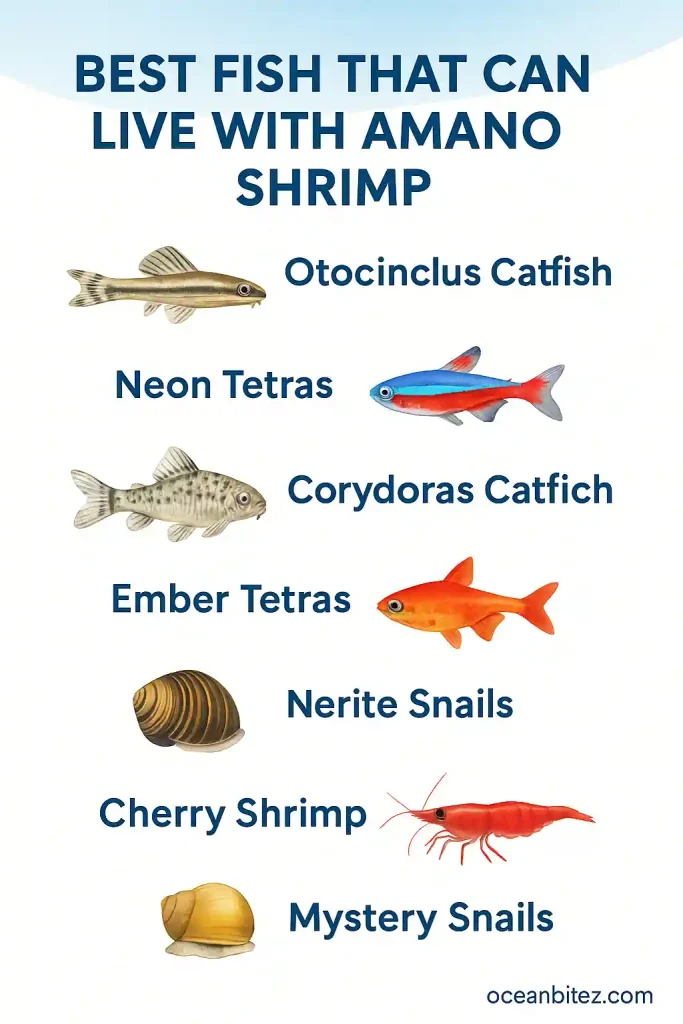
Best Fish That Can Live With Amano Shrimp
When choosing tank mates for Amano shrimp, the goal isn’t just “what won’t eat them”—it’s “what fish make their job easier or support a peaceful environment.” Below are species that pair especially well with Amanos and why.
1.Otocinclus Catfish
Why they’re perfect for Amanos: Both Otocinclus and Amano shrimp are algae eaters—but they focus on different areas. While Amanos graze biofilm on hardscape and plants, Otos clean glass and leaves. Together, they’re a natural cleaning crew with no competition. Plus, Otos are shy and avoid interaction, giving Amanos space to forage freely.
2.Neon Tetras
Why they’re great for Amanos: Neon Tetras stay in the mid to upper levels of the tank, leaving the bottom zone—where Amanos live—undisturbed. They don’t dig in the substrate or peck at shrimp. Their small size and calm schooling behavior help maintain a low-stress environment, which is essential for Amano shrimp to stay active and molting properly.
3.Corydoras Catfish
Why they complement Amanos well: Corydoras are bottom dwellers, but they sift sand gently rather than digging or chasing. Their presence doesn’t threaten Amanos, and their constant movement helps stir up food particles—making it easier for Amanos to find scraps. Corys also tolerate similar water parameters, making tank maintenance simpler.
4.Ember Tetras
Why Amanos benefit from them: Ember Tetras are one of the smallest and least aggressive community fish. They help bring life to the mid-water column without overwhelming shy Amanos. Their light bioload and gentle temperament reduce stress—important for Amano shrimp who are more active in low-stress tanks.
5.Nerite Snails
Why they pair so well with Amanos: Nerite snails and Amano shrimp are the perfect tank janitors. Nerites clean surfaces Amanos can’t reach—like glass and filter intakes—without competing for food. They also help reduce algae growth so Amanos can focus on foraging softer surfaces. Plus, they don’t reproduce in freshwater, keeping things tidy.
6.Cherry Shrimp
Why they work well with Amanos: Cherry shrimp are smaller and more colorful, but they thrive in the same water parameters. Amanos won’t bother them, even during feeding, and the two species often graze side-by-side. In fact, having both can boost activity in the tank and create a more natural shrimp colony vibe.
7.Mystery Snails
Why they’re a peaceful pair: While larger than Nerites, Mystery Snails are still slow, calm, and non-intrusive. They clean excess food without competing for biofilm. Their presence adds diversity without disrupting the shrimp’s routine.
Other Amano Shrimp
Why a group works better than a solo shrimp: Amanos are not aggressive, but they’re social. Keeping 3–5 or more reduces stress, encourages natural behavior, and increases algae-cleaning efficiency. Just make sure the tank is big enough (10+ gallons) to support them comfortably.
Tank Mates to Avoid with Amano Shrimp
Not every peaceful-looking fish is safe for shrimp. Some species may stress, injure, or eat Amano shrimp—especially during molting or at night. Here’s a list of tank mates to skip if you want your Amanos to thrive.
Betta Fish
Why they’re risky for Amanos: Betta personalities vary, but many are territorial and aggressive toward tank mates—especially those that move a lot like shrimp. Even if they don’t eat the Amanos, they often chase or nip, causing constant stress that shortens shrimp lifespan and disrupts molting.
Angelfish
Why they’re a bad match: Angelfish grow large and have strong hunting instincts. Shrimp are small and slow, making them easy prey—especially juveniles. Amanos may survive with young Angelfish, but once the fish mature, shrimp become targets.
Cichlids (All Types)
Why Amanos won’t last long with them: Cichlids are smart, curious, and aggressive. They dig, chase, and often eat anything smaller than them—including full-grown Amano shrimp. Even dwarf varieties like Apistos pose a risk.
Goldfish
Why they’re unsuitable: Goldfish constantly forage and have strong mouths. They don’t intentionally hunt shrimp, but their rooting behavior stirs the substrate, stresses Amanos, and may lead to accidental injuries or ingestion.
Crayfish or Large Clawed Shrimp
Why they’re dangerous: Crayfish and macro shrimp may look like cool additions—but they’re opportunistic predators. They’ll grab and eat Amano shrimp without hesitation, especially during molting or at night when shrimp are most vulnerable.
Tips for a Peaceful Mixed Tank with Amano Shrimp
Adding the right fish is only part of the equation. How you set up and maintain your tank plays a big role in keeping your Amano shrimp safe and stress-free. These tips help avoid common problems and support long-term success:
1. Add Shrimp First
Introducing Amano shrimp before adding fish gives them time to explore, claim hiding spots, and settle in without pressure. This reduces stress and makes them bolder over time.
2. Use Lots of Hiding Spots
Include moss, driftwood, caves, or shrimp tubes. Amanos need places to hide, especially during molting when they’re vulnerable and soft-shelled.
3. Choose a Soft Substrate
Fine gravel or sand is better than sharp substrates. It’s gentler on shrimp legs and easier to clean without disturbing them.
4. Feed Properly and Avoid Overcrowding
Feed sinking shrimp pellets or algae wafers regularly so shrimp don’t have to compete. Don’t overload the tank—more fish equals more stress.
5. Match Water Parameters
Ideal for Amanos:
- Temperature: 72–78°F (22–26°C)
- pH: 6.5–7.5
- GH: 6–8
- KH: 2–4
Choose fish with similar requirements to avoid parameter swings that harm shrimp.
6. Use a Sponge Filter or Cover the Intake
Strong filters can suck up baby shrimp. Use a sponge filter or place a sponge pre-filter over the intake to protect them.
7. Keep the Tank Calm
Avoid loud vibrations, sudden changes, or harsh lighting. The calmer the tank, the more active and visible your Amanos will be.
FAQs
Can Amano shrimp live with Betta fish?
It’s risky. While some Bettas tolerate shrimp, many will nip or chase them—especially in smaller tanks. If you try this combo, add lots of hiding spots and monitor behavior closely.
Will Amano shrimp eat other shrimp?
No. Amano shrimp are peaceful and won’t harm other shrimp, including babies. They may outcompete smaller shrimp like Cherries for food, so ensure enough space and feeding coverage.
Can Amano shrimp live alone?
Yes, but they’re more active and confident in groups of 3–5 or more. A group improves tank cleaning and helps reduce hiding behavior.
Do Amano shrimp get along with snails?
Absolutely. Amanos pair well with Nerite, Mystery, and Ramshorn snails. These species don’t compete aggressively and help clean the tank.
What fish will eat Amano shrimp?
Avoid cichlids, Angelfish, large Gouramis, Goldfish, and Crayfish. These species are known to chase, stress, or eat shrimp—especially during molting or at night.
Are Amano shrimp good for community tanks?
Yes, if the tank is peaceful and shrimp-safe. With the right setup and compatible species, Amanos thrive in community aquariums and help control algae.