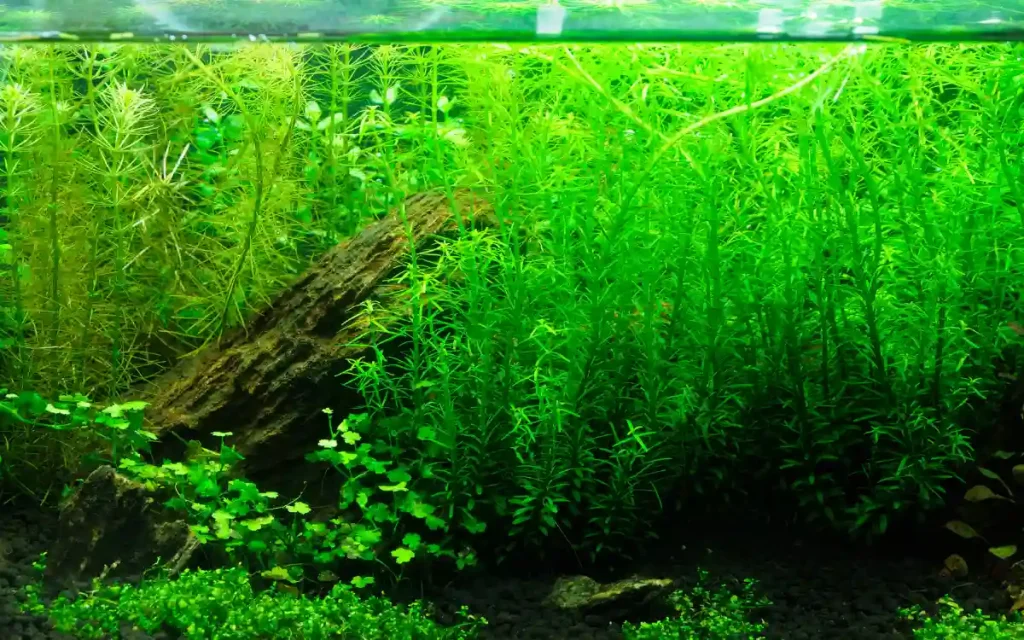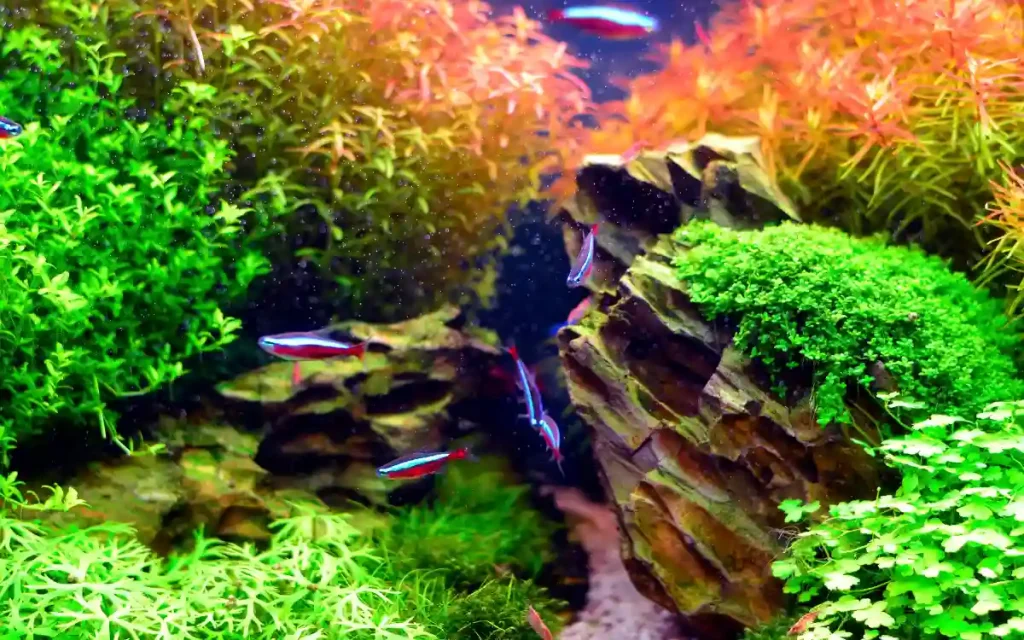
If you’re looking to transform the bottom of your aquarium into a lush green carpet, you’re in the right place. Carpet plants add depth, natural beauty, and create a more realistic underwater environment for your fish. While some aquatic plants can be challenging to grow, there are several beginner-friendly options that will thrive even in simpler setups.
In this guide, we’ll explore 10 beautiful carpet plants that are perfect for beginners, with details on how to care for each one and tips to help them flourish. Whether you’re setting up your first planted tank or looking to add more greenery to your existing aquarium, these plants will help you create a stunning underwater landscape.
List of 10 Aquarium carpet plants
1. Java Moss (Taxiphyllum barbieri)
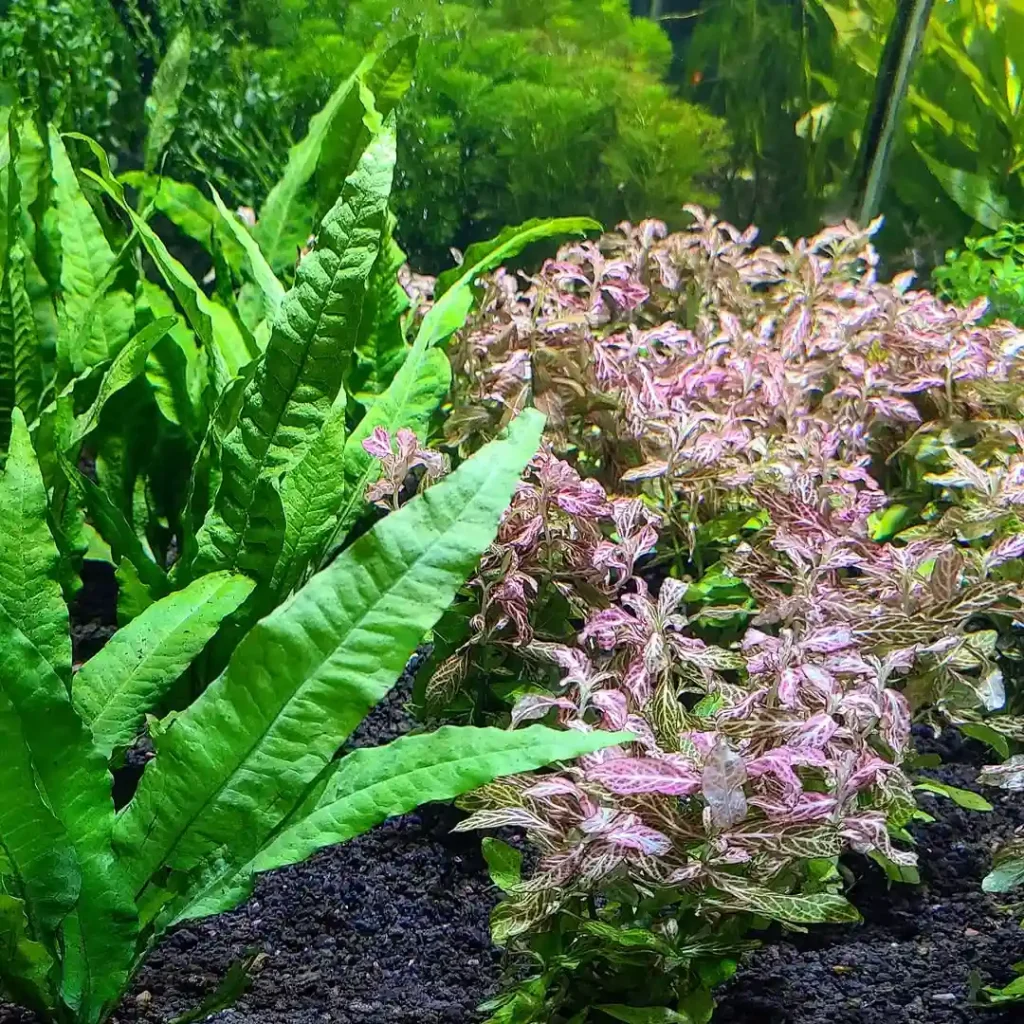
Java Moss is the ultimate beginner-friendly carpet plant, known for its remarkable adaptability and low maintenance requirements. This versatile moss forms a soft, plush carpet that adds depth and texture to any aquarium.
Java Moss grows in almost any water condition, requires minimal light, and doesn’t need specialized substrate. It’s nearly impossible to kill, making it perfect for first-time aquascapers. It thrives in low to moderate light with temperatures between 59-86°F (15-30°C) and a pH range of 5.0-8.0.
For planting, tie small portions to rocks or driftwood using fishing line or cotton thread. Alternatively, chop into small pieces and sprinkle across the substrate, pressing lightly to help it attach. Trim every few weeks to maintain desired thickness and prevent floating pieces.
Pro tip: For faster carpet formation, spread thin layers of moss between two pieces of plastic mesh and place this “moss sandwich” on your substrate.
2. Dwarf Hairgrass (Eleocharis parvula)
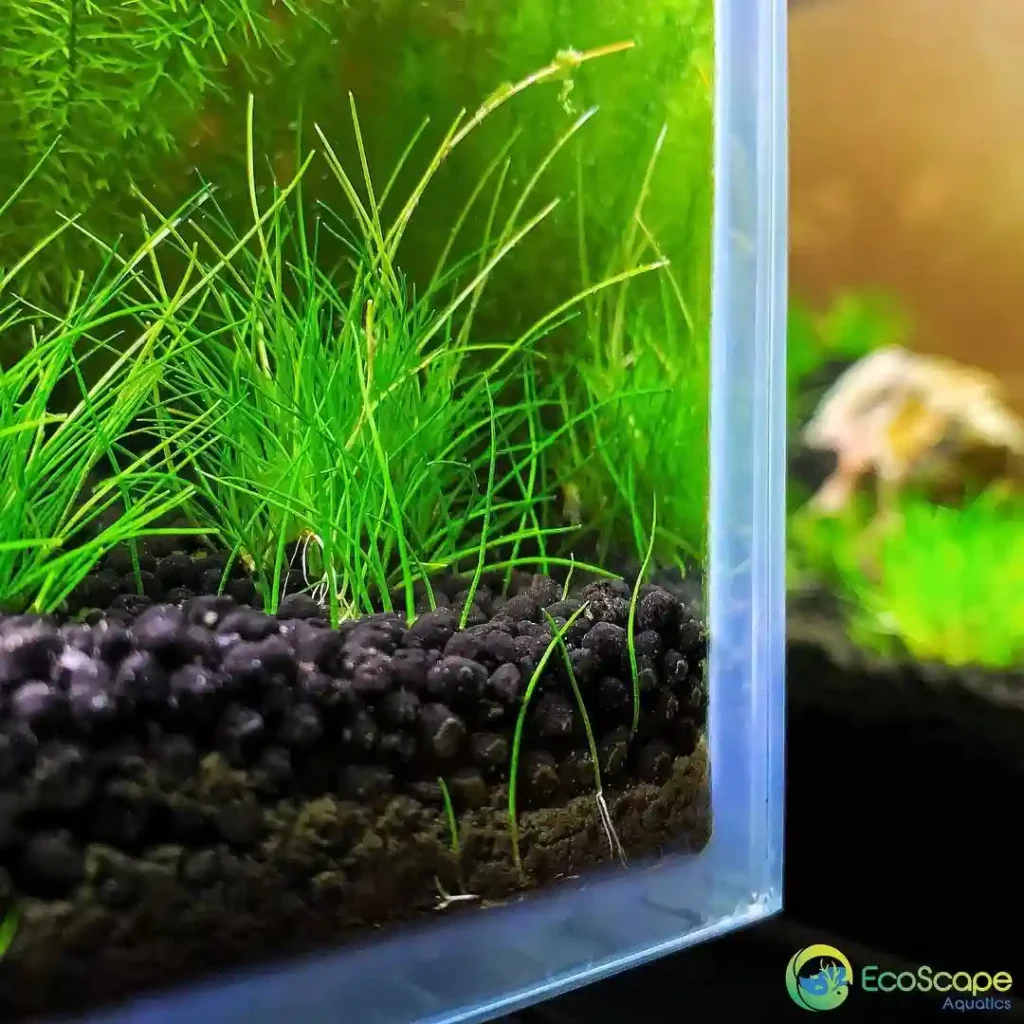
Dwarf Hairgrass creates a beautiful bright green carpet that resembles a freshly mowed lawn. Its delicate grass-like appearance adds a natural touch to any aquascape.
This fast-growing plant creates a striking bright green carpet once established and works well in both small and large tanks. It also provides excellent hiding places for fry and small shrimp. Dwarf Hairgrass prefers moderate to high light, temperatures of 50-85°F (10-29°C), and a pH range of 6.5-7.5.
When planting, separate larger clumps into smaller bunches of 5-10 blades and plant these bunches about 1 inch apart. Push roots fully into the substrate, leaving only the blades exposed. Using nutrient-rich substrate will give you the best results.
Pro tip: Trim hairgrass regularly (like mowing a lawn) to encourage horizontal rather than vertical growth, creating a denser carpet.
3. Marsilea Minuta
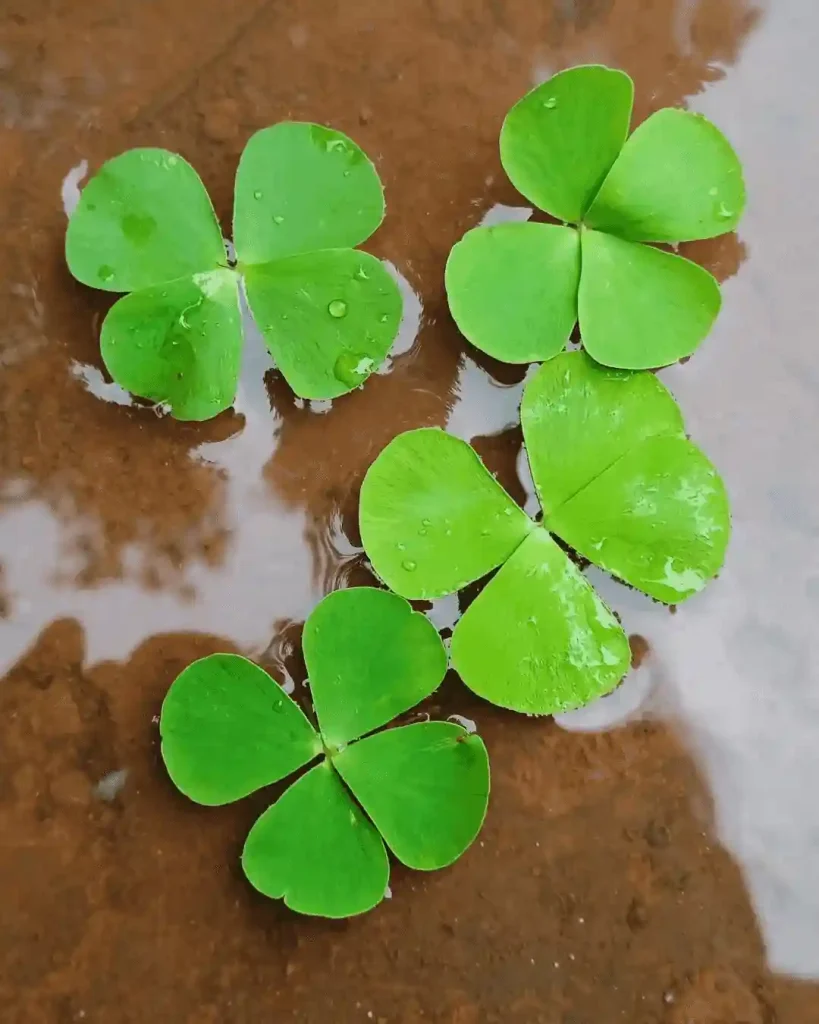
Often called dwarf water clover, Marsilea Minuta forms a carpet of small, four-leaf clover-like plants that add charm and character to your aquarium floor.
Marsilea Minuta is adaptable to various light conditions and features slow but steady growth, meaning less maintenance. It can grow in both nutrient-rich and basic substrates and tolerates a wide range of water parameters. It does best in low to moderate light with temperatures between 68-82°F (20-28°C) and a pH of 6.0-7.5.
Plant small portions about 1-2 inches apart, ensuring roots are well-anchored in substrate. Be patient—slow initial growth is normal. Once established, it will spread via runners.
Pro tip: In lower light conditions, leaves may grow larger with longer stems. With higher light, they stay more compact, creating a denser carpet.
4. Monte Carlo (Micranthemum tweediei)

Monte Carlo has become incredibly popular in the aquascaping world for its vibrant green color and small, round leaves that form a thick carpet.
This plant grows faster than many other carpet plants and is more forgiving about light requirements than similar species. It creates a dense, lush carpet and stays compact and low to the substrate. Monte Carlo thrives in moderate to high light with temperatures of 68-77°F (20-25°C) and a pH range of 6.0-7.5.
For planting, place small portions in a grid pattern about 1-2 inches apart. Press gently into the substrate, leaving some leaves exposed. For faster results, use tissue culture plants which are pest-free. Trim horizontally once it reaches desired height to encourage spreading.
Pro tip: While CO2 injection helps Monte Carlo grow faster and denser, it can still succeed without CO2 if given enough light and nutrients.
Read also: 12 Fast Growing Aquatic Plants
5. Dwarf Baby Tears (Hemianthus callitrichoides)
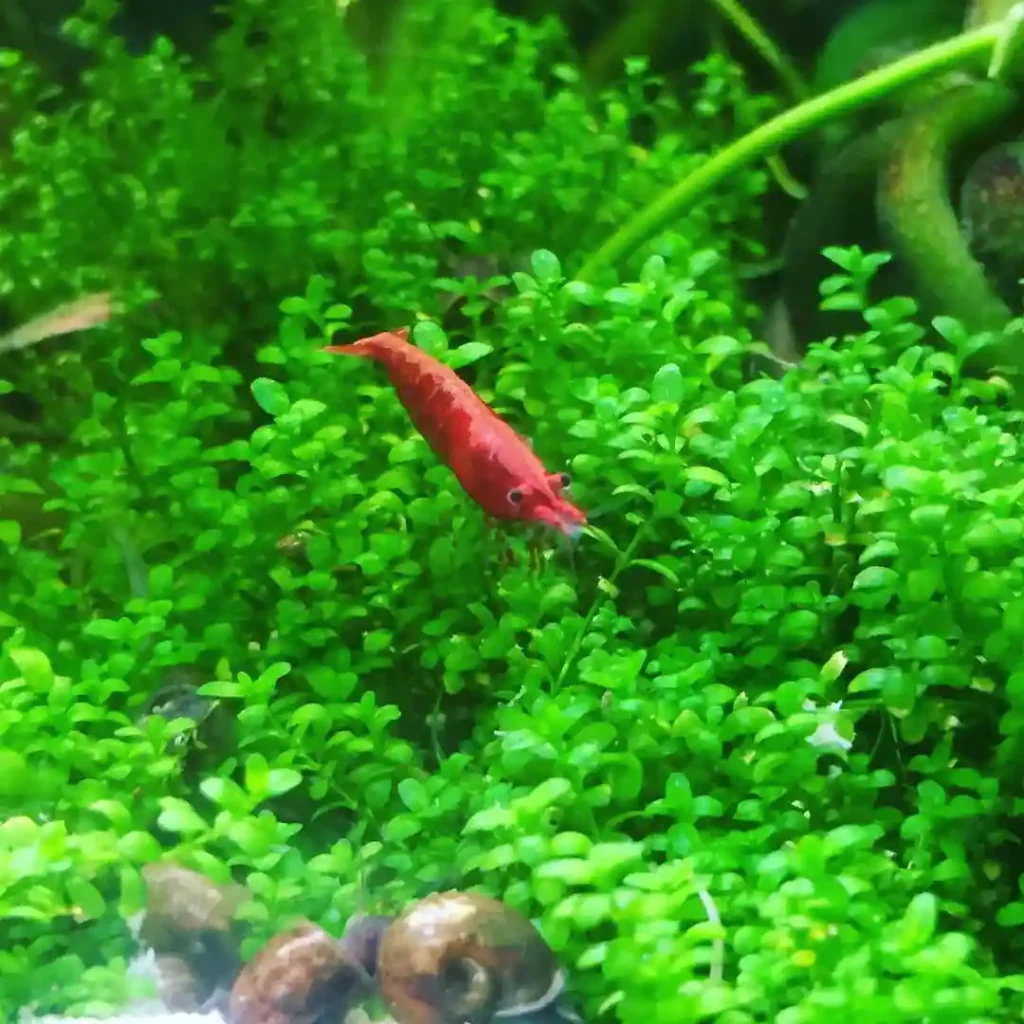
Known as HC or Cuba in the hobby, Dwarf Baby Tears creates one of the most impressive carpets with its tiny, bright green leaves forming a dense mat.
This plant creates the most dense, uniform carpet appearance with tiny leaves that provide great scale in smaller tanks. While more demanding than others on this list, it’s incredibly rewarding once established and makes a dramatic impact in any aquascape. Dwarf Baby Tears requires high light, temperatures between 68-82°F (20-28°C), and a pH of 5.0-7.5.
Plant in small patches, pressing gently into the substrate. Use a fine-grain substrate to help delicate roots establish. Starting with plenty of plants will give you faster coverage. If using the dry start method, keep substrate slightly moist during establishment.
Pro tip: Though considered more challenging, success with Dwarf Baby Tears is possible even for beginners if you provide high light and CO2 supplementation.
6. Sagittaria Subulata (Dwarf Sagittaria)
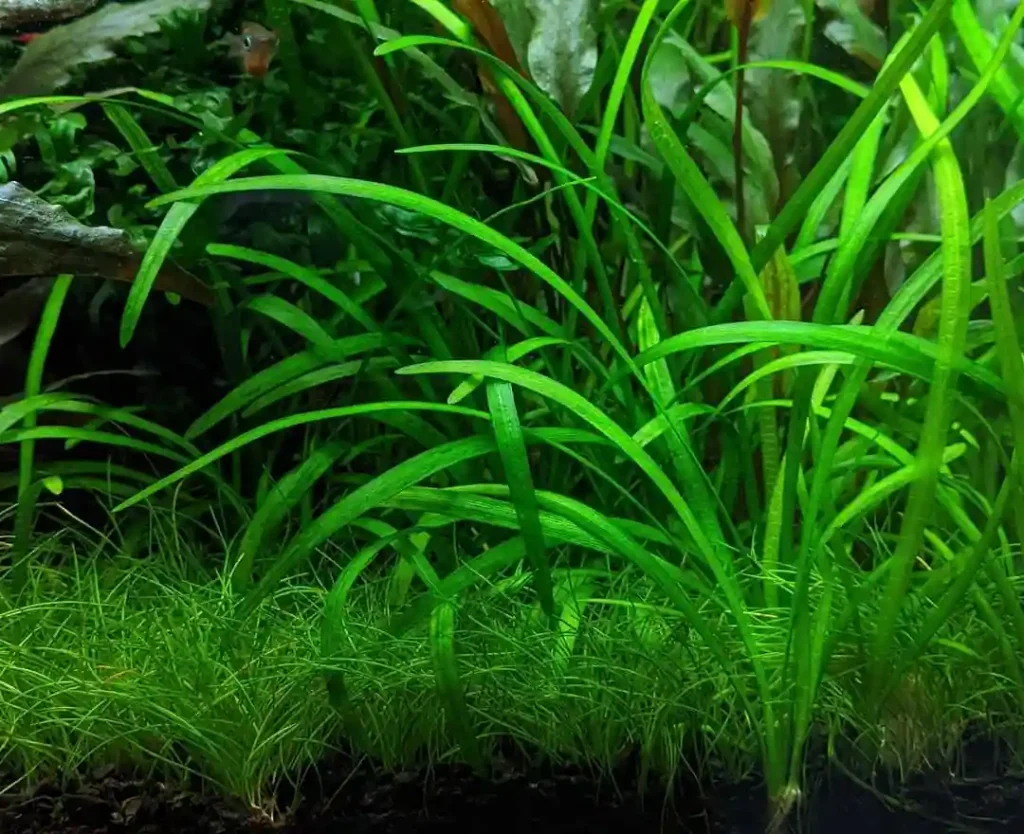
Dwarf Sagittaria creates a taller grass-like carpet that adds dimension and movement to your aquarium floor.
This extremely hardy and adaptable plant spreads quickly via runners and can be kept short with regular trimming. It tolerates lower light conditions better than many carpet plants. Dwarf Sagittaria thrives in low to moderate light with temperatures of 68-82°F (20-28°C) and a pH range of 6.5-8.0.
Plant individual plants about 2 inches apart, pushing roots fully into the substrate. Trim leaves to about 2 inches after planting to encourage new growth and remove any dead or yellowing leaves promptly.
Pro tip: For a more uniform carpet, trim plants to the same height once they start spreading. New growth will emerge shorter and denser.
7. Staurogyne Repens
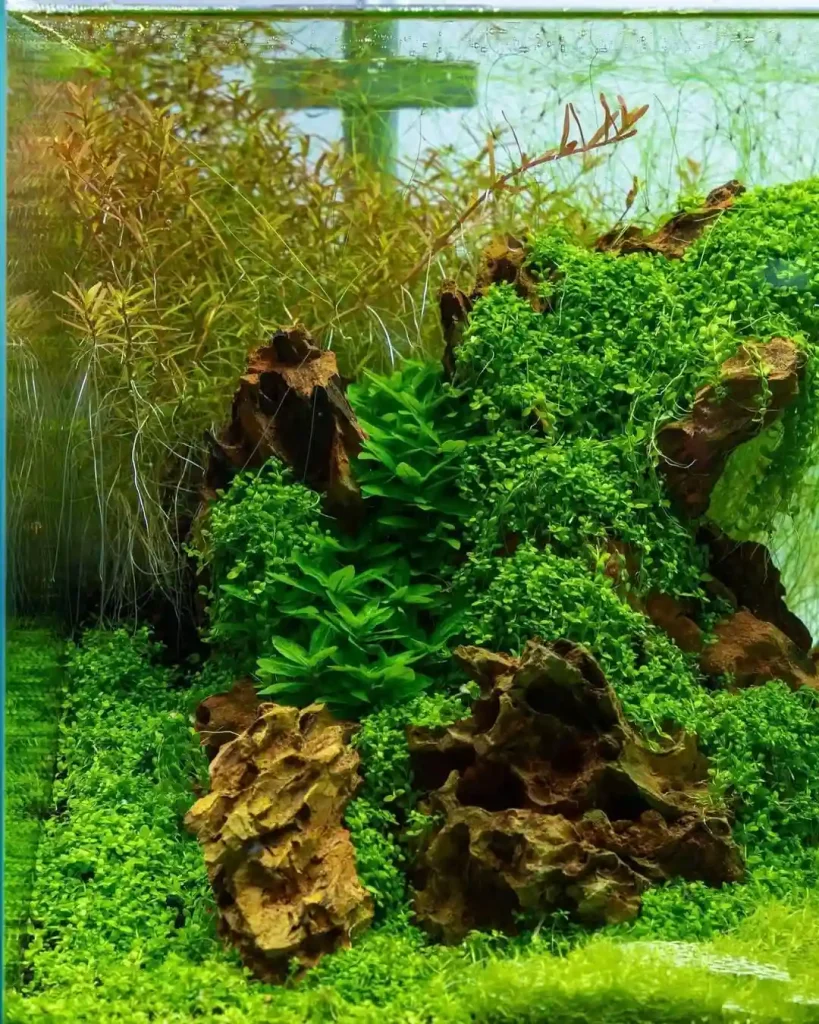
Staurogyne Repens forms a lush, compact carpet with broader leaves than many other carpet plants, adding a unique texture to your aquascape.
This plant is more forgiving about water conditions and sturdier than many delicate carpet plants. It stays compact with proper care and has a vibrant green color that adds visual interest. Staurogyne Repens does best in moderate to high light with temperatures between 68-82°F (20-28°C) and a pH of 6.0-7.5.
Separate larger bunches into small groups with 3-5 stems and plant about 1 inch apart for faster coverage. Bury stems horizontally with leaves above the substrate and trim regularly to encourage side shoots and denser growth.
Pro tip: When trimming, cut just above a node (where leaves meet the stem) to encourage new side shoots to develop from that point.
Read also: 10 Best Foreground Plants for Planted Aquariums
8. Lilaeopsis Brasiliensis (Micro Sword)
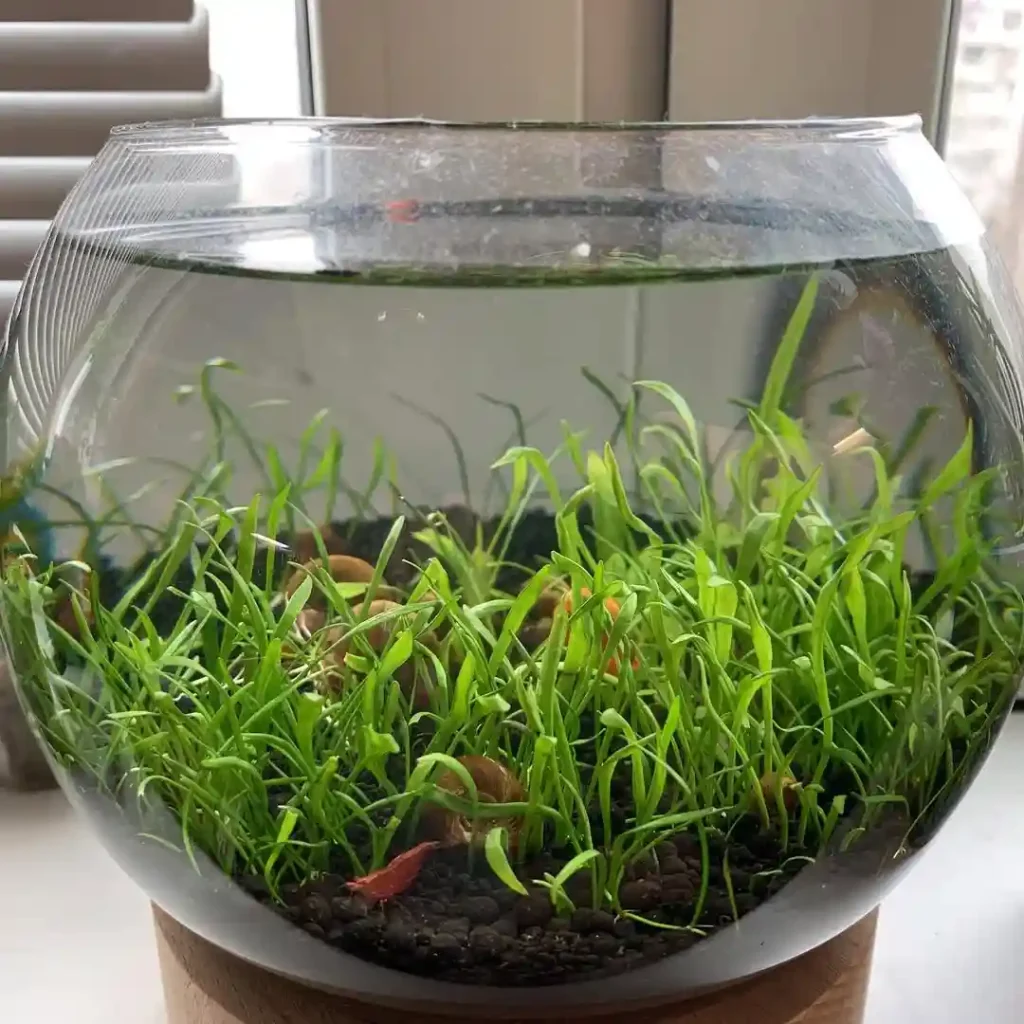
Micro Sword creates a grasslike carpet with thin, upright leaves that sway gently in the current, adding movement and life to your aquarium floor.
This plant is more robust than some delicate carpet plants and creates a natural-looking underwater lawn. It provides good transitional height between foreground and midground and can thrive in established tanks with minimal fertilization. Micro Sword prefers moderate to high light, temperatures of 70-83°F (21-28°C), and a pH range of 6.5-7.5.
Plant in small clumps about 1-2 inches apart, ensuring roots are well-anchored in substrate. Be patient with initial growth, which may be slow. Once established, you’ll see new runners spreading outward.
Pro tip: For faster growth, increase light intensity and consider adding root tabs near the plant base every few months.
9. Cryptocoryne Parva
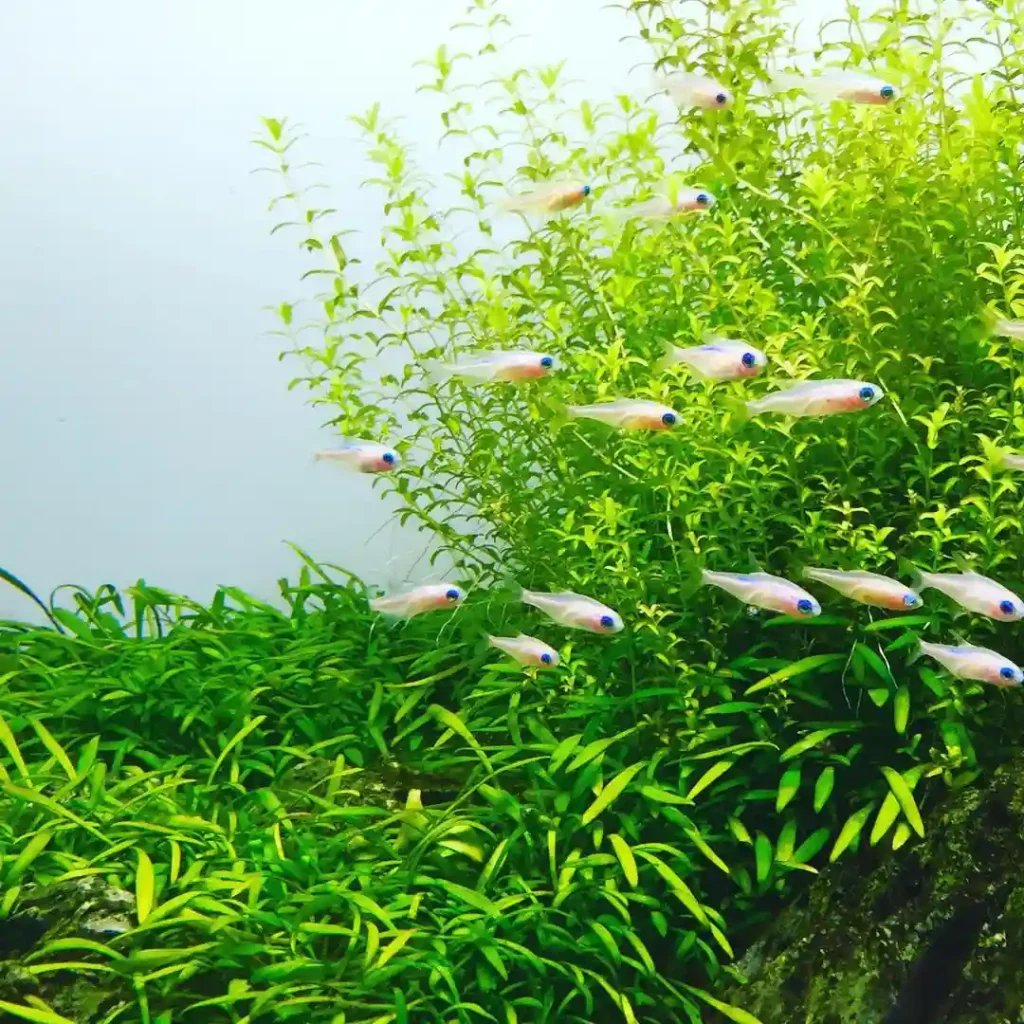
The smallest member of the Cryptocoryne family, C. Parva forms a compact carpet with small, spear-shaped leaves that add texture and interest.
This extremely hardy and long-lived plant tolerates lower light conditions and is very low maintenance once established. It doesn’t require CO2 injection, making it perfect for simpler setups. Cryptocoryne Parva thrives in low to moderate light with temperatures of 68-82°F (20-28°C) and a pH of 6.0-7.5.
Plant individual plants about 1 inch apart, pushing roots fully into nutrient-rich substrate. Be extremely patient—this is the slowest grower on our list. Avoid disturbing once planted, as Crypts can “melt” when moved.
Pro tip: Don’t be alarmed if leaves melt after planting—this is normal for Cryptocorynes. New, adapted leaves will grow within a few weeks.
10. Pygmy Chain Sword (Echinodorus tenellus)
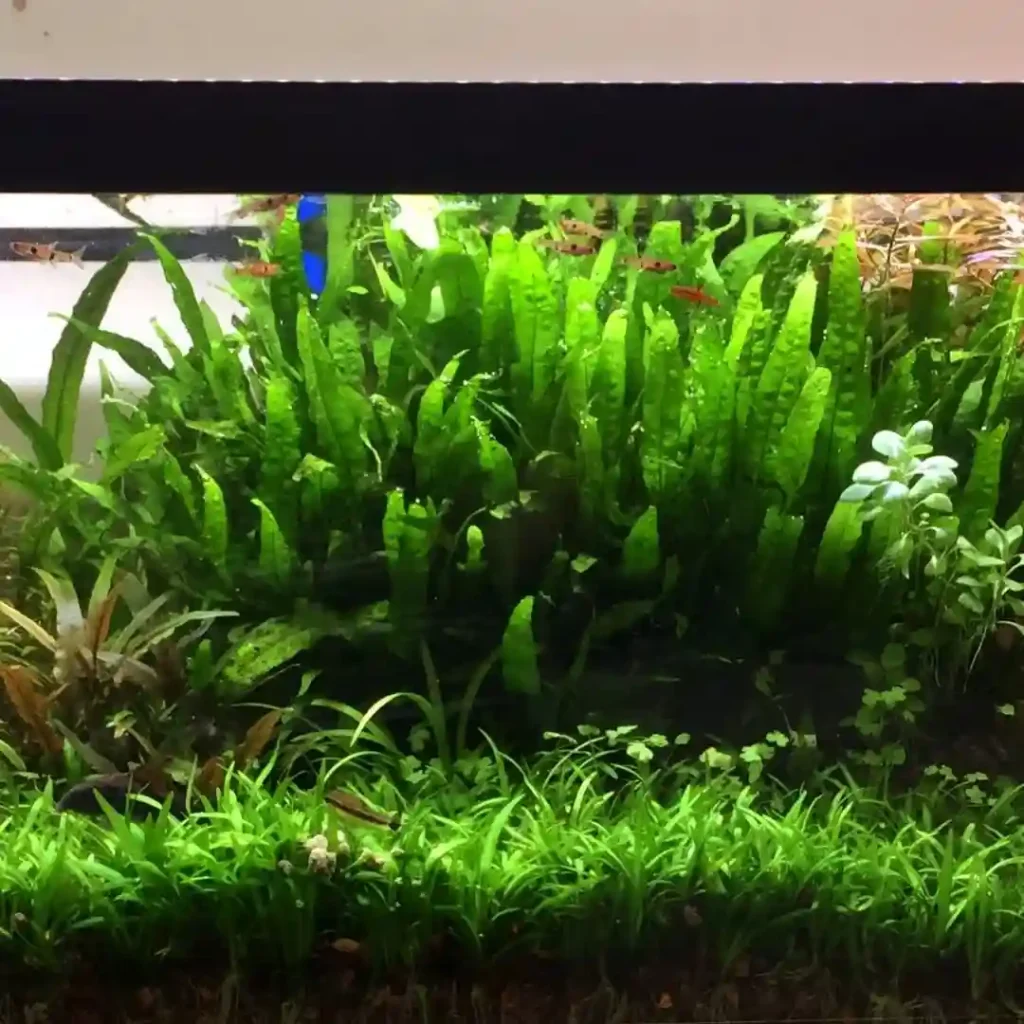
Pygmy Chain Sword creates a taller carpet with narrow, sword-shaped leaves that adds dimension and texture to your aquarium.
This fast-growing plant spreads quickly via runners once established and adapts to a wide range of conditions. It can be kept shorter with regular trimming if desired. Pygmy Chain Sword does best in moderate to high light with temperatures of 68-82°F (20-28°C) and a pH of 6.5-7.5.
Plant individual plants about 2 inches apart, pushing roots fully into substrate. Trim any extremely long leaves after planting. Once established, you can remove runners if you want to limit spread.
Pro tip: Under high light, leaves will grow shorter and more compact, creating a denser carpet effect.
Setting Up Your Tank for Carpet Plant Success
To help your carpet plants thrive, consider these key factors:
Lighting: Most carpet plants need moderate to high light. LED lights with PAR values of 40+ at substrate level work best, with 8-10 hours of light daily being ideal for most species.
Substrate: Nutrient-rich aquasoil or similar substrates promote better root development. Fine-grained substrates help delicate roots establish. Consider adding root tabs for extra nutrients.
CO2 and Fertilization: While not always necessary, CO2 injection dramatically improves growth rates. Liquid fertilizers help provide nutrients not available in water column, while root tabs placed near plants help feed heavy root feeders.
Maintenance Tips: Regular trimming encourages lateral growth and denser carpets. Remove any algae promptly to prevent it from smothering slow-growing plants. Perform regular water changes to maintain good water quality.
FAQ:
How long does it take for carpet plants to grow?
Most carpet plants take 2-4 weeks to establish their root systems. Full carpet coverage typically takes 2-6 months, depending on species, tank conditions, and how densely you initially planted.
Can carpet plants grow without CO2 injection?
Yes! While CO2 helps plants grow faster and denser, Java Moss, Marsilea Minuta, and Cryptocoryne Parva can all thrive without CO2 supplementation. Other species on this list can grow without CO2 but will develop more slowly.
What is the best substrate for carpet plants? Nutrient-rich aquasoils like ADA Amazonia, Fluval Stratum, or Tropica Soil work best for most carpet plants. These substrates provide essential nutrients and create an ideal environment for root development.
How often should I fertilize my carpet plants?
For tanks with CO2 injection, fertilize with comprehensive liquid fertilizers 2-3 times weekly. For low-tech tanks, once weekly is usually sufficient. Add root tabs every 3-4 months for heavy root feeders.
Do carpet plants need a lot of light?
Most carpet plants do require moderate to high light to thrive, with Java Moss and Cryptocoryne Parva being exceptions that can tolerate lower light. Providing adequate light is crucial for healthy, compact growth.
How do I prevent my carpet plants from floating away?
Use plant weights or thin cotton thread to anchor plants until their roots establish. Plant small portions rather than large clumps, and ensure roots are pressed firmly into the substrate.
Final Thoughts
Creating a lush carpet in your aquarium takes some patience and care, but the results are well worth the effort. Start with plants that match your experience level and tank conditions, and don’t be afraid to experiment with different species to find what works best for you.
Remember that good maintenance practices—regular trimming, fertilization, and water changes—are key to long-term success with carpet plants. With time and proper care, you’ll be rewarded with a beautiful underwater lawn that transforms your aquarium into a natural underwater paradise.
Happy planting!