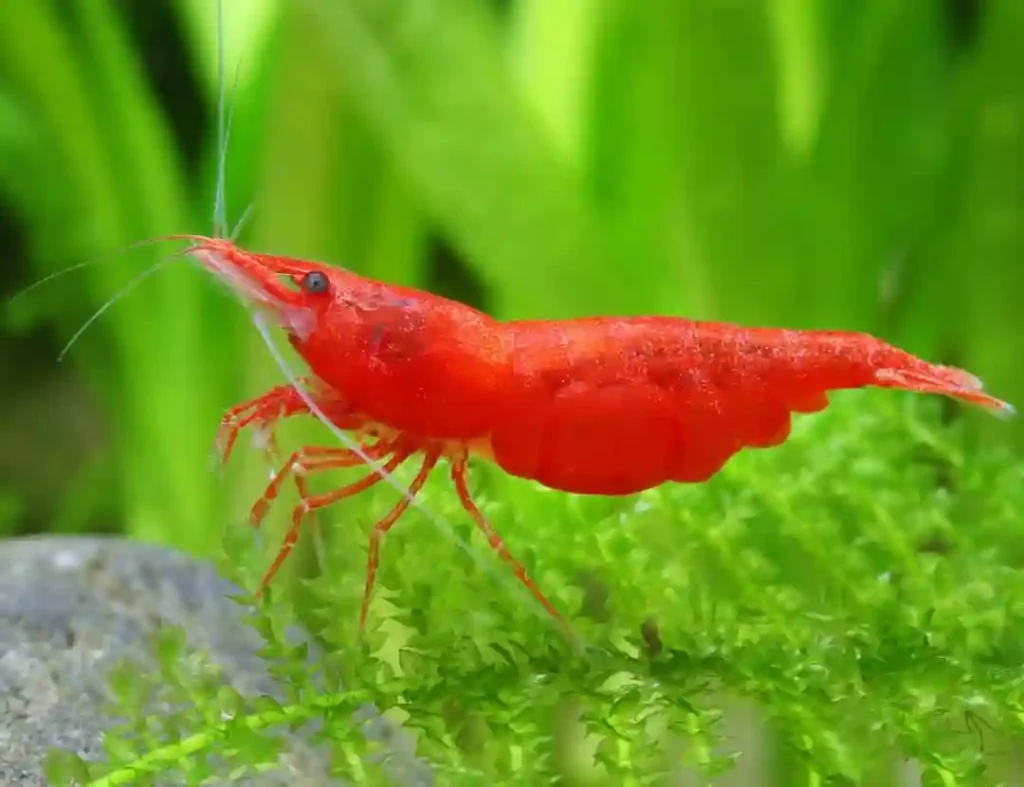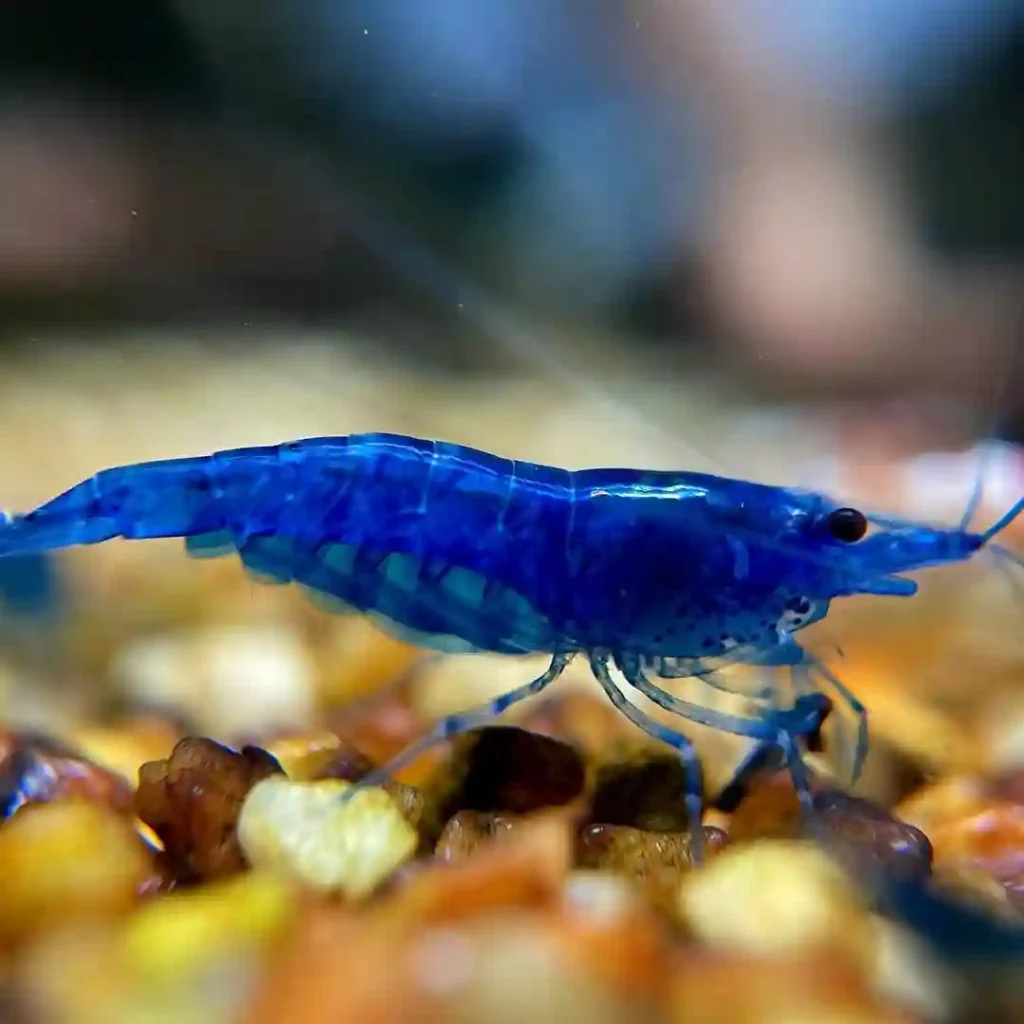
Keeping your cherry shrimp tank clean is essential for their health and water quality. The best way to clean a cherry shrimp tank is by gently removing debris with a siphon, wiping algae from the glass, and changing 20–30% of the water weekly. Use shrimp-safe tools and avoid disturbing the substrate too much to protect baby shrimp and beneficial bacteria. This step-by-step guide will show you exactly how to clean your shrimp tank without harming its delicate ecosystem.
Do Cherry Shrimp Tanks Need Cleaning?

Even though cherry shrimp are great at picking up leftovers, they can’t do all the cleaning themselves. Over time, waste, algae, and uneaten food still build up. If you don’t clean your tank regularly, it can lead to cloudy water, algae growth, and stressed shrimp.
Look out for these signs your tank needs a cleaning:
- The water looks hazy or smells off
- You see leftover food sitting on the bottom
- Algae is growing on the glass or decorations
- Your shrimp are less active or hiding more
Just like any shrimp tank setup, light weekly attention helps keep it balanced and clear.
Cleaning Tools You’ll Need
Before you start, it’s a good idea to gather everything you need so you’re not scrambling mid-clean. Here are the tools that work best for cherry shrimp tanks:
- Siphon or gravel vacuum
- Shrimp-safe sponge or algae scraper
- Airline tubing
- Turkey baster
- Bucket for tank water
- Water conditioner
Having these on hand makes the process smoother and safer for your shrimp, especially for nano or small shrimp tanks.
Step-by-Step: How to Clean a Cherry Shrimp Tank
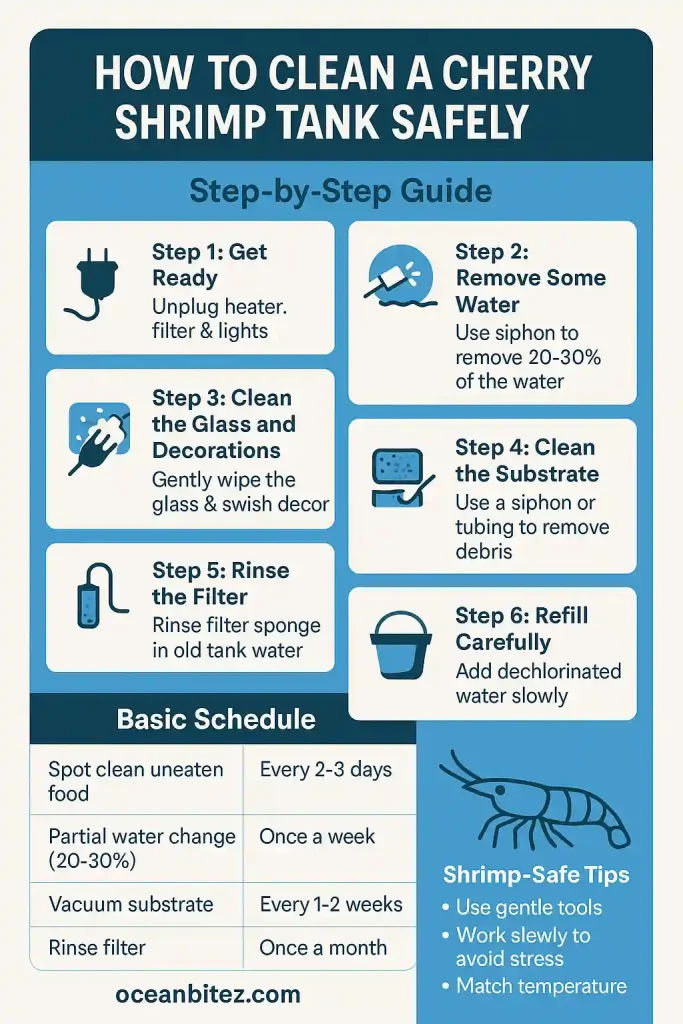
Cleaning a shrimp tank doesn’t have to be stressful—for you or the shrimp. Just go slow, be gentle, and follow these simple steps.
Step 1: Get Ready
Unplug your heater, filter, and lights. Don’t feed your shrimp just before cleaning.
Step 2: Remove Some Water
Use a siphon to take out 20–30% of the water. Always collect it in a clean bucket—you’ll need it to rinse your filter parts.
Step 3: Clean the Glass and Decorations
Gently wipe glass and swish decor in the old tank water. No soap, ever.
Step 4: Clean the Substrate
Use a siphon or tubing to target areas with waste or food. Avoid stirring too much to keep ammonia spikes down.
Step 5: Rinse the Filter
If needed, clean the filter sponge using saved tank water to preserve beneficial bacteria.
Step 6: Refill Carefully
Add dechlorinated water that matches the tank’s temperature. Pour slowly or use a drip method.
How Often Should You Clean a Cherry Shrimp Tank?
Shrimp aren’t messy, but that doesn’t mean your tank stays clean on its own. Follow this schedule:
| Task | How Often |
| Spot clean food | Every 2–3 days |
| Partial water change (20–30%) | Once a week |
| Substrate vacuum | Every 1–2 weeks |
| Filter rinse | Once a month |
| Full deep clean | Every 4–6 weeks |
Too much cleaning at once can throw off the tank’s balance—cycling matters even during maintenance.
Tips for Cleaning Without Harming Your Shrimp
- Use gentle tools like airline tubing
- Work slowly to avoid stressing baby shrimp
- Match refill water temperature
- Never use soap or chemicals
- Don’t stir the entire substrate at once
Post-Cleaning Care: What to Do After Cleaning
After cleaning, watch your shrimp. They should return to grazing within 15 minutes. Plug everything back in and ensure the heater is running properly.
If they seem stressed, try adding Indian almond leaves or botanicals. These can also support healthy molting and boost their immune system.
Common Mistakes to Avoid
- Cleaning everything at once
- Using untreated tap water
- Stirring too much gravel
- Ignoring temperature differences
- Using soaps or chemicals
If your shrimp act odd afterward, check your parameters—GH/KH levels and calcium play a role too.
FAQs
Do I need to remove the shrimp before cleaning?
No. Just go slow and keep an eye on where they are.
Can I suck up baby shrimp by accident?
Yes especially during substrate cleaning. Use a turkey baster or soft tubing and always check the siphon tube.
How do I clean the filter safely?
Rinse filter sponges in old tank water only. Don’t use tap water, or you’ll kill the good bacteria your shrimp depend on.
Do shrimp eat poop and keep the tank clean?
Not really. They eat leftover food and biofilm. You’ll still need to do regular water changes and cleanup. Learn more in our guide on what shrimp eat.