
How to Choose Aquarium Plants: A Simple Beginner’s Guide

Choosing aquarium plants can feel confusing when every plant has different needs. Some grow well in basic gravel and low light, while others need nutrient-rich soil, strong lighting, fertilizer, and added CO₂.
The easiest way to choose is to match the plants to your aquarium not force your aquarium to match the plants.
Before buying anything, check your tank size, lighting, substrate, water conditions, fish, and available maintenance time. This guide will help you make the right choices without wasting money on plants that are unlikely to survive.
Quick Answer
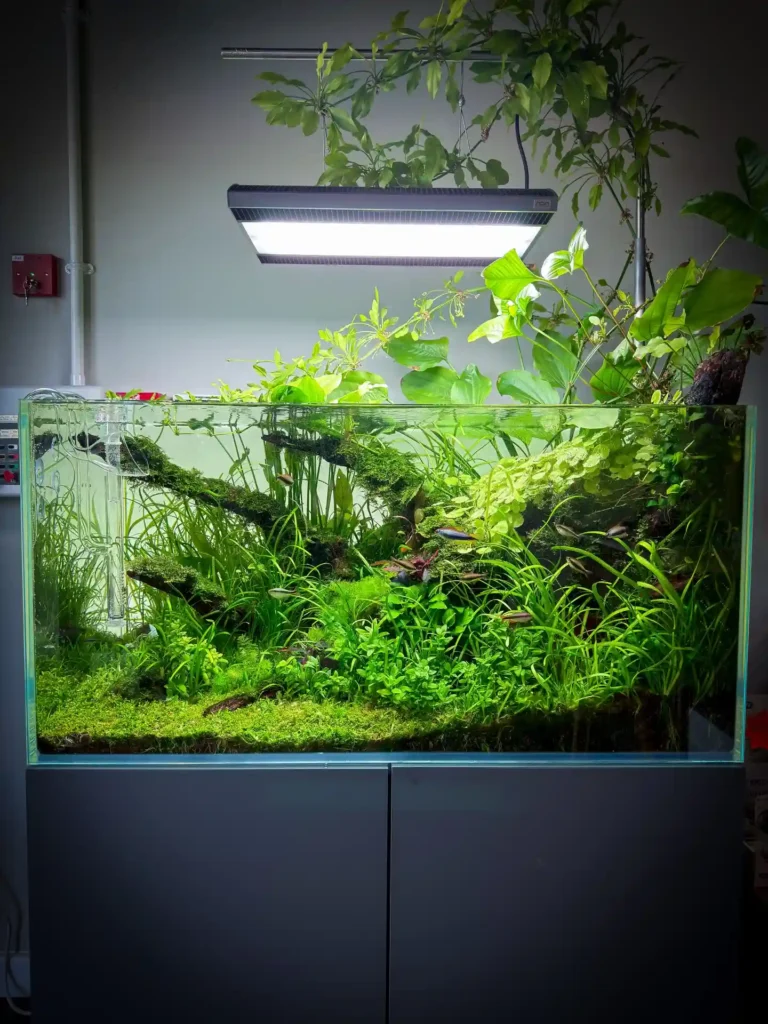
Beginners should choose hardy aquarium plants that match their current lighting and substrate. Anubias, Java fern, Java moss, Cryptocoryne, Amazon sword, and Vallisneria are generally good starting options.
Before buying a plant, check:
- Its mature height and width
- Light requirements
- Substrate and nutrient needs
- Whether it needs added CO₂
- Where it should be placed
- Whether your fish may eat or uproot it
- How quickly it grows
- How much trimming it needs
If you are completely new to planted tanks, begin with a few easy species rather than filling the aquarium with many different plants.
Why Add Live Plants to an Aquarium?
Live plants do more than make an aquarium look natural. When they are healthy, they become part of the tank’s ecosystem.
Aquarium plants can:
- Absorb nitrates and other nutrients
- Compete with algae for light and nutrients
- Provide hiding places for shy fish
- Give shrimp and fry areas to explore
- Offer surfaces where beneficial microorganisms can grow
- Produce oxygen during the light period
- Make fish feel more secure
- Create a more natural aquarium layout
Plants do not replace filtration, cycling, water changes, or regular maintenance. However, they can support a healthier and more stable environment.
You can explore the different plant categories and their basic care requirements in this complete aquarium plants guide.
Check Your Tank Before Choosing Plants
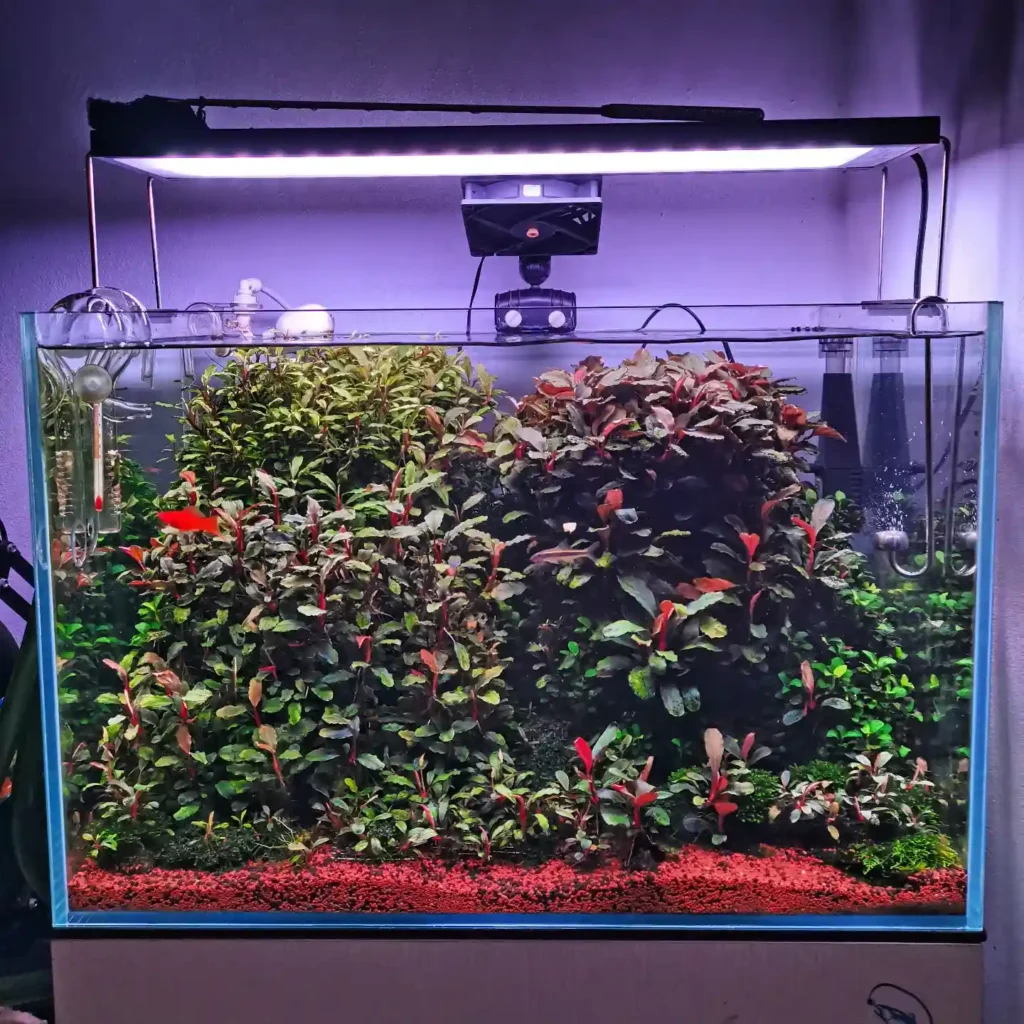
Do not choose plants based only on how they look in a shop or online photo. A beautiful plant may struggle if your aquarium cannot provide the conditions it needs.
Start by checking the following parts of your setup.
Tank Size
Think about the plant’s mature size, not just its size when you buy it.
A small Amazon sword may eventually become too large for a 5-gallon tank. Tall Vallisneria can quickly reach the surface and spread across the background. Small Anubias varieties, mosses, and compact Cryptocoryne species are often easier to manage in nano tanks.
Large aquariums provide more room, but they also need more plants to create a full appearance.
Measure the available space and consider how much swimming room your fish need. A planted aquarium should not be so crowded that active fish cannot move comfortably.
Lighting
Lighting is one of the most important factors in plant selection.
Aquarium plants are usually described as having low, medium, or high light requirements.
| Light level | Suitable plant types | Difficulty |
| Low | Anubias, Java fern, Java moss and some Cryptocoryne | Easy |
| Medium | Amazon sword, Vallisneria, Bacopa and dwarf sagittaria | Easy to moderate |
| High | Many red plants and demanding carpeting species | Moderate to advanced |
The light fixture’s appearance alone does not tell you whether it can grow demanding plants. Tank depth, light intensity, plant placement, and daily lighting time all affect how much usable light reaches the leaves.
If your aquarium has a basic LED, choose from these low-light aquarium plants instead of buying plants that require intense lighting.
More light is not automatically better. Strong light without balanced nutrients and plant growth can encourage algae.
Substrate
Different plants collect nutrients in different ways.
Root-feeding plants take much of their nutrition through their roots. Examples include:
- Amazon sword
- Cryptocoryne
- Vallisneria
- Dwarf sagittaria
- Many carpeting plants
These plants usually grow better in planted soil or with root tabs placed beneath the substrate.
Other plants take nutrients mainly from the water column. These include many mosses, floating plants and stem plants. A suitable liquid fertilizer may help them when the aquarium water does not provide enough nutrients.
Inert gravel or sand can still support live plants, but heavy root feeders may need root tabs. Fine sand should not become so compact that water cannot move around the roots.
Water Temperature
Choose plants that can live within the same temperature range as your fish.
Many common tropical aquarium plants do well at approximately 72–82°F, or 22–28°C. However, individual species can have narrower preferences.
A plant that prefers cooler conditions may struggle in a very warm discus tank. Likewise, tropical plants may not grow properly in a cold aquarium.
Check the recommended range for each plant before purchasing it.
Water pH and Hardness
Many hardy aquarium plants tolerate a broad range of pH and water hardness. That makes them suitable for beginner community tanks.
More sensitive species may prefer soft, acidic water or perform poorly in very hard water. Trying to change the aquarium’s chemistry for one delicate plant can create instability for the fish.
Beginners will usually have better results by choosing plants that already suit their tap water.
Decide Whether You Want a Low-Tech or High-Tech Tank
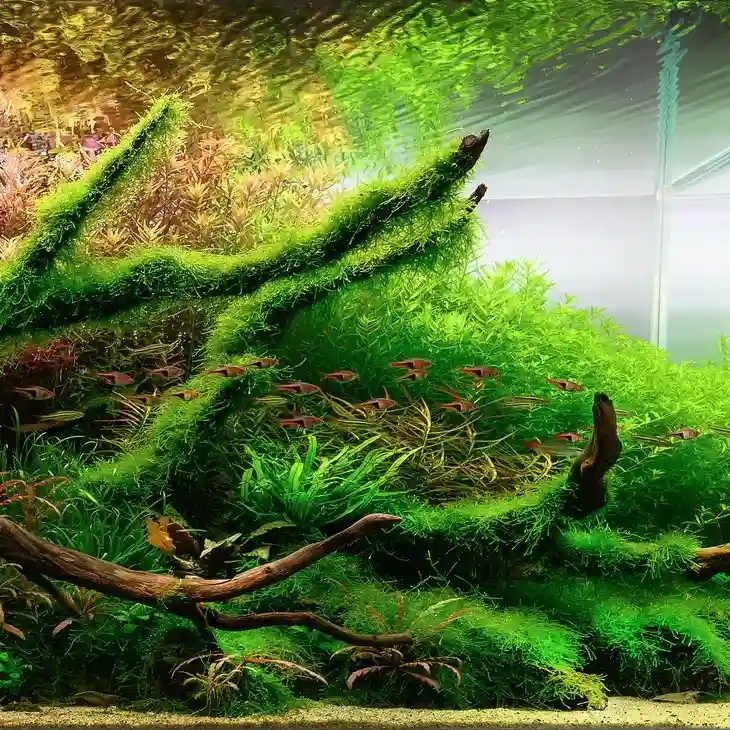
A low-tech planted aquarium normally uses moderate or low lighting, simple fertilizers and little or no injected CO₂. It is generally less expensive and easier to maintain.
A high-tech aquarium may use:
- Strong plant lighting
- Pressurized CO₂ injection
- Nutrient-rich substrate
- Regular fertilizer dosing
- Frequent testing and adjustments
- More regular pruning
High-tech systems can support thick carpets, faster growth and more demanding red plants. However, they require greater balance. Too much light or fertilizer without healthy plant growth can cause algae problems.
My recommendation for a first planted aquarium is a low-tech setup. You can always add more advanced equipment once you understand how your plants respond.
Read this guide to CO₂ for planted aquariums before deciding whether CO₂ injection is right for your setup.
Does Your Aquarium Need CO₂?
All aquatic plants use carbon dioxide for photosynthesis, but that does not mean every aquarium needs a pressurized CO₂ system.
Hardy plants can often grow using naturally available CO₂, although their growth may be slower. Common choices for non-injected tanks include:
- Anubias
- Java fern
- Java moss
- Cryptocoryne
- Vallisneria
- Water sprite
- Hornwort
Injected CO₂ becomes more useful when you want fast growth, dense carpeting, demanding species, or stronger coloration from certain plants.
Do not add CO₂ simply because plants are struggling. Poor lighting, damaged roots, missing nutrients, incorrect planting, or unstable water can cause similar problems.
Choose Plants by Aquarium Placement
Plant placement affects both the appearance of the aquarium and the health of each plant.
A simple planted layout normally uses short plants at the front, medium plants around the hardscape, and tall plants at the back.
Foreground Plants
Foreground plants stay relatively short and are placed near the front glass. They help fill empty substrate without blocking the view.
Possible beginner options include:
- Dwarf sagittaria
- Marsilea species
- Small Cryptocoryne varieties
- Anubias nana petite
- Pygmy chain sword
Some foreground plants spread slowly, while others form runners and cover a large area. Check how tall and quickly the plant grows before using it in a small tank.
See these foreground aquarium plants for more options and their care requirements.
Midground Plants
Midground plants sit between the short foreground and tall background. They add depth and help connect rocks, wood, and other parts of the layout.
Good midground choices can include:
- Anubias
- Java fern
- Cryptocoryne
- Bucephalandra
- Compact Amazon swords
Anubias and Java fern have rhizomes. Attach them to rocks or driftwood instead of burying the rhizome under the substrate. A buried rhizome can rot.
Background Plants
Background plants grow tall and are normally placed along the back or sides of the aquarium. They can hide heaters, filter pipes and other equipment.
Popular options include:
- Vallisneria
- Amazon sword
- Water sprite
- Hygrophila
- Bacopa
- Rotala
- Limnophila
Fast-growing background plants can absorb nutrients quickly, but they may need frequent trimming. Avoid planting them where they will shade smaller plants below.
Floating Plants
Floating plants remain on the water’s surface and collect nutrients directly from the water.
They can provide shade and hanging roots that make fish, shrimp, and fry feel secure. Common options include Amazon frogbit, Salvinia and red root floater.
However, floating plants can multiply quickly. Too many may block light from reaching the plants below or cover the entire surface. Surface agitation from a powerful filter may also damage species that prefer calm water.
Compare the best floating aquarium plants before adding them to your tank.
Do You Want a Carpet?
A carpet creates a low layer of plants across the substrate. It can look beautiful, but it is not always the easiest choice for beginners.
Carpeting plants often need:
- Good light at substrate level
- Suitable nutrients
- Enough space to spread
- Regular trimming
- Stable water conditions
- CO₂ for the best compact growth
Some easier choices, such as dwarf sagittaria and Marsilea, may spread in low-tech tanks. However, they may grow taller or more slowly without strong light and added CO₂.
Demanding carpets can fail when placed under weak lights or in plain gravel without adequate nutrients. Before planning a carpet, compare these aquarium carpet plants and choose one that matches your equipment.
Match Plants to Your Fish
Not every fish behaves well around live plants.
Goldfish may eat soft leaves or pull plants from the substrate. Large cichlids can dig around roots and move decorations. Silver dollars are also known for eating plant matter.
For fish that dig or nibble, try hardy plants such as:
- Anubias attached to rock
- Java fern attached to wood
- Tough-leaved plants
- Fast-growing plants that can recover
- Floating plants, when suitable for the fish
Secure loose plants and avoid delicate carpets in tanks with active diggers.
Fish compatibility also involves swimming space. Dense plants may suit shy tetras, shrimp, and fry, but highly active fish still need open areas.
Choose Plants for the Aquarium’s Purpose
The best plants also depend on the type of tank you want to create.
Beginner Community Tank
Choose hardy plants that tolerate a range of conditions. Anubias, Java fern, Cryptocoryne, Amazon sword, Vallisneria, and water sprite can work well.
Use a mixture of plant heights while leaving an open swimming area.
Betta Tank
Bettas often appreciate broad leaves, gentle shade and access to the surface. Anubias, Java fern, Cryptocoryne, mosses and controlled floating plants can create a comfortable environment.
Avoid letting floating plants completely cover the surface because bettas need easy access to air.
Shrimp Tank
Shrimp benefit from mosses, fine-leaved plants and surfaces where biofilm can develop. Java moss, subwassertang, floating plants, and small Anubias varieties are common choices.
Tissue-culture plants can reduce the risk of introducing snails, planaria, or pesticide residue.
Goldfish Tank
Goldfish can uproot plants and eat tender leaves. Use sturdy plants and attach them securely to hardscape when possible.
Anubias and Java fern are common options, but no plant is guaranteed to be goldfish-proof.
Aquascaped Tank
In an aquascape, plants are selected for their height, color, texture and growth pattern as well as their care needs.
Plan the layout before buying plants so you do not end up with mismatched sizes. This aquascaping guide for beginners explains how to combine plants, substrate, rocks and driftwood in a balanced layout.
Consider the Plant’s Growth Rate
Fast-growing plants are useful in new aquariums because they absorb nutrients quickly. They can help fill empty space while slower plants become established.
Examples include:
- Water sprite
- Hornwort
- Hygrophila
- Vallisneria
- Limnophila
- Some floating plants
The disadvantage is that fast growers need more pruning. They may also shade slower plants or spread beyond their intended area.
Slow-growing plants such as Anubias and Bucephalandra need less trimming, but their leaves may collect algae if they receive too much light.
A balanced tank can include both. Fast-growing species provide early coverage, while slow-growing plants create lasting structure.
Check the Plant’s Mature Size
Plants sold in small pots may become much larger after several months.
Before buying, find out:
- Maximum height
- Expected width
- Whether it spreads through runners
- Whether it grows floating leaves
- How often it needs trimming
- Whether it can be moved easily later
Place large swords and tall stem plants toward the back. Keep compact plants near the front and around smaller hardscape features.
Ignoring mature size is one of the most common reasons a planted tank becomes crowded.
Tissue-Culture or Potted Plants?
Aquarium plants are commonly sold in pots, bunches, or sealed tissue-culture cups.
Tissue-Culture Plants
These are grown in sterile laboratory conditions and sold in sealed containers.
Advantages include:
- Usually free from snails and algae
- Lower risk of unwanted pests
- Convenient for shrimp tanks
- Often divided into several small portions
Their small size can make them more delicate during planting. Some also take time to adjust to submerged conditions.
Potted or Bunched Plants
These are generally larger and can make a tank look established sooner.
However, they may carry algae, snails, eggs, or other organisms. They should be inspected carefully before being placed in the aquarium.
Neither option is automatically better. Choose based on your budget, tank type and tolerance for possible hitchhikers.
How to Identify Healthy Aquarium Plants
Inspect plants before purchasing them whenever possible.
Choose plants with:
- Firm leaves
- Healthy natural color
- Strong stems
- Visible new growth
- Healthy roots
- Minimal algae
- No bad smell or obvious rot
Avoid plants with:
- Mushy or transparent leaves
- Severe yellowing
- Broken or collapsing stems
- Black, rotting roots
- Heavy algae growth
- Obvious pest infestations
A few damaged leaves are not always a serious problem. Many plants also lose some old leaves while adjusting to a new aquarium.
Prepare Plants Before Adding Them
Never place a new plant directly into the aquarium without checking it.
Follow these basic steps:
- Inspect the leaves, stems and roots.
- Remove dead, damaged or melting leaves.
- Rinse the plant gently using clean, dechlorinated water.
- Remove pots, metal weights, gel and rock wool.
- Separate the plant into suitable portions if needed.
- Trim damaged or excessively long roots.
- Quarantine the plant when possible.
- Plant it according to its growth type.
Do not use random household chemicals to disinfect plants. Some treatments can leave harmful residue, especially in shrimp tanks.
A Simple Planting Plan for Beginners
You do not need ten different species to create an attractive tank. Three to five carefully selected plants are often enough.
Here is a simple low-tech plan:
| Area | Plant choice | Purpose |
| Foreground | Dwarf sagittaria or small Cryptocoryne | Adds low growth at the front |
| Midground | Anubias attached to rock or wood | Creates structure |
| Midground | Java fern attached to driftwood | Adds height and texture |
| Background | Vallisneria or water sprite | Hides equipment and fills space |
| Surface | A small amount of frogbit or Salvinia | Provides shade and cover |
This type of layout can work with moderate lighting and does not require a complicated CO₂ system. Exact results will still depend on your water, substrate and care routine.
Common Mistakes to Avoid
Buying Plants Only for Their Appearance
A colorful or delicate plant may require equipment your tank does not have. Always check its needs first.
Choosing Too Many Species
A tank filled with unrelated plants can look messy and become difficult to maintain. Begin with a few dependable species and add more later.
Burying Rhizomes
Do not bury the rhizome of Anubias or Java fern. Attach it to rock or driftwood while leaving the rhizome exposed.
Ignoring Mature Size
A plant that looks small at the store may eventually block light or swimming space.
Using Too Much Light
Long or intense lighting does not guarantee faster, healthier growth. It may lead to algae when plants cannot use all the available light.
A starting light period of around six to eight hours is reasonable for many planted tanks. Adjust it according to plant growth and algae, rather than following one fixed rule for every aquarium.
Expecting Immediate Growth
New plants need time to develop roots and adjust to your aquarium. Some may lose old leaves before producing submerged growth.
Assuming Every Plant Needs CO₂
Many beginner plants can grow without injected CO₂. Select suitable species instead of buying advanced equipment immediately.
Forgetting About Fish Behavior
Digging or plant-eating fish can destroy delicate plants, even when the lighting and substrate are perfect.
Why Are New Aquarium Plants Melting?
Plant melt happens when old leaves become transparent, soft, brown, or damaged after the plant is added to a new tank.
Many aquarium plants are grown above water before being sold. Those leaves may not survive underwater, so the plant sheds them and produces new submerged leaves.
Melting can also be caused by:
- Sudden changes in water conditions
- Damaged roots
- Insufficient nutrients
- Incorrect planting
- Poor lighting
- Unstable temperature
- A severely weakened plant
Remove badly decaying leaves, keep conditions stable and watch for healthy new growth. Do not throw the plant away immediately if its roots and growing point are still healthy.
Best Beginner Aquarium Plants
| Plant | Light | CO₂ injection | Placement | Main consideration |
| Anubias | Low | Not required | Foreground or midground | Do not bury the rhizome |
| Java fern | Low | Not required | Midground or background | Attach it to hardscape |
| Java moss | Low to medium | Not required | Hardscape or foreground | Needs occasional trimming |
| Cryptocoryne | Low to medium | Not required | Foreground or midground | May melt after being moved |
| Amazon sword | Medium | Not required | Background | Needs root nutrition and space |
| Vallisneria | Low to medium | Not required | Background | Can spread through runners |
| Water sprite | Low to medium | Not required | Background or floating | Grows quickly |
| Hornwort | Low to medium | Not required | Background or floating | Can shed leaves when stressed |
| Dwarf sagittaria | Medium | Helpful but optional | Foreground | May grow tall under weaker light |
| Amazon frogbit | Low to medium | Not required | Surface | Keep leaves away from heavy splashing |
“Not required” does not mean the plant cannot benefit from added CO₂. It means the species can generally be grown without injection when its other needs are met.
Frequently Asked Questions
Can aquarium plants grow in gravel?
Yes. Many aquarium plants can grow in gravel, but root-feeding plants may need root tabs. Make sure the gravel is not so large that small plants cannot anchor themselves properly.
Can aquarium plants grow without CO₂ injection?
Yes. Hardy species such as Anubias, Java fern, Java moss and many Cryptocoryne plants can grow without injected CO₂. Their growth may be slower than in a balanced CO₂ system.
Do aquarium plants need fertilizer?
Plants need nutrients, but the correct fertilizer depends on how they feed. Root feeders may need root tabs, while water-column feeders may benefit from liquid fertilizer. Avoid overdosing, and follow the product instructions.
How many plants should I add?
There is no single correct number. Add enough plants to make the layout look intentional while preserving swimming space and water flow. A few groups of healthy plants are usually better than one specimen of many different species.
Can I add live plants to an established aquarium?
Yes. Plants can be added to an established aquarium. Inspect and prepare them first, then avoid disturbing too much substrate at once.
Should I quarantine aquarium plants?
Quarantine is a good precaution because plants may carry snails, algae, eggs, or other unwanted organisms. It is especially useful in shrimp tanks and carefully managed aquariums.
Are floating plants good for beginners?
Many floating plants are beginner-friendly and grow quickly. However, they need to be thinned regularly so they do not block too much light or cover the entire surface.
What is the easiest aquarium plant?
Anubias and Java fern are among the easiest choices because they tolerate low light and do not need planted soil. Their rhizomes must remain above the substrate.
