
10 Best Plants for Shrimp Tanks (Beginner Safe)

Live plants make a shrimp tank easier to manage and more natural for its inhabitants. Their leaves, roots, stems, and textured surfaces collect biofilm that shrimp graze on throughout the day. Dense growth also gives newly hatched shrimp somewhere to hide while they are still tiny and vulnerable.
However, not every aquarium plant is equally useful in a shrimp setup. Some demand powerful lighting, injected CO₂, frequent trimming, or regular fertilizer adjustments. Those plants can work, but they are not always the best choice for someone setting up their first shrimp colony.
The plants below are easier to grow in low-tech aquariums and work well with Cherry Shrimp, Amano Shrimp, Ghost Shrimp, and many other freshwater species.
Quick Comparison of Shrimp Tank Plants
| Plant | Light | CO₂ Required? | Best Placement | Best Feature |
| Java Moss | Low to medium | No | Wood, rocks or loose clumps | Baby shrimp cover |
| Christmas Moss | Low to medium | No | Hardscape | Dense, decorative growth |
| Subwassertang | Low to medium | No | Loose clumps | Grazing and shelter |
| Anubias Nana | Low | No | Rock or driftwood | Broad biofilm-covered leaves |
| Java Fern | Low to medium | No | Wood or rock | Hardy background cover |
| Bucephalandra | Low to medium | No | Hardscape | Compact colorful growth |
| Salvinia | Low to medium | No | Water surface | Fine hanging roots |
| Amazon Frogbit | Low to medium | No | Water surface | Long roots and shade |
| Cryptocoryne Wendtii | Low to medium | No | Substrate | Ground-level shelter |
| Monte Carlo | Medium | Optional | Foreground | Low carpeting growth |
Why Live Plants Are Useful in Shrimp Tanks
Shrimp are constant grazers. Much of their day is spent picking through moss, wood, leaves, rocks, and other aquarium surfaces. They are usually eating biofilm, soft algae, microorganisms, and tiny pieces of organic material rather than healthy plant tissue.
Live plants increase the amount of grazing space available in the aquarium. A mature clump of moss can hold far more natural food than a smooth plastic ornament.
Plants also take up nutrients while growing, which can help with water quality. However, they do not replace cycling, filtration, testing, or regular maintenance. Ammonia and nitrite should still remain at zero in an established shrimp tank.
Plant cover is particularly useful when shrimp are breeding. Newly hatched shrimp are extremely small and spend their first weeks close to food-rich surfaces. Mosses, plant roots, and dense leaves give them somewhere to feed without crossing large open areas.
For help with the complete aquarium setup, see the Shrimp Tank Setup Guide.
1.Java Moss
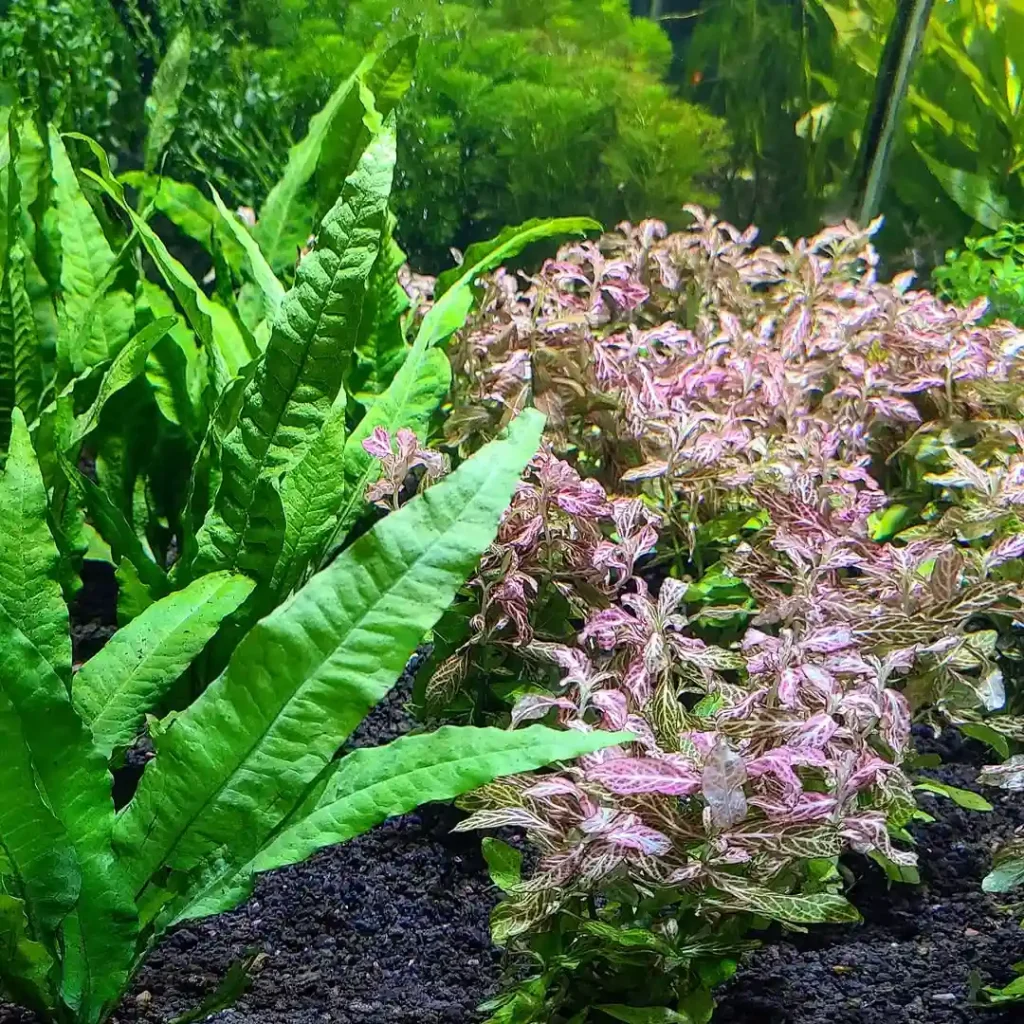
Java Moss is one of the most dependable plants for a freshwater shrimp aquarium. It tolerates low light, does not need nutrient-rich substrate, and can grow without injected CO₂.
Its tangled branches create a large grazing surface. Adult shrimp pick through the moss throughout the day, while baby shrimp disappear into its dense growth to find food and shelter.
Java Moss can be attached to driftwood, stones, mesh, or shrimp caves with thread or a small amount of aquarium-safe glue. It can also be left as a loose clump, although unattached moss may collect debris or move around during maintenance.
Growth can become untidy if it is never trimmed. Remove small amounts when necessary, but avoid cutting back the entire clump at once when baby shrimp may be living inside it.
Read the Java Moss Care Guide for attachment and trimming instructions.
2.Christmas Moss
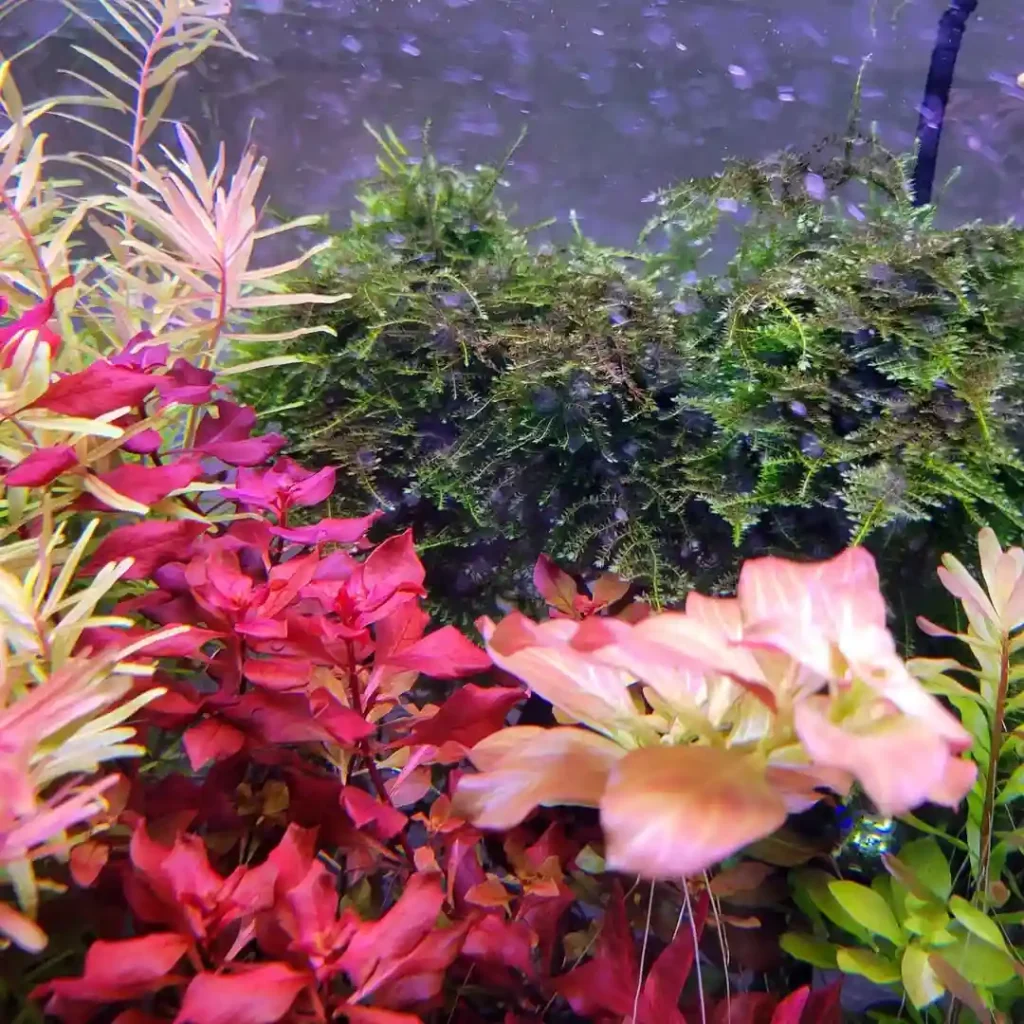
Christmas Moss has a more structured growth pattern than Java Moss. Its branches form layered, triangular shapes that can give rocks and driftwood a fuller appearance.
It offers many of the same benefits as Java Moss. Shrimp graze across its branches, and newly hatched shrimp can hide inside established clumps.
Christmas Moss usually looks better with slightly more consistent lighting and occasional trimming. It is still suitable for low-tech tanks, but it may grow more slowly than Java Moss under weak light.
Choose Christmas Moss when you want the shelter of moss with a more controlled and decorative appearance.
3. Subwassertang
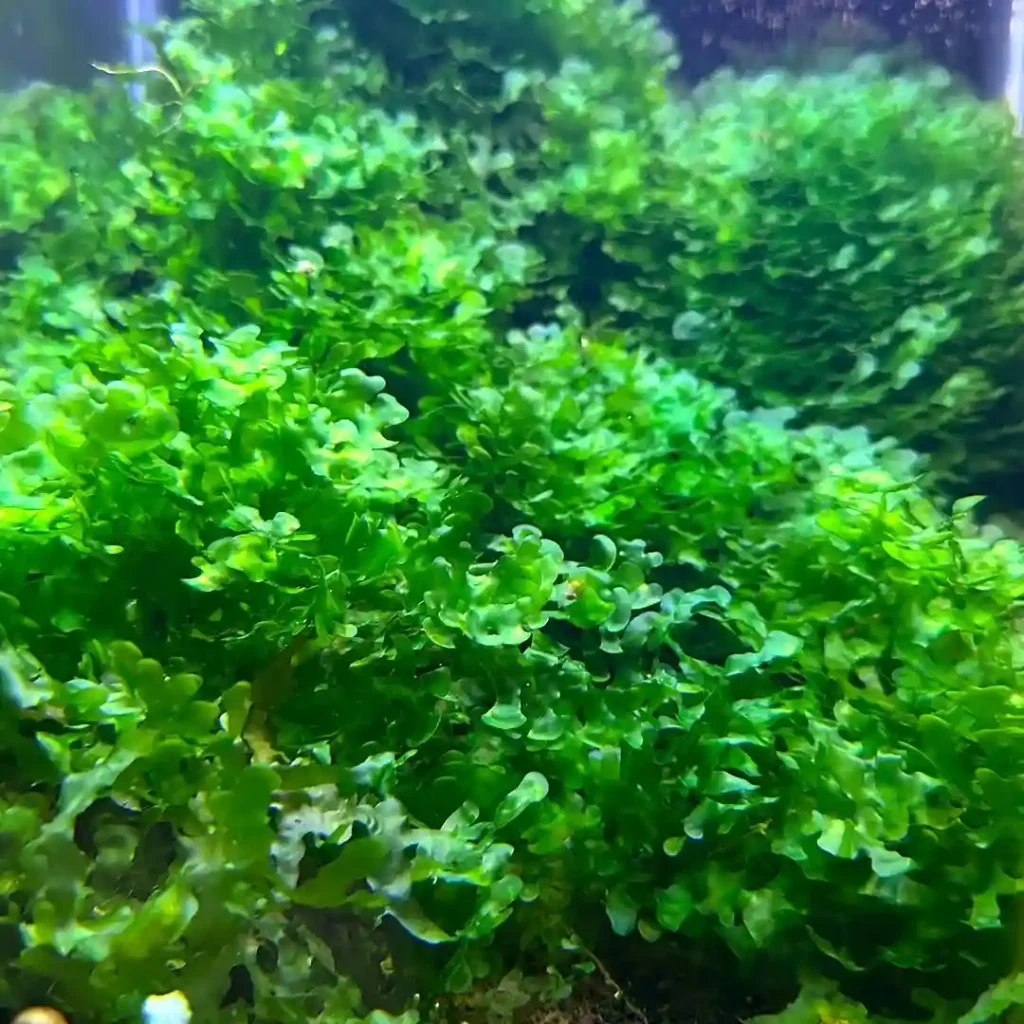
Subwassertang grows in loose, soft clumps instead of producing typical stems or roots. Its thin, folded growth creates many small spaces where biofilm can form.
It does not need to be buried or carefully attached. You can place it between stones, tuck it around driftwood, or allow it to form a loose mound.
This plant is particularly useful in breeding tanks. Baby shrimp can move through the clump while larger tank inhabitants have difficulty reaching into its narrow spaces.
Subwassertang grows slowly, so it will not cover an aquarium overnight. Once established, though, it requires very little trimming and works well in low to moderate light.
4. Anubias Nana
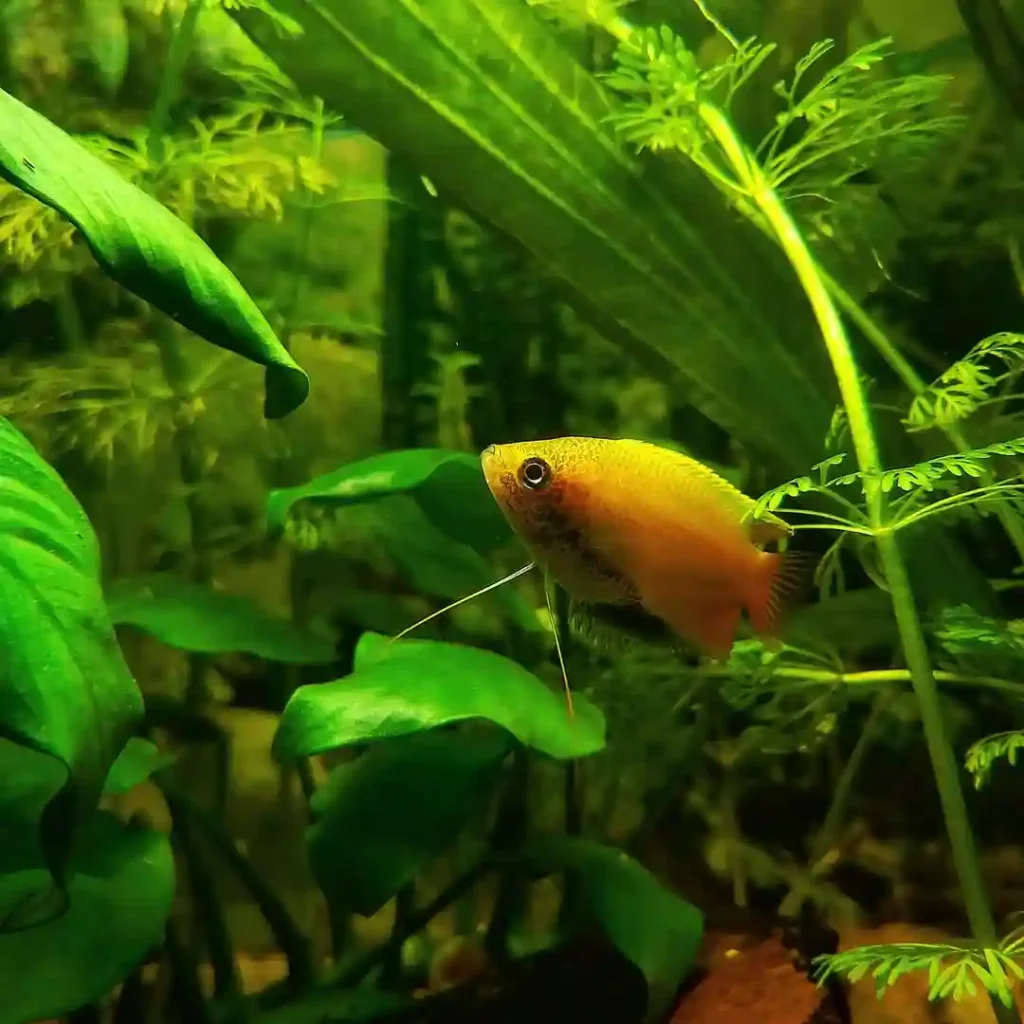
Anubias Nana is a strong choice for shrimp keepers who want a plant that does not need frequent attention. It grows slowly, tolerates low light, and produces broad leaves that shrimp often use as grazing and resting surfaces.
The plant grows from a thick horizontal stem called a rhizome. Never bury this rhizome in gravel or soil because it may rot. Attach the plant to a rock or piece of driftwood while leaving the rhizome exposed to the water.
Older Anubias leaves may collect visible algae because the plant grows slowly. In a shrimp aquarium, that is not always a bad thing. Shrimp often spend long periods cleaning these mature leaves.
Anubias Nana Petite is especially useful in nano tanks because it stays smaller than many other Anubias varieties.
5. Java Fern
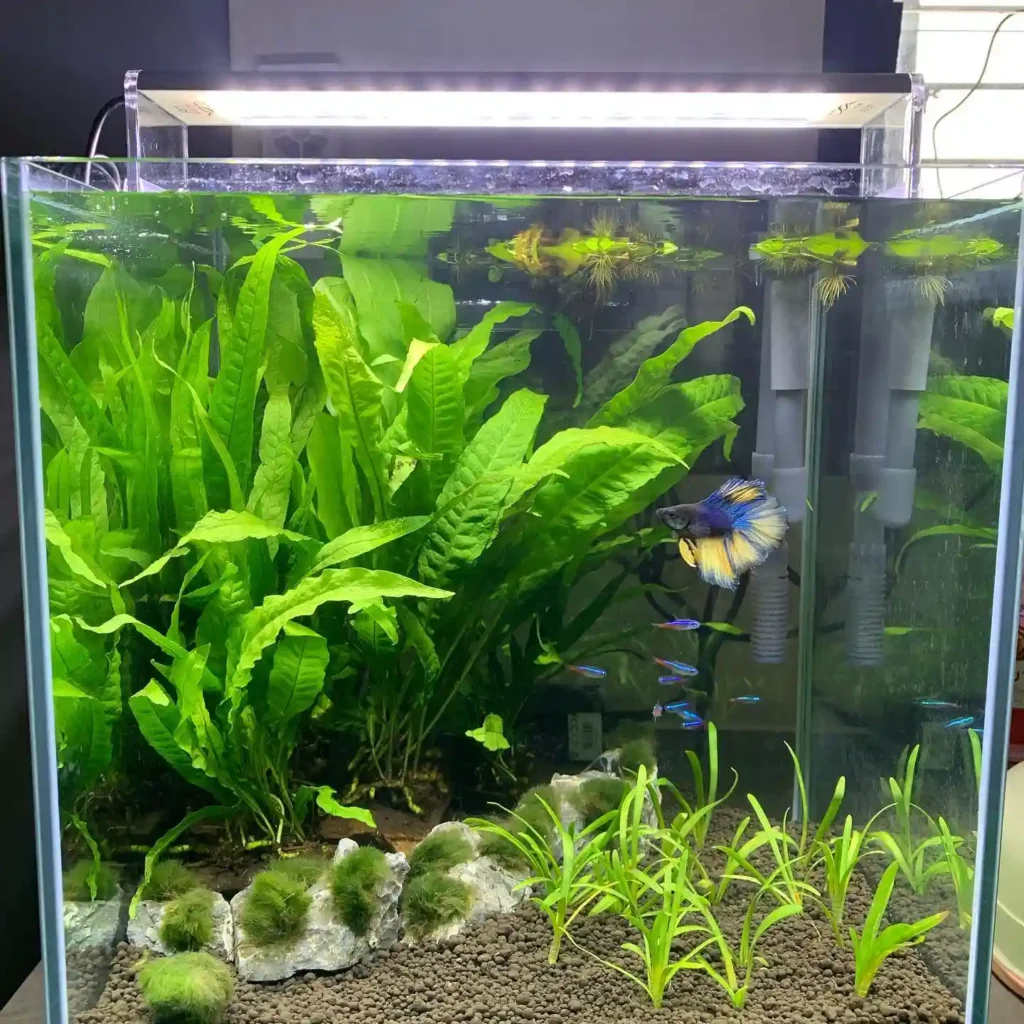
Java Fern is another hardy rhizome plant that grows well on rocks and wood. It handles low to moderate lighting and does not need injected CO₂.
Its longer leaves create shaded areas where shrimp can rest or molt. Established plants may also produce small plantlets on mature leaves, adding extra cover over time.
Like Anubias, Java Fern should not have its rhizome buried in the substrate. Secure it to hardscape and allow its roots to grip the surface naturally.
Java Fern can grow too large for very small desktop tanks, so choose a compact variety such as Java Fern Trident or Windelov if space is limited.
See the Java Fern Care Guide for more information about placement and propagation.
6. Bucephalandra
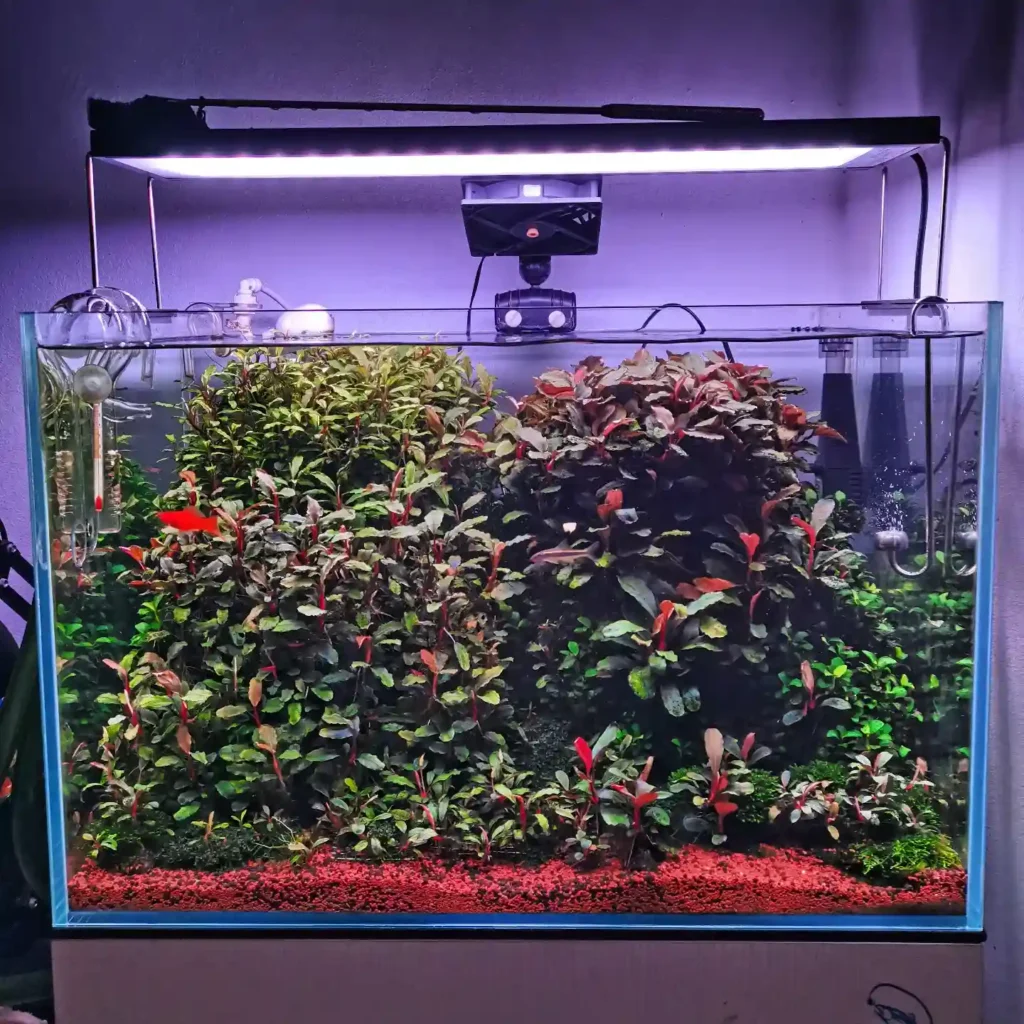
Bucephalandra, commonly called Buce, is a compact rhizome plant with attractive leaves that may appear green, blue, bronze, or purple depending on the variety and lighting.
Its slow growth makes it suitable for shrimp aquariums that need a tidy appearance. Shrimp frequently graze on its textured leaves, particularly once the plant has been in the aquarium long enough to develop a light layer of biofilm.
Attach Bucephalandra to small rocks, wood, or other hardscape. Do not bury its rhizome.
Buce is generally more expensive than Java Fern or Anubias, and newly added plants may lose a few leaves while adjusting. Stable water and modest lighting usually work better than sudden changes or very intense light.
Read the Bucephalandra Care Guide before adding it to a new aquascape.
7. Salvinia
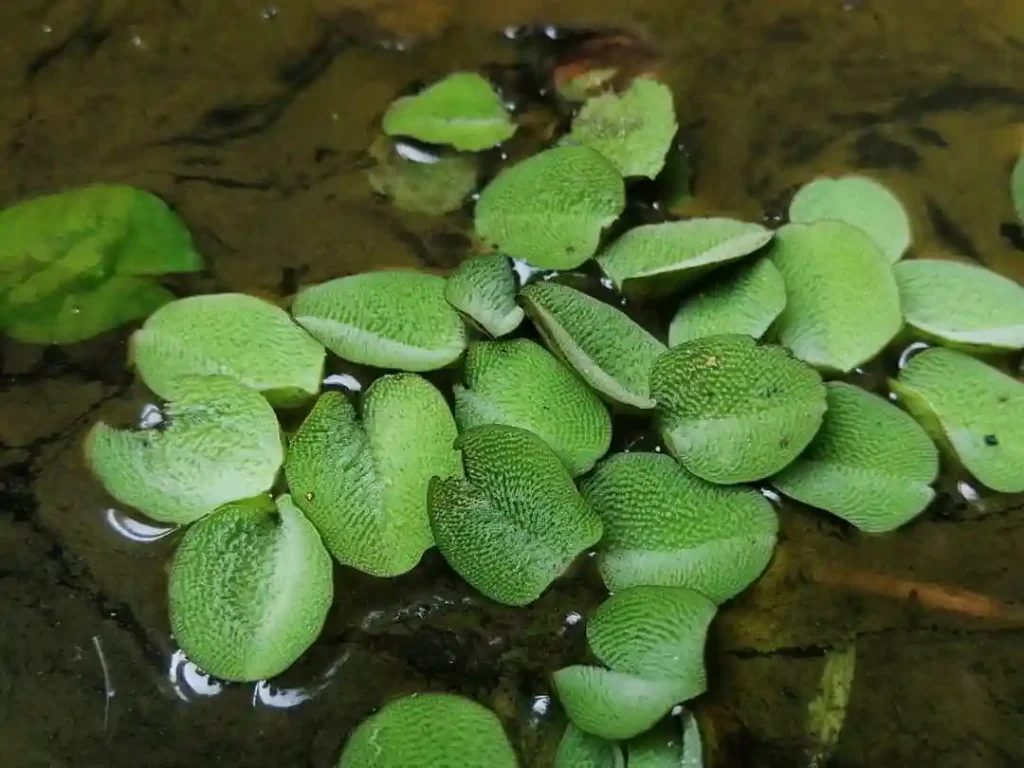
Salvinia is a floating plant with small surface leaves and fine underwater growth. Its hanging structures provide grazing areas near the surface and cover for young shrimp.
Floating plants absorb nutrients directly from the water column and create gentle shade below them. This can make shrimp feel more secure, especially in tanks with bright overhead lighting.
Salvinia is easier to control than Duckweed, but it still needs regular thinning. Do not allow it to cover the entire surface because it can block light from submerged plants and reduce open space for gas exchange.
Surface agitation should be gentle. Strong splashing or constantly wet leaves can damage many floating plants.
8. Amazon Frogbit
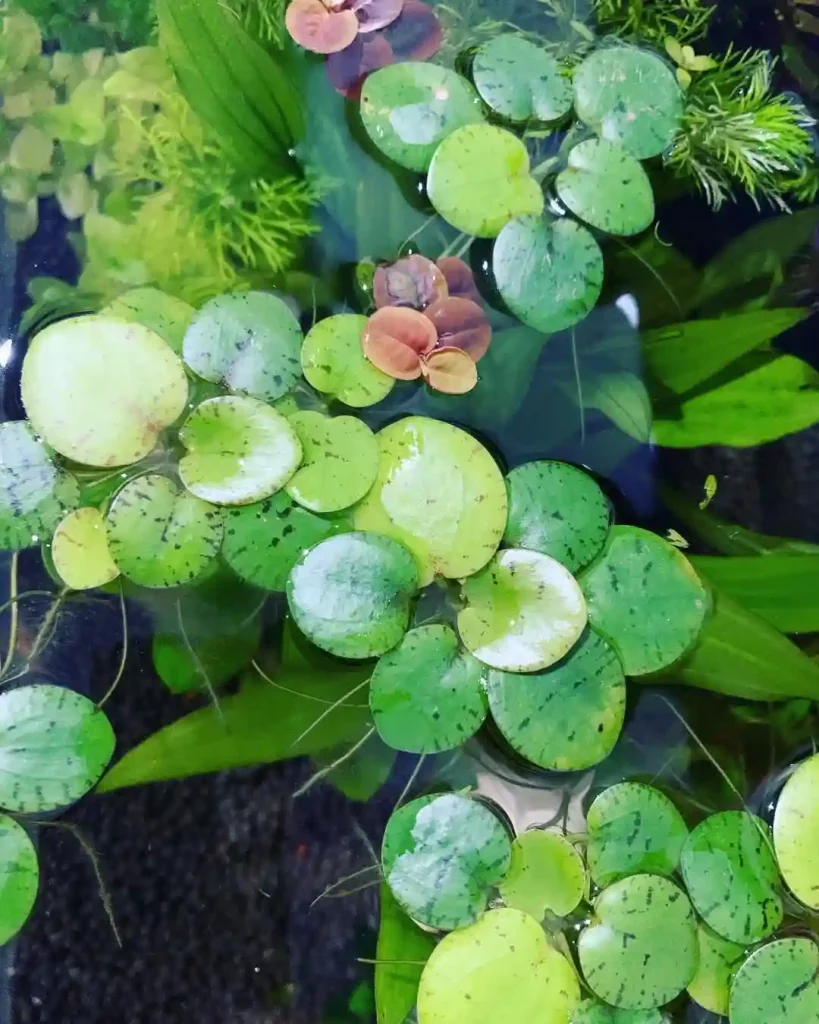
Amazon Frogbit produces larger floating leaves and long roots that hang down into the aquarium. Shrimp often climb along these roots and graze on the material that collects there.
Its roots make it especially helpful in breeding tanks, although they can become long enough to dominate a nano aquarium. Trim individual roots carefully if they interfere with the layout.
Frogbit appreciates a calm surface and access to light above the tank. Keep its leaves away from constant filter splashing and condensation when possible.
Like other floating plants, Frogbit must be thinned regularly. Leave part of the water surface open instead of allowing a solid plant mat to develop.
See the Floating Aquarium Plants Guide for more surface-growing options.
9. Cryptocoryne Wendtii
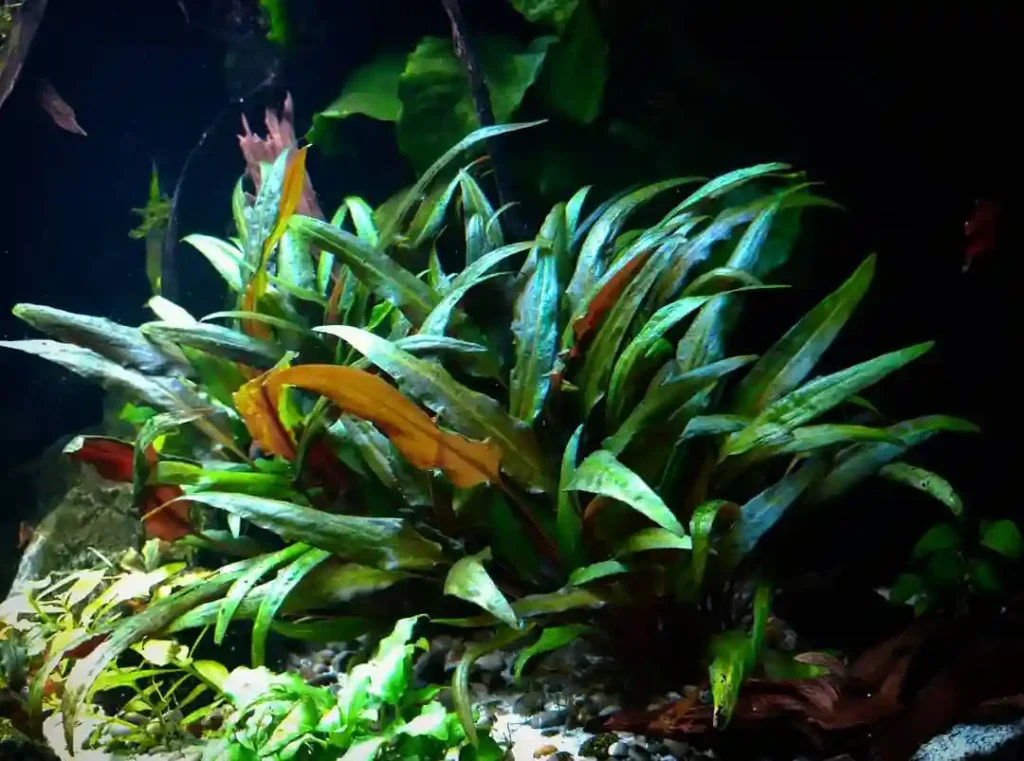
Cryptocoryne Wendtii is a rooted plant that works well when you want cover closer to the substrate. Its leaves form compact groups that shrimp can crawl beneath and graze around.
Unlike moss, Anubias, and Java Fern, Cryptocoryne should be planted in the substrate. It gets much of its nutrition through its roots, so an inert substrate may need occasional root tabs.
Newly introduced Cryptocoryne plants sometimes lose existing leaves after being moved. This is commonly called crypt melt. If the roots remain healthy and the tank conditions stay stable, new submerged leaves can grow back.
Avoid moving the plant repeatedly once it has settled. Cryptocoryne usually performs best when left undisturbed.
10. Monte Carlo
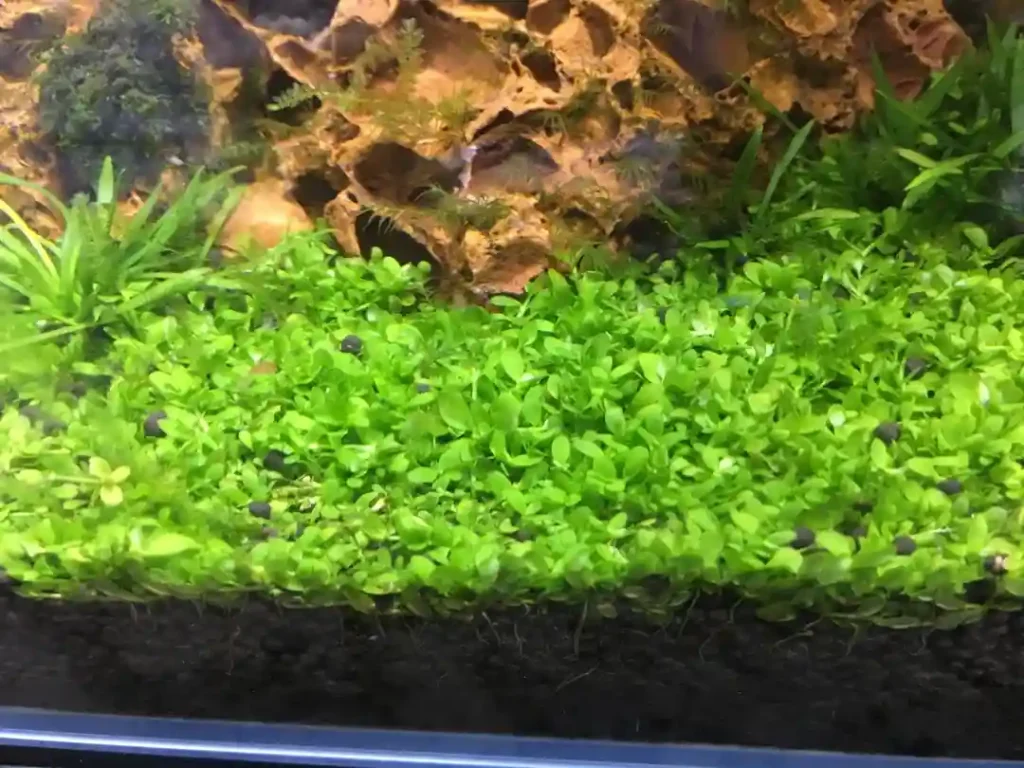
Monte Carlo is a carpeting plant that creates low growth across the foreground. Shrimp can crawl over and between its small leaves while grazing close to the substrate.
It is more demanding than Java Moss, Anubias, or Java Fern. Moderate light and a steady nutrient supply produce better results. Injected CO₂ can speed up growth, but it is not always required if expectations are realistic.
Without CO₂, Monte Carlo may spread slowly and grow less densely. That does not stop it from being useful in a shrimp tank, but beginners should not expect an instant, perfectly even carpet.
Use Monte Carlo when you want an open foreground with low shelter. For an easier first shrimp tank, start with moss and attached plants before adding carpeting species.
You can compare more options in the Aquarium Carpet Plants Guide.
Choosing Plants for Different Shrimp Tanks
The best combination depends on the tank’s size and purpose.
For a small shrimp-only aquarium, Java Moss, Anubias Nana Petite, Subwassertang, and a controlled amount of Salvinia provide plenty of grazing space without occupying the whole tank.
A breeding setup benefits from denser cover. Java Moss, Christmas Moss, Subwassertang, and floating roots give baby shrimp more places to remain hidden while feeding.
Larger display tanks can combine several plant levels. Monte Carlo can cover part of the foreground, Cryptocoryne can fill the middle, and Java Fern can provide height toward the back.
Do not fill every part of the aquarium. Shrimp still need accessible feeding areas, and you need enough open space to inspect the colony and remove waste.
Preparing New Plants for a Shrimp Aquarium
This is one of the most important parts of adding plants to a shrimp tank. Shrimp can be sensitive to pesticide residue left on commercially grown plants.
Tissue-culture plants are usually the lowest-risk option because they are grown in sealed containers without common aquarium pests or pesticide residue. Remove the gel and rinse the plant before planting.
Potted and loose aquarium plants require more care. Rinse them thoroughly, remove rock wool, inspect them for pests, and quarantine them in a separate container when their treatment history is unknown.
Do not assume that a quick rinse removes every chemical. If a store cannot confirm that its plants are safe for shrimp, quarantine them or choose tissue-culture plants instead.
Avoid transferring water from a plant holding tank into the shrimp aquarium.
Lighting a Planted Shrimp Tank
Most beginner plants do not need extremely bright light. Six to eight hours of consistent lighting per day is a sensible starting point.
Longer lighting periods do not automatically produce healthier plants. Excess light can encourage algae and make maintenance more difficult, especially when plant growth is limited by nutrients or CO₂.
Use a timer so the lighting schedule stays consistent. Adjust the intensity or duration gradually based on plant growth and algae levels instead of making several changes at once.
Fertilizer and Copper Safety
Plants may need fertilizer when nutrients are limited, particularly in shrimp-only tanks that receive little food and produce less waste than a heavily stocked fish aquarium.
Choose a fertilizer intended for planted aquariums and follow its instructions carefully. Start conservatively and watch the tank after dosing.
The advice to use only “copper-free” fertilizer is too simplistic. Plants require copper in very small quantities, and reputable shrimp-safe fertilizers may contain trace amounts. The greater risks are overdosing, using an unsuitable product, or treating the aquarium with copper-based medication.
Never use copper medication in a shrimp tank unless a qualified aquatic veterinarian has directed the treatment. Do not assume that every fish medication is safe for invertebrates.
Maintaining Plants Without Disturbing the Shrimp
Trim plants in small sections rather than cutting everything on the same day. Large changes remove grazing surfaces and may expose baby shrimp that were hiding in dense growth.
Before discarding moss, floating plants, or trimmings, place them in a container of aquarium water and inspect them carefully. Tiny shrimp can remain attached to plants after removal.
Do not scrub every leaf or remove every trace of biofilm. The aquarium should be clean enough to remain stable, but a shrimp tank does not need to look sterile.
Use a sponge prefilter over the filter intake when baby shrimp are present. Plants provide shelter, but they cannot prevent small shrimp from being pulled into an uncovered intake.
Plants That Need More Planning
High-demand carpeting and stem plants are not dangerous to shrimp, but they may be frustrating for beginners. They often need stronger lighting, more nutrients, regular trimming, and careful CO₂ management.
Duckweed is shrimp-safe, but it spreads rapidly and can be difficult to remove once established. Salvinia or Frogbit is easier to control.
Avoid adding unidentified outdoor or wild-collected plants. They may introduce pesticides, parasites, predators, or contaminants.
The most immediate danger usually comes from chemical treatment rather than the plant species itself. Always check how a plant was grown and handled before placing it with shrimp.
Do Cherry Shrimp Eat Live Plants?
Cherry Shrimp normally graze on biofilm, algae, microorganisms, and decaying material found on plant surfaces. They generally leave healthy plant tissue alone.
You may see shrimp picking at a damaged or dying leaf. They are usually eating the softened material and organisms growing on it rather than attacking a healthy plant.
What Is the Best Plant for Baby Shrimp?
Java Moss and Subwassertang are two of the best choices for baby shrimp. Their dense growth creates cover and holds plenty of natural grazing material.
Floating plant roots also help, but they should be used alongside lower cover because newly hatched shrimp may remain close to the substrate.
Read the Baby Shrimp Care Guide for more ways to improve survival.
Can Shrimp Live Without Plants?
Shrimp can live without live plants if the aquarium is properly cycled, filtered, fed, and maintained. However, live plants provide extra grazing surfaces and shelter that are difficult to replace with artificial decorations.
Plants become even more useful when the colony is breeding.
Are Artificial Plants Safe for Shrimp?
Aquarium-safe artificial plants can provide physical cover, but they do not grow, use nutrients, or offer the same textured grazing surfaces as live plants.
Avoid hard plastic decorations with sharp edges that could catch or injure shrimp.
How Many Plants Does a Shrimp Tank Need?
There is no exact number. Aim to provide a mixture of covered and open areas.
A few established clumps of moss and one or two attached plants can work in a nano aquarium. Breeding tanks usually benefit from denser planting, while display tanks can balance plants with visible feeding areas.
Can You Use Fertilizer With Shrimp?
Yes, but use a product marked safe for freshwater shrimp and follow its recommended dose. Never add extra fertilizer in an attempt to force faster plant growth.
Trace copper in a properly formulated fertilizer is different from concentrated copper medication. Large amounts of copper can harm shrimp.
Are Floating Plants Good for Shrimp?
Floating plants can be very useful. Their roots provide grazing space, soften bright lighting, and give baby shrimp extra cover.
Thin them regularly so they do not block all light or cover the entire water surface.
