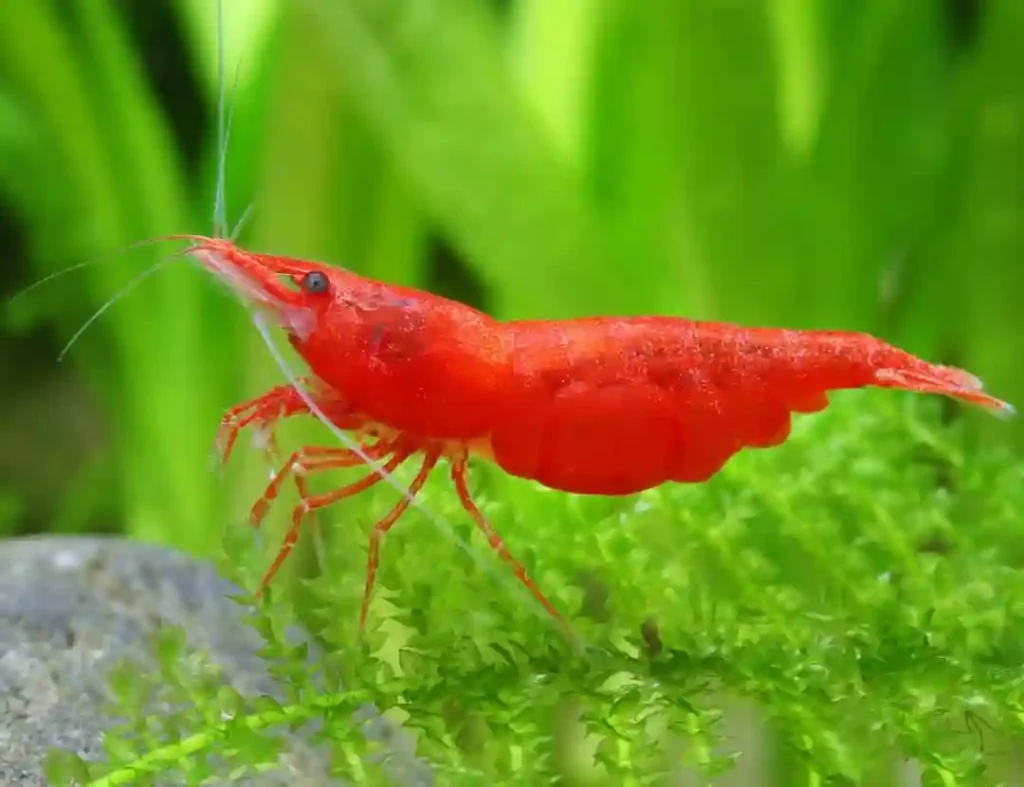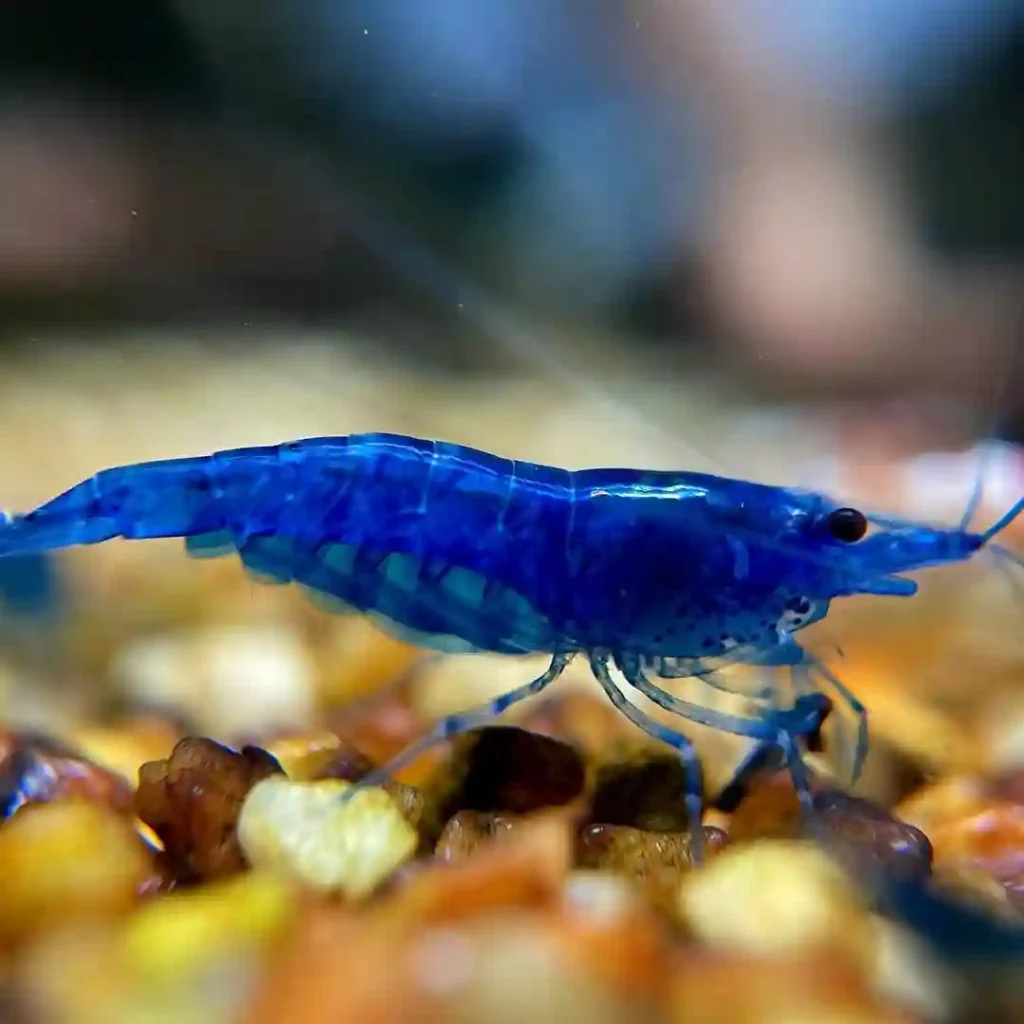
Pregnant cherry shrimp, also known as berried shrimp, carry their eggs beneath their abdomen, making them easy to spot. You’ll notice a cluster of tiny yellow or green eggs held in their swimmerets. As the eggs develop, they darken and get closer to hatching. This guide explains how to identify each pregnancy stage, what to expect, and how to care for berried shrimp to ensure a successful hatch.
How to Identify a Pregnant Cherry Shrimp
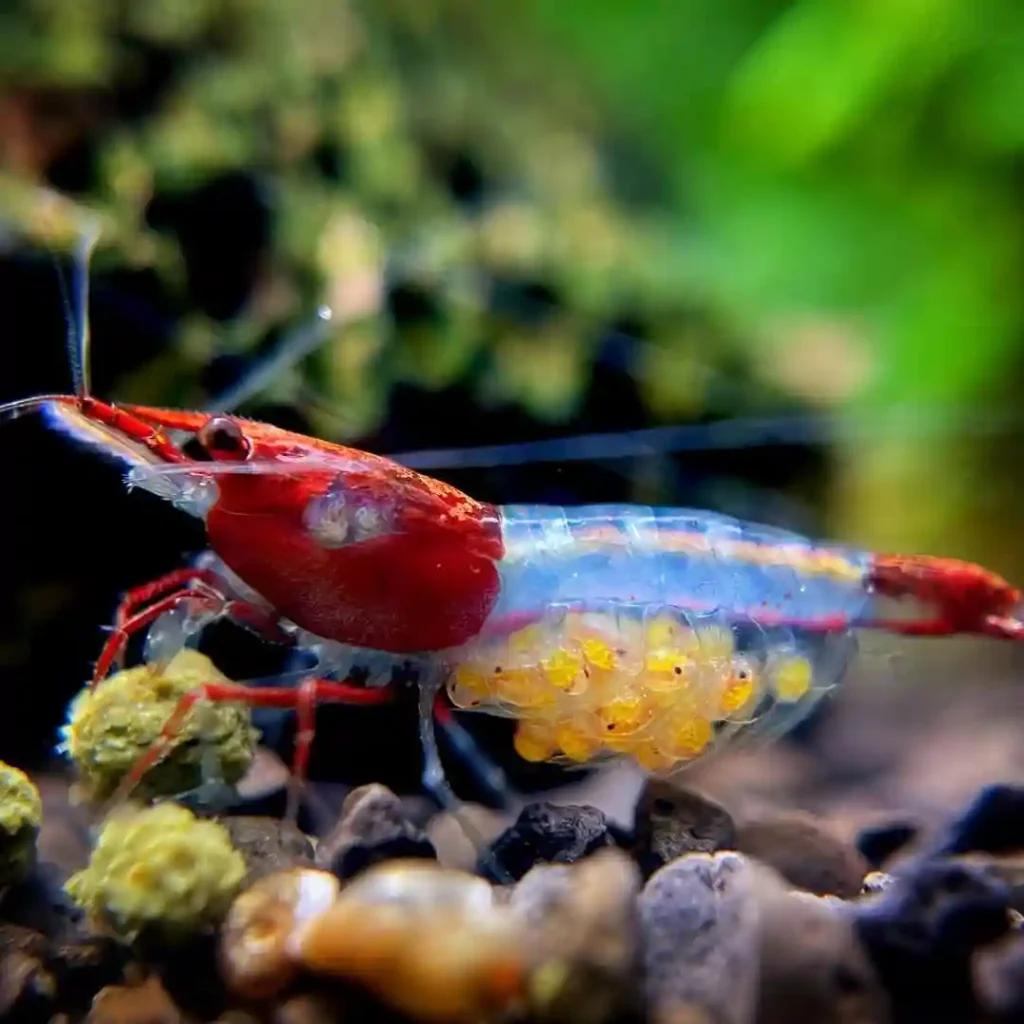
Cherry shrimp pregnancy happens in distinct stages that are visible to the naked eye:
The Saddle Stage (Pre-Pregnancy)
Before becoming “berried,” female cherry shrimp develop what’s called a saddle:
- Appearance: A yellowish-green or whitish triangular patch visible behind the head/upper back area
- What it is: Developing eggs in the ovaries
- Timing: The saddle may be visible for several days before eggs are moved to the underside
This saddle stage is your first indication that a female is preparing to breed.
The Berried Stage (Active Pregnancy)
Once a female has mated and is officially “pregnant,” you’ll notice:
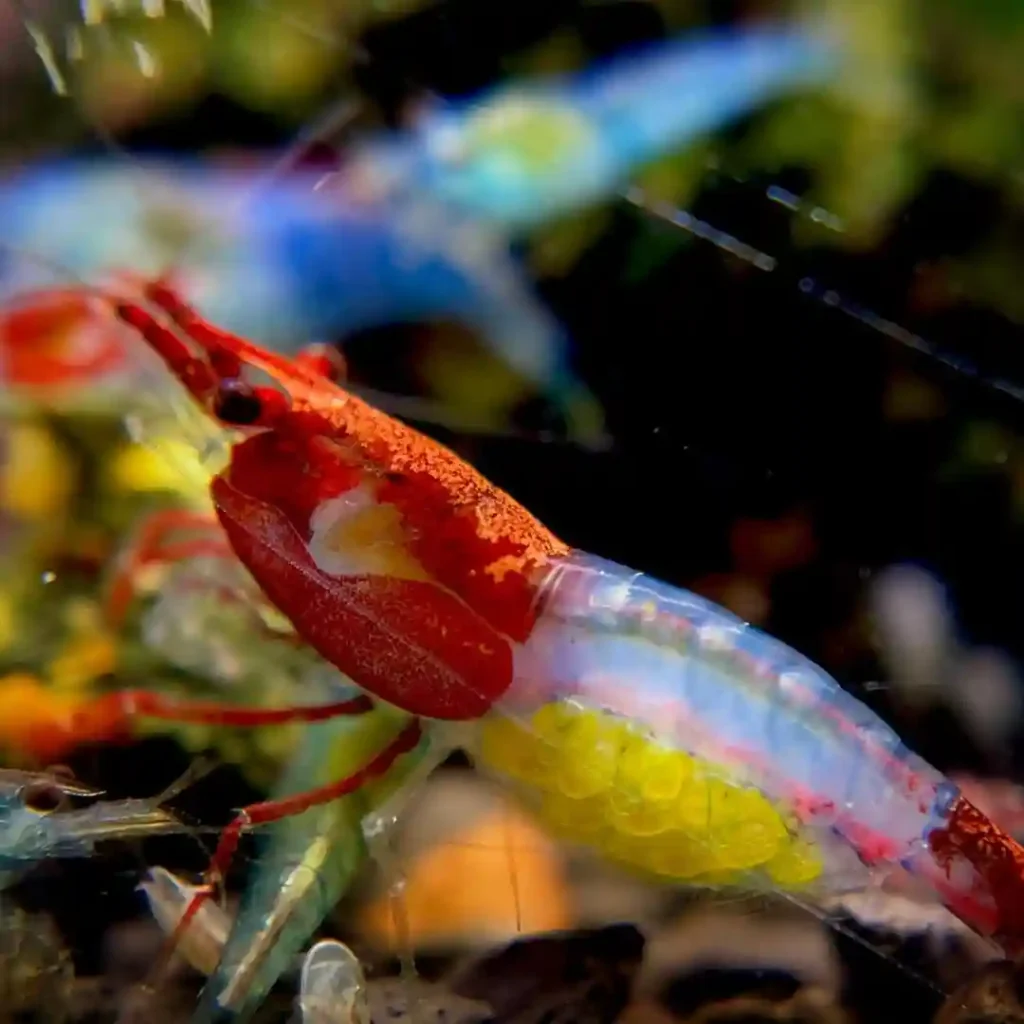
- Eggs under the tail: The most obvious sign – small, round eggs clustered beneath the shrimp’s abdomen
- Color of eggs: Usually matching the shrimp color (dark red/brown for red cherry shrimp), though they may appear slightly darker or lighter
- Number of eggs: Typically 20-30 eggs for young females, up to 40+ for mature females
- Constant fanning: The female uses her swimmerets (small leg-like appendages under the tail) to continuously fan the eggs, supplying them with oxygen
Behavioral Changes in Pregnant Cherry Shrimp

Berried females often show distinctive behaviors:
- Increased hiding: They tend to seek shelter and avoid open spaces more than usual
- Less active during molt cycles: They may reduce activity to protect their eggs
- Defensive posturing: When threatened, they curl their tails tighter to protect the eggs
- More cautious feeding: They might take longer to approach food sources
The Pregnancy Timeline
Cherry shrimp pregnancy follows a predictable pattern:
| Stage | Timing | What’s Happening |
| Saddle formation | Days 1-7+ | Eggs developing in ovaries |
| Mating | Following a female molt | Male deposits sperm, eggs are fertilized |
| Berried stage begins | Immediately after mating | Eggs move to underside of tail |
| Egg development | Days 1-28 (temperature dependent) | Eggs gradually darken and develop eyes |
| Pre-hatching | Days 25-28 | Eye spots clearly visible in eggs |
| Hatching | Days 28-30 | Tiny shrimplets emerge from eggs |
Water temperature significantly affects this timeline – warmer water (75-78°F) speeds up development, while cooler water (68-72°F) slows it down.
Proper Care for Pregnant Cherry Shrimp
When you spot a berried female, take these steps to maximize breeding success:
Water Parameters
Maintain stable conditions to prevent egg dropping:
- Temperature: 72-78°F (22-26°C) – avoid fluctuations
- pH: 6.8-7.5
- GH: 6-8 dGH
- KH: 2-5 dKH
- TDS: 150-250 ppm
- Ammonia/Nitrite: 0 ppm (critical)
- Nitrate: Below 20 ppm
Feeding Recommendations
Pregnant shrimp benefit from:
- Calcium-rich foods: Supports proper egg development (crushed cuttlebone, mineral supplements)
- Protein sources: Small amounts of high-quality protein foods (Snowflake food, baby shrimp food)
- Biofilm enhancers: Products that promote natural biofilm growth
- Blanched vegetables: Spinach, zucchini, green beans (1-2 times weekly)
Creating Safe Spaces
To protect the mother and future babies:
- Dense plant cover: Java moss, guppy grass, and floating plants
- Shrimp tubes/caves: Commercial ceramic shrimp shelters or small pieces of PVC pipe
- Leaf litter: Indian almond leaves or oak leaves create hiding spots while releasing beneficial tannins
What Not to Do With Pregnant Shrimp
Avoid these common mistakes:
- Don’t move her: Transferring a berried female to another tank often causes stress and egg dropping
- Don’t change water parameters suddenly: Large water changes can trigger premature egg release
- Don’t increase light intensity: Bright lights may stress pregnant females
- Don’t add new tank mates: Introducing new fish or shrimp creates unnecessary stress
- Don’t overfeed: Excess food leads to water quality issues
After the Eggs Hatch
Once your pregnant cherry shrimp releases her babies:
- Tiny shrimplets: New babies are approximately 1-2mm long and look like transparent versions of adults
- Immediate independence: Unlike fish fry, shrimplets are fully independent and begin foraging immediately
- Feeding needs: They survive on biofilm and microorganisms initially
- Growth rate: They reach juvenile size in 2-3 weeks and begin showing adult coloration
- Safety concerns: Standard filters can suck up shrimplets, so ensure all intakes are covered with fine sponge
Common Problems and Solutions
| Problem | Possible Causes | Solutions |
| Eggs turning white/fuzzy | Fungal infection or unfertilized eggs | Normal process – female will remove bad eggs herself |
| Female dropping all eggs | Severe stress, poor water quality, or shock | Check parameters, reduce disturbances, ensure stable conditions |
| Few eggs hatching | Water parameters issues, nutritional deficiencies | Supplement with mineral-rich foods, stabilize water conditions |
| Eggs not developing | Unfertilized clutch or temperature too low | Be patient – females may carry unfertilized eggs full term |
| Female hiding constantly | Normal protective behavior | Provide adequate hiding places and reduce tank activity |
Final Thoughts
Pregnant cherry shrimp are a sign of a healthy, thriving tank environment. Their willingness to breed indicates you’ve created suitable conditions for these sensitive creatures. By providing proper care during pregnancy, you’ll soon have a growing colony of these colorful, helpful algae-eaters enhancing your aquarium.
Remember that cherry shrimp can breed quite prolifically in good conditions, so have a plan for the growing population – whether that’s enjoying a larger colony, setting up additional tanks, or sharing with fellow hobbyists.