A new planted tank often looks calm and complete. Fresh soil, healthy plants, clear water. It feels like the right moment to add shrimp.
But this is where many shrimp losses begin.
Shrimp are not fragile because they are difficult to keep. They struggle because new planted tanks are still changing in ways that are easy to miss. Water chemistry shifts quietly. Food sources haven’t formed yet. Beneficial bacteria are still settling in.
This article explains the most common reasons shrimp fail in new planted tanks and what actually helps. Each point focuses on real-world problems beginners face, not theory, so you can understand what’s happening and give your shrimp a better chance to survive and grow.
1. The Tank Isn’t Truly Stable Yet
Why it happens: A new planted tank may finish the nitrogen cycle, but stability takes longer. Beneficial bacteria are still adjusting, and small changes cause big swings. Shrimp react fast to instability, even when test kits look fine.
How to fix it: Let the tank run shrimp-free for at least 30–45 days. Feed lightly to build bacteria. Avoid major changes. Stability matters more than “cycled” status.
2. Active Soil Releases Ammonia
Why it happens: Most planted tank soils release ammonia during the first weeks. Plants may handle it, but shrimp cannot. Even low ammonia levels stress or kill shrimp quickly.
How to fix it: Cycle the tank fully with soil before adding shrimp. Do frequent water changes early. Test ammonia often. Only add shrimp once ammonia stays at zero for weeks, not days.
3. No Biofilm for Shrimp to Eat
Why it happens: Shrimp survive by grazing on biofilm, algae, and microorganisms. New tanks look clean but lack food at the microscopic level.
How to fix it: Wait until you see light algae on glass and decor. Add botanicals like leaf litter or driftwood. Avoid overcleaning. A slightly “dirty” tank feeds shrimp better than a spotless one.
4. Plant Melting Pollutes the Water
Why it happens: New plants often melt while adapting. Decaying leaves release waste and ammonia, which destabilizes water fast in small tanks.
How to fix it: Trim melting leaves early. Remove rotting plant matter daily during the first weeks. Keep water changes steady. Once plants settle, water quality improves and shrimp survive longer.
5. CO₂ or Liquid Carbon Is Too Strong
Why it happens: CO₂ systems and liquid carbon products stress shrimp, especially in immature tanks. Sudden changes lower oxygen and affect molting.
How to fix it: Avoid liquid carbon in shrimp tanks. If using CO₂, keep levels low and consistent. Add shrimp only after plants adapt and CO₂ runs smoothly without daily adjustments.
6. Rapid pH and Hardness Swings
Why it happens: New tanks experience frequent pH, GH, and KH changes due to soil, water changes, and evaporation. Shrimp struggle with sudden shifts.
How to fix it: Top off with remineralized water, not tap. Match parameters during water changes. Keep changes small and regular. Stability saves shrimp more than chasing perfect numbers.
7. Overcleaning Removes Good Bacteria
Why it happens: Beginners clean filters, glass, and substrate too often. This removes biofilm and beneficial bacteria shrimp depend on.
How to fix it: Clean only when necessary. Rinse filter media in tank water. Leave some algae. Shrimp thrive in mature, slightly messy environments, not freshly scrubbed tanks.
8. Fertilizers Contain Shrimp Toxins
Why it happens: Some plant fertilizers contain copper or heavy metals. Plants tolerate them. Shrimp do not.
How to fix it: Use shrimp-safe fertilizers only. Dose lightly. Avoid root tabs near shrimp until the tank matures. If unsure, skip fertilizing until shrimp settle and plants root naturally.
9. No Microfauna Established
Why it happens: New tanks lack copepods, infusoria, and tiny organisms shrimp constantly eat. Pellets alone don’t meet their needs.
How to fix it: Add botanicals and natural wood. Seed the tank with aged filter media if possible. Time builds microfauna better than products ever will.
10. Too Many Shrimp Too Soon
Why it happens: Adding many shrimp at once overloads a fragile system. Waste increases faster than bacteria can adjust.
How to fix it: Start with a small group. Let the tank adjust before adding more. Shrimp breed quickly in stable tanks, so patience pays off.
11. Shrimp Were Added Too Early
Why it happens: A planted tank may look finished in two weeks, but shrimp need maturity, not aesthetics.
How to fix it: Wait at least a month after cycling. Longer is better. Watch for algae growth and stable readings over time, not single test results.
12. Acclimation Was Rushed
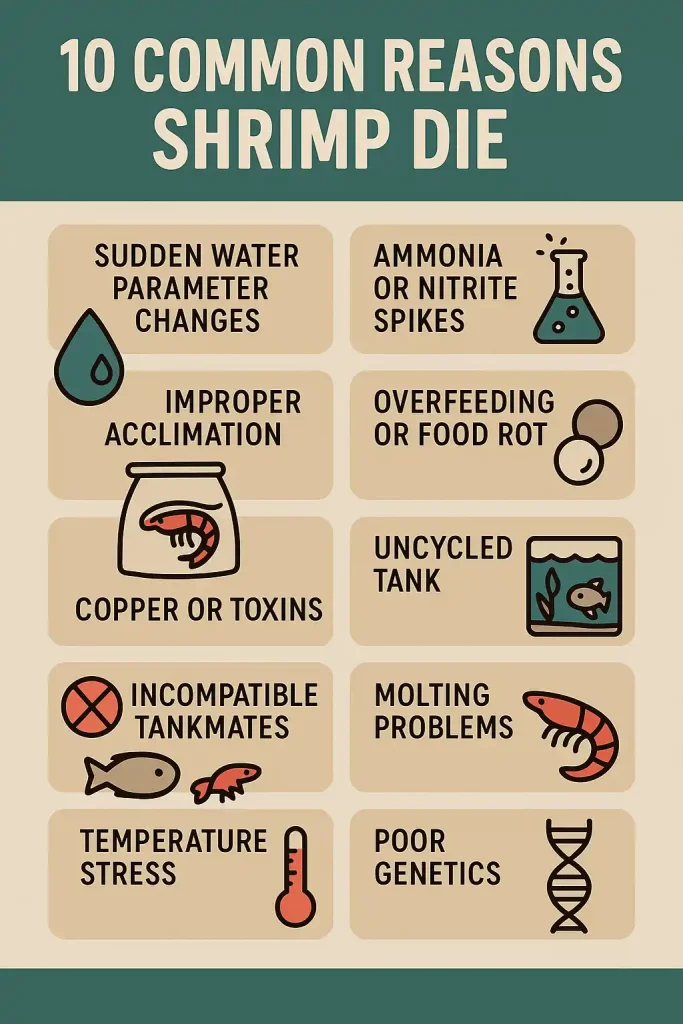
Why it happens: Shrimp experience shock when temperature and parameters change quickly. Many die within 48 hours due to poor acclimation.
How to fix it: Use slow drip acclimation for 1–2 hours. Match temperature and parameters closely. Never dump shrimp directly into a new tank.
13. The Tank Is Too Sterile
Why it happens: Overly clean tanks lack natural food and shelter. Shrimp feel stressed without leaf litter, algae, and hiding spots.
How to fix it: Add natural decor. Let algae grow lightly. Reduce cleaning. A tank that looks “alive” supports shrimp better than a showroom setup.