
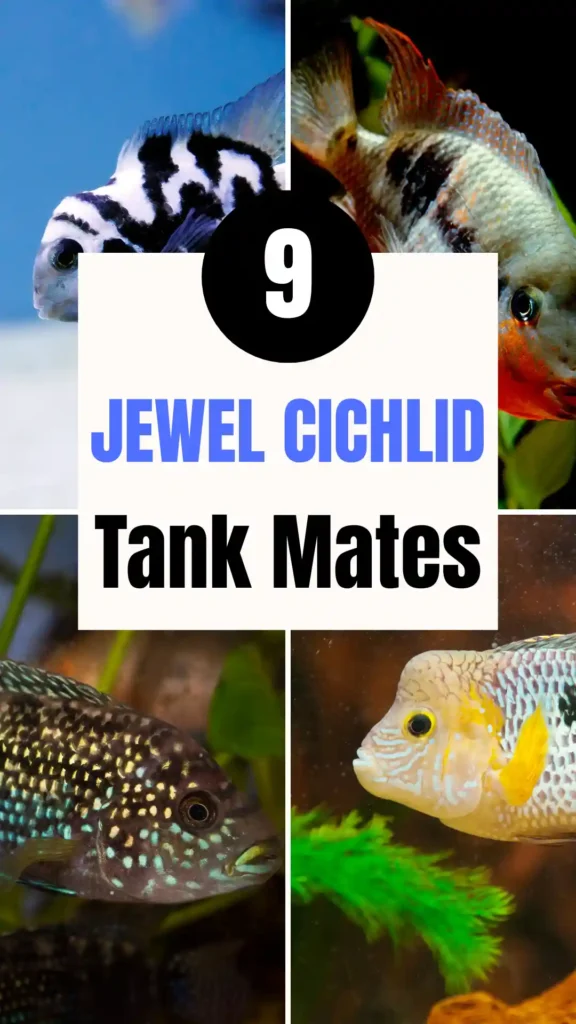
9 Jewel Cichlid Tank Mates

Jewel Cichlids are one of the most eye-catching freshwater fish you can keep in an aquarium. Their bright red body covered with sparkling blue spots makes them stand out in almost any tank. Because of this beauty, many aquarists want to keep them in a community aquarium with other fish.
However, Jewel Cichlids are known for their strong territorial behavior. If the wrong fish are placed in the same tank, fights can quickly start. Choosing the right tank mates is the key to keeping a peaceful aquarium. In this guide, we’ll explain which fish can live with Jewel Cichlids, which species should be avoided, and how to set up a tank that reduces aggression.
Jewel Cichlid Temperament
Before choosing tank mates, it’s important to understand how Jewel Cichlids behave in an aquarium.
Why Jewel Cichlids Are Aggressive
Jewel Cichlids come from African river systems where they protect their territory from other fish. In an aquarium, they show the same behavior. They often claim caves, rocks, or sections of the tank as their territory.
When another fish enters that space, the Jewel Cichlid may chase or attack it.
How Tank Size Affects Aggression
Tank size plays a huge role in controlling aggression. In small aquariums, fish cannot escape from territorial areas. This leads to constant stress and fighting.
Larger tanks provide more swimming space and allow fish to create their own territories.
Breeding Behavior Makes Them More Territorial
When a pair of Jewel Cichlids begins breeding, their aggression increases dramatically. They guard their eggs and fry and may attack any fish that swims nearby.
Because of this, many aquarists keep breeding pairs in a separate tank.
What Makes a Good Tank Mate for Jewel Cichlids
Not every fish can handle living with Jewel Cichlids. A good tank mate usually shares a few important traits.
Fish That Are Similar in Size
Small fish are often seen as food or easy targets. Tank mates should be similar in size or larger than Jewel Cichlids.
Semi-Aggressive or Hardy Fish
Peaceful fish struggle to defend themselves. Semi-aggressive fish tend to survive better because they can stand their ground.
Fish That Occupy Different Tank Levels
Fish that swim in different areas of the tank help reduce conflict. For example, bottom-dwelling catfish rarely compete for the same territory as cichlids.
Large Tank Requirements
A larger aquarium makes it easier to mix fish species. A tank of at least 40 to 55 gallons is recommended if you plan to keep multiple fish with Jewel Cichlids.
Best Jewel Cichlid Tank Mates
These fish are often kept successfully with Jewel Cichlids when the aquarium is large enough and properly decorated.
Convict Cichlids
Convict Cichlids are tough and territorial fish that can handle living with Jewel Cichlids. Their similar temperament means neither fish is easily bullied.
Firemouth Cichlids
Firemouth Cichlids are moderately aggressive but generally peaceful when they have enough space. They often coexist with Jewel Cichlids in large tanks.
Jack Dempsey Cichlids
Jack Dempseys are larger cichlids with strong personalities. Their size and strength make them capable of living alongside Jewel Cichlids in spacious aquariums.
Green Terror Cichlids
Green Terror Cichlids are semi-aggressive fish with bold personalities. Because they grow larger than Jewel Cichlids, they can hold their own in a mixed tank.
Texas Cichlids
Texas Cichlids are another hardy species. They are territorial but usually ignore other fish when enough hiding places are available.
Plecos
Large Plecostomus species make good tank mates because they stay near the bottom of the aquarium. They usually ignore other fish and focus on algae and leftover food.
Synodontis Catfish
Synodontis catfish are active bottom dwellers that come from similar regions as African cichlids. Their tough bodies help them tolerate occasional aggression.
Silver Dollars
Silver Dollars are fast schooling fish that stay in the middle or upper areas of the tank. Their speed helps them avoid conflicts with Jewel Cichlids.
Giant Danios
Giant Danios are quick swimmers that rarely stay in one place. Their fast movement makes it difficult for aggressive fish to chase them.
Tank Mates to Avoid With Jewel Cichlids
Some fish are simply not suitable companions for Jewel Cichlids.
Small Tetras
Tiny schooling fish like neon tetras are not good choices. Jewel Cichlids may chase or eat them.
Guppies and Other Livebearers
Peaceful fish such as guppies cannot compete with aggressive cichlids. If you want to keep guppies, it’s best to house them with peaceful species instead.
You can read more about them in our guide to guppy fish:
If you’re planning a guppy tank, you may also want to see these guppy tank mates:
Angelfish
Angelfish may appear large enough to coexist with Jewel Cichlids, but they are often bullied and stressed in aggressive tanks.
Shrimp and Snails
Shrimp and small snails usually become food for Jewel Cichlids. They are not recommended for tanks with these fish.
Ideal Tank Setup for Jewel Cichlid Community Tanks
A well-designed tank can help reduce aggression and improve compatibility.
Tank Size Recommendation
For a mixed tank with Jewel Cichlids, aim for at least 55 gallons. Larger tanks are even better because they provide more territory.
Use Rocks and Caves
Cichlids love hiding places. Adding rocks, caves, and driftwood allows fish to create separate territories.
Strong Filtration
Cichlids produce a lot of waste. A strong filtration system helps keep the water clean and stable.
Balanced Stocking
Avoid overcrowding the aquarium. Too many fish in a small space often leads to stress and fighting.
Tips to Reduce Aggression in Jewel Cichlid Tanks
Even compatible fish can fight sometimes. These simple strategies can help reduce problems.
Add Fish at the Same Time
Introducing fish together prevents one species from claiming the entire tank first.
Rearrange Decorations
Changing the layout of the tank can break established territories and reduce aggression.
Keep Fish of Similar Size
Fish that are close in size are less likely to bully each other.
Watch Breeding Behavior
If a pair begins breeding, they may become extremely aggressive. Be ready to move other fish if necessary.
Can Jewel Cichlids Live in Community Tanks?
Yes, Jewel Cichlids can live in community tanks, but success depends on several factors. The tank must be large enough, and the other fish should be strong and similar in size.
Beginner aquarists sometimes struggle with aggressive cichlids, so careful planning is important. With the right setup and compatible species, Jewel Cichlids can become a beautiful centerpiece in a mixed aquarium.
FAQs
Can Jewel Cichlids live with other cichlids?
Yes, they can live with other semi-aggressive cichlids if the tank is large enough. However, territorial disputes may still occur, especially during breeding.
Are Jewel Cichlids too aggressive for community tanks?
They can be aggressive, but they are not impossible to keep in community aquariums. Choosing hardy tank mates and providing plenty of space helps reduce conflict.
Can Jewel Cichlids live with plecos?
Yes. Large plecos are often good companions because they stay near the bottom of the tank and rarely interact with cichlids.
How many Jewel Cichlids can live together?
A pair is the most common setup. Keeping multiple pairs requires a very large aquarium with plenty of hiding spaces.
What size tank do Jewel Cichlids need for tank mates?
A 55-gallon tank or larger is recommended when keeping Jewel Cichlids with other fish.
Final Thoughts
Jewel Cichlids are stunning fish that can bring bright color and personality to an aquarium. While their territorial nature makes them challenging to mix with other species, the right tank mates and proper tank setup can make a big difference.
Choose fish that are similar in size, strong enough to defend themselves, and able to occupy different areas of the tank. With careful planning and a spacious aquarium, you can successfully keep Jewel Cichlids alongside other fascinating fish.
