
Peppered Cory Care Guide

Peppered cory is one of the most reliable bottom-dwelling fish you can keep. It’s not flashy, but it’s active, hardy, and adapts better than many other cory species.
Because it tolerates slightly cooler water, it gives you more flexibility with tank mates. Still, most problems happen from wrong pairings, poor substrate, or assuming they clean the tank. They don’t.
If you set things up properly, they are extremely easy to keep and even breed.
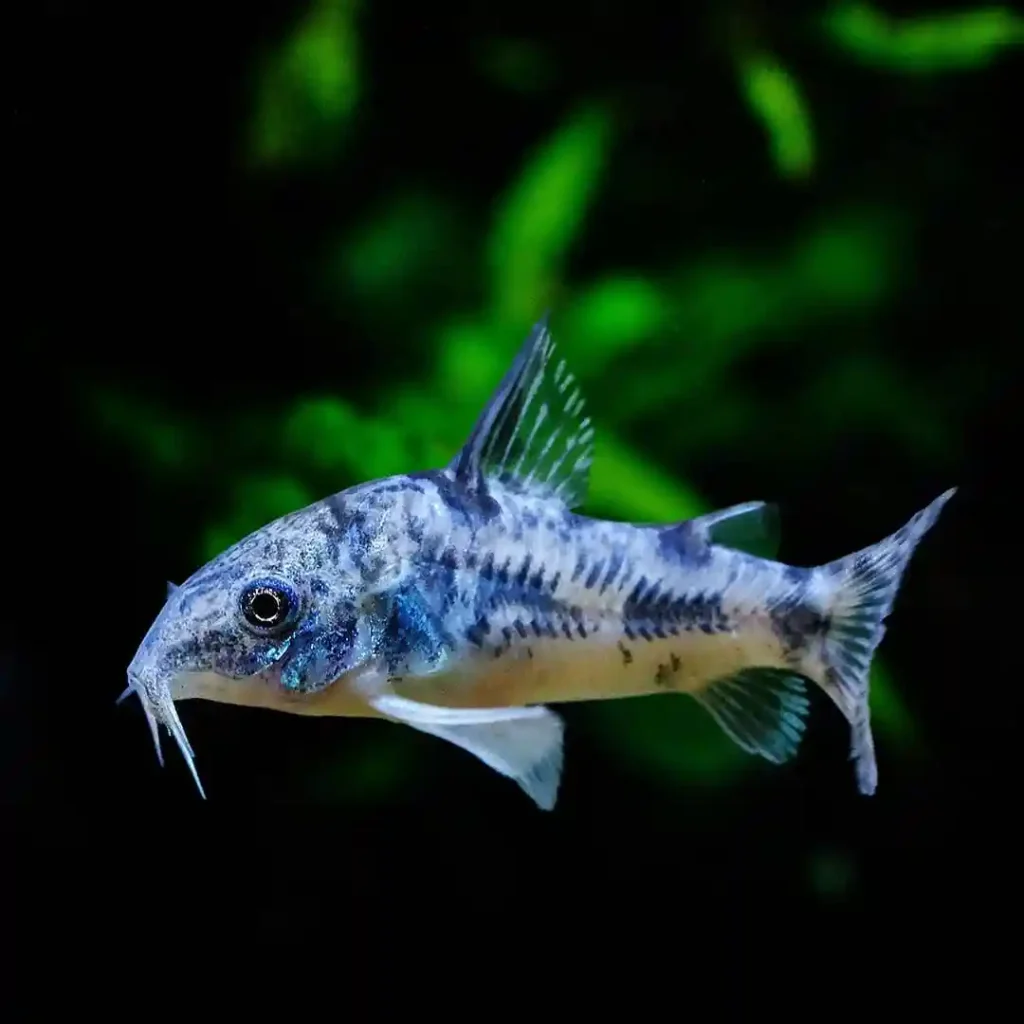
Species Overview
| Attribute | Details |
| Scientific Name | Corydoras paleatus |
| Common Name | Peppered Cory, Blue Leopard Cory |
| Size | 2.5 – 3 inches |
| Lifespan | 5 – 7 years |
| Care Level | Easy |
| Temperament | Peaceful |
| Tank Level | Bottom |
| Diet | Omnivore |
| Minimum Tank | 20 gallons |
Tank Size and Setup
Peppered corys need space along the bottom to move freely. A 20-gallon tank is the minimum, but a larger tank helps them stay more active and reduces stress.
Substrate is critical. Always use soft sand. Gravel may not show problems immediately, but over time it damages their barbels, which leads to infections.
A planted tank setup works best. Use simple plants like Anubias, Java fern, or Cryptocoryne. Add driftwood and hiding spots, but keep enough open space for them to forage.
They also prefer slightly cooler water compared to many tropical fish, which makes them more flexible in community setups.
Water Parameters
Peppered corys are more tolerant than many other corydoras.
Keep temperature between 68 and 77°F. This cooler range is one of their advantages.
pH should stay between 6.0 and 7.5. Clean water is still essential. Ammonia and nitrite must always be zero, and nitrate should be kept low with regular water changes.
Behavior and Schooling
Peppered corys are peaceful and social.
They should always be kept in groups of at least 6, but more is better. In proper groups, they stay active and constantly move across the bottom.
They may occasionally swim to the surface to gulp air, which is normal behavior.
If kept alone or in small groups, they become shy and less active.
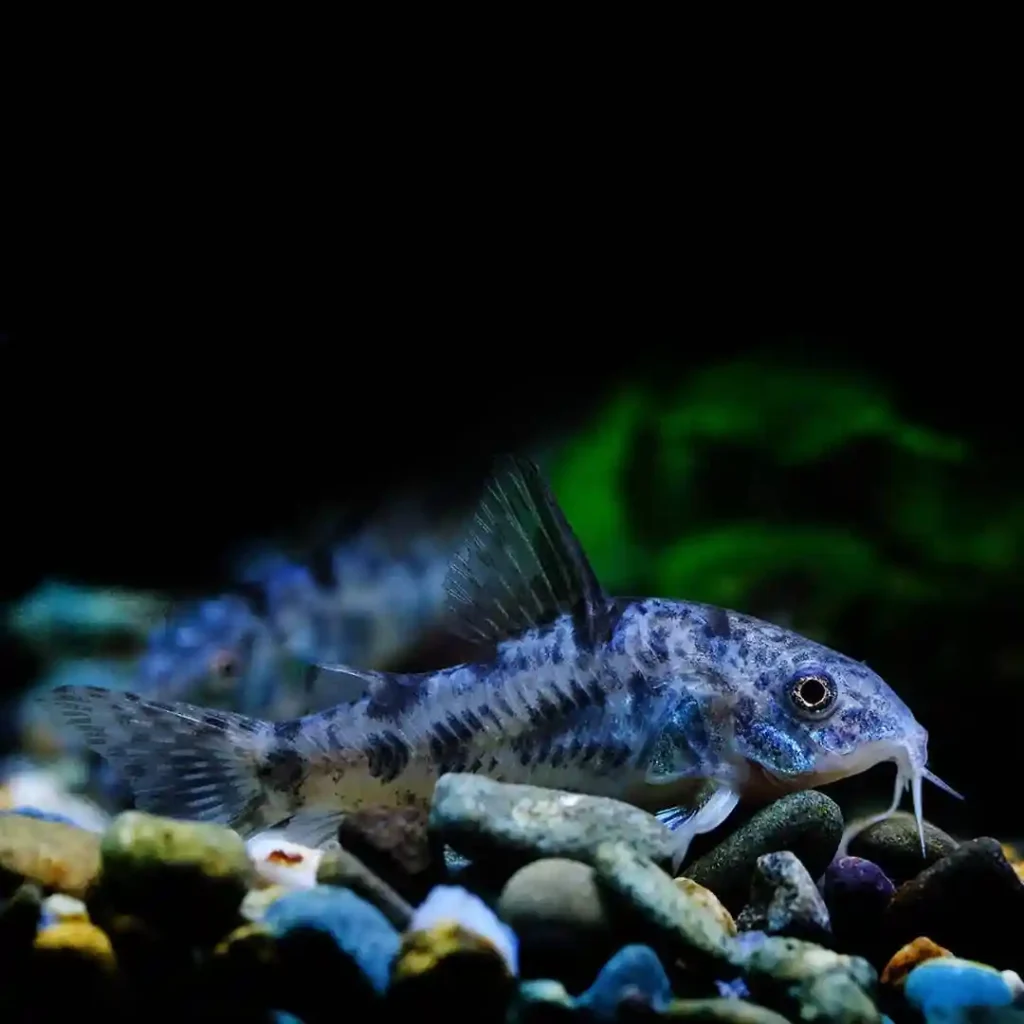
Tank Mates and Compatibility
This is where most people make mistakes. Peppered corys are peaceful, but not every fish suits them.
Peppered Cory with Betta
This setup can work, but only with calm bettas.
Peppered corys stay at the bottom, so many bettas ignore them. But aggressive bettas may still chase or stress them, especially in small tanks.
A planted tank with enough space increases the chances of success.
Peppered Corydoras with Betta
Same situation as above. There is no real difference—just another way people search. Compatibility depends on the betta’s personality.
Peppered Cory Catfish with Betta
Again, same pairing. Works only if the betta is not aggressive. Always monitor in the beginning.
Peppered Cory with Goldfish
This can work better than many tropical pairings.
Both species can tolerate cooler water, which makes them more compatible than other corys. However, goldfish produce a lot of waste, so strong filtration is required.
Also, goldfish may outcompete them for food if not managed properly.
Peppered Cory Catfish with Goldfish
Same compatibility as above. Possible, but only with good filtration and proper feeding.
Peppered Cory with Shrimp
This is a safe combination.
Peppered corys do not hunt shrimp and usually ignore both adults and baby shrimp. Works well in planted tanks.
Peppered Cory Catfish with Shrimp
Same result—completely safe and peaceful pairing.
Peppered Cory with Cherry Shrimp
Also safe.
Cherry shrimp can live alongside peppered corys without issues. A planted setup helps shrimp feel secure.
Peppered Cory Catfish with Guppies
This is one of the easiest combinations.
Guppies stay in the upper levels, while peppered corys stay at the bottom. Both are peaceful and adapt to similar conditions.
Breeding Peppered Cory
Peppered corys are one of the easier corydoras to breed.
Spawning Behavior
Breeding is usually triggered by cooler water changes. Females become rounder when carrying eggs.
They perform the typical corydoras spawning behavior where eggs are fertilized and then placed on glass, plants, or decor.
Peppered Cory with Eggs
After spawning, eggs are attached to surfaces like glass or leaves.
If left in the main tank, some eggs may be eaten by other fish. For better survival, you can move eggs to a separate container.
Eggs hatch within a few days, depending on temperature.
Raising Fry
Once hatched, fry need very fine food like powdered food or baby brine shrimp.
Clean water is important, as fry are sensitive to poor conditions.
Diet and Feeding
Peppered corys are easy to feed but should not be treated as cleanup fish.
Their main diet should be sinking pellets or wafers. You can also add frozen or live foods like bloodworms or brine shrimp.
One mistake people make is assuming they eat leftovers. That leads to underfeeding.
Feed once or twice daily and make sure food reaches the bottom.
Common Mistakes
Using gravel instead of sand leads to barbel damage over time.
Keeping them in small groups causes stress and inactivity.
Not feeding properly results in slow starvation.
Pairing them with aggressive fish leads to hiding and poor health.
Are Peppered Cory Good for Beginners
Yes, they are one of the best beginner fish.
They are hardy, peaceful, and tolerate a wider temperature range than most cory species. As long as you maintain clean water and proper feeding, they are very forgiving.
FAQs
Can peppered cory live with betta?
Yes, but only with calm bettas.
Can peppered cory live with goldfish?
Yes, but only with proper filtration and feeding.
Are peppered cory safe with shrimp?
Yes, completely safe.
Can peppered cory live with guppies?
Yes, this is an easy and peaceful combination.
Final Thoughts
Peppered cory is one of the most flexible and beginner-friendly corydoras you can keep.
They handle cooler water, adapt well, and work with many peaceful tank mates. Just focus on soft substrate, clean water, and proper feeding. If you get those basics right, they will thrive without much effort.
