
Bronze Cory Care Guide

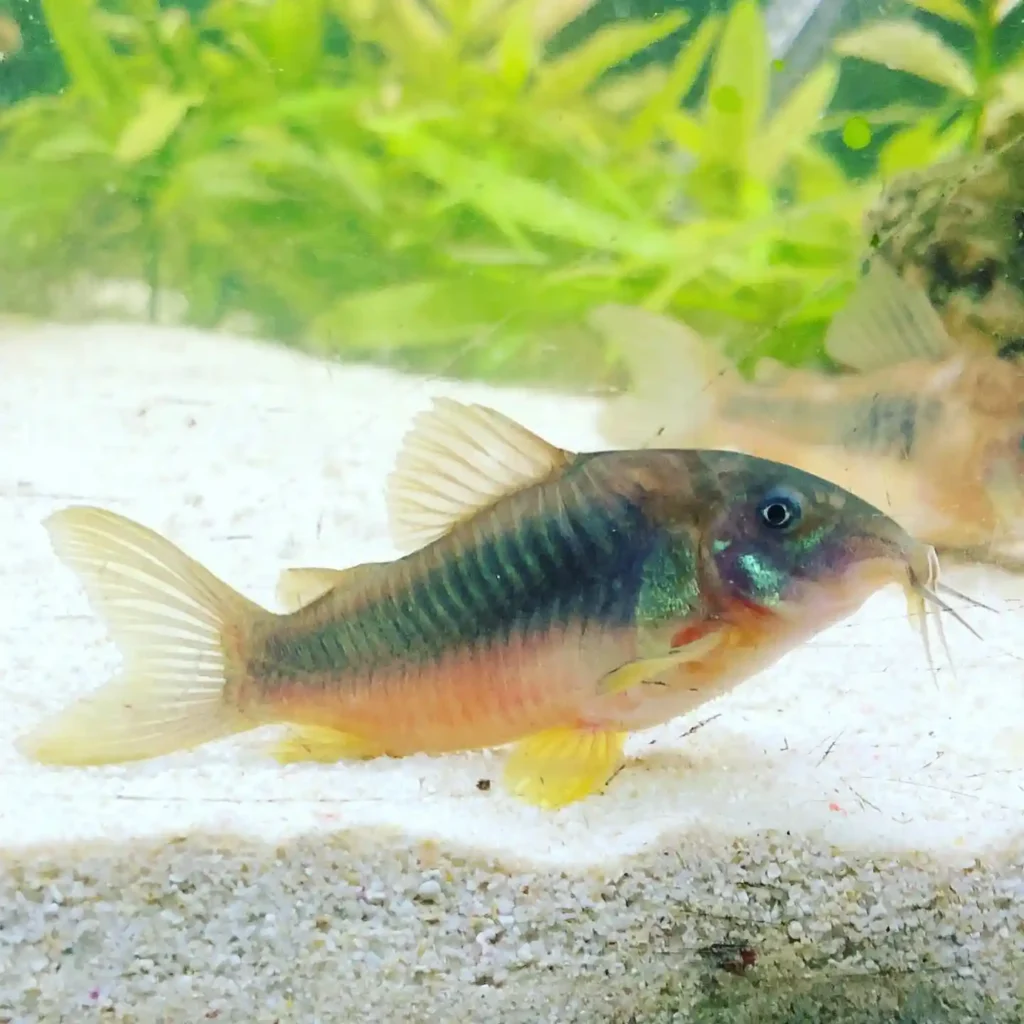
Bronze cory is one of the toughest and most beginner-friendly fish you can add to a freshwater aquarium. It adapts well, stays peaceful, and constantly moves around the bottom, which makes the tank feel active.
But don’t assume it’s impossible to mess up. Most issues come from wrong substrate, poor feeding, or bad tank mates. If you get those basics right, this fish is almost effortless to keep and even breed.
Species Overview
| Attribute | Details |
| Scientific Name | Corydoras aeneus |
| Common Name | Bronze Cory, Green Cory |
| Size | 2.5 – 3 inches |
| Lifespan | 5 – 8 years |
| Care Level | Easy |
| Temperament | Peaceful |
| Tank Level | Bottom |
| Diet | Omnivore |
| Minimum Tank | 20 gallons |
Tank Size and Setup
Bronze corys need space along the bottom, not just water volume. A 20-gallon tank is the minimum, but a larger tank gives them more room to move and reduces stress.
Substrate is the most important part of the setup. Always use soft sand. Gravel may seem fine at first, but it slowly damages their barbels, which leads to infections and poor health.
A simple planted setup works best. You don’t need anything complicated. Plants like Anubias, Java fern, or Cryptocoryne help create shade and make them feel secure.
Add driftwood and a few hiding spots, but leave enough open space for them to forage. They spend most of their time moving along the bottom.
Water Parameters
Bronze corys are hardy, but that doesn’t mean they tolerate dirty water.
Keep temperature between 72 and 79°F, with pH between 6.0 and 7.5. They can adapt slightly outside this range, but stability is what matters most.
Ammonia and nitrite must always be zero. Nitrate should stay low with regular water changes. If water quality drops, they show stress quickly even though they are considered hardy.
Behavior and Schooling
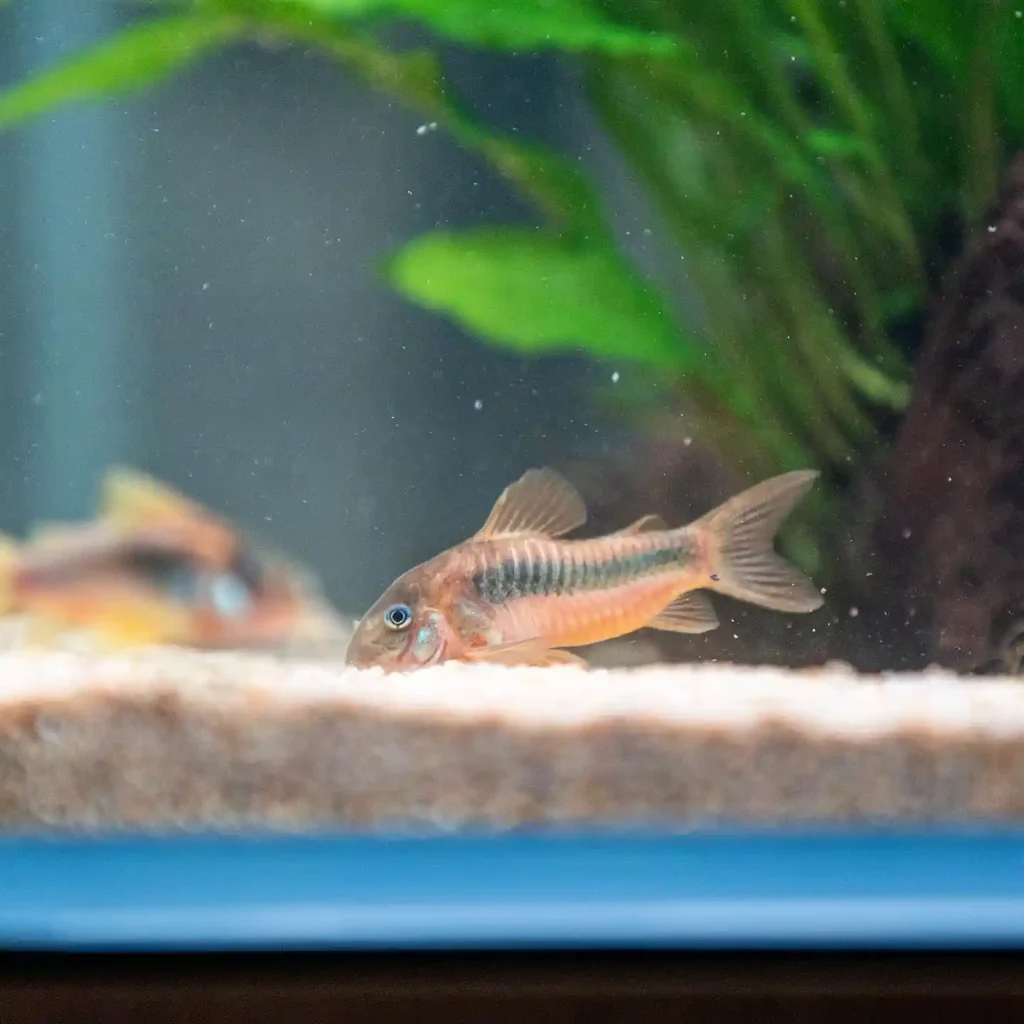
Bronze corys are peaceful and social fish that should never be kept alone.
Keep at least 6 together, but 8 to 10 is better. In proper groups, they stay active and show natural behavior like sifting through the substrate.
They often swim to the surface to gulp air. This is normal and part of their natural behavior, not a sign of low oxygen.
If kept in small numbers, they hide more and become less active.
Tank Mates and Compatibility
Choosing the right tank mates is simple—stick to peaceful fish and avoid anything aggressive or too large.
Bronze Cory with Betta Fish
This setup can work, but it depends on the betta.
Calm bettas usually ignore bottom fish, so bronze corys stay safe. But aggressive bettas may chase or stress them, especially in smaller tanks.
Adding plants and space improves compatibility, but always watch behavior in the beginning.
Bronze Cory with Betta
Same situation as above. It works only if the betta has a calm temperament. There’s no guarantee, so be ready to separate them if needed.
Bronze Cory with Shrimp
This is a safe and easy combination.
Bronze corys do not hunt shrimp and usually ignore both adults and babies. This pairing works especially well in planted tanks where shrimp have hiding spots.
Bronze Cory with Goldfish
Not recommended.
Goldfish prefer cooler water, while bronze corys need warmer tropical conditions. Goldfish also produce a lot of waste, which makes it harder to maintain clean water.
Different care needs make this pairing unsuitable long term.
Diet and Feeding
Bronze corys are not picky, but they still need proper feeding.
Their main diet should be sinking pellets or wafers. You can also feed frozen or live foods like bloodworms, brine shrimp, and daphnia.
One common mistake is assuming they will survive on leftover food. That rarely works. If food doesn’t reach the bottom, they may not eat enough.
Feed once or twice daily in small portions.
Breeding Bronze Cory
Bronze corys are one of the easiest corydoras to breed if conditions are right.
How Do Bronze Corydoras Breed
Breeding is usually triggered by cooler water changes and good feeding.
Females become noticeably rounder when carrying eggs. Males are smaller and slimmer.
When ready, they perform a unique behavior known as the T-position, where the male fertilizes the eggs.
Spawning Behavior
After fertilization, the female carries eggs and places them on surfaces like glass, plants, or decor.
Eggs are small and sticky, and multiple eggs are laid over time rather than all at once.
Can Albino Corydoras Breed with Bronze Corydoras
Yes, they can.
Albino corydoras are just a color variation of bronze corys, so they are the same species. When bred together, the offspring may be albino, bronze, or a mix depending on genetics.
Raising Fry
If you want higher survival, separate the eggs or adults.
Eggs usually hatch within a few days. Fry can be fed very fine foods like powdered fry food or baby brine shrimp.
Clean water is important during this stage, as fry are sensitive.
Common Problems
Most issues come from simple mistakes.
Using gravel instead of sand leads to barbel damage over time.
Poor water quality causes stress and weakens their immune system.
Keeping them in small groups makes them shy and inactive.
Not feeding properly leads to slow starvation, especially in busy community tanks.
Are Bronze Cory Good for Beginners
Yes, they are one of the best beginner fish.
They are hardy, peaceful, and easy to care for. But beginners still need to get the basics right—clean water, proper group size, and correct feeding.
If those are handled, they are very forgiving fish.
FAQs
Can bronze cory live with betta fish?
Yes, but only with calm bettas. Aggressive ones can cause problems.
Are bronze cory safe with shrimp?
Yes, they are completely safe and do not attack shrimp.
Can bronze cory live with goldfish?
No, their water requirements are different and not compatible.
How many bronze cory should be kept together?
At least 6, but more is better for natural behavior.
How do bronze cory breed?
They breed through a spawning process triggered by water changes and good feeding, with eggs laid on surfaces like glass or plants.
Final Thoughts
Bronze cory is one of the easiest fish to keep, but that doesn’t mean you can ignore the basics.
Focus on soft substrate, clean water, proper feeding, and peaceful tank mates. If you get these right, they stay active, healthy, and may even breed without much effort.
