
How to Care for Cryptocoryne Plants

Cryptocoryne plants, often called “Crypts,” are some of the best beginner aquarium plants for low-tech freshwater tanks. They are hardy, adaptable, and available in many colors, shapes, and sizes. Once established, they can grow for years with very little maintenance.
The challenge is that Cryptocoryne plants often melt after being added to a new aquarium. Many beginners panic and throw the plant away too early. In most cases, the roots are still healthy, and the plant grows back stronger after adjusting to the tank.
If you want an easy planted aquarium with natural-looking plants that do not need constant trimming, Cryptocoryne is one of the best choices.
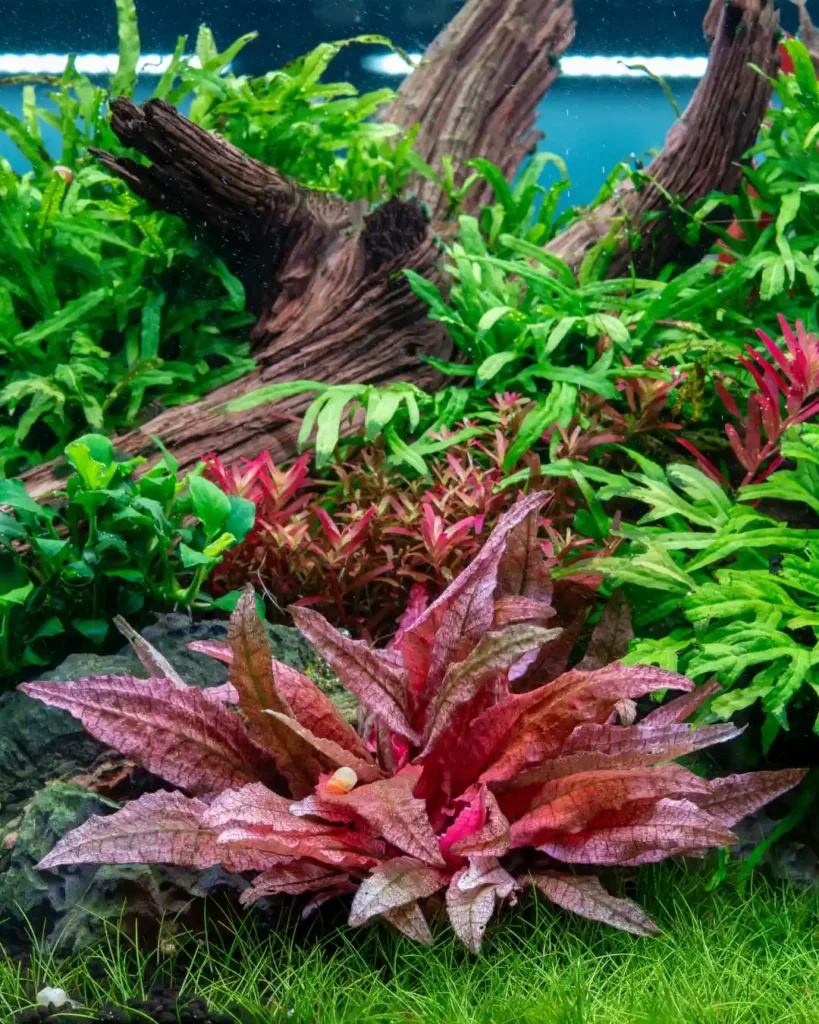
What Is a Cryptocoryne Plant?
Cryptocoryne is a group of freshwater aquarium plants known for their wavy leaves, slow to moderate growth, and ability to thrive in low light.
They are popular because they work well in:
- Low-tech aquariums
- Community tanks
- Betta tanks
- Shrimp tanks
- Natural aquascapes
- Beginner planted tanks
Many Crypts grow in shades of green, bronze, brown, or reddish tones, which adds more color variety to planted aquariums.
Quick Cryptocoryne Care Guide
| Feature | Details |
| Care Level | Easy |
| Growth Rate | Slow to moderate |
| Lighting | Low to medium |
| CO2 Needed | No |
| Placement | Foreground to background |
| Temperature | 72–82°F |
| pH Range | 6.0–7.8 |
| Propagation | Runners |
Why Beginners Love Cryptocoryne Plants
Crypts are popular because they are forgiving once established.
Main benefits include:
- Survive in low light
- Grow without CO2
- Natural-looking leaves
- Many color varieties
- Easy to maintain
- Good for low-tech aquariums
They also pair beautifully with beginner plants like Anubias and Java Fern.
Read also:-
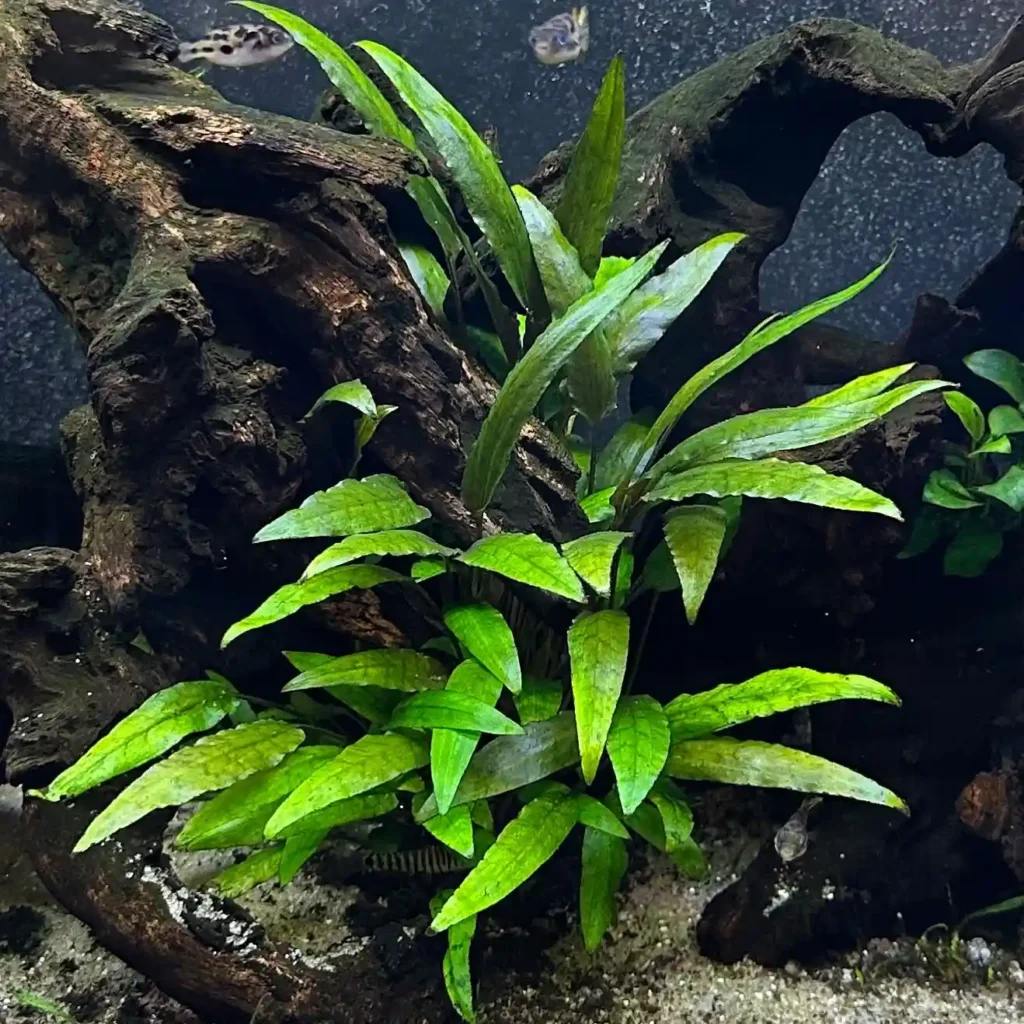
Best Types of Cryptocoryne Plants
Cryptocoryne Wendtii Green
One of the easiest and most common Crypts for beginners.
Cryptocoryne Wendtii Brown
Has bronze or brown-colored leaves that add warmth to planted tanks.
Cryptocoryne Parva
A smaller foreground Crypt often used in nano aquascapes.
Cryptocoryne Undulata
Known for slightly wavy textured leaves.
Cryptocoryne Balansae
Long narrow leaves that work well in background areas.
Best Tank Setup for Cryptocoryne Plants
Lighting
Low to medium lighting works best.
Strong lighting is not necessary and may encourage algae growth if nutrients become unbalanced.
Crypts usually develop richer colors under moderate lighting, especially bronze varieties.
Water Parameters
Cryptocoryne plants are adaptable, but stable water conditions help them settle faster.
| Parameter | Ideal Range |
| Temperature | 72–82°F |
| pH | 6.0–7.8 |
| GH | 3–12 |
| KH | 2–8 |
Frequent sudden changes in water conditions can trigger Crypt melt.
Do Cryptocoryne Plants Need CO2?
No.
Cryptocoryne grows well without injected CO2, which makes it ideal for beginners and low-tech tanks.
Adding CO2 may improve growth speed and color intensity, but it is optional.
Best Substrate for Cryptocoryne
Unlike Anubias or Java Fern, Crypts are root feeders.
That means they grow best in nutrient-rich substrate.
Good options include:
- Aquasoil
- Root tabs under gravel
- Sand with root fertilizers
- Planted tank substrate
In my experience, Crypts respond much better to root tabs than liquid fertilizer alone.
Read also:-
How to Plant Cryptocoryne Properly
Plant the roots gently into the substrate while keeping the crown slightly above the gravel or sand.
Do not bury the entire plant too deeply.
Once planted, avoid moving Crypts often because they dislike sudden changes.
What Is Crypt Melt?
Crypt melt is when the leaves suddenly turn soft, transparent, or mushy after placing the plant into a new aquarium.
This scares many beginners, but it is very common.
The plant is adjusting to new water conditions.
What To Do During Crypt Melt
- Leave the roots in place
- Remove dead leaves
- Avoid moving the plant
- Keep water stable
- Be patient
In many cases, new leaves appear within a few weeks.
Honestly, almost every Crypt tank I’ve started had some melting at first. The healthy roots usually recover if left alone.
Fertilizer Needs
Cryptocoryne plants feed heavily from their roots.
Root tabs usually make the biggest difference.
Important Nutrients
- Iron
- Potassium
- Nitrogen
- Trace minerals
Signs of Nutrient Deficiency
| Problem | Possible Cause |
| Yellow leaves | Low nutrients |
| Tiny new leaves | Weak root feeding |
| Holes in leaves | Potassium deficiency |
How Fast Do Cryptocoryne Plants Grow?
Growth depends on the variety.
Some stay compact and slow-growing, while others spread steadily through runners.
Compared to stem plants, Crypts are still fairly low-maintenance.
Once established, they become stronger and more stable over time.
How Cryptocoryne Spreads
Most Crypts spread using runners under the substrate.
Small baby plants eventually appear nearby.
You can:
- Leave them connected
- Separate them carefully
- Replant them elsewhere
This is one reason planted tank hobbyists love Crypts. A small group slowly expands into a natural carpet-like cluster.
Best Tank Mates for Cryptocoryne
Crypts work with most peaceful freshwater fish.
Good Tank Mates
- Bettas
- Tetras
- Corydoras
- Rasboras
- Shrimp
- Snails
Fish That May Damage Crypts
- Goldfish
- Large cichlids
- Silver dollars
These fish may uproot or damage leaves.
Cryptocoryne in Aquascaping
Crypts are excellent for natural aquascaping because the leaves move gently in water flow and create a soft jungle appearance.
They work especially well:
- Around driftwood
- Along pathways
- In midground layouts
- In jungle aquascapes
- In low-tech planted tanks
Mixing green and bronze Crypt varieties creates a more layered look.
Common Cryptocoryne Problems
Crypt Melt
Normal after planting or major tank changes.
Yellow Leaves
Usually nutrient-related.
Slow Growth
Often caused by poor root nutrition.
Algae on Leaves
Usually from excessive light or unstable nutrients.
FAQs
Are Cryptocoryne plants easy for beginners?
Yes. They are one of the best beginner aquarium plants.
Why are my Cryptocoryne leaves melting?
This is usually Crypt melt caused by adjusting to new water conditions.
Do Cryptocoryne plants need CO2?
No. They grow well in low-tech aquariums.
Can Cryptocoryne grow in sand?
Yes, especially with root tabs added underneath.
Are Crypts root feeders?
Yes. They absorb most nutrients through their roots.
How long does Crypt melt last?
Usually a few weeks before new growth appears.
