
Male vs Female Guppy: 6 Easy Ways to Tell

The easiest way to tell a male guppy from a female is to check the anal fin under the belly. A male has a thin, pointed fin called a gonopodium. A female has a rounded, fan-shaped anal fin.
Males are also usually smaller, slimmer, and more colorful. Females tend to be larger, have rounder bellies, and may show a dark gravid spot.
If you are new to guppies, my Guppy Care Guide covers their tank, water, food, and daily care.
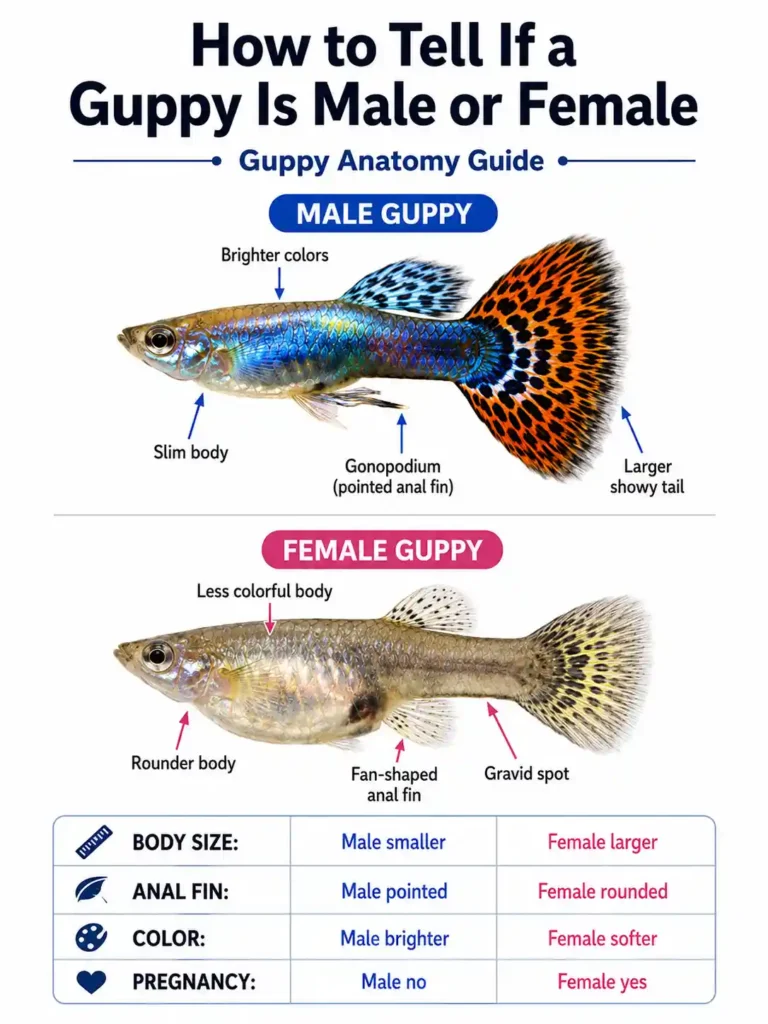
Male vs Female Guppy Comparison
| Feature | Male guppy | Female guppy |
| Anal fin | Thin and pointed | Rounded and fan-shaped |
| Body size | Smaller | Larger |
| Body shape | Slim | Fuller and rounder |
| Color | Usually brighter | Usually softer |
| Tail | Often large and colorful | Usually shorter |
| Gravid spot | Not present | Often visible |
| Behavior | Displays and chases | Usually calmer |
The anal fin is the best feature to check. Color and size are helpful, but they are not always reliable.
How to Tell If a Guppy Is Male or Female
1. Check the Anal Fin
Look underneath the guppy, near the back of its belly. This small fin gives you the clearest answer.
A male guppy has a narrow, pointed anal fin called a gonopodium. It may look like a small stick held close to the body.
A female has a wider anal fin shaped like a small fan. If you are unsure, watch the fish from the side when it slows down.
2. Compare the Body Size
Female guppies are usually larger and heavier than males. Their bodies become fuller as they grow.
Males stay smaller and slimmer. Their colorful tails may look large, but the body itself is normally narrow.
Size alone is not enough to confirm the sex. Two guppies may be different ages or come from different strains.
3. Look at the Color
Male guppies usually have brighter colors on their bodies, tails, and dorsal fins. They may show blue, red, orange, yellow, black, or mixed patterns.
Females often have silver, gray, or pale bodies. However, some fancy females also have colorful tails.
Use color as a clue, then check the anal fin to be sure.
4. Check the Tail and Dorsal Fin
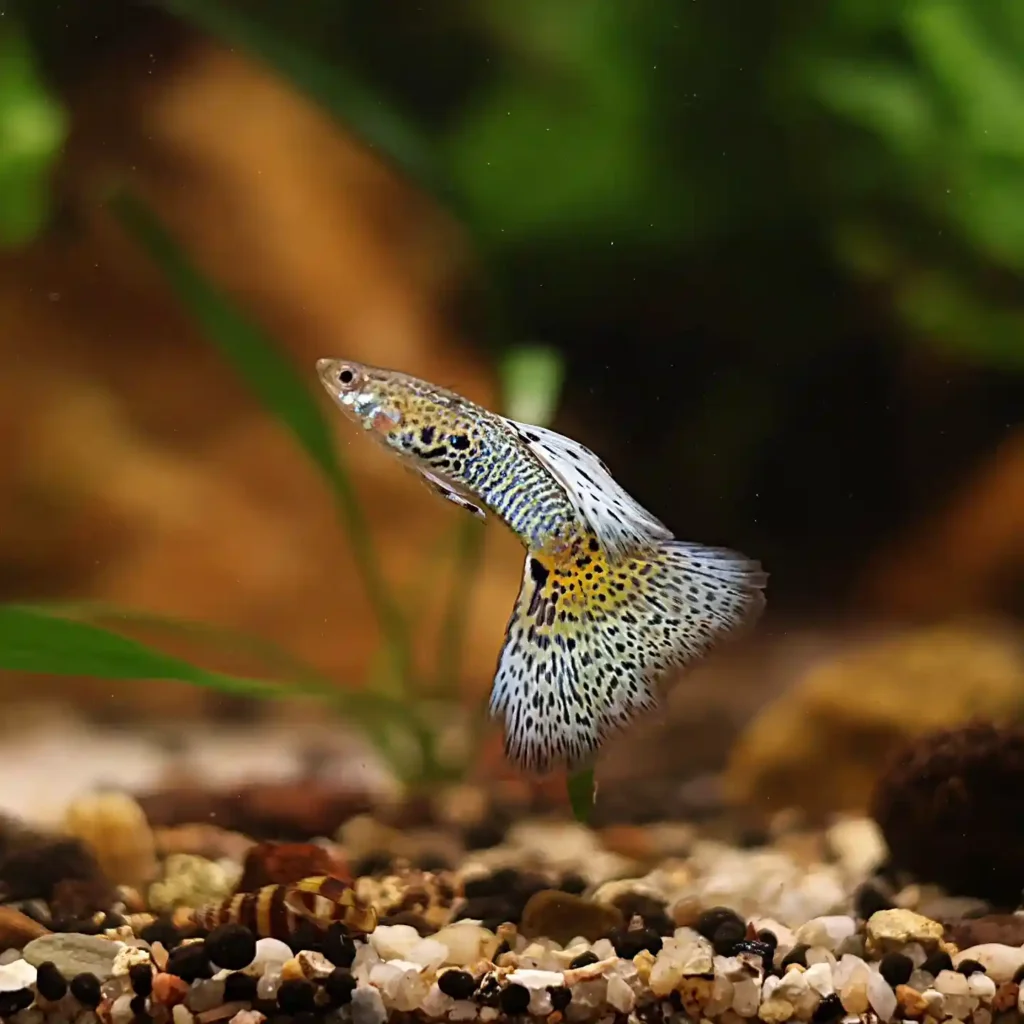
Male guppies often have larger and more decorative fins. Their tails may be round, fan-shaped, delta-shaped, or sword-like.
The dorsal fin on the back may also be longer and brighter.
Females normally have shorter fins, but selective breeding can produce females with colorful tails. Fin shape should support your answer rather than decide it alone.
5. Look for a Gravid Spot
A gravid spot is a dark area near the back of a female guppy’s belly. It sits close to the anal fin.
The spot may look black, brown, or dark orange. It often becomes darker and easier to see during pregnancy.
Males do not have a true gravid spot. However, the spot can be difficult to see on young, dark, or heavily patterned females.
6. Watch the Behavior
Male guppies often swim around females, spread their fins, and try to mate. They may appear more active when females are nearby.
Females are often calmer, although their behavior can change when pregnant or stressed.
Behavior can help you identify the sex, but it is not final proof. Some males are calm, and some females are very active.
What Does a Male Guppy Look Like?
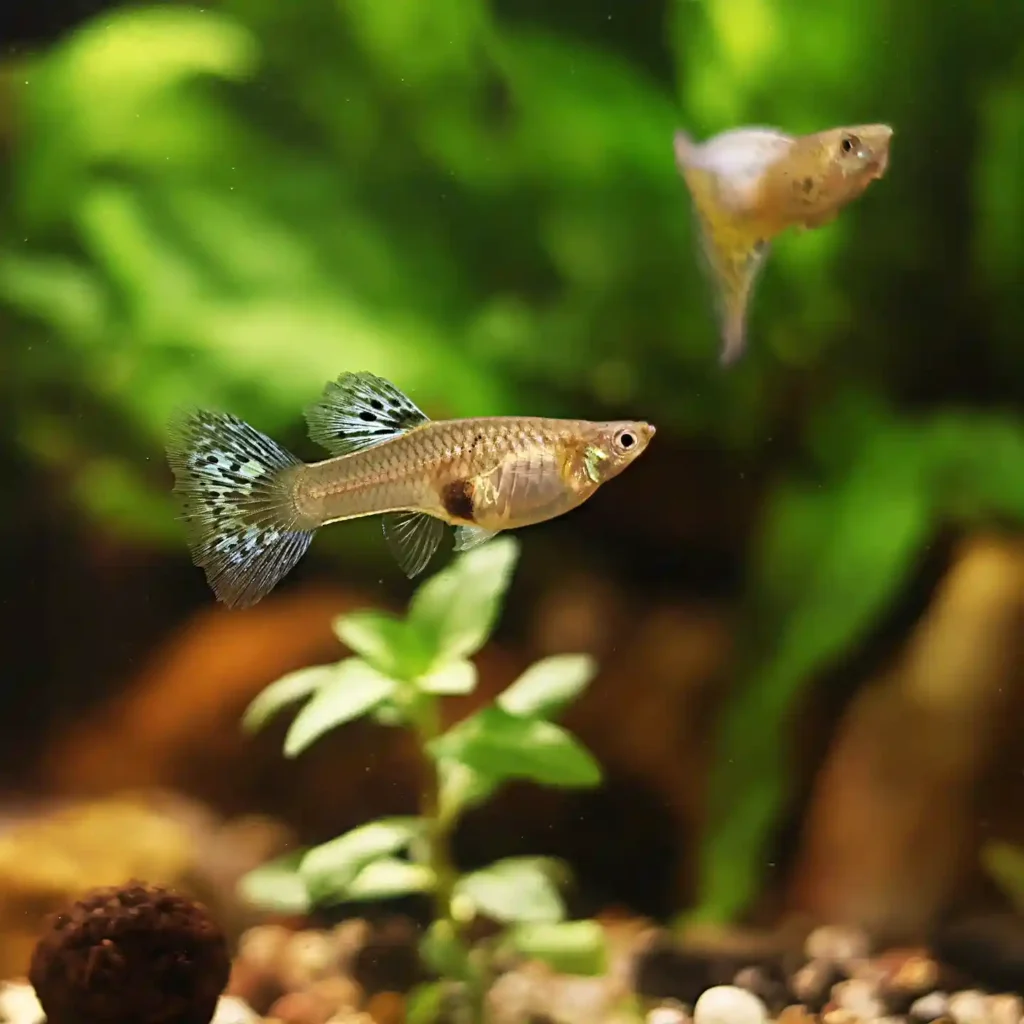
A male guppy usually has a small, slim body with bright colors and a large tail. Its most reliable feature is the pointed gonopodium beneath the body.
Males often display their fins and chase females. Young males may look dull at first, but their colors become easier to see as they grow.
What Does a Female Guppy Look Like?
A female guppy is normally larger with a fuller belly. She has a rounded anal fin and may have a dark gravid spot near the back of her belly.
Female guppies are often less colorful than males, but this is not true for every strain. A colorful female is still female if she has a rounded anal fin.
How to Tell the Sex of Young Guppies
Young guppies can be hard to identify because their fins, colors, and body shapes are still developing.
As they grow, young males begin to develop a pointed gonopodium and brighter colors. Young females keep a rounded anal fin and usually develop a fuller body.
Do not separate fry based only on color. Wait until you can see the anal fin clearly.
Good food and clean water support steady growth. My Guppy Fish Food Guide explains what to feed adults and young guppies.
Should You Keep Male and Female Guppies Together?
You can keep male and female guppies together, but they will breed quickly. A female can also store sperm and produce more than one group of fry after mating.
Keep one male with two or three females. This spreads the male’s attention and reduces the chance of one female being chased all day.
Do not keep several males with one female. Constant chasing can cause stress, hiding, damaged fins, and missed meals.
If you do not want baby guppies, keep a male-only or female-only group.
Male-Only Guppy Tank
A male-only tank gives you plenty of color without pregnancy or fry.
The males may still display and chase each other. Provide enough space, plants, and decorations that break up their view across the tank.
Watch for one fish being repeatedly cornered or prevented from eating.
Female-Only Guppy Tank
A female-only tank is often calmer than a mixed group. Females can still chase one another, but breeding pressure is removed.
A female bought from a pet store may already be pregnant. She may produce fry even when there are no males in your aquarium.
Common Guppy Gender Mistakes
Do not judge sex by color alone. Fancy female guppies may have colorful tails, while young males may not have developed their full colors.
A large belly does not always mean pregnancy. Overfeeding, constipation, or illness may also make a guppy look swollen.
Avoid comparing guppies of different ages. A young female may be smaller than an adult male.
Most importantly, do not overlook the anal fin. A pointed gonopodium means male, while a rounded anal fin means female.
Frequently Asked Questions
What Is the Easiest Way to Tell a Male Guppy From a Female?
Check the anal fin beneath the body. A male has a thin, pointed gonopodium. A female has a rounded, fan-shaped anal fin.
Can Female Guppies Be Colorful?
Yes, some female guppies have colorful tails and patterns. Check the anal fin rather than relying only on color.
Do Female Guppies Have Large Tails?
Some female guppies have fairly large tails, especially fancy strains. Male tails are usually larger, brighter, and more decorative.
Can a Female Guppy Turn Into a Male?
No, a female guppy does not turn into a male. A young male may be mistaken for a female before its gonopodium and adult colors appear.
Can You Keep Only Male Guppies?
Yes. A male-only tank prevents breeding, but the fish may still chase one another. Give them enough space and visual hiding areas.
Can You Keep Only Female Guppies?
Yes, but females bought from stores may already be pregnant. They can store sperm and give birth later.
How Many Females Should You Keep With One Male?
Keep two or three females for every male. This reduces constant attention and stress on one female.
