
GloFish Danio Care Guide: Tank Setup, Size & Beginner Tips

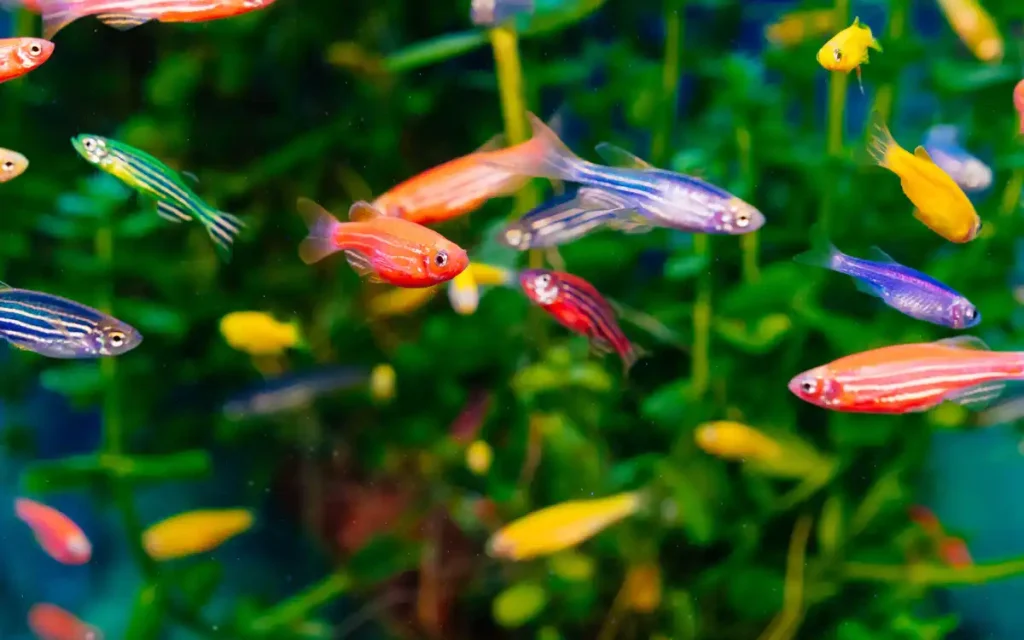
GloFish Danios are fluorescent color forms of the Zebra Danio. They have the same slim body, rapid swimming style, social needs and basic care requirements as regular Zebra Danios. The main difference is their bright coloration, which becomes especially noticeable under blue aquarium lighting.
These fish are not painted, dyed or injected with color. Their fluorescent appearance is inherited and remains throughout their lives.
Although GloFish Danios are often sold as beginner fish, they still need a proper group, enough horizontal swimming space and stable water. Their small adult size does not make them suitable for bowls or crowded desktop tanks.
GloFish Danio Overview
| Category | Details |
| Base species | Zebra Danio |
| Scientific name | Danio rerio |
| Adult size | Around 2 inches |
| Temperament | Peaceful, fast and highly active |
| Social needs | Keep at least 6 together |
| Minimum tank | 10 gallons |
| Preferred tank | 20-gallon long or larger |
| Diet | Omnivore |
| Typical lifespan | Around 3–5 years |
| Special lighting required | No |
| Difficulty | Beginner-friendly with proper care |
For complete information about water conditions, feeding, breeding, maintenance and disease prevention, read the Zebra Danio Care Guide.
What Is a GloFish Danio?
A GloFish Danio is a fluorescent variety of the common Zebra Danio. The original fluorescent fish were developed by introducing genes associated with fluorescent proteins into Zebra Danios.
The coloration is now passed from parent fish to their offspring. It is part of the fish rather than a coating applied after birth.
This is an important distinction because some brightly colored aquarium fish have historically been dyed or injected. Authentic GloFish Danios do not receive their color through those methods.
Their fluorescent coloration changes their appearance, but it does not turn them into a separate species. They still behave and need to be cared for like Zebra Danios.
Available GloFish Danio Colors
GloFish Danios are commonly available in five branded colors:
- Starfire Red
- Sunburst Orange
- Electric Green
- Cosmic Blue
- Galactic Purple
Availability may differ between stores and countries. Different colors can be kept together because they are color forms of the same fish.
A mixed-color school can create a bold display, while a single-color group gives the aquarium a more consistent appearance. Color does not change temperament, adult size or care requirements.
Moonrise Pink is used within the wider GloFish range, but it may not be available as a Zebra Danio in every market. Check the actual species label rather than choosing a fish based only on color.
GloFish Danio vs Zebra Danio
GloFish and regular Zebra Danios are the same species. Their primary difference is appearance.
| Feature | GloFish Danio | Regular Zebra Danio |
| Species | Danio rerio | Danio rerio |
| Color | Fluorescent red, orange, green, blue or purple | Silver-gold body with horizontal blue stripes |
| Care requirements | Same as Zebra Danio | Standard Zebra Danio care |
| Behaviour | Fast, active and social | Fast, active and social |
| Adult size | Around 2 inches | Around 2 inches |
| Lighting | White or blue LED | Normal aquarium lighting |
| Schooling needs | At least 6 | At least 6 |
You can keep fluorescent and regular Zebra Danios in the same school. However, the combined group should still be large enough for normal social behaviour.
For example, three GloFish Danios and three regular Zebra Danios can form a group of six. A larger group will usually create a stronger schooling display when the tank has enough room.
GloFish Danio vs Glowlight Danio
GloFish Danios and Glowlight Danios are not the same fish.
The Glowlight Danio is a naturally occurring species commonly identified as Danio choprae. It has orange horizontal markings, blue bars and a more patterned appearance.
The GloFish Danio is a fluorescent color form of Danio rerio. Its coloration is brighter and more uniform.
| Feature | GloFish Danio | Glowlight Danio |
| Scientific name | Danio rerio | Danio choprae |
| Color origin | Inherited fluorescent coloration | Natural coloration |
| Appearance | Solid fluorescent colors | Orange and blue pattern |
| Base fish | Zebra Danio | Separate danio species |
| Blue-light response | Fluorescence becomes more visible | Does not display the same fluorescence |
The similar names cause confusion in aquarium stores and online listings. Check the scientific name if you are uncertain which fish is being sold.
Do GloFish Danios Need Special Lighting?
GloFish Danios do not need special lighting to remain healthy or retain their color. Normal white aquarium lighting is enough for daily care.
Blue LED lighting makes their fluorescence appear more intense. Many keepers use a light with separate white and blue settings, allowing the tank to have a natural appearance during the day and a more dramatic display for a short period later.
Do not leave blue lighting on all night. Fish still need a regular period of darkness to rest.
A practical schedule is:
- White or mixed light during the normal daytime period
- Blue light for a short viewing period
- Complete darkness overnight
Aim for approximately six to eight hours of aquarium lighting each day, particularly when live plants are present. Adjust the schedule if algae becomes difficult to control.
Lighting changes how strongly the colors appear, but it does not improve the fish’s health or make the fish genuinely glow in complete darkness.
Do GloFish Danios Glow in the Dark?
No. GloFish Danios are fluorescent rather than naturally bioluminescent.
Fluorescent coloration absorbs certain wavelengths of light and re-emits them, making the fish appear brighter under blue lighting. They require an external light source for this effect.
When the aquarium is completely dark, the fish do not produce their own visible light.
Tank Setup for Displaying Their Colors
GloFish Danios need the same tank arrangement as regular Zebra Danios. Their constant movement makes horizontal swimming room more valuable than excessive height.
A 10-gallon aquarium can hold a small group, but space becomes limited once decorations, equipment and plants are added. A 20-gallon long aquarium offers a much better footprint for their fast swimming style.
Arrange plants and hardscape around the sides and back while leaving the center open. A darker background can make fluorescent colors easier to see without using excessively bright lighting.
A suitable display can include:
- Dark gravel or sand
- A dark background
- Green plants around the edges
- Open swimming space through the middle
- White and blue LED settings
- A secure lid
GloFish Danios can jump when startled, so the aquarium should always have a properly fitted cover.
Group Size and Color Mixing
Keep at least six GloFish Danios together. They are social fish, and keeping only two or three can result in nervous swimming or excessive chasing.
They do not need to be the same color. Fish from all available GloFish Danio colors recognize one another as members of the same species.
Regular Zebra Danios and compatible long-fin Zebra Danio varieties may also join the group. Be more careful with long-fin individuals because faster tank mates may nip or damage their extended fins.
Some chasing is normal within a danio group. Constant targeting, damaged fins, hiding or a fish being prevented from eating suggests that the aquarium may be too small or the group structure needs attention.
Can GloFish Danios Live With Other GloFish?
GloFish is a brand that includes several different fish species. Sharing the GloFish name does not automatically make those fish compatible.
GloFish Tetras, Barbs, Sharks and Bettas have different adult sizes and temperaments. Compatibility should be based on the underlying species rather than fluorescent color.
GloFish Danios usually fit best with peaceful community fish that tolerate their rapid movement. Potential companions include:
- Regular Zebra Danios
- Other peaceful danio species
- Harlequin Rasboras
- Small Corydoras
- Peaceful barbs
- Active community tetras
Avoid combining them with fish that require very warm water or become stressed by constant activity.
Can GloFish Danios Live With Bettas?
This combination is possible, but it is not one I would recommend for every tank.
GloFish Danios are fast, restless swimmers, while Bettas generally prefer calmer surroundings. Danios may also investigate or nip long fins, especially if their group is too small.
A larger, heavily planted tank provides a better chance of success than a small aquarium. Even then, the Betta’s individual temperament matters.
If the Betta begins hiding, stops eating, displays stress stripes or develops damaged fins, separate the fish.
Do GloFish Danios Need Different Food?
No. Their diet is the same as that of regular Zebra Danios.
A quality small flake or micro-pellet can form the main diet. Frozen or live daphnia, brine shrimp and similar foods can be offered occasionally for variety.
Fluorescent coloration is inherited, so color-enhancing food does not create the glow. A balanced diet can help the fish maintain good condition, but lighting has a greater effect on how bright the fluorescent color appears to the viewer.
Feed small portions once or twice daily and remove uneaten food. GloFish Danios are quick eaters, but excess food can still damage water quality.
Are GloFish Danios Dyed?
Authentic GloFish Danios are not dyed, injected or painted. Their fluorescence is genetically inherited.
That does not mean every unusually colored fish in a store is a genuine GloFish. Look for accurate labeling and buy from a reputable aquarium retailer.
Avoid fish with suspicious patches, damaged scales, unnatural streaks or injection-like marks. Those may be dyed fish or unhealthy specimens sold under misleading names.
Are GloFish Danios Healthy?
A fluorescent GloFish Danio should have the same general health and care expectations as a regular Zebra Danio. Its color alone does not tell you whether the fish is healthy.
Before buying, look for:
- Steady, active swimming
- Clear eyes
- Open fins without severe damage
- Smooth scales
- Normal breathing
- Interest in food
- No white spots or unusual growths
Do not choose a fish simply because it has the brightest color. A healthy, alert fish is a better purchase than an intensely colored fish showing signs of illness.
Quarantine new fish before adding them to an established community aquarium when possible.
Ethical Questions About GloFish
Some aquarists enjoy fluorescent fish, while others prefer species with natural coloration. That is a personal decision.
The important care point is that authentic GloFish Danios are not individually dyed or injected. They inherit their fluorescent traits and are bred in captivity.
Buy them only if you can provide the same group size, tank space and maintenance required by any Zebra Danio. Bright color should never be treated as a substitute for proper fish care.
Can You Breed GloFish Danios?
GloFish Danios are capable of reproduction because they are Zebra Danios. Their fluorescent traits can be inherited by offspring.
However, GloFish are protected commercial fish. Intentional breeding, distribution and sale may be restricted by licensing, trademark or local regulations.
The purpose of this page is aquarium care, not commercial breeding. Check the brand’s current terms and the laws in your location before intentionally breeding or distributing these fish.
Common GloFish Danio Problems
Their most common problems are usually related to normal Zebra Danio care rather than fluorescence.
Keeping too few danios may result in persistent chasing and nervous behaviour. Small aquariums restrict their swimming space, while incompatible tank mates may become stressed by their activity.
Other warning signs include:
- Faded appearance under normal lighting
- Clamped or damaged fins
- Hiding away from the group
- Rapid breathing
- White spots
- Loss of appetite
- Difficulty maintaining balance
A change in appearance does not always mean the fluorescent trait is disappearing. Stress, illness, poor water conditions and weak lighting can all change how the fish looks.
Test the water
