
15 Types of Shrimp for Freshwater Aquariums

Freshwater shrimp are small, colorful, and surprisingly useful in an aquarium. Many species eat algae, leftover food, biofilm, and tiny waste particles that collect on plants, rocks, driftwood, and substrate.
But not all aquarium shrimp are the same.
Some are perfect for beginners. Some need stable water and careful breeding setups. Some stay tiny and peaceful, while others grow larger and may compete for food with small fish.
This guide covers the best types of freshwater aquarium shrimp, including their size, care level, tank needs, behavior, and what makes each one worth keeping.
1.Cherry Shrimp (Neocaridina davidi)
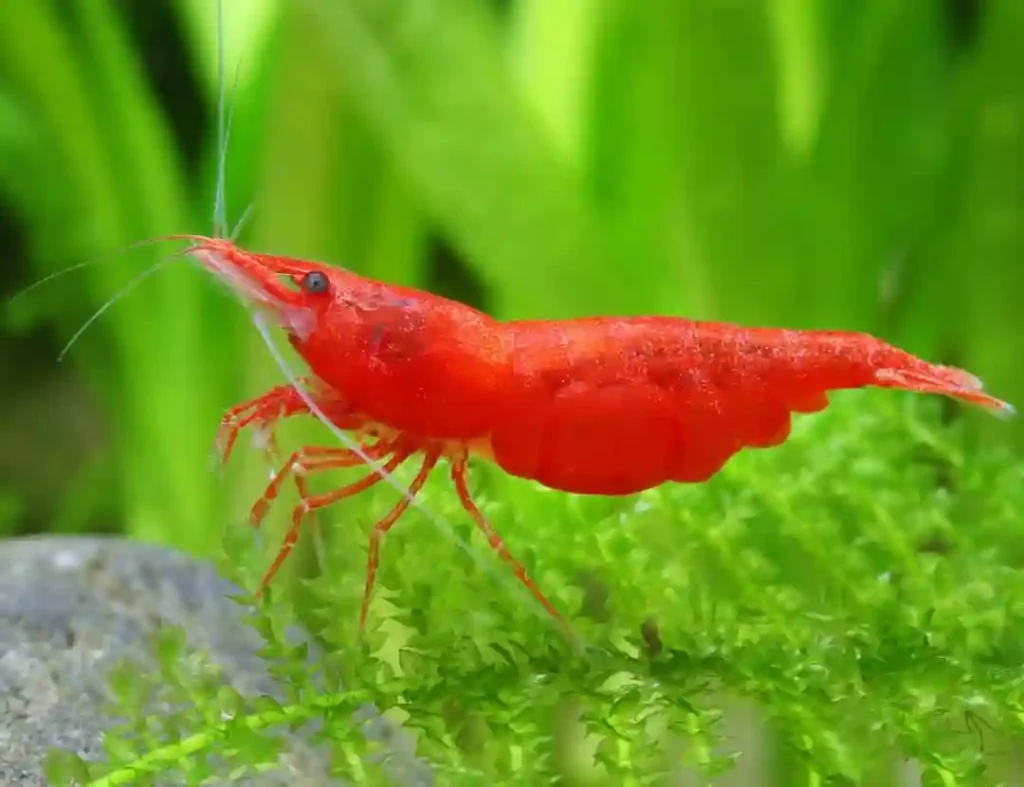
Cherry shrimp are one of the best freshwater shrimp for beginners. They are hardy, colorful, easy to find, and breed well in a stable aquarium. Their bright red color looks beautiful against green plants, dark substrate, and natural driftwood.
These shrimp are active grazers. You will often see them picking at moss, sponge filters, plant leaves, and hardscape for biofilm and tiny food particles. They do not replace normal tank maintenance, but they help keep the aquarium cleaner.
Cherry shrimp do best in peaceful tanks. Avoid keeping them with large fish, aggressive fish, or anything that can fit them in its mouth. Small rasboras, ember tetras, otocinclus, and peaceful nano fish are better choices.
They breed easily in freshwater. Females carry eggs under their bodies until tiny baby shrimp hatch. Dense plants, moss, and hiding places help babies survive.
- Best tank setup: Planted nano tank, shrimp-only tank, peaceful community tank
- Tank size: 5 gallons or larger
- Temperature: 68–78°F
- pH: 6.5–8.0
- Care level: Easy
2.Blue Dream Shrimp (Neocaridina davidi var. blue)

Blue dream shrimp are a stunning blue variety of Neocaridina shrimp. They have the same basic care needs as cherry shrimp, but their deep blue color gives the tank a cooler, cleaner look.
They look especially good in aquariums with light-colored sand, green plants, and black backgrounds. In darker tanks, the blue can look richer and more intense.
Like cherry shrimp, blue dream shrimp breed in freshwater. If the tank is stable and there are no predators, the colony can grow quickly. To keep their color strong, many shrimp keepers remove pale or low-grade shrimp from the breeding group.
Do not mix blue dream shrimp with other Neocaridina colors if you care about color quality. Crossbreeding can produce wild-type brown or clear offspring over time.
- Best tank setup: Color shrimp tank, planted nano tank, shrimp breeding tank
- Tank size: 5 gallons or larger
- Temperature: 68–78°F
- pH: 6.5–8.0
- Care level: Easy to Moderate
3.Amano Shrimp (Caridina multidentata)
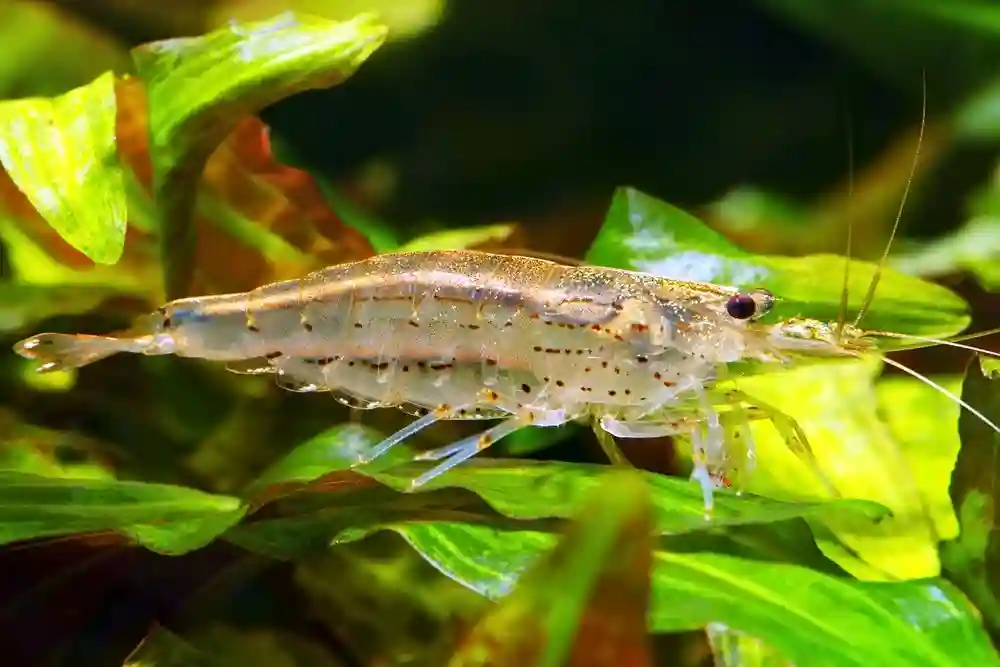
Amano shrimp have earned their reputation as the premier algae eaters in the shrimp world. Larger than most ornamental shrimp species, they make a more noticeable presence in your tank. These hardy and adaptable creatures feature an interesting transparent appearance with distinctive dots along their bodies.
Their active nature means they’re often visible in the tank, busily cleaning surfaces and searching for food. Unlike many ornamental shrimp, Amano shrimp rarely breed in home aquariums because their larvae require brackish water to develop, making them a stable population that won’t overrun your tank.
- Care level: Easy
- Size: 1.5-2 inches
- Lifespan: 2-3 years
- Water parameters: 65-80°F, pH 6.0-7.5, GH 4-14
4.Crystal Red Shrimp (Caridina cantonensis)
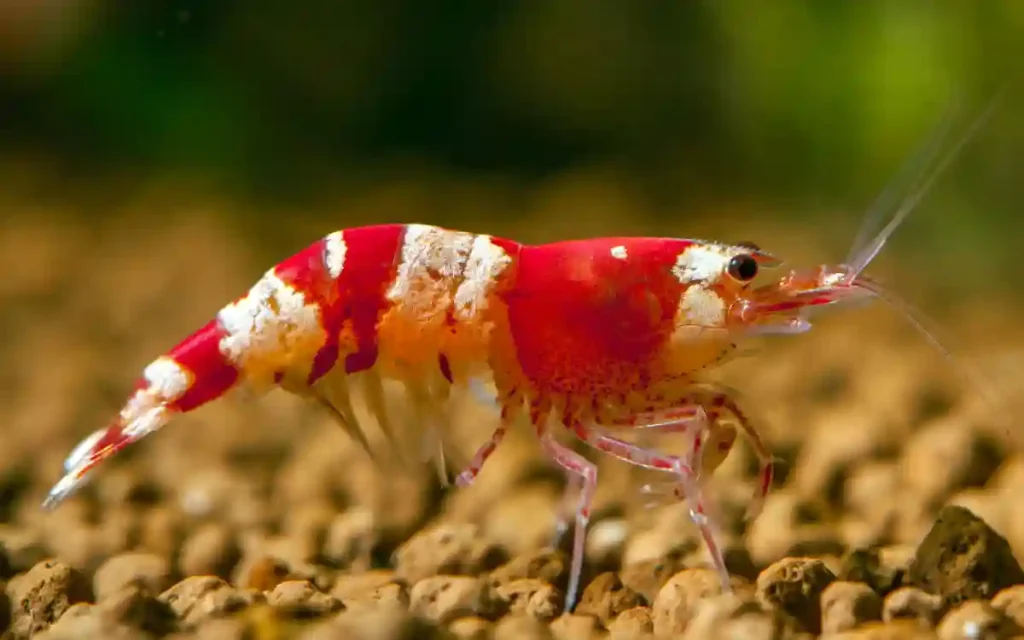
Crystal red shrimp are one of the most popular Caridina shrimp. They have red and white patterns that make them look very different from common Neocaridina shrimp.
They are beautiful, but they are more sensitive. Crystal red shrimp need stable water, lower pH, softer water, and clean conditions. Sudden changes in temperature, minerals, or water quality can stress them quickly.
These shrimp are best for keepers who already understand basic shrimp care. A shrimp-only tank is usually better than a busy community tank because crystal red shrimp are small and delicate.
They breed in freshwater, but the babies need safe hiding spaces and stable water. A mature tank with moss, leaf litter, and biofilm works best.
- Best tank setup: Shrimp-only tank, soft water planted tank, careful breeding tank
- Tank size: 5–10 gallons or larger
- Temperature: 68–74°F
- pH: 5.8–6.8
- Care level: Moderate
5.Ghost Shrimp (Palaemonetes sp.)
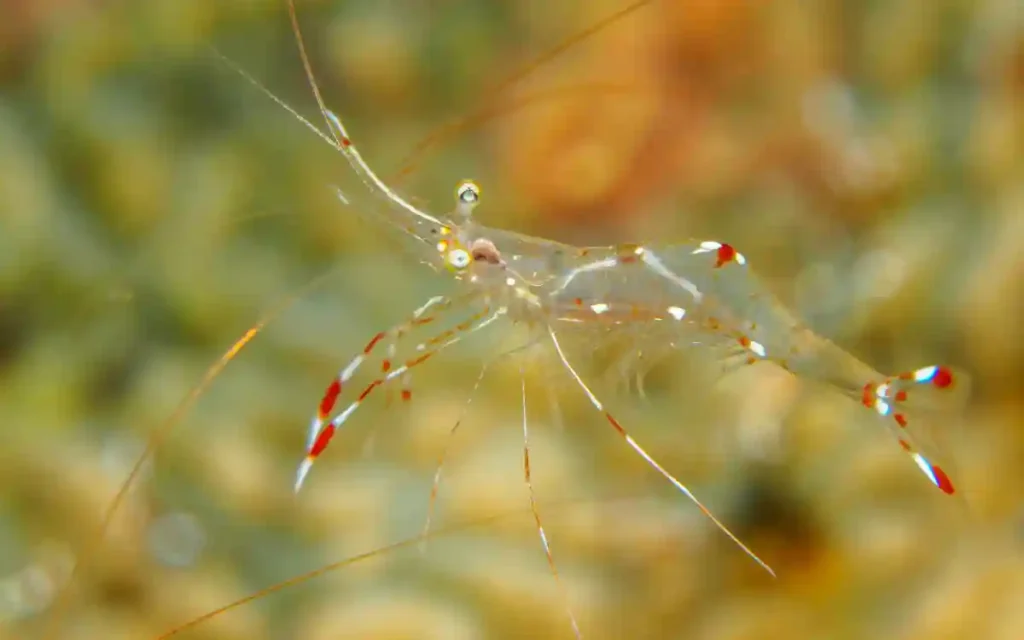
Ghost shrimp are clear-bodied freshwater shrimp often sold at low prices. Their transparent bodies make them fun to watch because you can see their internal organs and food moving through their digestive system.
They are useful scavengers and will eat leftover fish food, soft algae, and tiny debris. Because they are inexpensive, many beginners try them before moving into colorful shrimp like cherry shrimp or blue dream shrimp.
Quality can vary a lot with ghost shrimp. Some are sold as feeder shrimp, which means they may arrive weak, stressed, or unhealthy. For a proper aquarium, buy them from a reliable source and quarantine them before adding them to your main tank.
Ghost shrimp can be peaceful, but some larger individuals may bother tiny shrimp fry or compete strongly for food. They are best kept with peaceful fish and enough hiding spots.
- Best tank setup: Budget cleanup crew, beginner shrimp tank, peaceful community tank
- Tank size: 5–10 gallons or larger
- Temperature: 68–80°F
- pH: 6.5–8.0
- Care level: Easy
6.Bamboo Shrimp (Atyopsis moluccensis)
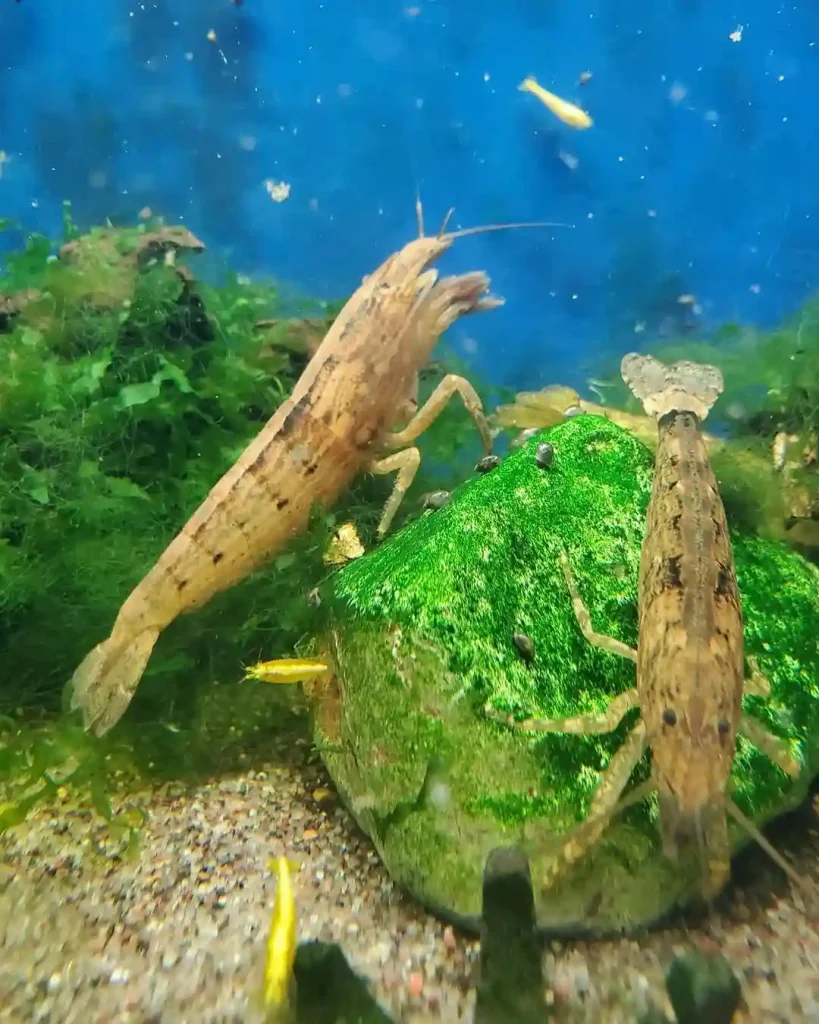
Bamboo shrimp are larger filter-feeding shrimp. Instead of picking at surfaces all day like cherry shrimp, they use fan-like front legs to catch tiny food particles from the water.
They are peaceful and fascinating to watch. You will often see them sitting near filter outflow areas with their fans open, collecting food from moving water.
Because they filter feed, they need a mature tank with gentle but steady water flow. If they are always scraping the substrate for food, it may mean there is not enough suspended food in the water.
Bamboo shrimp do not breed in normal freshwater aquariums. Their larvae need special conditions, so they are usually bought rather than bred by hobbyists.
- Best tank setup: Mature planted tank, peaceful community tank with water flow
- Tank size: 20 gallons or larger
- Temperature: 72–82°F
- pH: 6.5–7.8
- Care level: Moderate
7.Blue Tiger Shrimp (Caridina cantonensis var. “Blue Tiger”)
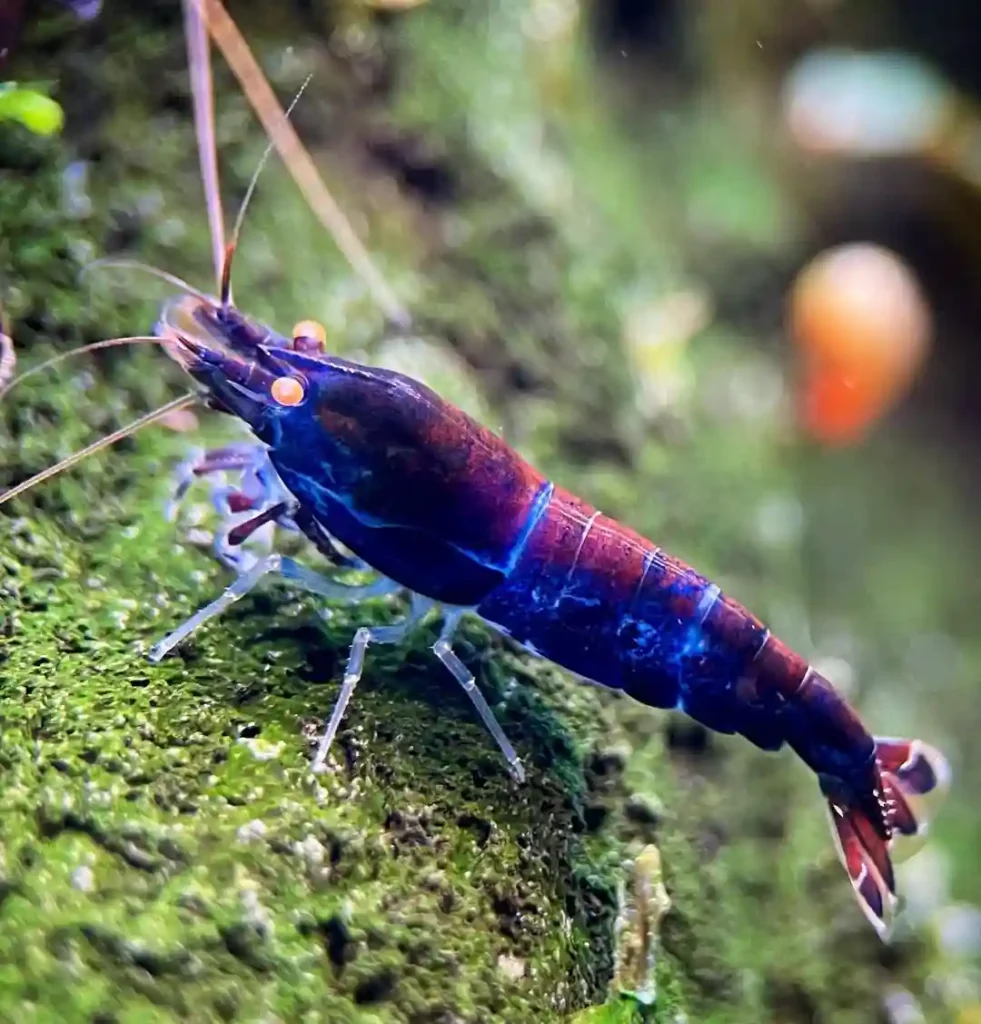
Blue Tiger shrimp feature a blue body with striking dark stripes that create a tiger-like pattern. These shrimp are more challenging to keep than Neocaridina species, making them appealing to hobbyists looking to advance their shrimp-keeping skills.
Their unique pattern stands out compared to solid-colored shrimp, and their active behavior makes them entertaining to watch. Blue Tigers prefer slightly acidic water and do well in tanks with active soil substrates that help maintain appropriate water chemistry.
- Care level: Moderate
- Size: 1-1.5 inches
- Lifespan: 1-2 years
- Water parameters: 65-75°F, pH 6.0-7.0, GH 4-6
8.Snowball Shrimp (Neocaridina davidi var. white)
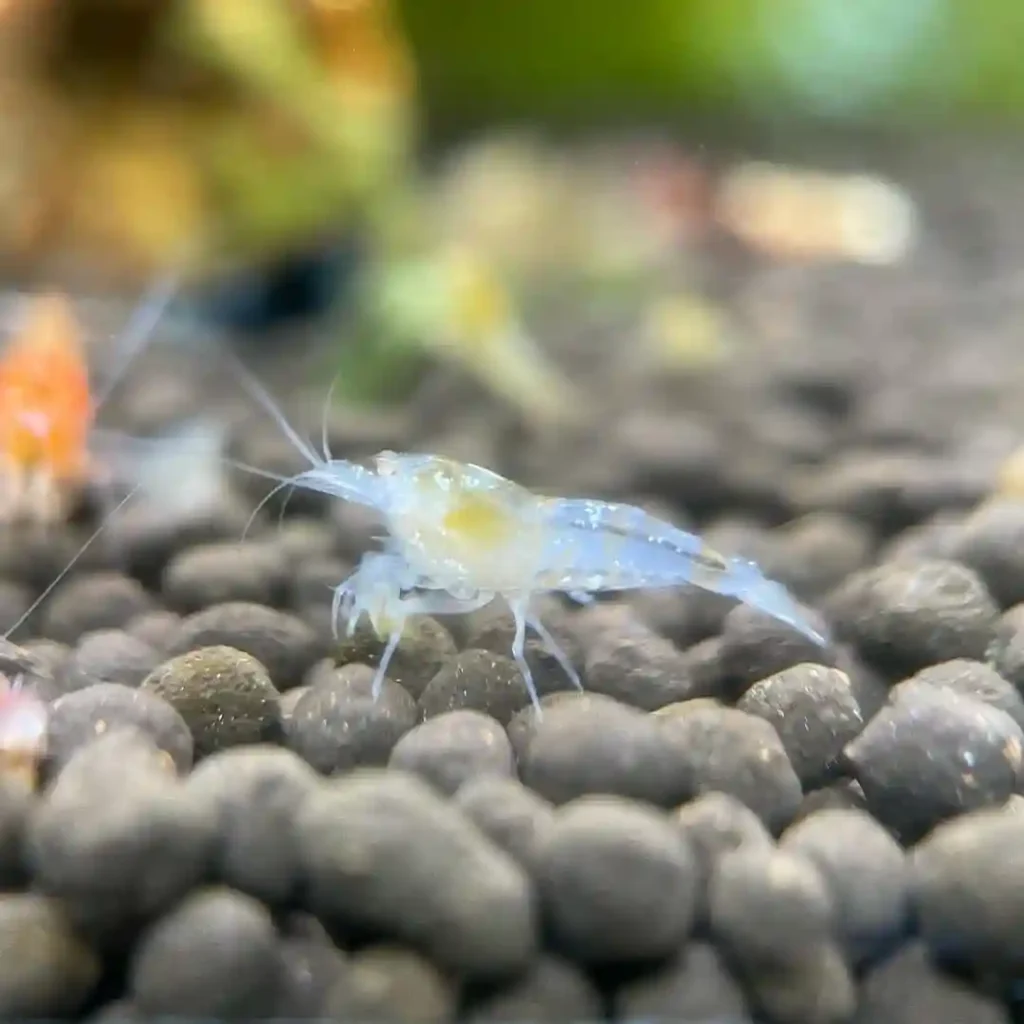
Snowball shrimp are a white or translucent Neocaridina variety. They get their name from the white eggs females carry, which look like tiny snowballs under the body.
They are not as bold in color as red, blue, or yellow shrimp, but they have a clean, soft look that works well in natural aquascapes. They can look beautiful in tanks with dark substrate and fine green plants.
Snowball shrimp are beginner-friendly and breed easily in freshwater. They are peaceful, active, and spend most of their time grazing on biofilm and small food particles.
Because they are light-colored, they may be harder to see in pale sand tanks. A darker background or substrate helps them stand out.
- Best tank setup: Simple shrimp tank, planted nano tank, beginner breeding setup
- Tank size: 5 gallons or larger
- Temperature: 68–78°F
- pH: 6.5–8.0
- Care level: Easy
9.Sulawesi Cardinal Shrimp (Caridina dennerli)
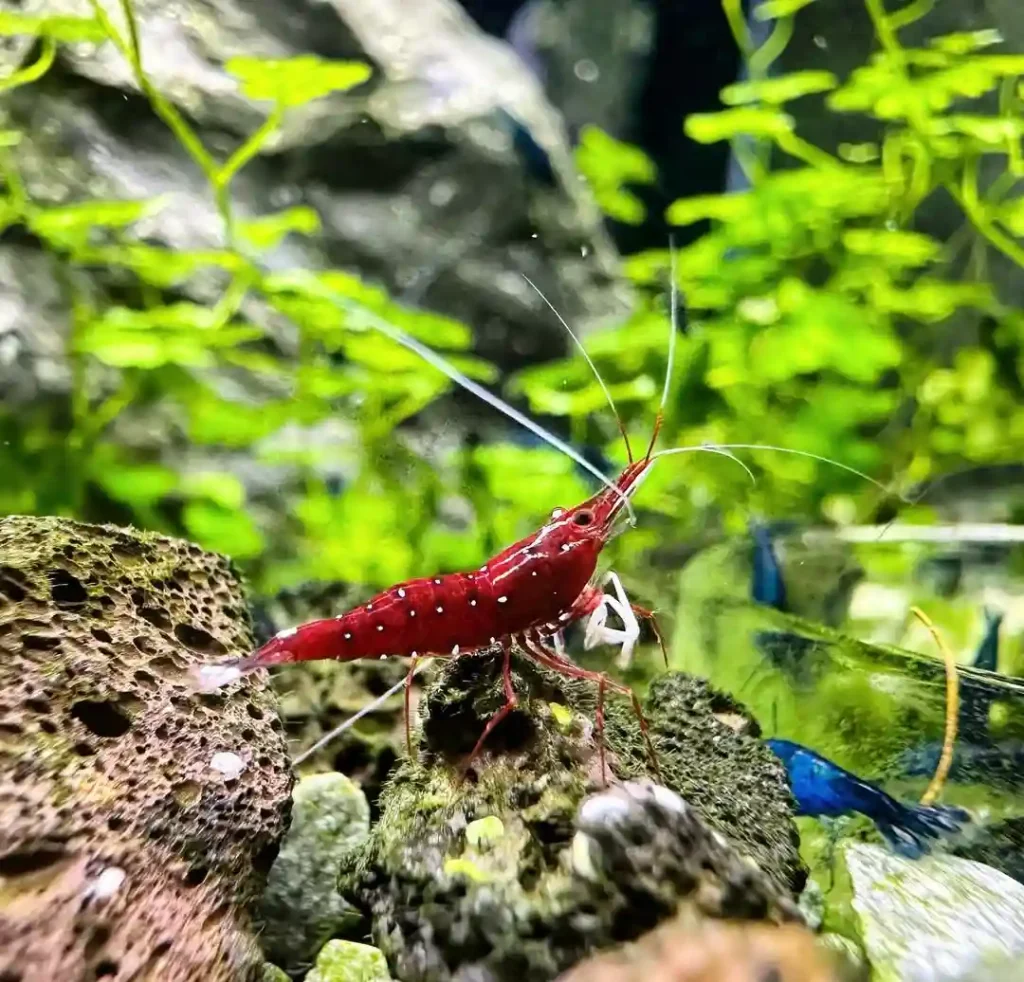
Sulawesi Cardinal shrimp feature striking white spots on a deep red body, creating an exotic appearance that stands out in any aquarium. These challenging shrimp are prized among serious shrimp keepers who enjoy the advanced care requirements they present.
Native to unusual alkaline lakes in Indonesia, they require specific water parameters that differ from most other aquarium shrimp. Their distinctive appearance and challenging nature make them a goal for many shrimp enthusiasts who have mastered more beginner-friendly species.
- Care level: Advanced
- Size: 1 inch
- Lifespan: 1-2 years
- Water parameters: 80-86°F, pH 7.5-8.5, GH 8-12
10.Yellow Gold Shrimp (Neocaridina davidi var. yellow)
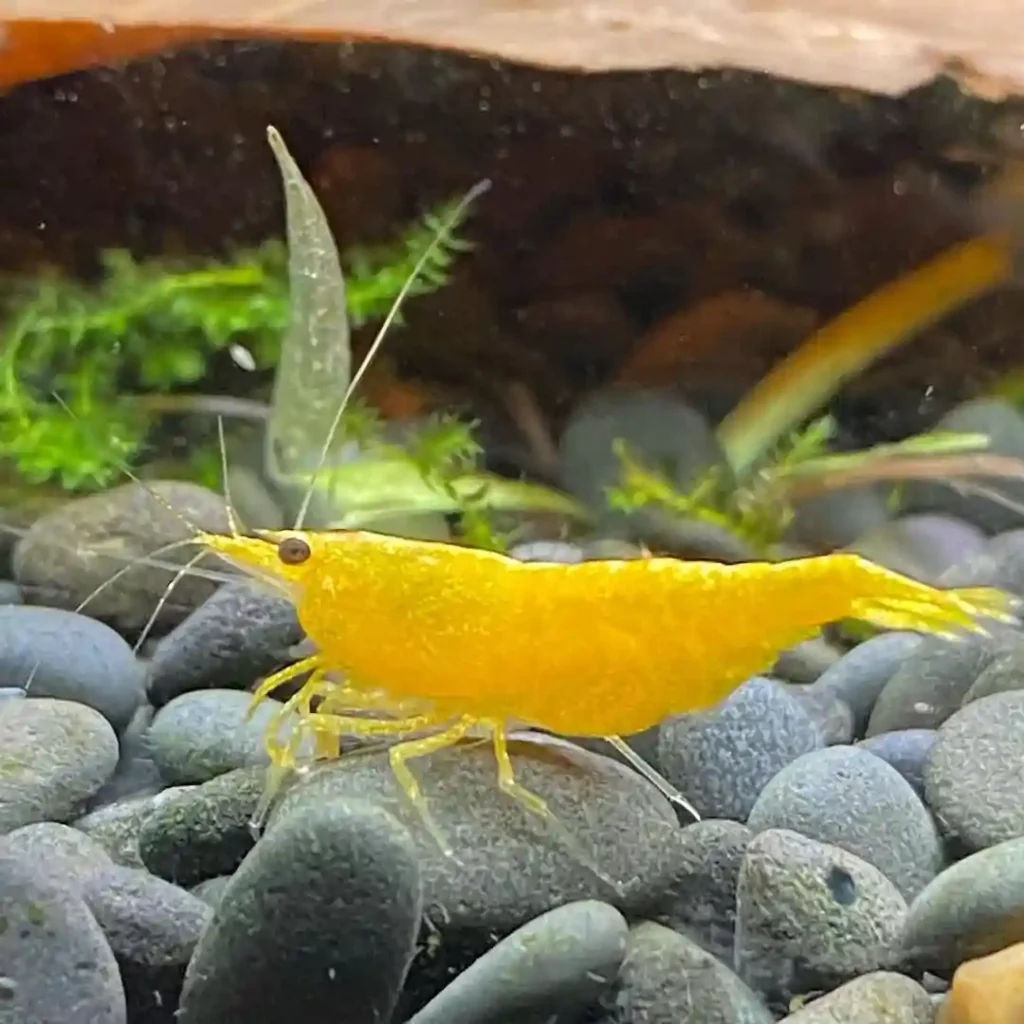
Yellow shrimp are bright, cheerful, and easy to care for. Their yellow color stands out well in planted aquariums, especially with dark substrate and green moss.
They belong to the same general group as cherry shrimp and blue dream shrimp, so their care is very similar. They enjoy stable water, gentle filtration, and plenty of surfaces to graze.
Yellow shrimp are a good choice if you want a colorful colony that breeds easily. Females often carry yellowish eggs, which makes them easy to spot when breeding starts.
As with other Neocaridina shrimp, avoid mixing different colors in the same tank unless you do not mind losing strong color lines over time.
- Best tank setup: Beginner shrimp colony, planted nano aquarium, peaceful community tank
- Tank size: 5 gallons or larger
- Temperature: 68–78°F
- pH: 6.5–8.0
- Care level: Easy
11.Bee Shrimp
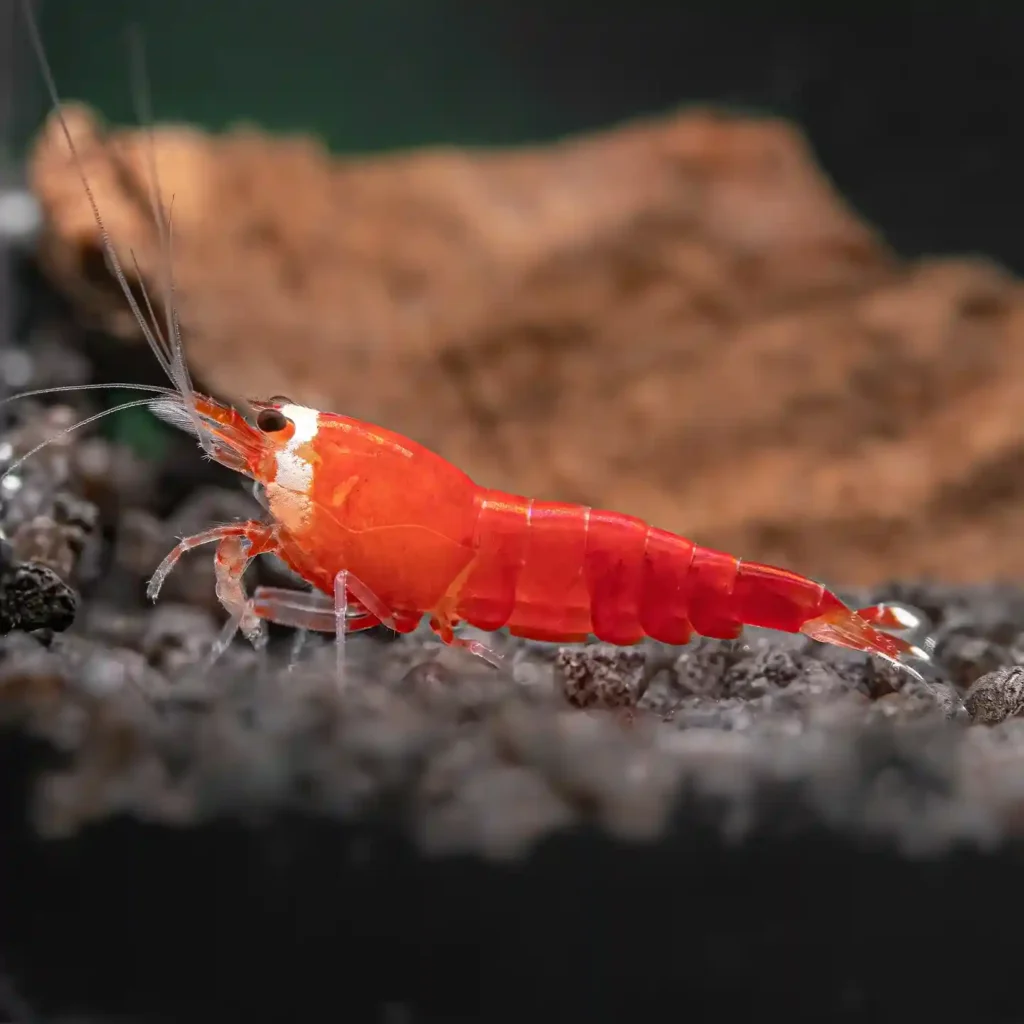
Bee shrimp are small Caridina shrimp known for striped patterns and selective breeding varieties. They are not as beginner-proof as cherry shrimp, but they are rewarding for aquarists who enjoy more careful water management.
They prefer soft, clean, stable water. Many keepers use active substrate to help keep the pH lower and more stable. Remineralized RO water is also common in dedicated Bee shrimp tanks.
Bee shrimp should not be placed in rough community tanks. Even peaceful fish may eat tiny baby shrimp, and larger fish may scare adults into hiding.
A mature shrimp-only tank is the best setup. Moss, botanicals, and gentle filtration help create the biofilm-rich environment they need.
- Best tank setup: Dedicated Caridina tank, soft water planted tank
- Tank size: 5–10 gallons or larger
- Temperature: 68–74°F
- pH: 5.8–6.8
- Care level: Moderate
12. Taiwan Bee Shrimp
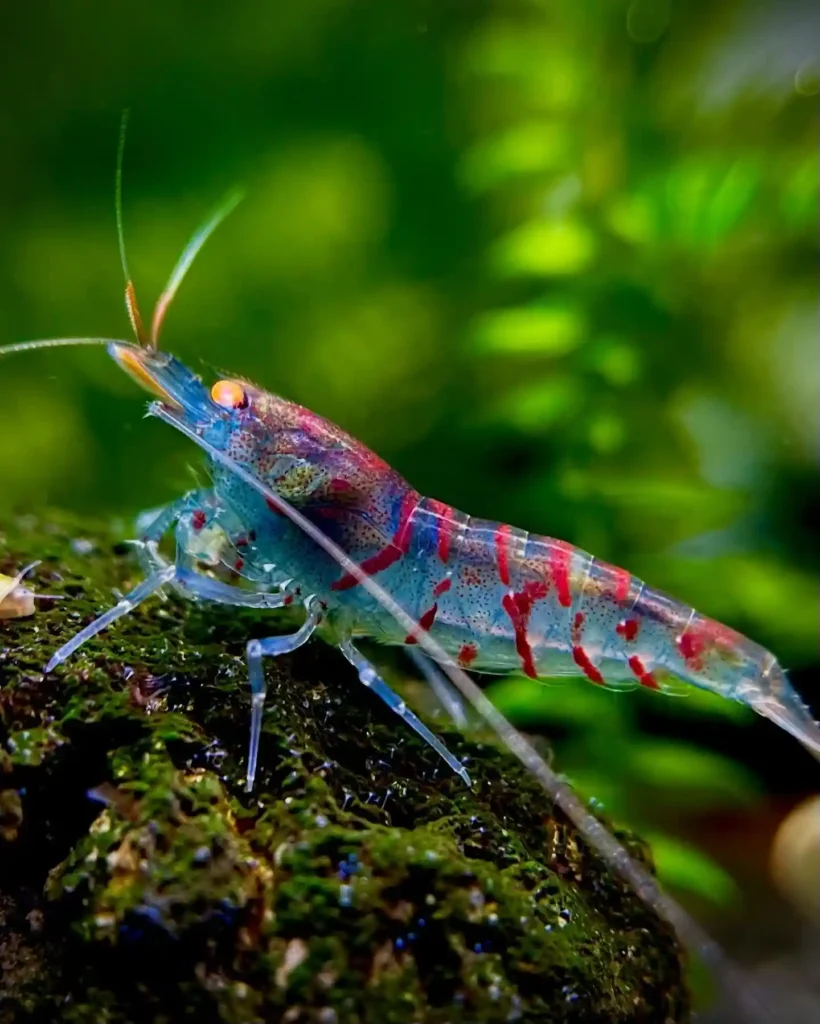
Taiwan Bee shrimp are advanced Caridina shrimp with striking patterns and colors. Popular types include King Kong, Panda, Wine Red, and Blue Bolt lines.
They are stunning, but they are not the best first shrimp. Taiwan Bee shrimp need very stable soft water, careful feeding, and clean conditions. Even small mistakes can cause losses.
These shrimp are usually kept in dedicated tanks with active substrate and remineralized RO water. A stable tank matters more than chasing perfect numbers every day.
They breed in freshwater, but successful breeding takes patience. Baby shrimp are tiny and sensitive, so the tank needs plenty of biofilm, moss, and safe surfaces.
- Best tank setup: Advanced shrimp-only tank, selective breeding setup
- Tank size: 5–10 gallons or larger
- Temperature: 68–74°F
- pH: 5.5–6.5
- Care level: Hard
13. Blue Bolt Shrimp
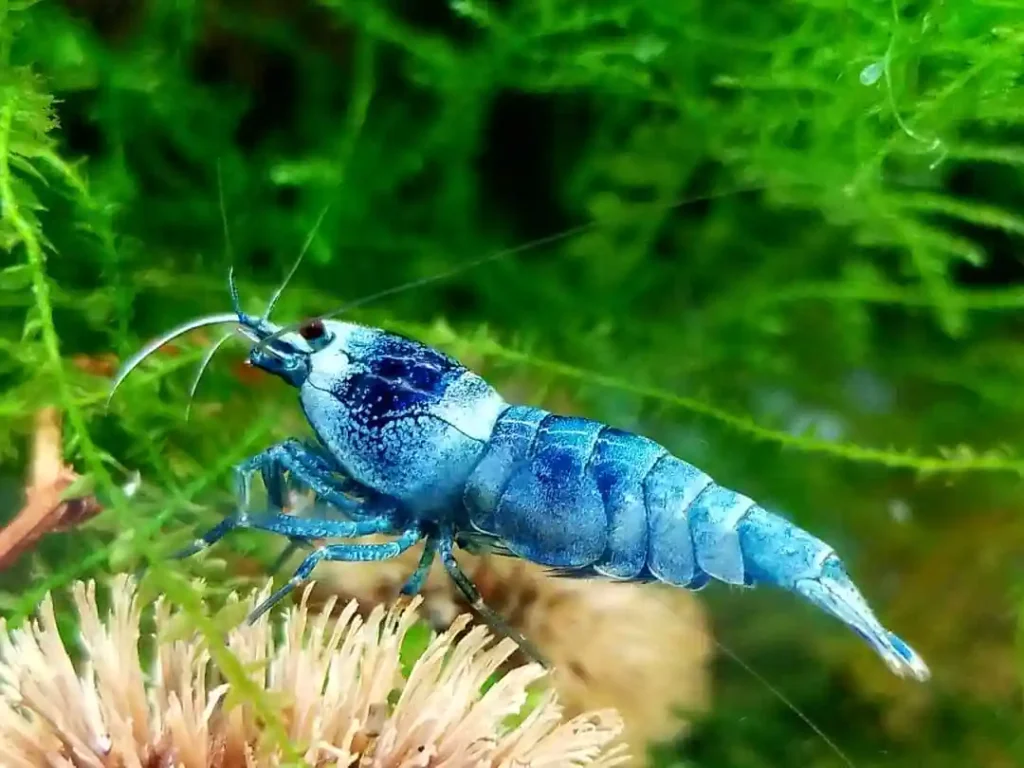
Blue bolt shrimp are a beautiful Taiwan Bee variety with pale blue, white, and sometimes deeper blue shading. They are one of the most attractive shrimp for serious Caridina keepers.
They need soft, acidic, stable water. They are not a good match for hard tap water unless the keeper is willing to use RO water and remineralize it properly.
Blue bolts are best kept in shrimp-only aquariums. Fish can stress them, and baby shrimp are easy snacks for many tank mates.
The tank should be mature before adding them. A new aquarium with unstable water is risky. Moss, active substrate, sponge filtration, and steady feeding all help support a healthy colony.
- Best tank setup: Advanced Caridina tank, shrimp-only aquascape
- Tank size: 5–10 gallons or larger
- Temperature: 68–74°F
- pH: 5.5–6.5
- Care level: Hard
14. Green Jade Shrimp
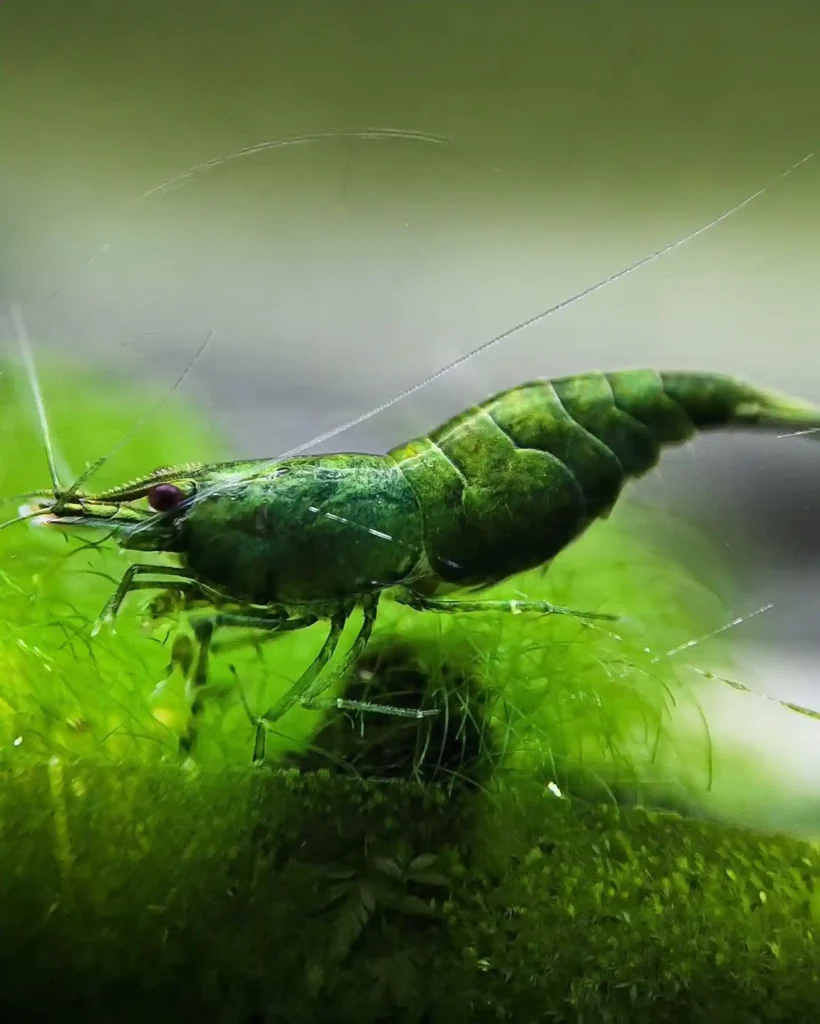
Green jade shrimp are a green Neocaridina variety. They can look amazing in planted tanks, although their color may blend into moss and leaves.
Their care is similar to cherry shrimp, blue dream shrimp, and yellow shrimp. They are hardy once settled and can breed in freshwater when the tank is stable.
Because green color can vary a lot, buy from a reliable breeder if you want strong color. Some shrimp may appear dark green, olive, or almost black depending on lighting and background.
They work well in peaceful nano tanks, but avoid fish that hunt small invertebrates. If you want babies to survive, give them moss, floating plants, and dense cover.
- Best tank setup: Planted shrimp colony, nano aquascape, peaceful community tank
- Tank size: 5 gallons or larger
- Temperature: 68–78°F
- pH: 6.5–8.0
- Care level: Easy to Moderate
15. Crystal Black Shrimp
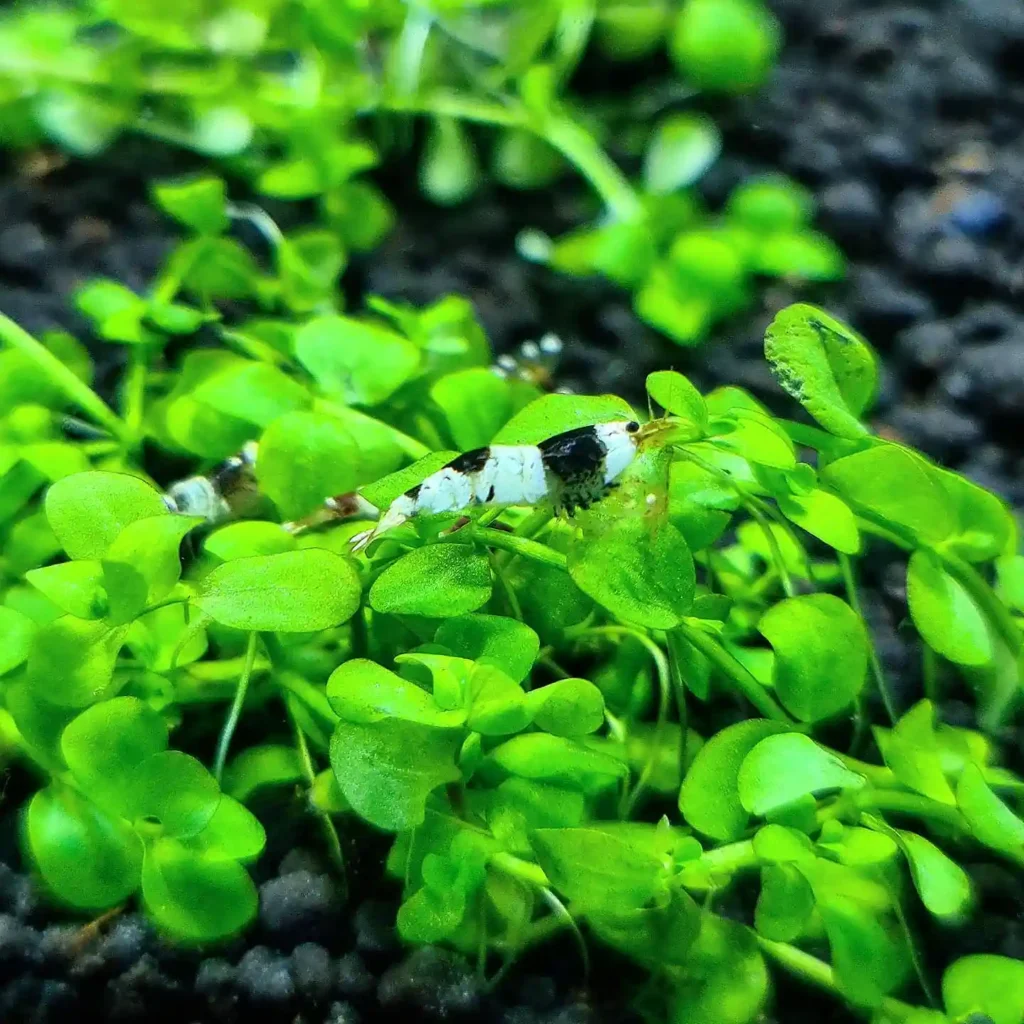
Crystal black shrimp are similar to crystal red shrimp, but they have black and white bands instead of red and white. Their clean pattern makes them a favorite for shrimp keepers who enjoy high-contrast colors.
Care is very similar to crystal red shrimp. They prefer soft, slightly acidic water and a stable aquarium. They do not handle poor water quality or sudden parameter swings well.
Crystal black shrimp do best in mature tanks with sponge filters, fine plants, moss, and gentle water movement. Strong filter intakes can be dangerous for baby shrimp, so sponge filters are usually the safest option.
They can breed in freshwater, but colony growth depends on stability. When conditions are right, they can produce beautiful offspring with strong patterns.
- Best tank setup: Soft water shrimp tank, Caridina breeding setup, planted nano tank
- Tank size: 5–10 gallons or larger
- Temperature: 68–74°F
- pH: 5.8–6.8
- Care level: Moderate
Best Shrimp for Beginners
For most beginners, the best aquarium shrimp are Neocaridina shrimp. They are hardy, colorful, and breed easily in freshwater.
The best beginner choices are:
| Shrimp | Why It’s Beginner-Friendly |
| Cherry Shrimp | Hardy, cheap, colorful, easy to breed |
| Yellow Shrimp | Same easy care as cherry shrimp |
| Blue Dream Shrimp | Beautiful color with beginner-friendly care |
| Snowball Shrimp | Peaceful and easy to breed |
| Ghost Shrimp | Budget-friendly, but quality varies |
| Amano Shrimp | Hardy and great for algae control |
My honest pick: Cherry shrimp are the best first shrimp. They are affordable, easy to understand, and forgiving compared with Crystal Red, Taiwan Bee, or Sulawesi shrimp.
Best Shrimp for Algae Control
If your main goal is algae control, choose Amano shrimp first. They are stronger algae eaters than cherry shrimp and are more active on soft algae.
Best algae-eating shrimp:
| Shrimp | Algae Control Rating |
| Amano Shrimp | Excellent |
| Cherry Shrimp | Good for soft algae and biofilm |
| Ghost Shrimp | Moderate |
| Blue Dream Shrimp | Good for biofilm and light algae |
| Bamboo Shrimp | Not an algae cleaner |
| Vampire Shrimp | Not an algae cleaner |
Amano shrimp are the best for planted tanks with mild algae. But they will not fix heavy algae caused by too much light, overfeeding, or poor maintenance.
Best Shrimp for Breeding
If you want a growing shrimp colony, choose shrimp that breed fully in freshwater.
Best shrimp for breeding:
| Shrimp | Breeding Difficulty |
| Cherry Shrimp | Easy |
| Blue Dream Shrimp | Easy |
| Yellow Shrimp | Easy |
| Snowball Shrimp | Easy |
| Green Jade Shrimp | Easy to Moderate |
| Crystal Red Shrimp | Moderate |
| Taiwan Bee Shrimp | Hard |
| Sulawesi Shrimp | Hard |
For easy breeding, stick with one color of Neocaridina shrimp. Mixing colors may sound fun, but the babies often lose bright color over time.
Best Tank Mates for Aquarium Shrimp
Shrimp do best with peaceful fish that are too small or too calm to bother them. Even then, baby shrimp may still get eaten.
Good shrimp tank mates include:
| Tank Mate | Notes |
| Otocinclus Catfish | One of the safest shrimp tank mates |
| Chili Rasboras | Small and peaceful |
| Ember Tetras | Usually peaceful, may eat tiny babies |
| Pygmy Corydoras | Peaceful bottom dwellers |
| Small Snails | Nerite, ramshorn, and mystery snails can work |
| Other Same-Species Shrimp | Best for breeding colonies |
Avoid bettas, cichlids, goldfish, large gouramis, pea puffers, and aggressive barbs. Many of these fish will hunt or harass shrimp.
Internal link idea: Link to a post on “best shrimp tank mates” or “peaceful nano fish for planted tanks.”
Basic Shrimp Tank Setup
A good shrimp tank does not need to be complicated, but it does need to be stable. Shrimp are sensitive to sudden changes, especially copper, ammonia, nitrite, and quick shifts in water parameters.
A strong shrimp setup includes:
| Tank Item | Why It Helps |
| Sponge filter | Gentle filtration and safe for baby shrimp |
| Live plants | Adds cover and grazing surfaces |
| Moss | Great hiding place for baby shrimp |
| Driftwood | Grows biofilm and adds natural cover |
| Stable heater | Keeps temperature steady |
| Shrimp-safe food | Supports color, molting, and breeding |
| Dark substrate | Makes shrimp colors stand out |
Do not rush the tank. A mature aquarium with natural biofilm is much better for shrimp than a brand-new tank.
What Do Aquarium Shrimp Eat?
Aquarium shrimp eat biofilm, soft algae, leftover food, decaying plant matter, and shrimp pellets. But they still need a balanced diet, especially in clean tanks where natural food is limited.
Good shrimp foods include:
| Food | Best For |
| Shrimp pellets | Daily nutrition |
| Algae wafers | Grazing and minerals |
| Blanched spinach | Occasional vegetable treat |
| Blanched zucchini | Easy soft food |
| Indian almond leaves | Biofilm and grazing |
| Powdered shrimp food | Baby shrimp and filter feeders |
| Mineral food | Molting support |
Feed lightly. Overfeeding can cause water problems fast, especially in small shrimp tanks.
Common Shrimp Care Mistakes
The biggest shrimp mistakes usually come from unstable water or unsafe tank mates.
Avoid these problems:
| Mistake | Why It’s Bad |
| Adding shrimp to a new tank | Not enough biofilm and unstable water |
| Keeping shrimp with large fish | Shrimp may get eaten |
| Overfeeding | Causes ammonia and poor water quality |
| Using copper-based medicine | Copper can kill shrimp |
| Skipping acclimation | Sudden water changes can shock shrimp |
| Mixing shrimp colors | Offspring may lose bright color |
| Strong filter intake | Baby shrimp can get sucked in |
A slow, stable tank is better than a “perfect” tank that keeps changing.
