
Glowlight Danio Care Guide: Nature’s Neon Sparkler

If your goal is to add instant color and movement to a freshwater tank, GloFish Danio is one of the easiest ways to do it. These fish are bright, fast, and extremely hardy, which is why many beginners start with them.
But don’t assume “easy fish” means zero effort. The biggest mistakes with GloFish Danios come from poor grouping, small tanks, and mixing them with the wrong tank mates. Get the basics right, and they become one of the most active and enjoyable schooling fish in your aquarium.
What is a GloFish Danio?
GloFish Danios are a modified version of the Zebra Danio. Scientists introduced fluorescent proteins into their DNA, allowing them to display bright neon colors.
These colors are not painted or injected they are part of the fish itself and remain throughout its life.
You’ll usually find them in shades like red, green, blue, orange, and purple. Under standard lighting, they look colorful. Under blue or actinic LED lighting, they appear much more vibrant and “glowing.”
This is why lighting plays a bigger role here compared to natural fish species.
More different types of danio
GloFish Danio Overview
Instead of long explanations, here’s a quick snapshot to help you understand their basic needs:
| Category | Details |
| Base Species | Zebra Danio |
| Size | ~2 inches |
| Lifespan | 3 – 5 years |
| Temperament | Peaceful but very active |
| Tank Size | 10+ gallons (20 preferred) |
| Group Size | 6 or more |
| Diet | Omnivore |
| Difficulty | Easy |
The key takeaway here is not just “easy care,” but “active schooling fish.” That changes how you should set up the tank.
Appearance & Color Behavior
GloFish Danios keep the same slim, torpedo-like body shape as Zebra Danios. They are built for speed and rarely stay still.
What makes them different is their solid fluorescent coloration. Unlike natural fish that show patterns or gradients, these fish display bold, uniform colors that stand out even in simple tanks.
Lighting changes everything. Under regular white light, they look bright. Switch to blue LED lighting, and the color intensity increases noticeably. That’s why many hobbyists design their tank lighting specifically around these fish.
GloFish Danio vs Glowlight Danio (Important Difference)
This is where confusion happens, especially for beginners.
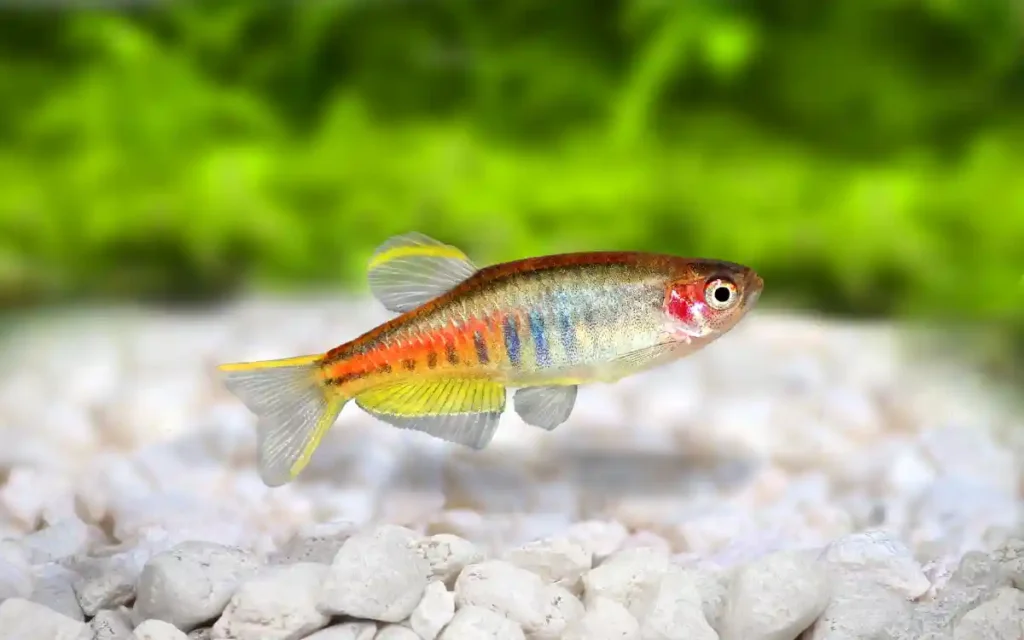
The Glowlight Danio is a naturally colored fish with a mix of orange and blue patterns. The GloFish Danio, on the other hand, is genetically modified and shows solid neon colors.
Here’s the real difference in simple terms:
- Glowlight Danio → natural patterns, softer colors
- GloFish Danio → artificial neon colors, stronger visual impact
There’s no “better” option here. It comes down to your preference. If you like a natural-looking aquarium, go with Glowlight Danios. If you want a bright, modern display tank, GloFish Danios fit better.
Tank Size & Setup: Don’t Underestimate Their Energy
One of the biggest mistakes is assuming small fish need small tanks.
GloFish Danios may only grow to around 2 inches, but they are constantly moving. That means they need horizontal swimming space more than anything else.
A 10-gallon tank is the bare minimum, but a 20-gallon tank is where they actually start behaving naturally.
Keep the layout simple. Leave the center open for swimming and place plants or decorations along the edges. This creates a natural flow pattern where fish can move freely.
Also, always use a lid. These fish are known jumpers, especially when startled.
Water Parameters & Adaptability
One reason these fish are beginner-friendly is their adaptability.
They can live comfortably in a temperature range of 18–26°C, which is slightly cooler than many tropical fish. This makes them suitable even for unheated tanks in moderate climates.
They also tolerate a wide pH range, but stable, clean water is still essential. Sudden changes are more harmful than slightly imperfect parameters.
A simple rule: consistency matters more than perfection.
Diet & Feeding Routine
GloFish Danios are easy to feed, but variety improves their health and activity.
A mix of flakes or small pellets works as a base diet. Adding frozen foods like brine shrimp or daphnia once or twice a week keeps them more active and improves overall condition.
Feed small amounts once or twice daily. Overfeeding is a common beginner mistake and quickly leads to poor water quality.
Behavior & Schooling Needs
This is where many setups fail.
GloFish Danios are schooling fish, not solo fish. Keeping them in small numbers (2–3) leads to stress and erratic behavior.
In proper groups of six or more, their behavior changes completely. They move together, spread aggression within the group, and look much more natural.
Some chasing is normal. It’s part of their social structure, not aggression.
Best Tank Mates (Match Energy, Not Just Temperament)
GloFish Danios are peaceful, but their speed can overwhelm slow fish.
They do best with other active community fish like tetras, guppies, Corydoras, or other danios. These species can handle the constant movement without stress.
Avoid slow, long-finned fish. They may not be attacked, but they can become stressed due to constant activity around them.
Are GloFish Danios Ethical?
This topic comes up often, and opinions vary.
GloFish Danios are genetically modified, but they are not dyed or artificially colored after birth. They are bred in captivity and not taken from wild populations.
From a care perspective, they behave exactly like normal Zebra Danios.
The decision comes down to personal preference. Some aquarists prefer natural species, while others enjoy the unique look of fluorescent fish.
Common Problems (And How to Avoid Them)
Most issues are not disease-related—they are setup mistakes.
Keeping too few fish leads to stress and chasing. Small tanks restrict movement. Poor water quality causes dull color and inactivity.
These problems are easy to fix if you focus on three things: group size, tank space, and clean water.
Frequently Asked Questions
Do GloFish Danios need special lighting?
No, but blue LED lighting enhances their color significantly.
Are they beginner-friendly?
Yes, they are one of the easiest schooling fish to keep.
Can they live with bettas?
Sometimes, but their fast movement can stress bettas.
Do they glow in the dark?
No, they only appear to glow under specific lighting.
Final Thoughts
GloFish Danios are simple to care for, but they still need the right setup to truly thrive.
Give them enough space, keep them in proper groups, and pair them with compatible tank mates. Do that, and you’ll have a bright, active aquarium that never feels dull.
If you’re building a beginner-friendly community tank with strong visual appeal, this is one of the easiest species to start with—and one you won’t get bored of.
If you want a naturally colorful fish without going for artificial options, the Glowlight Danio is one of the best choices. This small, fast-moving fish shows bright orange and blue patterns that stand out in planted aquariums—no genetic modification needed.
Unlike GloFish, the Glowlight Danio gets its color from nature, making it a great option for hobbyists who prefer natural beauty.
Species Overview & Origin
Glowlight Danios come from the fast-flowing streams of Myanmar, especially the Irrawaddy River basin. These waters are clear, cool, and rich in oxygen.
Quick facts:
- Size: 1 – 1.2 inches
- Lifespan: 2 – 4 years
- Temperament: Peaceful but active
- Difficulty: Easy to moderate
They are small, but their energy level is very high.
Appearance: Why It’s Called the “Glowlight”
Glowlight Danios are easy to recognize:
- Bright orange or gold horizontal stripe
- Blue or turquoise vertical bars
- Slight yellow or red tint on fins
This combination gives them a glowing effect under aquarium lighting.
👉 Unlike many fish, their color comes from natural pigmentation, not artificial enhancement.
Ideal Tank Setup
Even though they are small, they need space.
- Minimum tank: 15 gallons
- Ideal: 20 gallons long
- Group size: 8–10
Setup Tips
- Use a long tank for swimming
- Keep open space in the center
- Add plants along edges
- Always use a lid
They are fast swimmers and can jump easily.
Water Parameters for Success
Glowlight Danios prefer slightly cooler tropical water.
- Temperature: 22–26°C
- pH: 6.0 – 7.5
- Hardness: 2 – 10 dGH
Oxygen & Flow
- Moderate to strong flow is beneficial
- Add an air stone or strong filter
They come from moving water, so oxygen-rich conditions help them thrive.
Diet & Feeding
These fish have a fast metabolism and need regular feeding.
Diet:
- Micro pellets or crushed flakes
- Live or frozen foods (daphnia, brine shrimp)
- Occasional variety improves color
Feed small portions 1–2 times daily.
Best Tank Mates
Glowlight Danios are peaceful but very active.
Good Tank Mates
- Zebra Danio
- Pearl Danio
- Small tetras
- Sparkling gouramis
Shrimp Compatibility
- Safe with adult shrimp
- May eat very small shrimplets
Avoid
- Slow or long-finned fish
- Aggressive species
Breeding the Glowlight Danio
Glowlight Danios are egg scatterers.
- Use marbles or mesh at the bottom
- Eggs fall through and stay protected
- Remove parents after spawning
Breeding is possible but requires a separate setup.
Glowlight Danio vs GloFish Danio
This is a common confusion.
- Glowlight Danio → natural colors
- GloFish Danio → genetically modified
Key differences:
- Natural vs artificial coloration
- Glowlight has patterned stripes and bars
- GloFish has solid neon colors
If you want a natural look, Glowlight Danio is the better choice.
Common Problems
- Keeping too few fish
- Small tank size
- Low oxygen levels
- Mixing with slow fish
These issues can lead to stress or poor behavior.
Frequently Asked Questions
Are Glowlight Danios aggressive?
No, but they can be energetic and may nip slow fish.
How many should be kept together?
At least 8–10 for proper schooling.
Do they need strong flow?
Moderate flow is ideal.
Can they live in a 10 gallon tank?
Not recommended—they need more swimming space.
Final Thoughts
Glowlight Danio is one of the best naturally colorful fish for aquariums. It combines bright patterns with active behavior, making it a great alternative to artificial-looking fish.
If you give them space, flow, and a proper group, they will stay active and show their best colors.
