
Java Fern Care Guide

Java Fern is one of the easiest aquarium plants to grow. It is hardy, adaptable, and suitable for both beginners and experienced aquarists. Unlike many aquatic plants that require nutrient-rich substrates and strong lighting, Java Fern can thrive with very little attention.
Its attractive green leaves and low-maintenance nature make it a favorite choice for community aquariums, shrimp tanks, betta tanks, and planted aquascapes. If you’re looking for a plant that grows steadily without demanding constant care, Java Fern is one of the best options available.
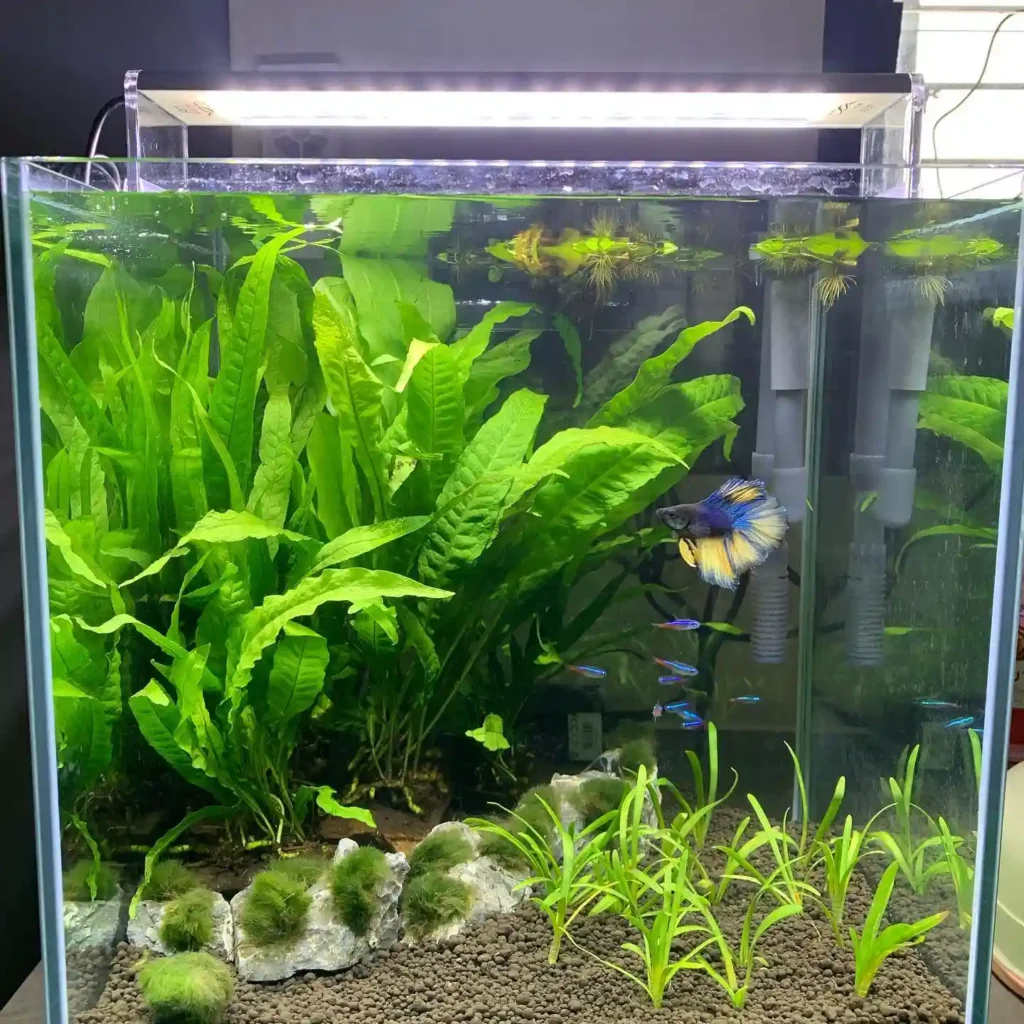
Java Fern Plant Profile
| Information | Details |
| Scientific Name | Microsorum pteropus |
| Common Name | Java Fern |
| Origin | Southeast Asia |
| Growth Rate | Slow to Moderate |
| Difficulty | Easy |
| Lighting | Low to Moderate |
| CO2 Required | No |
| Placement | Midground to Background |
| Temperature | 68–82°F |
| pH | 6.0–8.0 |
What Is Java Fern?
Java Fern is an epiphyte plant found naturally attached to rocks, driftwood, and tree roots in streams and rivers throughout Southeast Asia.
Unlike stem plants, Java Fern does not grow from roots buried in substrate. Instead, it grows from a thick horizontal structure called a rhizome. New leaves and roots develop from this rhizome as the plant matures.
This unique growth habit is one reason Java Fern is so easy to care for.
Why Is Java Fern So Popular?
Many aquarium plants require strong lighting, nutrient-rich substrates, and CO2 injection to thrive. Java Fern is different.
It grows well in low-tech aquariums and tolerates a wide range of water conditions. This makes it one of the most forgiving plants available.
Aquarists often choose Java Fern because:
- It survives in low light.
- Most fish leave it alone.
- It does not require special substrate.
- It grows without CO2 injection.
- It works well in beginner aquariums.
For tanks containing plant-nibbling fish, Java Fern is often one of the safest choices.
Different Types of Java Fern
Several cultivated varieties are available in the aquarium hobby.
Narrow Leaf Java Fern
This variety has thinner leaves and creates a more delicate appearance.
Windelov Java Fern
Windelov features finely branched leaf tips that give the plant a decorative look.
Trident Java Fern
Trident Java Fern produces narrow leaves with multiple lobes, making it popular in aquascaping.
Needle Leaf Java Fern
This variety develops very thin leaves and works well in smaller aquariums.
All varieties share similar care requirements.
Tank Requirements
Java Fern adapts to a wide range of aquarium setups.
Because it naturally grows attached to hard surfaces, the focus should be on stable water conditions rather than specialized equipment.
Aquarium Size
Java Fern can be grown in tanks as small as 5 gallons or as large as several hundred gallons.
Larger aquariums simply allow the plant to spread more naturally.
Water Parameters
| Parameter | Recommended Range |
| Temperature | 68–82°F |
| pH | 6.0–8.0 |
| GH | 3–15 dGH |
| KH | 2–12 dKH |
The plant tolerates minor fluctuations better than many aquarium plants.
Read also: How to Take Care of Anubias Plants
Lighting Requirements
Java Fern prefers low to moderate lighting.
Many beginners assume stronger lighting leads to faster growth, but excessive light often causes algae problems on the leaves.
A simple LED aquarium light is usually sufficient.
Low Light
Growth is slower but healthy.
Moderate Light
Often produces the best balance between growth and algae control.
High Light
Can increase algae buildup if nutrients become unbalanced.
For most aquariums, moderate lighting is ideal.
How to Plant Java Fern
This is where many beginners make mistakes.
Java Fern should not be buried in substrate.
The rhizome must remain exposed because burying it often causes the plant to rot.
Instead, attach Java Fern to:
- Driftwood
- Rocks
- Decorations
Many aquarists use fishing line, thread, or aquarium-safe glue to secure the plant until it naturally attaches itself.
After several weeks, the roots will grip the surface on their own.
Read also: Anubias vs Java Fern: Which Is Better for Beginners?
Does Java Fern Need Substrate?
No.
Because nutrients are absorbed directly from the water column, substrate is not required.
This makes Java Fern an excellent choice for:
- Bare-bottom aquariums
- Goldfish tanks
- Shrimp tanks
- Breeding setups
The plant will still produce roots, but those roots mainly help anchor it to surfaces.
Does Java Fern Need CO2?
Java Fern grows successfully without CO2 injection.
While supplemental CO2 can slightly increase growth, it is not necessary for healthy plants.
This makes Java Fern ideal for low-tech planted aquariums.
Fertilizer Requirements
Although Java Fern is undemanding, it still benefits from nutrients.
In heavily stocked aquariums, fish waste often supplies enough nutrients.
In lightly stocked tanks, a liquid fertilizer may improve growth and leaf color.
Signs of nutrient deficiencies include:
- Yellowing leaves
- Transparent spots
- Slow growth
A simple all-in-one liquid fertilizer is usually sufficient.
Growth Rate
Java Fern grows slowly compared to stem plants.
New leaves typically emerge from the rhizome every few weeks.
Growth speed depends on:
- Lighting
- Nutrient availability
- Water quality
- Temperature
Patience is important because this plant develops gradually.
Java Fern Propagation
One of the most interesting features of Java Fern is its ability to reproduce through plantlets.
Small baby plants often develop directly on older leaves.
As they mature, they form roots and leaves of their own.
Once large enough, they can be detached and attached elsewhere in the aquarium.
The rhizome can also be divided to create multiple plants.
Both methods are simple and beginner-friendly.
Common Java Fern Problems
Although hardy, Java Fern can occasionally experience issues.
Brown Spots on Leaves
Many beginners assume brown spots indicate disease.
In reality, these spots are often reproductive structures involved in propagation.
However, excessive spotting can also indicate nutrient issues.
Melting Leaves
Newly introduced plants sometimes lose older leaves while adapting to new conditions.
This is usually temporary.
Black Leaves
Blackening leaves often result from algae growth, nutrient imbalance, or old age.
Slow Growth
Slow growth is normal for Java Fern, but severe stagnation may indicate low nutrient levels.
Best Tank Mates
Java Fern works well with a wide range of aquarium fish.
It is particularly useful in aquariums where delicate plants would be damaged.
Suitable tank mates include:
- Guppies
- Tetras
- Corydoras
- Bettas
- Angelfish
- Shrimp
- Goldfish
Even many plant-eating fish tend to ignore Java Fern.
Java Fern in Aquascaping
Java Fern is commonly used as a midground or background plant.
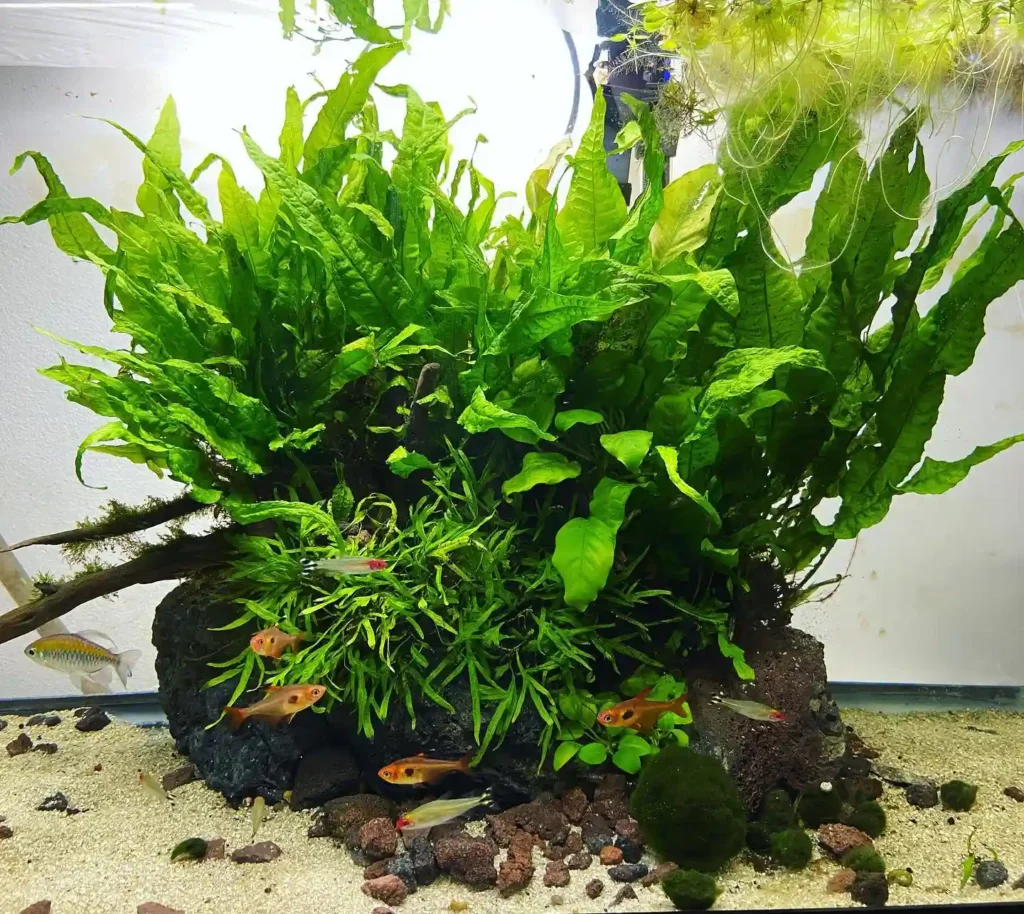
Because it attaches to hardscape, it can create a natural forest-like appearance when attached to driftwood.
Popular aquascaping uses include:
- Driftwood layouts
- Jungle aquariums
- Nature aquascapes
- Shrimp tanks
Its dark green leaves provide excellent contrast against lighter plants.
Frequently Asked Questions
Can Java Fern grow without substrate?
Yes. Java Fern absorbs nutrients from the water column and does not require substrate.
Why is my Java Fern turning brown?
Brown spots may be reproductive structures, algae, or a sign of nutrient deficiencies.
Should I bury Java Fern roots?
The roots can touch the substrate, but the rhizome should never be buried.
Does Java Fern need CO2?
No. It grows well in low-tech aquariums without supplemental CO2.
How fast does Java Fern grow?
Java Fern grows slowly to moderately depending on lighting and nutrient availability.
Can goldfish eat Java Fern?
Most goldfish leave Java Fern alone because the leaves are tough and less appealing than softer plants.
