
10 Best Types of Cichlids for Beginners

The best cichlids for beginners are Bolivian rams, keyhole cichlids, kribensis, electric blue acaras, rainbow cichlids, and yellow labs. These fish are easier to feed and usually more manageable than sensitive or highly aggressive cichlids.
If this is your first cichlid tank, I would choose a Bolivian ram, keyhole cichlid, or electric blue acara. Your best option will depend on your tank size, tap-water conditions, and whether you want a community aquarium or a cichlid-only setup.
Cichlids are known for having big personalities. They learn feeding routines, guard territories, and may even recognize the person who feeds them. That behavior makes them fun to keep, but it can also create problems when the wrong fish share a tank.
An “easy” cichlid still needs a fully cycled aquarium. No cichlid can safely live with ammonia or nitrite in the water, even if the species is described as hardy.
Key Takeaways
- The Bolivian ram is my best overall beginner cichlid.
- Keyhole cichlids are a good choice for calm community aquariums.
- Electric blue acaras make colorful centerpiece fish for larger tanks.
- Yellow labs are one of the easier African cichlids, but they need hard, alkaline water.
- Convict cichlids are hardy, yet their breeding aggression can be hard to control.
- German blue rams, Flowerhorns, and many Apistogramma species are not my first choices for new fishkeepers.
- Tank length and floor space often matter more than aquarium height.
Beginner Cichlids at a Glance
| Cichlid | Adult Size | Suggested Minimum Tank | Temperament | Beginner Rating |
| Bolivian ram | 3–4 inches | 20–30 gallons | Mostly peaceful | Excellent |
| Keyhole cichlid | 4–5 inches | 30 gallons | Peaceful and shy | Excellent |
| Kribensis | 3–4 inches | 20–30 gallons | Territorial when breeding | Very good |
| Electric blue acara | 6–7 inches | 40–55 gallons | Usually calm | Very good |
| Rainbow cichlid | 4–5 inches | 30–40 gallons | Generally peaceful | Very good |
| Firemouth cichlid | 5–6 inches | 40 gallons | Territorial | Good |
| Convict cichlid | 4–6 inches | 30 gallons | Often aggressive | Good with caution |
| Yellow lab | 4–5 inches | 40–55 gallons | Mild for an mbuna | Good |
| Peacock cichlid | 4–6 inches | 55 gallons | Semi-aggressive | Good with research |
| Blood parrot cichlid | 7–8 inches | 55 gallons | Usually semi-peaceful | Good |
These tank sizes are starting points. You will need more space when keeping groups, breeding pairs, or several tank mates.
What Makes a Cichlid Good for Beginners?
I don’t judge a beginner fish only by how hardy it is. A good first cichlid should also have manageable aggression, a reasonable adult size, and feeding needs that are easy to meet.
Forgiving Water Needs
Some cichlids become sick when the temperature, pH, or hardness changes slightly. Those fish can be difficult for someone still learning how to maintain stable water.
A beginner-friendly species should handle small, gradual changes without becoming stressed. This does not mean it can tolerate dirty water. Ammonia and nitrite should always remain at zero.
Manageable Aggression
Many cichlids protect caves, rocks, or sections of the substrate. Even a normally peaceful fish may chase its tank mates after laying eggs.
I look for species that give clear warnings and can be managed with enough room, hiding places, and broken lines of sight. Fish that attack every tank mate without warning are poor choices for a first community aquarium.
A Reasonable Adult Size
The little fish you see at a store may be only a few months old. Some cichlids grow from a two-inch juvenile into a fish that needs a 55-gallon tank or larger.
Always plan for the adult fish. Buying a small aquarium and hoping to upgrade later often costs more and may leave the fish in a crowded tank.
Simple Feeding
A good first cichlid should accept a quality pellet made for its dietary needs. Frozen brine shrimp, bloodworms, mysis shrimp, vegetables, or other foods may be added depending on the species.
Diet matters because cichlids do not all eat the same food. Some African cichlids need more plant matter, while many South American species do well with a varied omnivorous diet.
1. Bolivian Ram
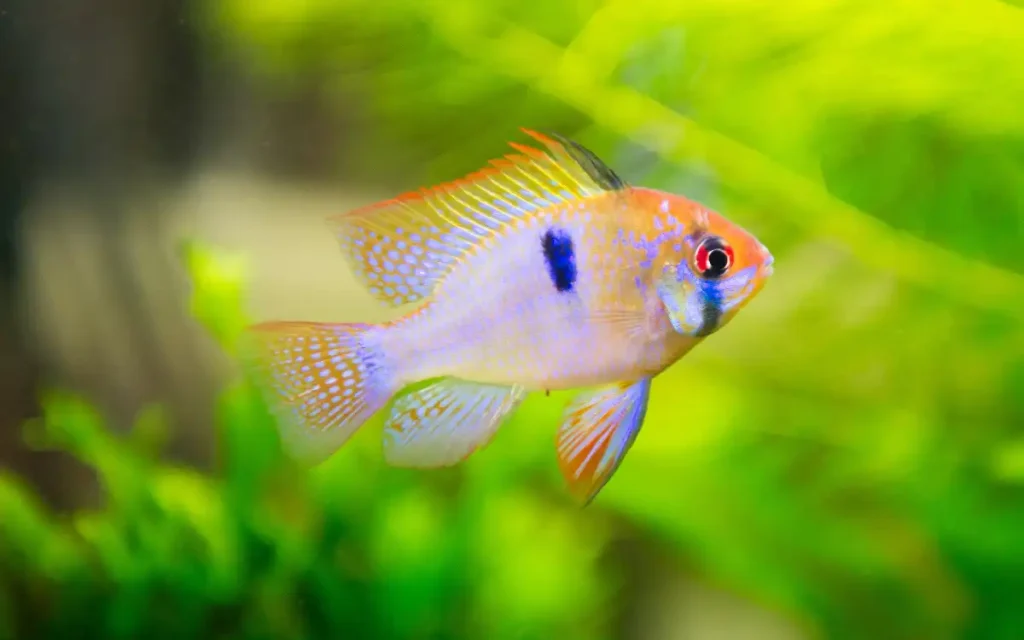
The Bolivian ram is my top small cichlid for a beginner. It has attractive colors and interesting behavior without the sensitivity commonly seen in German blue rams.
An adult usually reaches about 3 to 4 inches. A single fish or compatible pair can live in a well-arranged 20- to 30-gallon aquarium, though extra space makes territorial behavior easier to manage.
I would use sand or another smooth substrate because Bolivian rams spend time searching along the bottom for food. Plants, driftwood, and open patches of substrate will make the tank feel secure without removing all its feeding space.
They can live with peaceful tetras, rasboras, and other calm fish that share similar water needs. Avoid fin-nippers and aggressive bottom dwellers.
A pair may defend the area around its eggs or fry. The aggression is normally limited to a small territory, but cramped tanks can turn that behavior into constant chasing.
You can learn more about their water, diet, and breeding needs in my complete Bolivian Ram Cichlid guide.
2. Keyhole Cichlid
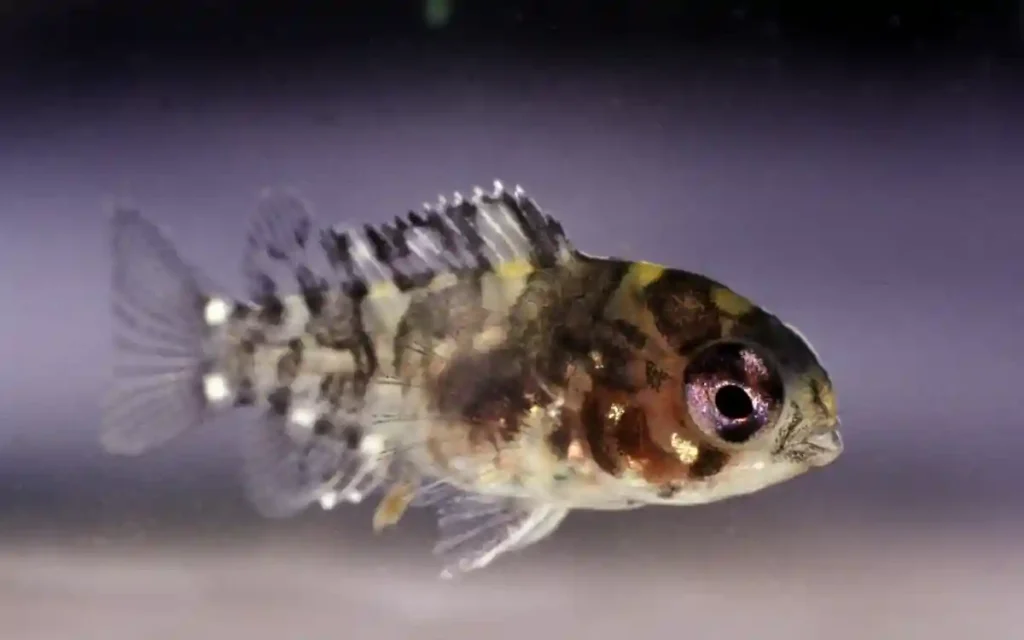
Keyhole cichlids are among the gentlest cichlids available. I recommend them to beginners who want natural behavior and a peaceful community more than extremely bright colors.
They normally grow to around 4 or 5 inches. A 30-gallon tank can work for a pair, but a larger aquarium gives them more room when other fish are present.
Keyholes can be shy. Plants, driftwood, caves, and shaded areas help them feel safe. Without cover, they may hide frequently or lose color.
Good companions include peaceful schooling fish that are too large to be eaten. Avoid keeping keyholes with pushy barbs, aggressive cichlids, or very active fish that rush them during feeding.
They eat quality cichlid pellets along with frozen and live foods. Watch each fish at mealtime because shy individuals may hang back while faster fish take the food.
3. Kribensis Cichlid
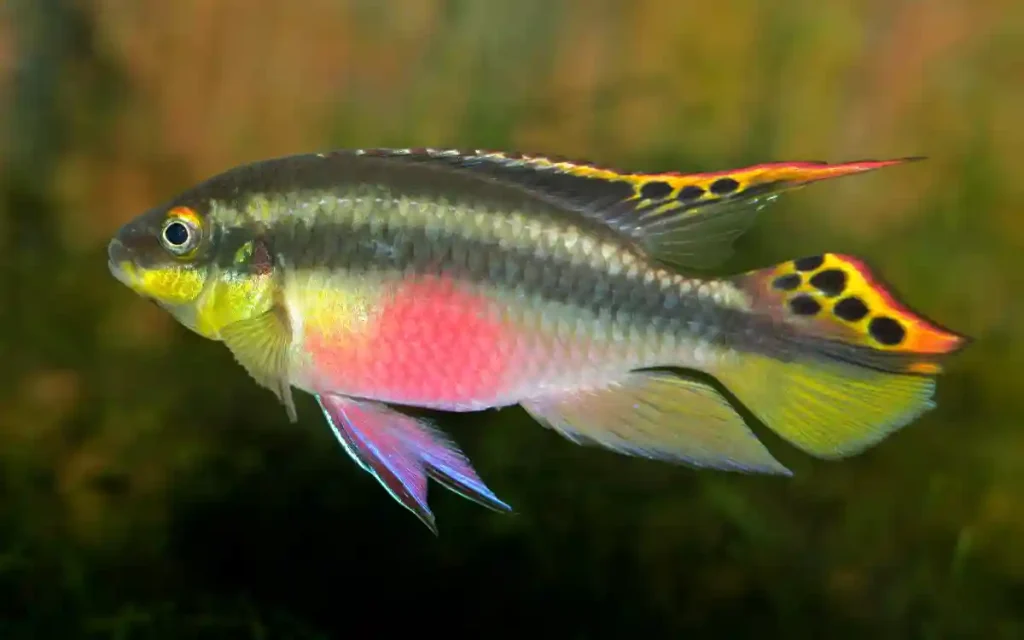
Kribensis are small, colorful cichlids from West Africa. They adapt to a wider range of water conditions than many dwarf cichlids, which makes them easier for a new keeper.
Adults usually stay around 3 to 4 inches. They can work in a 20- to 30-gallon aquarium, although I prefer more space when keeping them with other bottom-dwelling fish.
Provide at least one suitable cave per fish or pair. Flowerpots placed on their sides, smooth rock caves, and coconut shells can all work. Make sure every decoration is stable and has an opening large enough for the fish.
Kribensis may live peacefully in a community until they breed. Once eggs or fry appear, both parents can defend a large part of the aquarium.
I would not place a breeding pair in a cramped tank with corydoras or other fish that continually enter their territory. A single kribensis is often simpler to manage if breeding is not your goal.
4. Electric Blue Acara
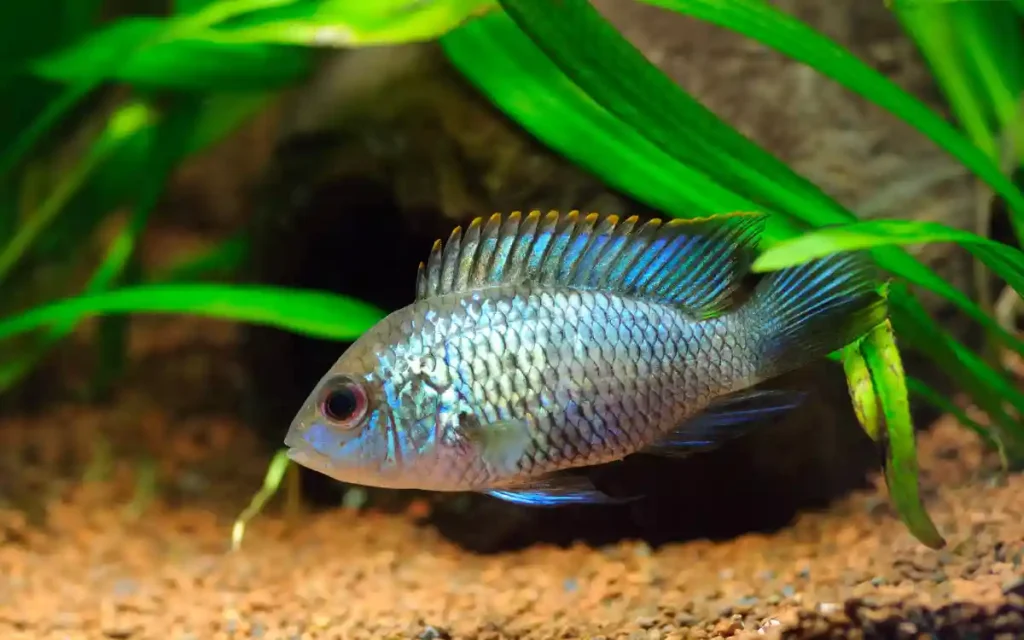
An electric blue acara is a strong choice when you want a larger centerpiece fish. Its bright blue color looks dramatic, yet its behavior is usually easier to manage than that of an Oscar, Jack Dempsey, or green terror.
Adults commonly reach 6 to 7 inches. I would use at least a 40-gallon tank for one fish, but a 55-gallon aquarium gives it better swimming room and more options for tank mates.
These fish produce more waste than dwarf cichlids, so good filtration and weekly maintenance matter. Leave open swimming room while adding wood, rocks, or sturdy plants around the edges.
Electric blue acaras usually accept pellets, frozen foods, and other meaty foods. Don’t rely only on treats such as bloodworms. A suitable pellet should form the base of the diet.
They are often calm enough for a community of medium-sized fish. Tiny tank mates may be eaten, while aggressive fish may bully or injure the acara. A breeding pair can also become territorial.
5. Rainbow Cichlid
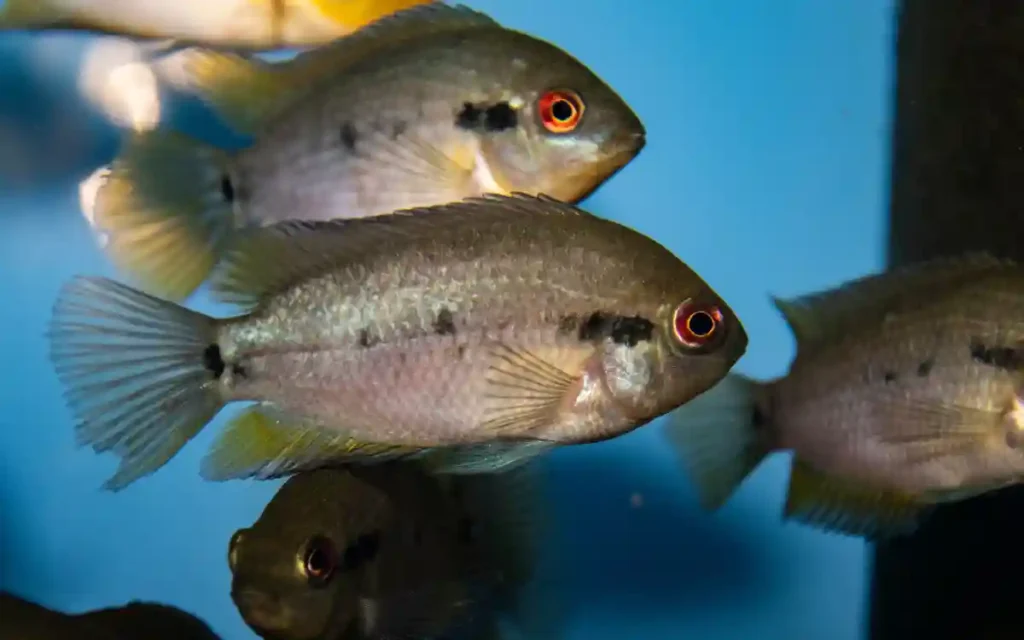
The rainbow cichlid is an overlooked beginner fish. It stays at a manageable size, accepts common aquarium foods, and is normally calmer than many Central American cichlids.
Adults generally grow to around 4 or 5 inches. A 30- to 40-gallon tank gives a pair enough room, especially when you divide the aquarium with wood, rocks, and plants.
Their body color can change with mood, surroundings, and breeding condition. A relaxed fish may show warm yellow or orange shades with dark markings.
Rainbow cichlids are less destructive to plants than many larger cichlids, although any fish may dig around a chosen breeding site. Use rooted plants around the sides and leave some open floor space.
They can share a tank with similarly sized, peaceful fish. As with other cichlids, a pair may guard eggs and push other residents away.
6. Firemouth Cichlid
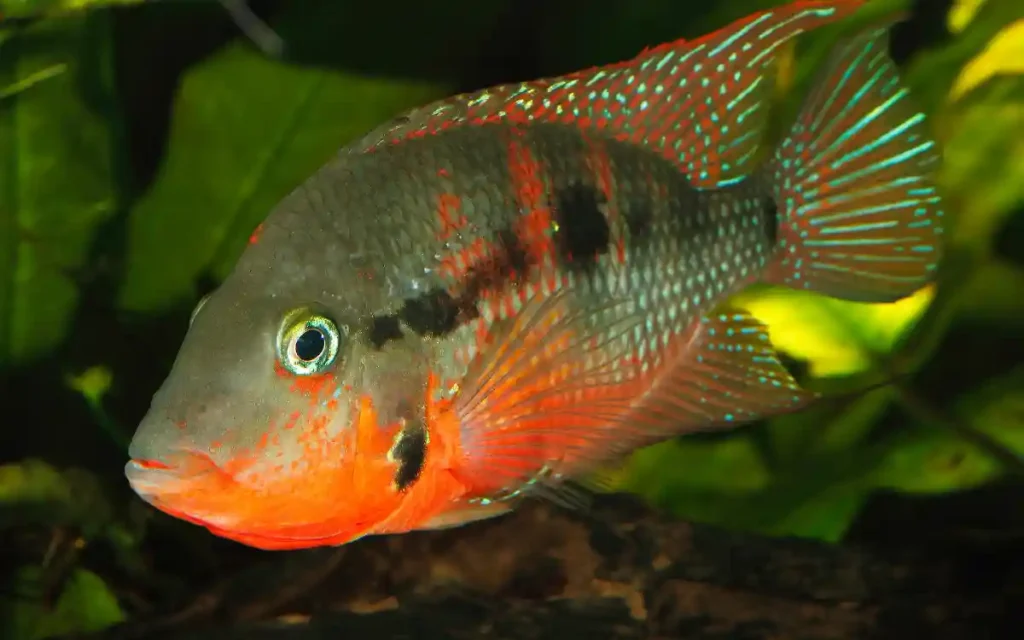
A firemouth cichlid gets its name from the bright red or orange color around its throat and belly. When threatened, it spreads its gill covers and displays its colorful throat.
That display can look fierce, but firemouths often warn other fish before fighting. Enough space makes their territorial behavior much easier to handle.
An adult can reach about 5 to 6 inches. I recommend a tank of at least 40 gallons, with extra room for a pair or a mixed community.
Firemouths like to sift through sand and may move small pieces of gravel. Use a soft substrate and keep heavy rocks firmly supported so digging cannot make them fall.
Suitable tank mates may include robust schooling fish and other cichlids with compatible behavior. Avoid tiny fish, slow fish, and species that constantly challenge the firemouth.
Two males or a breeding pair can become difficult in a small tank. Create separate territories and keep a backup divider ready.
7. Convict Cichlid
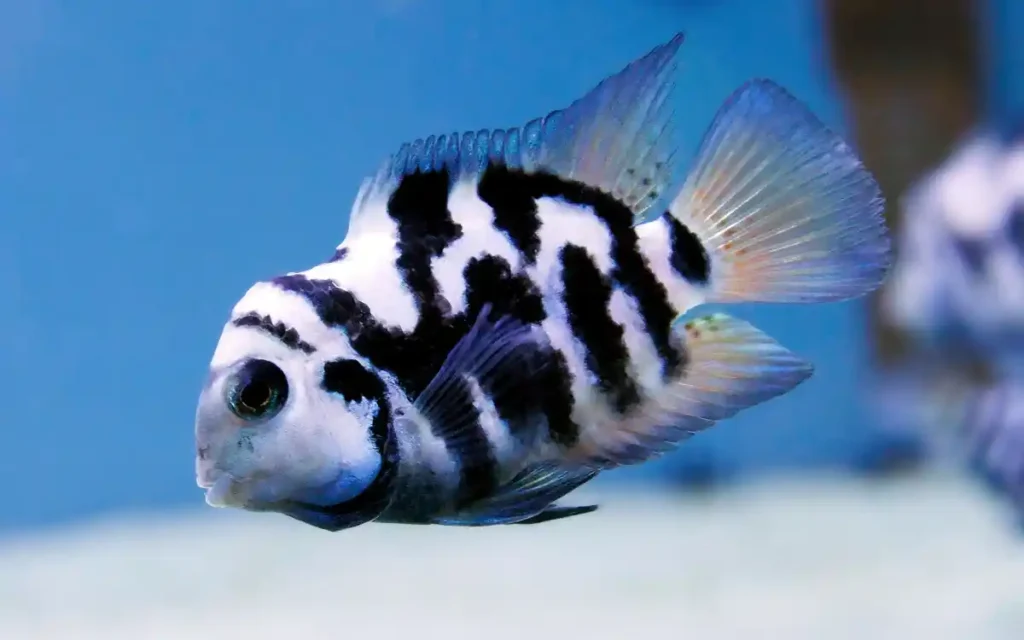
Convict cichlids are often called beginner fish because they are hardy and easy to feed. I agree that they are physically tough, but I don’t think they are easy community fish.
Adults usually reach 4 to 6 inches. A single convict can be kept in a well-arranged 30-gallon tank, while pairs and communities need more room.
The main problem is breeding aggression. Convicts form pairs easily and can produce fry before a new owner is ready. Once that happens, the parents may attack almost every fish that enters their territory.
A single convict is usually easier to handle than a pair. Give it caves, strong filtration, and decorations that block its view across the whole tank.
If you want a calm community aquarium, choose a Bolivian ram or keyhole cichlid instead. Choose a convict only if you are prepared to manage its territorial behavior.
8. Yellow Lab Cichlid
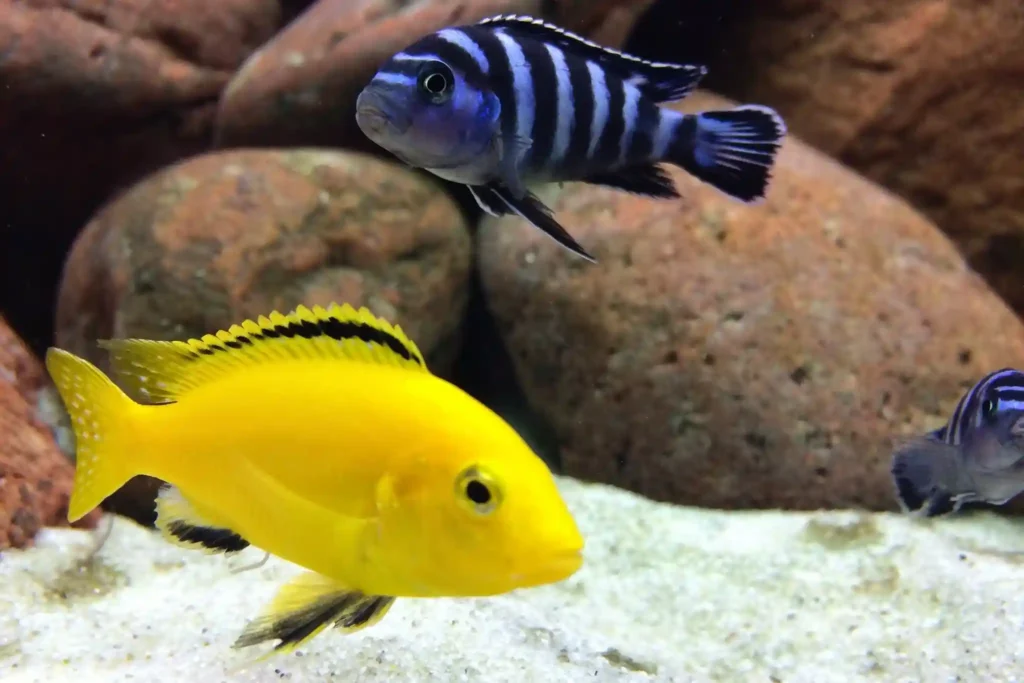
The yellow lab is one of the more manageable mbuna cichlids from Lake Malawi. Its bright yellow body and dark fin markings make it easy to recognize.
“Manageable” is relative here. Yellow labs are still active African cichlids and should live in a tank arranged for their needs.
I recommend a 40- to 55-gallon aquarium, depending on the group and other fish. Build several stable rock piles with gaps and caves so weaker fish can escape from dominant individuals.
Yellow labs need hard, alkaline water. They should not be placed in a soft-water South American community simply because their temperament appears suitable.
They also need a diet that fits an mbuna. Use an appropriate pellet and include plant-based foods. Too much rich, meaty food can cause digestive trouble.
If you are planning a mixed African setup, read my guide to choosing tank mates for African cichlids before buying the fish.
9. Peacock Cichlid
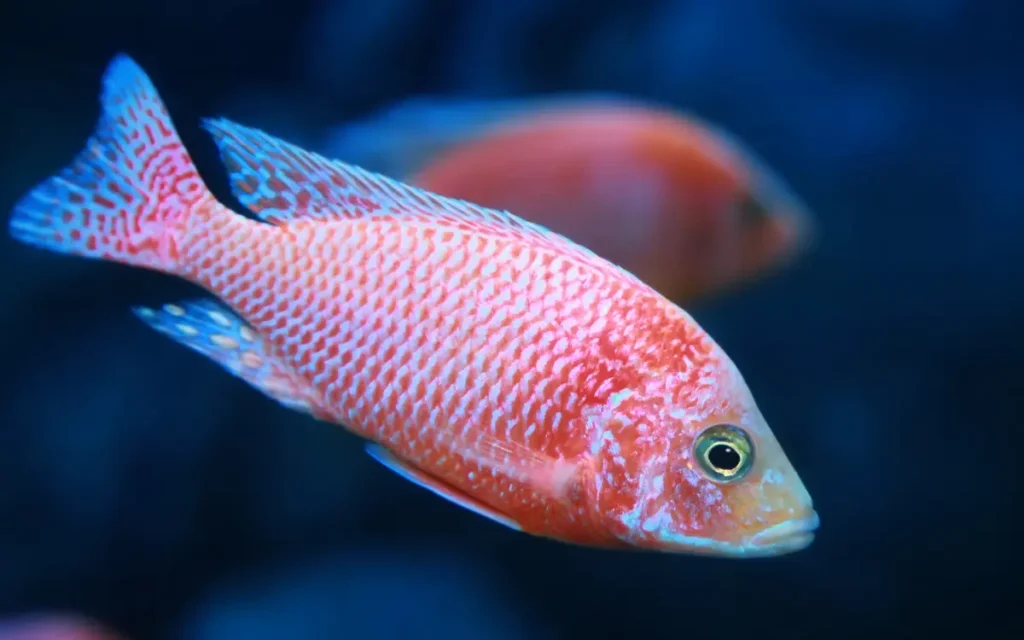
Peacock cichlids can work for a committed beginner who is willing to build a proper Lake Malawi aquarium. I would not add them to an ordinary tropical community tank.
Most commonly kept peacocks grow to around 4 to 6 inches, though size varies by species. A 55-gallon or larger aquarium is a much safer starting point for a group.
They need hard, alkaline water, clean conditions, open swimming space, and some rocky cover. Sand is a good substrate because it matches their natural feeding behavior and is gentle on their mouths.
Males display the strongest colors. More than one male may fight if the tank is too small or there are not enough females and hiding places. Randomly mixing several colorful males can produce a stressful tank.
Feed a quality African cichlid pellet and avoid excessive fatty or rich food. Careful feeding may reduce the risk of digestive problems commonly grouped under the name Malawi bloat.
My Peacock Cichlid care guide covers their tank, water, diet, and social needs in greater detail.
10. Blood Parrot Cichlid
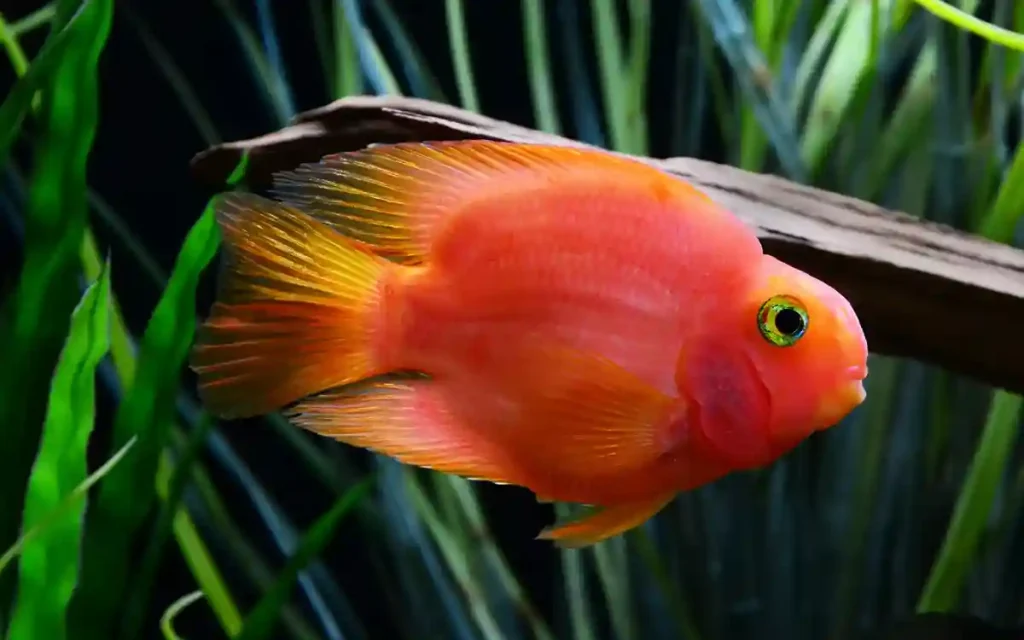
Blood parrot cichlids look intimidating, but many are less aggressive than typical large Central American cichlids. They are often curious and may learn to follow their owner near the glass.
Adults commonly reach 7 to 8 inches. I would give one fish at least a 55-gallon tank, with more room for tank mates.
Their unusual mouth shape can make it hard to pick up certain foods. Choose sinking or slowly sinking pellets that the fish can catch comfortably. Check that it is eating instead of assuming food left on the floor was consumed.
Blood parrots create a fair amount of waste. Strong filtration, gravel cleaning, and regular water changes will help keep the tank clean.
Their tank mates should be large enough not to be eaten but calm enough not to bully them. Provide wide caves and hiding places that fit the fish’s full adult body.
Blood parrots are hybrids. Selective breeding has given some individuals compressed bodies, small mouths, or swimming problems. I would avoid sellers offering dyed fish or fish with severe body deformities.
Read the full Blood Parrot Cichlid Care Guide before deciding whether this hybrid is right for you.
Popular Cichlids I Would Not Recommend First
Some popular cichlids are hardy, beautiful, or widely sold, yet they are poor choices for a first aquarium.
German Blue Ram
German blue rams are small and peaceful, but they need warm, stable, very clean water. Weak store stock and sudden water changes can cause them to decline quickly.
The Ram Cichlid Care Guide explains their needs. If you like the ram body shape but want a more forgiving fish, I would choose a Bolivian ram.
Flowerhorn Cichlid
Flowerhorns are large, interactive fish with strong personalities. They also produce a lot of waste and can be extremely aggressive toward other fish.
Most are best kept alone in a large tank. Their size, strength, and maintenance needs make them a poor first cichlid for someone wanting a community.
Read my Flowerhorn Cichlid Care Guide if you are interested in a dedicated single-fish aquarium.
Apistogramma
Apistogramma are small, but small does not always mean simple. There are many species, and their water and social needs are not identical.
Some need soft, acidic water. Females can become surprisingly territorial when guarding young, and poor tank-mate choices may leave a weaker fish trapped.
My Apistogramma Care Guide will help you decide whether you can provide the stable conditions these dwarf cichlids need.
Oscar
Oscars grow quickly, eat smaller fish, and produce heavy waste. A juvenile may look manageable at the store, but an adult needs a large aquarium and powerful filtration.
They can make rewarding pets, but I would not buy one until I had room for its adult tank.
Discus
Discus need warm water, stable conditions, careful feeding, and suitable companions. They are social fish, so keeping one alone is usually not a good plan.
Their cost and sensitivity leave little room for beginner mistakes. I would gain experience with easier South American cichlids first.
African or South American Cichlids: Which Are Easier?
Neither group is always easier. The better choice depends partly on your tap water and the kind of aquarium you want.
| Cichlid Setup | Best For | Main Difficulty |
| South American community | Calm fish and planted tanks | Some species need soft, warm water |
| Central American tank | Hardy fish with bold behavior | Territory and breeding aggression |
| African Rift Lake tank | Bright colors and active groups | Hard water, stocking, diet, and aggression |
If your tap water is naturally hard and alkaline, a Lake Malawi setup may be easier to maintain than trying to create soft water. If your water is softer, a South American community may require fewer adjustments.
I wouldn’t choose fish by color alone. Start with one type of water and build the aquarium around fish that can live in it.
How to Choose Your First Cichlid
Test Your Tap Water
Test the pH, GH, and KH of your tap water before selecting a fish. Knowing your starting conditions can save you from constantly trying to change the water.
Stable water that is reasonably close to the fish’s preferred range is often safer than water that is repeatedly adjusted with chemicals.
Plan for the Adult Fish
Check the adult size, not the size of the fish for sale. Also look at whether the species lives alone, forms a pair, or needs a group.
A tank that works for one young fish may become crowded once that fish matures or begins defending territory.
Think About the Social Setup
A single centerpiece fish can be easier than a breeding pair. Pairs may become aggressive after spawning, while African cichlid groups need careful stocking.
Don’t assume that buying one male and one female will create a peaceful pair. Two fish may reject each other.
Prepare for Aggression
Use rocks, wood, plants, caves, and tall decorations to break up the fish’s view. A bullied fish needs a place where the dominant fish cannot see it constantly.
Keep a tank divider or spare aquarium available when possible. Moving one fish may be the only safe answer if fighting becomes serious.
Choose a Healthy Fish
Watch the fish before buying it. A healthy cichlid should have:
- Clear eyes
- A full but not swollen belly
- Smooth, controlled breathing
- Upright swimming
- Fins that are not tightly clamped
- No white spots, open wounds, or cotton-like growth
- Some interest in food or activity around the tank
Avoid buying a sick-looking fish because you feel sorry for it unless you have a quarantine tank and know how to treat the problem.
Which Beginner Cichlid Should You Choose?
Here are my direct recommendations:
- Best overall: Bolivian ram
- Best peaceful option: Keyhole cichlid
- Best for a smaller tank: Kribensis
- Best colorful centerpiece: Electric blue acara
- Best first African cichlid: Yellow lab
- Best for bold behavior: Firemouth cichlid
- Hardiest but hardest to mix: Convict cichlid
- Best larger single fish: Blood parrot cichlid
If you are completely new to cichlids, I would start with a Bolivian ram, keyhole cichlid, kribensis, or electric blue acara. These species let you enjoy cichlid behavior without starting with one of the most sensitive or aggressive options.
Frequently Asked Questions
What is the easiest cichlid to keep?
I consider the Bolivian ram one of the easiest small cichlids for beginners. It is usually peaceful, fairly adaptable, and less sensitive than a German blue ram. An electric blue acara is another good option if you have a larger tank.
What is the most peaceful cichlid for beginners?
The keyhole cichlid is one of the most peaceful choices. Bolivian rams and rainbow cichlids can also live in suitable community tanks, although any cichlid may become territorial when breeding.
Can beginner cichlids live in a community tank?
Yes, some can. Keyhole cichlids, Bolivian rams, rainbow cichlids, and electric blue acaras can live with carefully selected fish. Tank mates must be compatible in size, behavior, temperature, pH, and hardness.
Can I keep different types of cichlids together?
Sometimes, but it depends on the exact species. Avoid mixing fish only because they share the cichlid name. African, Central American, and South American cichlids may need very different water, food, and social arrangements.
What fish can live with cichlids?
Possible tank mates include suitable tetras, rasboras, barbs, rainbowfish, catfish, and other cichlids. The correct choice depends on the cichlid’s adult size and temperament. African species require their own compatibility plan, as explained in my African cichlid tank-mate guide.
Can cichlids live in a 20-gallon tank?
A few small cichlids can live in a 20-gallon tank. A single Bolivian ram, a carefully managed pair of dwarf cichlids, or some kribensis setups may work. Most medium and large cichlids need much more room.
Are African cichlids harder than South American cichlids?
African cichlids are not always harder, but their stocking and aggression can confuse beginners. They also need hard, alkaline water. Many peaceful South American cichlids fit community tanks more easily, though some are sensitive to poor water quality.
Should a beginner keep one cichlid or a pair?
One fish is often easier because breeding aggression is removed. A pair can be enjoyable, but there is no guarantee that two fish will accept each other. You also need a plan for eggs and fry.
Do cichlids need sand?
Not every cichlid must have sand, but many enjoy digging, sifting, or searching for food along the bottom. A smooth sand substrate is especially useful for Bolivian rams, firemouths, and peacock cichlids.
How many cichlids should I add at once?
There is no single number for every species. Add peaceful community cichlids slowly so you can watch their behavior and water quality. African cichlid groups may require a different stocking method to prevent one new fish from becoming an easy target. Plan the complete group before buying any fish.
